How to Propagate Aloe Vera From Pups and Cuttings
Aloe vera is one of the easiest houseplants to multiply, yet many people try leaf cuttings first and end up disappointed when nothing roots.
If you have a plant with pups growing at the base, you have the fastest, most reliable propagation method available.
This post walks through every method side by side, from dividing pups to rooting cuttings and starting from seed, so you can pick the right approach for your plant and skip the guesswork.
What Is Aloe Vera Propagation?
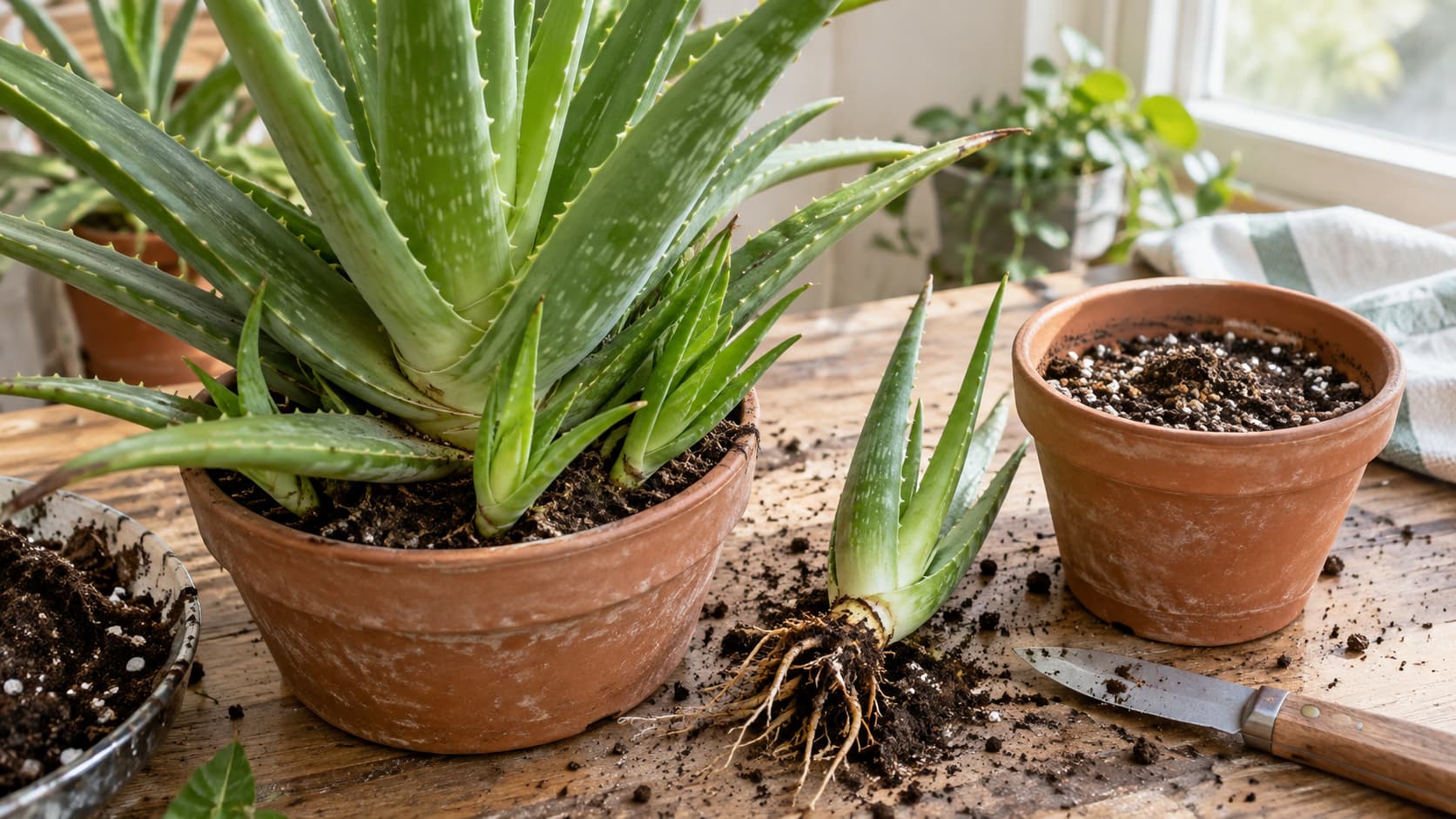
Aloe vera propagation means creating a new, independent plant from one you already own. Most gardeners do this by separating a pup. A pup is also called an offset, sucker, or plantlet.
It grows naturally at the base of the parent plant. You can also propagate aloe vera from a leaf cutting or from seed. Both take longer and succeed less often than working with pups.
Aloe reproduces asexually through these offsets. That means every pup you plant is a genetic clone of the mother plant. That’s why division is considered the most dependable method for home gardeners.
Which Aloe Propagation Method Should You Use?
Not every aloe plant hands you the same starting point, so the right method depends on what you already have. Here is a quick comparison to help you choose before you pick up a knife.
|
Method |
Difficulty |
Success Rate |
Time to New Plant |
|---|---|---|---|
|
Division (pups) |
Easy |
Very high |
6 to 12 weeks |
|
Leaf cuttings |
Moderate to hard |
Low |
Several weeks to a few months |
|
Seed |
Hard |
Low |
Several weeks, plus greenhouse-style conditions |
What You’ll Need to Propagate Aloe Vera
You do not need a shed full of tools to propagate aloe vera. A handful of basic supplies covers every method in this guide.
- Sharp, clean knife or shears: Use this to separate pups or slice off a leaf without crushing the tissue.
- Well-draining cactus or succulent potting mix: This keeps moisture from sitting around the roots and causing rot.
- Pots with drainage holes: Small pots work for pups, while the mother plant needs more room.
- Gloves (optional): Handy if your aloe variety has sharp, toothed edges along the leaves.
- Rooting hormone (optional): Can support faster root development on cuttings that lack roots of their own.
How to Propagate Aloe Vera From Pups
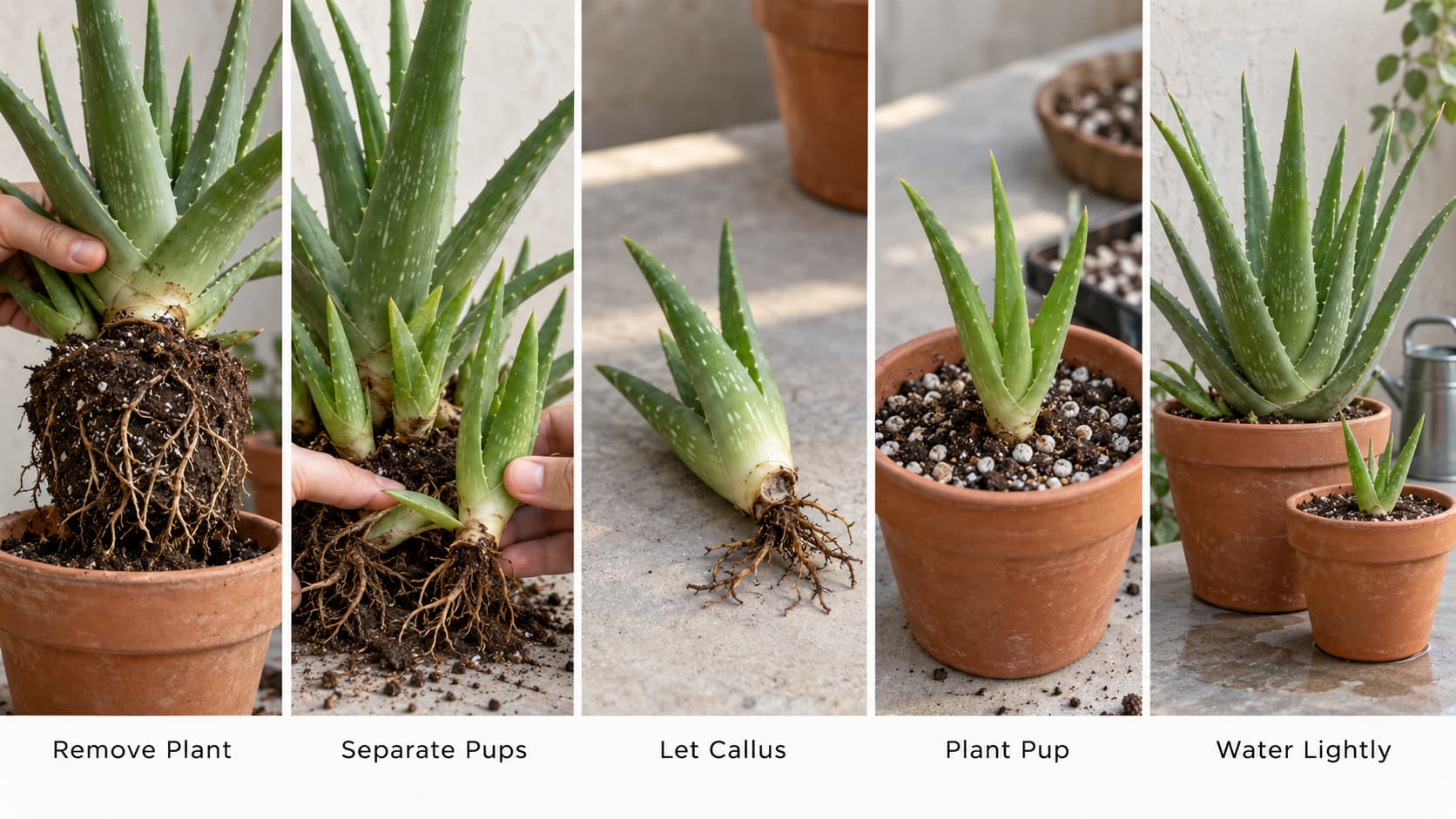
Division is the method most gardeners reach for first, and for good reason. It relies on a process the plant is already doing for you.
Step 1: Remove the Plant From Its Pot
Gently tip the aloe out of its container, supporting the base with one hand. If roots cling to the pot, loosen the edges first with a butter knife or your fingers. This gives you a clear view of where the pups meet the main root system.
Step 2: Identify and Separate the Pups
Look for pups that are at least one-fifth the size of the parent plant. They should also have several sets of true leaves. Using your fingers or a clean knife, gently pull or cut each pup away from the mother. Try to keep as much of its own root system intact as you can.
Step 3: Let the Pup Callus
Set the separated pups in a dry spot for two to seven days. This lets the cut end seal over, which protects the pup from rot once it goes into soil. Skipping this step is one of the fastest ways to lose a healthy pup.
Step 4: Plant the Pup
Fill a small pot with well-draining succulent mix and bury just the base of the pup. Keep the lower leaves resting above the soil line instead of buried. Center the pup so it stands upright and doesn’t lean.
Step 5: Water and Repot the Mother Plant
Water the new pup lightly a few days after planting. Then let the soil dry out fully between waterings. Return the mother plant to its original pot, or size up if it looked crowded. Both plants should settle in within a few weeks.
How to Propagate Aloe Vera From Leaf Cuttings
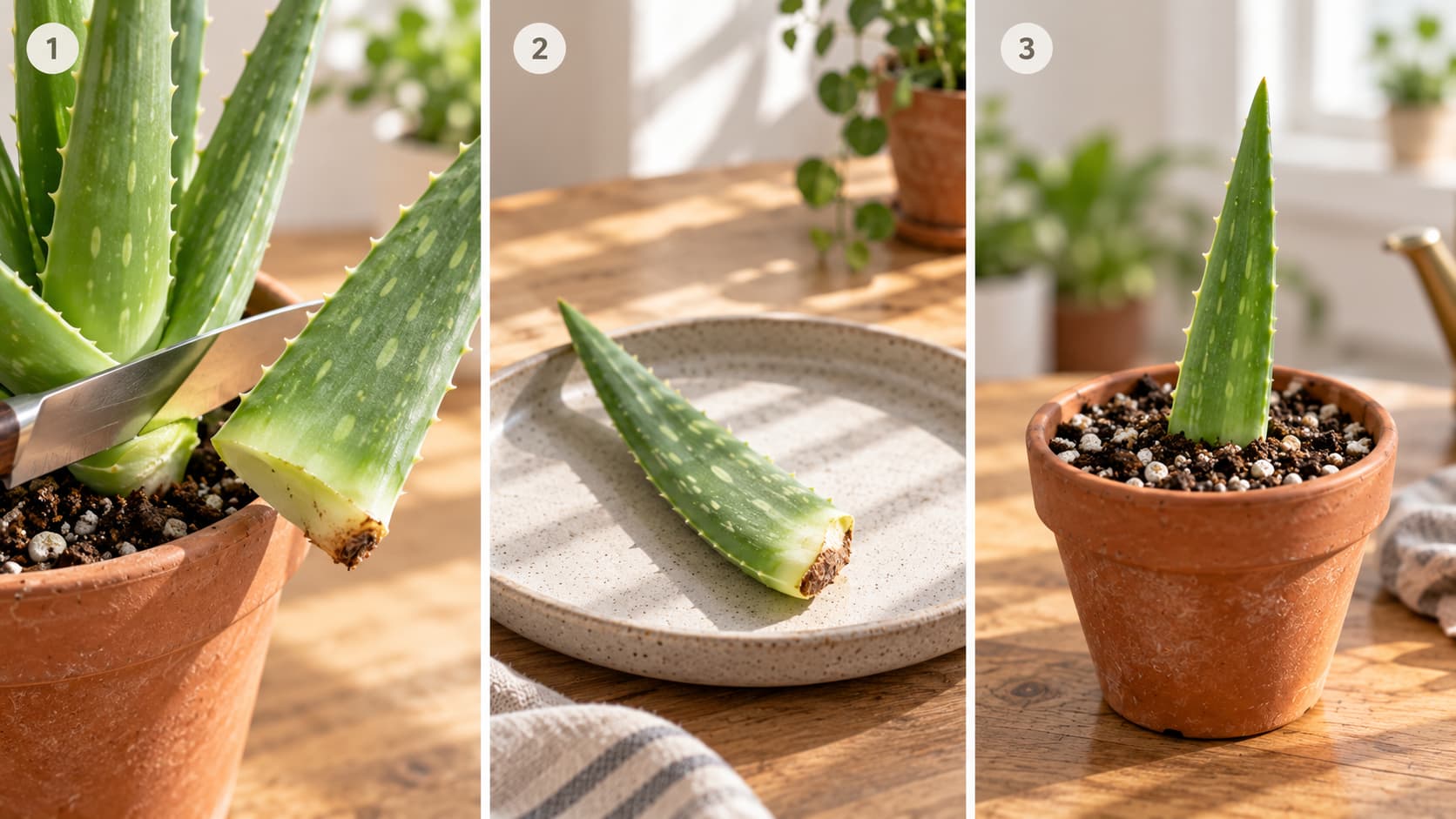
If your plant has no pups yet, a leaf cutting is worth trying, though it takes patience. Success rates are lower, so treat this as a backup option.
Step 1: Cut Near the Base
Slice a healthy, plump leaf close to the stem, making sure a small piece of stem tissue comes away with it. That stem tissue is what actually forms new roots, so a leaf cut without it will rot instead of rooting.
Step 2: Let It Callus (Longer Than Pups)
Leave the cutting in a dry, shaded spot for one to two weeks, since cuttings take longer to seal than pups do. Rushing this step is the main reason leaf cuttings fail before they even get a chance to root.
Step 3: Plant and Wait
Insert the calloused end about an inch into a well-draining mix, water sparingly, and wait several weeks to a few months for roots to form. Resist the urge to tug on it to check progress, since disturbing the base can undo the rooting that has already started.
Can You Root Aloe Vera in Water?
Rooting aloe vera in water is not recommended, and it rarely works well. Unlike pothos or basil, aloe stores water in its thick, fleshy leaves. Prolonged contact with standing water can cause the cut end to rot before roots form.
According to the University of New Hampshire Extension, succulents like aloe need dry, well-draining conditions to root properly. That is the opposite of what a glass of water provides. If you want a better success rate, let the seeds dry out, then plant them in soil.
How to Propagate Aloe Vera From Seed
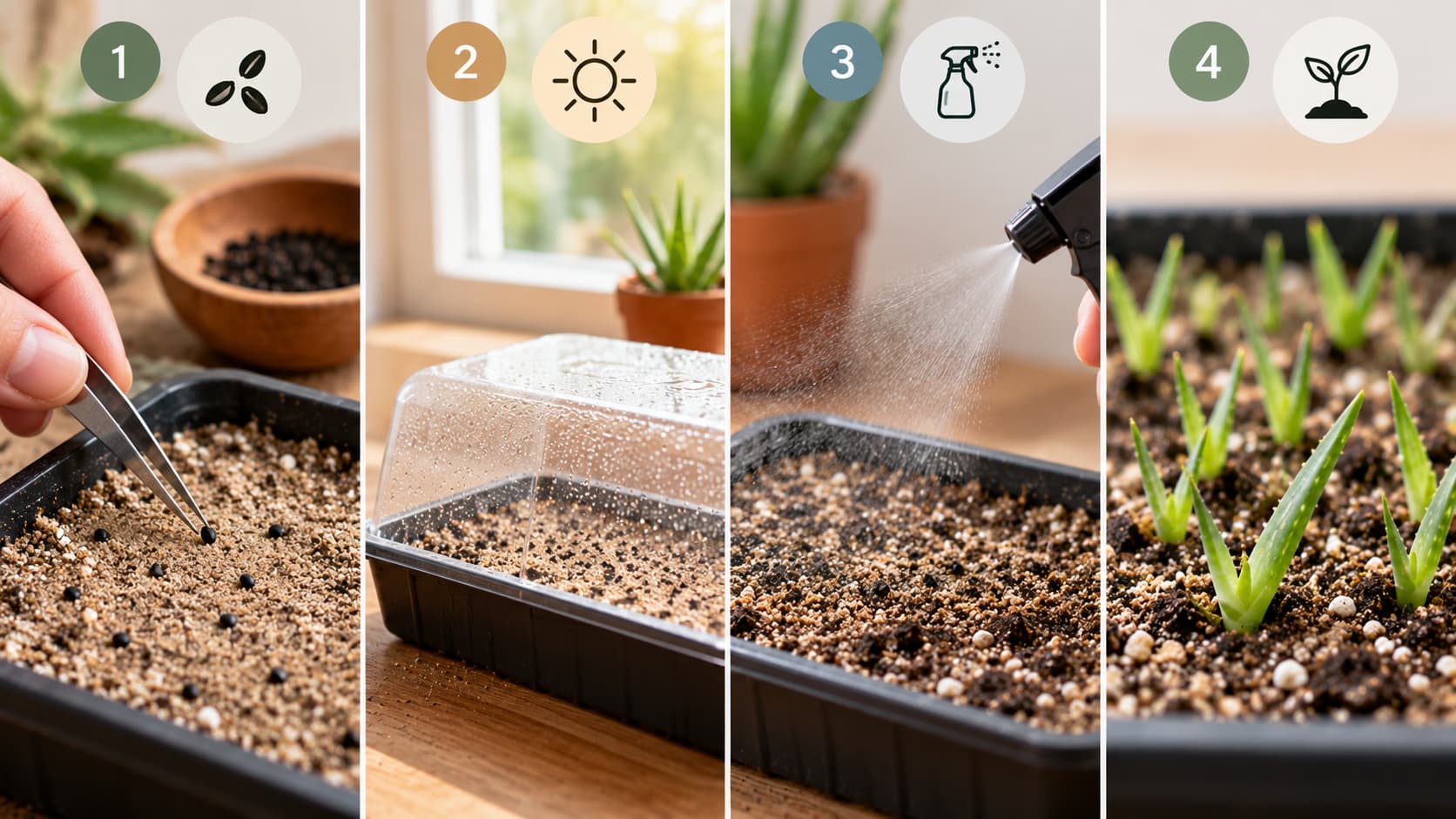
Seed propagation is rarely anyone’s first choice, but it is worth knowing about if you want to experiment. Just know it takes far longer than the other two methods.
Step 1: Sow Seeds in a Well-Draining Tray
Sow seeds in a shallow tray of sand and well-draining soil. This mimics the loose, dry conditions aloe seeds need to germinate, so avoid dense potting soil that holds too much moisture.
Step 2: Keep the Tray Warm and Bright
Keep the tray warm, around 70°F, in bright indirect light. Steady warmth speeds up germination, while direct sun on such young seedlings can do more harm than good.
Step 3: Mist Instead of Watering Directly
Mist lightly instead of watering directly. This keeps seeds moist without washing them out of place or burying them deeper than intended.
Step 4: Wait for Germination and Growth
Expect germination in a few weeks. Seed-grown aloe can take a year or more to reach a usable size, so this method suits patient gardeners more than anyone in a hurry.
How Long Does Aloe Vera Propagation Take?
Patience looks different depending on which method you choose. Here is a quick breakdown by stage.
|
Stage |
Typical Timeframe |
|---|---|
|
Callusing (pups) |
2 to 7 days |
|
Callusing (cuttings) |
1 to 2 weeks |
|
Pup root re-establishment |
6 to 12 weeks |
|
Cutting root development |
Several weeks to a few months |
|
Seed germination |
Several weeks, plus a year or more to maturity |
Caring for Newly Propagated Aloe Vera
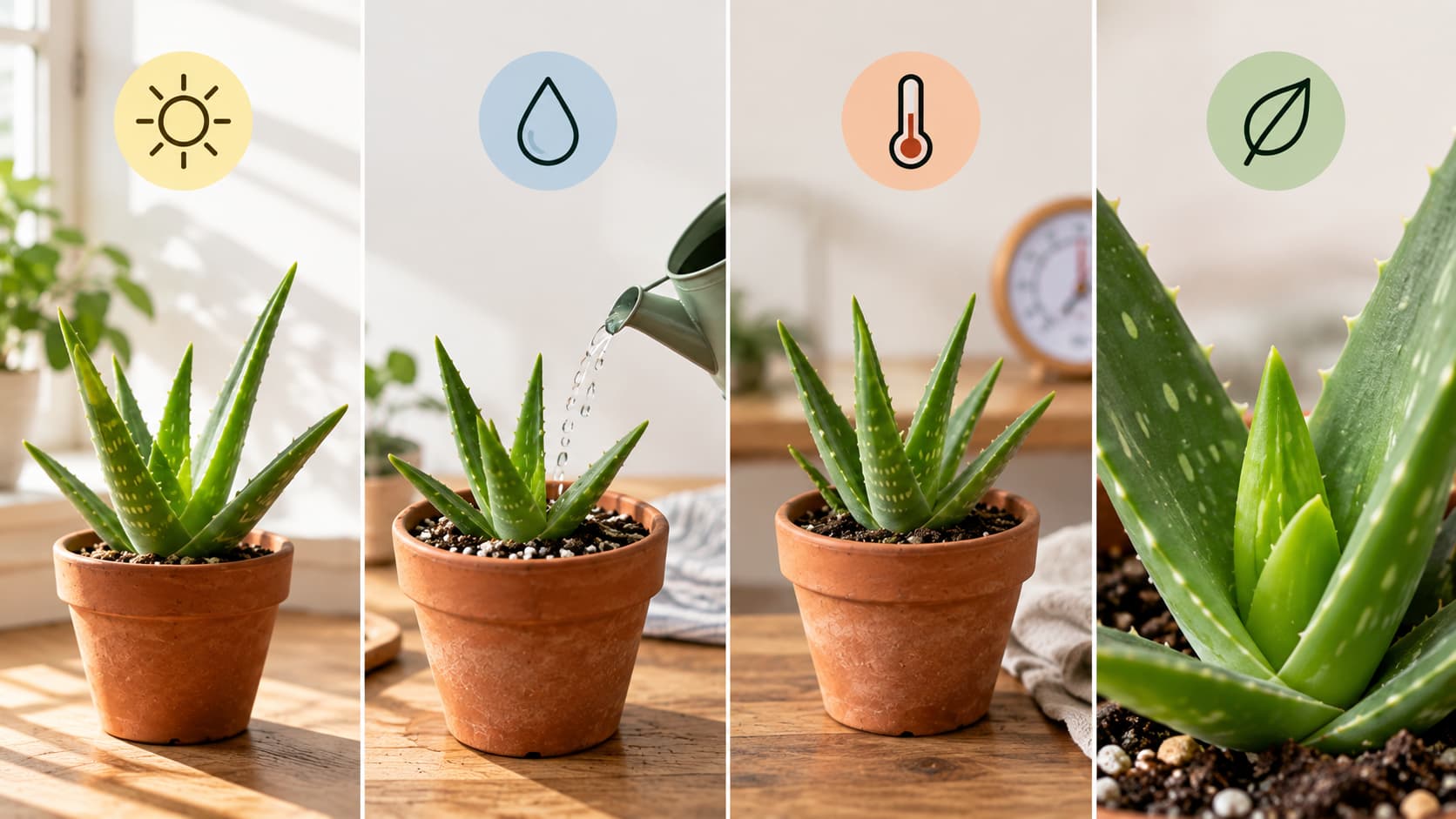
Newly propagated aloe needs careful care with light, water, and temperature while its roots become established.
- Light: Give new plants bright, indirect light for the first few weeks. Direct sun can scorch tender new roots before they establish. Once you see fresh growth, move the plant toward a sunnier spot.
- Watering: Hold off on watering for several days right after planting to avoid rot. After that, let the soil dry out completely between waterings. Aloe would rather go too dry than sit in damp soil.
- Temperature: Keep newly propagated aloe between 55 and 80°F. Cold drafts or sudden swings can stress a plant that has not fully rooted. A steady room temperature works best.
- Signs of success: New leaf growth at the center of the rosette is the clearest sign that propagation worked. This usually shows up within a few weeks for pups and longer for cuttings. Firm, upright leaves also show that roots are holding.
Common Aloe Vera Propagation Mistakes to Avoid
The biggest mistake I have made myself is watering a new pup too soon because it looked sad sitting in dry soil.
That instinct to help almost always backfires, since the cut base has not sealed yet and extra moisture invites rot within days. I also learned the hard way that regular potting soil holds too much water for aloe, even when it looks like a succulent mix.
Other common slip-ups include burying the leaves instead of just the base, pulling pups before they have their own roots, and skipping the callus period because waiting feels unnecessary.
None of these mistakes are hard to avoid once you know they matter, which is exactly why they trip up so many first-time growers.
Concluison
Propagating aloe vera does not need to feel complicated once you know which method fits your plant.
Division works best for nearly everyone, since it relies on a process the plant already does naturally. Leaf cuttings and seeds have their place, but treat them as backup options, not your starting point.
Give new pups time to callus, keep them dry at first, and watch for that first sign of new growth. Soon, you will have more aloe than you need.
Frequently Asked Questions
Can you grow aloe vera from a cutting?
Yes, though it takes longer and succeeds less often than growing from pups. Make sure your cutting includes a small piece of stem tissue, since leaves alone will not root.
Can you root aloe cuttings in water?
You can try, but standing water often causes the cut end to rot before roots form. A dry callus period followed by planting in soil gives you a much better chance.
How to propagate aloe vera without roots?
Let the cutting or pup callus fully in a dry spot for several days to two weeks. Then plant it in a well-draining mix and water sparingly until new roots develop.
How do you keep aloe pups alive?
Give the pup time to callus before planting, use well-draining soil, and hold off on watering for a few days after it goes into the pot. Bright, indirect light helps it settle in.
What is the dark side of aloe vera?
While aloe gel is widely used on the skin, some research points to health risks tied to consuming the plant’s latex, including liver and kidney concerns at high doses. A 2022 review published in Molecular Biology Reports outlines these findings, so it is worth being cautious with oral use.
What is the lifespan of an aloe vera plant?
Most aloe vera plants live between 12 and 25 years with proper care. Some have been reported to live even longer under ideal conditions.
Why is my aloe making so many pups?
Producing pups is simply how a healthy aloe plant reproduces. A plant getting enough light, proper drainage, and occasional feeding will often send out new pups every year once it matures.
What makes an aloe plant happy?
Bright, indirect light, well-draining soil, and infrequent watering are the three things aloe vera needs most. Consistent care matters more than any single perfect condition.