Coffee Grounds for Plants: Benefits, Risks, and Best Uses
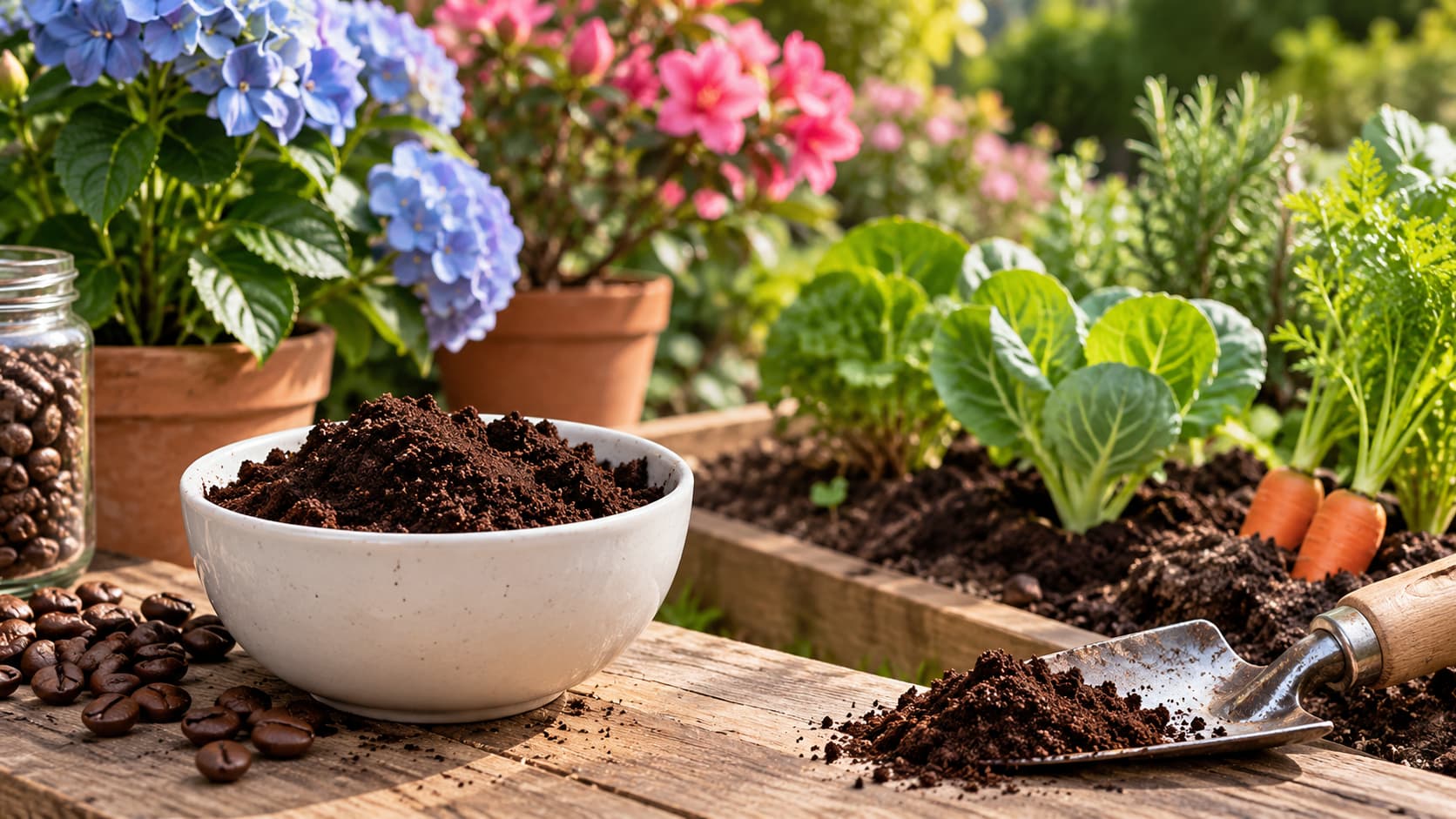
Coffee grounds often end up in the trash, but they can still belong in the garden. Used correctly, they can support soil and plant health, though they aren’t suitable for every plant or application method.
A little care in how you use them can make the difference between helping your garden and creating unnecessary problems.
What Is in Coffee Grounds
Used coffee grounds contain organic matter along with roughly 1–2% nitrogen and smaller amounts of phosphorus, potassium, and trace minerals. Their pH is usually close to neutral, around 6.5–6.8.
However, the nutrients are not immediately available to plants because soil microbes need time to break the grounds down before plants can use them effectively.
Coffee Grounds Myths vs Facts
Coffee grounds have picked up a lot of garden folklore over the years. Here is what holds up to testing and what doesn’t.
|
Claim |
Verdict |
Why |
|---|---|---|
|
Coffee grounds acidify soil |
False |
Used grounds are nearly pH neutral, so they will not meaningfully shift soil acidity over time. |
|
Coffee grounds make good mulch on their own |
False |
Grounds are fine-textured and compact quickly, which blocks air and water from reaching roots. |
|
Coffee grounds kill slugs |
False |
Controlled testing by garden researcher Robert Pavlis at GardenMyths.com found slugs crawled over grounds without hesitation. |
|
Coffee grounds change hydrangea color to blue |
False |
Flower color depends on soil pH, and since grounds barely affect pH, they will not shift the bloom color. |
|
Coffee grounds are a good compost ingredient |
True |
In moderation, grounds add nitrogen and organic matter that speeds up decomposition. |
|
Coffee grounds suppress some fungal growth in lab settings |
Partially true |
Studies show this effect only in controlled lab conditions, not in an open garden bed. |
Can You Put Coffee Grounds Directly on Soil
Yes, but only in small, occasional amounts, and never as a thick layer. Raw grounds compact easily, which starves roots of air and water. They also contain enough caffeine to slow the growth of nearby seedlings.
A University of Melbourne study found that even light applications stunted broccoli, radish, and sunflowers when placed directly in soil. If you add grounds straight to a bed, keep the layer under half an inch. Always cover it with mulch or compost so it does not form a crust.
7 Ways to Use Coffee Grounds in Your Garden
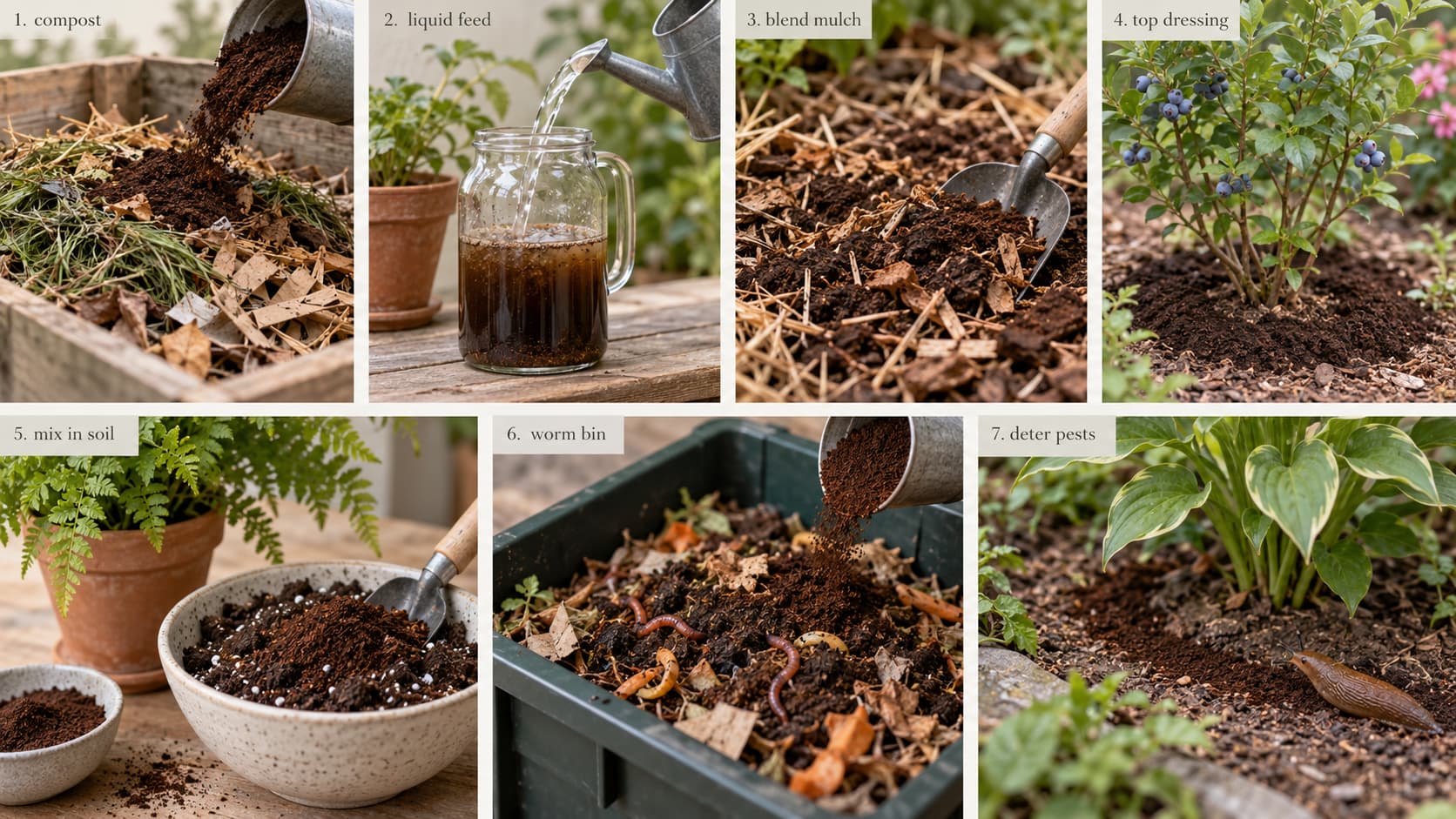
There is more than one way to put coffee grounds to work in your garden. Below are seven methods worth trying, starting with the safest and most proven.
1. Add Them to Your Compost Pile
Composting is the method with the most research backing it. It gives soil microbes time to convert raw nitrogen into a form roots can absorb. Keep coffee grounds under 20 percent of your total compost volume. Pair them with dry leaves, straw, or shredded cardboard as the carbon source.
The Oregon State University Extension recommends layering roughly equal parts leaves, grass clippings, and coffee grounds. This mix heats up and breaks down evenly. Skipping this ratio and dumping in grounds alone can slow the pile down instead of speeding it up.
2. Make a Diluted Liquid Feed
For potted plants or seedlings, a liquid feed spreads nutrients out instead of concentrating them. Steep about one tablespoon of used grounds in a gallon of water overnight, then strain out the solids.
Water acid-loving plants with the liquid every few weeks rather than daily. Even diluted caffeine can build up in soil with repeated overuse. This method also lets you see how a plant responds before trying a heavier application elsewhere.
3. Blend Grounds Into Mulch
Coffee grounds on their own compact quickly and block air and water from reaching roots. That is why mulch works only as a blend, not a standalone layer.
Mix one part coffee grounds with three parts wood chips, shredded bark, or straw. The combination stays loose enough to breathe while adding nitrogen as it breaks down. This is a practical way to use up grounds without the compaction problem coffee mulch is known for.
4. Use a Thin Top Dressing
A light top dressing works well for established, acid-loving plants like blueberries and azaleas. Sprinkle a layer under half an inch thick around the base of the plant. Keep the layer a few inches away from the stem.
Always cover the grounds with mulch or compost afterward. An exposed layer will crust over and repel water instead of absorbing it. Reapply no more than once every six weeks to avoid excess acidity or nitrogen buildup.
5. Mix a Small Amount Into Potting Soil
Houseplants that prefer slightly acidic conditions, like African violets or ferns, can benefit from composted grounds. Blend in roughly one part grounds to ten parts potting soil, never more.
Containers have far less volume than garden beds, so they buffer less against nutrient buildup. Watch the plant for yellowing leaves or slowed growth over the following weeks. That signals the ratio was too strong for the container. This method works best with grounds that have already spent time in a compost pile.
6. Add to Worm Composting Bins in Small Amounts
Worm bins can accept coffee grounds in moderation. Worms will eat the material, and it adds useful organic matter to the finished vermicompost. Keep additions light and infrequent, since large amounts have been linked to reduced worm activity.
A small handful mixed into a full bin every week or two is a safer starting point. If worms start avoiding a section of the bin, cut back and let the population recover.
7. Sprinkle Around Problem Areas as a Mild Deterrent
Some gardeners scatter coffee grounds around plants to discourage slugs, ants, or cats. Controlled testing has not confirmed this actually works. Garden researcher Robert Pavlis at GardenMyths.com tested slugs directly against coffee grounds and found no effect.
The slugs crawled over the material without any hesitation. If you want to try this anyway, treat it as a low-cost experiment. Pair it with a proven method, like a physical barrier, so your plants are not left unprotected.
Which Plants Like Coffee Grounds
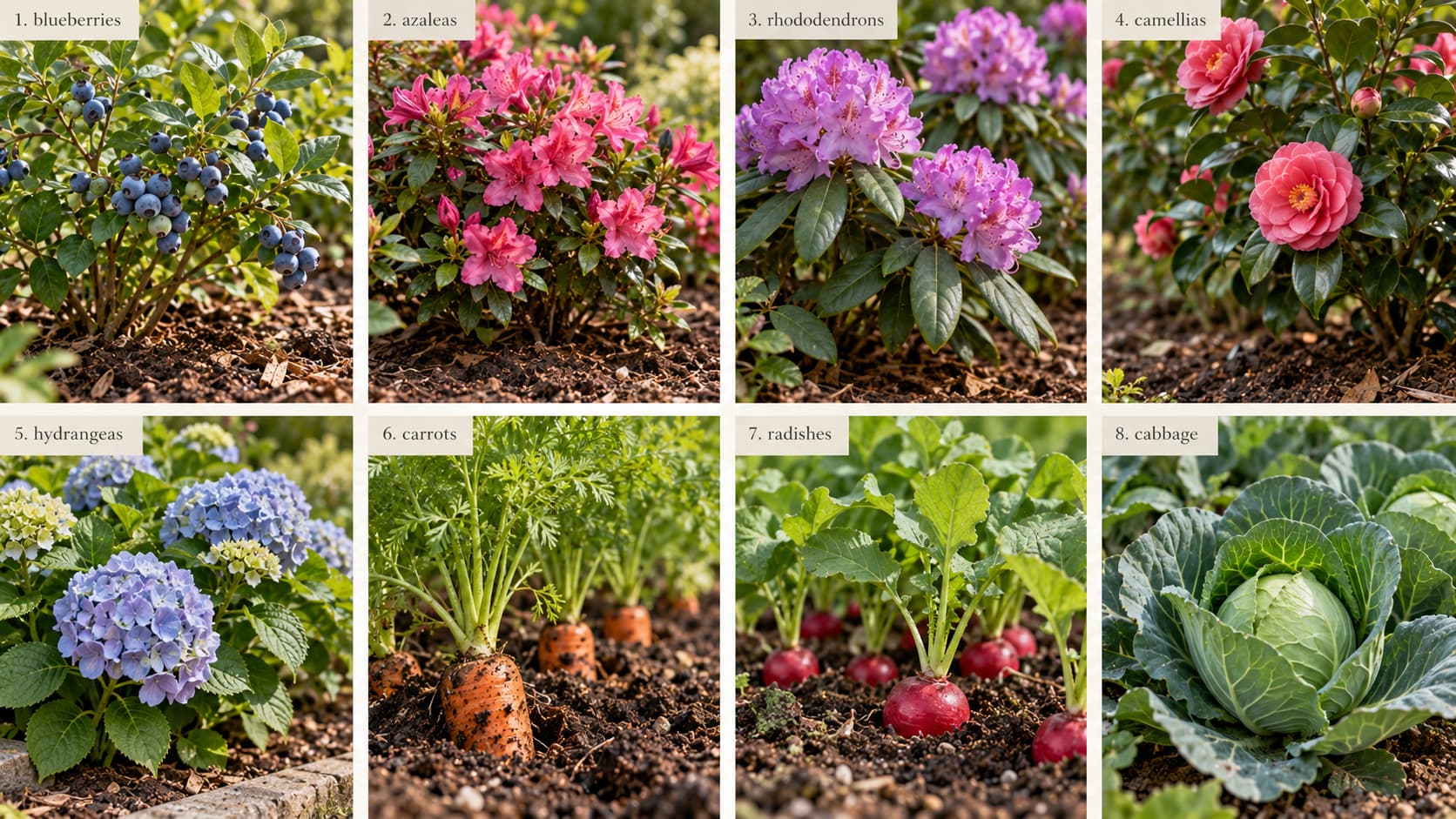
Not every plant responds the same way to coffee grounds, so it helps to know which ones actually benefit. Here is a quick rundown of the plants most likely to do well with composted grounds.
- Blueberries thrive with the mild acidity and extra organic matter composted grounds provide.
- Azaleas respond well to the nitrogen boost and slightly acidic conditions composted grounds create over time.
- Rhododendrons share the same acid-loving preferences as azaleas and benefit in similar ways.
- Camellias hold their blooms better with the steady, slow-release nutrients composted grounds offer.
- Hydrangeas gain healthier foliage from the added nitrogen, even though flower color will not change.
- Carrots grow well when you mix composted grounds into the top few inches of soil.
- Radishes benefit from the same light nutrient boost that helps carrots and other root vegetables.
- Cabbage grows better when you work grounds into compost before planting season.
Which Plants Do Not Like Coffee Grounds
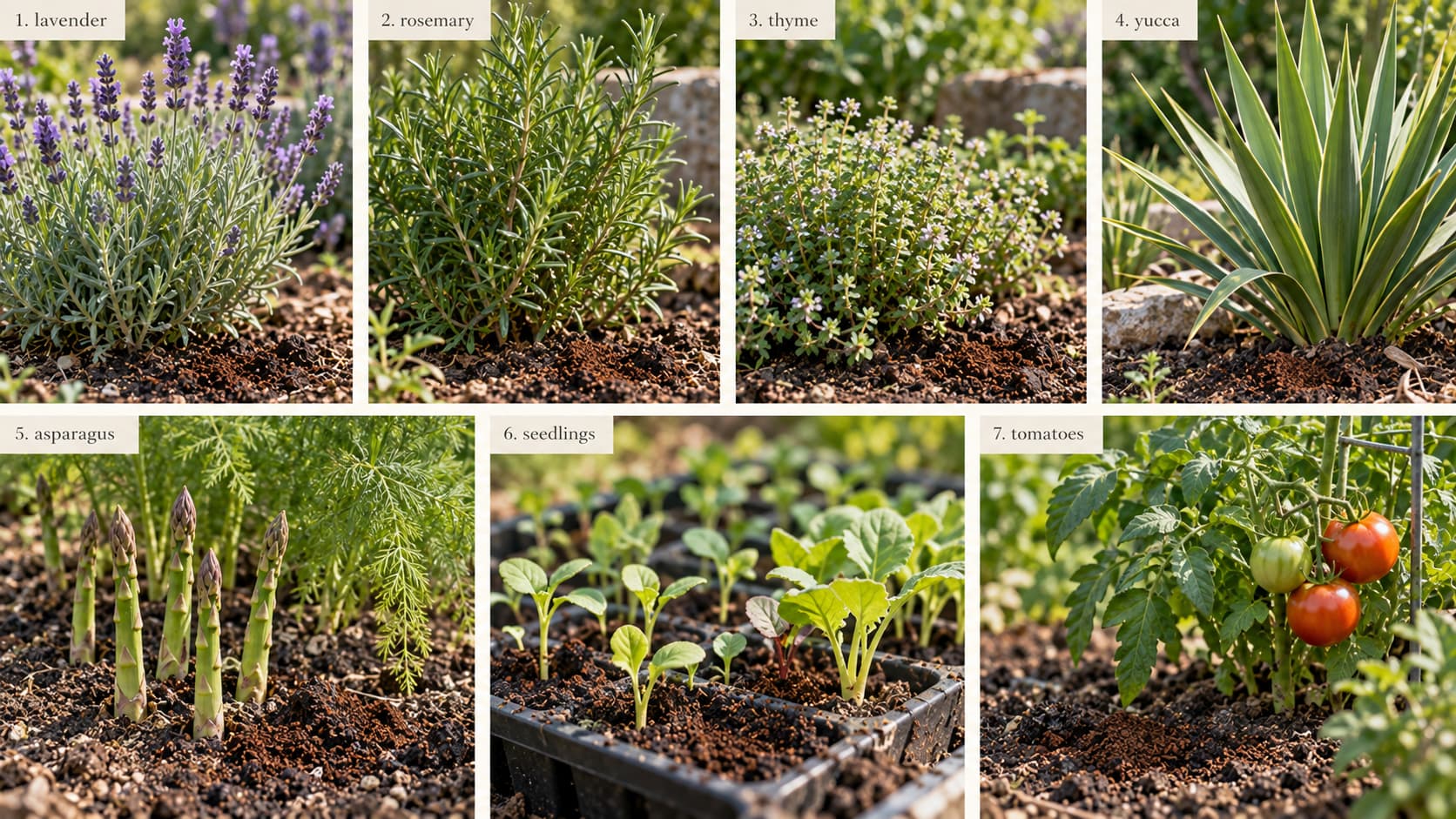
Some plants are far more sensitive to coffee grounds than others, especially young or alkaline-loving ones. These are the plants you should keep grounds away from.
- Lavender prefers alkaline soil, and coffee grounds can push conditions in the wrong direction.
- Rosemary struggles in the slightly acidic, moisture-retentive soil that grounds tend to create.
- Thyme grows best in dry, alkaline conditions that composted or raw grounds can disrupt.
- Yucca needs well-drained, alkaline soil, which coffee grounds are not suited to provide.
- Asparagus is sensitive to the acidity shift, however small, that repeated applications can cause.
- Seedlings are especially vulnerable to caffeine’s growth-suppressing effect, even in small doses.
- Tomatoes are debated, since extra nitrogen from grounds can favor leafy growth over fruit production.
Do Coffee Grounds Keep Animals Away
The evidence here is mixed at best. Gardeners often claim coffee grounds repel slugs, cats, ants, and even mice, but controlled testing tells a different story.
Robert Pavlis at GardenMyths.com ran a direct test with slugs and coffee grounds. The slugs crawled right over them without any hesitation. Claims about cats and ants avoiding the scent remain anecdotal, with no published study confirming either effect. Mice reports are just as inconsistent.
Some pest control sources call coffee grounds a deterrent, while others say mice will eat them if hungry enough. If you have a real pest problem, treat coffee grounds as a mild, unproven extra step. Do not rely on them as your main defense.
Common Mistakes When Using Coffee Grounds for Plants
A few habits explain most of the disappointing results gardeners report with coffee grounds. Avoiding these keeps your plants healthier and your soil balanced.
|
Mistake |
Why It Hurts Your Plants |
|---|---|
|
Piling fresh grounds against plant stems |
Traps moisture against the stem, which invites rot and fungal problems. |
|
Using grounds as the only fertilizer |
Grounds lack the balanced nutrient profile plants need on their own. |
|
Applying grounds near seedlings |
Caffeine content can stunt germination and early root development. |
|
Skipping a soil pH test first |
You may be adding acidity to soil that is already acidic. |
|
Using a thick layer instead of a thin one |
Thick layers compact and block water and air from reaching roots. |
How to Use Coffee Grounds the Right Way
The safest approach treats coffee grounds as one small ingredient in a bigger routine, not a stand-alone fertilizer. Always use grounds that have already been brewed, since fresh grounds carry more acidity and caffeine.
Keep direct soil application thin, spaced roughly six weeks apart, and always cover it with mulch or compost. When in doubt, route your grounds through the compost bin first.
That single step neutralizes most of the risks tied to direct soil use. Watch your plants for yellowing leaves or stalled growth, since that is your clearest sign to cut back.
Conclusion
Coffee grounds aren’t a miracle fix, but they aren’t useless either. Used the right way, mostly through compost and in careful moderation, they add real nutrients to soil.
Acid-loving plants genuinely appreciate the boost. Used the wrong way, piled on fresh and thick against tender roots, they cause the very same problems.
Most gardeners end up blaming the grounds for it. Know your plant, test your soil, and let composting do the heavy lifting for you.
Frequently Asked Questions
What kind of plants do you put coffee grounds on?
Acid-loving plants like blueberries, azaleas, camellias, and rhododendrons respond best to composted coffee grounds.
What plants can you not put coffee grounds on?
Alkaline-loving plants like lavender, rosemary, thyme, and yucca do not do well with coffee grounds.
When should you use coffee grounds on plants?
Add composted grounds during regular feeding, roughly every six weeks, rather than as a one-time treatment.
What animals will coffee grounds keep away?
No controlled study confirms coffee grounds reliably repel slugs, cats, ants, or mice.
Do coffee grounds attract mice?
Reports conflict. Some sources call grounds a mouse deterrent, while others say mice will eat them if hungry enough.
Why are people leaving coffee grounds on their porch?
A recent trend involves burning dried grounds to release a strong scent believed to disrupt mosquitoes near outdoor seating areas.
What happens if a dog licks coffee grounds?
A small lick is usually harmless, but a spoonful or more can cause caffeine toxicity, especially in small breeds. Contact the Pet Poison Helpline or your vet if your dog eats a significant amount.