
What Is Farmhouse Furniture Style? Features and Look Explained
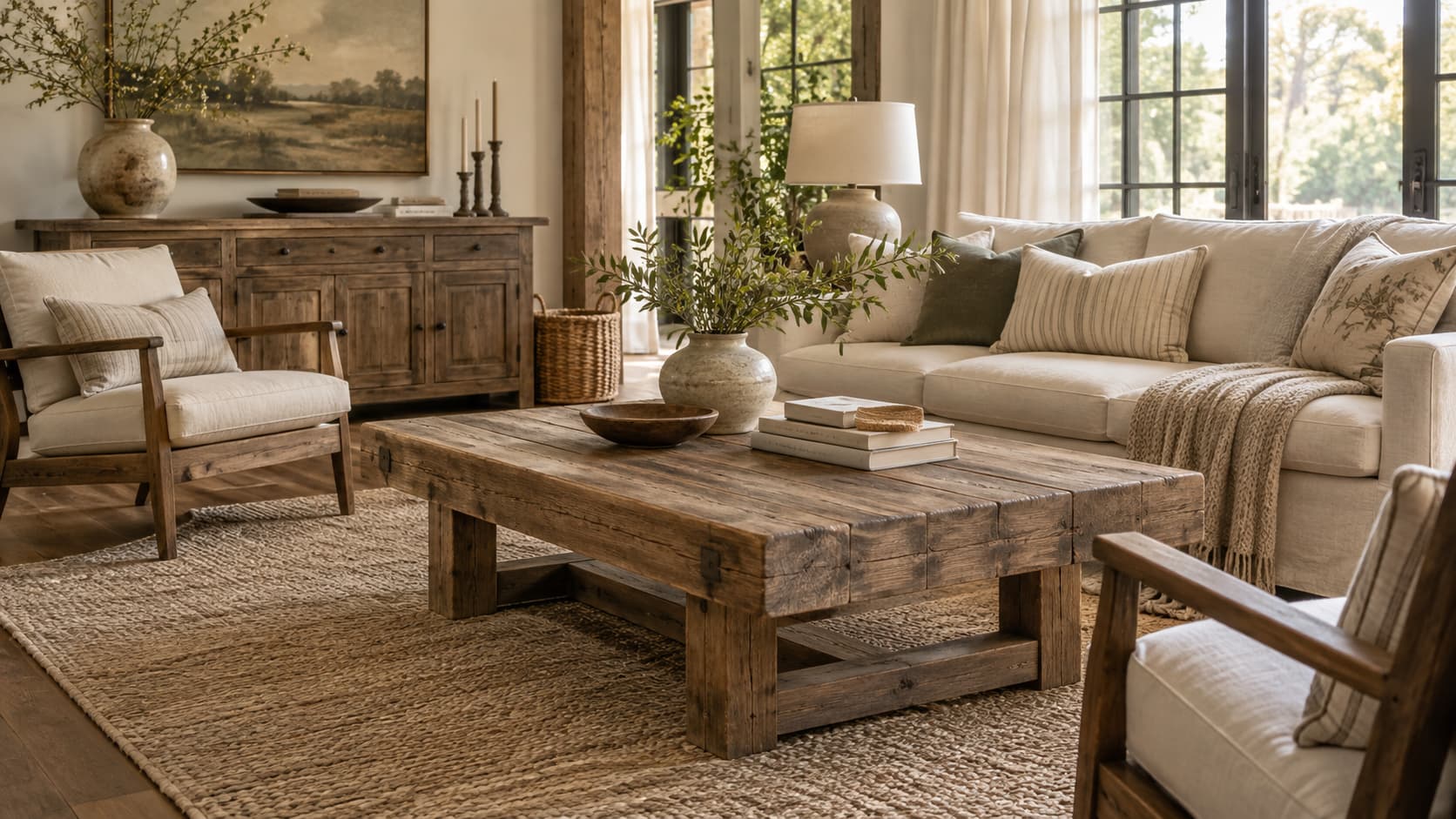
Farmhouse furniture style pulls its charm from rural homes. There, every piece worked hard and looked good doing it. Today it shows up in city apartments and suburban houses.
It leans on natural wood, neutral tones, and furniture pieces that feel lived in rather than staged. If you keep seeing reclaimed tables and slipcovered sofas online, you might wonder what ties them together.
This post explains what the style means, where it began, and how it compares to other styles.
What Is Farmhouse Furniture Style
Farmhouse furniture style is built on natural materials and practical shapes. It traces back to working farms, not showrooms. Pieces lean on wood, iron, and stone left close to their raw state.
Colors stay soft and neutral; think cream, beige, and off-white. Nothing about it is flashy.
A farmhouse dining table is built to survive decades of family dinners. It does not just need to look good in a photo. That mix of function and warmth is what sets the style apart from something purely decorative.
Where Farmhouse Style Comes From
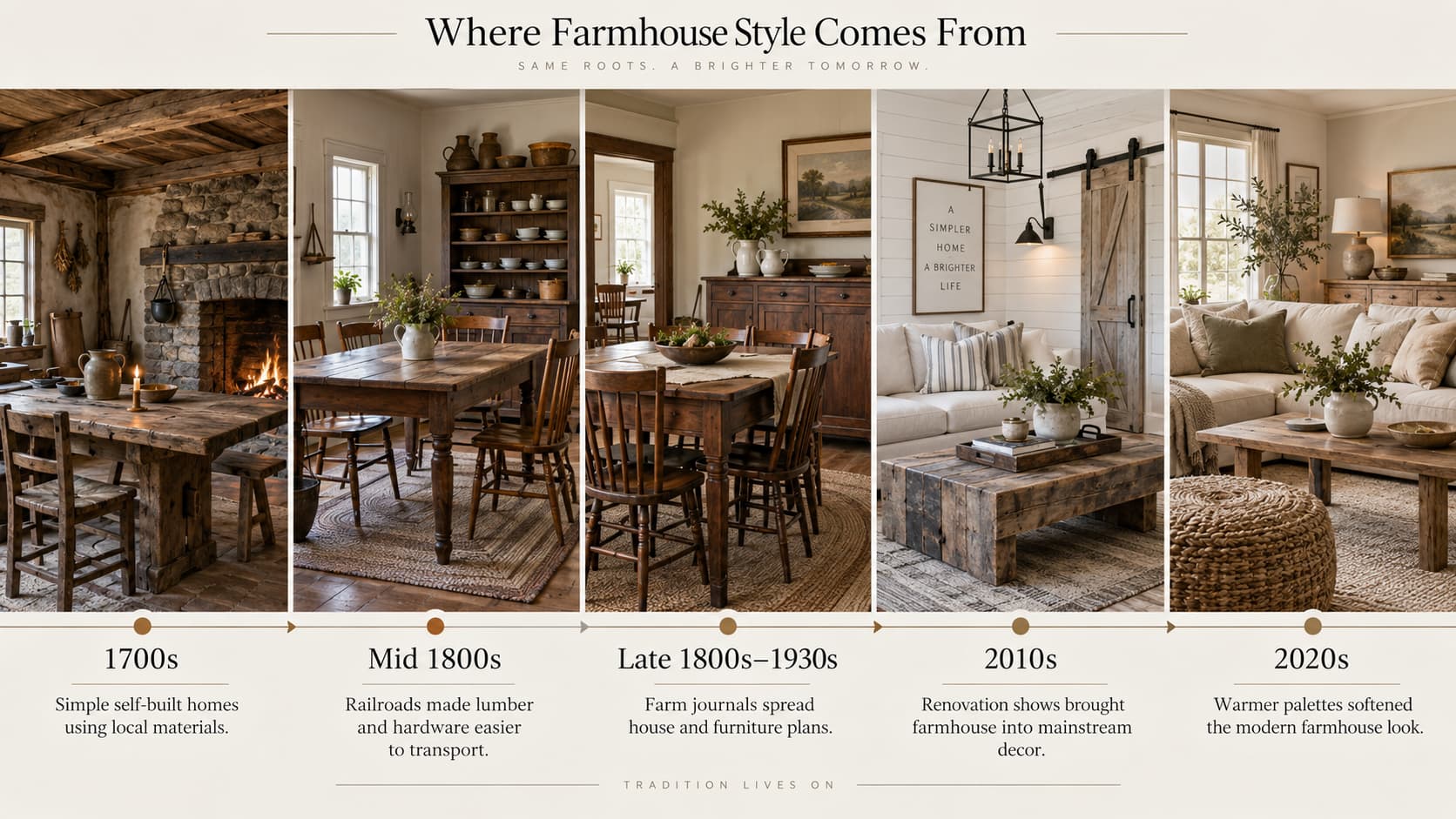
Farmhouse style did not start as a decorating trend. It grew out of real rural homes built with whatever wood and stone was on hand. Furniture there had to survive daily farm life first and look good second.
|
Period |
What Happened |
|---|---|
|
1700s |
Colonial families in America built simple wood homes themselves, without architects, using local materials |
|
Mid 1800s |
Farmhouse architecture spread through the Midwest as railroads made lumber and hardware easier to transport |
|
Late 1800s to 1930s |
Farm journals published house and furniture plans, spreading a shared rural look across regions |
|
2010s |
Renovation shows brought the traditional farmhouse look into mainstream home decor and furniture catalogs |
|
2020s |
Modern farmhouse softened into warmer, less stark palettes as homeowners moved away from the all-white and black look |
According to HGTV, the earliest true farmhouses date to colonial families in the 1700s. The style spread widely once railroads made building materials easier to move by the mid 1800s. That practical, self-built history is why farmhouse furniture still favors sturdy joints over ornate detail.
Key Characteristics of Farmhouse Furniture Style
A handful of traits show up again and again once you know what to look for. Here is what actually defines the look, piece by piece.
- Natural Materials: Wood, iron, and stone are left close to their natural finish so grain and texture stay visible.
- Warm Neutral Colors: Cream, beige, soft white, and light gray form the base palette on both furniture and walls.
- Functional Sturdy Pieces: Furniture is built for daily use, favoring large dining tables and deep sofas over delicate accent pieces.
- Vintage and Distressed Finishes: Reclaimed wood, worn paint, and secondhand pieces add the sense that a room has history behind it.
Farmhouse Furniture vs Similar Styles
Farmhouse often gets mixed up with country and cottage style. All three share a rural mood on the surface. The real differences come down to color, pattern, and how much clutter each one allows.
|
Style |
Color Palette |
Clutter Level |
Overall Mood |
|---|---|---|---|
|
Farmhouse |
Neutral, muted whites and grays |
Low, minimal accessories |
Practical and calm |
|
Country |
Warmer tones, florals, plaids |
Medium, more accessories |
Homey and traditional |
|
Cottagecore |
Pastels, florals, mixed patterns |
High, layered and busy |
Whimsical and romantic |
Country style leans on more pattern and warmer colors than farmhouse. Cottagecore goes further still, embracing clutter and floral prints that farmhouse avoids. If a room feels stripped back and neutral, it is farmhouse. If it feels busy and full of pattern, it has moved into cottage or country territory.
Types of Farmhouse Style
Farmhouse is not one fixed look. It splits into a few directions depending on how much rustic texture or polish you want.
1. Traditional Farmhouse
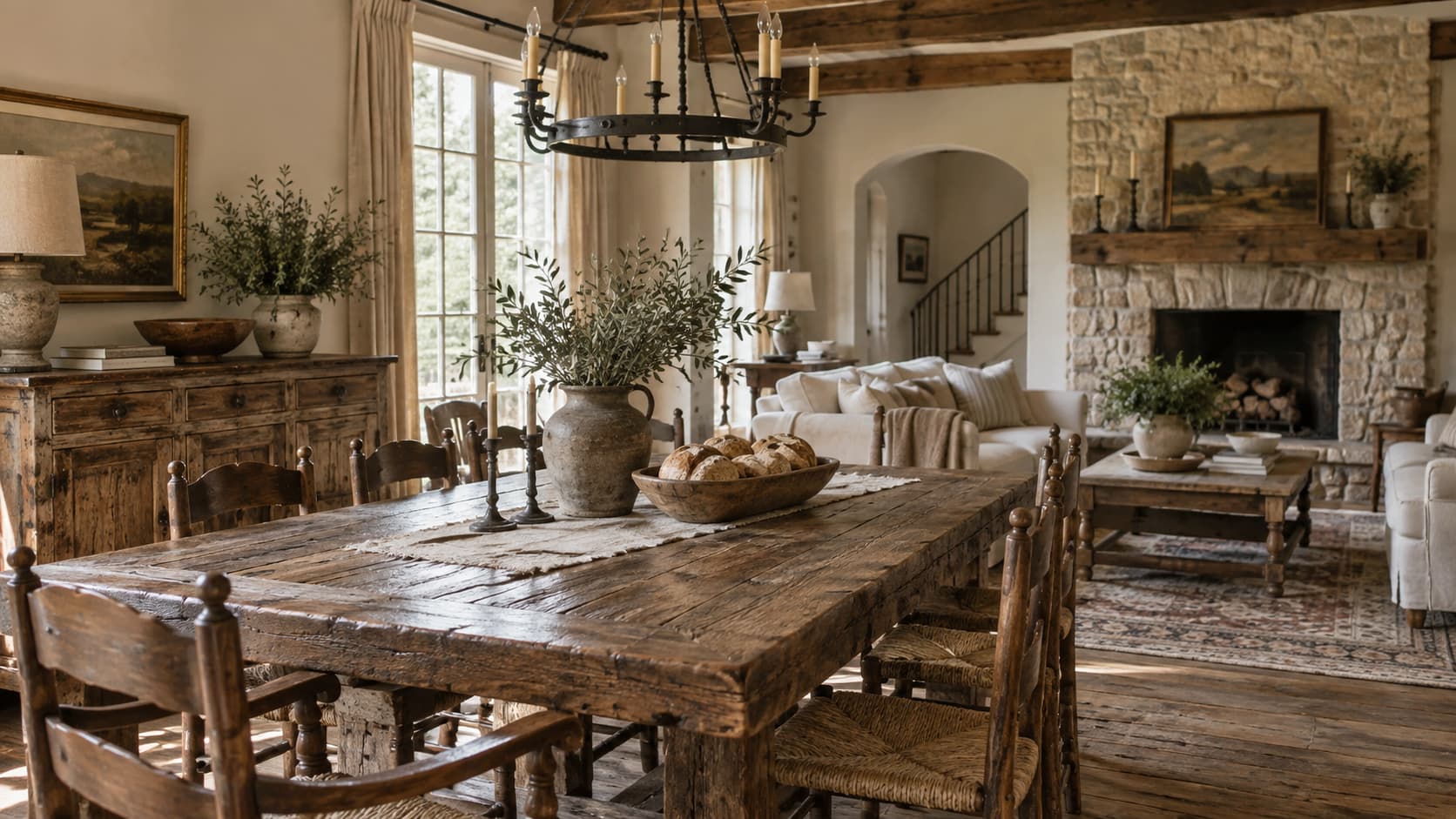
This sticks closest to the original look, with heavy use of raw wood and antique finds.
- Materials: Raw wood, wrought iron, and worn stone
- Color Palette: Warm cream, faded white, and natural wood tones
- Signature Pieces: Worn dining tables, iron light fixtures, and furniture that looks handed down through generations
2. Modern Farmhouse
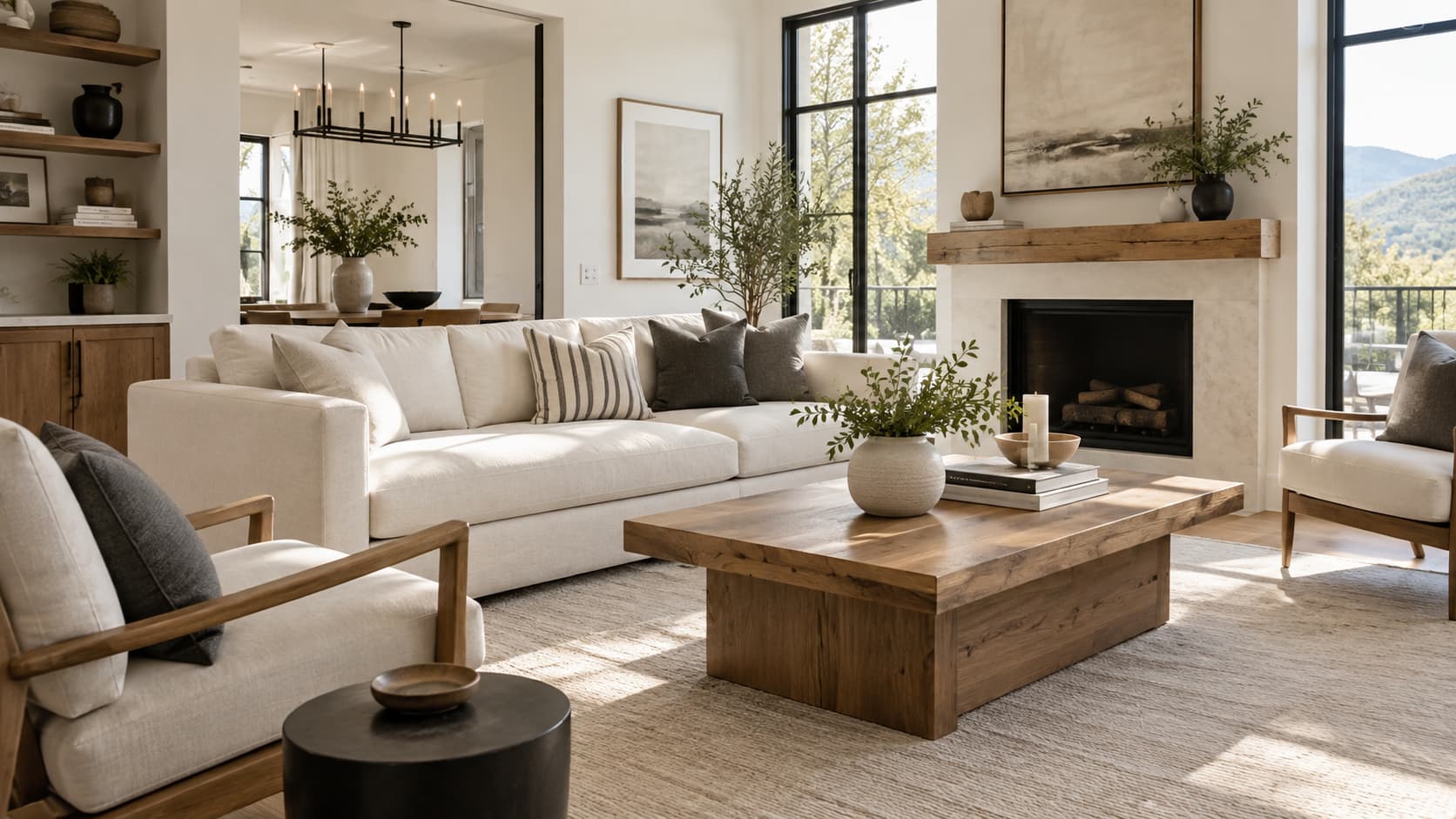
Modern farmhouse pairs the same natural materials with cleaner lines and a less cluttered layout.
- Materials: Smooth wood, matte black metal, and simple upholstery
- Color Palette: White, light gray, and soft black accents
- Signature Pieces: Streamlined sofas, matte black hardware, and furniture with simple silhouettes
3. French Farmhouse
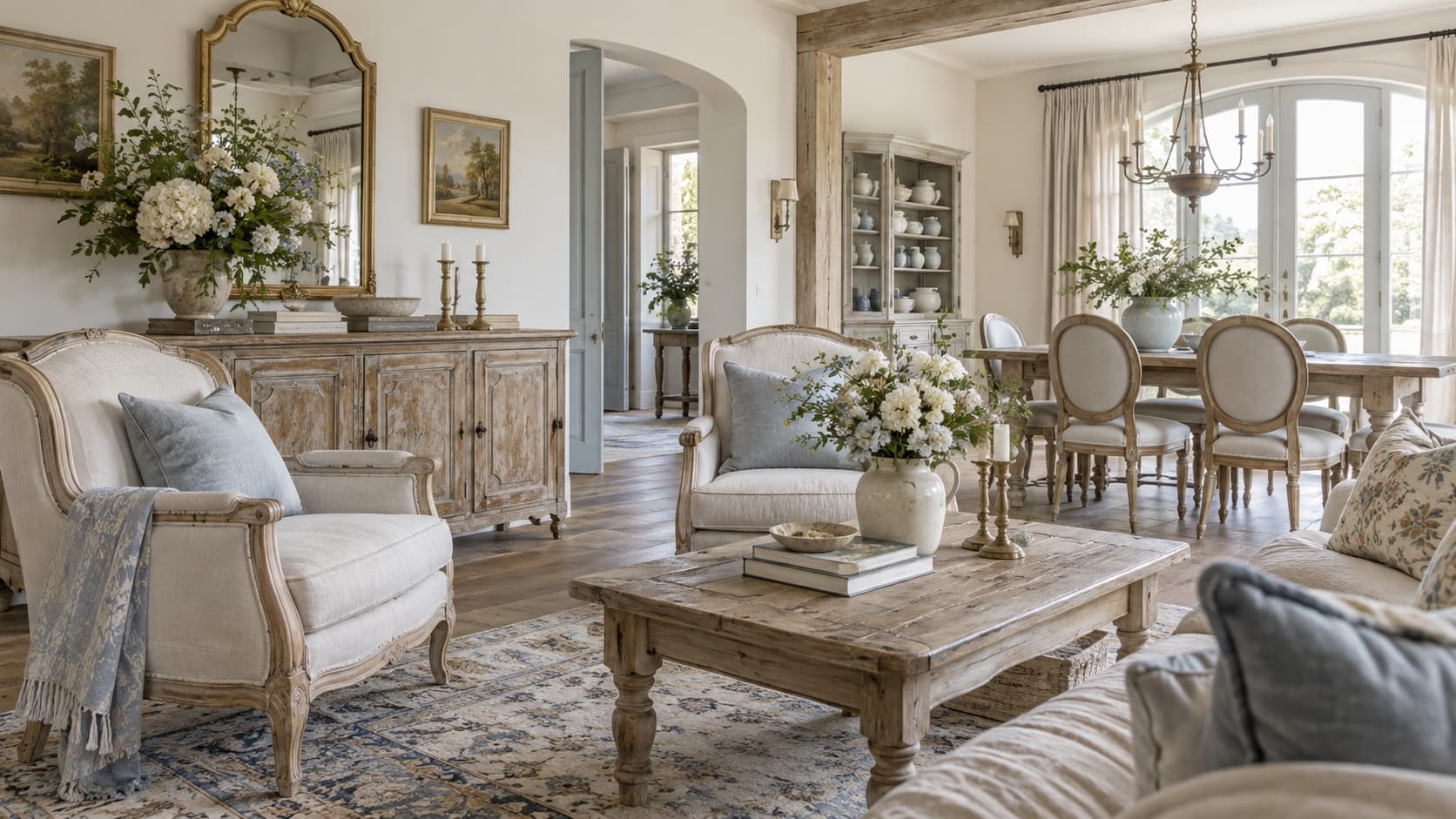
French farmhouse softens the look with curved furniture legs and floral prints.
- Materials: Washed wood, soft upholstery, and light metal details
- Color Palette: Soft white, pale blue, and muted floral tones
- Signature Pieces: Upholstered armchairs, curved dining chairs, and a washed wood sideboard
4. Industrial Farmhouse
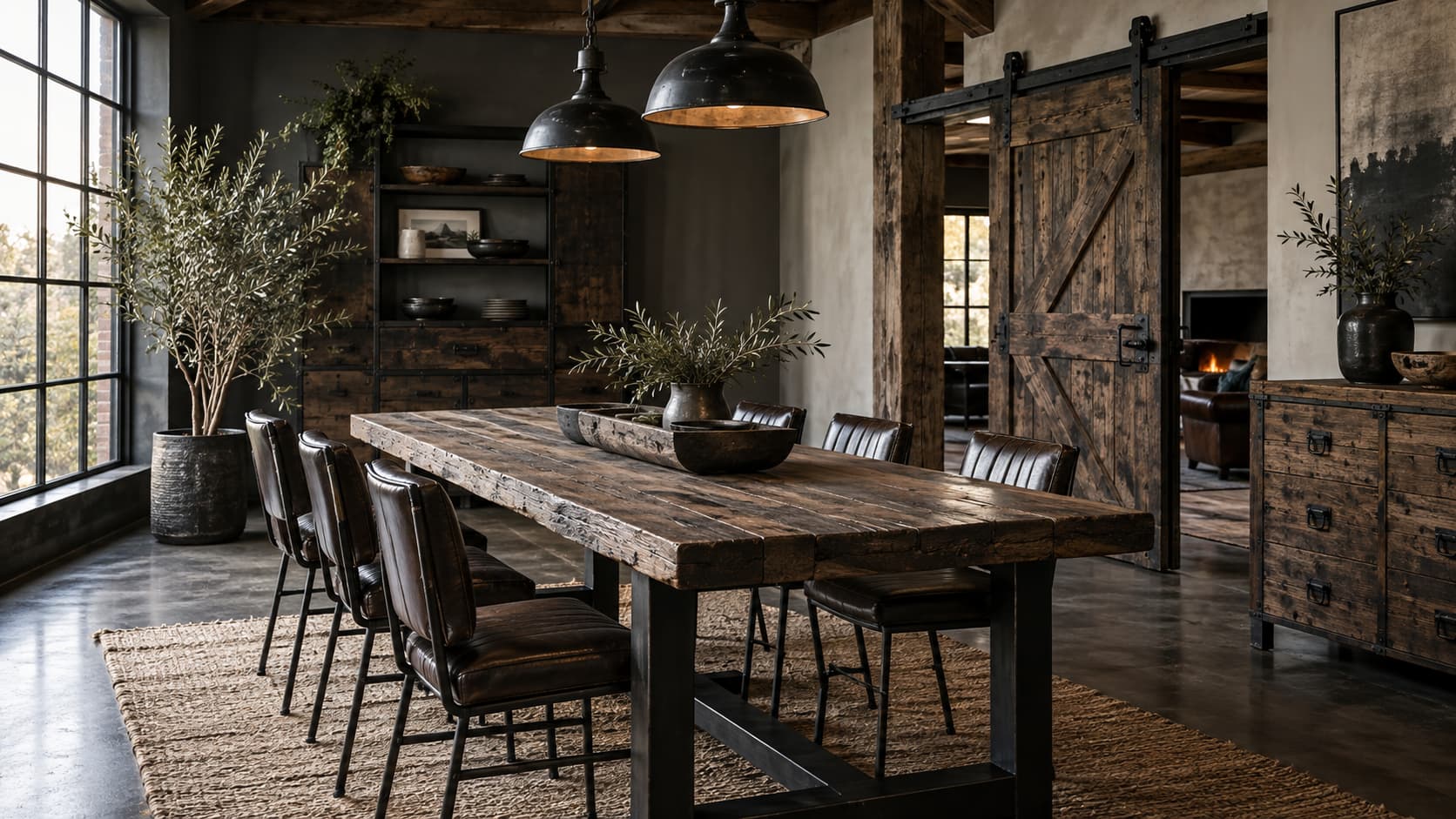
Industrial Farmhouse adds metal accents, exposed hardware, and darker tones for a rougher, more masculine feel.
- Materials: Reclaimed wood, black steel, and exposed hardware
- Color Palette: Dark brown, charcoal, and matte black
- Signature Pieces: Barn doors with iron hardware and furniture that mixes reclaimed wood with black steel
5. Coastal Farmhouse
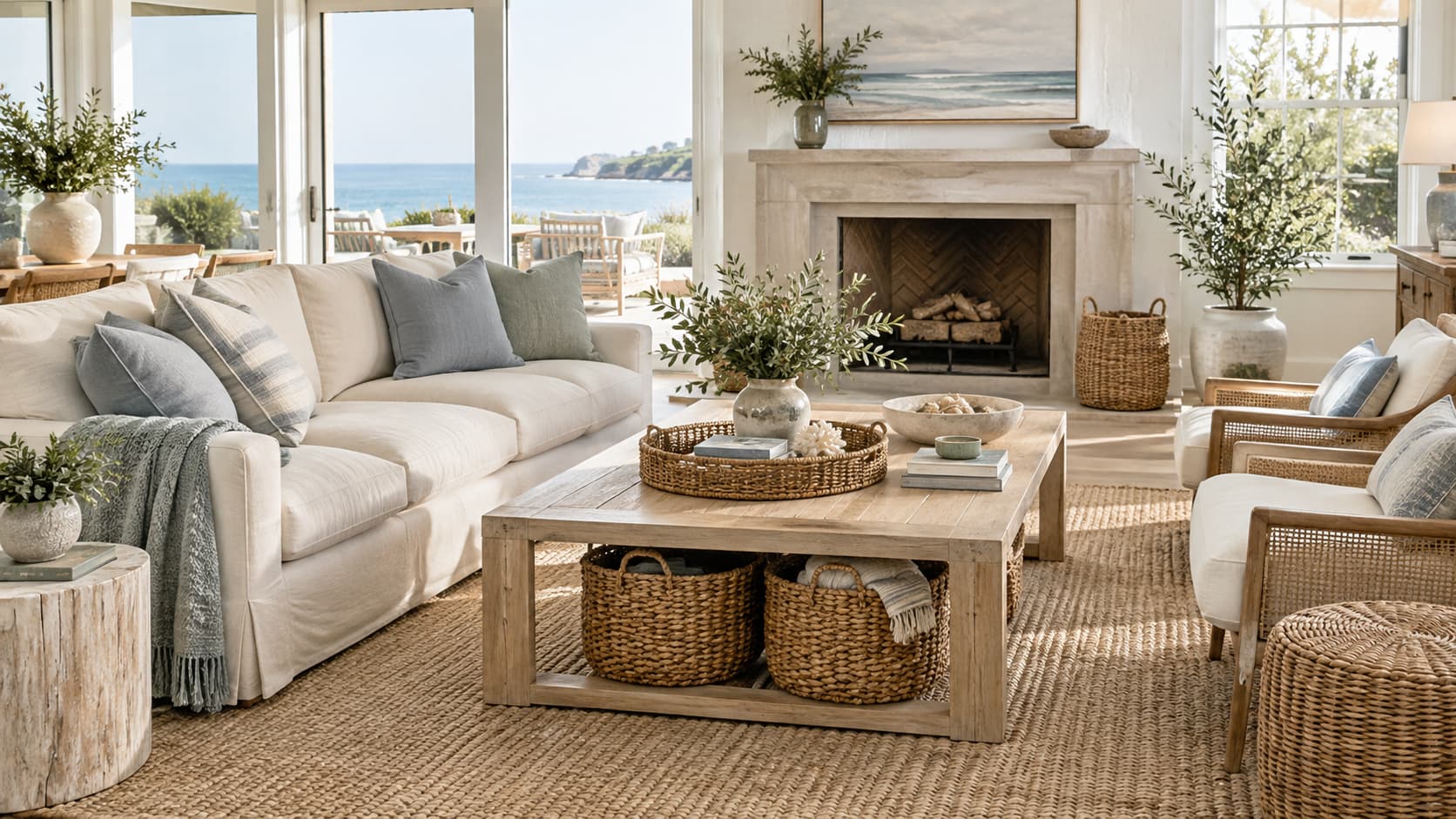
Coastal farmhouse keeps the natural materials but shifts the palette toward soft blues and sage greens.
- Materials: Light wood, woven fibers, and linen fabric
- Color Palette: Soft blue, sage green, and sandy white
- Signature Pieces: Woven baskets, linen sofas, and light wood furniture that feels closer to a beach house than a barn
How to Bring Farmhouse Style Into Each Room
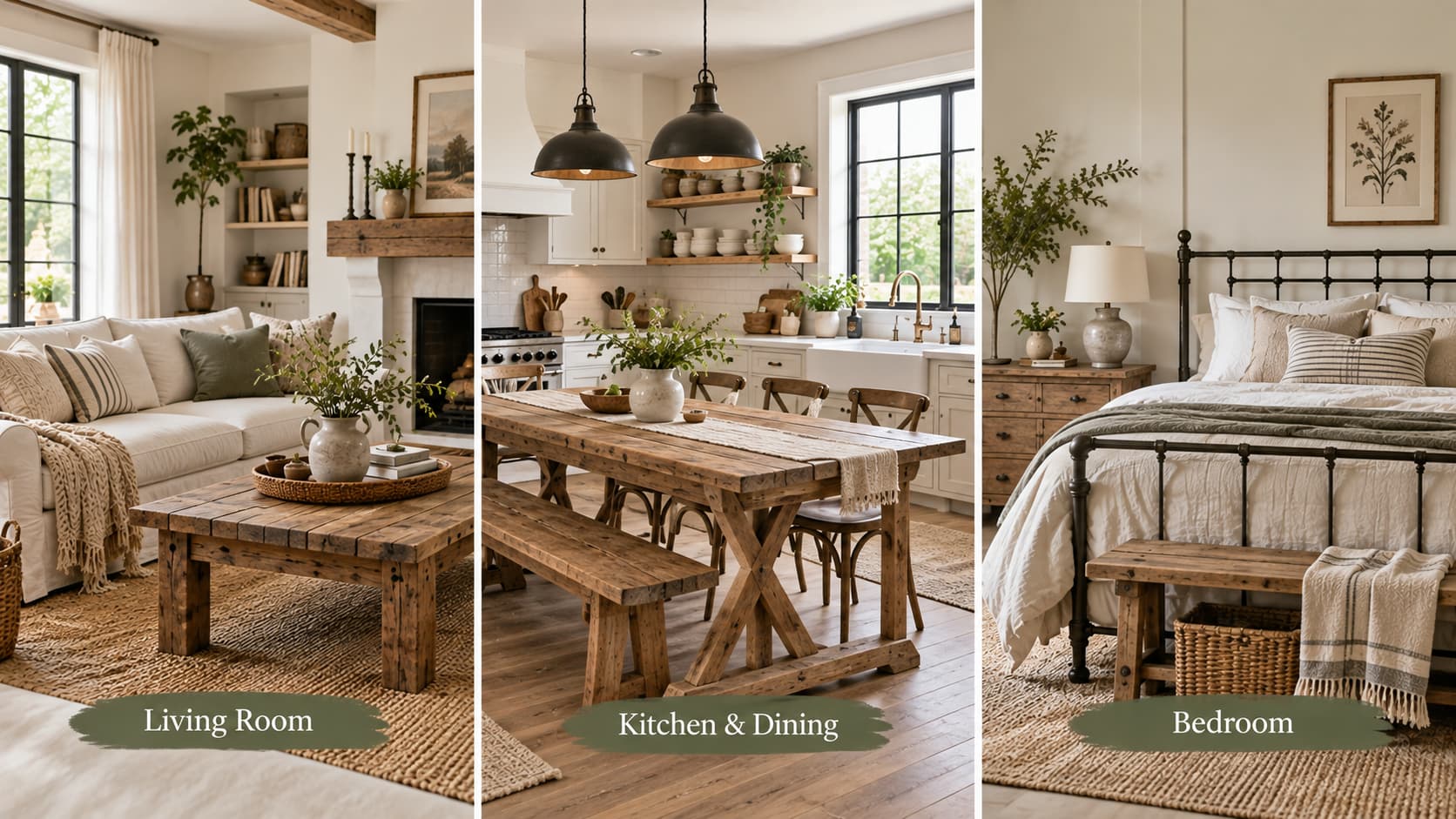
You do not need to redo an entire house at once. Picking the right anchor pieces room by room is the easiest way to build the look.
Living Room
Start with a slipcovered or linen sofa in a neutral tone. Add a reclaimed wood coffee table as the centerpiece, then add a wood or iron console table along one wall. Finish with woven baskets for storage and a chunky knit throw so the room feels layered without looking cluttered.
Kitchen and Dining Room
A farmhouse sink and a solid wood table do most of the work here. Pair the table with simple benches or mismatched chairs to keep the look casual rather than matched. Swap a few upper cabinets for open shelving, then let ceramic pieces and woven placemats add a lived-in feel.
Bedroom
An iron or reclaimed wood bed frame sets the tone for the whole room. Pair it with linen bedding in a soft neutral shade and a distressed nightstand within arm’s reach. A vintage lamp or a simple wood-framed mirror rounds out the space without overwhelming it.
Common Mistakes to Avoid With Farmhouse Style
Farmhouse style is forgiving, but it is easy to push it too far. These are the mistakes that come up most often.
|
Mistake |
Why It Hurts the Look |
What to Do Instead |
|---|---|---|
|
Overdoing distressed finishes |
The room starts to look staged instead of lived in |
Mix one or two worn pieces with newer, clean furniture |
|
Skipping a neutral base |
Accent colors clash without a calm backdrop |
Anchor the room in white, cream, or light gray first |
|
Filling every surface with vintage items |
The space feels cluttered instead of thoughtfully chosen |
Pick a few pieces with real meaning and leave the rest bare |
|
Ignoring scale |
Small furniture gets lost in open farmhouse layouts |
Choose larger, sturdier pieces that match the room’s proportions |
Is Farmhouse Style Still Relevant
Farmhouse style has outlasted plenty of design trends. It was never built around one color scheme or gimmick.
It was built around function and comfort, which age well. That said, the look does keep shifting. According to a 2026 trend report from Houseplans.com, the stark black-and-white farmhouse look is softening into warmer tones. A related look called modern cottage is picking up popularity alongside it.
The core ideas behind farmhouse style are not going anywhere: natural materials, neutral colors, and furniture built to last. What changes over time is the finish, not the foundation. That is why farmhouse furniture keeps finding its way into new homes decade after decade.
Conclusion
Farmhouse furniture style comes down to a few ideas. Use natural materials, calm neutral colors, and furniture built to be used. It borrows from rural homes but bends into modern spaces.
That can mean one reclaimed coffee table or a full room refresh. The finish keeps changing while the heart stays the same.
Start small and pick pieces you need. Let the room grow from there. Traditional or modern, farmhouse furniture gives a home a warm, welcoming feeling people love.
Frequently Asked Questions
What style is replacing a farmhouse?
Nothing is fully replacing it. A softer, warmer look called modern cottage is gaining ground alongside traditional farmhouse.
What is the new farmhouse style called?
Many designers call the current update modern cottage, blending farmhouse simplicity with warmer, more layered textures.
What is the difference between farmhouse style and cottage style?
Farmhouse style stays neutral and minimal. Cottage style adds more pattern, color, and layered accessories.
What home design trends are out?
Stark black-and-white farmhouse, heavy gray palettes, and cold minimalist interiors are fading in favor of warmer spaces.
What are the main interior color trends right now?
Warm neutrals, muted sage green, terracotta, and deep grounded blues are leading color choices for 2026 interiors.
What is the most popular home decor right now?
Warm, textured, personal spaces are leading the way, favoring natural materials and character over matched furniture sets.


