Cottagecore Interior Design: The Complete Guide
Some homes feel calm the moment you step inside, not because they are perfect, but because they feel lived-in and personal.
That is exactly what cottagecore interior design aims to create. It focuses on comfort, quiet details, and spaces that reflect simple, everyday living.
I have seen how small changes like softer fabrics or older pieces can shift the entire mood of a room.
Today, I’ll show you how this style works, what defines it, and how to bring it into different spaces without overthinking it. Let’s start with the basics.
What is Cottagecore Interior Design?
Cottagecore interior design is built around one idea: life feels better when it slows down. It draws from rural cottages, pastoral landscapes, and homes that feel gathered over time.
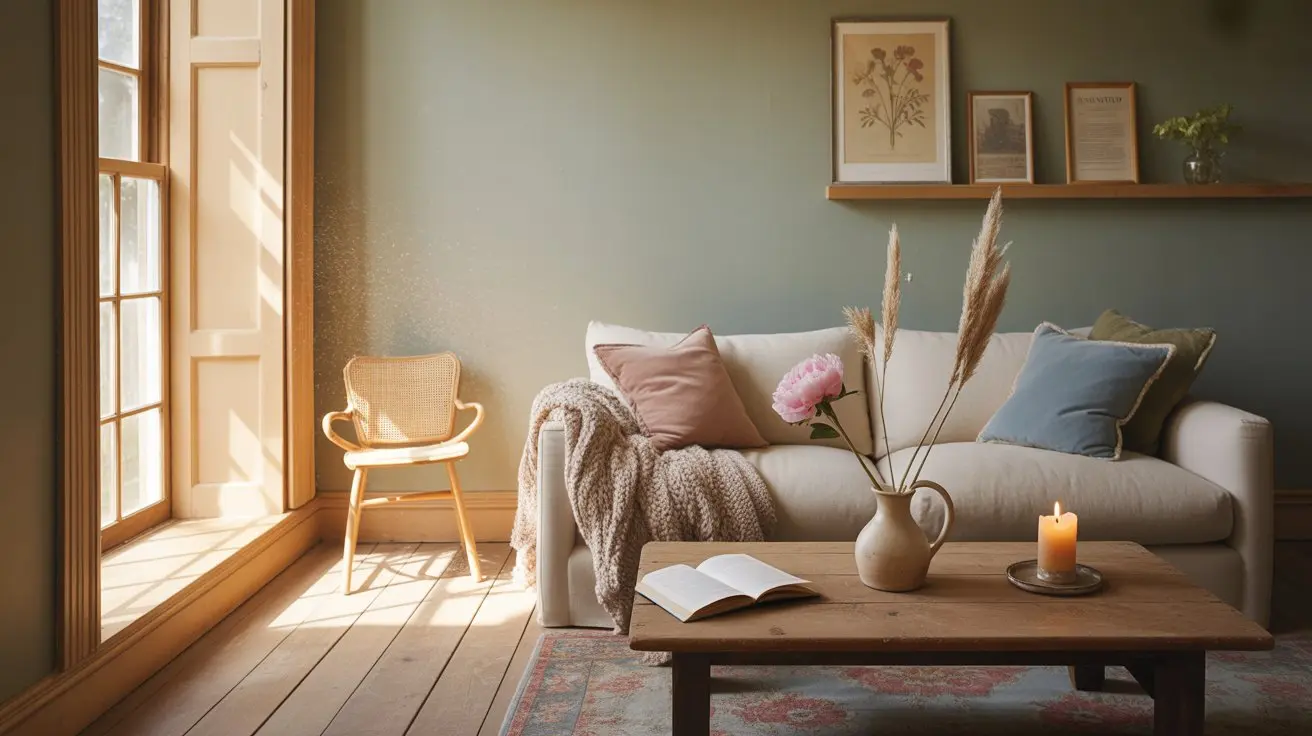
Think handmade pottery on open shelves. Wildflowers in a vintage jug. A worn quilt on a reading chair. Nothing perfectly matched, but everything intentional.
Where Did It Come From?
The roots go back centuries. French aristocrats escaped formal court life for simple village settings in the 1700s.
The modern version took off around 2019 and exploded during the pandemic. People craving comfort and simplicity gave it a name, and a massive following on Pinterest, Instagram, and TikTok.
Is It Still Popular in 2026?
Yes, and it keeps growing. What started as a social media look has become a genuine lifestyle choice.
The focus has shifted from purely decorative to functional and livable. Soft palettes, natural materials, and vintage furniture now sit comfortably alongside modern conveniences.
Core Elements of the Cottagecore Style
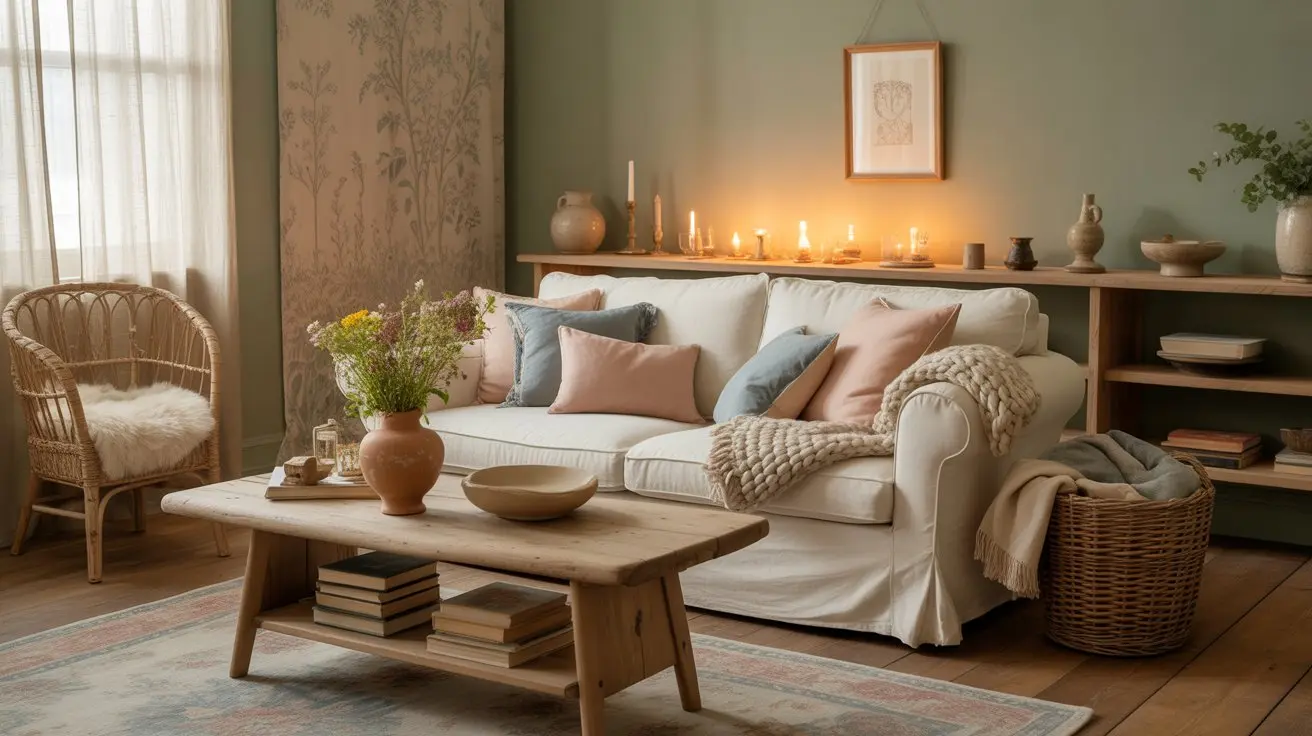
Every style has building blocks that make it recognizable. With cottagecore, every element points back to the same place: nature, simplicity, and quiet beauty.vHere’s what defines the look:
1. Natural Materials
Cottagecore starts with what things are made of. Synthetic materials feel out of place here.
The most-used materials include:
- Wood: Raw or lightly finished, used for floors, shelves, and furniture
- Wicker and rattan: Adds a relaxed, sun-worn quality to any room
- Linen and cotton: Soft, breathable, and gets better with every wash
- Wool: Chunky knits and throws that make a room feel like a hug
Mix wood tones freely. A weathered oak table next to a painted pine dresser looks collected, not chaotic.
2. Color Palette
Color sets the mood before anything else. In cottagecore, every shade is pulled from nature.
The go-to tones are:
- Soft pastels: Blush pink, dusty blue, sage green, lavender
- Warm neutrals: Cream, warm beige, soft terracotta, muted brown
- Earthy accents: Amber glass, rust, deep moss green
Pick one soft pastel as your dominant wall color. Let the neutrals ground everything around it.
3. Florals and Botanicals
Florals are the signature of this style. But how you use them matters more than how many you have.
One botanical wallpaper on an accent wall beats florals on every surface. A single floral rug anchors the room better than five mismatched prints fighting for attention.
Mix scales when layering; a large-print curtain pairs better with a small-scale cushion than another large pattern.
4. Vintage and Handmade Pieces
Nothing brings this style to life faster than something old or handmade. A ceramic jug from a thrift store. A cross-stitch piece in a simple frame. A quilt passed down through the family.
The best cottagecore spaces look slowly collected, not assembled in a single shopping trip. Take your time. Let the space grow.
Incorporating Cottagecore Interior Design Room by Room
The beauty of this style is that it works in every room. Each space gets its own personality while still feeling like part of the same home. Here’s how to bring it to life, one room at a time:
1. Living Room
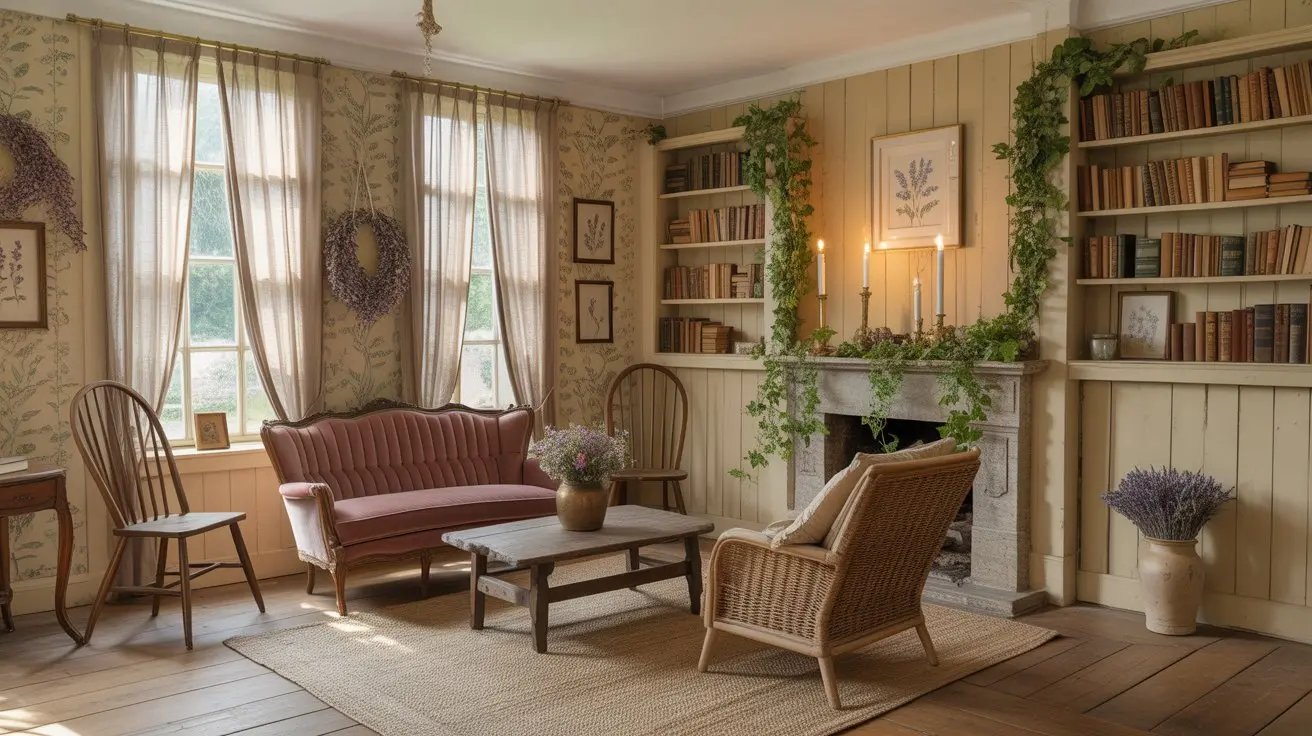
The living room is where cottagecore gets to fully breathe. It has the most space and the most opportunity to layer textures and personal pieces.
Start with a linen or cotton slipcovered sofa in warm cream or dusty sage. Mix seating, a rattan chair in one corner, a tufted accent chair in another. Nothing needs to match.
Style open shelves with old books, ceramic vases, small plants, and objects that mean something. Leave breathing room between pieces; overcrowding looks cluttered, not collected.
Layer a vintage-style rug on the floor. Faded florals or worn orientals in earthy tones work best. Drape a chunky knit throw casually over the sofa arm, not folded perfectly.
2. Bedroom
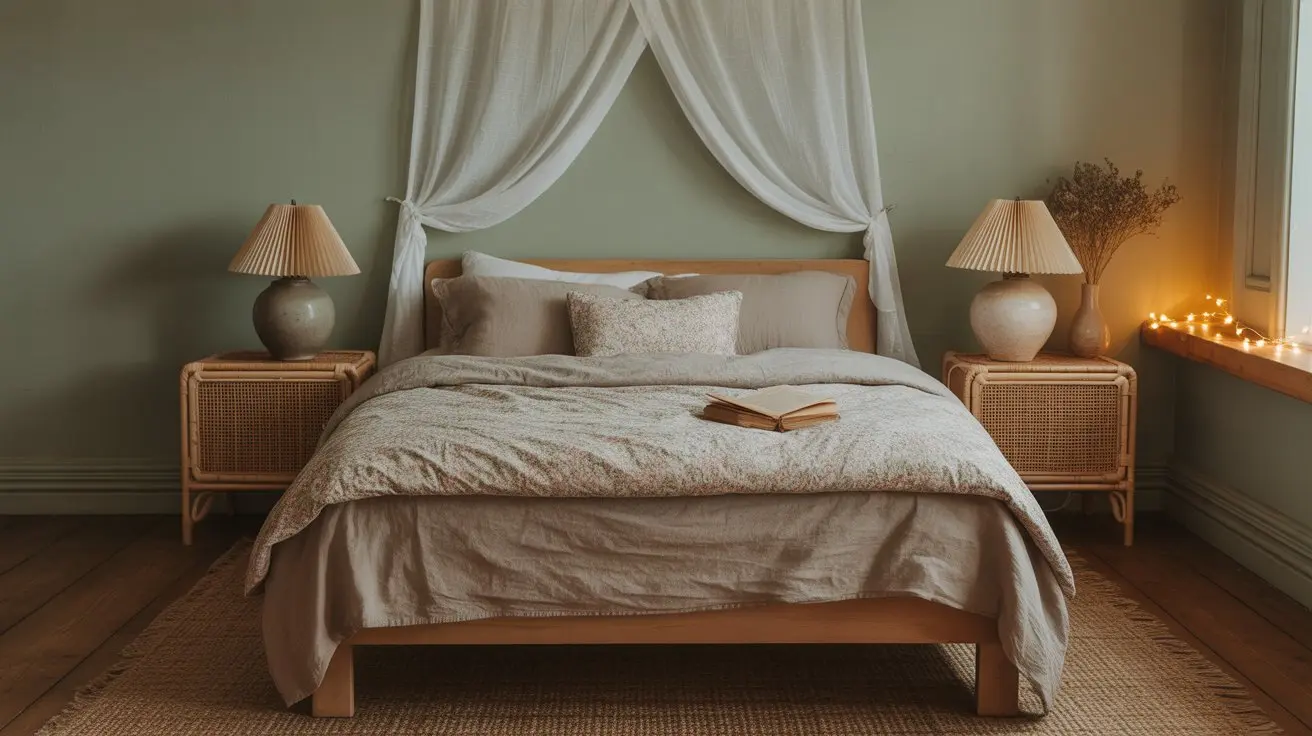
The bedroom is where this style feels most personal. It should feel like a retreat, soft, quiet, and removed from the outside world.
Start with the bed. Layer washed linen sheets in stone, bone, or soft moss. Add a vintage quilt at the foot. A floral duvet cover works as a statement if the rest of the room stays neutral.
For lighting, skip harsh overhead fixtures. Use a ceramic table lamp, warm fairy lights along a shelf, or a cluster of candles on the nightstand. Battery-operated candles are a safe, practical option.
Style the nightstand simply: a small dried flower vase, a well-loved book, and one candle. That’s all it needs.
3. Kitchen
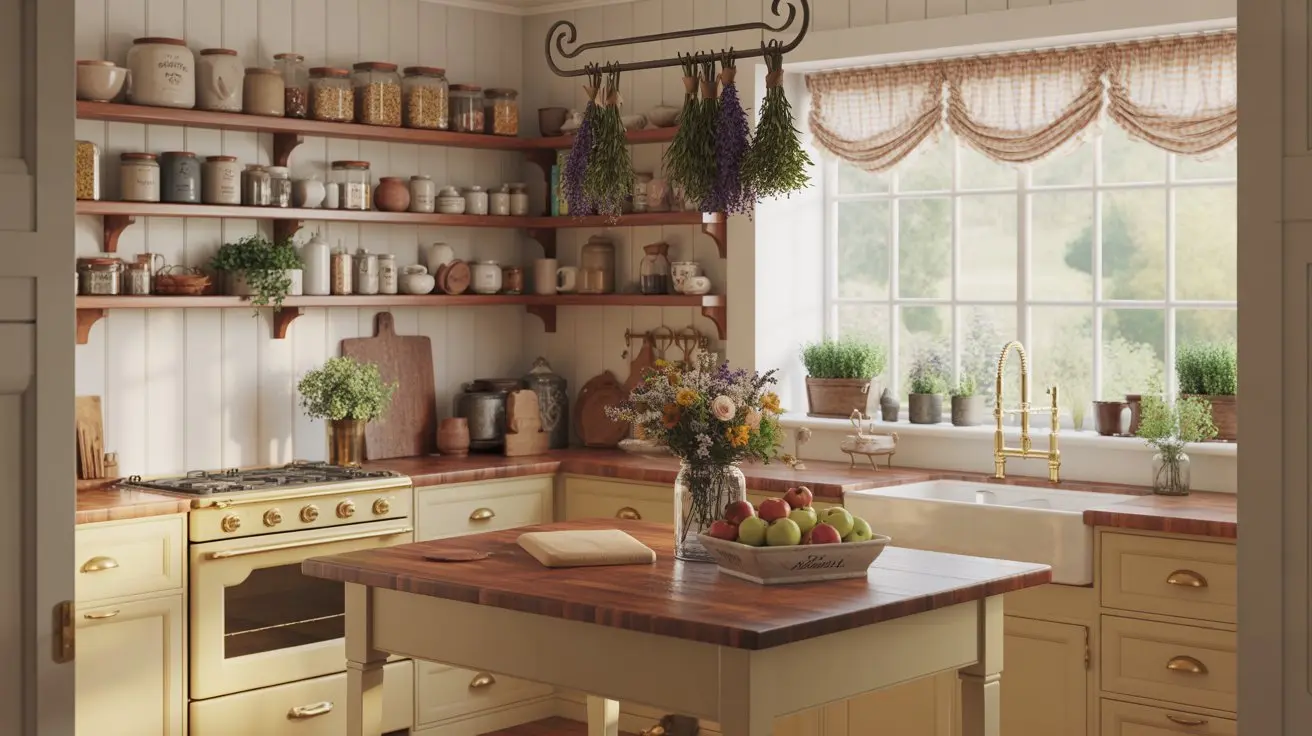
The cottagecore kitchen is a working kitchen. Every element should serve a purpose and look good doing it.
Replace upper cabinets with open shelves where possible. Stack stoneware bowls, display glass jars with dry ingredients, and hang dried herb bundles from a ceiling hook.
A deep farmhouse sink paired with brushed brass faucets shifts the entire feel of the space. If a full sink swap isn’t in the budget, replacing chrome cabinet hardware with brass knobs makes a noticeable difference.
Keep a row of small clay pots growing basil, rosemary, and mint on the windowsill. It’s practical, beautiful, and brings the outside in.
4. Bathroom
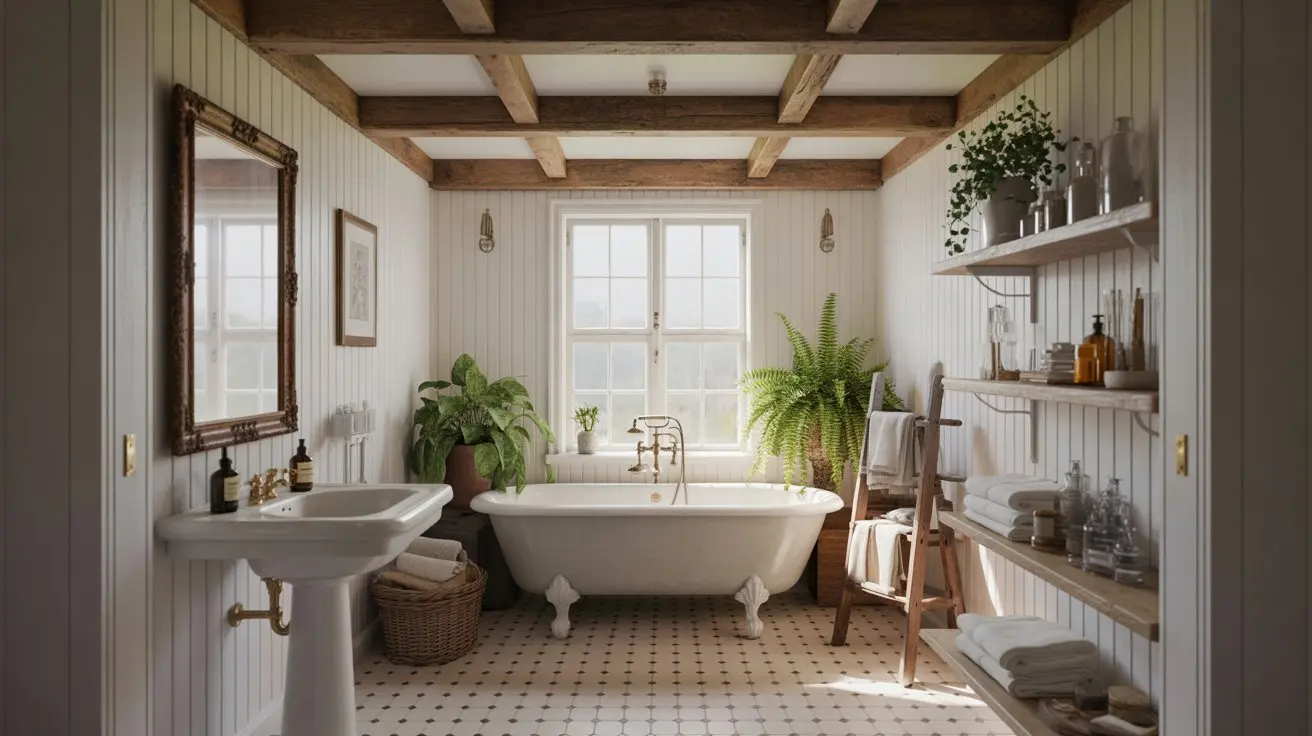
Small as it is, the bathroom has real potential in a cottagecore home. The humidity and natural light make it one of the best rooms for living plants.
A clawfoot tub is the dream centerpiece. If that’s out of reach, vintage-style brass or copper fixtures make a strong impact on their own.
Swap plastic dispensers for glass or amber bottles. Display hand-cut soaps on a small ceramic dish. Add a trailing pothos or small fern on a wooden shelf; both thrive in bathroom conditions.
5. Dining Room
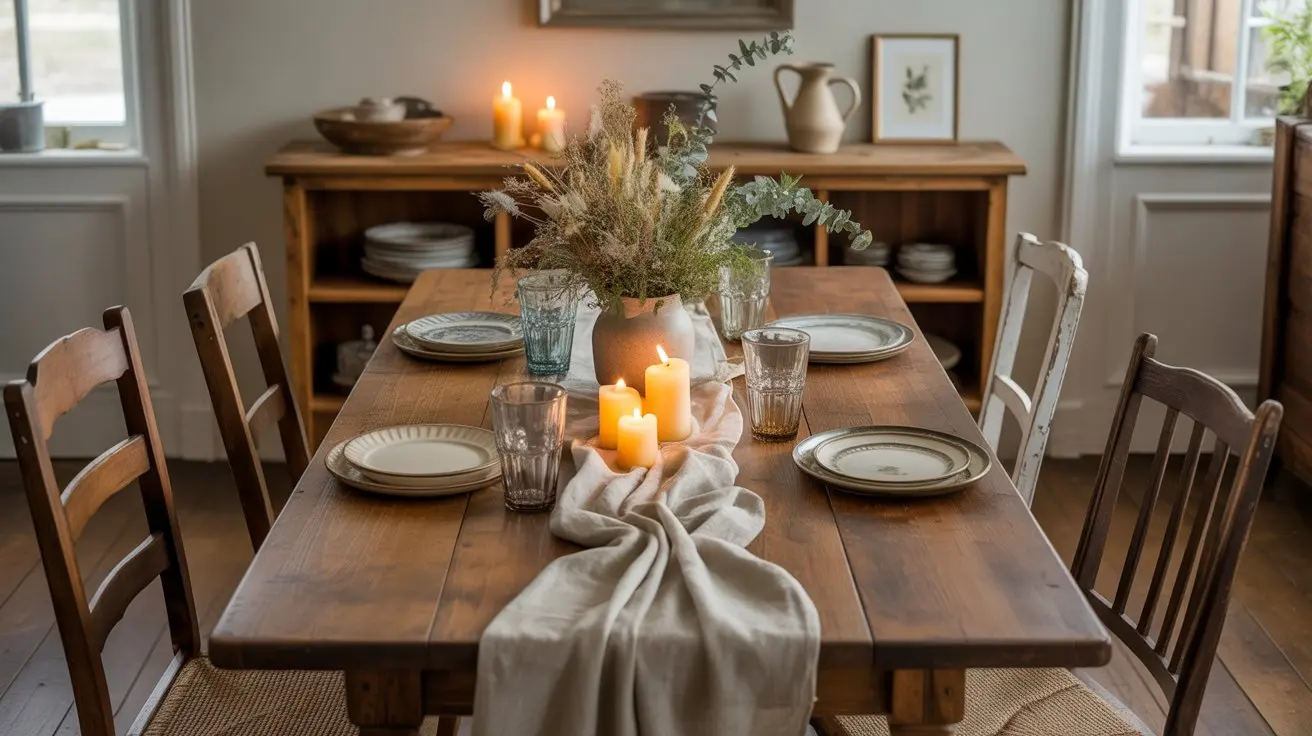
The cottagecore dining room is built for slow meals and long conversations. It should feel generous, slightly undone, and full of warmth.
Start with a solid wood table, reclaimed or vintage, which works best. Mix your chairs rather than matching them. A bench on one side adds a casual, gathered feel.
Layer a crinkled linen tablecloth across the center. For the centerpiece, use a low ceramic vase with garden clippings, dried wheat, or candles at different heights. Display vintage dishware on an open sideboard, old china, and mismatched glasses add character that new sets never can.
How to Get the Cottagecore Look on a Budget
Cottagecore was never meant to be expensive. The whole point is that it looks collected, imperfect, and personal. A $4 thrift store jug beats a $90 designer vase every single time.
Thrift and Vintage Shopping
Thrift stores are the heartbeat of this style. Keep these tips in mind every time you shop:
- Check the ceramics section first: vintage jugs, plates, and teapots are usually cheap and plentiful
- Look past the color: a dark dresser repainted in soft sage becomes a completely different piece
- Pick up old frames even if the art inside is bad: swap it for botanical prints
- Shop seasonally: thrift stores fill up after the holidays and at the start of spring
The best spaces are built slowly. Give yourself permission to collect over months, not weekends.
Easy DIY Ideas
Some of the most beautiful cottagecore pieces cost almost nothing to make. Good ones to start with:
- Pressed flower frames: Wildflowers, glass frames, parchment; under $10
- Dried herb bundles: Fresh herbs, twine, ceiling hook; under $8
- Painted terracotta pots: Clay pots, chalk paint, brushes; under $15
- Linen pillow covers: Linen fabric and iron-on tape; under $18
None of these requires serious craft skills. Just a little time, which is very on-brand for this style.
Where to Shop
Good sources for cottagecore pieces at every budget:
- Etsy: Handmade ceramics, pressed flower art, embroidered linens, botanical prints
- IKEA: Rattan baskets, SINNERLIG pendant lamp, simple linen bedding
- Target: Threshold and Studio McGee lines carry ceramic vases and woven textures
- Facebook Marketplace: Best for vintage furniture at low prices
- Estate sales: Best for china, textiles, and framed art
Cottagecore for Renters and Small Spaces
Renting doesn’t mean settling for a cold, generic space. Cottagecore is one of the most renter-friendly styles out there; most of it lives in textiles, plants, lighting, and accessories. No permanent changes needed.
No-Damage Decor Ideas
These are the zero-damage moves that make the biggest impact:
- Swap harsh overhead bulbs for warm-toned ones, takes 30 seconds and changes everything
- Layer rugs over existing flooring to cover anything too modern
- Use removable hooks for hanging botanicals, macrame, and framed art
- Replace builder-grade cabinet hardware with brass knobs, save originals in a zip-lock bag
- Use peel-and-stick floral wallpaper on one accent wall, brands like Tempaper peel off cleanly
- Add tension rod curtains in linen or soft floral, no drilling required
Small Space Tips
Small spaces need a scaled-back approach. Too many layers in a tight room feel overwhelming fast.
Follow this simple rule: pick three cottagecore elements per room and do them really well. A beautifully styled shelf, the right curtains, and a warm lamp will always beat ten mediocre pieces scattered around.
Use wicker baskets for storage; they double as decor. Keep surfaces clear and let one or two statement pieces do the work.
Common Mistakes to Avoid
Even the best style is easy to get wrong. Here are the most common mistakes, and how to fix them:
- Too many florals at once: Use florals as accents, not on every surface. One statement piece is more powerful than five competing prints
- Matching everything: Cottagecore thrives on mismatched, collected pieces. Perfectly coordinated sets kill the feeling instantly
- Ignoring lighting: Harsh overhead lighting destroys the mood. Warm, layered light sources are non-negotiable
- Buying everything new: New pieces rarely carry the character this style needs. Thrift first, buy new only when necessary
- Overcrowding shelves: Leave breathing room between objects. If every inch is filled, remove one thing
Conclusion
At its core, cottagecore interior design is about creating a space that feels calm, personal, and easy to live in.
It is not about perfection or strict rules, but about choosing pieces that feel right over time.
When you focus on natural materials, soft colors, and meaningful details, your home starts to feel more relaxed and comfortable.
I have found that even small updates can make a noticeable difference when done with intention. If you want a home that feels warm and lived-in, start small and build gradually.
Try a few ideas today and shape your own version of cottagecore interior design.
Frequently Asked Questions
What Makes Cottagecore Interior Design Different from Farmhouse Style?
Cottagecore is more romantic and nature-driven with florals and vintage finds. Farmhouse style is more structured, neutral, and utilitarian in feel.
Can I Do Cottagecore in a Modern Apartment?
Yes. Use removable wallpaper, warm lighting, linen curtains, and vintage accessories. No permanent changes are needed to get the look.
What Colors Work Best for Cottagecore Interiors?
Soft pastels like sage green, blush pink, and dusty blue work best. Warm neutrals like cream and beige act as grounding base tones.
How Do I Start Cottagecore Decorating on a Small Budget?
Start with thrift stores, Facebook Marketplace, and estate sales. Small DIY projects like pressed flower frames and painted pots cost very little.
Is Cottagecore Still a Relevant Style in 2026?
Yes. It has evolved from a social media trend into a practical, livable style focused on natural materials, vintage finds, and cozy comfort.