
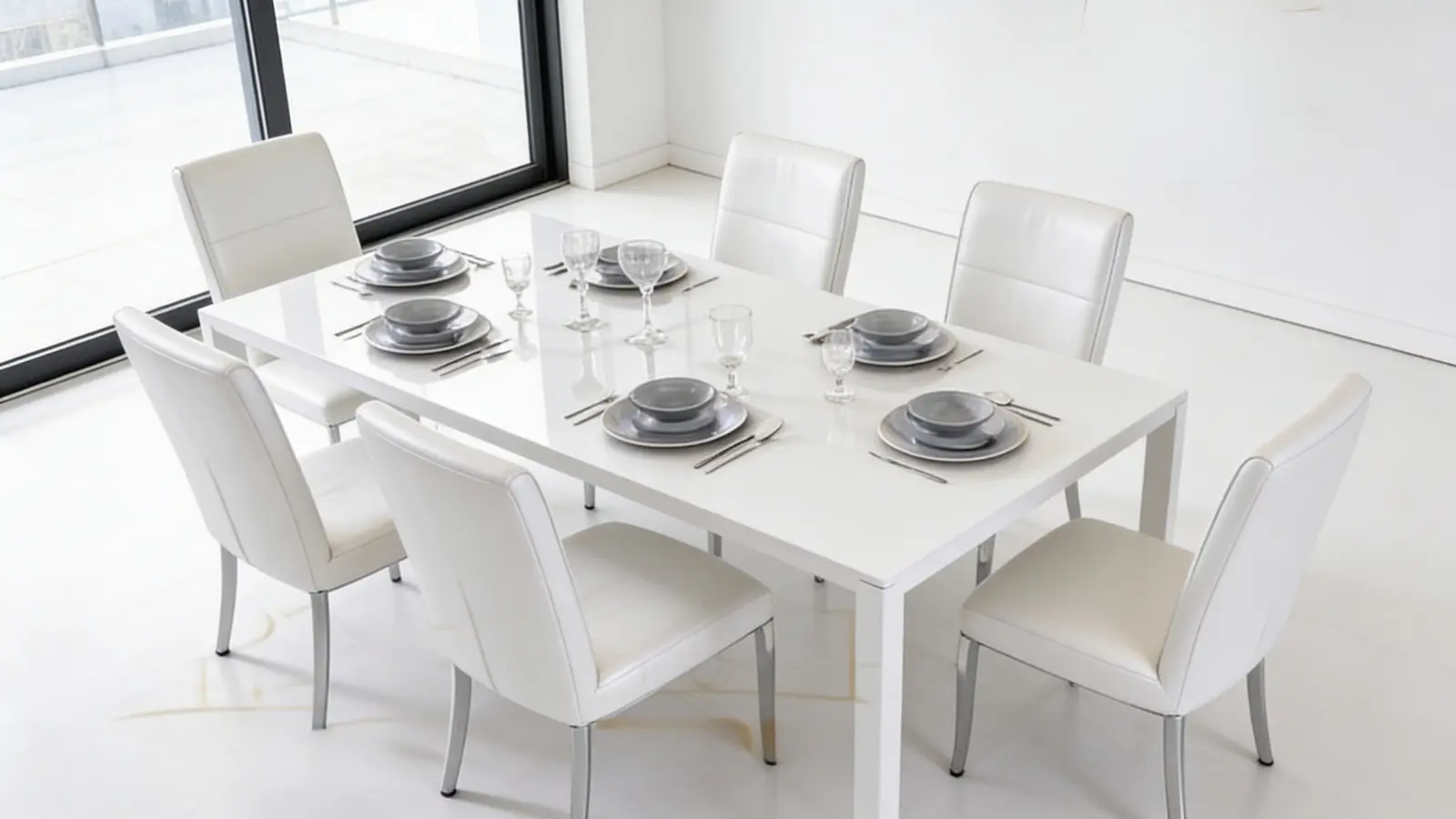
What Is the Standard Size of Dining Table for 6?
Many people choose a dining table based only on wall space and later realize the room feels cramped or uncomfortable to use every day.
Choosing the standard size of dining table for 6 is not just about fitting six chairs around a table. It is about balancing seating comfort, movement space, and room layout.
Different dining room table sizes work better for different homes and dining areas. The right dimensions can improve seating comfort, movement space, and overall room balance.
Learn the right dimensions, table shape, and spacing to create a dining setup that feels comfortable, practical, and easy to use every day.
Standard Size of Dining Table for 6
The standard size of a dining table for 6 is usually 60 to 72 inches long, 36 to 40 inches wide, and 28 to 30 inches high.
These dining room table sizes are based on the space each person needs to sit and eat comfortably. A 60-inch table fits six people at the minimum level, while a 72-inch table provides extra elbow room and better spacing for serving dishes.
The standard dining table height also works with most dining chairs, providing about 10 to 12 inches of leg clearance for comfortable daily use.
Most rectangular 6-seater tables seat two people on each side and one at each end. Slightly larger dining room table sizes make daily meals feel more comfortable and less crowded.
Difference Between a Compact and Standard 6-Seater Table
Compact and standard 6-seater tables differ mainly in seating comfort, table dimensions, and the amount of room they need.
| Feature | Compact 6-Seater Table | Standard 6-Seater Table |
|---|---|---|
| Table Length | 60 to 66 inches | 72 inches or more |
| Seating Comfort | Slightly tighter seating | More elbow and serving space |
| Best For | Small apartments and compact rooms | Larger dining rooms and frequent hosting |
| Table Shape Options | Mostly rectangular or round | Available in all shapes |
| Daily Use | Suitable for smaller families | Better for regular gatherings |
How Different Table Shapes Affect 6-Seater Dimensions?
Table shape affects table dimensions, seating layout, and the floor space needed around the table. Different shapes also change how comfortably six people can sit together.
Check the space and dimension details below to find the best 6-seater table shape.
1. Rectangular Dining Table for 6
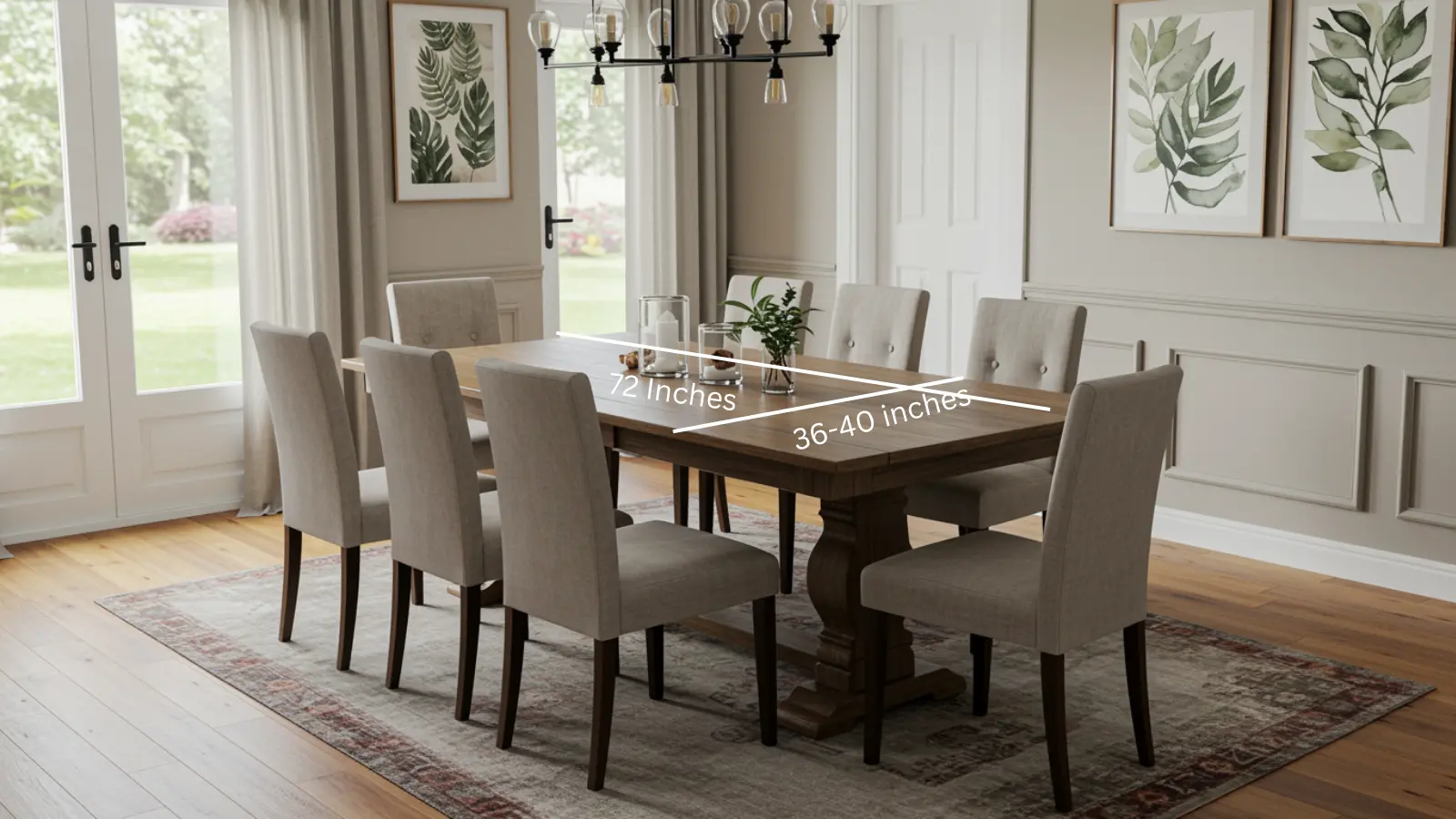
The most practical shape for a 6-seater dining table in most homes is 72 inches long, making the seating far more comfortable for daily meals.
2. Round Dining Table for 6 Seats
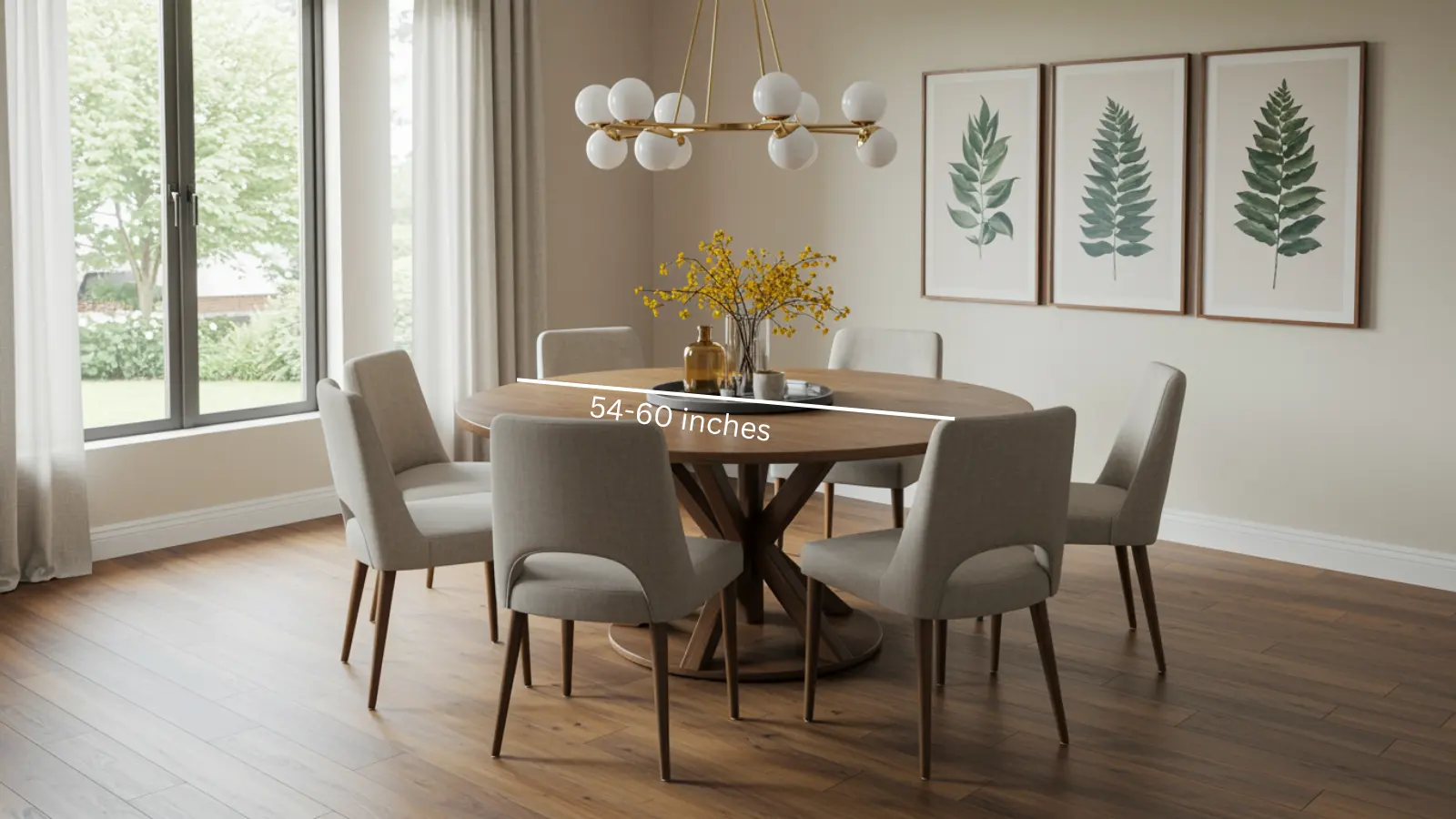
A round dining table for 6 usually needs a diameter of 54 to 60 inches for comfortable seating. With no head position, every seat feels equal, making the table feel more social and balanced.
The main drawback is floor space. A 60-inch round table often takes up more usable room than a rectangular table of similar size because chairs extend outward on all sides.
3. Oval Dining Table for 6 Seats

An oval dining table for 6 usually follows the same 60 to 72-inch length as a rectangular table but uses rounded ends for a softer layout. The curved edges reduce sharp corners and allow slightly better movement around nearby furniture.
Best 6-Seater Dining Table Layout for Your Room
Different dining room layouts work better with specific table shapes and sizes. Choosing the right layout helps improve seating comfort, movement space, and overall room balance.
| Table Type | Ideal Room Layout | Recommended Room Size | Why It Works |
|---|---|---|---|
| 72 x 36-inch Rectangular Table | Narrow or long dining rooms | 12 x 9 feet | Provides better walking space in longer layouts |
| 60-inch Rectangular Table | Compact dining spaces | 10 x 10 feet | Saves space while comfortably seating six |
| 60-inch Round Table | Square dining rooms | 11 x 11 feet | Creates balanced seating on all sides |
| 60 to 72-inch Oval Table | Open-plan or medium-sized rooms | 11 x 10 feet | Softer edges improve movement and room flow |
How to Choose the Perfect Six-Seater Dining Table?
Choosing the right dining table depends on room size, seating comfort, and daily use. The table should fit the space without making movement feel restricted.
- Room Size and Seating Needs: Measure the dining area and leave at least 36 inches around the table for easy movement. Compact tables suit smaller rooms, while larger ones work better for hosting.
- Expandable vs Fixed Tables: Expandable tables save space and provide extra seating when needed. Fixed tables are more stable and better for regular daily use.
- Materials and Durability: Solid wood tables are durable and long-lasting. Glass, metal, and engineered wood options are lighter, more affordable, and easier to match with modern interiors.
Ideal Rug Size for a 6-Seater Dining Table

A dining rug should extend far enough beyond the table so that chairs stay fully on the rug when pulled out. The standard rule is to add at least 24 inches on all sides of the table.
For a 72 x 36-inch rectangular dining table, the ideal rug size is usually 9 x 6 feet or larger. A 60-inch round dining table works best with an 8-foot round rug.
A rug that is too small causes chairs to catch on the edges when moving. The right rug size keeps the dining area more balanced, comfortable, and easier to use every day.
Large rugs also help define the dining area, especially in open-plan layouts. Always make sure all chair legs stay on the rug, even when chairs are pulled out.
Common Mistakes to Avoid When Choosing a Dining Table
Choosing the wrong dining table size can make the room feel cramped and uncomfortable, even if the table technically fits the space.
- Ignoring clearance space: Leaving too little space around the table makes chair movement difficult and restricts walking space.
- Choosing an oversized table: A table that is too large can overwhelm the dining room and reduce everyday comfort.
- Picking the wrong table shape: Rectangular tables may feel awkward in square rooms, while round tables can take up too much space in narrow layouts.
- Using a rug that is too small: Small rugs cause chairs to catch on the edges when pulled out.
- Ignoring chair spacing: Tight seating arrangements reduce comfort during meals and gatherings.
The right dining table should balance seating comfort, movement space, and room proportions for practical daily use.
Conclusion
Choosing thestandard size of dining table for 6 helps create a dining space that feels comfortable, functional, and easy to use every day.
The right table dimensions, shape, and spacing improve seating comfort, movement, and the overall balance of the room.
Different dining room table sizes suit different layouts, so selecting the right fit matters just as much as the design itself.
A well-sized table should support both daily meals and gatherings without making the space feel crowded.
If you still have questions about choosing the right 6-seater dining table size for your home, share them in the comments section below.
Frequently Asked Questions
Can a Bench Be Used Instead of Chairs with a 6-Seater Dining Table?
Yes, benches can save space and make compact dining areas feel less crowded. They also allow flexible seating for guests.
What Is the Best Table Finish for Homes with Kids?
Matte and textured finishes usually hide scratches, fingerprints, and stains better than glossy surfaces, making them easier to maintain daily.
Does Table Thickness Affect Dining Comfort?
Yes, very thick tabletops can reduce leg clearance underneath the table. Standard dining tables usually keep the top thickness balanced for comfortable seating.


