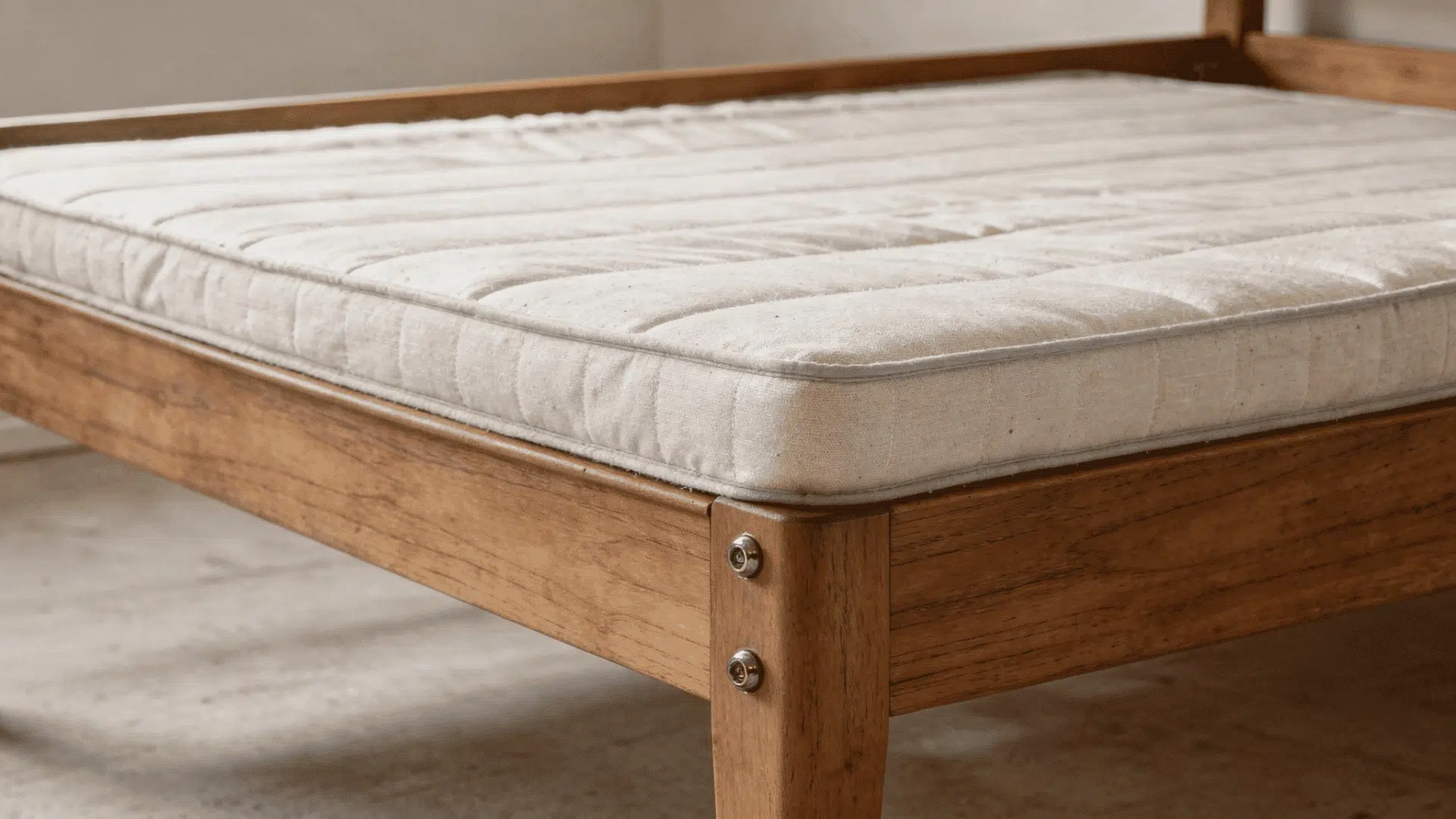
How to Stop a Squeaky Bed? Simple Fixes
A noisy bed is rarely just a nuisance. It disrupts sleep, causes frustration, and often signals a problem that gets worse the longer it goes ignored.
Learning how to stop a squeaky bed does not require special skills or expensive tools. Most fixes are simple and can be done in very little time.
Here you’ll find practical fixes for every common cause of bed squeaks, from loose bolts and worn mattresses to friction between parts and uneven floors.
Start by identifying the source of the noise. Once that is clear, the right fix becomes easy to apply and the results are immediate.
Common Reasons Behind a Squeaky Bed
Bed squeaks almost always come from friction, looseness, or wear somewhere in the setup.
These are the most common sources:
- Loose bolts, screws, or nuts
- Wooden slats rubbing against the frame
- Worn or aging mattress springs
- Metal joints develop gaps over time
- Uneven flooring is causing the frame to rock
Most beds have more than one of these happening at once, which is why pinpointing the source before attempting any fix makes a real difference.
Materials Needed to Fix a Squeaky Bed
Here are the basic materials to have on hand before you start fixing your squeaky bed:
- Screwdriver
- Wrench or spanner
- WD-40 (for metal frames)
- Beeswax (for wooden frames)
- Felt pads or cork
- Old fabric or cloth
- Furniture pads
- Replacement screws or bolts
How to Stop a Squeaky Bed: Simple Solutions
Most squeaky beds can be fixed without spending much money or time. The right approach depends on identifying the cause and applying the appropriate fix.
1. Identify the Source of the Squeak

A squeaky bed usually comes from friction between parts or loose bolts and screws. Press down on the frame, mattress, and box spring to locate where the noise originates.
Identifying the exact source before attempting any fix saves time and effort. Skipping this step often means treating the wrong area, leaving the squeak completely unresolved.
2. Tighten Loose Screws and Bolts

Loose screws and bolts allow bed frame parts to shift and create noise. Use a wrench or screwdriver to tighten every bolt, screw, and nut on the frame.
This quick fix can make your bed noticeably quieter in minutes. If a screw is stripped or rusted, replace it rather than trying to tighten it.
3. Lubricate Joints and Friction Points
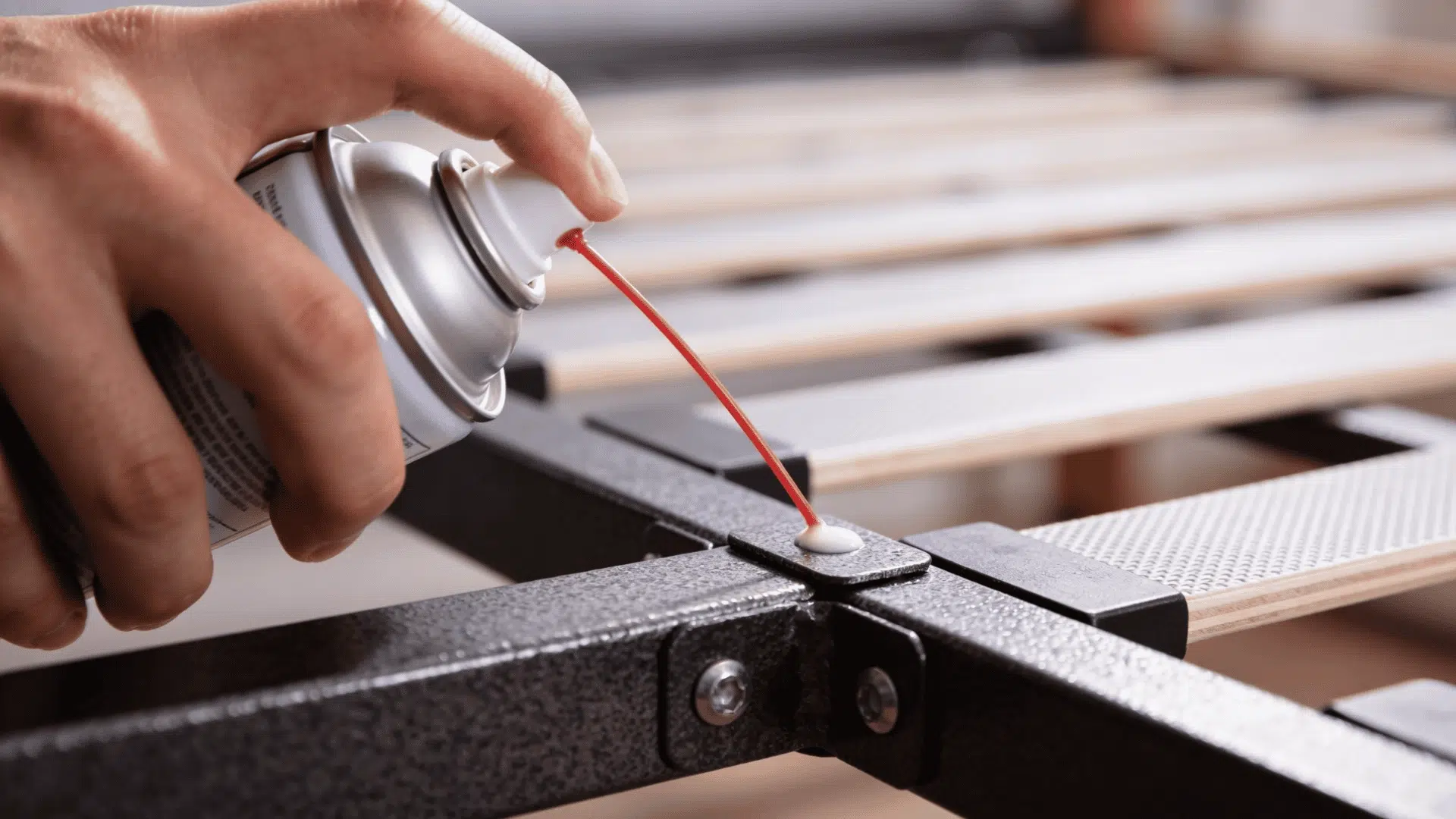
Friction between metal or wood parts is a common cause of bed squeaks. Apply WD-40 on metal frames and beeswax on wooden joints to smooth surfaces and reduce noise.
Once lubricated, parts move smoothly and the squeaking stops. Reapply as needed over time, and avoid overusing WD-40 on wood as it can damage the finish.
4. Use Padding Between Slats and Frame

Wooden slats rubbing against the frame create friction and noise. Place felt pads, cork, or old fabric between the slats and frame to cushion the contact points.
This reduces or eliminates squeaking from that area of the bed. Over time, padding can compress and wear out, so check and replace it periodically as needed.
5. Rotate or Flip the Mattress
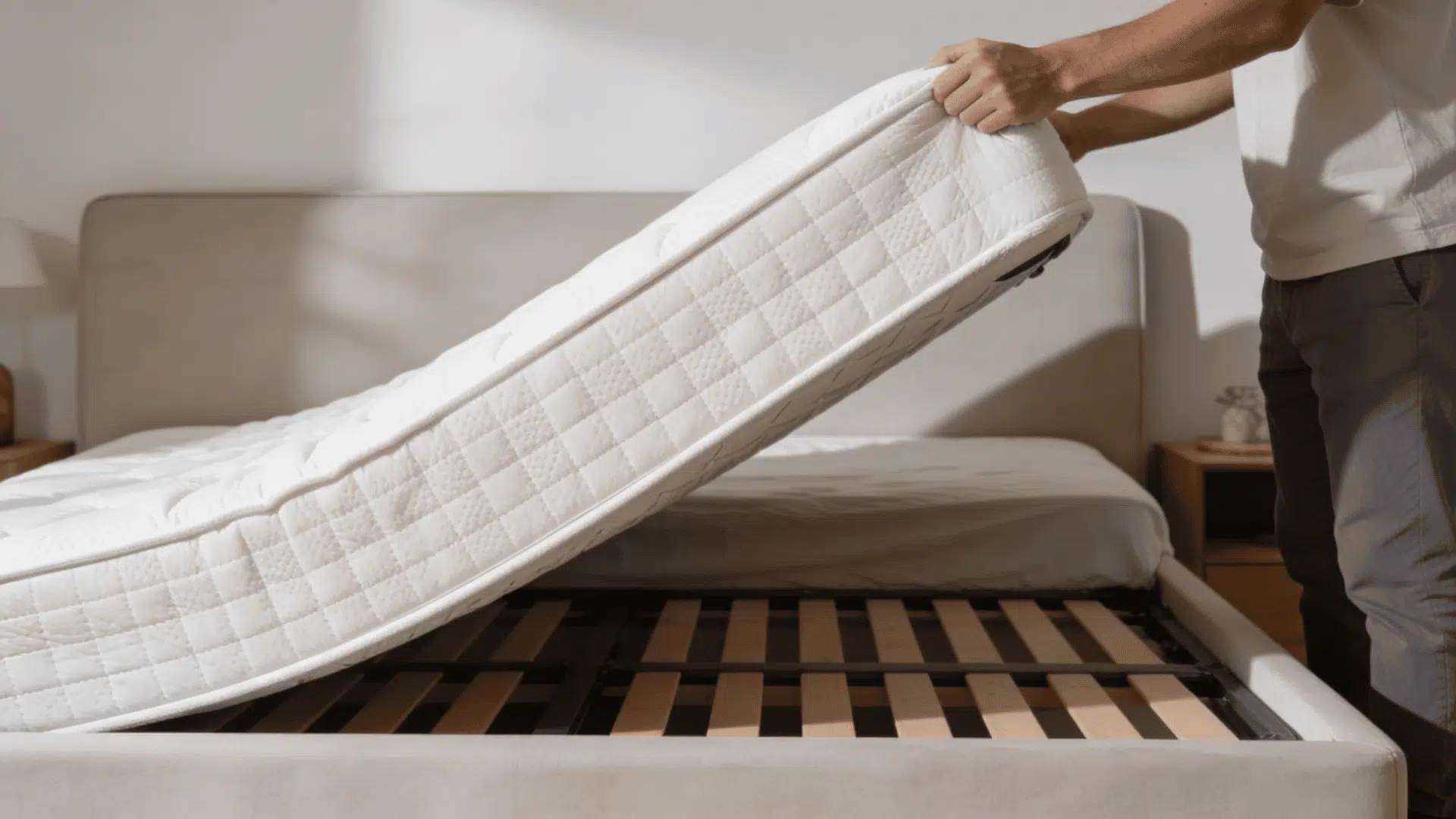
Uneven mattress wear creates internal friction that leads to squeaking. Rotating it redistributes pressure across different areas, reducing strain on worn spots and minimizing noise.
A rotated mattress becomes quieter and lasts longer by spreading wear evenly. If the mattress is severely worn, rotating may not help and replacement becomes necessary.
6. Add Floor Padding or Reposition the Bed
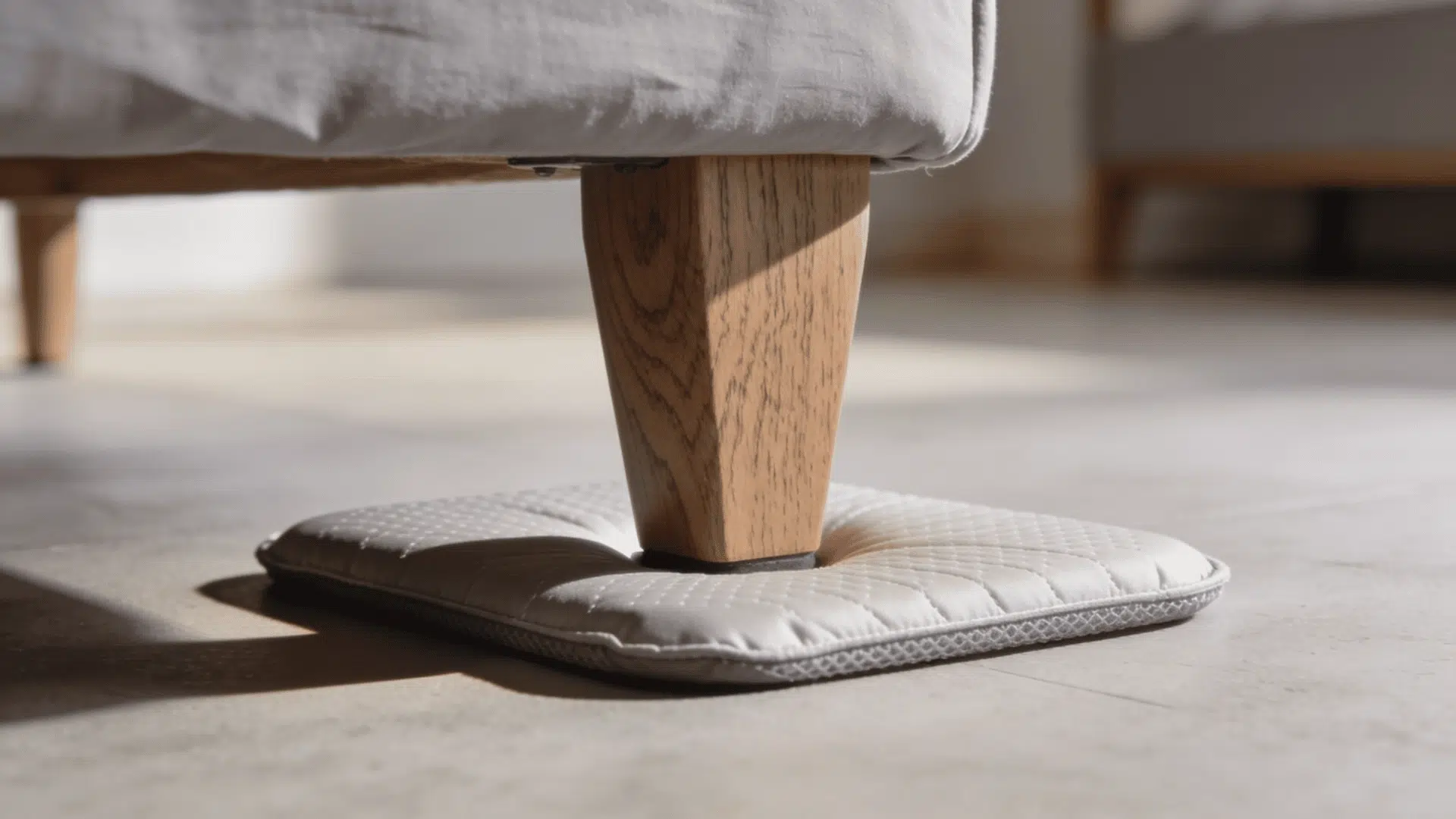
Friction between the bed frame legs and the floor can cause squeaking. Place furniture pads under each leg or add a rug beneath the bed to absorb movement and reduce noise.
The right padding keeps the bed stable and noticeably quieter. If the floor is severely uneven, repositioning the bed to a flatter area of the room may be necessary.
Tip: Before tightening or lubricating anything, place your phone on the bed recording audio while you press different areas. Playing it back makes it much easier to catch the exact spot causing the noise than relying on your ear in the moment.
Maintenance Tips
Small, consistent habits keep your bed quiet and prevent squeaks from coming back over time.
- Tighten hardware: Check all bolts and screws every few months.
- Rotate mattress: Flip or turn it seasonally to spread wear.
- Lubricate joints: Apply wax or lubricant at least once yearly.
- Replace padding: Swap out compressed felt pads or cork when needed.
- Check floor contact: Ensure furniture pads under legs stay firm.
A few small habits done consistently keep your bed quiet long after the initial fix and prevent the same problems from returning.
Final Verdict
Knowing how to stop a squeaky bed comes down to identifying the cause and applying the right fix, whether that means tightening bolts, lubricating joints, or adding padding.
Sleep quality matters more than most people realize. A quiet, stable bed is a small but important part of getting the rest the body truly needs.
Now you know what causes bed squeaks and exactly how to fix them. Staying consistent with maintenance means the problem is unlikely to return anytime soon.
Got a squeaky bed fix that worked for you? Drop it in the comments, it might be exactly what someone else needs to hear.
Frequently Asked Questions
Can a Squeaky Bed Affect Sleep Quality?
Yes. The noise disrupts sleep cycles, causes lighter sleep, and can lead to fatigue and irritability over time if left unaddressed.
How Long Does It Take for a Bed to Start Squeaking Again After Fixing It?
With proper fixes and regular maintenance, a bed can stay squeak-free for several years. Poor upkeep or heavy use may cause noise to return sooner.
Can the Type of Mattress Cause More Squeaking?
Yes. Older innerspring mattresses are more prone to squeaking than foam or latex options, as the internal coils can rub together over time.