

How to Mop a Floor the Right Way: A Step-by-Step Guide
You just spent an hour mopping, yet the floor still looks streaky and somehow dirty again. This happens because most of us never learned the right technique. Mopping a floor well is not about fancy tools or scrubbing harder.
It comes down to a few simple habits done in order. In this guide, you will learn what you need, the exact steps to follow, and the best way to clean any floor, so you can mop with confidence every time.
What You Need to Mop a Floor
Before you start mopping, gather a few basic supplies. Having everything ready from the start makes the whole process faster and far less messy.
|
Item |
Why You Need It |
|---|---|
|
Mop |
Picks up dirt and spreads the cleaning solution evenly across the floor |
|
Bucket (ideally two) |
Holds your cleaning solution and keeps a separate supply of clean rinse water |
|
pH-neutral floor cleaner |
Cuts through grease and dirt without damaging the floor’s finish |
|
Broom or vacuum |
Clears loose dirt and debris before mopping, so you are lifting it away instead of pushing it around |
How to Mop a Floor: Step by Step

Once your supplies are ready, mopping itself is simple. Follow these five steps in order for a floor that is actually clean, not just wet.
Step 1: Sweep or Vacuum First
Start by sweeping or vacuuming the whole floor. This clears loose dirt, dust, and grit before any water touches the surface. Skip this step, and your mop just pushes debris around instead of lifting it away. A few extra minutes here saves you from mopping the same dirt twice.
Step 2: Mix Your Cleaning Solution
Fill a bucket with warm water and add a small amount of floor cleaner. If you have a second bucket, fill it with plain water for rinsing. This two-bucket habit keeps your rinse water clean while your mop stays effective the whole time you clean.
Step 3: Wring the Mop Until Just Damp
Dip your mop into the solution, then wring it out well. It should feel damp, not dripping. A mop that is too wet leaves puddles that soak into seams and take far too long to dry, especially on wood or laminate.
Step 4: Mop in Small Sections
Work in small areas, about four to five feet at a time, using overlapping strokes or a gentle figure-eight motion. Move backward toward the door so you never step on a spot you just cleaned. This keeps footprints and fresh dirt off your work.
Step 5: Rinse and Let It Dry
Once you have covered the whole floor, go over it again with clean water to lift any leftover soap. This final rinse is what prevents that dull, cloudy look once the floor dries. Let it air dry fully before you walk on it.
What’s the Best Thing to Mop Your Floor With?
Not every cleaner works the same way on every surface. According to the CDC, regular cleaning with soap and water removes most everyday dirt and germs, so here is a quick look at your main options.
-
pH-Neutral Floor Cleaner: This is the safest all-around choice, since it cleans well without stripping a floor’s finish.
-
Dish Soap: A single drop in a full bucket of warm water works fine on sealed tile or vinyl, but too much leaves a sticky film.
-
Vinegar: Diluted vinegar is fine for sealed tile, but skip it on hardwood and natural stone, where the acid can dull the surface.
-
Warm Water: Warm water alone cuts grease better than cold and dries faster, though it works best paired with a proper floor cleaner.
How to Mop Different Types of Floors
Different floors need different care, since what works well on tile can actually damage wood or laminate. Here is how to adjust your approach for each surface.
1. Hardwood Floors

Hardwood is sensitive to standing water, so moisture control matters here more than anywhere else in the house.
-
Use a barely damp microfiber mop, never a soaking one.
-
Choose a wood-specific, pH-neutral cleaner.
-
Mop with the grain and wipe up any wet spots right away.
-
Skip steam mops entirely. The National Wood Flooring Association warns that wet mops and steam mops can damage a wood floor’s finish over time.
Curious why steam causes so much damage? This guide on steam cleaning hardwood floors has more detail.
2. Tile and Grout Floors
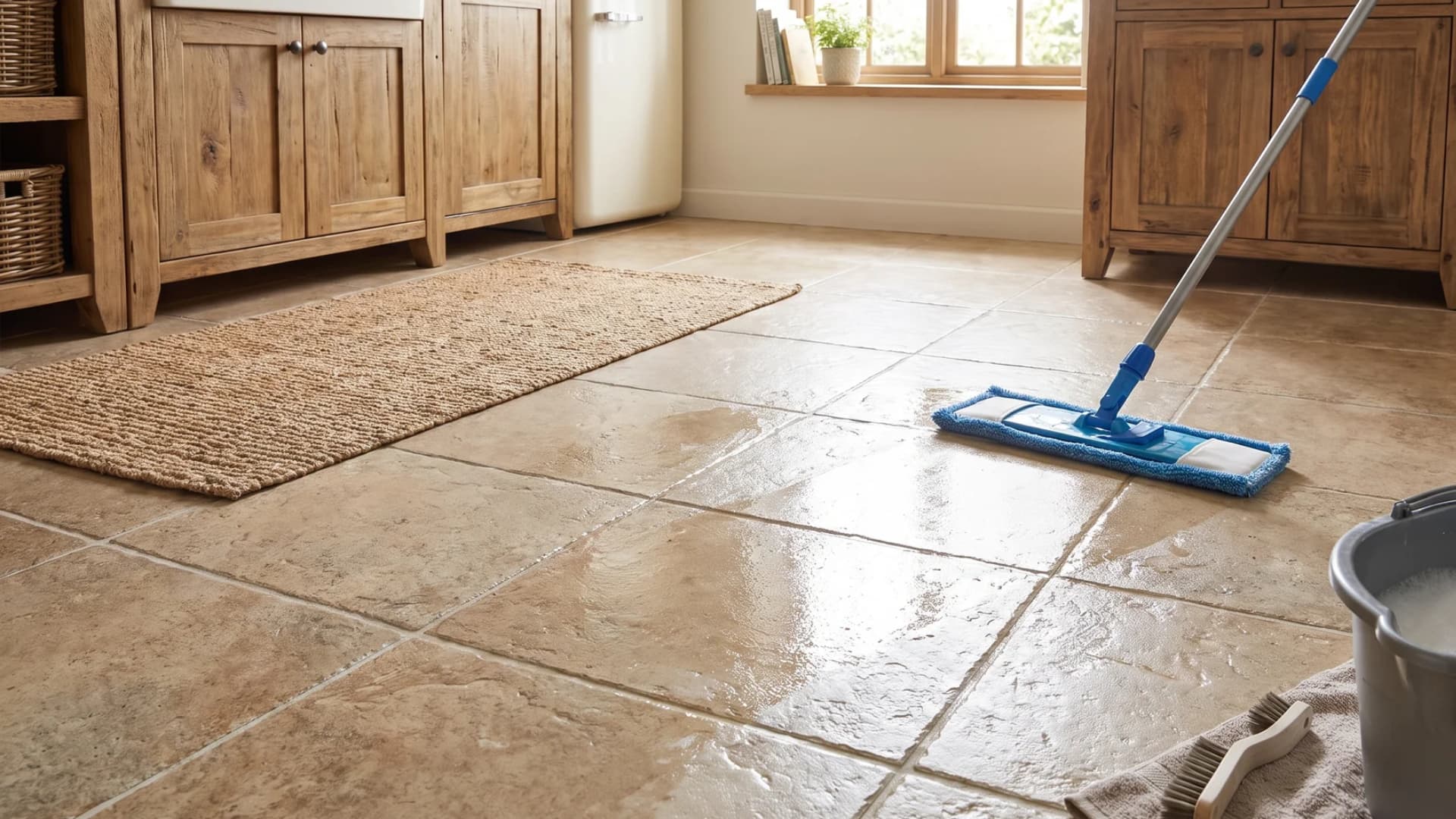
Tile handles water well, but grout lines trap dirt that a quick pass with a flat mop simply won’t reach.
-
Mop with a mild, pH-neutral cleaner and rinse the mop often.
-
Use a soft grout brush on stained lines.
-
Avoid excess soap, which dulls glazed tile over time.
-
The same porous-surface logic applies to other textured floors, like these tips for cleaning brick floors.
3. Laminate Floors

Laminate looks like wood but reacts badly to water that seeps into its seams.
-
Use a well-wrung, barely damp mop.
-
Pick a laminate-safe cleaner.
-
Wipe up any standing water right away.
4. Vinyl and Linoleum Floors

These floors are among the most forgiving to mop, as long as you skip harsh chemicals.
-
Use a pH-neutral cleaner and a well-wrung mop.
-
Avoid abrasive scrubbers that dull the surface.
-
Let the floor air dry fully after rinsing.
5. Natural Stone Floors

Stone like marble or travertine is porous and reacts badly to acidic cleaners.
-
Use only a stone-safe, pH-neutral cleaner.
-
Keep vinegar and other acidic products away from stone.
-
Change your rinse water often to prevent the surface from dulling.
Common Mopping Mistake
Even with the right steps, a few small habits can undo all your effort. Here are the mistakes that come up again and again.
|
Mistake |
The Fix |
|---|---|
|
Skipping the sweep or vacuum step |
Always clear loose dirt before you mop, so you are lifting it away instead of smearing it |
|
Using too much soap |
Stick to the amount on the label. Extra soap leaves a sticky film that attracts more dirt |
|
Mopping with dirty water |
Change your water once it turns cloudy or gray, ideally two or three times per floor |
|
Soaking the mop instead of damp-wringing it |
Wring until it stops dripping. A damp mop cleans just as well without the water damage |
|
Skipping the final rinse |
Go over the floor once more with clean water to remove any leftover soap residue |
Why Does My Floor Look Streaky or Cloudy After Mopping?
A streaky or cloudy floor almost always comes down to one of three things: too much cleaner, mop water that has already turned dirty, or skipping the rinse step.
Extra soap dries into a thin film that catches light and looks dull once the floor is dry. Dirty water does something similar, since it just spreads a thin layer of grime across the room instead of lifting it away.
The fix is simple. Use less cleaner than you think you need, swap your water as soon as it looks gray, and always finish with a plain water rinse.
How Often Should You Mop?
How often you mop depends mostly on foot traffic. Kitchens, entryways, and other busy spots usually need a weekly mop to keep grease and dirt from building up, while bedrooms and quieter rooms can often go two to three weeks between cleans.
Homes with pets, kids, or frequent visitors may need to mop more often, since these usually bring in extra dirt.
A good habit is to sweep or dust-mop often and save the full wet mop for one set day each week, rather than doing it daily, which is gentler on wood and laminate floors.
Final Thoughts
Mopping a floor well isn’t complicated once you know the right order. Sweep first, use just enough cleaner, work in small sections, and always finish with a rinse.
These small habits are what separate a floor that looks clean from one that is truly clean.
Pick the right approach for your flooring, stay consistent with how often you mop, and you will notice the difference within a single cleaning session. Your floors, and your guests, will thank you.
Frequently Asked Questions
Are you supposed to rinse the floor after mopping?
Yes. A final pass with clean water removes leftover soap and prevents the dull, sticky film that forms once the floor dries.
What is the best thing to mop my floors with?
A pH-neutral floor cleaner mixed with warm water is the safest choice for most homes and most floor types.
What are the 5 steps in cleaning the floor?
Sweep or vacuum first, mix your cleaning solution, wring the mop until damp, mop in small sections, then rinse and let the floor dry.
How to mop the floor easily?
Keep two buckets ready, one for solution and one for rinsing, and mop in small overlapping sections. This cuts out most of the back-and-forth that makes mopping feel like a chore.
What is the 20-minute rule of cleaning?
The 20-minute rule is a general cleaning habit where you set a timer and clean for 20 focused minutes, then stop. Applied to floors, it means giving your kitchen or entryway a quick sweep and damp mop in one short burst instead of waiting for a full deep clean.


