
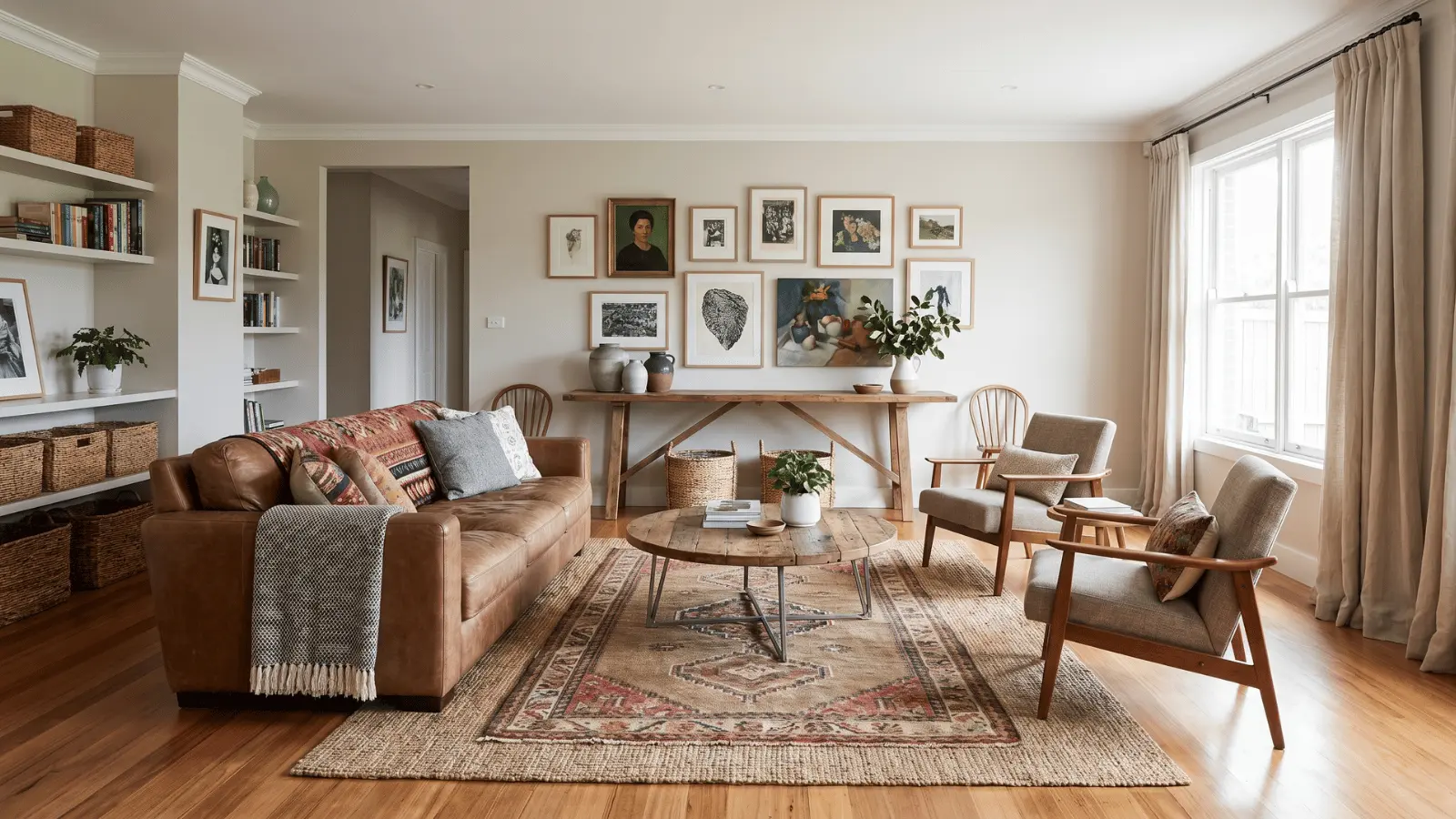
How Eclectic Living Rooms Actually Work
You’ve probably seen eclectic living rooms that look amazing, and others that just look like a mess. The difference isn’t luck. Its structure.
Most people don’t realize that pulling off eclectic decor takes a clear plan, not just a good eye. If your room feels “off” but you can’t figure out why, you’re not alone.
This blog walks you through how eclectic design actually works, from picking a color palette to mixing furniture styles to knowing when you’re truly done.
How Eclectic Design Actually Works
Eclectic design is all about mixing different styles, colors, textures, and time periods in one space while still making everything feel balanced.
Instead of following one strict style, it gives you the freedom to combine pieces you truly love. The key is creating a room that feels personal, not messy.
A common color palette, repeated textures, and balanced furniture placement help tie everything together. You might pair a modern sofa with a vintage table or mix bold patterns with simple decor.
Layering is important, but every item should still have a purpose. Eclectic design works best when there is contrast with harmony, allowing the room to feel creative, warm, and comfortable without looking overcrowded.
Creating an Eclectic Living Room That Feels Cohesive
Getting an eclectic living room right takes more than instinct. A clear process keeps every decision connected and intentional.
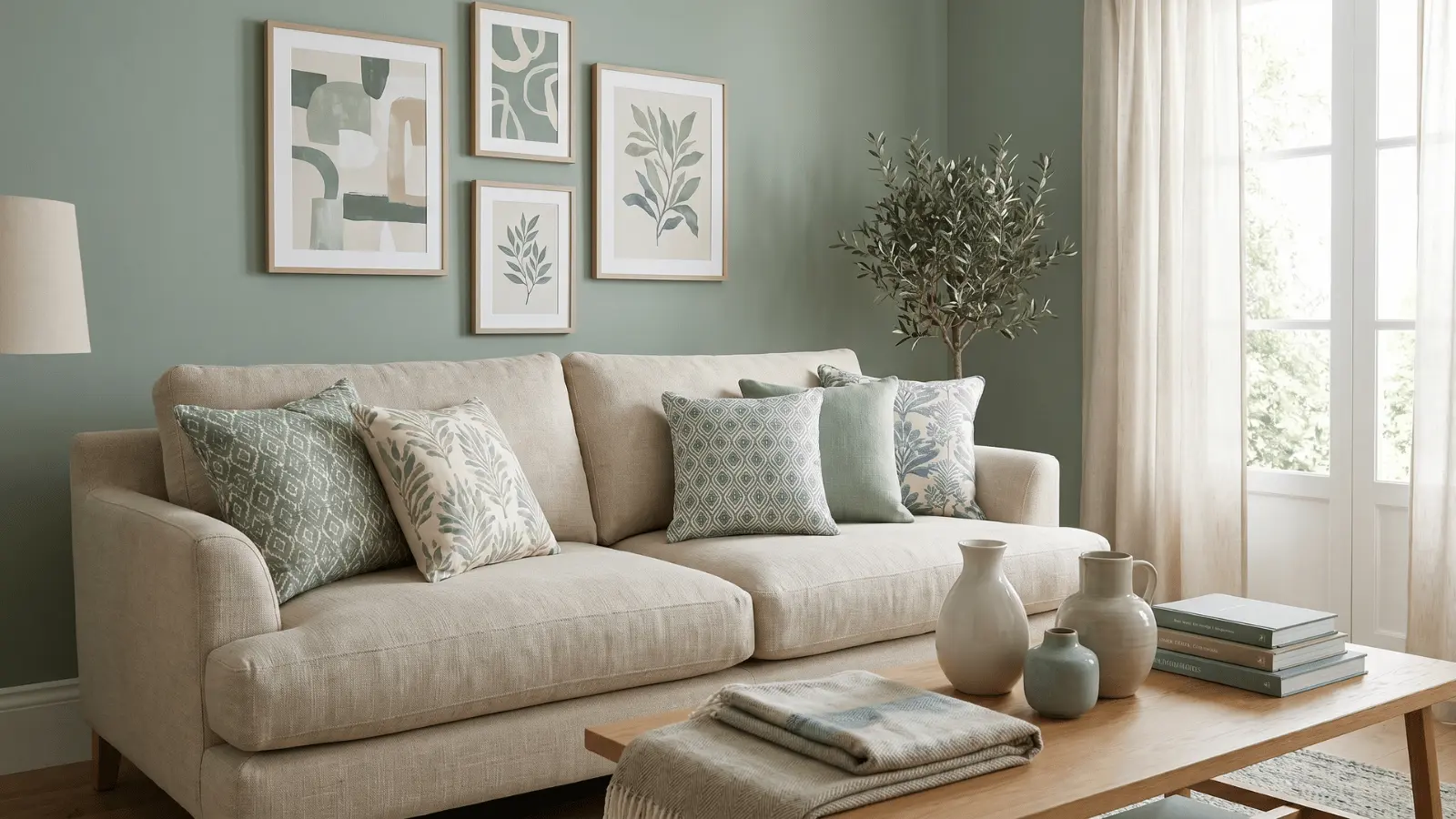
1. Choosing the Right Color Strategy
| Color Rule | What It Does | Why It Helps |
|---|---|---|
| Core Palette + Accents | Uses a few base colors with 1–2 bold shades | Keeps eclectic decor balanced instead of chaotic |
| Visual Linking | Repeats the same color in different decor pieces | Connects mixed furniture and styles naturally |
| Neutral Background | Adds soft tones behind bold colors | Prevents visual fatigue and makes the room feel calmer |
2. Mixing Furniture Styles
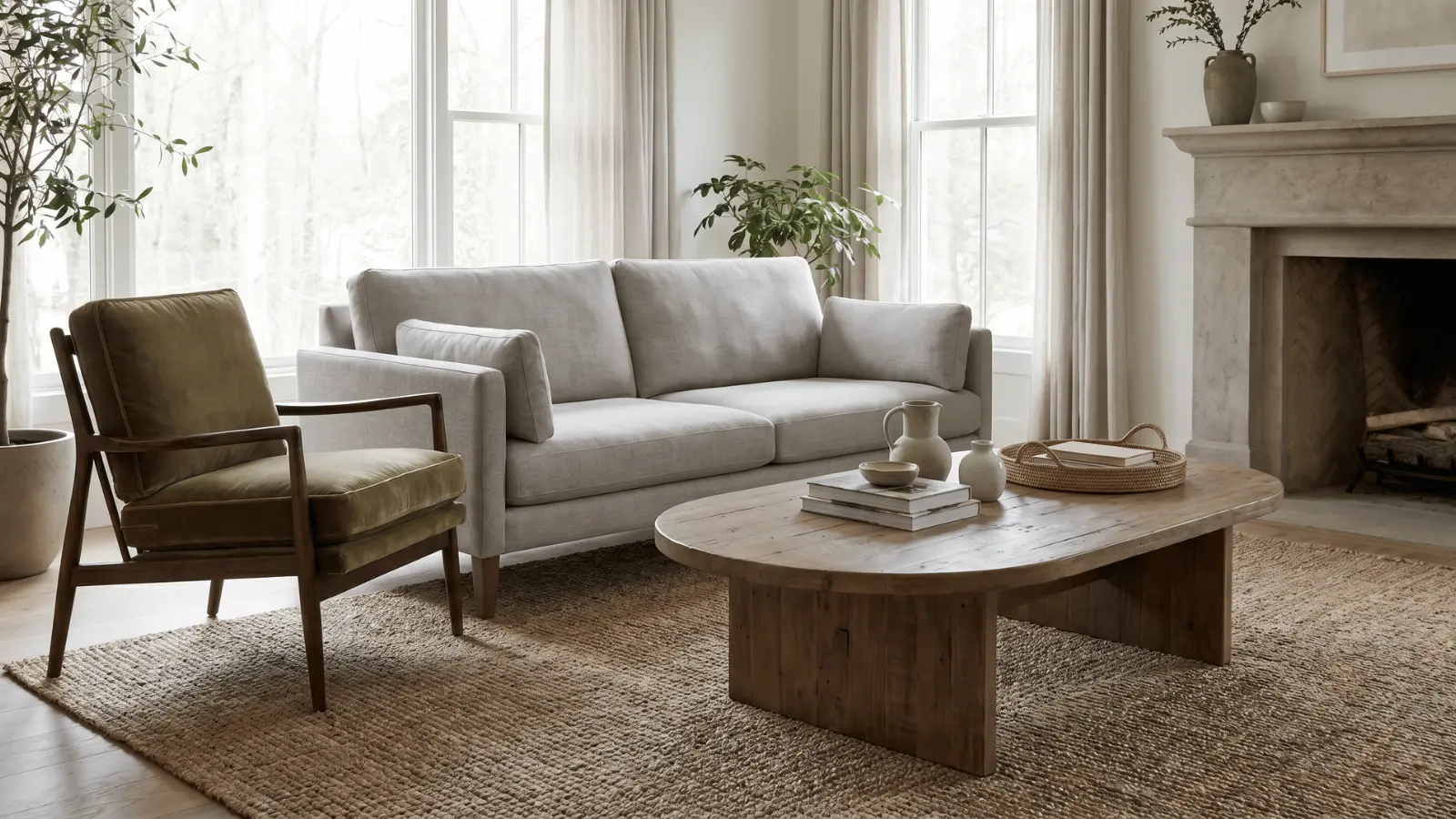
Furniture is where most eclectic living rooms either come together or fall apart.
- Anchor Piece Method: Start with one dominant furniture piece, usually the sofa. Every other furniture choice should support it, not compete with it. This creates a clear visual lead.
- Scale and Proportion Matching: Items need to feel physically balanced with each other. Pairing an oversized sectional with a delicate side table creates tension, unless it’s clearly intentional.
- Material Bridging: Shared materials connect different furniture styles. Wood, metal, fabric, and natural textures help mixed pieces feel more unified.
3. Using Patterns and Textures
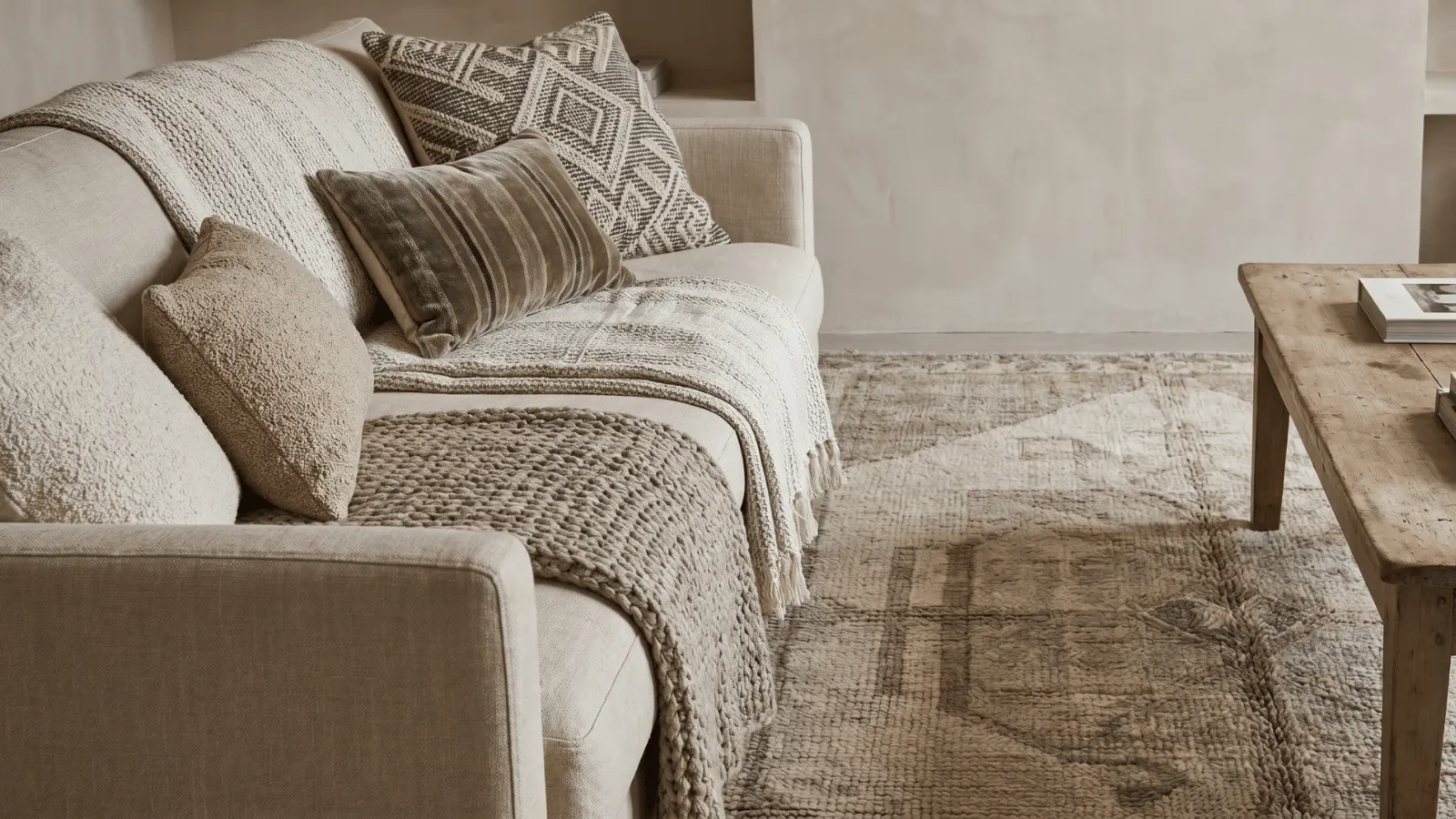
Always mix patterns of different sizes, large, medium, and small. A large geometric rug can sit alongside a medium floral cushion and a small-print throw without conflict, because the scales are distinct.
Combine soft, rough, smooth, and natural materials across the room. A velvet cushion next to a jute rug next to a linen curtain creates depth without adding more color. Texture is how you add richness when your palette is already full.
Too many bold patterns in the same size range creates visual chaos. The room also needs “rest” areas, plain surfaces, solid colors, or space, where the eye can recover before moving to the next visual point.
How to Know If Your Eclectic Living Room is “Done”
Knowing when to stop is just as important as knowing what to add.
Run through these checks before calling the room finished:
- Visual balance: No single area feels heavier or busier than the rest.
- Color repetition: Your palette colors show up in at least two or three spots around the room.
- Breathing space: There are clear areas of rest, plain surfaces, an open floor, and solid walls.
- Clear focal point: One element leads the eye when you walk in.
- Intentional feel: The room feels designed, not assembled by accident.
The clearest failure signal: your eye doesn’t know where to go. It keeps moving without landing anywhere. That means something is competing for attention that shouldn’t be, and something needs to come out.
Combining Eclectic with Other Aesthetics
Eclectic design does not have to stand alone. It mixes surprisingly well with other styles by borrowing their strongest features while still keeping a personal and layered look.
| Style Combination | What Makes It Work | Overall Feel |
|---|---|---|
| Eclectic + Modern | Sleek furniture mixed with bold art and vintage decor | Clean but full of personality |
| Eclectic + Boho | Layered rugs, plants, woven textures, and colorful accents | Relaxed and creative |
| Eclectic + Farmhouse | Rustic wood paired with mixed patterns and older decor pieces | Warm and welcoming |
| Eclectic + Minimalist | Fewer decor items with carefully chosen statement pieces | Simple without feeling plain |
| Eclectic + Industrial | Metal finishes, exposed textures, and vintage furniture | Urban and stylish with contrast |
Common Mistakes to Avoid
Even eclectic spaces need balance to feel comfortable and organized. Avoiding a few common mistakes can keep the room stylish instead of overwhelming.
- No color control: Too many colors compete for attention. There’s no thread to follow, so the room looks random.
- Lack of focal point: Without a visual anchor, the eye jumps around the room with no landing point.
- Over-decorating without editing: Adding more keeps happening until there’s no negative space left. The room loses clarity.
- Mixing styles without a unifying element: Styles from different eras need a bridge, a shared material, color, or shape. Without it, pieces just coexist without connecting.
- Ignoring scale and proportion: Pieces that don’t relate in size feel accidental, not curated.
- Copying ideas without adapting: Inspiration from other spaces doesn’t always fit your dimensions, light, or existing pieces. Blind copying skips the adaptation step, and the result rarely works.
Each mistake follows the same pattern; something important is skipped, visual conflict fills the gap, and the room ends up looking cluttered instead of layered.
Conclusion
Designing an eclectic living room doesn’t have to feel overwhelming. Now you know what actually makes the style work: color control, a strong anchor, balanced scale, and intentional layering.
Eclectic decor isn’t about mixing everything you love. It’s about mixing it the right way.
Before your next design move, revisit the checklist in this blog and see where you stand. Small adjustments often make the biggest difference.
If you found this helpful, check out our other blogs on interior styling, furniture arrangement, and home décor tips. There’s plenty more to help you build a home you truly love.
Frequently Asked Questions
How do I use lighting in an eclectic living room?
Layer your lighting. Use one statement overhead fixture, add side lamps in mixed styles, and include a small accent lamp for warmth and depth.
How do I create a gallery wall in an eclectic living room?
Start with one large anchor piece and build outward. Mix frame sizes but stick to two finishes. Lay everything out before hanging anything.
What is the best rug for an eclectic living room?
Choose a rug with a bold pattern or rich texture that includes one or two of your palette colors. Always go larger than you think you need.


