Fall Lawn Care: What to Put on Your Lawn This Fall
Fall lawn care decides how healthy your grass looks next spring, yet most homeowners rush through it or skip steps entirely. Grass plants spend fall storing energy in their roots, which means timing and order matter more than effort alone.
This article breaks down exactly what to put on your lawn in fall, from soil testing to fertilizing, so every step happens in the right order and your lawn comes back stronger, greener, and more resilient when spring finally arrives.
What Is Fall Lawn Care and Why Does Timing Matter?
Fall lawn care means testing soil, mowing correctly, managing leaves, aerating, overseeding, fertilizing, and controlling weeds before the first hard freeze.
It is the work you do between late summer and winter to protect your grass and set it up for spring. Timing matters because grass behaves differently as temperatures drop. Instead of growing new leaf blades, grass pushes energy down into its roots.
This is why fertilizer and grass seed applied at the right time do more good than the same products used in spring. Miss the window, and you are left with thin, patchy grass through winter.
Cool-Season vs. Warm-Season Lawns: Know Your Grass Type First

Before you follow any fall lawn care checklist, you need to know which type of grass you have. Cool-season and warm-season grasses need almost opposite fall routines.
|
Grass Type |
Common Examples |
Fall Priority |
|---|---|---|
|
Cool-Season |
Kentucky bluegrass, tall fescue, perennial ryegrass, fine fescue |
Aerate, overseed, and fertilize now to build strong roots before winter. |
|
Warm-Season |
Bermuda, zoysia, St. Augustine, centipede, bahiagrass |
Finish fertilizing early, skip overseeding, and focus on mowing height and weed control. |
What Should You Put on Your Lawn in Fall?
Most lawns need three things in fall. That means a slow-release fertilizer, grass seed if you are overseeding a cool-season lawn, and a soil amendment like lime or sulfur if your soil test calls for it.
What you actually apply depends on your grass type and what your soil test reveals, but these three categories cover almost every fall lawn care routine.
-
Fertilizer: Use a slow-release, low-nitrogen, high-potassium blend to build root strength before winter.
-
Grass seed: Overseed cool-season lawns like fescue or bluegrass with seed that matches your existing grass.
-
Lime or sulfur: Apply lime if your soil is too acidic, or sulfur if it is too alkaline, based on your soil test results.
The 9-Step Fall Lawn Care Checklist
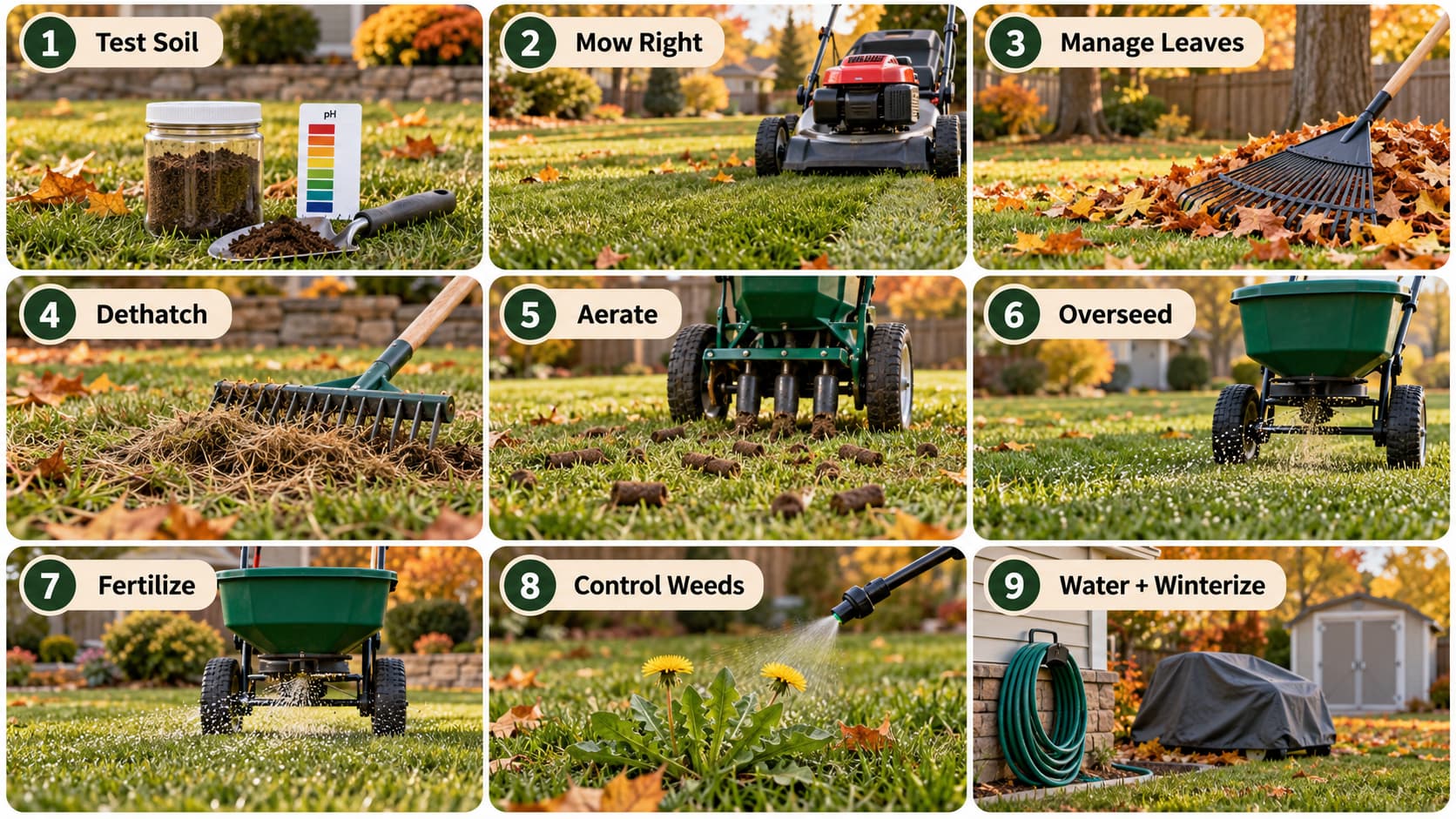
Once you know your grass type, fall lawn care comes down to nine tasks done in the right order. Skipping the sequence, not just the tasks, is what usually causes problems.
1. Test Your Soil First
A soil test tells you your pH level and nutrient needs before you spend money on fertilizer. Basic kits cost around $10 to $20, or you can send a sample to your local extension office for a detailed report. This single step decides which fertilizer ratio you buy later. Skipping it means guessing, and guessing wastes both money and time.
2. Mow at the Right Height
Keep mowing as long as your grass keeps growing, even into late fall. Cool-season grasses do well with a slightly shorter final cut, while warm-season grasses prefer a slightly taller one to protect against frost. Cutting too short stresses the roots right when they need strength the most.
3. Manage Fallen Leaves
A thin layer of leaves can be mulched right into the lawn with a mower. A thick, wet layer needs to be raked or blown away before it blocks sunlight and traps moisture. Left alone, leaf piles invite mold, fungus, and dead patches by spring. Clearing leaves weekly during peak fall keeps this manageable.
4. Dethatch If Needed
Thatch is the layer of dead grass and roots that builds up between soil and living grass. Push a screwdriver into your lawn, and if it stops at a spongy layer thicker than half an inch, it is time to dethatch. Cool-season lawns handle fall dethatching well, but warm-season lawns recover better if you wait until late spring. This is not a task most lawns need every year.
5. Aerate Compacted Soil
Aeration pulls small plugs of soil out of your lawn so water, air, and nutrients can reach the roots. Signs you need it include water pooling on the surface or grass that feels spongy underfoot.
According to University of Minnesota Extension, compacted soil restricts root growth and reduces water infiltration, which is exactly what aeration corrects. Aerating cool-season lawns is best in early to mid-fall, while warm-season lawns are best aerated in late spring.
6. Overseed Thin or Bare Spots
Overseeding fills in bare patches and thickens thin areas of a cool-season lawn. The best window runs from late August through mid-October, while the soil is still warm enough for germination.
Warm-season lawns generally skip this step unless you are adding ryegrass for winter color. Water lightly and often until the new seed takes hold.
7. Apply the Right Fall Fertilizer
Fall fertilizer should be low in nitrogen and higher in potassium to support root growth rather than leaf growth. Apply it about three to four weeks before your area’s first expected frost.
Feed warm-season lawns earlier, by late summer, so growth has time to slow before cold weather arrives. Always follow your soil test results over a generic ratio.
8. Control Weeds Before They Spread
Fall is one of the best times to treat weeds because they are pulling nutrients down into their roots. Post-emergent herbicides work well on visible weeds like dandelions and clover.
Pre-emergent herbicides block weed seeds, but they will also block grass seed, so avoid them if you just overseeded. Pick one approach based on whether you seeded this season.
9. Adjust Watering and Winterize Equipment
Water deeply but less often as temperatures fall, aiming for about an inch a week including rainfall. Keep watering until the ground freezes, then drain hoses and shut off irrigation lines to avoid cracked pipes.
Clean, sharpen, and store your mower blades so they are ready for spring. A few minutes of equipment care now saves a scramble later.
Common Fall Lawn Care Mistakes to Avoid
Even a solid fall lawn care checklist can fail if a few common mistakes slip through. Here are the ones that cause the most damage.
|
Mistake |
Why It Hurts Your Lawn |
|---|---|
|
Fertilizing warm-season grass too late |
Pushes new growth right before frost, which then dies back and weakens the lawn. |
|
Using pre-emergent right after overseeding |
Blocks new grass seed from germinating along with the weeds. |
|
Stopping mowing too early |
Leaves grass too tall going into winter, which invites mold and disease. |
|
Skipping the soil test |
Leads to guessing on fertilizer ratio, wasting money and missing real nutrient gaps. |
|
Leaving wet leaf piles for days |
Blocks sunlight and traps moisture, creating dead patches by spring. |
Fall Lawn Care by Region
Fall lawn care does not look the same everywhere in the country. Your region decides how much of this checklist applies and when.
-
Northern and Midwest regions: Follow the full checklist, since cool-season grass is actively growing and fall is the best time to build roots.
-
Southern regions: Skip overseeding and late fertilizing, and focus mainly on mowing height and weed control instead.
-
Transition zone areas: Check your exact grass type closely, since both cool-season and warm-season grasses grow in this region and need different timing.
Conclusion
Fall lawn care is not complicated once you know the right order. Test your soil first, mow with purpose, manage leaves, aerate, overseed, feed, and control weeds before the ground freezes.
Skip the guesswork of random dates and let soil temperature and grass type guide your timing instead.
A little effort spread across a few weekends pays off next spring with thicker, greener grass and fewer bare patches. Follow this checklist, adjust it to your region, and enjoy the results.
Frequently Asked Questions
When should I overseed and fertilize my lawn in the fall?
Aerate first, then overseed between late August and mid-October, and apply your main fertilizer a few weeks later or as a light starter feed at seeding.
What lawn care should I do in October?
October is prime time to aerate, overseed cool-season grass, and apply your main fall fertilizer application before the ground gets too cold.
Should I cut my grass short or long in the fall?
Cool-season grass benefits from a slightly shorter final cut, while warm-season grass should be left a bit taller to protect against frost damage.
Is it better to leave cut grass on the lawn or pick it up?
Short grass clippings can stay on the lawn because they return nutrients to the soil, but always remove or mulch thick leaf piles.
Is 10 minutes of watering the lawn enough?
Usually not. Most sprinklers need closer to 20 to 30 minutes to reach the one inch of water per week that grass roots need.
Can I put new grass on top of old grass?
You can overseed new grass seed into an existing lawn, but laying new sod directly over old grass without removing it first will not take root properly.
What fertilizer should I put down in October?
Choose a low-nitrogen, high-potassium fall or winterizer fertilizer, ideally based on what your soil test recommends for your specific lawn.