DIY Sofa Table: Easy Build Steps with 9 Design Ideas
A living room can feel close to complete, yet still have one empty spot that looks unused. The space behind a couch is often where that gap shows the most.
A diy sofa table can give that area a simple purpose without making the room feel crowded.
I’ve built one myself, and the difference it made to an oddly empty stretch of wall was bigger than I expected. It can hold small decor, everyday items, lamps, or storage pieces while adding a more finished look.
With the right size and style, this project can fit different rooms, budgets, and skill levels without feeling too hard to start.
Why Add a DIY Sofa Table Behind Your Couch?
A diy sofa table is a slim table placed behind a couch, beside a sofa, or along a blank wall. It gives you a handy surface for lamps, books, drinks, remotes, baskets, small decor, or phone chargers without adding bulky furniture.
It works especially well behind a couch because it turns dead space into something useful. The table can make the seating area feel more balanced while adding useful storage and display space.
Some people also use it as the surface that ties the whole seating arrangement together; pairing a sofa table with the right coffee table on the other side of the couch is what usually makes a living room feel fully furnished instead of half-done.
Since most sofa tables are narrow, they can fit neatly in living rooms, apartments, and open layouts without taking up too much floor space.
Things to Consider Before Building a DIY Sofa Table
A little planning can make your diy sofa table easier to build and better suited to your room. Before buying wood or making cuts, check the size, style, and features you want so the finished table feels useful instead of awkward.
You also don’t need to own a saw to start. Most hardware stores will cut lumber to your exact measurements for free or for a small fee, which is worth asking about before you buy any tools.
- Measure your sofa and space: Measure the sofa length, sofa back height, wall clearance, and the walkway space behind the couch. The table should not feel too wide, too tall, or too deep for the room.
- Choose the right height and depth: A sofa table usually looks best when it sits level with the sofa back or slightly lower. Keep the depth narrow enough so people can still walk comfortably behind the couch.
- Pick a style for your living room: Choose a look that fits your space, such as farmhouse, rustic, modern, industrial, minimalist, painted wood, or natural stained wood. Match it with your couch, flooring, and nearby furniture.
- Decide what features you need: Think about how you will use the table every day. You can add a lower shelf, baskets, hooks, charging ports, lamps, cable clips, or hidden storage.
One quick note before you pick a plan: the build below is a fitted, truss-style table for anyone who wants a more custom, furniture-grade look and doesn’t mind a longer weekend project.
If you’d rather keep things simple and inexpensive, skip ahead to the “Simple 2×4 Sofa Table” idea further down; it uses the same basic principles with far fewer steps.
How to Build a DIY Sofa Table Step-by-Step
Building a diy sofa table becomes much easier when you follow a clear order. Start with the right tools, plan the size, build the base, then finish it in a way that matches your living room.
For this build, you’ll mainly need a miter saw, a table saw, a pocket-hole jig, clamps, and a sander. Nothing exotic, but a pocket-hole jig makes a real difference in how tight the joints end up.
Step 1: Cut and Square the Base Lumber

Start by cutting the legs from 4x4s and the apron, stretcher, and truss pieces from 2x4s using a miter saw. To eliminate the rounded corners typical of dimensional lumber, rip a ¼ inch off each side on the table saw, leaving clean 3-inch-wide boards.
This small step creates tighter, gap-free joints and gives the final table a noticeably more refined, professional appearance.
Step 2: Assemble the Table Base Sides

Drill pocket holes in the apron pieces and cut biscuit slots for the tabletop fasteners. Flip the legs upside down and glue-screw the short aprons centered onto each leg.
Attach the lower side stretchers, then the front and back aprons, using clamps and a support block to hold everything steady. Finish by installing a support bracket between the aprons for the truss.
Step 3: Cut and Fit the Truss Angles

Drill pocket holes in the riser and inner supports, then attach the riser to the stretcher’s center. Set the miter saw to 50°, test-cutting scrap first to dial in the fit before cutting the outer truss supports.
Cut pieces slightly long initially, then fine-tune the length for a tight, gap-free connection between the riser and supports.
Step 4: Assemble and Install the Truss

Drill holes with a forstner bit, glue and screw the outer supports to the riser and stretcher. Cut the inner supports using the same angle as before, then secure them with pocket screws.
Plug all visible pocket holes with 3/8-inch dowels for a clean look. Flip the base over, position the truss assembly, and secure it to the stretchers and top.
Step 5: Sand and Finish the Base

Once the truss is fully secured and all pocket holes are plugged and trimmed flush, sand the entire base thoroughly with 80-grit sandpaper, then 150-grit.
This removes rough edges and prepares a smooth surface. Later, paint the base with two to three coats of medium gray satin latex enamel for a durable, polished finish.
Step 6: Prepare and Glue the Reclaimed Top

Plane only one side of each reclaimed Douglas fir board to preserve character, then joint one straight edge per board.
This is the step I’d budget the most patience for; reclaimed boards are almost never perfectly flat, and rushing the clamping is where most gaps in the seams come from.
Glue the boards using a silicone brush on the lower ¾ of each seam to minimize squeeze-out on top. Clamp firmly, working out any twist, then cut the glued top to final length using a circular saw and edge guide.
Step 7: Sand, Finish, and Attach the Tabletop

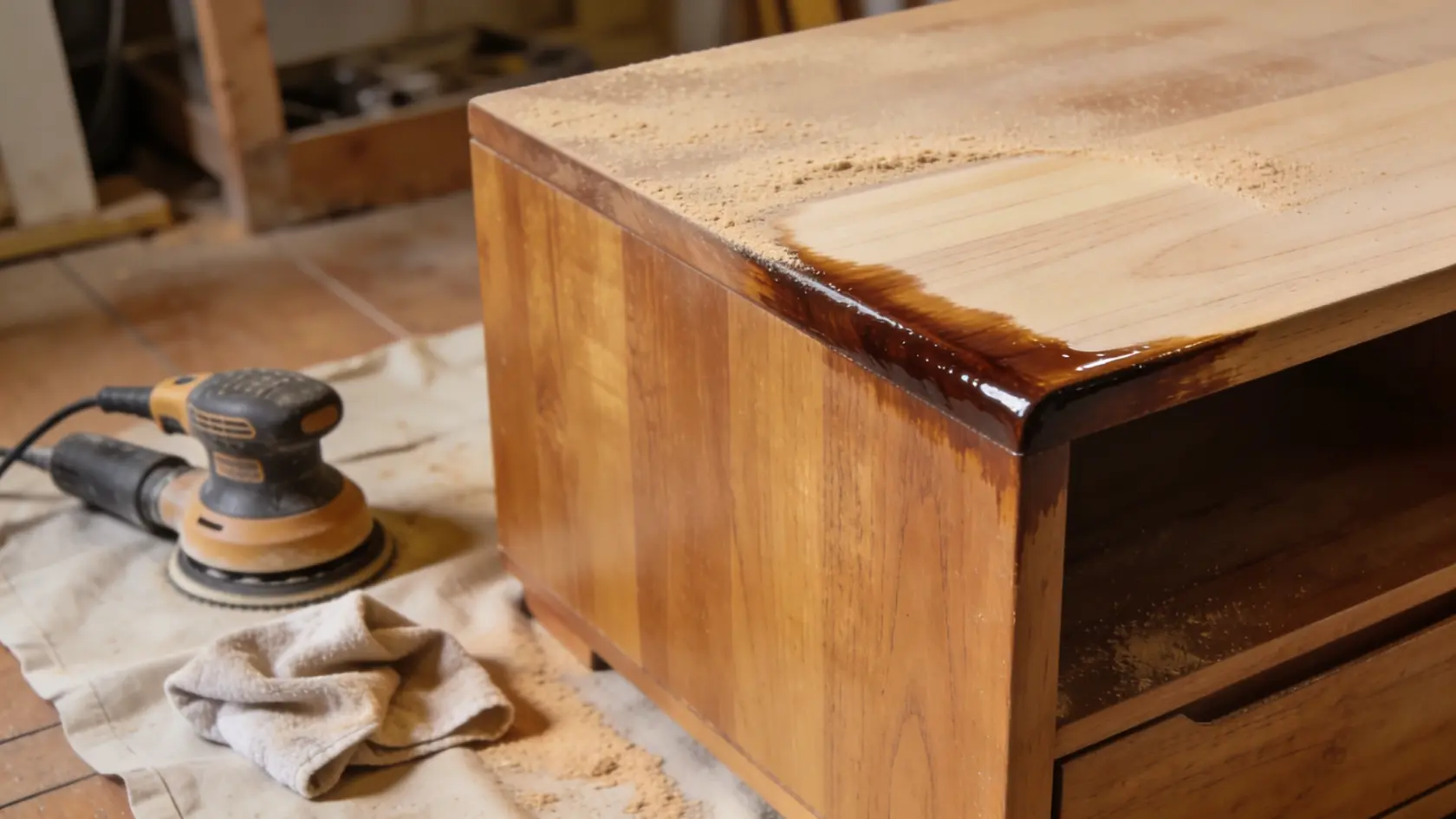
Lightly sand the top with 80-grit to expose fresh wood while preserving gouges and saw marks, then smooth with 150-grit.
Apply two coats of water-based polyurethane using a chip brush. Once dry, attach the top to the base using tabletop fasteners, completing your rustic-meets-modern DIY sofa table with its eye-catching truss detail.
For a closer look at the wood preparation process you can watch the original video here: Fix This Build That
DIY Sofa Table Ideas for Behind Your Couch
A diy sofa table can be built in many ways, depending on your room size, sofa style, budget, and storage needs. Some designs are simple and practical, while others add more style, charging space, or flexible use.
1. Simple 2×4 Sofa Table

A simple 2×4 sofa table is a great choice for beginners because the wood is strong, affordable, and easy to find. It gives the table a sturdy base without making the project feel too complicated.
Style it with a warm stain, a small lamp, and a tray for remotes or coasters. This look works well in rustic, farmhouse, or casual living rooms.
2. Narrow Behind-Couch Table

A narrow behind-couch table is useful when you have limited space behind the sofa. It gives you a surface for lamps, drinks, books, or chargers without making the walkway feel tight.
Keep the styling slim too, with low decor, a small plant, or a narrow tray. This helps the table stay useful without making the space feel crowded.
3. Sofa Table with Storage Baskets

A sofa table with storage baskets is helpful when you want the room to look cleaner without hiding everything in cabinets. Baskets can hold blankets, remotes, toys, magazines, or pet items.
Style it with matching baskets on the lower shelf and a simple lamp or books on top. This keeps the storage looking planned instead of messy.
4. Sofa Table with Charging Station

A sofa table with a charging station is useful for phones, tablets, lamps, and laptops. You can add an indoor-rated power strip, USB charger, or cable clips to keep cords easier to manage.
Style it with a lamp, a small tray, and hidden cord clips under the tabletop. Keep chargers tucked toward the back so the setup looks neat.
5. Farmhouse Wood Sofa Table

A farmhouse wood sofa table usually has a warm stained finish, simple lines, and sturdy legs. It brings a cozy look to the space without needing too much detail.
Style it with woven baskets, ceramic vases, framed photos, or soft greenery. A slightly distressed finish can also make the table feel more relaxed and lived-in.
6. Modern Black Sofa Table

A modern black sofa table gives the living room a clean and bold look. It works well when you want the table to stand out without adding too many colors.
Style it with light-colored decor, a metal lamp, or a simple glass vase. Keep the pieces minimal so the black finish looks sharp instead of heavy.
7. Industrial Pipe Sofa Table

An industrial pipe sofa table uses wood boards with metal pipe legs or supports. It gives the table a stronger look and can make a simple build feel more custom.
Style it with darker books, black metal accents, Edison-style lamps, or leather trays. Use a darker stain for a bold look, or a lighter stain for a softer look.
8. Sofa C-Table

A sofa C-table is smaller than a full sofa table and can slide beside or partly over the sofa arm. It is useful for drinks, snacks, books, tablets, or laptops.
Style it with only one or two items, such as a coaster and a small book. Since the surface is small, too much decor can make it less useful.
9. Console-Style Sofa Table

A console-style sofa table is longer and often more decorative. It can sit behind a couch, against a living room wall, or near an entryway.
Style it with matching lamps, stacked books, baskets, framed art, or a long tray. Keep the setup balanced so the table feels polished without looking crowded.
Maintenance Tips for Your DIY Sofa Table
A diy sofa table can stay sturdy and clean for years with a little regular care. Since it may hold lamps, drinks, books, baskets, chargers, and decor, the surface and frame should be checked periodically.
- Clean the surface weekly: Wipe the tabletop with a soft cloth to remove dust, crumbs, and minor marks.
- Protect it from drink stains: Use coasters under drinks to prevent water rings, stains, or cloudy spots on painted or stained wood.
- Check screws and joints: Tighten screws and inspect joints every few months, especially if the table is long, narrow, or used often.
- Keep cords organized: Keep cords, chargers, and power strips neat so they do not pull against the table or create clutter behind the couch.
- Avoid too much weight: Do not place very heavy items on a slim sofa table unless the frame has strong support braces.
- Touch up the finish: Fix chipped paint or worn stain as needed to keep the table looking clean and finished.
Protect the floor: Add felt pads under the legs to prevent scratches on wood, tile, or vinyl floors.
Conclusion
Building my own DIY sofa table taught me that the “empty spot” behind a couch is really just an opportunity waiting for the right project.
With the right measurements, basic tools, and a clear plan, you can build a piece that fits your sofa, supports your daily needs, and matches your home style.
Start with a design that feels easy for your skill level, then add features like baskets, shelves, charging space, or a painted finish.
Even a small project made a bigger difference in my living room than I expected — try one idea that fits your room and build from there with confidence.
Frequently Asked Questions
How Deep Should a Sofa Table Be?
Most sofa tables are narrow, usually around 10–14 inches deep, so they fit behind a couch without blocking walkways.
What is the Best Height for a Sofa Table?
A sofa table usually looks best when it sits level with the sofa back or slightly lower.
Can a Sofa Table Have Built-In Charging?
Yes, you can add cable clips, USB chargers, or an indoor-rated power strip while planning the table design.