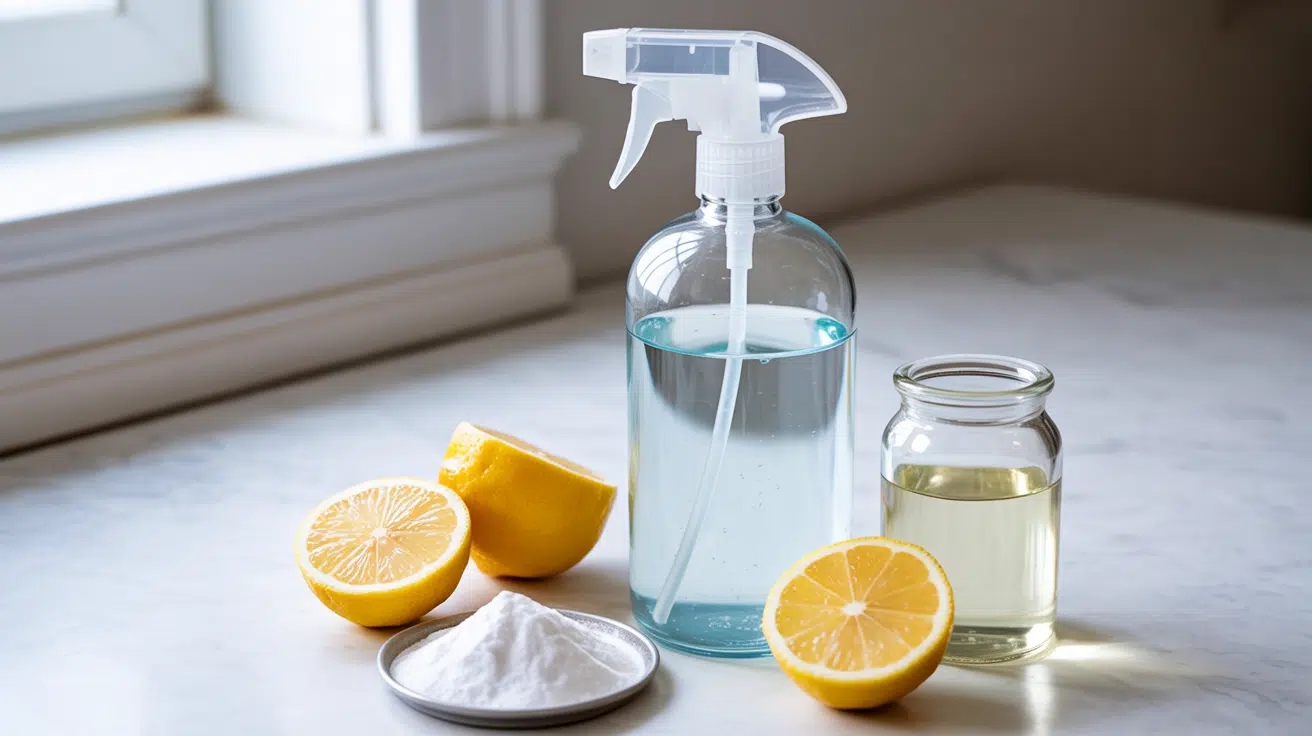
DIY All-Purpose Cleaner: 5 Easy Non-Toxic Recipes
Is your kitchen counter dirty again, and does the store-bought spray keep costing more every time you buy it? Making your own DIY all-purpose cleaner at home is easier than most people expect.
You only need a few simple ingredients you probably already have on hand. Distilled water, vinegar, dish soap, castile soap, alcohol, and essential oils all work well together in different combinations.
Each ingredient plays a different role in cleaning your home. Some formulas cut grease fast, while others are gentler and safer for delicate surfaces like natural stone or wood.
These recipes cover safe surfaces, mixes to avoid, and simple storage tips so your cleaner stays fresh longer.
Why Do You Need a DIY All-Purpose Cleaner?
Many people want a cleaner that feels simple and safe. A DIY non-toxic all-purpose cleaner uses ingredients you can actually recognize, unlike many store-bought sprays.
It also helps cut down on strong artificial fragrances that can bother sensitive noses. Making your own cleaner means fewer plastic bottles piling up under your sink too.
You also get full control over what goes into your cleaner. You can adjust scent, strength, and ingredients based on your home, pets, kids, allergies, or specific surfaces.
Homemade cleaners are often gentler than harsh chemical sprays. They tend to cost less over time, and you decide exactly what touches your counters, floors, and furniture.
Ingredients You Will Need
Before mixing anything, it helps to know what each ingredient actually does. Here’s a quick breakdown of the basics used in most homemade cleaner recipes.
- Water: Dilutes the cleaner and forms the base
- Vinegar: Cuts odor, light grime, and mineral buildup
- Dish soap: Lifts grease and everyday dirt
- Castile soap: Gentle soap for no-vinegar formulas
- Alcohol: Helps with grease and faster drying
- Essential oils: Add scent, but need safety checks
Each one brings something different to the mix. Combining the right ones helps you build a cleaner suited to your surfaces, without relying on harsh chemicals.
DIY All-Purpose Cleaner Formulas
Now that you know what each ingredient does, here are five easy recipes you can mix at home, each suited to different surfaces and cleaning needs.
Some work best for tough grease, others for gentle daily wipe-downs. Pick the one that matches your surface and cleaning routine.
1. Basic Dish Soap All-Purpose Cleaner

This simple recipe works best for everyday counters, appliances, sticky spots, and general wipe-downs around the house.
|
Ingredients:
Steps:
|
This mild recipe is best for granite, marble, quartzite, limestone, and other acid-sensitive surfaces that vinegar can damage.
2. Basic Vinegar All-Purpose Cleaner

This vinegar based cleaner works well on sinks, tile, trash cans, appliances, and everyday grime found around the house.
|
Ingredients:
Steps:
|
Caution: Do not use this cleaner on marble, granite, limestone, travertine, or any other natural stone surface.
3. DIY All-Purpose Cleaner Without Vinegar

This gentler recipe skips vinegar entirely, making it a good choice for readers who prefer a milder, no-vinegar cleaner.
|
Ingredients:
Steps:
|
This formula works better on surfaces that should never be cleaned with acidic vinegar, since the soap base is much gentler.
4. DIY All-Purpose Cleaner With Alcohol

This alcohol based cleaner works great on greasy fingerprints, bathroom surfaces, shiny surfaces, and anywhere you need a quick-dry finish.
|
Ingredients:
Steps:
|
Caution: Do not use near flames. Do not mix with bleach. Test painted or delicate surfaces first.
5. Fresh Citrus Peel

This naturally scented cleaner is perfect for readers who want a fresh citrus smell without added fragrances or essential oils.
|
Ingredients:
Steps:
|
Note: Avoid using this cleaner on natural stone, since it still contains vinegar and remains acidic even after straining.
Where Can You Use a DIY All-Purpose Cleaner?
Not sure which recipe fits which spot in your home? Here’s a simple breakdown to help you match the right cleaner to the right surface.
Use the table below as a quick reference before you start cleaning any room:
| Surface | Best Recipe |
|---|---|
| Kitchen counters | Basic dish soap cleaner or vinegar cleaner |
| Bathroom sink | Vinegar cleaner |
| Tile | Vinegar cleaner |
| Stove exterior | Dish soap or alcohol cleaner |
| Trash can | Vinegar cleaner |
| Glass | Light vinegar cleaner |
| Wood furniture | Spray cloth first, never spray directly |
| Natural stone | Stone-safe soap cleaner only |
Most homemade all-purpose cleaners work well across common kitchen, bathroom, and household surfaces, as long as you match the formula to the surface correctly.
How Long Does Homemade All Purpose Cleaner Last?
Shelf life depends mostly on the type of water you use. H A few quick rules will help you get the most out of every batch you make:
Tap water version: Lasts about 2 to 4 weeks
Distilled water version: Lasts noticeably longer
- Store the bottle in a cool, dark place away from sunlight
- Always label and date the bottle when you make it
- Throw it away if it smells strange, looks cloudy, or has any residue
Homemade cleaner made with tap or filtered water usually lasts 2 to 4 weeks, while distilled water versions can last anywhere from 3 to 6 months.
Common Mistakes to Avoid
A few small slip-ups can make your homemade cleaner less effective or even damage surfaces. Here are the mistakes to watch out for.
Keep an eye out for these common errors before they cost you a bottle or a surface:
- Mixing vinegar and castile soap in the same bottle
- Using vinegar on natural stone surfaces
- Adding too much essential oil to the mix
- Reusing dirty or unwashed bottles
- Forgetting to label the cleaner with its name and date
- Spraying electronics directly with any liquid cleaner
- Treating every homemade cleaner as a disinfectant
- Storing homemade cleaner in direct sunlight
Avoiding these simple mistakes helps your cleaner stay effective longer and keeps your surfaces safe from accidental damage.
Is DIY All Purpose Cleaner Really Effective?
Yes, homemade all-purpose cleaner works well for most daily messes. It handles everyday dirt, spills, dust, light grease, and odors around the home easily.
For regular wipe-downs on counters, appliances, and common surfaces, these recipes do a solid job without needing anything fancy or expensive from the store.
That said, homemade cleaner has limits. It is not always a replacement for proper disinfectants when you need to kill germs and bacteria.
It also will not handle mold removal, heavy-duty degreasing, or other specialty jobs. Keep dedicated products on hand for those tougher, specific cleaning tasks.
Wrapping Up
There’s a real satisfaction in mixing up your ownDIY all-purpose cleaner and knowing exactly what’s in the bottle you use.
The right formula depends on your surface. Dish soap and vinegar work for everyday messes, while soap-based mixes protect delicate stone.
Choosing homemade cleaners means fewer chemicals, less plastic waste, and a healthier space for your family, pets, and everyday living.
A small batch mixed today can replace several store-bought bottles this month. That alone makes the switch worth trying.
Have you tried any of these recipes? Share your experience, favorite scent combinations, or tips in the comments below.
Frequently Asked Questions
Can you Use Vodka Instead of Rubbing Alcohol in a DIY All-Purpose Cleaner?
Yes, plain vodka can replace rubbing alcohol in most recipes. It cuts grease and helps surfaces dry faster, though rubbing alcohol tends to work slightly better.
Is DIY All Purpose Cleaner Safe for Wood Countertops?
Yes, wood and butcher block countertops can be cleaned with a gentle soapy water mix. Avoid over-saturating wood, since excess moisture can warp or damage it.
Can you Mix Baking Soda Into a Homemade All-Purpose Cleaner?
Baking soda works better as a separate scrub than mixed into liquid cleaners. Combine it with castile soap or dish soap for scrubbing sinks, tubs, or stubborn stains.