How to Take Down a Conservatory: A Practical Step-by-Step Guide
Conservatories age. The polycarbonate yellows, the seals fail, the frames warp, or the design simply doesn’t suit the way you want to use the house any more. At some point the right answer is to take it down rather than patch it up.
This guide walks through how to take down a conservatory safely and methodically, the tools you’ll need, what to do with the waste, and when it’s worth bringing in a professional rather than tackling it as a weekend job.
What Does It Take to Dismantle a Conservatory?
To take down a conservatory you typically need two to three people, basic hand tools, ladders, safety gear and a skip. The job takes one to three days for a standard 3m x 4m conservatory and costs £500 to £2,000 if you hire a professional. Most homeowners can dismantle the structure themselves, but the base usually needs a contractor.
Before You Start: Planning and Safety
Conservatory dismantling looks straightforward and largely is, but a 4kg glass panel falling off a ladder can do real damage to a person, a patio or a parked car. A short planning session before you start saves both time and accidents.
- Empty the conservatory completely. Furniture, plants, blinds, anything fixed to the walls. The cleaner the space, the easier the work.
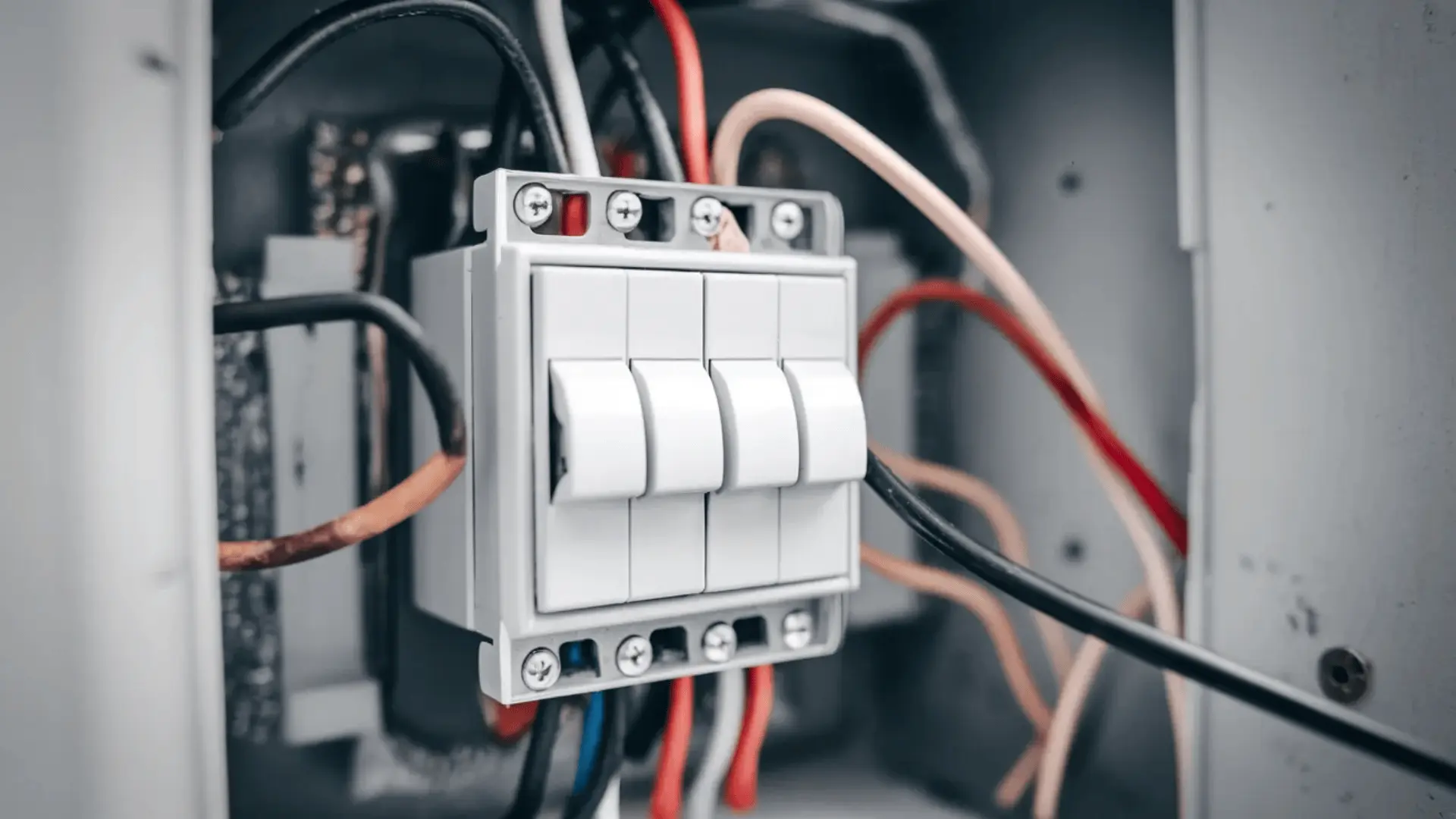
- Isolate the electrics. If there are sockets, lights or wired-in heaters, turn off the relevant circuit at the consumer unit. Cap any cables back inside the wall.
- Check the connection to the house. Make sure you know how the conservatory meets the main wall. Some installations cut into brickwork; others bolt onto a flashing strip.
- Hire a skip. A 6-yard skip handles a typical 3m x 4m conservatory. Order it before you start, not halfway through.
- Wear proper PPE. Safety glasses, gloves, sturdy boots and a hard hat. Glass cuts and falling debris are the two main hazards.
- Check the weather. Don’t start a roof job on a windy day. Glass panels in wind are dangerous.
- Plan the order. Top down, outside in. Work as a team so one person stabilises while another removes fixings.
Tools You’ll Need
Most conservatories come apart with surprisingly few specialist tools:
- Drill or screwdriver with a range of bits (Philips, Pozi, Torx)
- Set of spanners and adjustable wrench
- Step ladder and extension ladder
- Crowbar and claw hammer
- Craft knife (for cutting silicone seals)
- Sledgehammer and chisel (for the base)
- Reciprocating saw (useful but optional)
- Skip and heavy-duty rubble sacks
Step-by-Step: How to Take Down a Conservatory
Working top down keeps the structure stable for as long as possible. Here’s the sequence we’d follow:
Step 1: Remove the Guttering
Start by detaching the guttering and downpipes around the perimeter. These are usually clipped or screwed to the roof eaves. Take them off in sections and stack them clear of the work area.
Step 2: Lift Out the Roof Panels
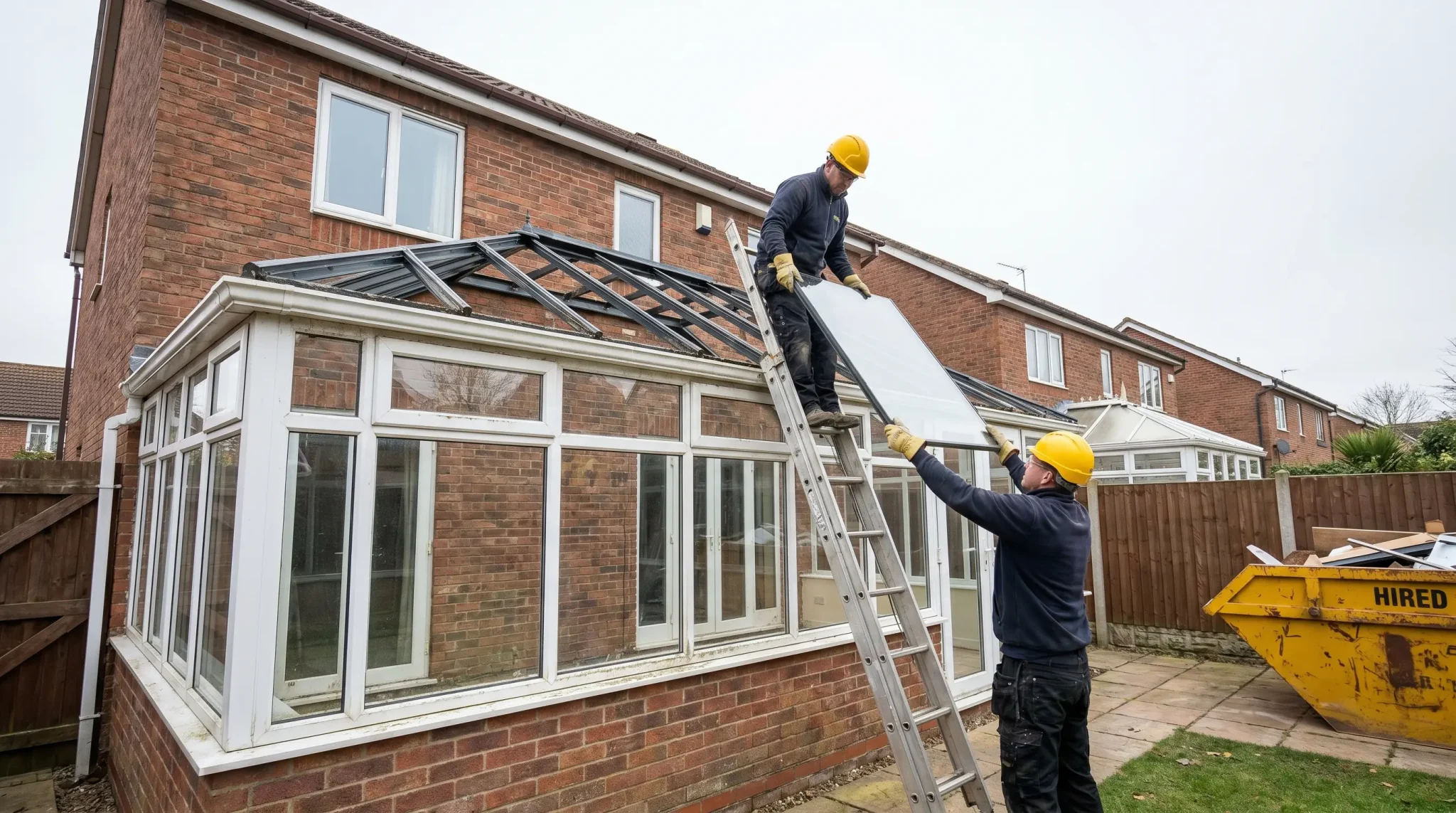
Roof panels (whether glass or polycarbonate) sit between glazing bars and are usually held in place with rubber gaskets and end caps. Remove the end caps, peel back the gaskets, and lift the panels out one at a time.
Heavy glass panels need two people. One on the ladder, one receiving the panel on the ground. Don’t try to manhandle a glass roof panel solo – it’s how injuries happen.
Step 3: Take Apart the Roof Frame
The roof frame (glazing bars and the ridge or hip beam) is bolted to wall plates on the house side and to the top of the conservatory frame on the outer side. Unbolt at both ends, support the bar as you remove the fixings, and lift it down.
Step 4: Remove Glass Walls and Doors
Doors come off first – lift them off their hinges. Then work around the perimeter, removing fixed glass panels and opening windows from each frame section.
Most panels are held by a bead – a thin strip that clips into the frame around the glass. A craft knife or screwdriver pops the bead out, allowing the glass to be lifted clear.
Step 5: Take Down the Frames and Posts
With the glass and roof out, the remaining frame is light enough for two people to dismantle. Frames usually screw or bolt together at corners and at the dwarf wall. Work methodically from one end to the other.
Step 6: Detach From the Host Wall
The conservatory will have a flashing strip or wall plate fixed to the house wall. Unscrew it and check the brick condition underneath. Old silicone or sealant usually peels off with a scraper.
If the conservatory was let into a slot cut in the brickwork, you’ll need to patch the slot afterwards with matching brick or render before you can call the job complete.
Step 7: The Base
If you’re leaving the base in place for a new structure, stop here and have a builder assess whether it’s suitable for what you’re building next.
If the base is going too: the dwarf wall comes apart with a hammer and chisel, working brick by brick. The concrete slab usually needs a powered breaker (hire one for the day). This is the noisiest, dustiest, most physically demanding part of the whole job and the part most homeowners hand off to a contractor.
Waste Disposal and Recycling
A typical conservatory generates two to four cubic metres of mixed waste: glass, uPVC or aluminium frames, polycarbonate roofing, bricks, concrete and packaging.
- Glass: most household recycling centres take glass separately. Don’t put it in the skip with mixed waste if you can avoid it.
- Aluminium frames: scrap metal yards pay for these. A typical conservatory’s aluminium is worth £30 to £100.
- uPVC: not easily recycled by households. Most ends up in skips.
- Bricks and concrete: often accepted at construction recycling sites at lower rates than mixed waste.
If the conservatory is fairly modern and you’ve taken it apart carefully, it may be worth offering for free on local online groups. Plenty of people are happy to take a working conservatory off your hands if they can collect it themselves.
DIY vs Hiring a Professional
The honest answer is that the dismantling itself is within reach of any competent DIYer with a willing second pair of hands. The base, the patching of the host wall and the waste removal are where most people choose to bring in a contractor.
A full conservatory removal in Berkshire or anywhere else typically runs £500 to £2,000 depending on size, complexity and whether the base is included. That covers two operatives, all tools, a skip, and the patch-up of the host wall.
It’s often worth getting a quote even if you plan to do the structure yourself – the cost of the base removal alone can be similar to the full job once you factor in the breaker hire, skip and the time it takes.
What to Do With the Space After
Once the conservatory is gone, you usually have three options:
- Build a new conservatory or orangery on the same footprint. Reusing the base saves £2,000 to £5,000 if it’s still sound.
- Build a proper single-storey extension. Treat it as a fresh project: new foundations, building regulations, the lot. Cost lands closer to £2,000 to £3,000 per m².
- Return the space to garden. Lift the base, level the ground, and lay turf or paving. The simplest and cheapest outcome, often the best one when the conservatory was poorly placed to begin with.
Whichever route you pick, the demolition is the easy bit. The decision about what comes next – and whether you actually wanted a conservatory there in the first place – is the one worth spending time on.