18 Basement Layout Ideas that Actually Work
Most homeowners skip straight to finishes, furniture, and features without ever stopping to ask how the space will actually function. That’s where basement projects go wrong.
The right basement layout does more than divide square footage. It controls noise, improves flow, and makes every part of the space earn its place.
Whether you’re working with a small basement or a large open one, the layout you choose determines how useful it becomes long-term.
I’ll walk you through everything from defining your goals and mapping your structure to matching the right basement layout ideas to your specific space, so you can plan smart and build something that lasts.
Define the Purpose of Your Basement Before Planning the Layout
A well-planned basement starts with one simple question: What do you actually need it for? Locking in your goals early keeps every layout decision focused and practical.
- Intended uses: List every function, TV lounge, bedroom, home gym, office, or storage.
- Usage frequency: Separate daily-use spaces from areas you’ll visit only occasionally.
- Structured zoning: More functions in a single basement require clear zones to avoid chaos.
- Conflicting areas: Keep noisy spaces, such as gyms and TV rooms, away from quiet zones, such as offices or bedrooms.
- Overloading risk: Too many functions crammed into a single layout make the space feel cramped and confusing.
- Common misconception: More features don’t mean a better layout, purpose, and flow always come first.
Define what you need before you plan anything. That one step keeps your entire basement layout from falling apart later.
Measure and Map Structural Constraints First
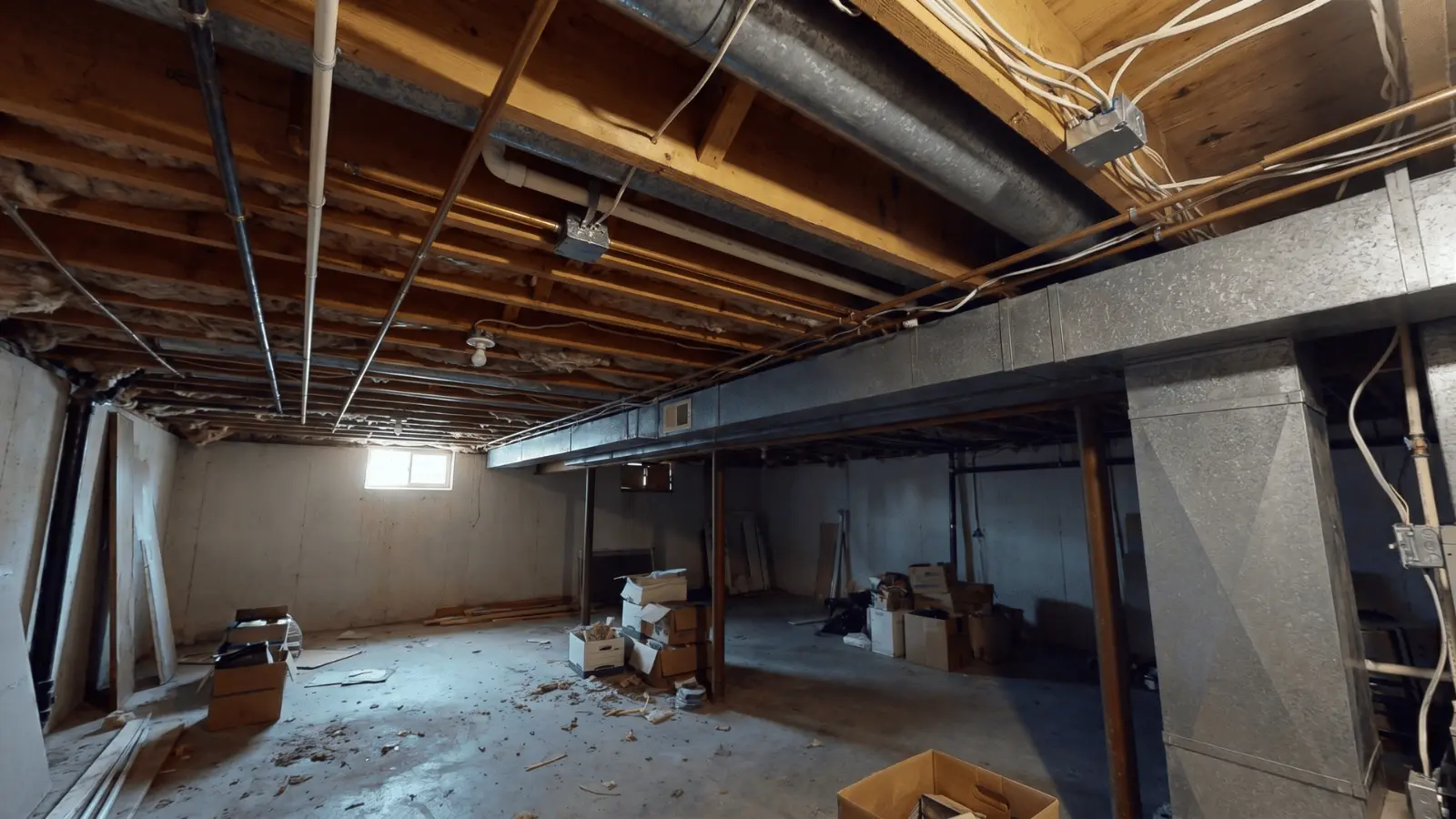
Before anything goes on paper, know what you’re working with. Support columns, HVAC ducts, water lines, drains, windows, and entry points are all fixed. Your layout has to work around them, not the other way around.
Ignoring these elements leads to costly redesign once construction is already underway.
Start with ceiling height. Most local building codes require at least 7 feet for a finished basement. That’s your baseline, but it’s not the whole picture.
Beams and ductwork don’t follow the average. A ceiling that measures 8 feet in the open center of your basement might drop to 6.5 feet directly under a main duct run.
Measure the lowest point in each zone, not the highest. Anything under 7 feet can’t become a legal finished room. You either route your layout around it or frame around the obstruction and plan for a drop ceiling in that area.
Moisture is the other thing to catch early. Areas near water lines and floor drains aren’t suitable for bedrooms or any space where people spend extended time. Map these zones before you assign any function to them.
The biggest mistake here is assuming you can place anything anywhere. Your structure has already made several decisions for you. Read them correctly before you commit to a layout.
How to Create a Basic Basement Floor Plan
Once you know your structural constraints, put them on paper before you pick a layout.
You don’t need software to do this. A sheet of graph paper, a ruler, and a pencil work fine.
Start by sketching the perimeter of your basement to scale; one square per foot is a common approach. Then mark the fixed elements: columns, load-bearing walls, staircase, windows, doors, floor drain, water heater, and HVAC unit.
Next, note the location of existing electrical outlets, plumbing hookups, and any overhead ductwork or beams. These constrain where walls and wet areas can go without significant added cost.
Once your constraints are mapped, you can test different zone arrangements directly on the sketch. Try a few versions before committing. Most homeowners go through three or four floor plan drafts before landing on one that works.
If you plan to pull a permit, which you should for any finished basement, your local building authority will need to see a floor plan that includes square footage, wall locations, doors, and finished versus unfinished areas. It doesn’t have to be architect-grade. It has to be legible and accurate.
Basement Layout Ideas You Can Apply Based on Your Basement Type
Not every basement layout works for every space. The right layout depends on your basement’s size, shape, and what you need it to do.
1. Open Concept Basement
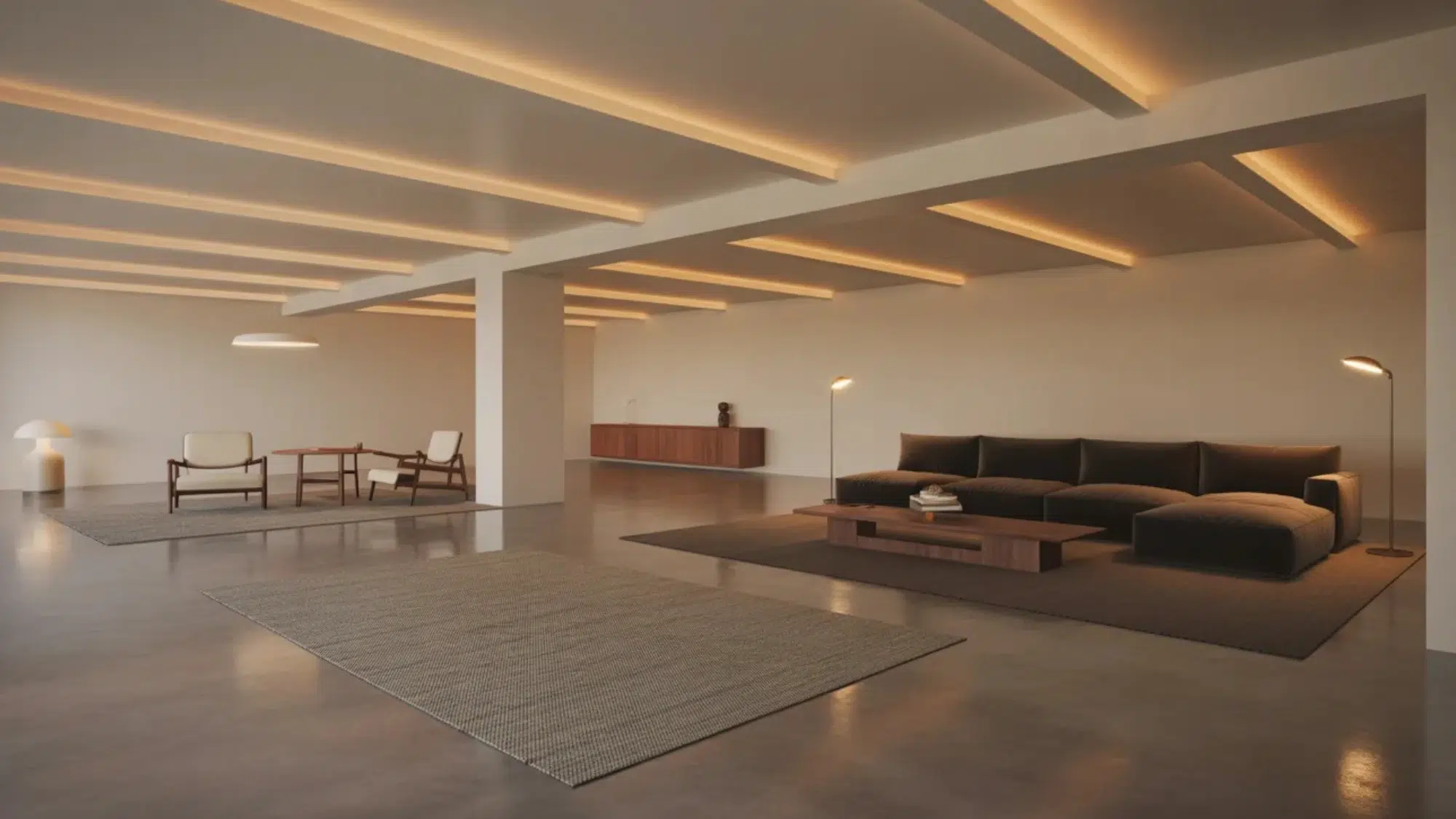
An open-concept layout removes interior walls to create a single, connected space. It works best in mid- to large basements where natural light and airflow aren’t major concerns.
This layout feels spacious and flexible, but it can struggle with noise control and defining separate use areas.
2. Zoned Open
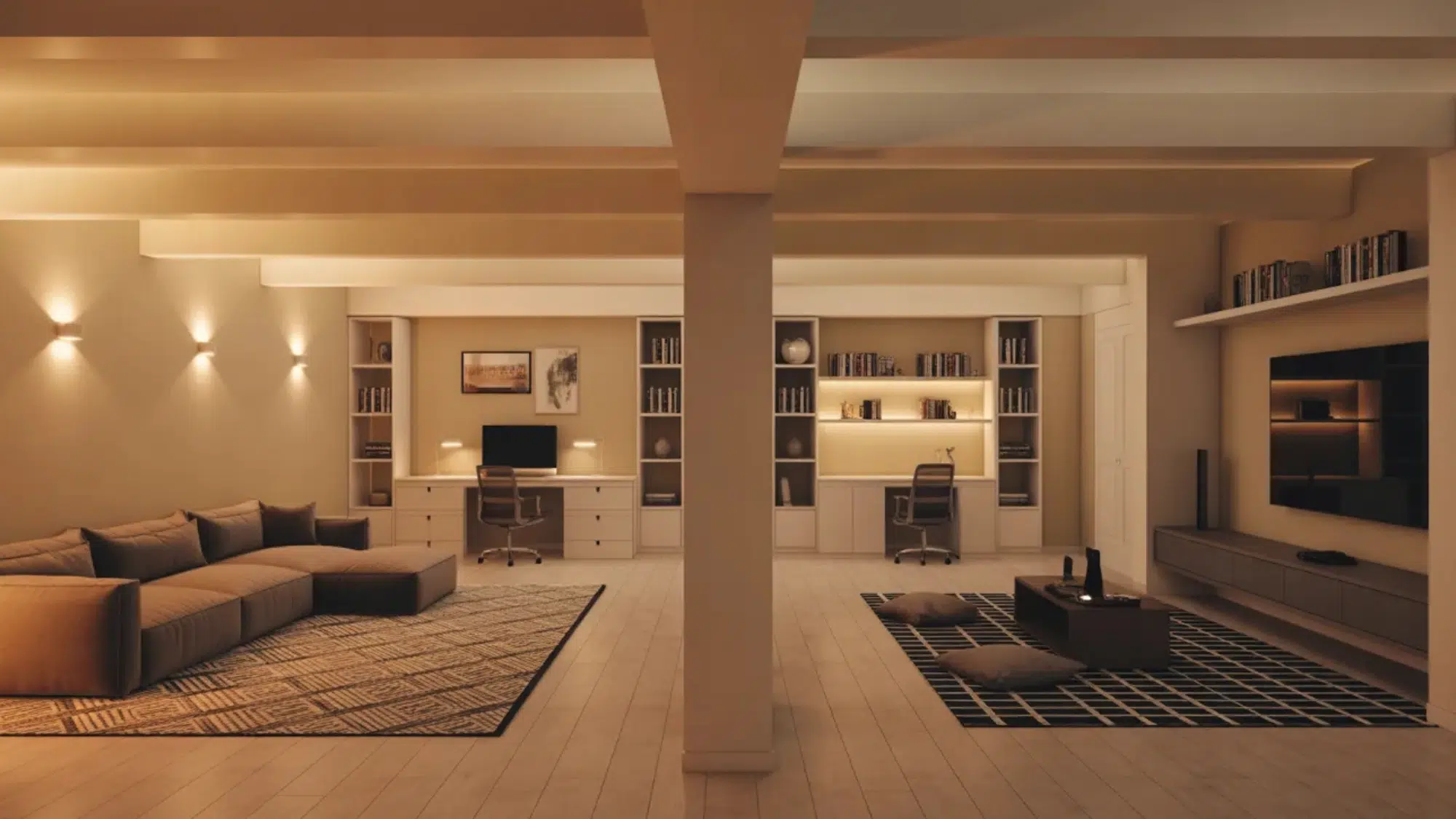
A zoned open layout keeps the open feel but uses furniture, rugs, and lighting to define separate areas. It’s ideal when you want multiple functions without building walls.
It works well in square or rectangular basements but fails when zones aren’t clearly separated.
3. Multi-Room Basement
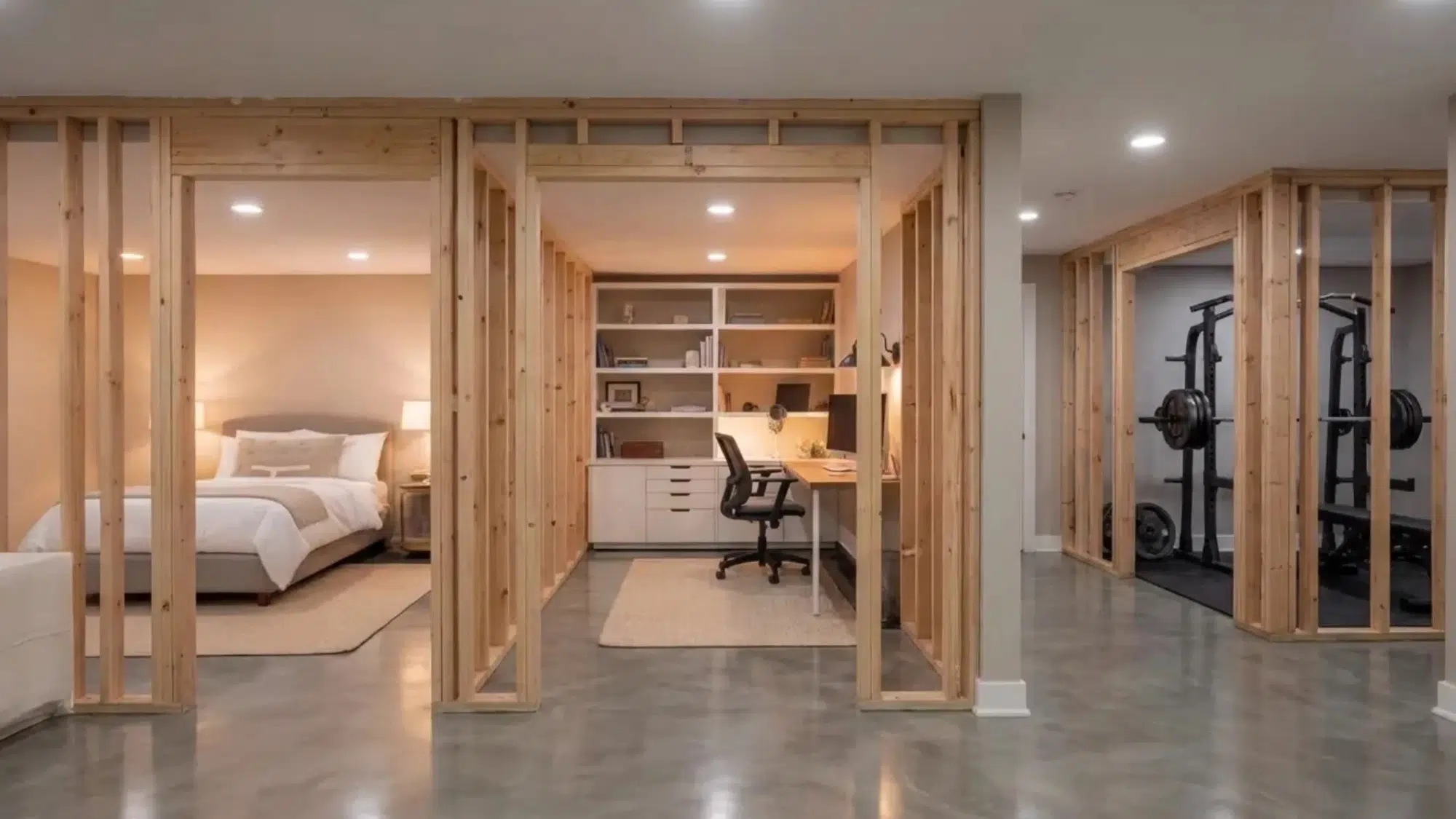
This layout divides the basement into fully enclosed rooms using framed walls. It suits larger basements with multiple distinct purposes, like a bedroom, office, and gym.
It gives privacy and noise control but reduces flexibility and can make smaller basements feel cramped.
4. Long and Narrow Basement
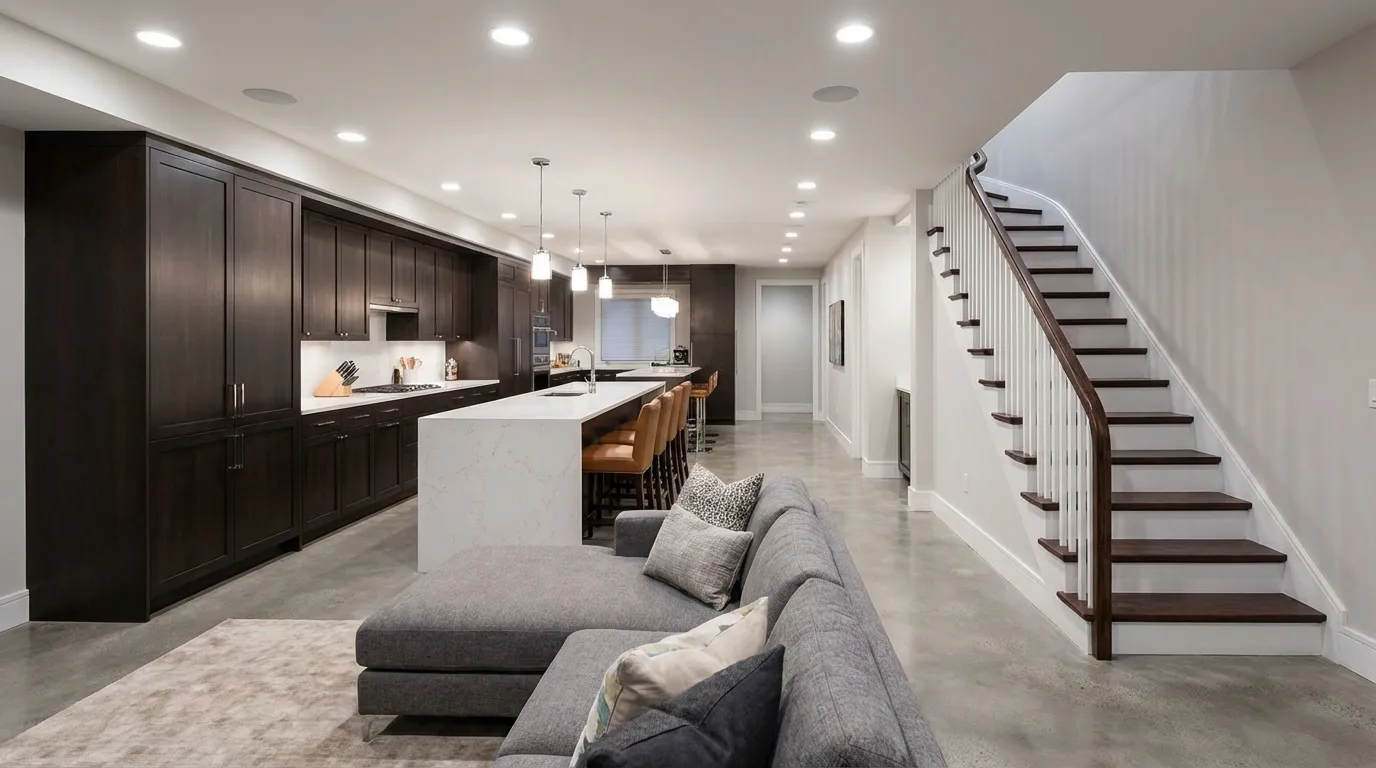
Long, narrow basements require layouts that run the length of the space. Placing zones end-to-end keeps traffic flow smooth and prevents the space from feeling boxed in.
Avoid placing large furniture perpendicular to the walls, as it blocks movement.
5. Small Basement
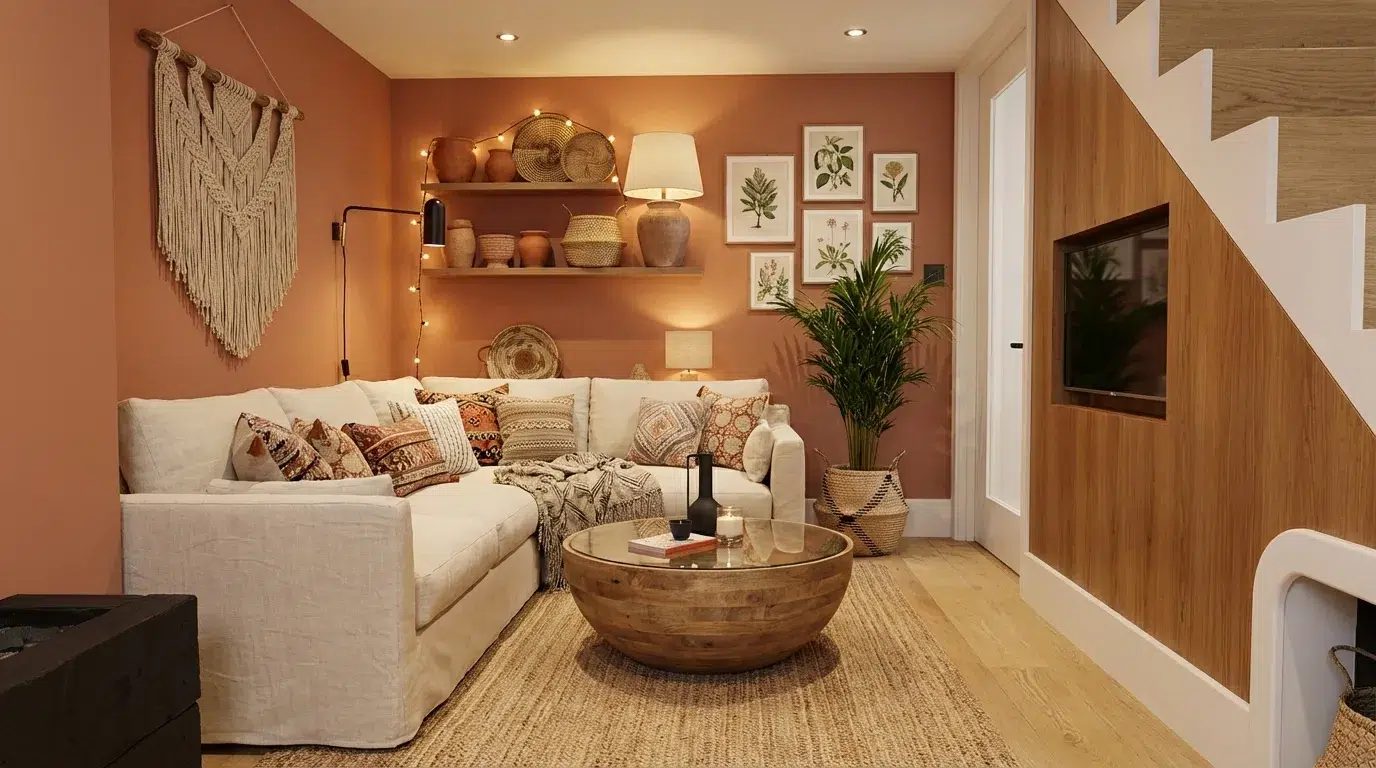
Small basements require layouts that prioritize one or two functions over everything else. Built-in storage, multi-use furniture, and light colors help the space feel larger.
Trying to fit too many uses into a small basement is the fastest way to make it feel unusable.
6. Entertainment Basement
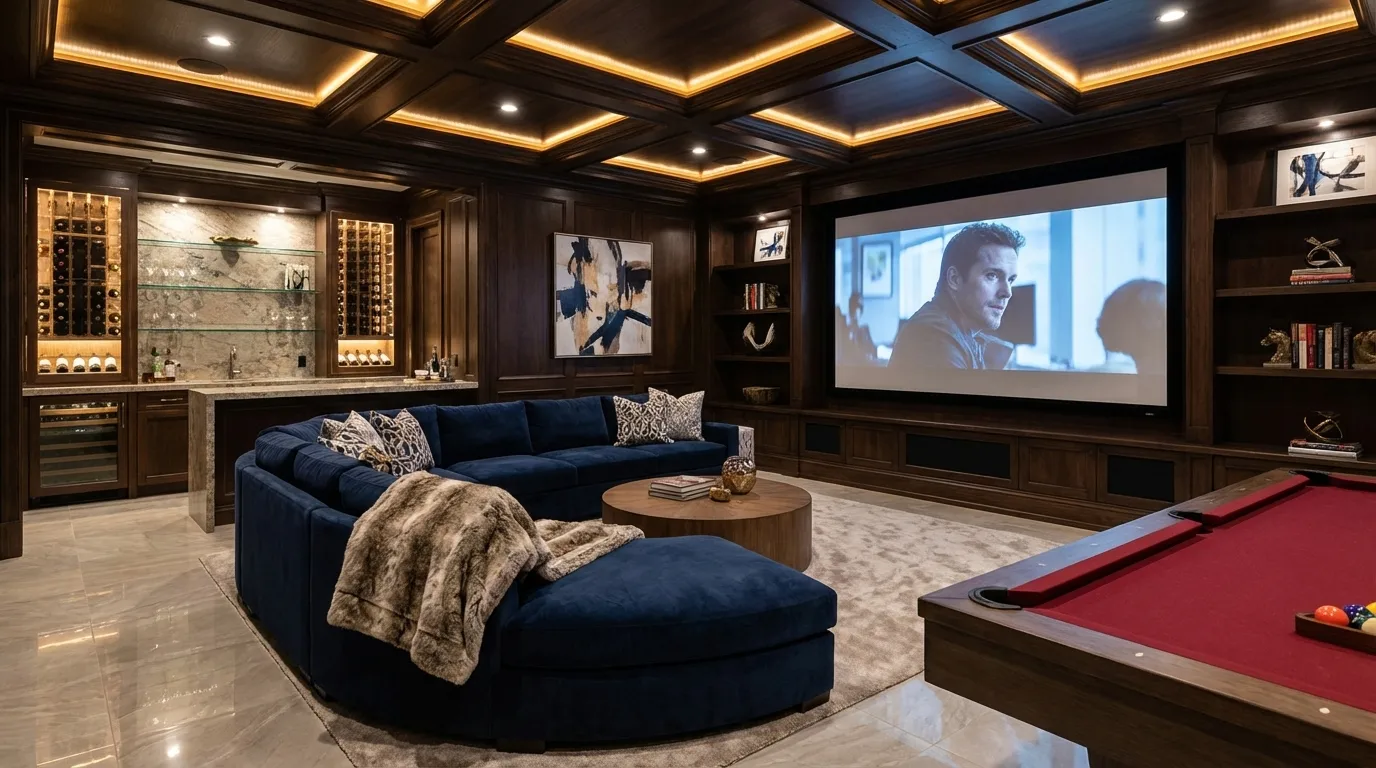
An entertainment layout centers the space around social activity, seating, screens, and a bar or snack area. It works best in open or zoned layouts with good soundproofing.
This layout fails when seating isn’t arranged around a clear focal point, such as a TV or stage.
7. Home Theater Basement
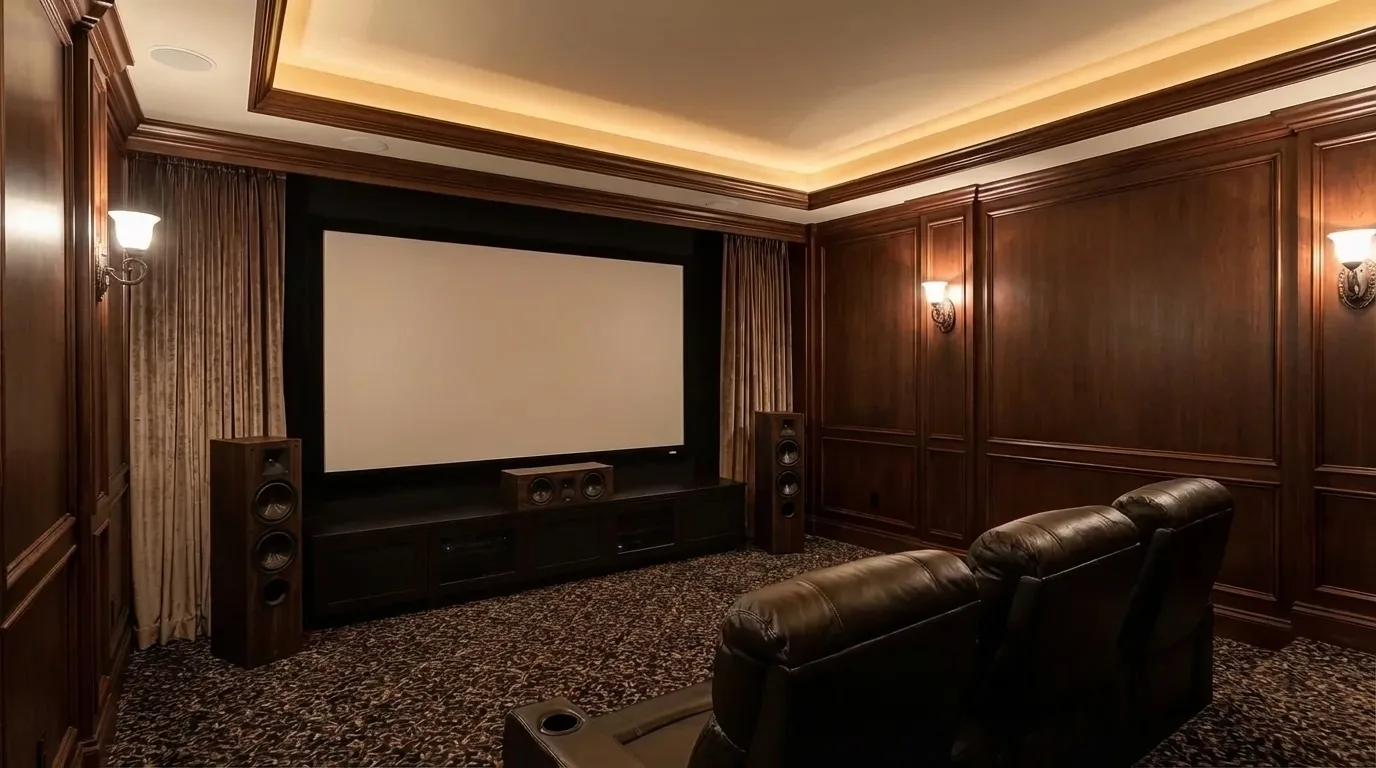
A home theater layout is built around one purpose: an immersive viewing experience. Tiered seating, blackout capability, and acoustic treatment are key.
This layout works best in rectangular basements with limited windows and fails in spaces with too much ambient noise or light.
8. Basement Bar
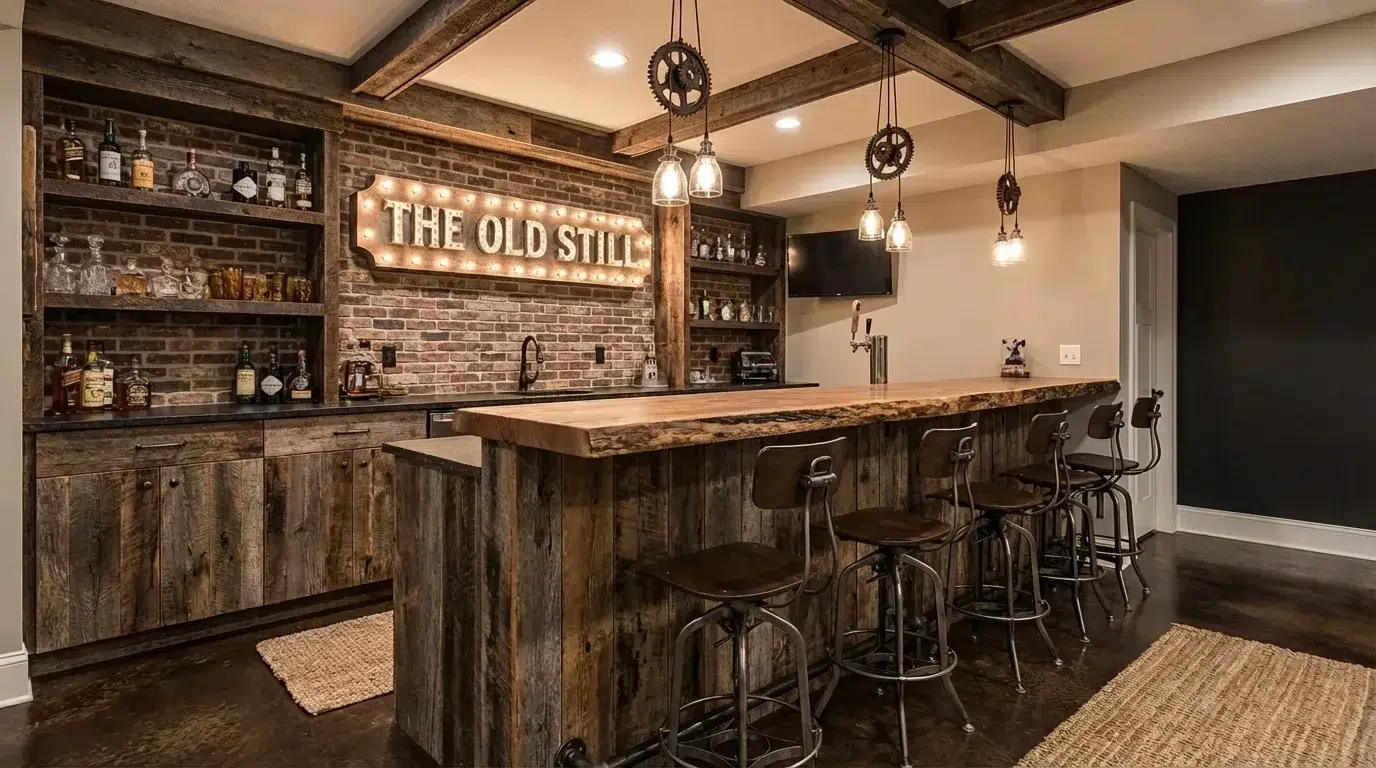
A basement bar layout positions the bar as the room’s centerpiece with seating arranged around it. Counter space, under-bar storage, and proximity to plumbing lines are critical.
This layout works well in entertainment-focused basements but feels out of place in family or multi-use spaces.
9. Game Room Basement

A game room layout prioritizes open floor space for movement and clear zones for each game type. Pool tables, arcade units, and console setups each need dedicated space.
This layout fails when furniture placement blocks natural traffic flow through the room.
10. Family Lounge Basement
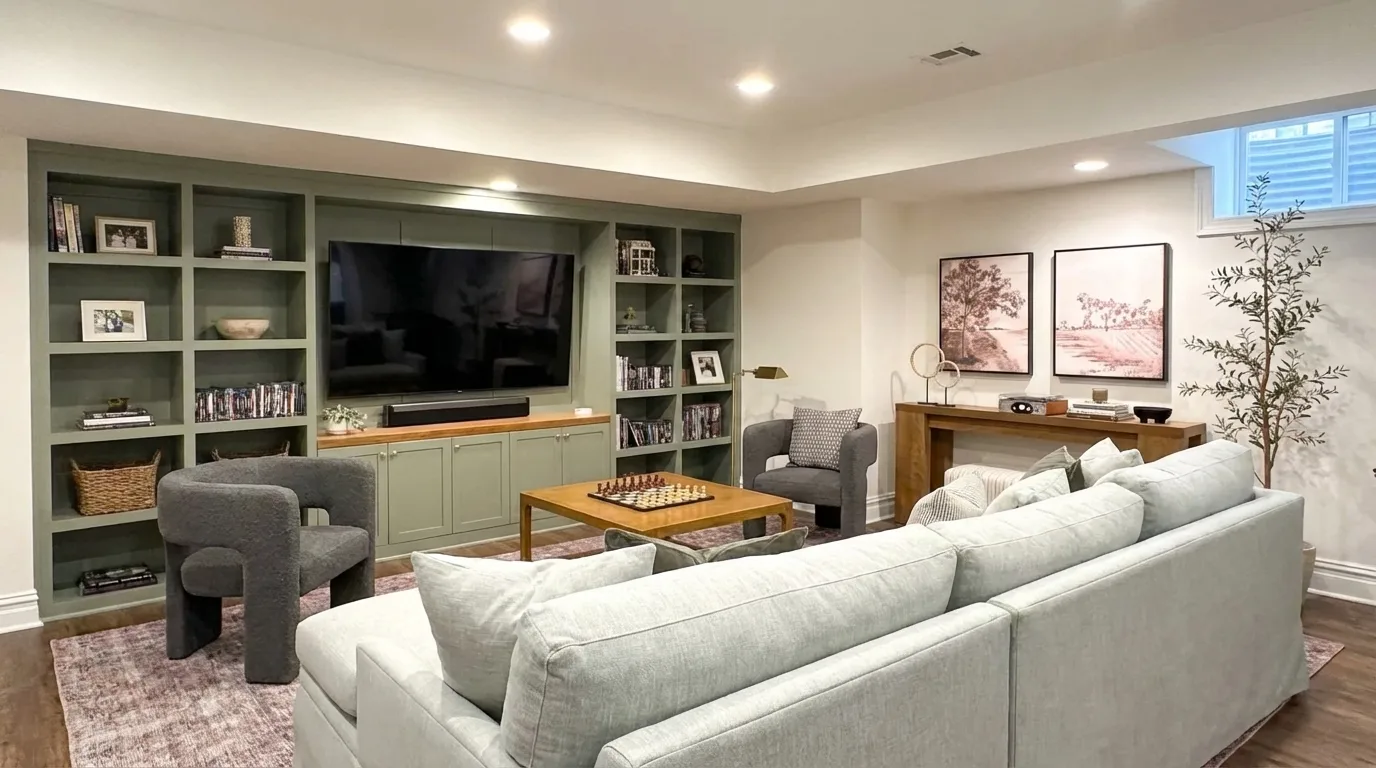
A family lounge layout balances comfort, storage, and casual entertainment in one connected space. Soft seating, a media area, and easy-access toy or game storage are common features.
It works best when the layout accommodates both adults and kids without crowding either.
11. Basement Apartment
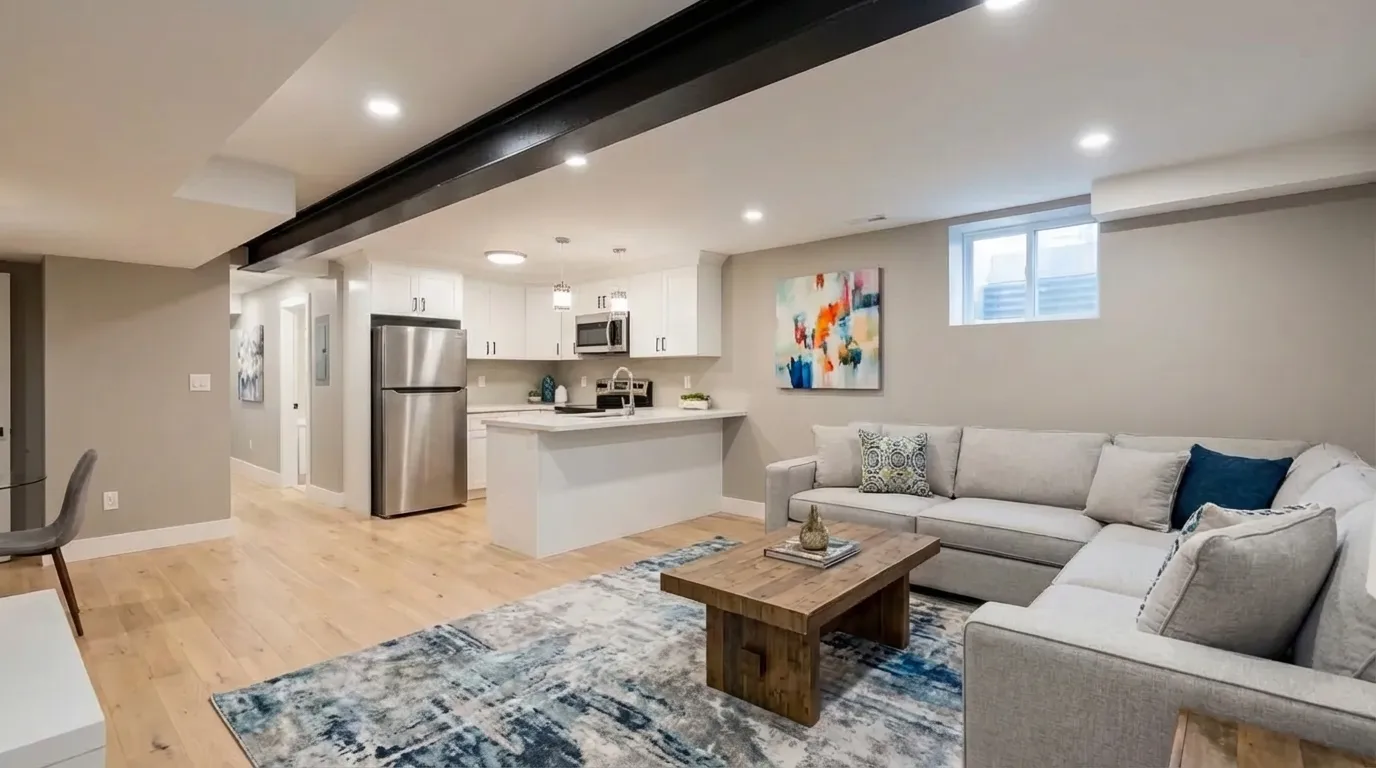
A basement apartment layout includes all the essentials: a sleeping area, a living space, a kitchen or kitchenette, and a full bathroom.
Egress windows, ventilation, and ceiling height are non-negotiable. This layout requires careful code compliance and fails without proper natural light and emergency exit access.
An egress window isn’t just any window. Building codes typically require it to have a minimum opening of 5.7 square feet, a sill height no more than 44 inches from the floor, and a minimum width of 20 inches and height of 24 inches.
Exact specs vary by municipality, so always verify with your local building authority before framing any sleeping area.
12. Guest Suite Basement
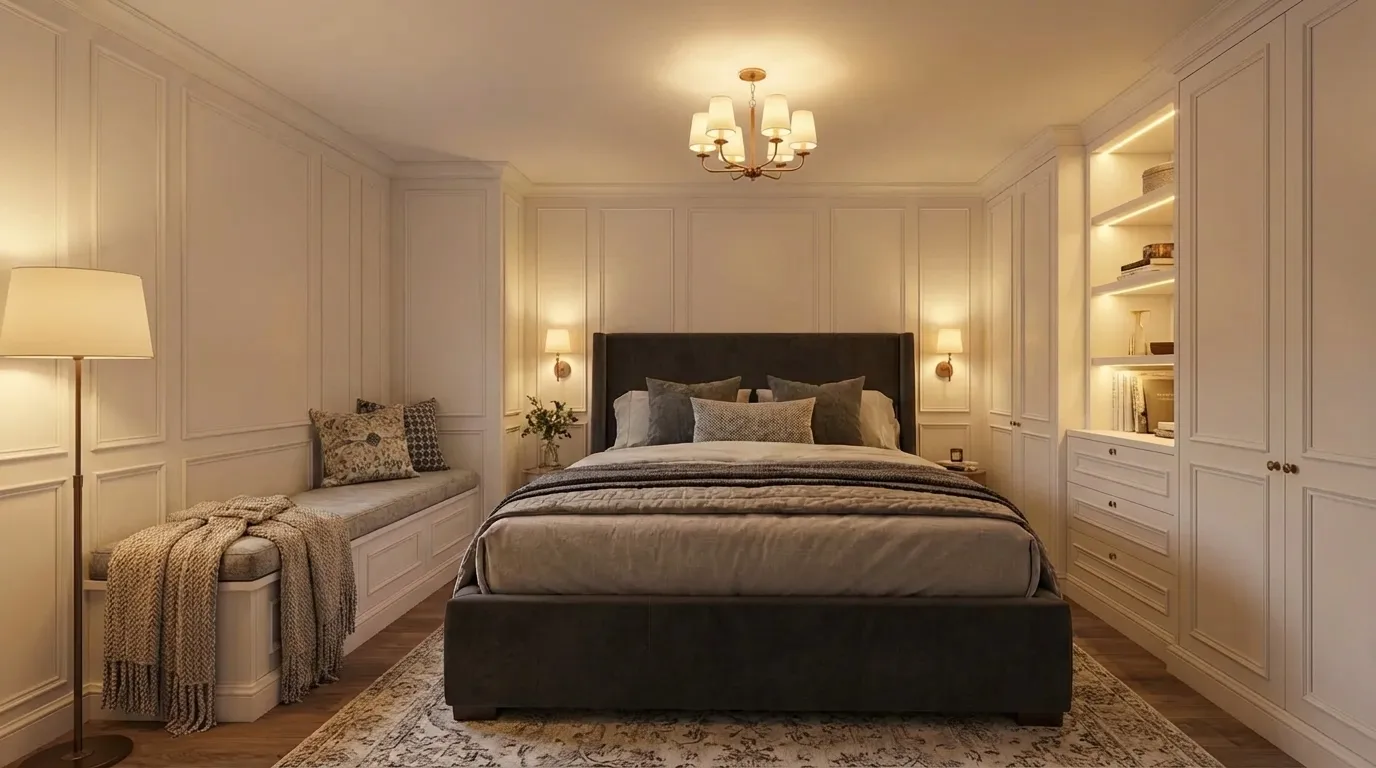
A guest suite layout focuses on comfort and privacy, a bedroom, bathroom, and a small sitting or storage area. It should feel separate from the main basement activity areas.
This layout works best when soundproofing and independent access are built into the plan from the start.
13. Home Office Basement
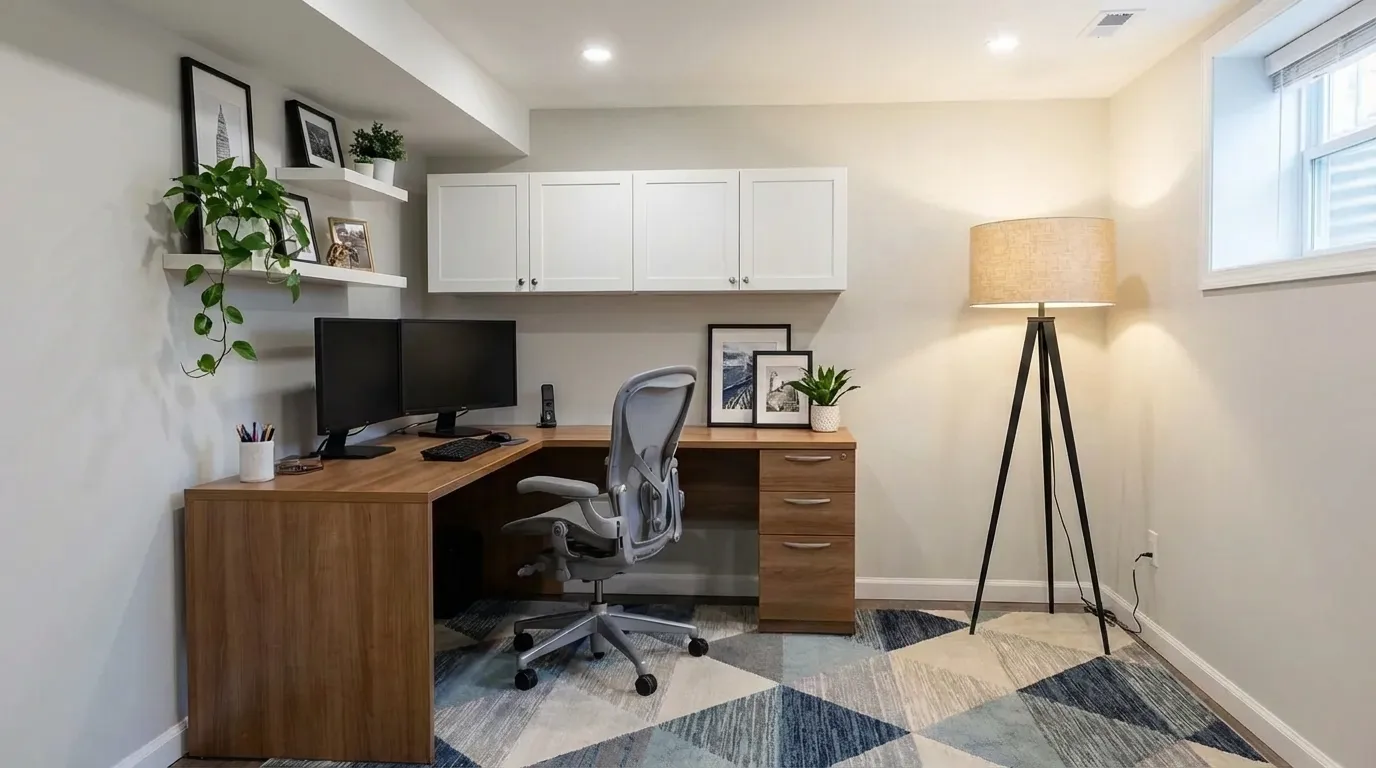
A home office layout needs quiet, good lighting, and enough space for a desk, storage, and equipment. It should be placed away from noisy areas, such as gyms or entertainment areas.
This layout fails when the lighting is poor or when foot traffic constantly passes through the workspace.
14. Kids’ Playroom Basement
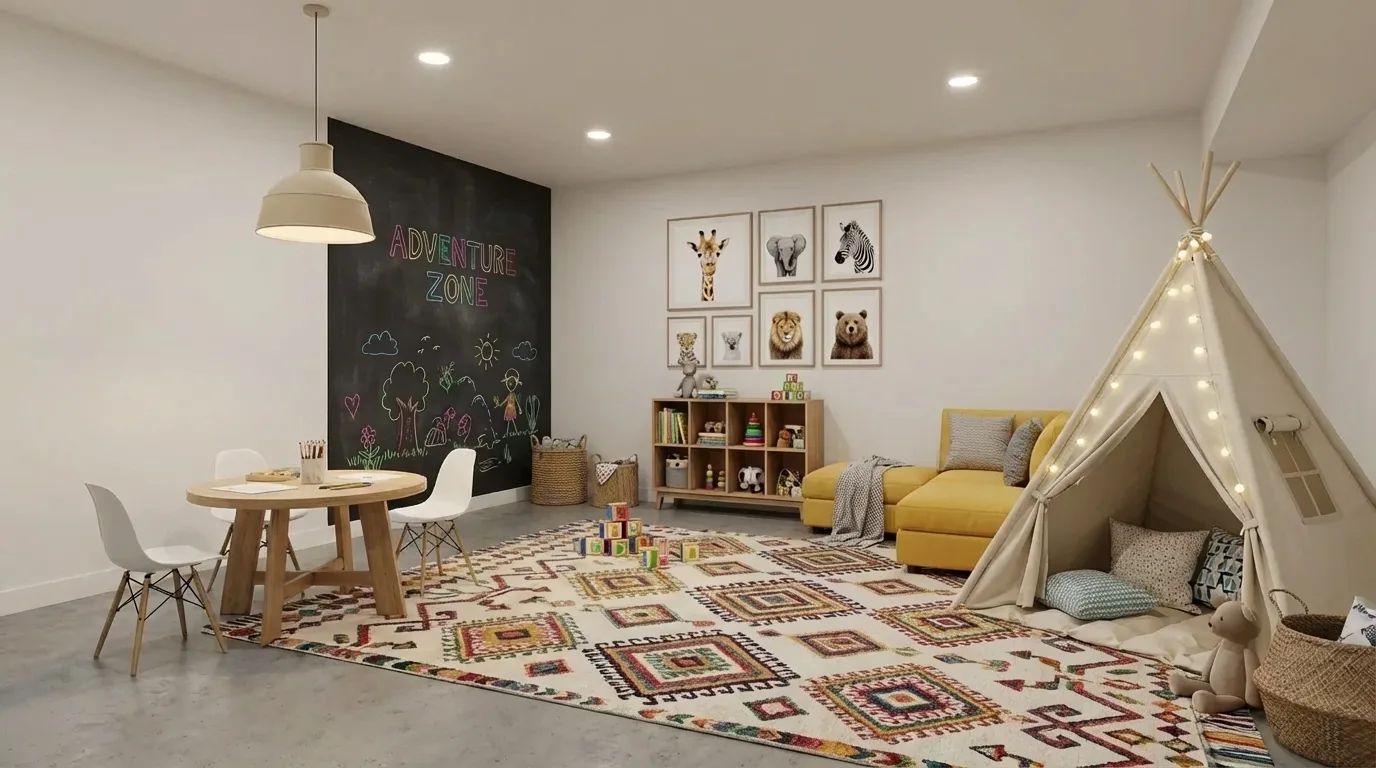
A kids’ playroom layout prioritizes safe, open floor space, easy-to-clean surfaces, and accessible storage. Bright lighting and durable materials are essential.
Keep this zone away from utility areas and ensure the layout allows a clear sightline for supervision from multiple angles.
15. Yoga or Wellness
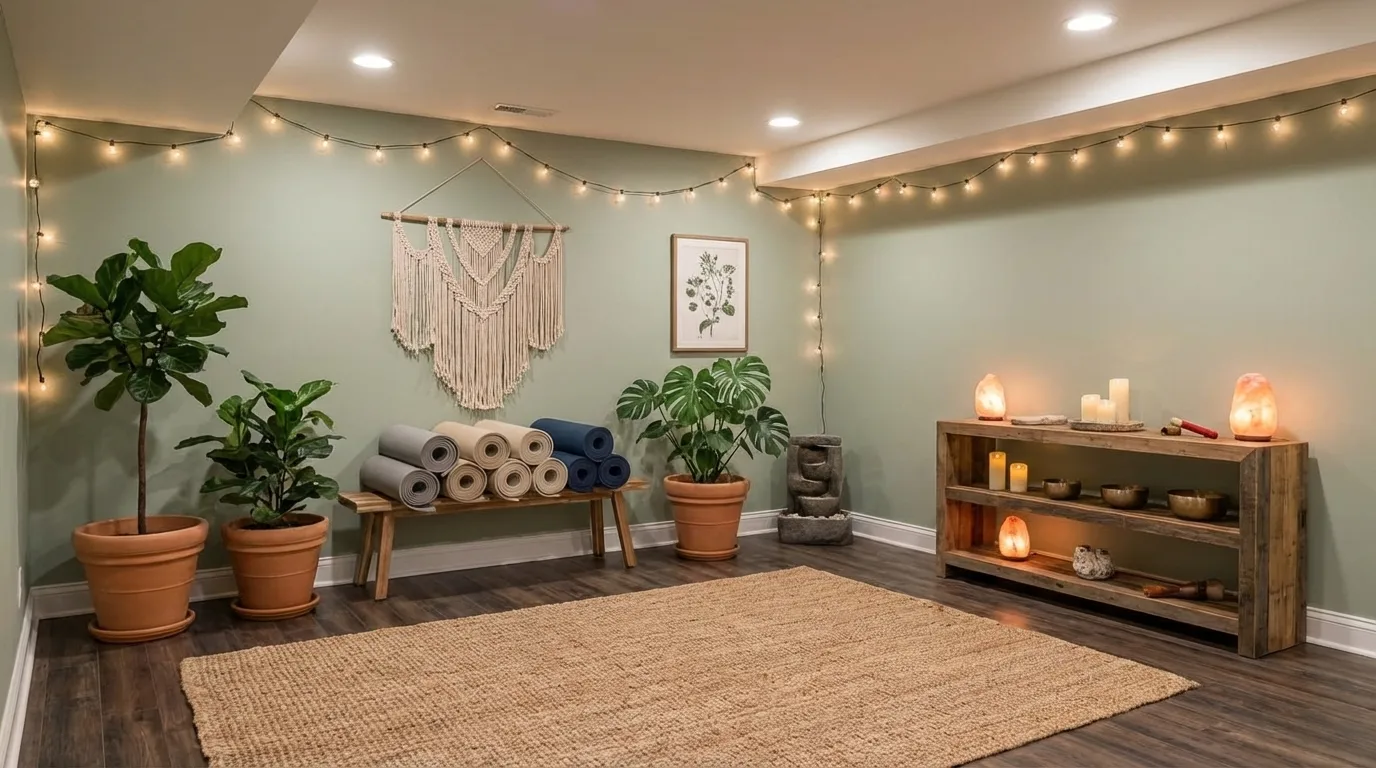
A yoga or wellness layout prioritizes calm, open floor space, minimal clutter, and soft, diffused lighting. Mirrors, natural textures, and sound absorption panels enhance the experience.
This layout works best in a quiet corner of the basement away from high-traffic or noisy zones.
16. Laundry + Utility
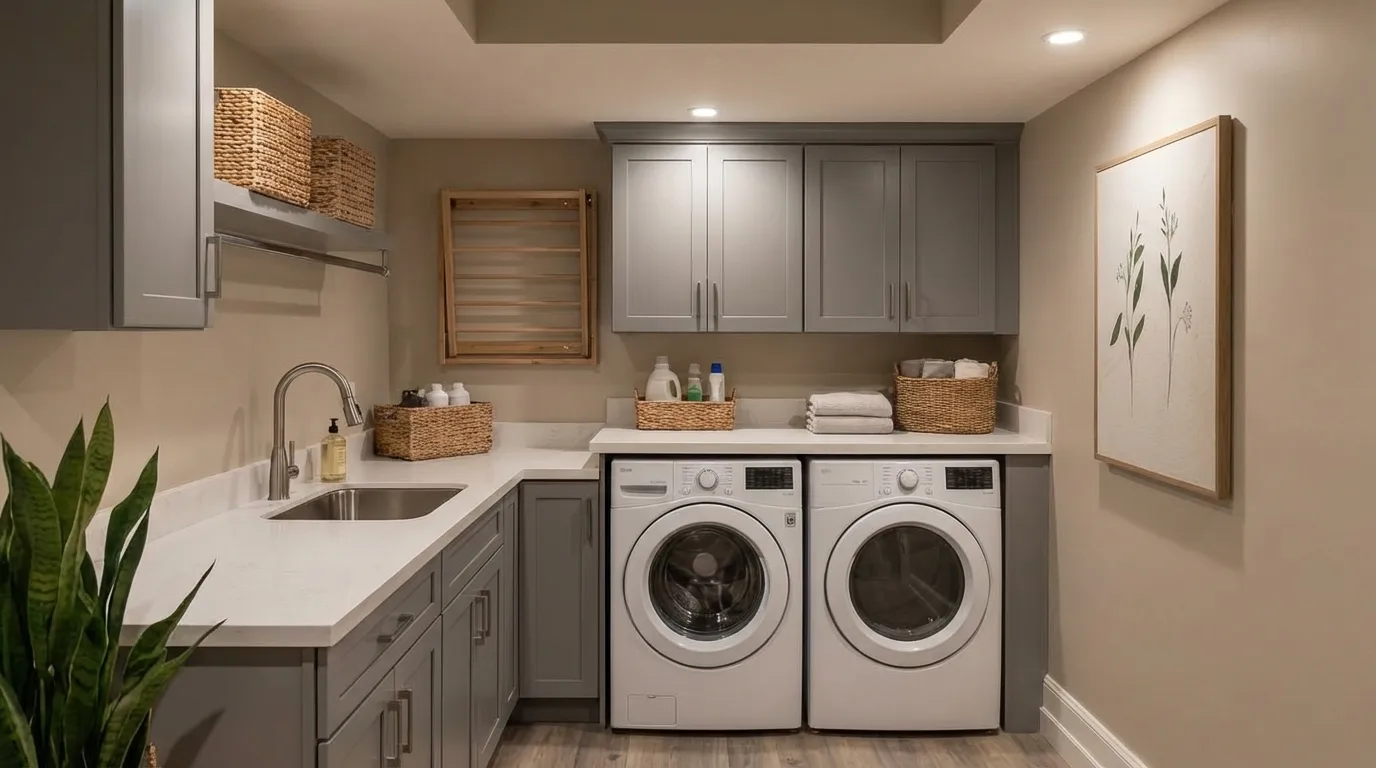
A laundry and utility layout organizes essential mechanical functions, such as the washer, dryer, water heater, and HVAC, into a clean, accessible zone.
Keeping these elements grouped reduces plumbing costs and simplifies maintenance. This layout works best when utility access doesn’t cut through primary living areas.
17. Storage-Focused Basement
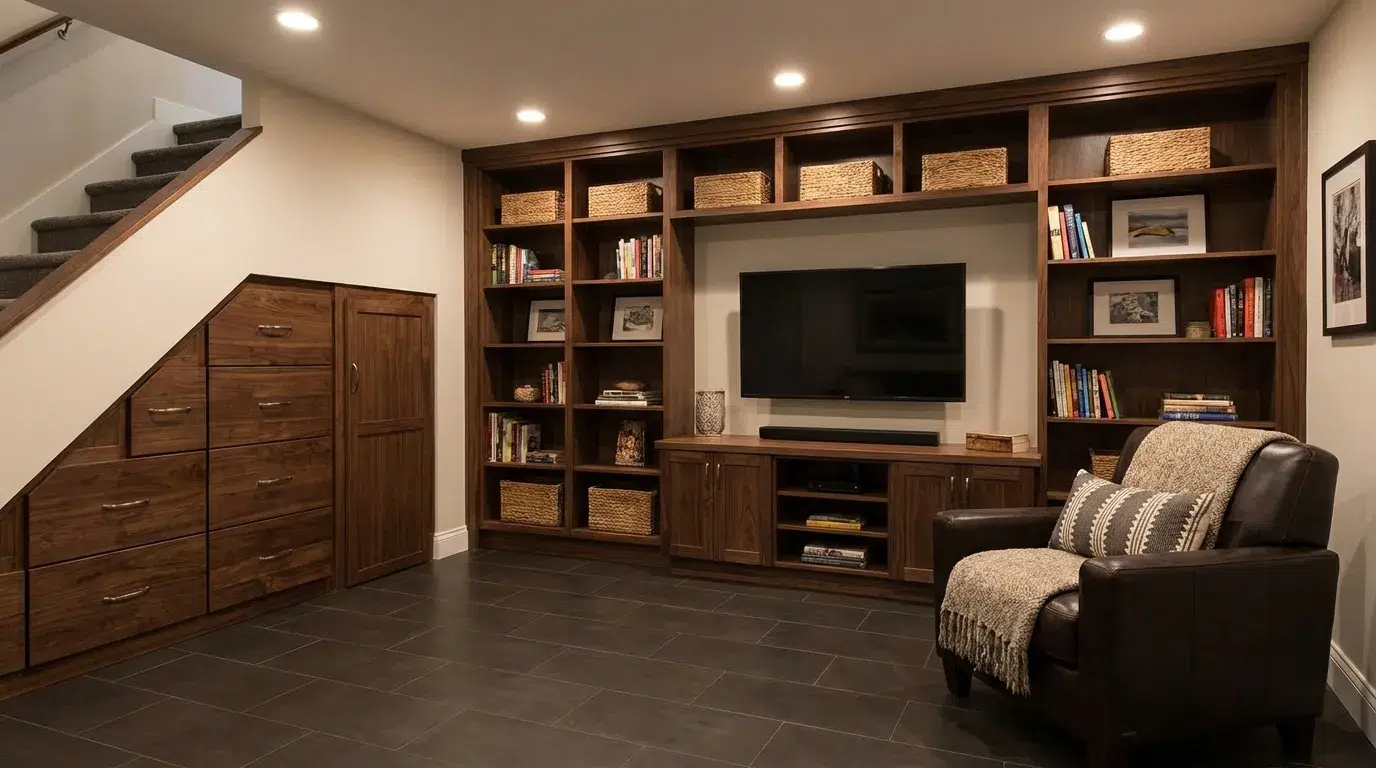
A storage-focused layout maximizes wall space with shelving, cabinetry, and built-in units. It suits basements where the primary need is organized long-term storage.
This layout fails when items aren’t categorized and accessible, turning the space into an unusable dumping ground.
18. Workshop Basement
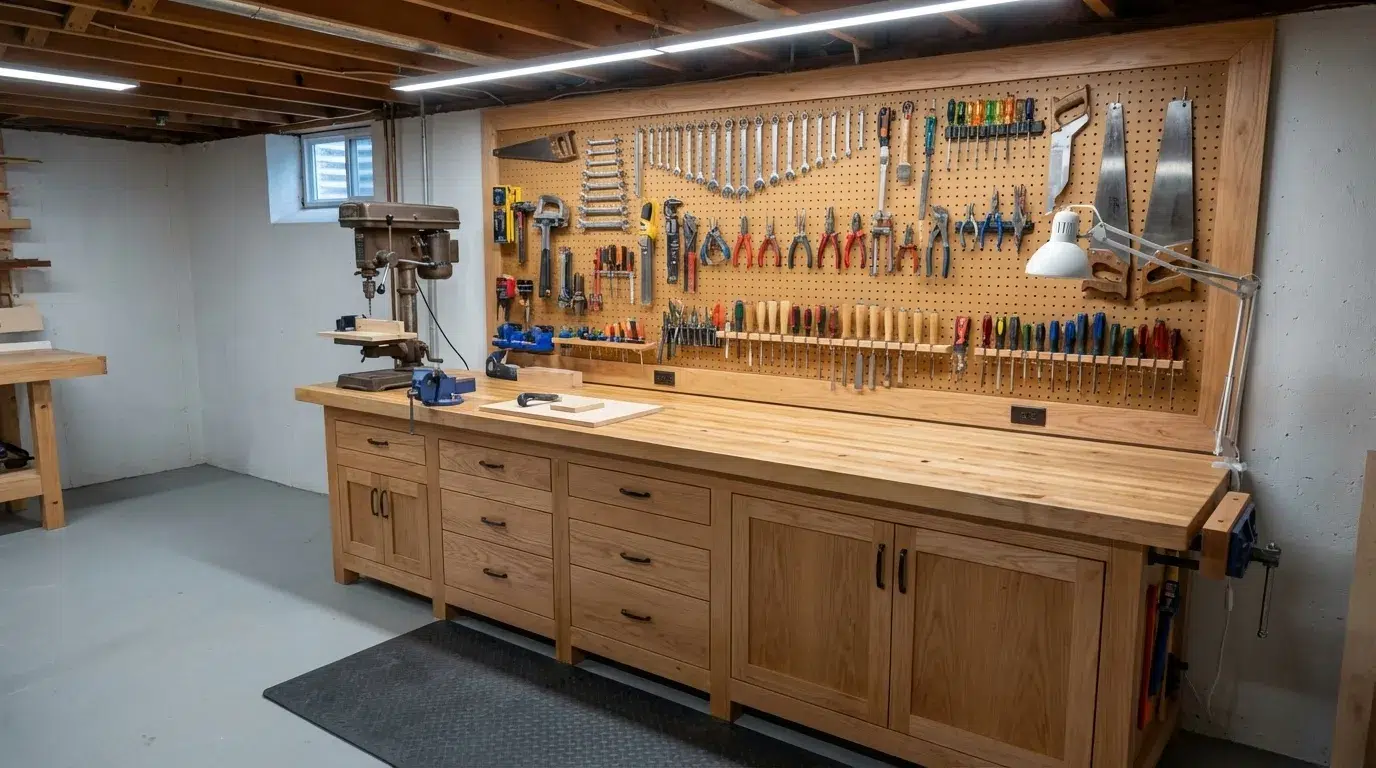
A workshop layout centers around a sturdy workbench with tool storage, power access, and ventilation for dust and fumes.
Clearance around equipment and a non-slip floor surface are essential for safety. This layout works best in a dedicated, enclosed room away from living or sleeping areas.
Every basement type has a layout that best suits it. Match your layout to your space and your lifestyle, and it will work hard for you every single day.
Common Basement Layout Mistakes that Break Functionality
Poor planning at the layout stage doesn’t just create inconvenience; it creates problems that are expensive and disruptive to fix once construction is underway.
These are the mistakes that come up most often, and the ones worth avoiding before a single wall goes up.
- Ignoring Structural Constraints: Treating columns, ducts, and water lines as afterthoughts forces costly layout corrections later.
- Overcrowding With Too Many Functions: Fitting too many zones into one space makes every area feel cramped and unusable.
- Poor Zoning: Placing a gym beside a bedroom creates noise and comfort conflicts that no furniture can resolve.
- Blocking Natural Pathways: Ignoring circulation routes makes the space feel disjointed and difficult to move through.
- Not Planning for Lighting Early: Leaving lighting decisions until late results in misplaced fixtures and costly rework afterward.
Most of these mistakes share a common thread: they come from treating the basement as a flexible afterthought rather than a space that needs the same level of planning as any other room in the house.
Getting these decisions right at the start is far easier than correcting them later.
Conclusion
A great basement doesn’t happen by accident. It starts with clear goals, an honest look at your space, and a layout that matches both.
Every decision you make at the planning stage saves you time, money, and frustration down the road.
The layouts covered here aren’t just ideas, they’re practical systems you can apply based on what your basement actually is and what you need it to do.
Start with purpose, work around your structure, and zone deliberately. Skip any one of those steps, and you’ll feel it later. Get them right, and your basement becomes one of the most functional spaces in your home.
Frequently Asked Questions
How Much Does It Cost to Finish a Basement Layout?
Finishing a basement costs between $25 and $50 per square foot. Basic layouts cost less, while multi-room or specialty layouts, such as home theaters, cost more due to additional plumbing, electrical, and soundproofing requirements.
Do Basement Layouts Need a Building Permit?
Most finished basement layouts require a permit when adding walls, plumbing, or electrical work. Requirements vary by location. Always check with your local building authority first. Skipping permits can cause problems during home resale and may require costly rework.
What Flooring Works Best for a Finished Basement Layout?
Vinyl plank and engineered hardwood handle moisture better than solid wood or carpet. Tile suits utility zones, and rubber flooring works best for gyms or playrooms. Always install a moisture barrier underneath, regardless of the flooring type chosen.