
How to Get Pee Smell Out of a Couch: A Full Cleaning Guide
A couch that smells like urine can ruin a room fast. Maybe a pet had an accident, a toddler missed the potty, or an aging parent had a rough night.
Whatever the cause, learning how to get pee smell out of a couch comes down to the same steps. Blot the spot, treat it with the right cleaner, and dry it.
This post walks through fresh stains, dried odors, human versus pet urine, and cleaning tips for every couch material.
How Do You Get Pee Smell Out of a Couch?
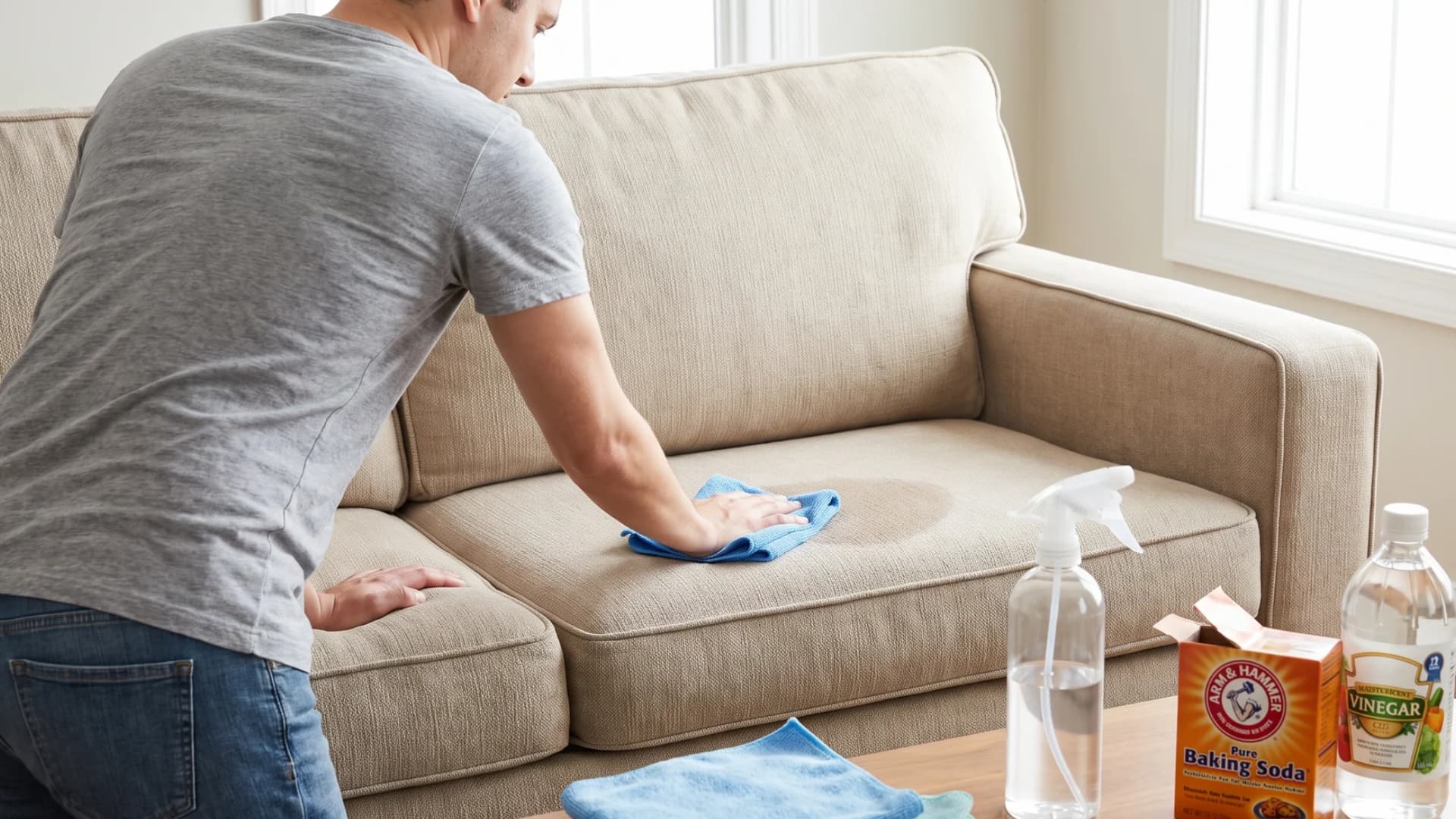
Blot the wet spot right away with a clean cloth or paper towel. Do not rub, since rubbing pushes urine deeper into the fabric. Mix one part white vinegar with one part water and spray it on the stain.
Let it sit for fifteen minutes. Blot again to lift the solution, then sprinkle baking soda over the area once it dries.
Vacuum the baking soda after a few hours. For old or stubborn smells, swap the vinegar mix for an enzymatic cleaner. It breaks down the uric acid that plain water cannot touch.
Why Does Urine Smell Linger in Couch Fabric and Foam?
Urine is not just water. It carries compounds that bond tightly to fabric and foam. That is why the smell sticks around after the stain looks dry.
-
Uric acid crystals: These crystals do not dissolve in water. They stay in the fibers until a cleaner breaks them apart.
-
Ammonia and bacteria: These give urine its sharp smell, and the odor gets stronger the longer the stain sits untreated.
-
Humidity and heat: Moisture in the air can wake up old crystals. A dried stain can smell worse on a humid day.
Human Urine vs. Pet Urine: Does the Cleaning Method Change?
Pet urine and human urine share the same basic chemistry, but they are not identical. Here is how they compare and what that means for your cleaning routine.
|
Factor |
Human Urine |
Pet Urine |
|---|---|---|
|
Concentration |
Usually more diluted |
Often more concentrated, especially in cats |
|
Odor strength |
Milder at first |
Stronger, especially with dogs and cats |
|
Common cause |
Toilet training, illness, or elderly accidents |
Untrained pets, marking, or anxiety |
|
Cleaning approach |
Same vinegar, baking soda, or enzymatic steps |
Same steps, usually with an enzymatic cleaner |
|
Treatments usually needed |
One to two rounds |
Two to three rounds for full odor removal |
Step-by-Step: How to Remove Fresh Pee Stains and Smell

Fresh stains are the easiest to handle if you act fast. Follow these five steps in order for the best result.
Step 1: Blot the Stain
Press a clean cloth or paper towel firmly on the wet spot. Keep pressing with fresh sections of cloth until no more liquid transfers. Avoid scrubbing, since it pushes urine deeper into the cushion.
Step 2: Mix a Cleaning Solution
Combine 1 cup warm water, 1/2 cup white vinegar, and 1 tablespoon baking soda. The vinegar breaks down ammonia while the baking soda helps lift odor.
Step 3: Apply and Wait
Spray the solution over the stain and a bit of the surrounding area. Let it sit for about fifteen minutes so it can soak into the fibers and start breaking down the urine.
Step 4: Blot Again
Use a dry towel to soak up the solution along with any leftover moisture. Repeat this step a few times until the towel comes away mostly dry.
Step 5: Dry the Area Completely
Open a window or point a fan at the spot. Avoid a hair dryer or heater, since heat can lock leftover odor into the fabric.
How to Get Old, Dried Pee Smell Out of a Couch
Dried stains need a bit more patience because the uric acid crystals have already set into the fabric. Start by misting the area lightly with water to loosen the crystals.
Then soak the spot with an enzymatic cleaner and let it sit for fifteen to thirty minutes. Blot well. Repeat the process two or three times over a few days if the smell has been there for weeks.
A UV flashlight used in a dark room can help you find spots that look dry but still hold odor. Old urine often shows up faintly under blacklight.
Best Products to Remove Urine Smell From a Couch
The right product can save you a lot of scrubbing. Here are the main options and when each one works best.
-
Enzymatic cleaners: Break down uric acid at the source, making them the top choice for old or pet stains.
-
Oxygen-based stain removers: Lift both the stain and light odor from fresh spots without leaving a strong scent behind.
-
Baking soda: A cheap, safe way to pull lingering odor out of fabric once the wet cleaning step is done.
-
White vinegar spray: A budget option that neutralizes ammonia on fresh, light stains.
-
Odor-masking sprays: Cover the smell for a short time but do not remove the source. They work best as a quick fix.
Natural, Chemical-Free Ways to Get Pee Smell Out of a Couch
If you would rather skip store-bought sprays, a few pantry staples can handle most fresh, light stains.
-
White Vinegar: Mix equal parts white vinegar and water in a spray bottle and mist the stain. The American Kennel Club recommends this same ratio for pet urine on upholstery. The acid in vinegar breaks down ammonia on contact.
-
Baking Soda: Sprinkle a thick layer over the clean, dry spot and leave it overnight. It draws out trapped moisture and odor, and a quick vacuum in the morning finishes the job.
-
Lemon Juice: Mix one part lemon juice with two parts water and mist it lightly over the area. It leaves a fresh scent and helps cut through mild odor. Test it on a hidden spot first.
-
Sunlight: If you can, place cushions outside on a dry day. Sunlight helps reduce bacteria and speeds up drying, which lowers the chance of the smell coming back.
How to Clean Pee Smell From Different Couch Materials

Not every couch fabric reacts the same way to cleaning products. Match your method to your material to avoid damage.
1. Leather
Leather needs a gentle touch since harsh cleaners can dry it out or crack the surface. Clean it first, then recondition it so it keeps its finish.
-
Wipe with a mild soap and water mix
-
Dry with a soft cloth right away
-
Rub a small amount of leather conditioner or olive oil into the spot afterward
2. Suede
Suede holds onto both moisture and smell, so light cleaning and careful drying matter more here than anywhere else. Once dry, brushing brings back its texture.
-
Blot only, never scrub
-
Use a suede-safe cleaner or a light vinegar mist
-
Brush the nap with a soft suede brush once fully dry
3. Fabric, Cotton, and Linen
These natural fibers soak up urine quickly, which means the stain and smell can go deep. A hydrogen peroxide mix works well here but can lighten dark fabric.
-
Test any solution on a hidden spot first
-
Mix hydrogen peroxide, baking soda, and a drop of dish soap for tough stains
-
Rinse with a damp cloth and dry fully
4. Velvet, Velour, and Chenille
These soft materials flatten easily, so avoid heavy scrubbing. A light alcohol-based spray cleans without flattening the pile further.
-
Spray rubbing alcohol lightly over the stain
-
Blot gently with a soft cloth
-
Vacuum with a brush attachment once dry to restore the texture
5. Microfiber and Synthetic Blends
These fabrics are usually easy to clean, but the wrong cleaner can leave water marks or a stiff patch. A mild soap solution keeps things safe.
-
Dampen a sponge with warm water and a few drops of dish soap
-
Blot and rinse with a clean, damp cloth
-
Let it air dry fully before sitting on it
6. Removable Cushion Covers
If the cover unzips, washing it separately gives you a much deeper clean than spot treatment alone. Check the foam underneath too, since urine often soaks through.
-
Check the care tag before washing
-
Wash on the hottest safe setting with regular detergent
-
Treat and dry the foam insert separately if it got wet
When to Call a Professional or Replace the Cushion
Most stains respond to home treatment within a few rounds, but some do not. If the smell remains after three or four attempts, mold may already be a problem. This is also true if the foam stayed wet for more than a day.
Professional upholstery cleaners have stronger tools, like steam extraction and industrial enzymatic treatments. These reach spots a spray bottle cannot.
If the foam or frame is soaked through and the smell keeps returning, replacing the cushion is often cheaper.
Conclusion
Getting pee smell out of a couch comes down to one idea. Blot fast, treat with the right cleaner, and let the spot dry fully before you sit on it again. Fresh stains usually clear up in one round.
But old or pet stains may need a few repeats with an enzymatic cleaner. Match your method to your couch material, and stay patient with dried spots. Call a professional if the smell will not leave after several tries.
Frequently Asked Questions
How long does it take to get the smell of pee out of a couch?
A fresh stain can clear up in about an hour once you blot, treat, and dry it. Older or set-in stains often need two to three rounds over several days to fully disappear.
How do you get human urine smell out of a couch after it has dried?
Mist the dried spot with water to loosen the crystals. Then soak it with an enzymatic cleaner for fifteen to thirty minutes, blot well, and repeat if the smell lingers.
Does urine smell ever go away?
Yes, but only with active cleaning. Uric acid crystals do not fade on their own. They can reactivate with humidity, so the smell stays until you break them down.
What kills the smell of human urine?
Enzymatic cleaners kill the smell most reliably. They break down the uric acid itself instead of just covering the odor with a scent.
What is the most powerful urine odor eliminator?
Commercial-grade enzymatic and oxidizing cleaners give the strongest results for stubborn, long-set odors. Ozone treatment can also help clear a whole room.
What destroys pee smell?
Breaking down the uric acid crystals destroys pee smell for good. Enzymatic cleaners do this best, while vinegar and baking soda help with fresh, milder stains.
What do nursing homes use to get rid of pee smell?
Many care facilities use commercial enzymatic treatments along with ozone or hydroxyl generators. These reach odor throughout a room, not just on furniture surfaces.


