How to Make a Furniture Shopping List Before Buying
Buying furniture can feel exciting at first, but it can also get confusing once you start looking at sizes, styles, prices, and room needs.
Without a clear plan, it is easy to miss important pieces or buy something that does not truly work for your space.
That is why learning how to make a furniture shopping list can make the whole process feel calmer and more organized.
This blog will help you think through your home, your budget, and your choices before you start shopping.
Why a Furniture Shopping List Makes Buying Easier
A furniture shopping list makes buying easier by giving you a clear plan before you start looking at options.
Instead of picking pieces only because they look nice, you can focus on what your room actually needs, what fits your space, and what works with your budget.
It also helps you avoid impulse buys, duplicate purchases, and pieces that clash with your home’s style, the same three mistakes I see friends make every single time they skip the planning step.
How to Make a Furniture Shopping List?
- Measure the room and entry points: Measure the room width, wall length, ceiling height, doorways, hallways, stairs, and elevators. This helps you avoid furniture that fits the room but cannot enter the home.
- Check what you already own: List the furniture you are keeping, along with its size, color, material, and style. This prevents duplicate buys and helps new pieces blend with your current setup.
- Set a clear budget: Decide how much you want to spend on the full home or each room. Include delivery, taxes, assembly, and return costs so the final price does not surprise you.
- Separate must-haves from extras: Start with daily-use furniture like a bed, mattress, sofa, dining table, desk, or dresser. Add accent tables, benches, shelves, and decorative pieces later.
- Think about your daily routine: Choose furniture based on how you actually live. A family room may need durable seating, a home office needs a supportive chair, and a guest room may need flexible storage.
- Plan storage early: Add cabinets, dressers, bookshelves, storage beds, or ottomans to your list if clutter is a concern. Storage furniture keeps the room useful, not just good-looking.
Furniture Shopping Checklist for Every Room
A room-by-room furniture checklist helps you plan one space at a time instead of feeling overwhelmed by the whole home.
Use it to note the main pieces each room needs, then adjust the list based on your space, budget, and daily routine.
1. Bedroom Furniture

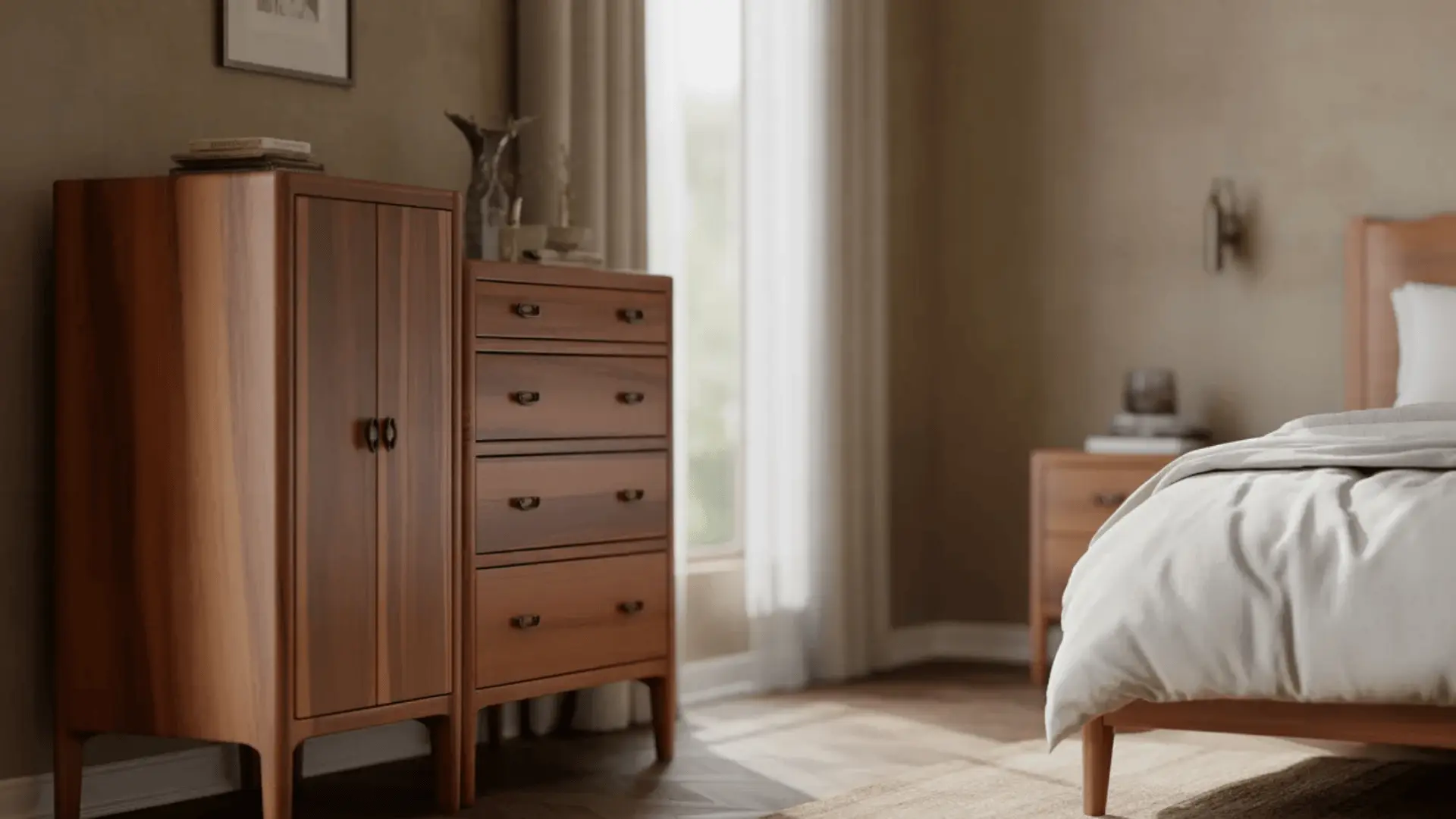
A bedroom should focus on comfort, relaxation, and practical storage. Essential furniture includes a bed frame, mattress, nightstands, dresser, wardrobe, and bedside lamps.
Depending on the available space, you can add a mirror, bench, chair, or extra closet storage. Choose pieces that support your daily routine while keeping the room comfortable and organized.
Keep these tips in mind when choosing and arranging bedroom furniture:
- Measure wall space before buying a dresser or wardrobe so both pieces fit without crowding the walkway.
- Pick a bed frame height that matches your mattress thickness for easier movement getting in and out.
- Choose bedside lamps with warm lighting since bright bulbs can make winding down harder at night.
- Leave room near the closet if you plan to add a bench or mirror later on.
2. Kitchen and Dining Room Furniture

The kitchen and dining area need furniture that supports meals, storage, and everyday activities. A dining table and chairs are the main pieces, while bar stools can work well with kitchen islands or counters.
Additional options like buffets, sideboards, kitchen carts, and pantry cabinets can provide extra storage and workspace. Choose pieces based on your cooking habits and the available space.
Keep these tips in mind when selecting kitchen and dining furniture:
- Match chair height to your table and counter so seating feels natural during meals or quick snacks.
- Pick bar stools with footrests if your island seating will be used for longer periods daily.
- Choose a buffet or sideboard with drawers if you need hidden storage for linens or serving dishes.
- Look for a kitchen cart with wheels so you can move it as needed.
3. Home Office Furniture

A functional home office needs furniture that supports focus and comfort. Start with a desk, an office chair, a task lamp, and storage options such as bookshelves or filing cabinets.
You can also add storage drawers, a printer stand, and cable organizers to keep the workspace neat. Consider your work style and equipment needs before choosing furniture sizes and layouts.
Keep these pointers in mind as you plan the space:
- Test your chair’s back support before buying, since long work hours need more than just a stylish seat.
- Position the desk near natural light if your work involves screens for most of the day.
- Pick filing cabinets that lock if your documents include private or sensitive paperwork at home.
- Add a printer stand only if floor space allows without blocking movement around the desk.
4. Entryway Furniture

The entryway sets the tone for your home and needs furniture that keeps daily items organized. Useful pieces include a console table, shoe rack, storage bench, mirror, and coat hooks.
Small additions like baskets and wall shelves can help store keys, bags, shoes, and other essentials. Choose compact furniture that keeps the area open and easy to move through.
Keep these tips in mind when furnishing your entryway:
- Choose a storage bench with a lid so shoes stay hidden instead of cluttering the floor.
- Hang a mirror near the door so you can do a quick check before heading out.
- Pick coat hooks over a closet if your entryway is narrow and space feels limited.
- Add a shallow console table to keep the entryway open for easy daily movement.
5. Guest Room Furniture

A guest room should provide comfort while keeping the space practical. Start with basics like a bed, mattress, nightstand, dresser, and reading lamp.
Extra pieces like a luggage rack, small chair, or additional storage can make guests feel more comfortable. Keep the furniture flexible so the room can serve other purposes when not in use.
- Choose a mattress that suits different sleep styles since guests may have varying comfort needs.
- Add a luggage rack so guests are not left setting bags directly on the floor.
- Keep a small chair only if the room allows movement without feeling cramped.
- Pick furniture that can double as a workspace or storage when the room sits empty.
How to Choose Furniture That Matches Your Home Style
Your furniture should feel connected to your home, not randomly placed. Look at your room size, wall colors, flooring, lighting, and existing pieces before choosing styles, colors, and materials.
| Planning Point | What to Think About | Practical Tip |
|---|---|---|
| Picking a Theme | Choose a style that matches your flooring, walls, lighting, and current furniture. | Save 2–3 inspiration photos before shopping. |
| Coordinating Colors | Furniture colors do not need to match, but they should feel balanced together. | Keep large pieces neutral and use accents for color. |
| Comparing Materials | Wood feels warm, metal feels clean, and upholstery adds comfort. | Pick materials based on use, cleaning, pets, and kids. |
| Keeping Large Pieces Simple | Big pieces stay longer, so simple finishes are easier to style over time. | Use bold choices on smaller furniture instead. |
| Mixing Materials | A mix of materials adds interest, but too many finishes can feel busy. | Repeat one color, wood tone, or metal finish in the room. |
Smart Tips for Creating and Using Your Furniture List
A few extra habits worth building in, beyond the planning steps above:
|
Tip #1 – Compare in-store and online options Visit stores to test comfort, materials, and build quality, then check online listings for price differences, reviews, color choices, and delivery terms. |
|
Tip #2 – Verify sale prices before buying Do not assume every sale tag reflects a real discount. Compare the same item across other websites and save the original price so you can confirm whether the markdown is genuine. |
|
Tip #3 – Track delivery and assembly details Note the shipping cost, delivery window, package dimensions, return deadline, and whether assembly tools or extra help will be needed. |
Conclusion
Making a furniture list before you shop can save time, money, and a lot of confusion.
When you measure your rooms, set a budget, note your style, and separate must-haves from extras, every purchase feels more planned.
A good furniture checklist also keeps you from comparing everything on impulse you’re working from a plan instead of a mood.
Start with one room, write down what you truly need, and update the list as your home comes together. With a little planning, you can shop more confidently and choose furniture that fits your space, lifestyle, and budget.
Frequently Asked Questions
How Early Should I Make a Furniture Shopping List Before Moving?
Make it at least 4–6 weeks before moving so you have time to compare, order, and plan delivery.
How Many Furniture Stores Should I Compare Before Buying?
Compare at least 3 stores so you can check price, quality, delivery, and return options.
Should Renters Make a Furniture Shopping List Differently?
Yes, renters should focus on movable, flexible pieces that can work in future homes too.