Can HVAC Systems Cause Mold and Poor Air Quality?
Your HVAC system has a major effect on the air that moves through your home. Under normal conditions, it helps control temperature, humidity, filtration, and air circulation. Problems can develop when moisture gets into the system, drainage fails, insulation becomes wet, or components collect enough debris to support microbial growth.
Mold is one possible concern, but it is not the only one. Poor filtration, excessive dust, weak ventilation, and other airborne pollutants can also affect indoor air quality. Figuring out what is happening usually starts with identifying the source rather than assuming the ductwork itself is to blame.
How HVAC Systems Can Contribute to Mold Growth
Mold needs moisture to grow. HVAC equipment handles moisture every time an air conditioner removes humidity from indoor air, so several parts of the system deserve attention when mold becomes a concern.
Condensation Around Coils and Ductwork
Air conditioning coils become cold as the system operates. Moisture from warm indoor air condenses on the coil and is supposed to drain safely away.
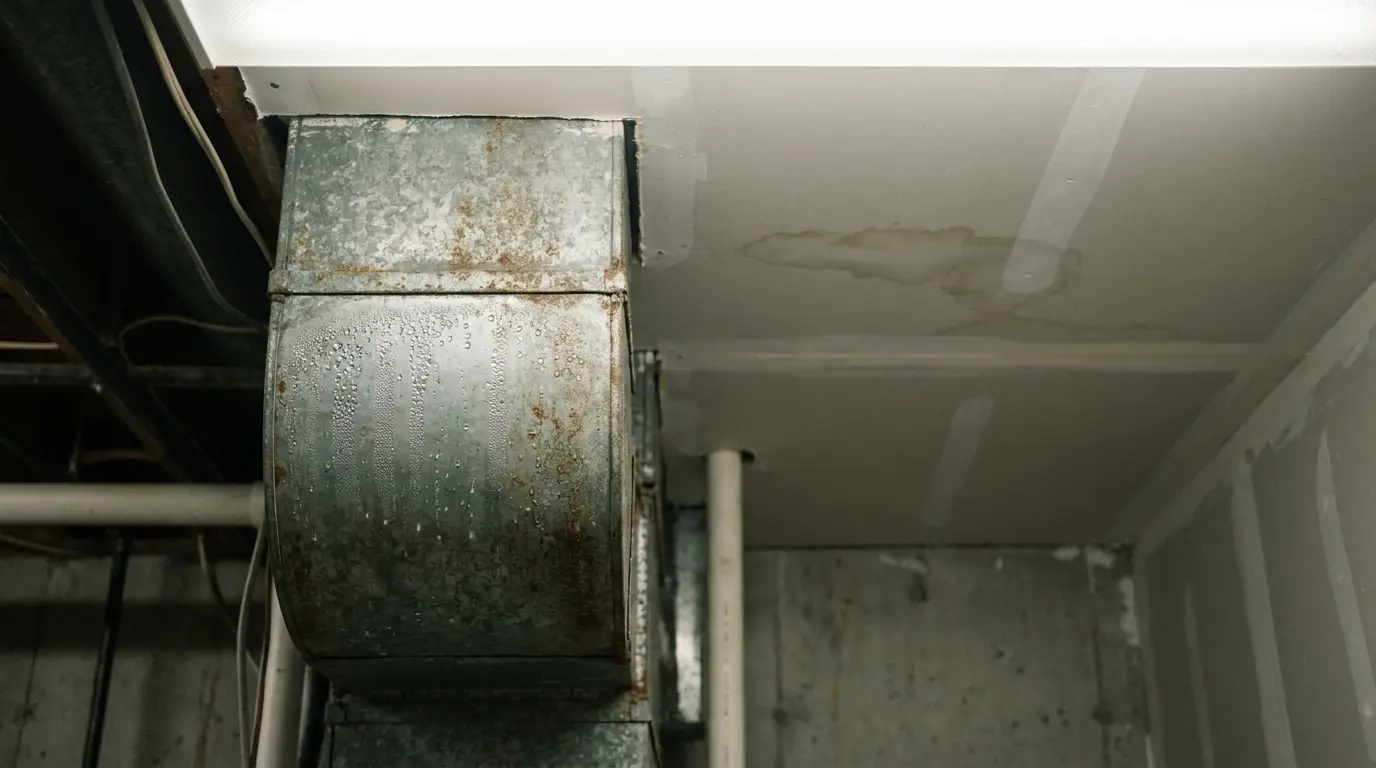
Problems arise when water collects where it should not. Condensation may also form on poorly insulated ductwork that passes through a warm attic, crawl space, garage, or another unconditioned area.
The EPA identifies condensation near cooling coils as a significant potential source of moisture within HVAC systems. It also recommends that ducts in unconditioned spaces be properly sealed and insulated to reduce condensation.
Clogged Drain Pans and Condensate Lines
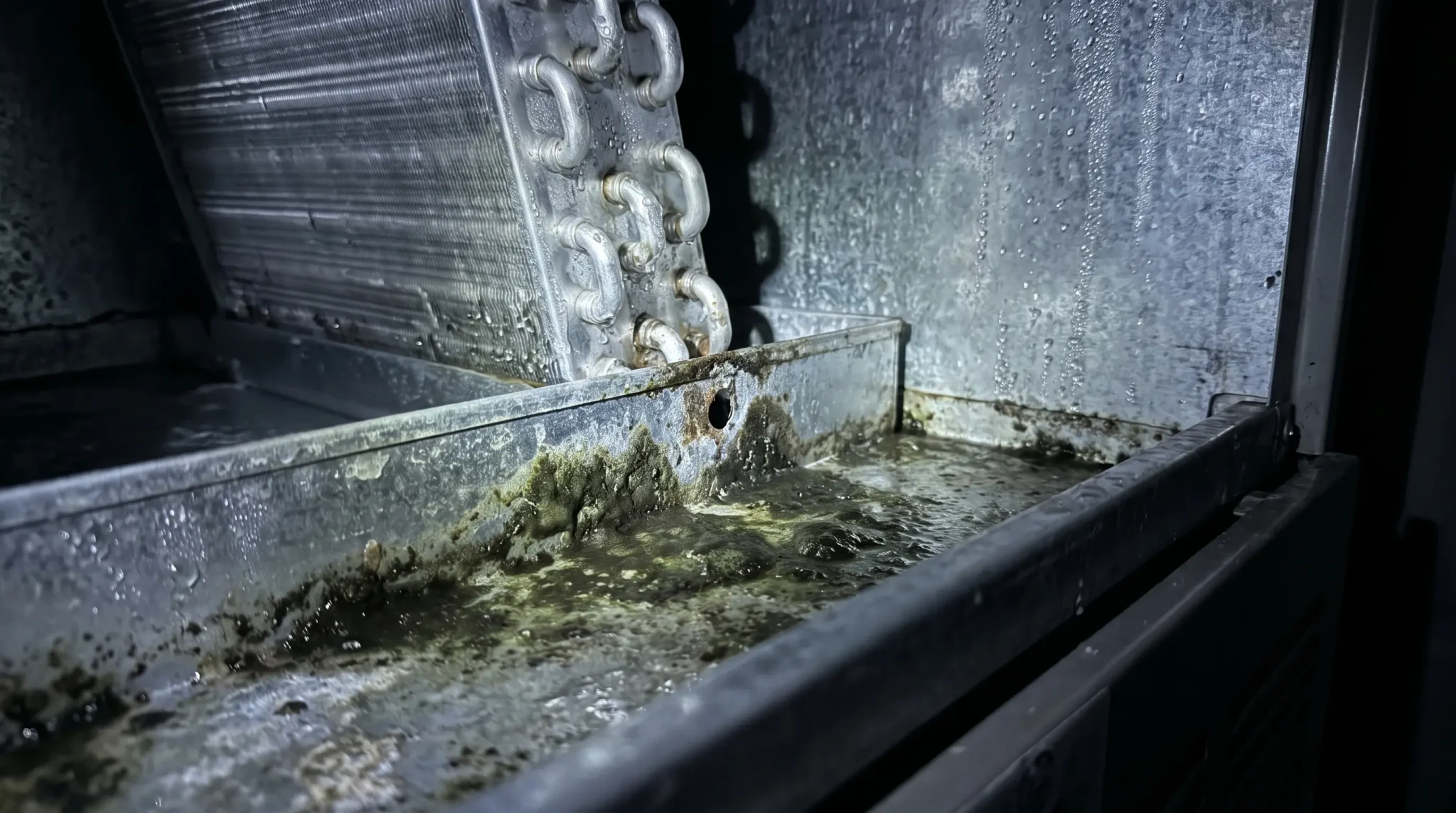
The water removed by an air conditioner normally flows into a drain pan and exits through a condensate line. A blockage, damaged pan, poor slope, or buildup of debris can leave water sitting around the air handler.
That persistent dampness can support mold and bacterial growth. The EPA specifically recommends checking that condensate pans drain properly and treating standing water beneath cooling coils as a problem that deserves prompt attention.
A homeowner may first notice this issue as water around the air handler, staining near a utility closet, or a musty odor that becomes stronger when the system runs.
Poorly Insulated or Leaky Ducts
Duct insulation helps maintain the proper surface temperature and reduces the chance that humid air will condense against cold metal.
Damaged insulation can undermine that protection. Leaky ducts can cause a different set of problems because air may move between conditioned rooms and attics, crawl spaces, wall cavities, or other areas that contain dust and moisture.
Insulation becomes a particular concern once it gets wet. According to EPA guidance, wet or mold-contaminated fiberglass duct material generally cannot be cleaned effectively and may need replacement.
How HVAC Problems Affect Indoor Air Quality
Indoor air quality covers much more than mold. Your HVAC system continuously moves air through the home, which gives it considerable influence over how pollutants circulate.
Mold Spores Can Move Through the Air
Mold spores already exist throughout the natural environment. Finding a few spores indoors does not automatically indicate a serious mold problem.
The concern changes when mold begins to grow inside an HVAC component or close to an air intake. Once the system operates, air movement may distribute spores from the affected area into other parts of the building.
EPA guidance notes that an HVAC system associated with a moisture problem can become a site of mold growth and has the potential to distribute mold through a building.
This is also why visible growth around a vent does not necessarily tell you the full extent of the problem. The source could be at the register, farther inside the duct system, around the air handler, or in nearby building materials.
Dust and Particulates Can Accumulate
HVAC filters capture airborne material before much of it reaches the equipment and returns to occupied rooms. A neglected filter becomes less useful as it loads with debris, and gaps around poorly fitted filters can allow air to bypass the filter altogether.
Dust may also accumulate in ducts over time. That does not automatically mean the duct system is unhealthy.
The EPA notes that a light amount of household dust in ductwork has not been shown to create a health risk. Duct cleaning is generally more worth considering when there is substantial mold growth, a pest infestation, or enough dust and debris that particles are visibly released from supply registers.
Poor Ventilation Can Make Indoor Air Stale
Filtration and ventilation solve different problems. A filter removes certain particles from air that passes through the system. Ventilation brings outdoor air into the building and helps dilute pollutants generated indoors.
Cooking, cleaning products, building materials, furniture, combustion appliances, pets, and ordinary household activities can all add contaminants to indoor air.
A building can therefore have a clean HVAC filter and still have poor indoor air quality. Ventilation, pollutant sources, moisture conditions, and mechanical performance all need to be considered together.
What Role Does Insulation Play?
Insulation is often overlooked during an indoor air quality investigation because it sits behind walls, above ceilings, around ducts, and in attics. Moisture changes the equation.
Damp Insulation Can Hold Moisture
A roof leak, plumbing problem, HVAC condensation, or humid attic can expose insulation to water. Nearby wood, drywall paper, accumulated dust, and other organic materials can provide conditions in which mold develops.
Duct insulation presents another concern because air moves directly through or alongside the HVAC system. Fibrous duct materials can trap moisture and contamination once they become wet. EPA guidance recommends replacement when fiberglass duct insulation becomes wet and moldy rather than relying on cleaning alone.
Damaged Insulation Can Lead to Condensation
Insulation also helps prevent cold duct surfaces from meeting warm, humid air.
Missing, compressed, or damaged insulation can leave sections of ductwork exposed. Condensation may then form on the exterior surface. Repeated wetting can damage nearby ceilings or framing and create favorable conditions for mold.
This is one reason a recurring ceiling stain near ductwork deserves more investigation than a fresh coat of paint.
Signs Your HVAC System May Be Affecting Air Quality
There is rarely one symptom that proves an HVAC system has a mold or air quality problem. Patterns are more useful.
Musty Odors Near Vents
A recurring musty smell when the blower starts is worth investigating, particularly when the odor seems concentrated near certain registers.
The smell alone cannot tell you whether mold is present. Moisture, wet insulation, dirty drain pans, damp building materials, or microbial growth elsewhere in the system can produce similar complaints.
Visible Moisture or Discoloration
Water around an air handler, condensation on ducts, ceiling stains near registers, or dark material around a vent can provide useful clues.
Dark discoloration is not automatically mold. Dust often collects around registers because of air movement. Laboratory analysis may be useful when the material cannot be identified visually.
Symptoms That Seem Worse Indoors
Mold exposure can cause symptoms such as stuffy nose, sore throat, coughing, wheezing, irritated eyes, or skin irritation in some people. Reactions vary considerably from person to person.
Those symptoms can also have many causes unrelated to mold. Anyone with persistent health concerns should discuss them with a qualified healthcare professional rather than attempting to diagnose an indoor environmental problem from symptoms alone.
How Mold Testing and Indoor Air Quality Testing Work
Testing becomes useful when there is a specific question to answer. The right approach depends on what has been observed inside the building.
Air Sampling
Mold air sampling collects airborne particles from selected indoor areas. An outdoor control sample may also be collected so the indoor findings can be considered alongside naturally occurring outdoor mold levels.
Laboratory analysis can identify the types of mold spores captured and their concentrations. The results make more sense when combined with a physical mold inspection and knowledge of recent moisture problems.
Surface Sampling
Visible discoloration can sometimes be sampled directly through a swab, tape lift, or another collection method.
Surface testing can help determine whether suspicious material is mold and identify what was collected. This can be especially useful around HVAC components where dust, dirt, oxidation, and biological growth may look similar.
Moisture and Humidity Measurements
Mold testing tells you about mold. Moisture investigation helps explain why it may be there.
Inspectors may use moisture meters, humidity measurements, thermal imaging, and visual observations to look for damp building materials or unusual temperature patterns.
Humidity deserves particular attention. EPA guidance generally recommends keeping indoor relative humidity below 60 percent and, when practical, around 30 to 50 percent.
Other Indoor Air Quality Testing
A mold test does not measure every indoor pollutant.
Depending on the concern, an indoor air quality evaluation may examine particulate matter, volatile organic compounds, carbon dioxide, temperature, humidity, or ventilation performance. Radon and combustion gases require their own testing methods.
This distinction matters because a musty or uncomfortable room does not automatically have a mold problem.
Should You Test the HVAC System Itself?
Sampling directly from an HVAC system can be useful under the right circumstances, but it should answer a specific question rather than serve as an automatic first step.
When HVAC Sampling May Help
Visible growth inside accessible equipment, repeated moisture problems, contaminated insulation, or an odor that consistently appears while the system operates may justify a closer HVAC investigation.
A surface sample can help identify suspicious material on a component. Air sampling elsewhere in the building may provide additional information about what occupants are breathing.
Sometimes Broader Testing Is More Useful
Taking one sample from one vent provides only a narrow look at a large mechanical system.
A more useful investigation may compare several areas of the home, examine moisture conditions, inspect accessible HVAC components, and collect an outdoor reference sample. The testing plan should follow the evidence found during the inspection.
Can Duct Cleaning Fix Mold or Poor Air Quality?
Duct cleaning is heavily marketed as an indoor air quality service, but it is not an automatic solution for every dusty vent or mold concern.
Cleaning Does Not Correct a Moisture Source
If condensation, a leaking drain pan, damaged insulation, or high humidity caused mold to develop, cleaning the ductwork without repairing that problem leaves the same conditions in place.
The EPA specifically warns that mold growth is likely to return when its underlying cause is not corrected.
Duct cleaning may have a place when substantial contamination is present inside hard-surface ducts. It should follow a proper evaluation of why the contamination developed.
Wet Insulated Ductwork May Need Replacement
Sheet metal and porous duct materials behave differently after contamination.
Wet or moldy fiberglass insulation may not be practical to clean thoroughly. EPA guidance states that affected insulated duct material should be removed and replaced when it cannot be effectively cleaned.
That decision should be based on the material involved and the extent of the moisture damage rather than a blanket assumption that every contaminated duct needs replacement.
How to Reduce Mold Risk in Your HVAC System
Routine maintenance goes a long way toward reducing moisture and air quality problems.
Condensate pans and drains should remain clear so water leaves the system as intended. HVAC filters need replacement according to the equipment and filter manufacturer’s recommendations. Damaged duct insulation and air leaks deserve repair before condensation becomes a recurring problem.
Humidity should also be watched during warmer months. Persistent indoor humidity above recommended levels may point to an oversized air conditioner, poor ventilation, moisture intrusion, or another mechanical or building-related problem.
Any recurring water around the air handler deserves attention. The same goes for wet insulation, unexplained ceiling stains, or an odor that repeatedly appears when the HVAC system starts.
When Do You Need Professional Help?
The right HVAC contractor can diagnose equipment performance, repair condensate drainage, replace damaged mechanical components, seal ducts, and correct insulation problems associated with the system.
A mold or indoor air quality specialist examines environmental conditions. That may include air sampling, surface samples, moisture measurements, or a broader investigation of where contamination could be coming from.
A home with both a mechanical problem and suspected contamination may need both types of expertise. Testing can establish whether mold or another air quality issue is present, while HVAC work corrects the mechanical condition behind it.
Can HVAC Systems Cause Mold and Poor Air Quality?
An HVAC system can contribute to mold and indoor air quality problems when moisture, drainage, filtration, insulation, or ventilation problems develop. Mold may grow on components or nearby building materials, and air movement can distribute contaminants beyond the original location.
The solution starts with figuring out what is really happening. Look for moisture. Inspect the mechanical system. Consider mold or indoor air quality testing when the source remains uncertain. Once the cause is clear, repairs and cleanup can focus on the actual problem rather than assumptions about what might be hiding inside the ductwork.