The Rattan Pendant Light: A Complete Guide to Choosing, Styling, and Placing One in Your Home
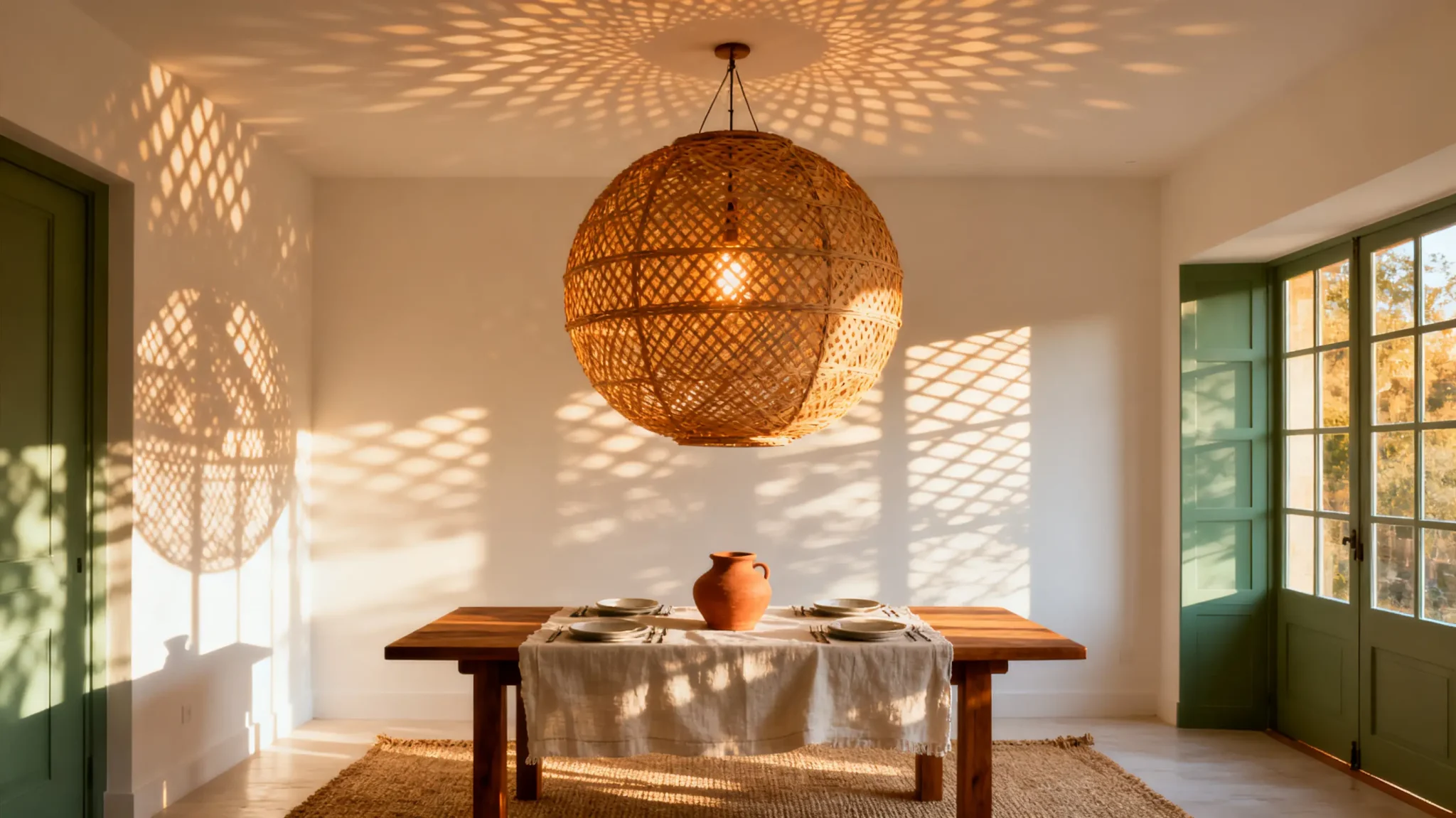
A rattan pendant light does something that few other lighting fixtures can — it brings warmth, texture, and a sense of natural beauty into a space without overwhelming it. The woven construction of rattan creates a dappled, soft light pattern that transforms plain ceilings into something genuinely atmospheric. Whether your home leans toward coastal, bohemian, organic modern, or Japandi-inspired design, a rattan pendant fits naturally into the aesthetic.
The rise of natural materials in interior design has made rattan one of the most sought-after textures in contemporary homes. If you’re considering this style for your own space, browsing a well-curated selection of rattan pendant lights is the best place to start. From open-weave globe designs to layered drum shades and tapered silhouettes, the range of options ensures there’s a fixture suited to every taste and ceiling height.
Why Rattan Pendant Lights Are Having a Major Design Moment
Interior design has been moving steadily toward natural materials, organic textures, and earthy palettes — and rattan fits this direction perfectly. Its warm honey tones, handcrafted quality, and slightly irregular texture give it an authenticity that mass-produced synthetic fixtures simply can’t replicate. In a world where interiors can feel overly polished and sterile, rattan introduces a welcome sense of warmth and life.
The material itself also has practical lighting advantages. The gaps in the weave allow light to filter through in irregular, dappled patterns that create movement and shadow on walls and ceilings. This effect is particularly beautiful in living rooms and bedrooms where atmospheric lighting matters more than raw brightness — creating the kind of cozy, layered ambiance that’s otherwise difficult to achieve.
Rattan also carries a cultural richness that adds depth to its aesthetic appeal. It has roots in Southeast Asian craft traditions and has been woven into furniture and home accessories for centuries. When you bring a rattan pendant into your home, you’re incorporating a material with real history and craftsmanship, not just a passing trend.
How to Choose the Right Rattan Pendant Light for Your Space
Not every rattan pendant is designed the same way, and the differences between styles can significantly affect how they function and feel in a room. The main variables to consider are shape, weave density, size, and bulb type.
Shape is the most visible design decision. Globe pendants are the most versatile — they work in almost any room and at almost any scale. Tapered or cone-shaped pendants cast more directed light downward, making them better suited to task lighting over kitchen islands or dining tables. Drum and flat-disc shapes work well in lower-ceilinged rooms where vertical clearance is limited.
Weave density determines how much light passes through the shade versus being contained within it. Open, loosely woven designs throw light patterns widely across walls and ceilings, creating a dramatic ambient effect. Tightly woven shades produce a softer, more contained glow — closer to what a traditional fabric shade delivers, but with far more texture and character.
Bulb type makes a significant difference in the overall look. Edison-style filament bulbs with a warm color temperature (2700K) complement rattan beautifully, reinforcing the natural, vintage-inflected quality of the material. Avoid cool white bulbs — they clash with rattan’s warm tones and undercut the cozy atmosphere the fixture is designed to create.
Rattan Pendant Lights by Room: Where They Work Best
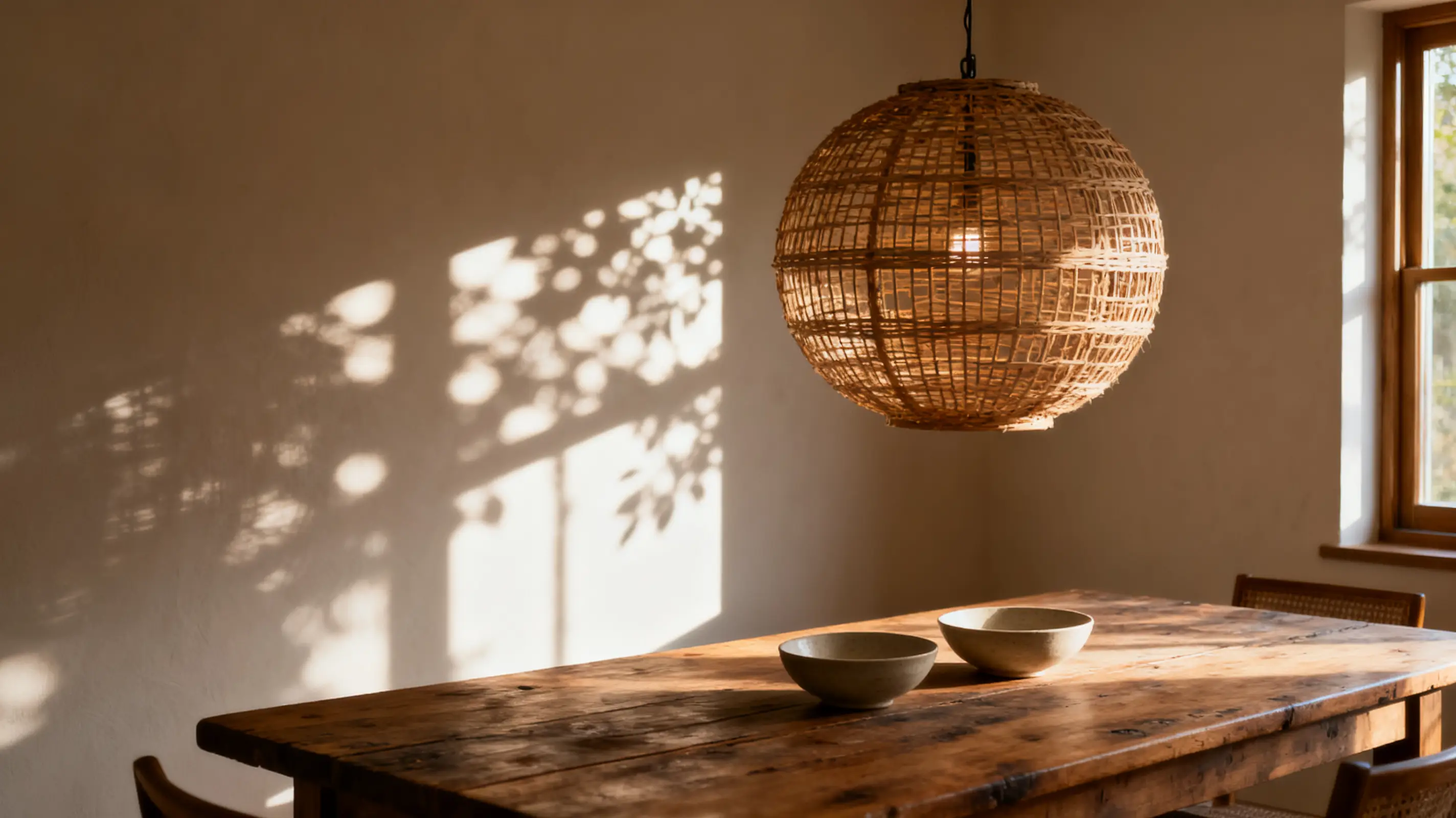
Rattan pendant lights are genuinely versatile, but some rooms allow them to perform at their very best.
Dining rooms are perhaps the most natural home for a rattan pendant. Hung 30–36 inches above the table, it creates an intimate zone of warmth and light that makes every meal feel more deliberate and inviting. A single large globe or a cluster of smaller pendants at varying heights both work beautifully in this context.
Kitchens and kitchen islands benefit from the organic contrast a rattan pendant brings against harder surfaces like stone countertops, tile backsplashes, and cabinetry. The warmth of the natural fiber softens what can otherwise feel like a utilitarian space.
Bedrooms are an excellent environment for rattan’s atmospheric light qualities. The dappled glow from an open-weave pendant creates a calming, restful atmosphere that contributes to a genuine sense of retreat. Hung centrally or as a pair flanking the bed, rattan pendants add texture and dimension to what is often a simply decorated space.
Living rooms work well when the pendant is used as a layered accent rather than the primary light source. Combining a rattan pendant with floor lamps and table lamps creates a rich, multi-dimensional lighting scheme that makes the room feel alive at every level.
Styling Your Rattan Pendant Light: What It Pairs Well With
The design language of rattan is rooted in warmth, nature, and artisanal craft — so the materials it pairs best with share these qualities. Natural linen, jute, raw wood, woven cotton, and terracotta all sit beautifully alongside rattan, creating a layered, cohesive interior where each element reinforces the others without competing.
Color palettes that complement rattan tend to be warm and earthy: cream, sand, warm white, terracotta, sage green, and deep warm brown. These tones echo the natural color range of rattan itself and create a unified, grounded aesthetic. Cool grays can work, but they require more care to prevent the overall room from feeling disconnected.
It’s also worth thinking beyond decorative spaces when building a comprehensive lighting plan for your home. Practical environments have very different requirements — task-heavy and utility-focused spaces call for an entirely different kind of fixture. Exploring garage lighting options highlights just how specialized different lighting contexts can be, reinforcing why matching the right fixture to each specific environment always produces the best results. A home where both aesthetics and function are addressed thoughtfully is a home that truly works at every level.
Getting the Scale and Hang Height Right
Scale is one of the most common mistakes made with pendant lighting, and rattan is no exception. A pendant that’s proportionally too small for the space looks timid and gets visually lost; one that’s too large creates an imbalance that draws attention for the wrong reasons.
A useful guideline for dining rooms: the pendant diameter should be roughly one-half to two-thirds the width of the table below. For a 48-inch table, that’s a pendant in the 24–32 inch range. For single pendants in a bedroom or living room, scale should be proportional to the furniture beneath or beside it rather than the room dimensions overall.
Hang height depends on ceiling height and function. Over dining tables and kitchen islands, 30–36 inches above the surface is the standard range. In ambient-focused rooms like bedrooms and living areas, hang height is more flexible — but maintaining at least 7 feet of clearance from floor to fixture base is a reliable rule of thumb.
A Final Word on the Rattan Pendant Light
The rattan pendant light earns its popularity not through novelty but through genuine design merit. It introduces natural texture, atmospheric light, and artisanal warmth in a way that few other fixtures can match — and it does so across a wide range of interior styles and room types. Whether you’re furnishing a coastal retreat, a boho-inspired bedroom, or a warmly modern family home, a rattan pendant light is a choice that consistently rewards.
Choose thoughtfully for scale, weave, and setting, and it will do exactly what the best pendant lighting always does: make the room feel like the best version of itself.