
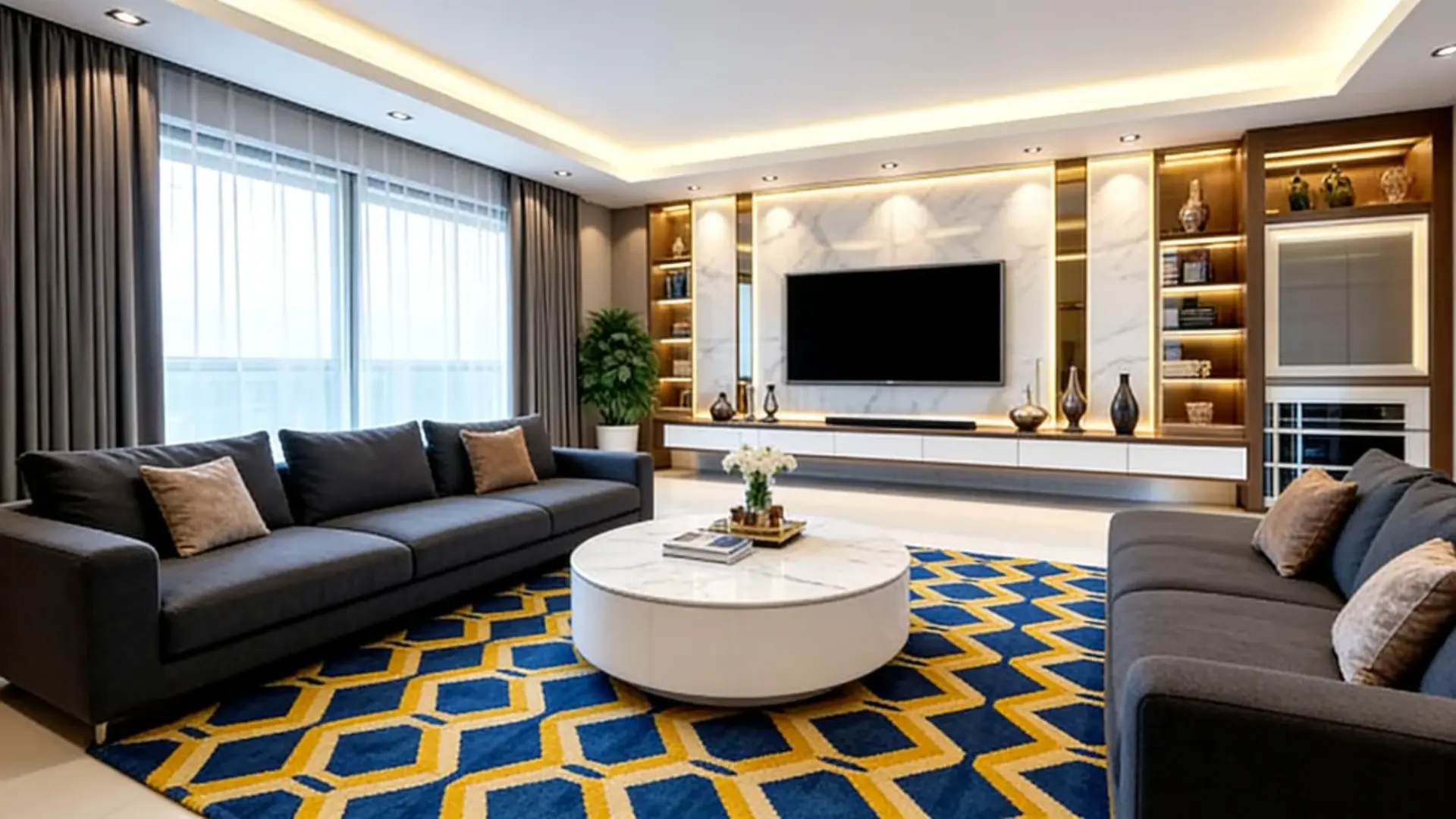
What Is Contemporary Interior Design? Key Features
Minimal interiors are often mistaken for cold, empty spaces, but that is usually the result of poor balance rather than simple design itself.
Contemporary interior design focuses on creating homes that feel open, functional, and comfortable without relying on heavy decor or overly detailed styling.
In many modern apartments and smaller homes, cluttered layouts and oversized furniture can make spaces feel more cramped than they actually are.
That is one reason contemporary interiors continue to appeal to homeowners looking for cleaner and more practical living spaces. The style is flexible, but certain elements define the look more clearly than others.
What Is Contemporary Interior Design?
Contemporary interior design focuses on creating spaces that feel clean, practical, and comfortable while reflecting current design preferences.
The style avoids excessive detailing and instead uses balanced layouts, smooth surfaces, and carefully selected furnishings to maintain a simple appearance.
Unlike styles tied to a specific time period, contemporary interiors continue to evolve as design trends change. Rooms often feel open and airy because of uncluttered arrangements, subtle color palettes, and thoughtful use of light.
Materials like wood, glass, metal, and soft fabrics are commonly combined to add depth without making the space feel busy or overcrowded.
What Are the Main Features of Contemporary Interior Design?
A few core elements define what makes a space feel truly contemporary. These features work together to create rooms that are open, balanced, and effortlessly modern.
Here is what sets the style apart:
1. Open Layouts and Natural Light
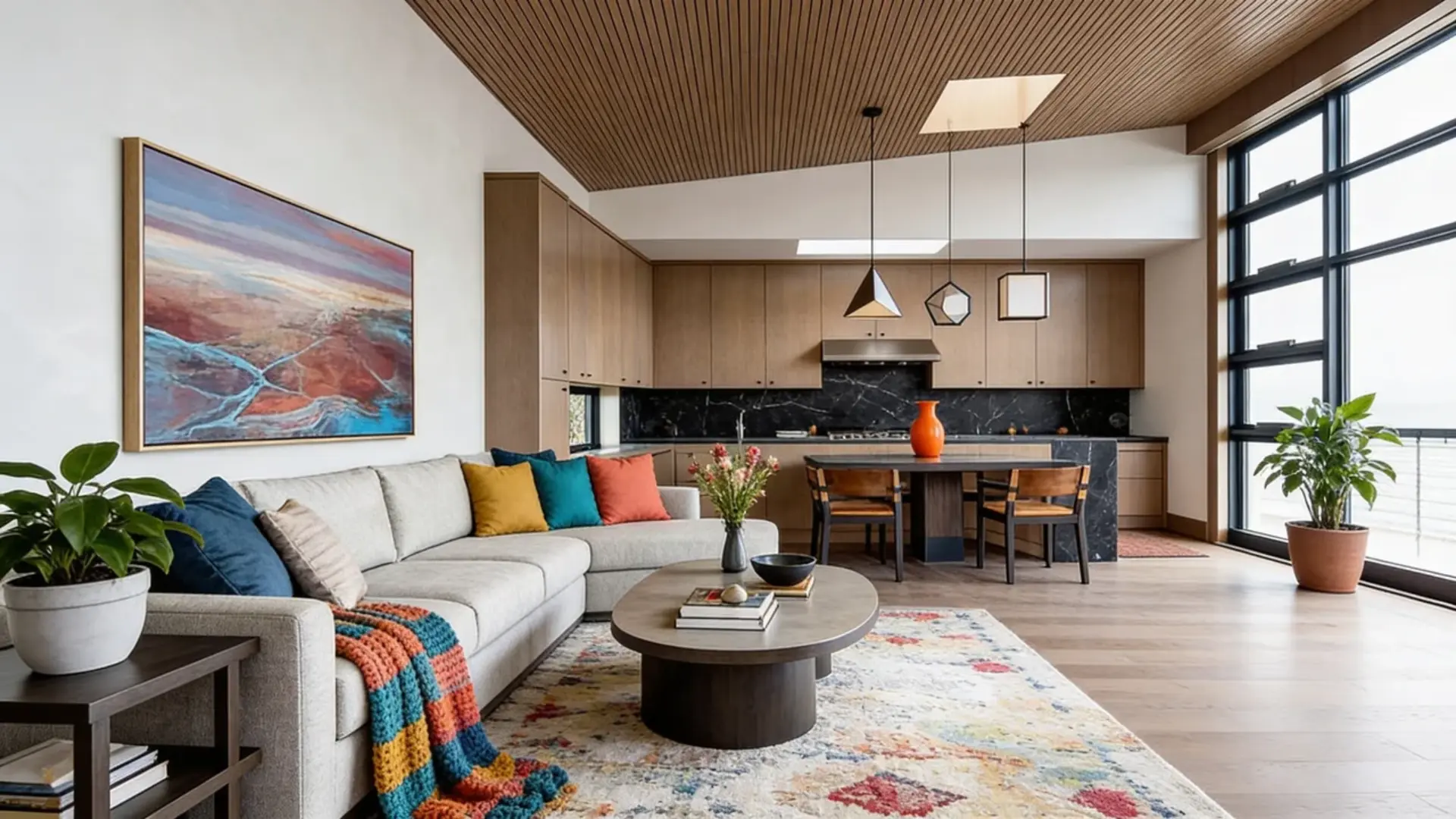
Contemporary homes often use open floor plans to make spaces feel larger and more connected. Living rooms, dining areas, and kitchens usually flow together without too many walls or barriers.
Large windows are another important feature. Natural light helps rooms feel brighter, cleaner, and more spacious. Glass doors, mirrors, and reflective surfaces are also common because they help spread light throughout the space.
2. Neutral Colors and Mixed Materials
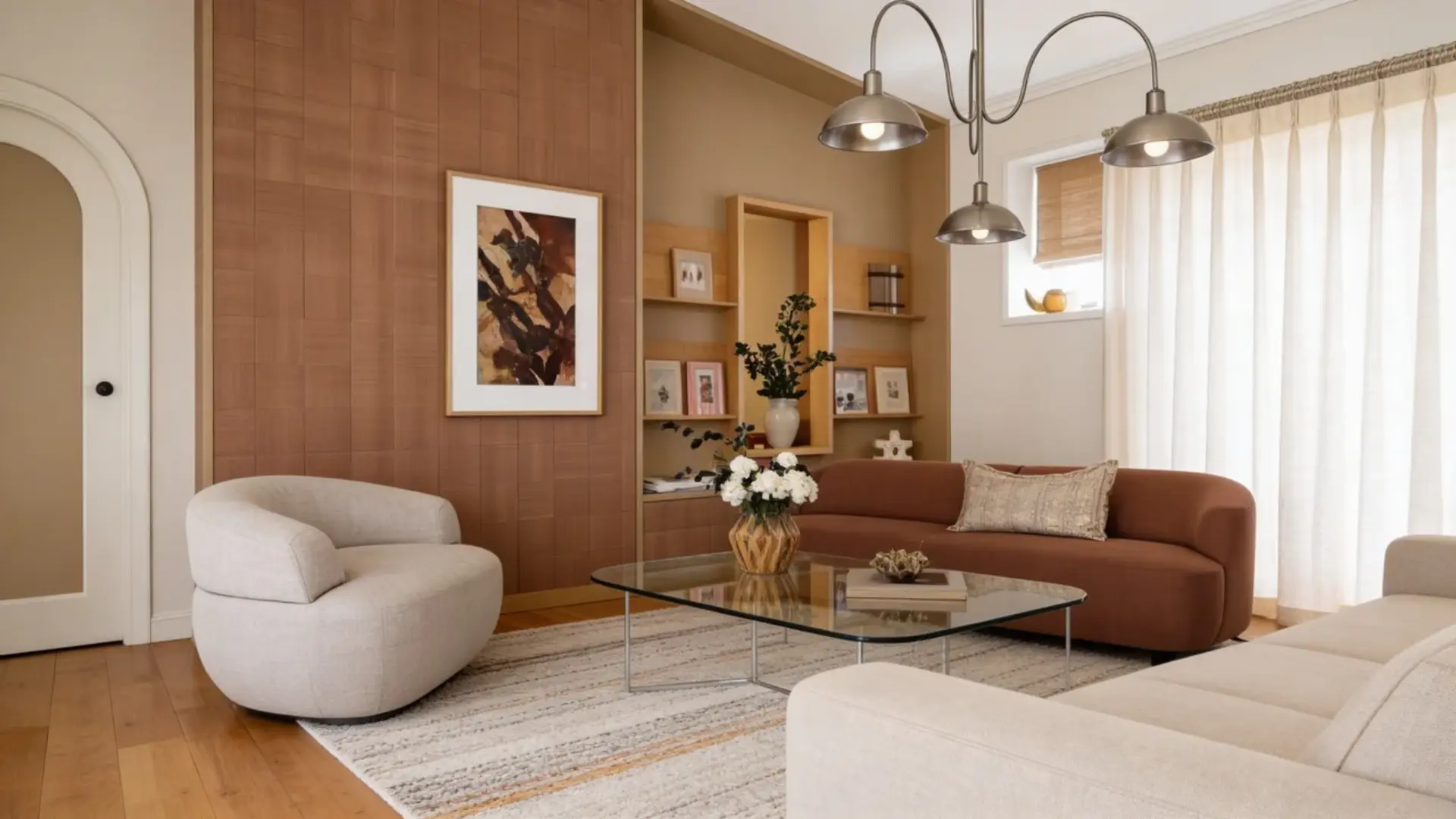
Most contemporary interiors use neutral shades like white, beige, gray, black, and soft earth tones. To keep neutral spaces from looking flat, designers mix different materials and textures.
Wood, metal, glass, stone, and soft fabrics are often layered together for balance.
For example, a room may combine:
- A linen sofa
- Wooden flooring
- Metal lighting fixtures
- Glass tables
- Textured rugs
This mix adds depth without adding clutter.
3. Simple Furniture and Minimal Decor
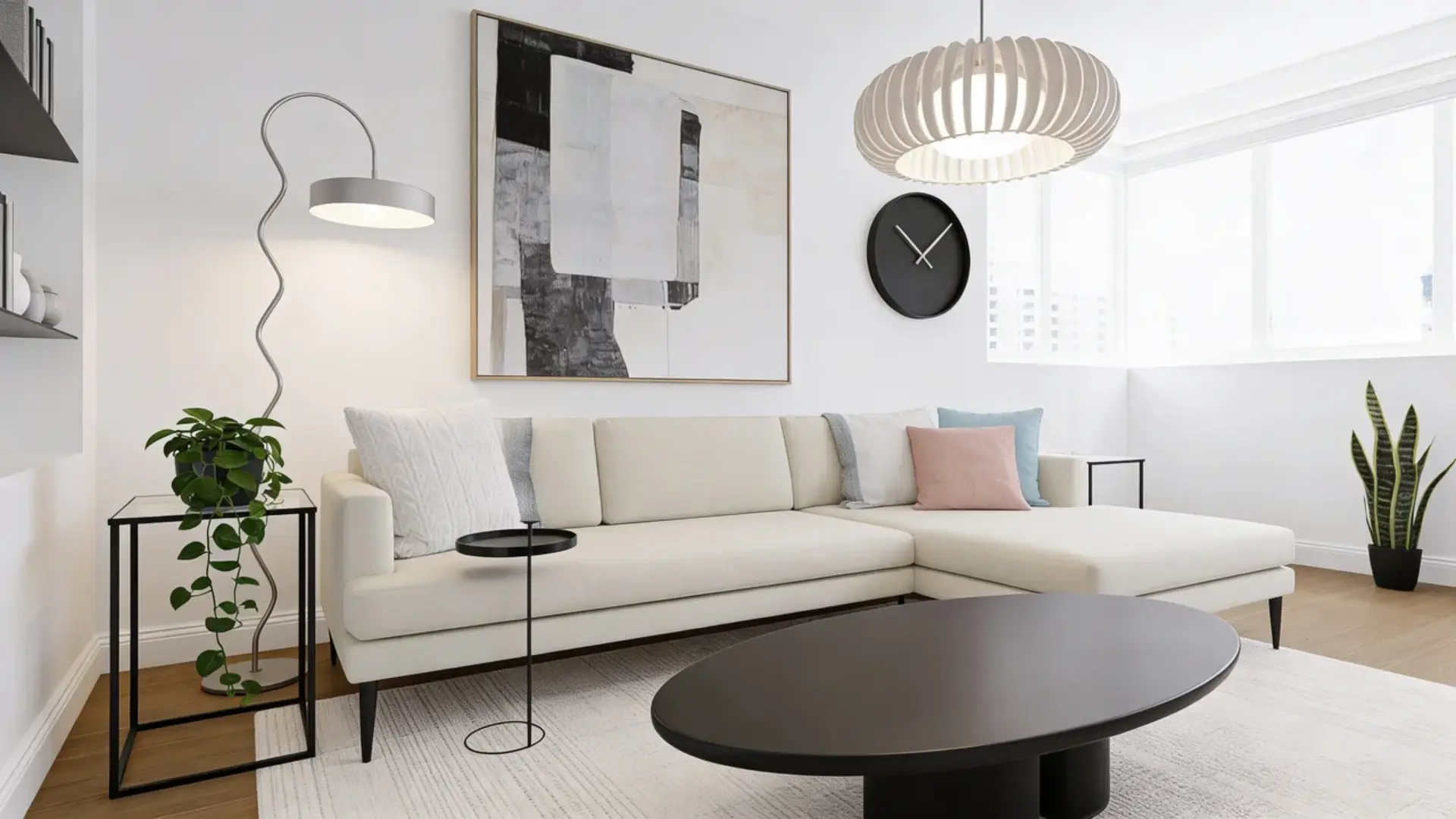
Furniture in contemporary interiors usually has clean lines and smooth shapes. Pieces are selected for both style and function instead of decoration alone. Instead of filling shelves and walls with many accessories, contemporary spaces use a few statement pieces like:
- Large artwork
- Sculptural lighting
- Indoor plants
- Textured cushions
This approach helps rooms feel organized, modern, and easy to maintain.
How to Add Contemporary Style to Your Home?
Creating a contemporary interior does not require a complete renovation. A few simple updates can make your home feel cleaner, brighter, and more modern.
- Replace bulky furniture with pieces that have clean lines
- Use neutral wall colors to create a simple and balanced base
- Keep enough open space to avoid a crowded look
- Add texture through rugs, cushions, curtains, or wooden finishes
- Improve lighting with large windows, floor lamps, or modern fixtures
- Limit decor to a few statement pieces instead of filling every surface
The goal is to create a space that feels functional, comfortable, and uncluttered while maintaining a modern appearance.
Key Differences Between Contemporary and Modern Interior Design
Contemporary and modern interior design are often confused, but they follow different design approaches.
| Contemporary Design | Modern Design |
|---|---|
| Changes with current trends | Based on a fixed historical style |
| Mixes different design influences | Follows modernist principles |
| Uses updated materials and finishes | Uses traditional modern materials |
| More flexible and adaptable | More structured and consistent |
| Often includes bold contrast and layered textures | Focuses on simplicity and natural elements |
Why Is Contemporary Interior Design So Popular?
Contemporary interior design remains popular because it creates homes that feel organized, comfortable, and easy to live in.
Many homeowners prefer spaces that look clean without requiring excessive decoration or complicated styling choices.
The design also works well in apartments, compact homes, and larger properties because it focuses on practical layouts and efficient use of space. Neutral shades, simple furniture, and open areas help rooms appear brighter and less crowded.
Another reason people prefer this style is its flexibility. Small changes in lighting, textures, furniture, or accessories can refresh the overall look without requiring a complete redesign of the entire space.
Final Thoughts
Contemporary interior design focuses on creating spaces that feel simple, functional, and comfortable. With clean layouts, neutral colors, natural light, and minimal decor, the style helps homes look modern without feeling overly formal or cluttered.
Its flexible approach is one of the biggest reasons for its popularity.
Since contemporary design evolves with current trends, it can easily adapt through small updates in furniture, lighting, textures, or decor while still maintaining a balanced and timeless look.
Which contemporary design feature do you like the most? Share your thoughts or favorite styling ideas in the comments below.


