Tesla Tiny House Interior: What’s Really Inside?
The Tesla tiny house interior has been all over social media, but most people still aren’t clear on what they’re actually looking at. Is it a real product, a concept, or something else entirely?
More importantly, what does the inside really look like, and does it actually work for everyday living?
This isn’t just about design trends. It’s about how a small space can handle real life when every inch matters.
If you’re curious about what fits inside a compact home like this, from layout and storage to smart energy systems, this breakdown will walk you through it in a simple, practical way.
What “Tesla Tiny House Interior” Actually Refers To
The term “Tesla tiny house interior” sounds straightforward, but the results it pulls up are anything but consistent.
Tesla doesn’t sell a tiny house. There is no official Tesla product called a “tiny house.” So, where does this phrase even come from?
There are two main sources behind most of the content you’ll find online:
- Tesla’s promo tiny house: A mobile demo unit showcasing Powerwall, solar roof tiles, and smart home tech. Not for sale.
- Boxabl Casita: A compact, foldable home linked to Musk near SpaceX’s Texas site, which got connected to Tesla.
Why does this confusion exist? Viral headlines love pairing Elon Musk’s name with Tesla, even when the two aren’t directly connected.
Social media makes it worse by mixing up Tesla’s energy demos with actual housing products. And since the phrase “Tesla tiny house” gets a lot of clicks, it spreads fast, accurate or not.
The bottom line is simple. When people talk about a “Tesla tiny house interior,” they usually mean either the Tesla Energy Demo Unit or the Boxabl Casita.
Keep that in mind as you go through interior examples and ideas ahead.
Overall Interior Layout and Space Distribution
The Tesla tiny house interior typically ranges from around 160 to 400 square feet. That’s not a lot of room, so every inch has to work hard.
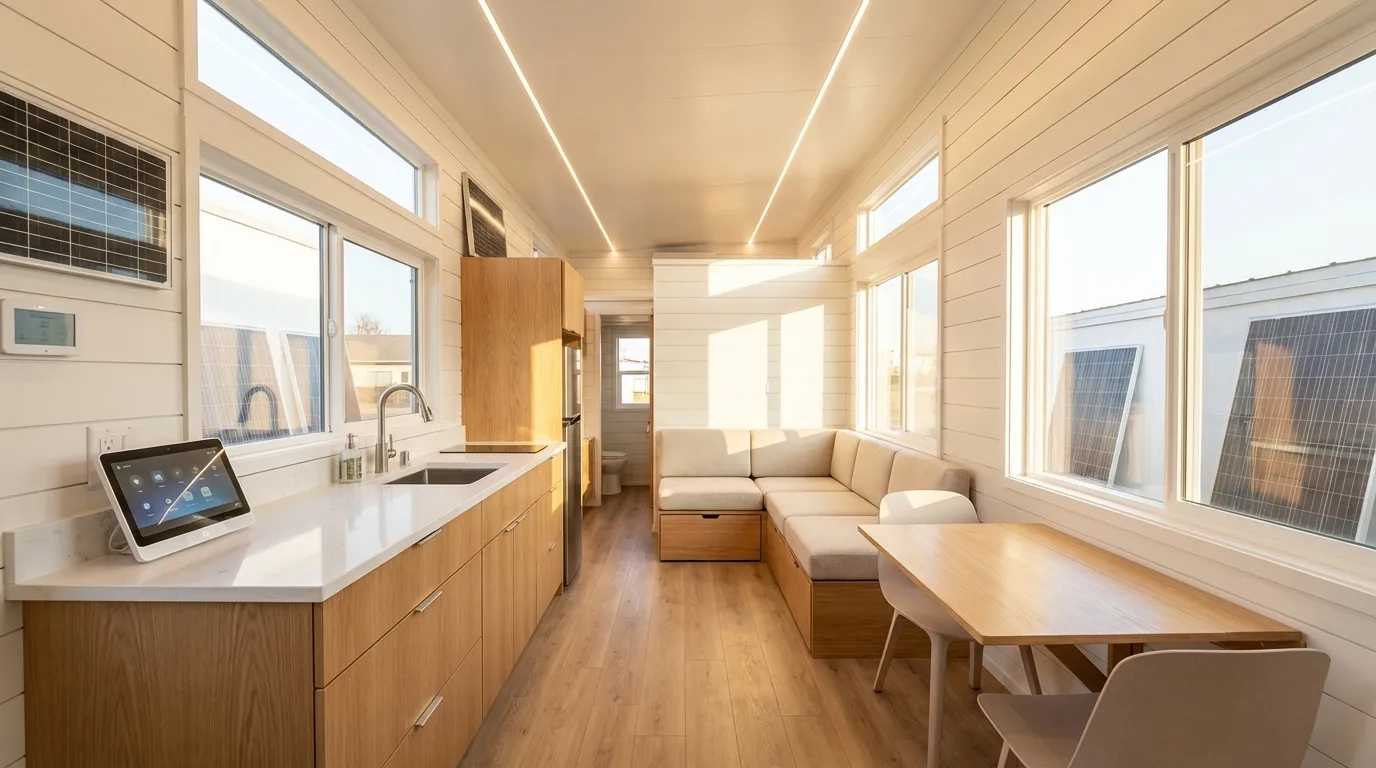
Most layouts follow a simple three-zone structure: a living and sleeping area, a kitchen, and a bathroom. These zones flow into one another without significant separation.
There are rarely full walls between them. This is where open-plan design comes in, by removing unnecessary partitions, the space feels much larger than it actually is.
Light moves freely from one end to the other, and so do you. Fewer walls also mean better airflow and a less boxed-in feeling. The result is a home that feels breathable, not cramped.
But this only works when the layout is planned well. If zones are placed without thought, the same open space can feel chaotic and tight.
A poorly arranged tiny house interior can actually feel smaller than a well-designed one half its size.
How Multipurpose Furniture Maximizes Space
In a tiny house, every piece of furniture needs to earn its place. Multipurpose furniture makes that possible by doing more than one job at a time.
Here are the most common examples you’ll find in a Tesla tiny house interior:
- Sofa-to-bed conversion: The seating area folds out into a full sleeping surface, removing the need for a separate bedroom.
- Foldable tables: Wall-mounted or collapsible tables appear when needed and fold away when not.
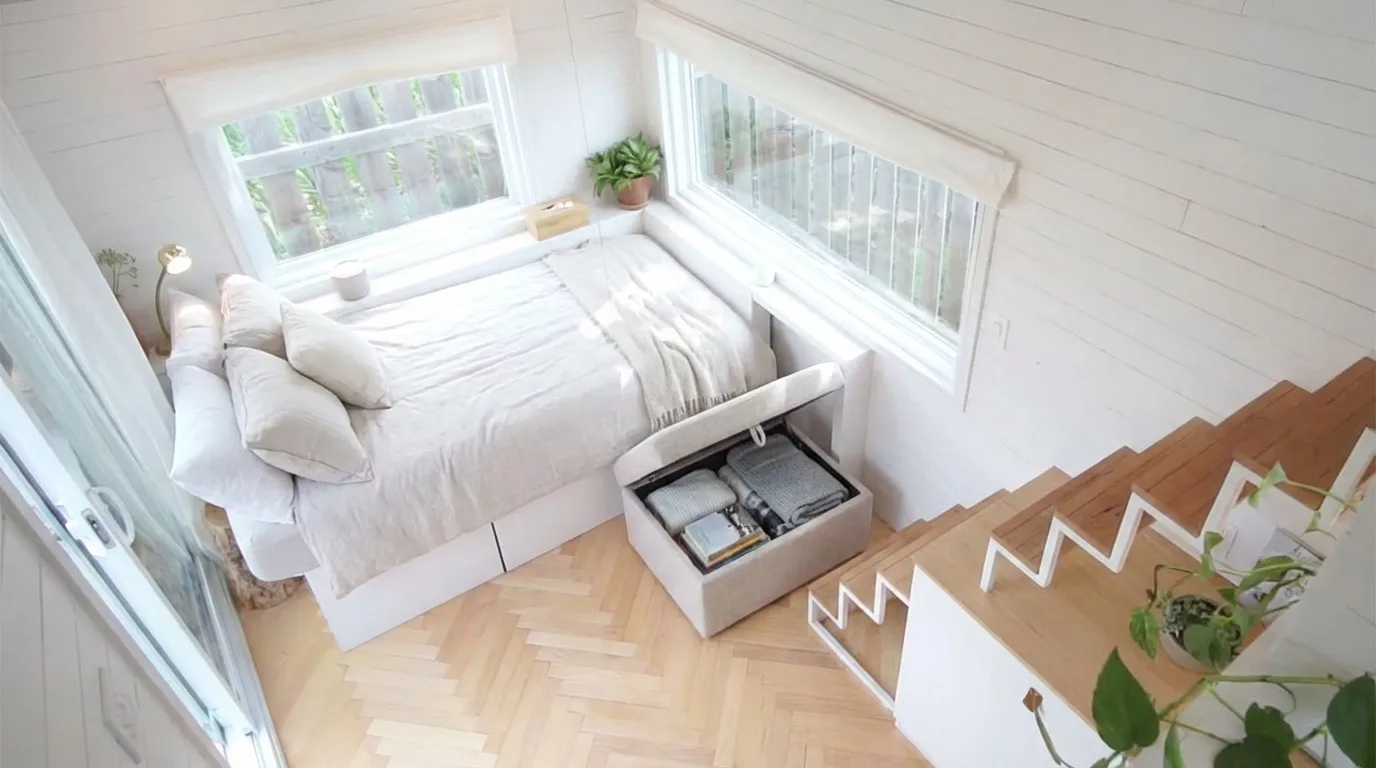
- Hidden storage under seating: Benches, ottomans, and bed frames often have built-in compartments underneath for storing items out of sight.
When one object serves multiple functions, you bring less furniture in overall. That directly reduces clutter and visual noise, making the space feel calmer and more open.
It also frees up floor area, which is the most valuable resource in any small home. However, this approach isn’t without its downsides:
- Worn-out mechanisms: Cheap conversion hinges and foldable parts break down faster with regular use.
- Daily inconvenience: If you’re converting a sofa into a bed every single night, it gets old quickly.
The key is choosing high-quality pieces and planning conversions around your actual routine, not just what looks good in photos.
Storage Designs Where Everything Actually Fits
Tiny homes don’t lack storage; they just store things smarter. Placement and design do the heavy lifting here.
Smart storage in a Tesla tiny house interior usually looks like this:
- Built-in cabinets: Walls and floors are hollowed out to hold shelves, drawers, and cupboards without taking up room.
- Vertical storage: Shelves and units rise toward the ceiling, using height rather than precious floor space.
- Hidden compartments: Stairs, benches, and bed frames double as concealed storage spots.
- Distributed storage: Spreading storage across zones prevents one area from feeling overcrowded or cluttered.
The result is a clean, organized interior where everything has a place. Nothing piles up because there’s always somewhere designed to hold it.
Kitchen and Bathroom Setup in a Compact Interior
Both the kitchen and bathroom are stripped down to essentials. Here’s how each one is typically designed:
Kitchen Design
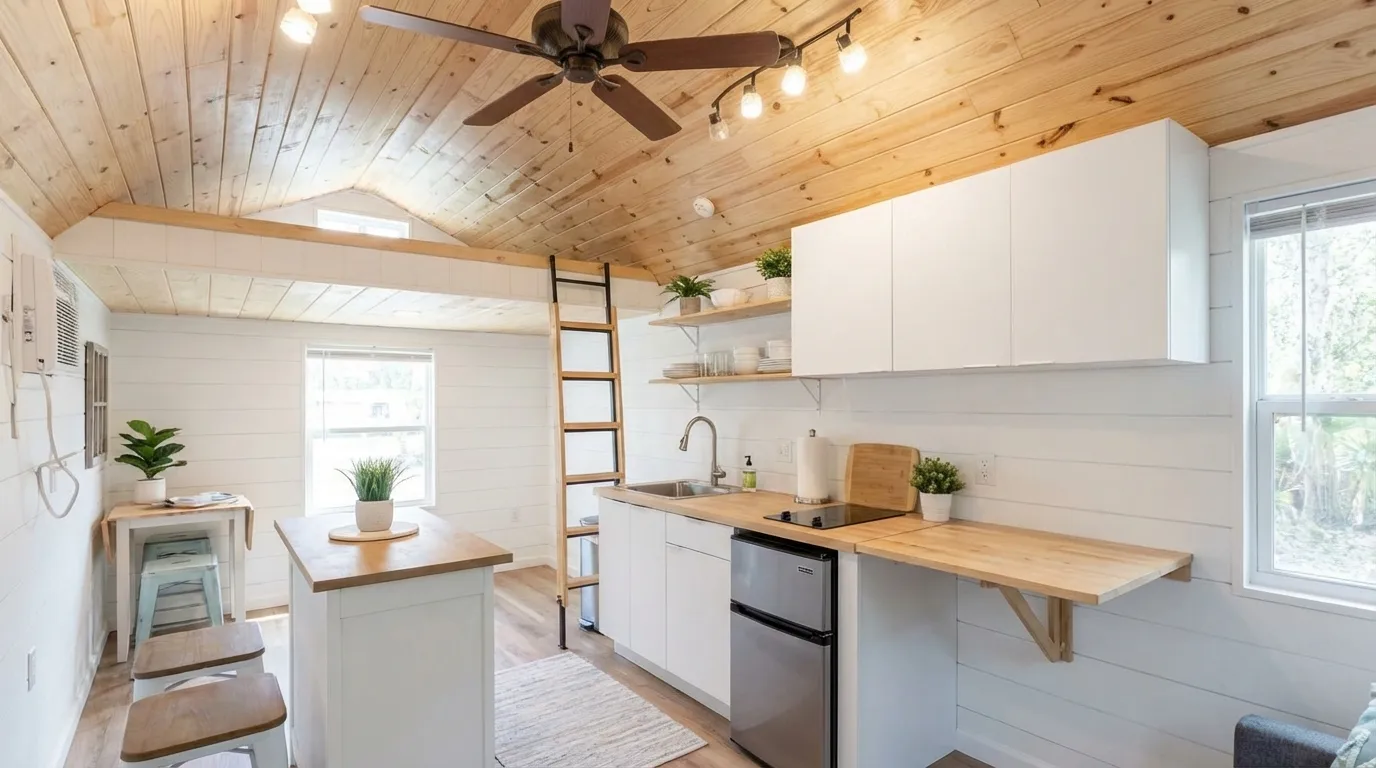
Compact appliances do the heavy lifting in a tiny house kitchen. A mini fridge and induction cooktop replace their full-sized versions, keeping the space functional without the bulk.
Counter space is limited, so fold-out wall-mounted surfaces step in when more room is needed. When the cooking is done, they fold back and disappear.
The layout follows an essentials-only approach. Only the most-used functions are included, and overhead cabinets handle storage above the counter, keeping the workspace below clear.
Bathroom Design
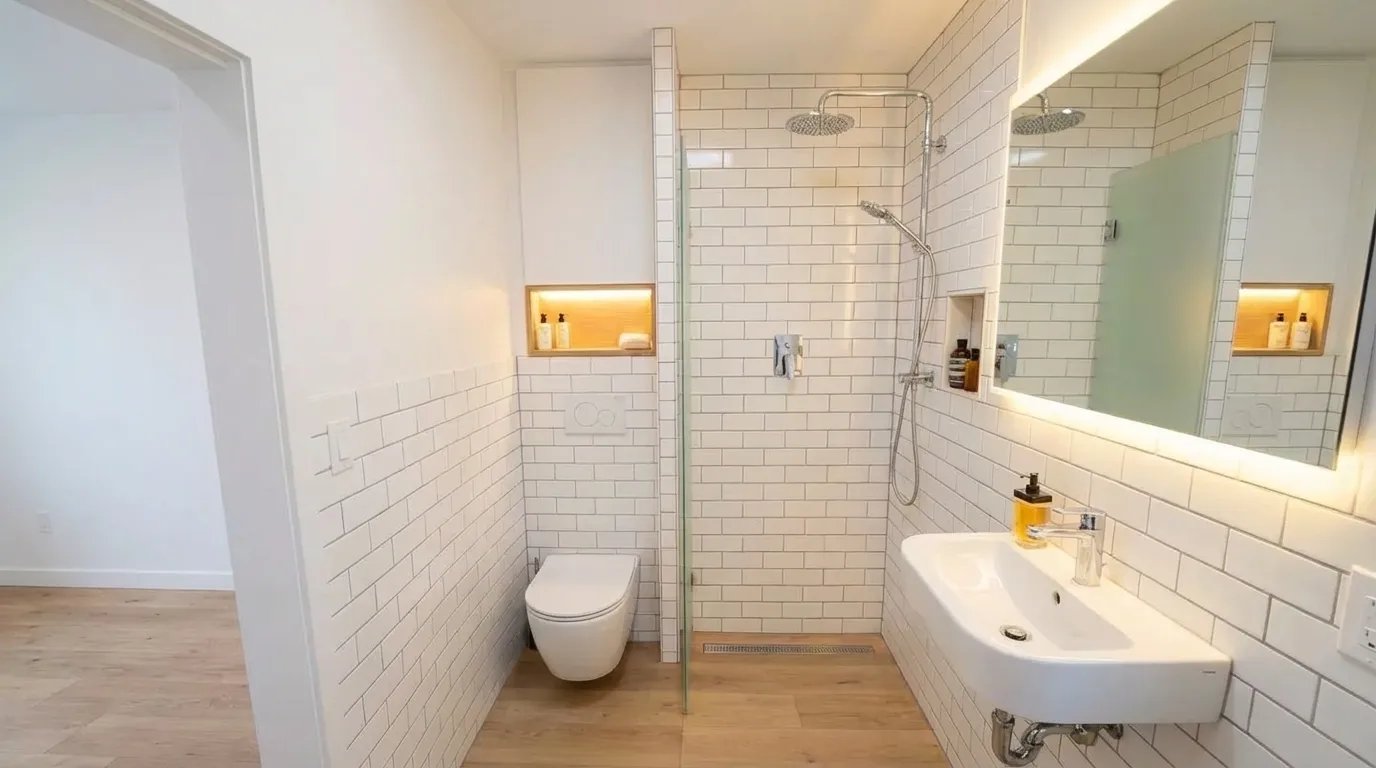
Bathrooms in tiny homes vary by model. Some fit a full sink, toilet, and shower using smart angular layouts. Others strip it down further with space-saving fixtures like corner sinks and sliding doors.
The wet bath concept takes this further by combining the shower and toilet into one shared open space. It removes the need for a separate enclosure entirely, saving valuable square footage.
The trade-off is comfort. Wet baths and tight layouts are manageable for short stays, but can feel limiting during long-term everyday use.
Both rooms prove that small doesn’t mean non-functional. With the right fixtures and layout, a tiny house kitchen and bathroom can cover everything you actually need.
Lighting, Materials, and Smart Features
The way a tiny house looks and runs comes down to two things, smart visual design and efficient technology. Together, they shape how the interior feels and functions.
| Feature | How It Works | Outcome |
|---|---|---|
| Large windows | Pull in natural light throughout the day | Interior feels open and connected to the outside |
| Light-colored walls and surfaces | Reflect light across the room | Space appears larger than its actual size |
| Minimalist finishes | Remove visual clutter from surfaces | Clean, breathable feel throughout the interior |
| Solar panels + Powerwall | Store and supply energy independently | No need for traditional utility connections |
| Smart lighting controls | Adjust brightness and tone automatically | Better ambiance without taking up physical space |
| Smart temperature controls | Regulate heat and cooling efficiently | Comfort without bulky HVAC infrastructure |
| Off-grid capability | Combines solar, storage, and smart systems | Full energy independence from external grids |
Without these features, dark interiors feel cramped and closed off, even in a well-planned layout.
One thing people get wrong: smart tech supports the interior, it doesn’t replace thoughtful space planning.
What the Interior Gets Right and Where It Falls Short
The design has real strengths but also clear limitations. Understanding both sides helps you set realistic expectations before making any decisions around tiny home living.
Strengths
- Smart use of limited space: Every corner is designed with purpose, making even 160 sq ft feel functional.
- Clean, minimal aesthetic: The interior feels uncluttered and modern, enhancing the feeling of openness.
- Works well for 1–2 people: For solo living or couples, the layout covers daily needs without feeling restrictive.
Limitations
- Storage falls short long-term: Built-in storage works for minimal living, but struggles with the demands of everyday life over time.
- Not designed for families: Limited sleeping space and a single bathroom make it impractical for more than two people.
- Comfort trade-offs: Wet baths and compact sleeping setups are manageable in the short term but lose appeal with extended daily use.
The Tesla tiny house interior is genuinely well thought out for the right person. But it works best as a lifestyle choice, not just a space-saving solution.
Conclusion
The Tesla tiny house interior is proof that a small space can be both functional and thoughtfully designed. From multipurpose furniture to solar-powered smart systems, every element works toward one goal, doing more with less.
But it’s not for everyone. It suits a specific lifestyle, a minimal one built around intention rather than excess. The trade-offs are real, and they matter for long-term comfort.
That said, the design principles behind this interior go beyond tiny homes. Smarter storage, better light, and energy-efficient systems are ideas worth borrowing for any living space.
If this shifted how you think about small-space living, or if you have questions, comment down below.
Frequently Asked Questions
How Much Does a Tesla Tiny House Interior Setup Cost?
The total cost varies widely. A basic Boxabl Casita starts around $49,500. Adding Tesla solar panels and a Powerwall can push the total significantly higher depending on energy needs and location.
Can You Legally Live in a Tesla Tiny House Full Time?
It depends on local zoning laws. Some areas allow full-time tiny home residency, while others restrict it. Always check municipal regulations before committing to permanent tiny house living in your region.
How Many People Can Comfortably Live in a Tesla Tiny House?
The interior is best suited for one to two people. The limited sleeping space, compact bathroom, and minimal kitchen make it impractical for families or anyone needing separate personal spaces daily.
Is the Tesla Tiny House Interior Customizable?
Customization options are limited compared to traditional homes. The Boxabl Casita offers a fixed floor plan, while Tesla’s energy components can be scaled. Interior decor and furniture choices remain largely up to the owner.