
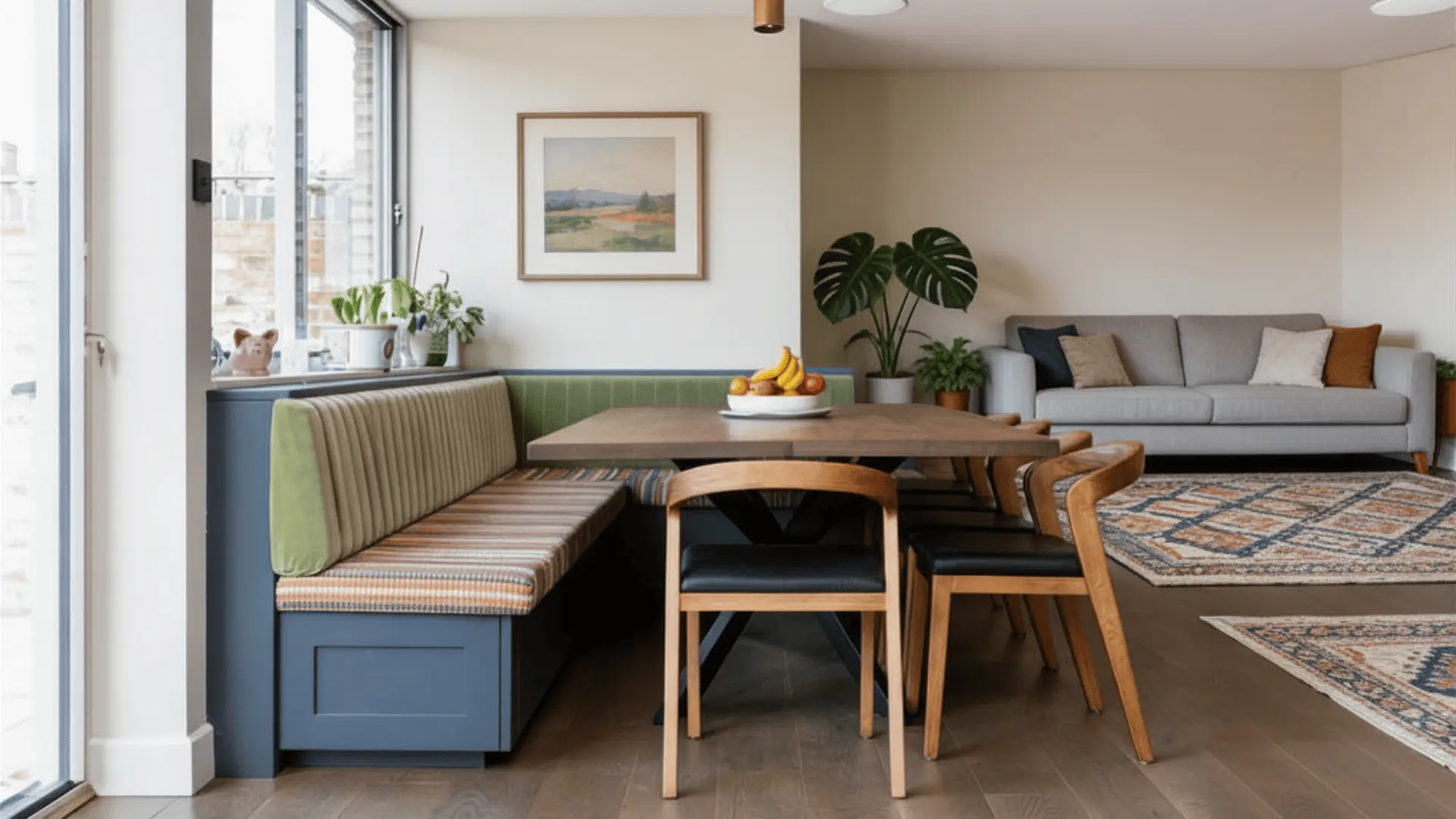
What is a Banquette? Meaning, Uses & Layout Guide
Small dining spaces often feel harder to plan than they should. The challenge is not just fitting a table, but making sure people can sit comfortably without wasting space.
This is where the idea of banquette seating becomes useful. It changes how seating is arranged by using walls and corners in a smarter way.
Today, I’ll break down what a banquette really is, how it fits into a layout, and why it works differently from regular seating. By the end, you’ll have a clear picture of how this setup functions in real spaces.
Let’s start with the basics.
What Is a Banquette?
A banquette is a bench-style seat used mainly in dining areas. It is usually fixed in place and often comes with cushioned seats and backrests for comfort.
Most banquettes are built along a wall or placed in a corner. This helps us use space better and keeps the layout clean. They are used with a table, just like chairs. People sit on one side, and chairs may be placed on the other.
Fixed Banquette vs. Movable Bench
A normal bench can be moved anywhere, but a banquette is usually fixed or made to fit a specific space. It is often designed for a wall, corner, or built-in layout, so it becomes part of the room.
Many people think every bench is a banquette, but that is not correct. A banquette usually means a fixed or fitted bench used with a table. In some cases, the term is also used for seating that looks or works like a built-in setup, even if it is not permanently attached.
This is why all banquettes are bench-style seats, but not all benches are called banquettes.
Why Banquette Seating is Used Instead of Chairs?
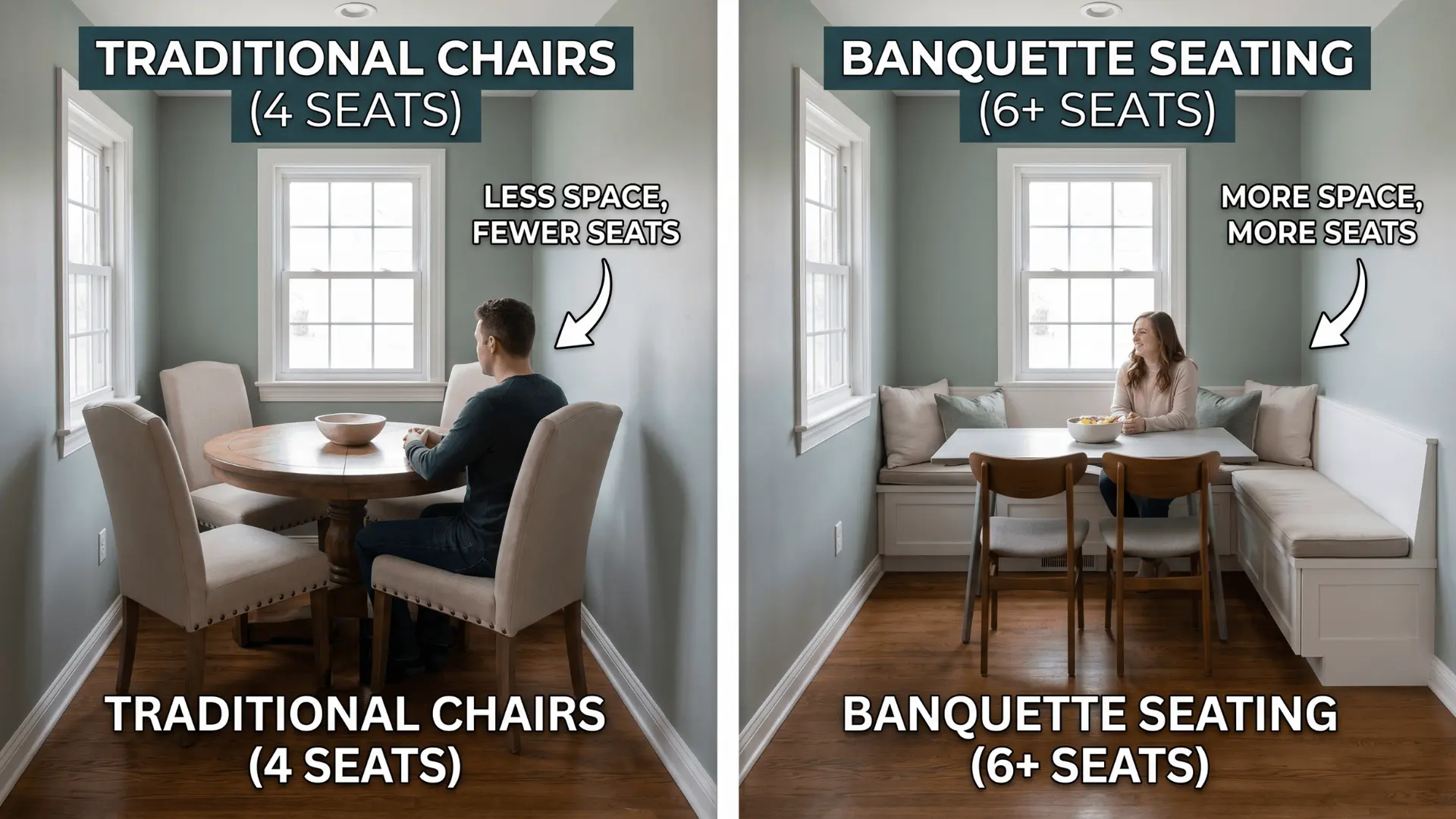
Banquette seating is mainly used when space is limited. It helps make better use of small dining areas. Chairs need space to move, so gaps are left around the table. This wastes space, reduces seating, and leaves corners unused.
How Banquette Seating Solves This Problem?
A banquette is placed against a wall or in a corner, so it uses space that often stays empty. This removes the need for extra clearance behind seats and keeps the layout tight.
Because people sit side by side on a single bench, more people can fit in the same area compared to separate chairs. The setup stays compact, and the space feels more organized.
Many assume banquettes are only for style, but their main purpose is practical. They help fit more seating into less space while keeping the layout clean and efficient.
How Banquette Seating Works in a Layout?
Banquette seating changes how space is used by fixing seating along a wall or in a corner. This helps make the layout more compact and efficient.
- Fixed Placement Against Walls or Corners: The banquette is attached to a wall or built into a corner, using space that often stays empty and reducing unused gaps.
- No Need for Space Behind Seating: Chairs need room to pull out, but a banquette removes this requirement. This keeps the layout tighter.
- Tighter Table Positioning: Since no extra clearance is needed, the table can be placed closer to the seating, making the area more organized.
- Step-by-Step Layout Setup: First, the banquette is placed along a wall or corner. Then, the table is positioned in front. Chairs can be added on the open side if needed. People enter from the open side and slide into place.
- Entry and Exit Movement: People usually sit by sliding along the bench. This works best when there is enough open space for easy movement.
- When the Layout Does Not Work Well: If spacing is tight, comfort drops. A table placed too close reduces legroom, and limited entry space makes sitting and standing difficult.
Common Shapes and Structural Variations
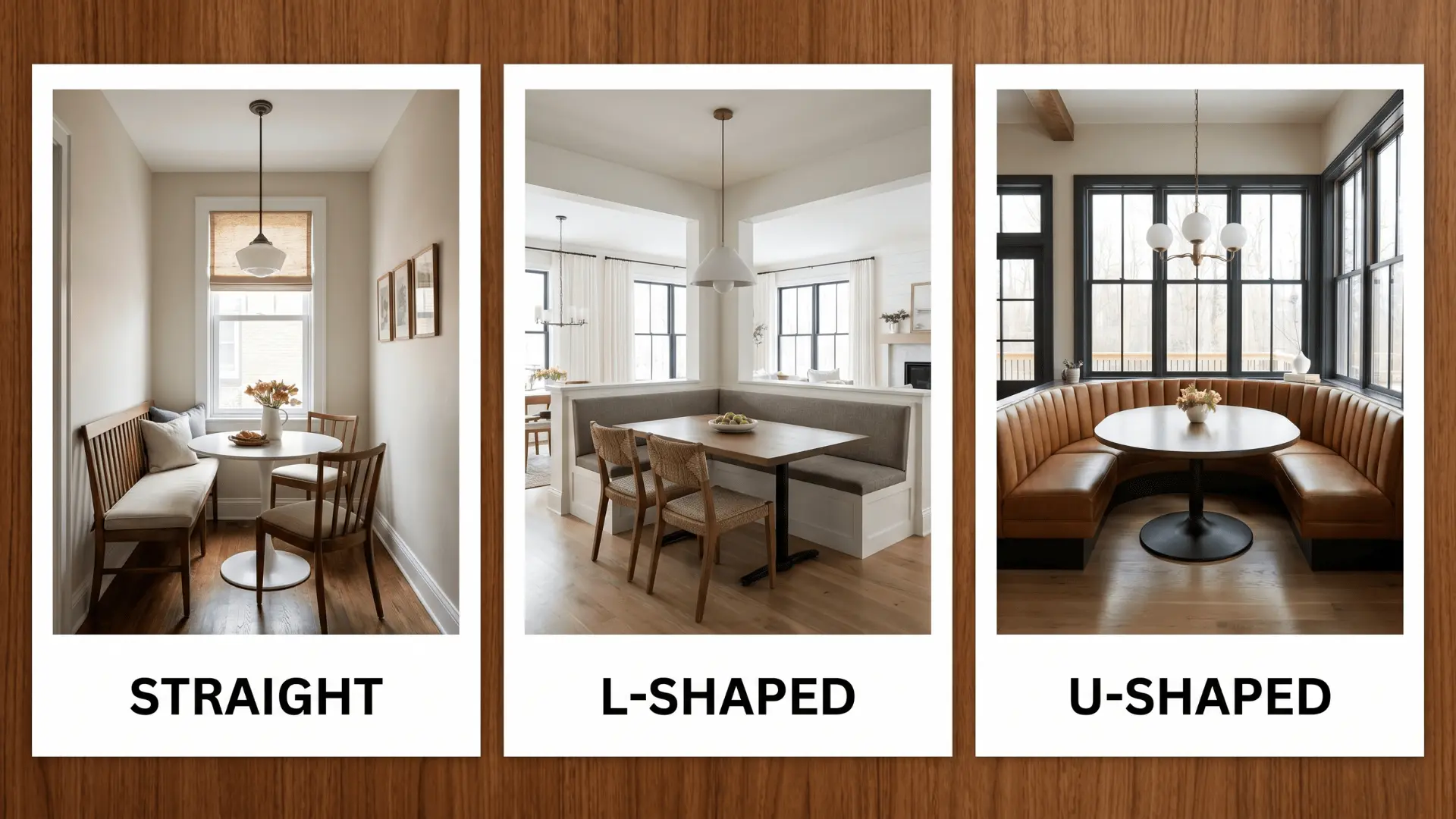
Banquette seating comes in different shapes, and each shape affects how people sit, move, and use the space.
Straight Banquette
A straight banquette runs along a single wall. It works well in narrow spaces where there is limited room to work with.
This setup is simple, easy to install, and fits neatly into small layouts. However, because everyone sits in a line, it offers less face-to-face interaction compared to other shapes.
L-Shaped Banquette
An L-shaped banquette fits into a corner and uses two connecting walls. It makes better use of corner space, which is often underused in a layout.
This shape allows more people to sit compared to a straight setup and creates a more connected seating arrangement. It is commonly used in kitchen nooks and compact dining areas.
U-Shaped Or Curved Banquette
A U-shaped or curved banquette wraps around the table, forming a more enclosed seating area.
This setup works well for larger groups because it increases seating capacity and brings everyone closer together. At the same time, it requires more space and may not be suitable for smaller rooms.
The shape of a banquette directly affects both seating capacity and movement. Compact shapes are better suited for small spaces, while larger configurations need more room to function properly.If the shape is too large for the space, the area can feel crowded, and movement around the table becomes difficult.
Key Features that Define a Banquette

A banquette has features that set it apart from regular seating. These features affect comfort, space use, and how it works in a room.
- Upholstered seat and backrest: Most banquettes have soft cushions on the seat and back. This makes sitting comfortable, especially for longer periods. Without cushioning, the seating can feel hard and less supportive.
- Fixed or built-in structure: A banquette is fixed in one place, usually against a wall or in a corner. This helps save space and keeps the layout stable. However, it cannot be moved like chairs, so planning is important.
- Optional storage under the seat: Some banquettes have storage space under the seat. The top can be lifted to store items, which is helpful in small homes. However, not every banquette includes storage, as it depends on the design.
- Height alignment with the table: The height of the banquette should match the table. If the height is too high or too low, it becomes uncomfortable to sit and eat. Proper alignment ensures good posture and enough legroom.
- Balance of comfort, storage, and space use: All these features work together to make the banquette useful. Cushioning adds comfort, the fixed structure saves space, and storage adds extra function. If any part is not planned well, the seating may not feel comfortable or practical.
Where are Banquettes Commonly Used?
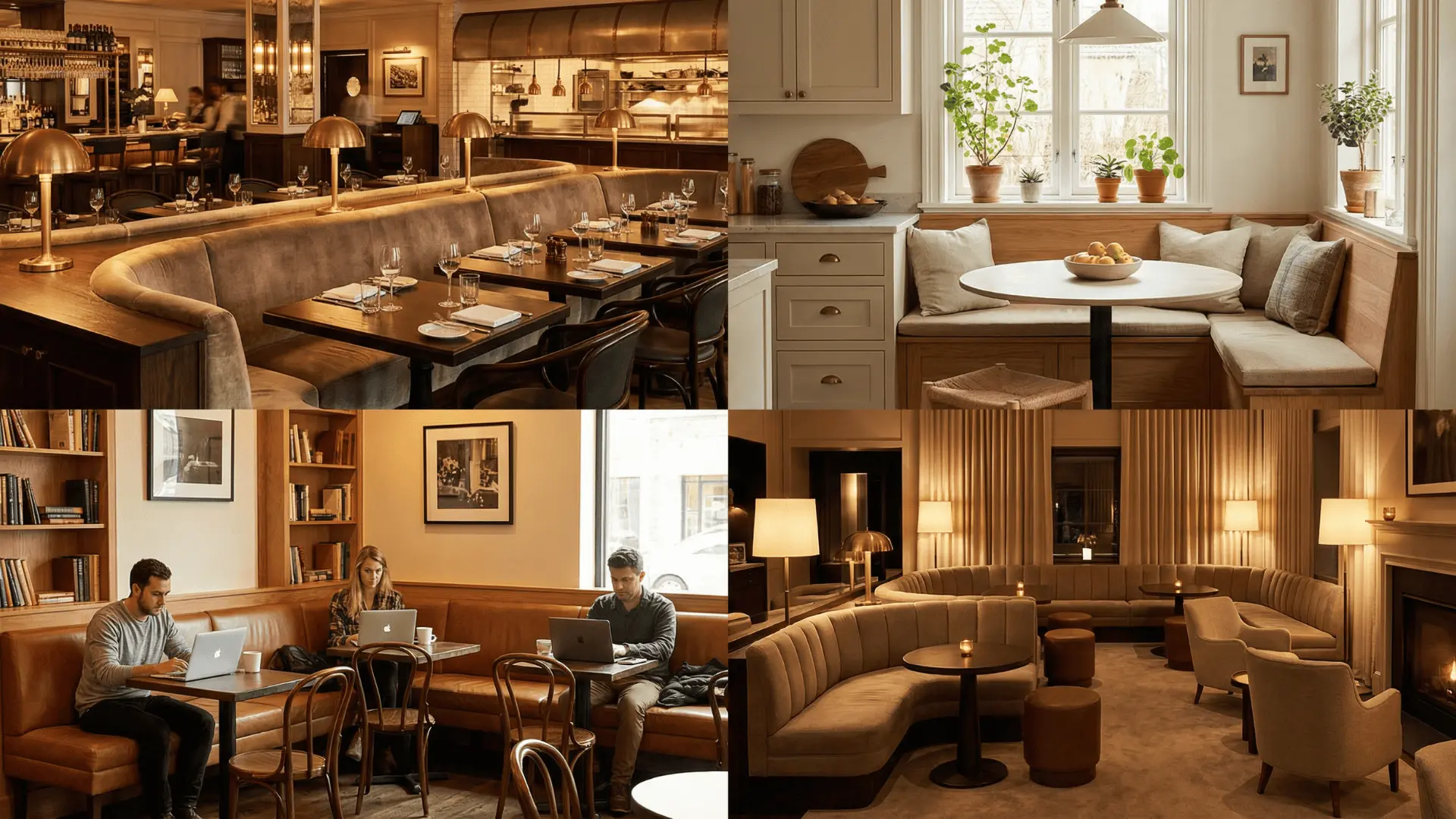
Banquettes are used in places where space needs to be used wisely. They help fit more people while keeping the area neat and organized.
- Kitchens and breakfast nooks: Banquettes are often placed in small kitchen corners. They turn unused corners into seating areas. This makes the kitchen more functional without taking up extra space.
- Dining rooms with limited space: In small dining rooms, chairs can take up too much space. A banquette runs along the wall, allowing more people to sit. This keeps the layout compact and easy to manage.
- Restaurants and cafés
Banquettes are widely used in restaurants and cafés. They allow more customers to sit in a limited area. This helps increase seating without making the space feel crowded.
These locations benefit from fixed seating because it removes unused gaps. It also keeps seating arranged in a clean and structured way. The result is better use of space and higher seating capacity.
When Banquette Seating Works and When It Doesn’t?
Banquette seating is useful in some situations, but not in all. It depends on the space, layout, and how you plan to use it.
| Where It Works Well | Where It Does Not Work Well |
|---|---|
| Fits neatly in small or corner-based layouts | Not suitable for large open spaces |
| Uses empty wall and corner space efficiently | Feels limiting when a flexible layout is needed |
| Helps seat more people in less space | Cannot be moved or rearranged easily |
| Creates a compact and organized setup | Fixed structure reduces layout changes |
| Works best when the seating capacity is important | Entry and exit can be difficult in tight setups |
Banquette seating is generally used in layouts where space needs to be used efficiently.
It performs well in compact or corner-based setups because it reduces unused gaps and keeps the layout structured. In more open or flexible layouts, its fixed nature can limit how the space is arranged.
Because of this, how well it works depends on the layout, spacing, and how people need to move around the area.
Banquette vs. Booth vs. Bench
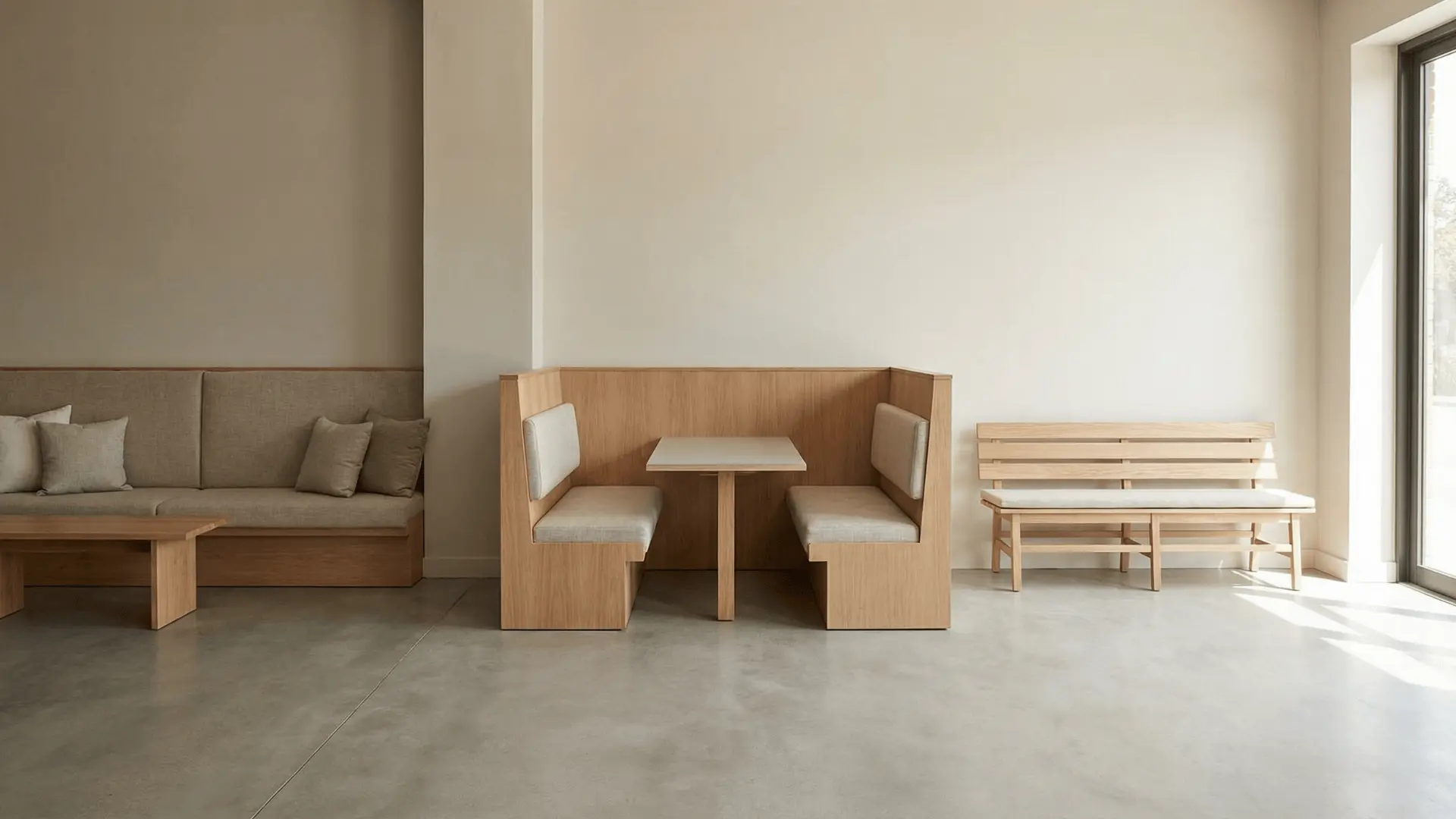
These three terms are often confused because they all involve bench-style seating. However, they are different in how they are built and used.
Banquette
A banquette is a fixed bench placed against a wall or in a corner. It is usually used with a table and does not move. It is open on one side, so people sit from the front.
Booth
A booth has two benches facing each other, with a table between them. It creates a more enclosed seating space, which is common in restaurants. Both sides are fixed, and people sit facing each other.
Bench
A bench is a simple seat that can be moved from one place to another. It is not fixed to a wall and can be used in different areas. It may or may not be used with a table.
Key difference: The main difference is in how they are placed and used. A banquette is fixed on one side, a booth is enclosed with seating on both sides, and a bench is movable.
People often mix these terms because they look similar. All of them are long seats, which makes them easy to confuse. You can identify them by checking their placement. If it is fixed to a wall, it is a banquette. If it has seating on both sides, it is a booth. If it can be moved, it is a bench.
Final Thoughts
Banquette seating is more than just a design choice. It changes how space is used, how people sit, and how a dining area feels overall.
Using walls and corners reduces wasted space and makes seating more structured. At the same time, it comes with limits, especially when flexibility or easy movement is needed.
The key is understanding where it fits and how it works before adding it to a space. \When planned well, it can make even small areas feel more functional and organized.
If you’re rethinking your dining setup, take a closer look at how a banquette could fit into your layout.
Frequently Asked Questions
What is a Banquette Sofa?
A banquette sofa is a cushioned bench that looks like a sofa and is placed along a wall, often paired with a dining table. It offers more comfort for long seating.
What is an L-Shaped Banquette?
An L-shaped banquette has two benches joined in an “L” shape to fit into a corner. It helps seat more people and uses space well.
What is a Banquette Corner Seat?
A corner banquette seat is placed in a corner, with seating on two sides. It creates a compact and cozy dining area.
Can a Banquette Be Added to an Existing Dining Area?
Yes, a banquette can be added if there is a free wall or corner. Proper measurements are needed for comfort and movement.


