Trailer Sizes Explained: How to Choose the Right Length and Width
Choosing the right trailer size usually looks simple until you start loading real equipment. A trailer may technically fit your machine on paper, but that does not always mean it will tow comfortably, balance correctly, or leave enough room for attachments, tools, and proper tie-down placement.
Experienced operators rarely think about trailer size in terms of dimensions alone. They think about how the trailer behaves at highway speeds, how easy it is to load in tight jobsites, and whether the trailer has enough Gross Vehicle Weight Rating (GVWR) to safely handle real-world working weight, not just ideal conditions.
Length and width determine how your load fits, but GVWR determines whether that load can actually be carried safely and consistently over time. If you are hauling equipment, materials, or tools regularly, size is not a secondary detail. It is a core decision that affects productivity, safety, and long-term durability. That is especially true when evaluating equipment trailers, where both deck length and width directly impact how machines are loaded and secured.
Why Trailer Size Matters More Than Most Buyers Think
Incorrect sizing becomes apparent quickly in real-world conditions.
A trailer that is too short forces awkward loading and poor weight distribution. One that is too narrow limits what you can haul safely. Oversizing, on the other hand, can create maneuverability issues and unnecessary cost.
When evaluating trailer sizes, you need to think about:
- The dimensions of your equipment or materials
- How often you load and unload
- The type of jobsite access you deal with
- How the load will be secured
The goal is not maximum size but the right size for the work.
Standard Trailer Lengths and What They Support
Trailer length determines more than cargo space. It affects load balance, maneuverability, tie-down placement, and how comfortably equipment fits once attachments and tools are added.
Smaller utility trailers commonly fall into the 10- to 14-foot range and are often used for compact equipment, mowers, side-by-sides, or light material hauling. These shorter trailers are easier to maneuver in residential areas, tighter jobsites, and crowded parking lots.
As workloads increase, many operators move into 16- to 20-foot trailers because they provide more flexibility for equipment placement and weight distribution. Tandem axle utility trailers and car haulers in this range are commonly used for compact tractors, skid steers, and commercial mowing equipment. Many equipment trailers are also built in these lengths because they provide enough room for attachments and safer tie-down positioning.
For heavier commercial applications, equipment trailers frequently extend into the 20- to 24-foot range, with higher GVWR ratings and reinforced frame construction designed for repeated hauling cycles. Deck-over and tilt trailers in these lengths are often chosen for larger compact equipment, palletized materials, and heavier machinery because they provide better load positioning and more stable towing characteristics under weight.
Longer trailers improve flexibility, but they also require more turning space and place greater demands on the tow vehicle. Buyers towing regularly in tighter urban areas often discover there is a practical balance between cargo space and maneuverability.
Width Determines What You Can Load
Width is often overlooked, but it plays a critical role in usability.
Most trailers fall into standard widths such as:
- 60-72 inches: compact trailers for smaller equipment
- 77-83 inches: common for utility and general-purpose hauling
- 102 inches: full-width trailers for larger equipment and commercial use
Width changes the entire loading experience, especially with equipment that already pushes the limits of trailer clearance.
Many lighter-duty utility trailers use deck widths around 60 to 72 inches for compact loads and smaller machines. These work well for narrow equipment and general-purpose hauling but can become limiting once equipment width increases.
Professional-grade utility and equipment trailers commonly move into the 77- to 83-inch range because that additional width allows safer loading and more flexibility around tie-down placement. Many tandem axle utility trailers and equipment haulers use 83-inch decks specifically because they accommodate compact tractors, skid steers, side-by-sides, and commercial mowing equipment more comfortably.
For larger machinery and palletized materials, deck-over equipment trailers frequently use full-width 102-inch decks. These wider trailers are designed for heavier commercial applications where clearance and cargo flexibility matter more than compact maneuverability. Deck-over configurations also eliminate fender restrictions, making them easier to load with forklifts or wider equipment.
Width becomes especially important once equipment starts changing. Larger tires, additional attachments, pallet overhang, or wider implements can quickly make a trailer feel undersized even if the equipment technically fits on paper. Experienced buyers usually leave additional margin rather than sizing to the absolute minimum clearance.
How GVWR Scales With Length and Width
Length and width determine how your load fits, but GVWR determines whether that load can be carried safely. These factors work together, not independently.
One of the most common trailer-buying mistakes is assuming that a larger deck automatically means higher usable capacity. In reality, trailer size and trailer capability are related, but they are not the same thing.
For example, two 18-foot trailers may look nearly identical from the outside. But if one uses heavier axles, reinforced crossmembers, thicker steel, and upgraded suspension components, its GVWR may be substantially higher. That difference directly affects how much equipment, material, or cargo the trailer can safely handle over time.
This becomes especially important with compact equipment. A skid steer that weighs 7,500 pounds by itself may seem manageable on paper, but once you add attachments, fuel, chains, spare buckets, or tools, the total loaded weight increases quickly. Buyers who only focus on deck dimensions often discover too late that the trailer physically fits the machine while operating dangerously close to its GVWR.
Commercial operators typically leave additional capacity beyond their expected working load for a reason. Trailers that constantly operate near maximum GVWR place more stress on brakes, tires, wheel bearings, suspension systems, and the trailer frame itself. Over time, that repeated stress affects towing stability, stopping distance, maintenance frequency, and long-term durability.
As trailers increase in length and width, manufacturers generally scale GVWR upward using:
- Stronger axles
- Heavier suspension systems
- Reinforced frame construction
- Upgraded braking components
That added structure improves capability, but it also increases the trailer’s empty weight. This is where buyers need to understand the relationship between GVWR and payload capacity rather than looking at dimensions alone.
The right trailer is not simply the one your equipment fits on. It is the one where deck size, payload, GVWR, and towing stability all work together for the way you actually haul.
Matching Trailer Size to the Job
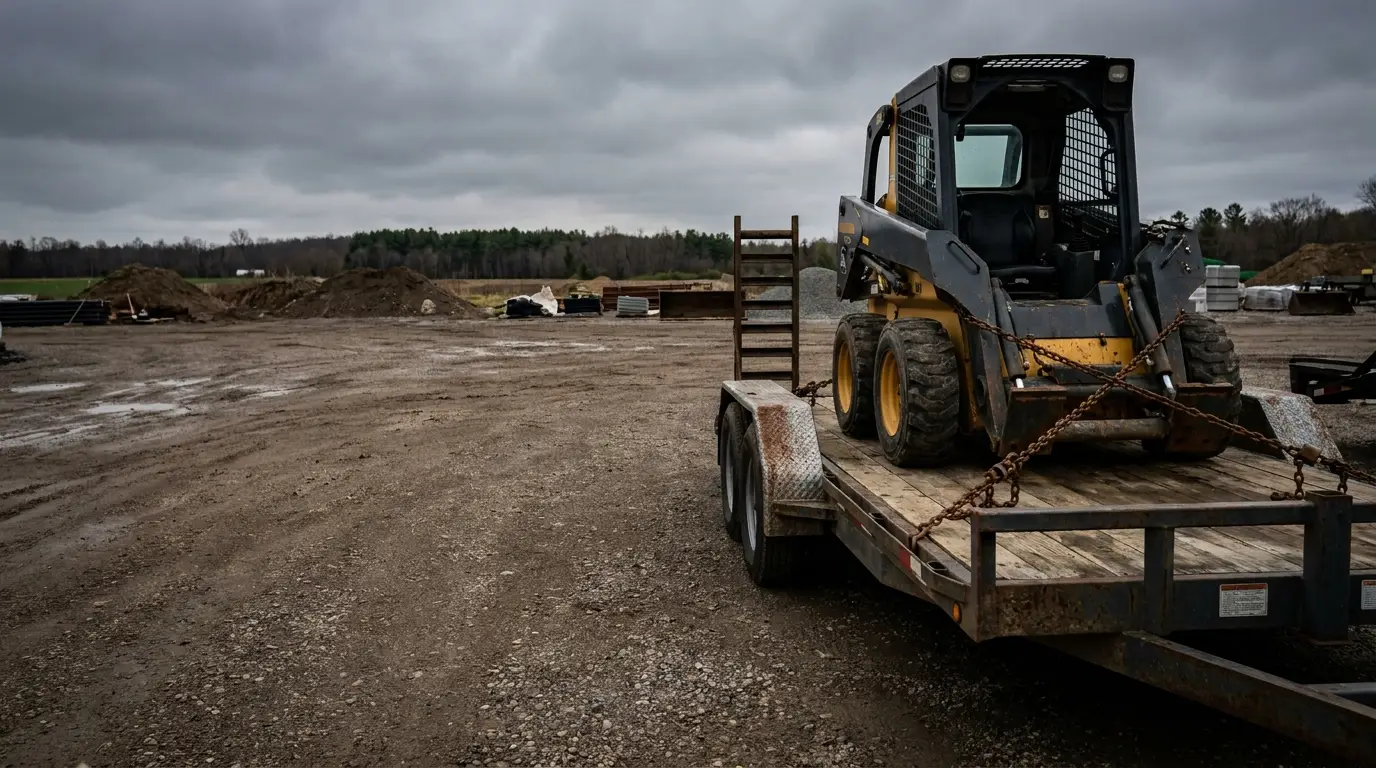
Different types of work demand different trailer dimensions.
Equipment Hauling
If you are transporting machinery, the length and width must accommodate both the machine and any attachments. Proper spacing also allows for balanced loading over the axles.
General Utility Work
For everyday hauling, utility trailers offer flexibility across multiple job types. In these cases, sizing should support the most common loads without creating excess bulk.
Material Transport
Bulk materials like gravel, soil, or debris require enough volume to minimize trips while maintaining manageable weight distribution.
Each use case has different requirements. A contractor hauling equipment daily usually prioritizes stability, braking confidence, and room for attachment changes over minimum dimensions. Someone towing only occasionally may care more about storage space or maneuverability. Those differences matter because the “right” trailer size depends as much on workflow and towing frequency as it does on measurements.
Weight Distribution and Deck Space
Length and width affect how weight is distributed across the trailer.
If a trailer is too short, you may be forced to place weight unevenly. That impacts towing stability and increases stress on axles and suspension components.
A properly sized trailer allows you to:
- Center the load correctly
- Maintain proper tongue weight
- Reduce sway during transport
- Protect structural integrity over time
This is where many first-time buyers run into problems. They underestimate how sizing affects performance. Reviewing common [trailer buying mistakes] can help avoid issues that lead to costly upgrades later.
Maneuverability vs. Capacity
There is always a trade-off between size and maneuverability.
Larger trailers:
- Carry more material
- Support larger equipment
- Reduce the number of trips required
But they also:
- Require more space to turn
- Are harder to position in tight areas
- Demand more from the tow vehicle
Smaller trailers are easier to handle but limit what you can carry.
When comparing trailer sizes, the decision comes down to where you work and how often you need to move larger loads. Professionals typically choose a size that supports growth without sacrificing control.
Durability and Long-Term Performance
Trailer size also affects how the unit holds up over time.
Longer and wider trailers experience different stress patterns than compact units. That makes construction quality critical.
Look for:
- Reinforced frames that maintain alignment
- Consistent crossmember spacing
- Strong tie-down points
- Durable deck materials
A well-built trailer in the right size range will last longer and require fewer repairs. That matters when your trailer is part of your daily workflow.
Think Beyond Today’s Workload
One of the most common sizing mistakes is buying only for current needs.
If your operation is growing, your trailer should support that growth. Moving up one size category can prevent the need to replace the trailer entirely within a year.
Professionals do not size for convenience; they size for long-term performance.
Getting the Right Fit
Choosing the right trailer size is not complicated, but it requires attention to detail.
You need to consider:
- The dimensions of your load
- How often you haul
- Jobsite access
- Towing capabilities
- Long-term workload
When those factors align, the trailer becomes an asset instead of a limitation.
If you are comparing options in your area, find a Trailer World near you and see how different sizes perform in person. Paper-based measurements do not always reflect real-world usability.
Frequently Asked Questions
What Is the Most Common Trailer Size?
For general use, 14- to 16-foot trailers with standard widths are common. However, the right size depends on what you haul and how often you use it.
Should I Choose a Longer Trailer Than I Need?
In many cases, yes. Slightly increasing length allows for better load placement and future flexibility, but it should not compromise maneuverability.
How Wide Should My Trailer Be?
Your trailer should be wide enough to safely accommodate your largest load while allowing for proper tie-down placement.
Does Trailer Size Affect Towing Stability?
Yes. Proper sizing allows for better weight distribution, which improves stability and control during transport.
What Happens If My Trailer Is Too Small?
You may deal with uneven loads, reduced stability, and the need for more trips, all of which affect efficiency and equipment life.
Built for Real Work
Trailer sizing is not about fitting into a category. It is about matching your equipment to your work.
Most experienced trailer owners eventually learn the same lesson: the right trailer is not necessarily the smallest one that technically works. It is the trailer that loads comfortably, tows predictably, and leaves enough margin for the way real jobs evolve over time.
Taking the time to evaluate trailer length, width, GVWR, payload, and towing behavior together usually prevents the problems that lead buyers to replace their trailer sooner than expected.