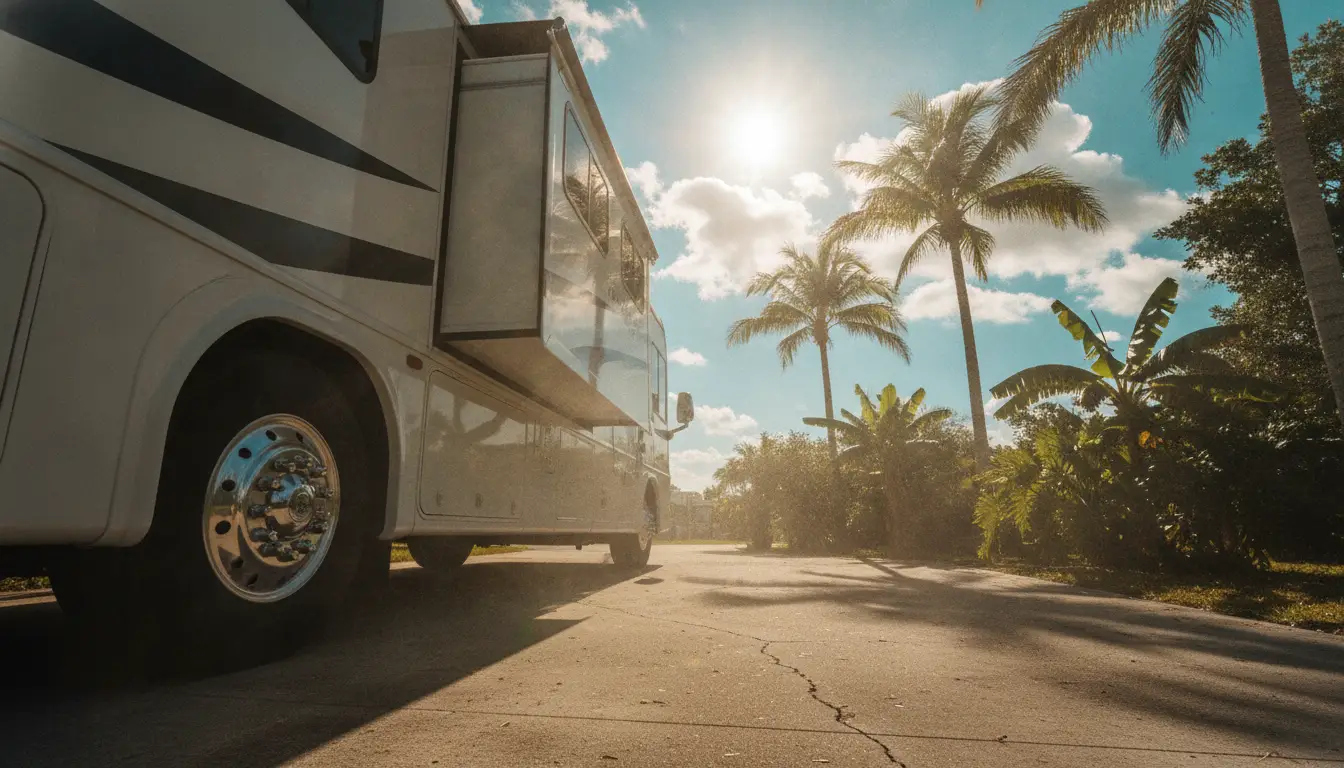
Don’t Let Florida’s Heat Ruin Your RV, A Simple Summer Protection Guide
Florida sunshine is one of the biggest reasons people love living and traveling here. Long days, warm evenings, and year-round outdoor adventures make it a great place to own an RV.
But that same sunshine can be rough on your vehicle.
High temperatures, strong UV rays, heavy humidity, and sudden storms can slowly wear down your RV, even when it is parked and not being used. The damage is not always obvious at first. A small crack in a seal, a slightly faded dashboard, or a tire that looks a little dry may not seem urgent. Over time, though, those little problems can turn into expensive repairs.
The good news is that protecting your RV during a Florida summer does not have to be complicated. A few regular checks and some simple habits can make a big difference.
Why Florida Heat Is So Tough on an RV
An RV is built to handle changing weather, but Florida summers create a difficult mix of heat, sunlight, and moisture.
The sun heats the exterior for hours at a time. Roof materials expand. Sealants dry out. Paint and decals fade. Inside, temperatures can rise quickly, especially when the windows are closed and there is little airflow.
Then there is the humidity.
Moisture can collect in cabinets, closets, under mattresses, and around windows. If it sits for too long, mold and mildew may start to grow. Add afternoon thunderstorms to the mix, and even a tiny gap in a roof seam can let water inside.
Have you ever opened a closed vehicle on a hot afternoon and felt that wall of heat hit you? Now imagine that heat building up inside your RV day after day.
That is why summer protection needs to cover both the outside and the inside.
Start at the Top With the Roof
Your RV roof takes the full force of the sun, so it deserves regular attention.
Check the roof every few weeks during the hottest months, especially if the RV is parked outside. Look around vents, skylights, air-conditioning units, antennas, and roof edges. You are checking for cracks, loose sealant, bubbling, or any area that looks dry and worn.
Small gaps can allow rainwater to seep inside. Once moisture gets beneath the roofing material, repairs can become much more difficult.
Keep the roof clean as well. Leaves, dirt, pollen, and other debris can trap moisture and hide early signs of damage. Use a cleaner that is suitable for your specific roofing material, and avoid harsh household chemicals that may weaken it.
A UV-protective roof treatment may also help, but always check the RV manufacturer’s guidance before applying anything. Using the wrong product can do more harm than good.
Give the Exterior Some Extra Protection
The sides of your RV need care too.
Regular washing removes dirt, salt, tree sap, pollen, and road grime that can damage the finish over time. Once the surface is clean, apply an RV-safe wax or UV protectant. This creates an extra layer between the exterior and the sun.
Pay attention to rubber seals, plastic trim, and decals. These areas tend to show sun damage early. Rubber can dry out and crack. Plastic can become brittle. Graphics may peel or fade.
A little conditioner made for RV rubber and trim can help keep these materials flexible.
Do not ignore small exterior problems. A loose corner of a decal may only be cosmetic, but a cracked window seal can lead to water damage. Fixing a minor issue now is usually much easier than dealing with a major one later.
Do Not Forget the Tires
RV tires often sit in the same position for long periods, and Florida heat can be especially hard on them.
Hot pavement raises the temperature around the tire, while direct sunlight dries out the rubber. Over time, this can lead to cracking, weak spots, or sidewall damage.
Check tire pressure when the tires are cool. Heat can change pressure readings, so early morning is often the best time. Look closely at the sidewalls for cracks, bulges, or unusual wear.
Light-colored tire covers are a simple way to reduce sun exposure while the RV is parked. They are inexpensive, easy to use, and can help extend tire life.
It is also a good idea to move the RV occasionally, when possible, so the same part of each tire is not carrying the weight month after month.
And remember, tread is not the only thing that matters. RV tires can age out even when they still look usable. Check the manufacturing date and follow the tire maker’s replacement guidance.
Keep the Interior From Turning Into an Oven
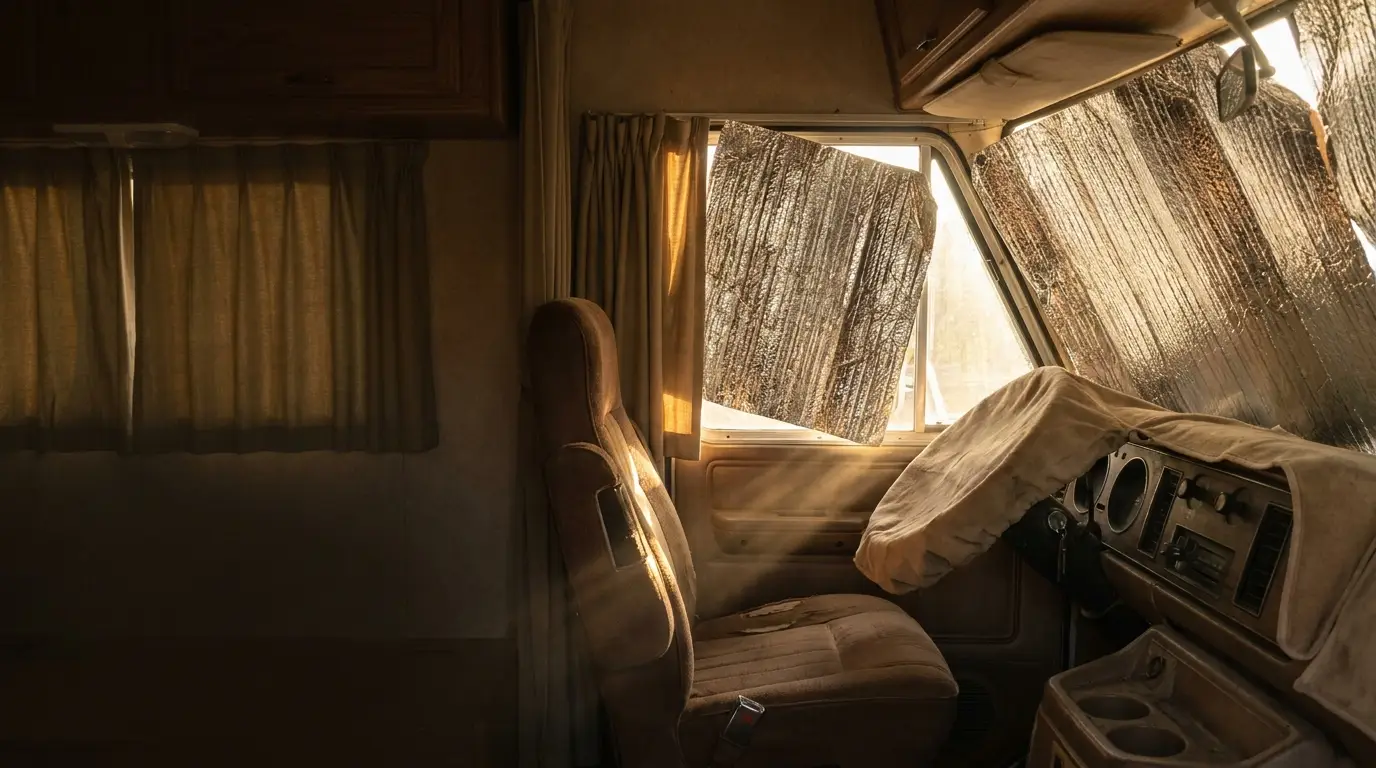
The inside of a closed RV can become extremely hot.
Start by blocking direct sunlight. Reflective window covers, insulated shades, and thick curtains can reduce heat buildup. Close blinds during the hottest part of the day, especially on windows facing direct sun.
Protect surfaces that are likely to fade or crack. Dashboards, seats, wood finishes, and upholstery can all suffer from long-term UV exposure. Covers can help, even if they are simple and lightweight.
Remove heat-sensitive items before leaving the RV parked. Electronics, aerosol cans, candles, batteries, food, and some cleaning products may leak, melt, swell, or become unsafe in extreme temperatures.
Try to create safe airflow too. Roof vent covers can allow ventilation while helping keep rain out. You can also leave interior cabinet doors slightly open so heat and moisture do not stay trapped in small spaces.
Just be careful about leaving windows open. Florida weather changes quickly, and open windows may invite rain, insects, or security problems.
Control Humidity Before Mold Appears
Heat gets most of the attention, but humidity can be just as damaging.
Moisture often gathers in places you do not check every day. Closets, bathrooms, storage compartments, mattresses, and corners behind furniture are common trouble spots.
Use moisture absorbers or a dehumidifier if you have safe access to power. Check and replace moisture-absorbing products regularly because they fill up faster than many people expect in humid weather.
Look for early warning signs. A musty smell, damp fabric, foggy windows, or small dark spots may mean moisture is building up.
Do not leave wet towels, damp clothes, swimsuits, or outdoor gear inside the RV. Even a small amount of moisture can create a problem when the vehicle is closed for days or weeks.
Mold spreads quickly, so deal with it as soon as you notice it. Clean the affected area, find the source of the moisture, and improve ventilation.
Help the Air Conditioner Work Properly
Your RV air-conditioning system works hard during a Florida summer.
Clean or replace the filters regularly. Dirty filters reduce airflow and force the unit to work harder. Check vents for dust, pet hair, or anything else that could block cool air.
Inspect the roof-mounted unit from outside as well. Leaves and debris can gather around it, and damaged seals may allow water to enter.
Test the system before a trip, not the morning you plan to leave. If the unit is blowing warm air, making strange noises, or taking too long to cool the space, have it checked.
Would you rather find out about an air-conditioning problem at home or halfway through a hot weekend trip?
A little maintenance can prevent a very uncomfortable surprise.
Protect the Battery and Electrical System
Extreme heat can shorten battery life, especially when the RV sits unused.
Inspect battery terminals for corrosion and make sure connections are secure. If your battery requires fluid checks, follow the manufacturer’s instructions carefully.
During long periods of inactivity, use an appropriate battery maintainer or disconnect the battery if recommended. Avoid guessing, since different RV systems have different requirements.
Check power cords, adapters, and surge protectors for cracks, heat damage, or loose connections. Florida thunderstorms can cause power surges, so a quality surge protector is a smart precaution when the RV is connected to electricity.
Do not overload the electrical system with several fans, portable air conditioners, and other devices at the same time. The goal is to reduce heat, not create an electrical hazard.
Choose the Parking Spot Carefully
Where you keep your RV can affect how well it handles summer weather.
Look for level ground with good drainage. Avoid low areas where water may collect after a storm. Check for nearby branches that could fall or scrape against the roof.
Shade can reduce direct sun exposure, but parking under a tree also has drawbacks. Sap, leaves, bird droppings, and falling limbs can create new problems. A partially shaded area away from large branches may be a better choice.
Think about security and access too. You should be able to inspect the RV regularly without difficulty. For owners who cannot keep a large vehicle safely at home, researching options such as RV storage units in Punta Gorda, FL may help them find a practical place that supports regular inspections and responsible care during the summer months.
No matter where the RV is parked, do not leave it unchecked for the entire season. Regular visits are one of the best ways to catch problems early.
Be Ready for Sudden Storms
Florida summer weather can change fast.
A clear morning can turn into heavy rain and strong wind by late afternoon. Before leaving your RV unattended, secure awnings, antennas, covers, chairs, and loose accessories.
Check that exterior compartments are fully closed. Make sure roof drains and gutters are clear. After a major storm, inspect the roof, windows, seals, and surrounding area for damage.
During hurricane season, include your RV in your household emergency plan. Keep insurance information, registration documents, maintenance records, and current photos in a safe place.
Photographs are especially useful if you ever need to make an insurance claim. Take clear pictures of the exterior, interior, roof, and major equipment before severe weather arrives.
Build a Simple Summer Checkup Routine
Protecting your RV does not require hours of work every weekend.
A short inspection every two to four weeks can be enough to spot early trouble. Walk around the exterior. Check the roof. Look at the tires. Open the door and notice how the interior smells and feels.
Check for moisture, pests, leaks, low battery power, and signs of heat damage. Run important systems when recommended by the manufacturer.
Keep a simple maintenance log on your phone or in a notebook. Write down the date, what you inspected, and anything that may need attention later.
This makes it easier to remember when you last checked tire pressure, cleaned the air filter, or replaced a moisture absorber.
Small checks add up.
Common Mistakes That Cause Summer Damage
Some RV owners accidentally make heat and moisture problems worse.
One common mistake is covering the RV with a basic plastic tarp. A tarp can trap moisture, rub against the exterior, and damage the finish. Use a breathable cover designed for RVs if you choose to cover the vehicle.
Another mistake is closing every vent and cabinet without doing anything to control humidity. A tightly sealed RV may keep rain out, but it can also trap damp air inside.
People also forget about the tires because the RV is not moving. In reality, parked tires still lose pressure and suffer from sun exposure.
Leaving food, liquids, batteries, candles, or cleaning products inside is another avoidable risk. High heat can ruin these items and create a mess.
Perhaps the biggest mistake is waiting until the next trip to inspect the RV. By then, a small leak or mold problem may have been growing for months.
A Little Care Goes a Long Way
Florida heat is intense, but it does not have to ruin your RV.
Focus on the basics. Protect the roof and exterior. Cover the tires. Control indoor heat and humidity. Maintain the air conditioner, battery, and electrical system. Check the RV regularly, especially after storms.
None of these steps are especially difficult. What matters is doing them consistently.
Your RV is more than a vehicle. It is part of your weekends, vacations, family trips, and plans for the open road. Taking care of it during the months when it is sitting still helps make sure it is ready when adventure calls again.