Over Dining Table Lighting Ideas That Actually Work
Good lighting can make or break a dining room. But most people treat it like an afterthought, just a ceiling fixture to brighten the space.
The truth is, what hangs above your table shapes the entire mood of the room. It defines the zone, sets the tone, and ties the design together.
In this blog, you’ll learn how different lighting types work, how to match them to your table and room, and what mistakes to avoid. If you’re starting fresh or upgrading what you have, this will help you make the right call.
What Makes Lighting Over a Dining Table Different?
Dining table lighting isn’t just about brightness. It serves a very specific purpose: to create a focused pool of light that anchors the dining area within the room.
Think of it as a visual frame. The light draws attention to the table and signals that this is the space for gathering, eating, and connecting.
That’s something a general ceiling light simply can’t do. It also directly affects mood.
Warm, focused light encourages relaxed conversation. Harsh, flat lighting does the opposite; it makes the room feel more like an office than a dining space.
Relying only on overhead ceiling lights leaves the table feeling undefined. There’s no visual weight, no warmth, and no sense of purpose in the space.
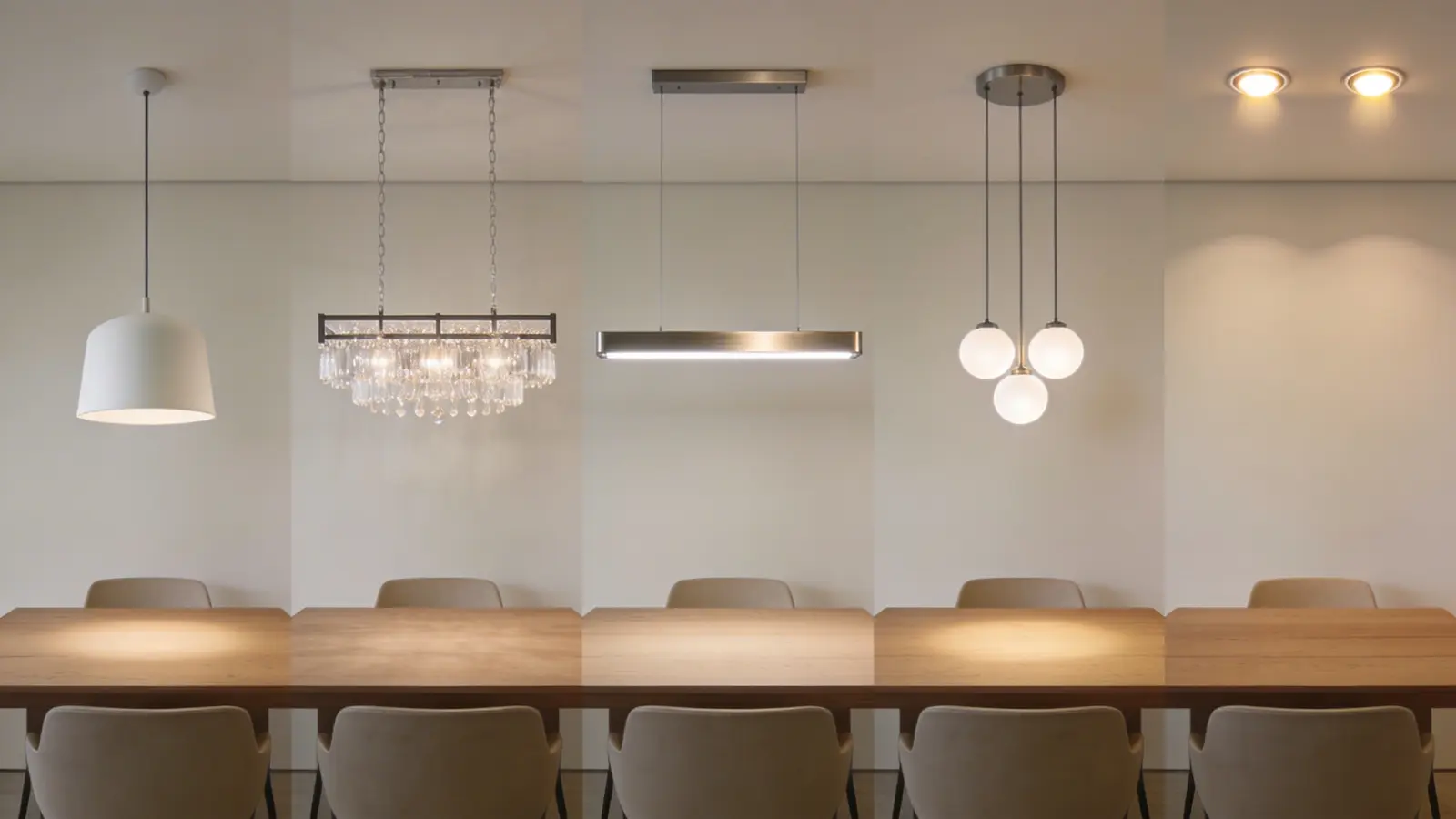
5 Core Types of Over Dining Table Lighting Ideas
There’s no single right answer when it comes to dining table lighting. The best option depends on your table, your room, and the look you’re going for. Here’s how the main types work.
1. Pendant Lights
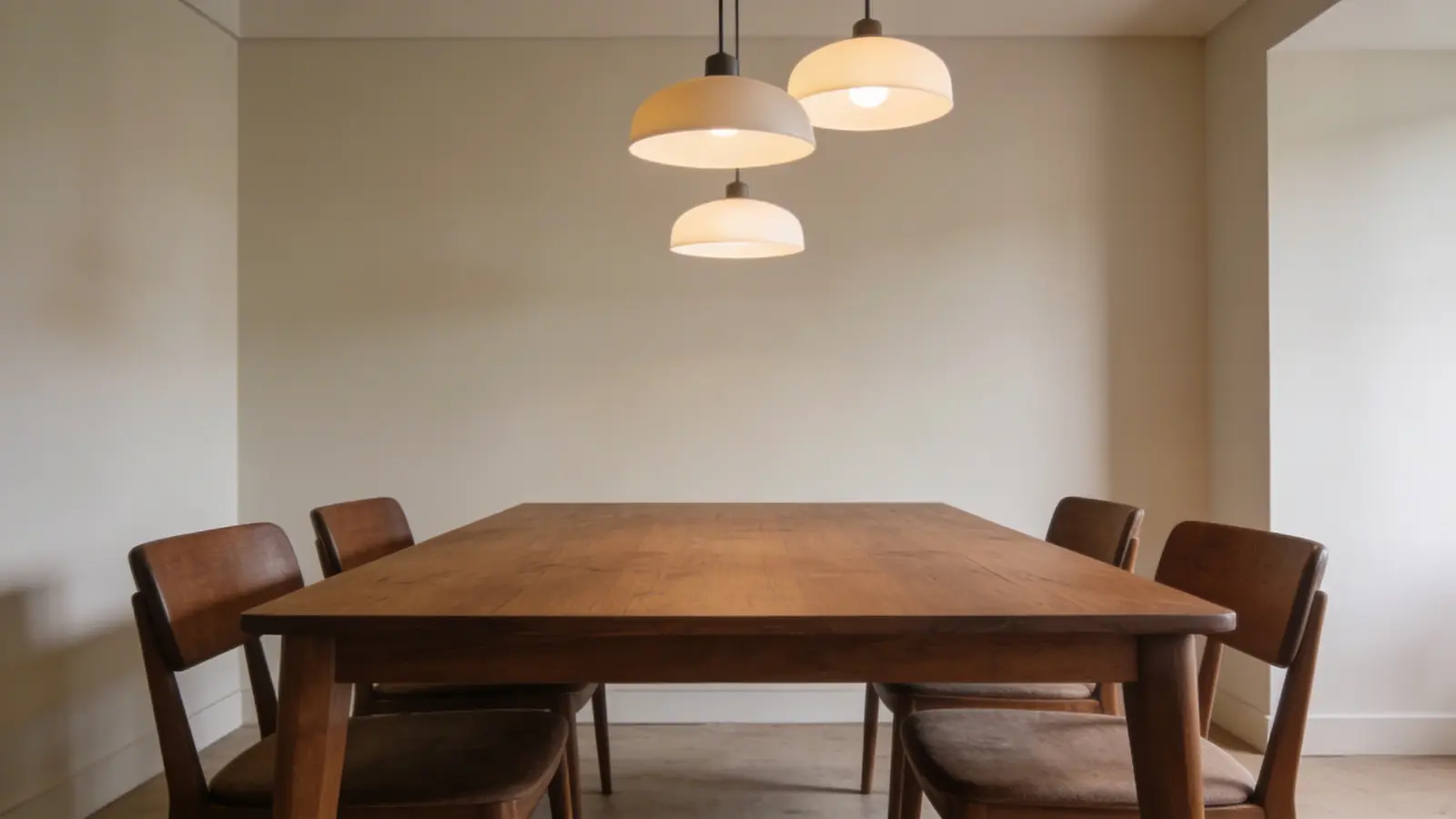
Pendant lights hang from the ceiling and cast light directly downward. This creates a focused, controlled glow right where you need it, over the table.
They work especially well for small to medium-sized tables and modern interiors. You can go with a single pendant for simplicity, a cluster for visual interest, or a linear row for longer tables.
The key is spacing. If you’re using multiple pendants, poor alignment leads to uneven lighting and a cluttered look.
2. Chandeliers
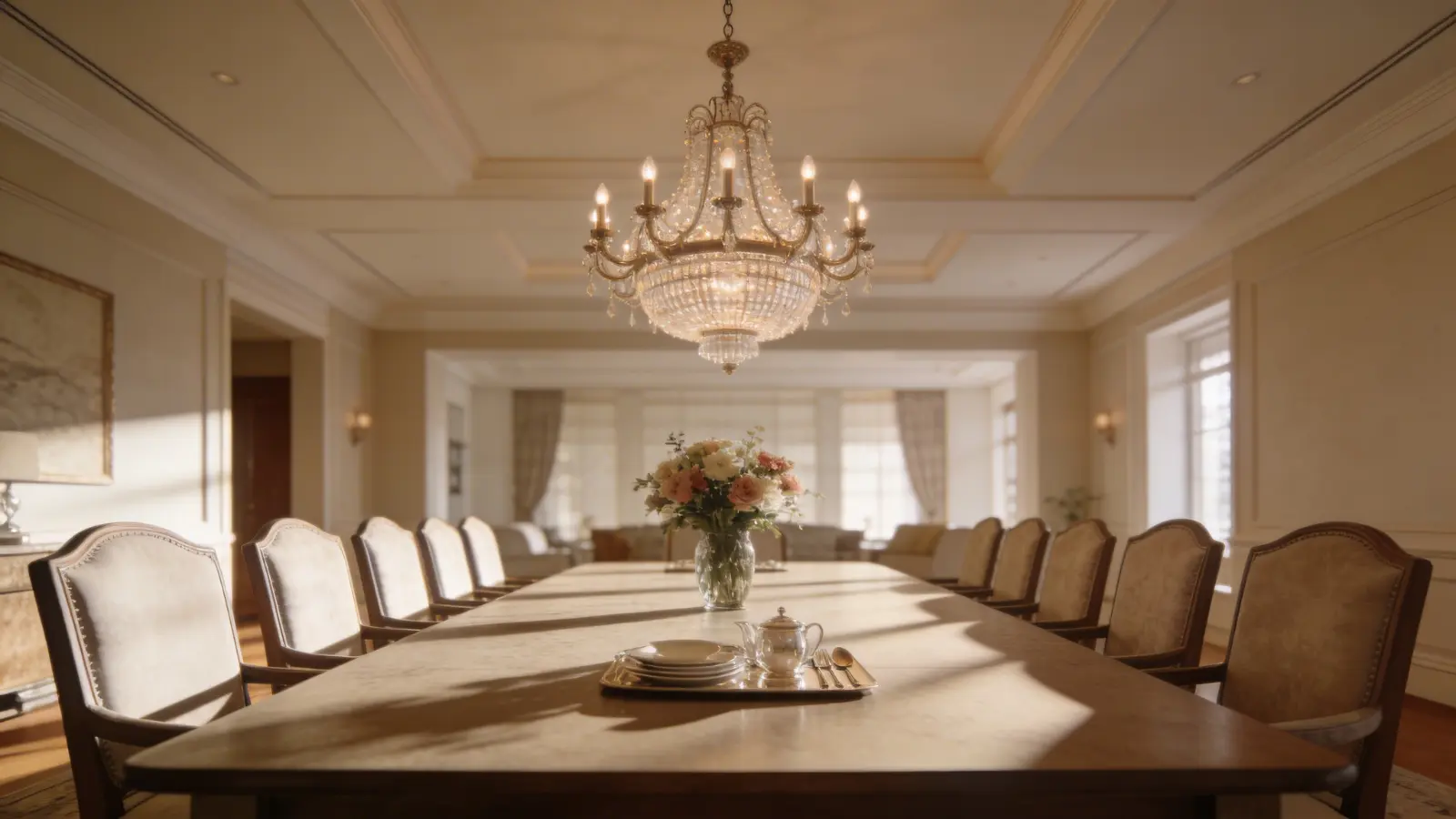
Chandeliers use multiple light sources spread across a larger fixture. This creates both ambient light and a strong focal point in the room.
They’re best suited for larger dining rooms where you want a statement piece. A chandelier fills vertical space and adds visual weight that smaller fixtures can’t match.
Sizing matters here more than anywhere else. Too large and it overwhelms the table. Too small, and it looks like an afterthought.
3. Linear Suspension Lights
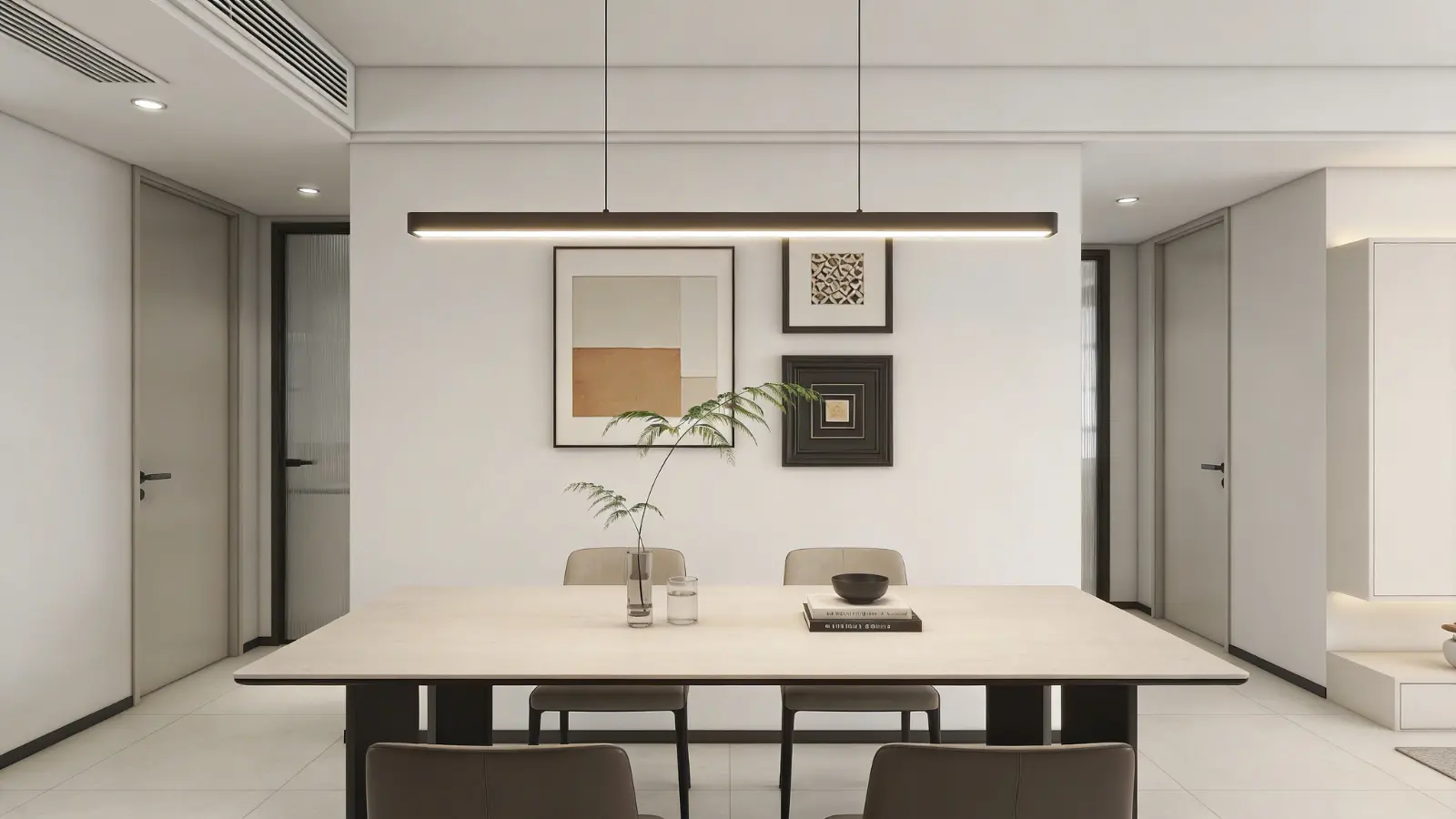
Linear fixtures are elongated and designed to run parallel to a rectangular table. They spread light evenly across the entire surface, eliminating dark spots at either end.
This is one of the most practical options for long dining tables. The shape mirrors the table below, which creates a natural visual connection.
Using a linear light over a round or square table breaks that proportion and looks awkward.
4. Multiple Light Clusters
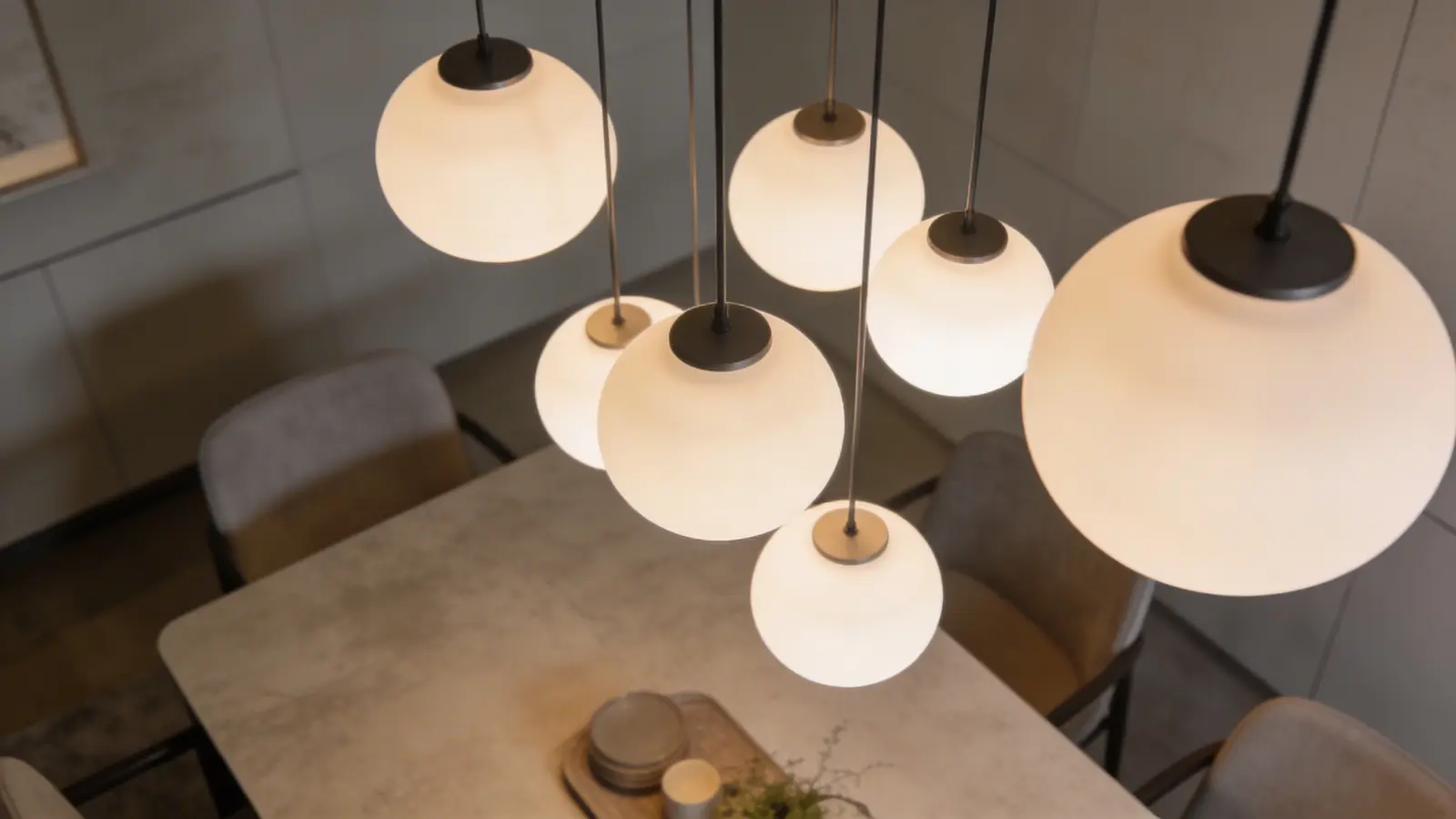
A cluster setup groups smaller individual lights at varied or consistent heights to create a layered focal zone. It’s a popular choice in contemporary and decorative interiors.
This approach adds depth to the space and gives you more design flexibility than a single fixture. But if the heights are inconsistent without intention, the result looks messy rather than curated.
5. Recessed and Spot Lighting
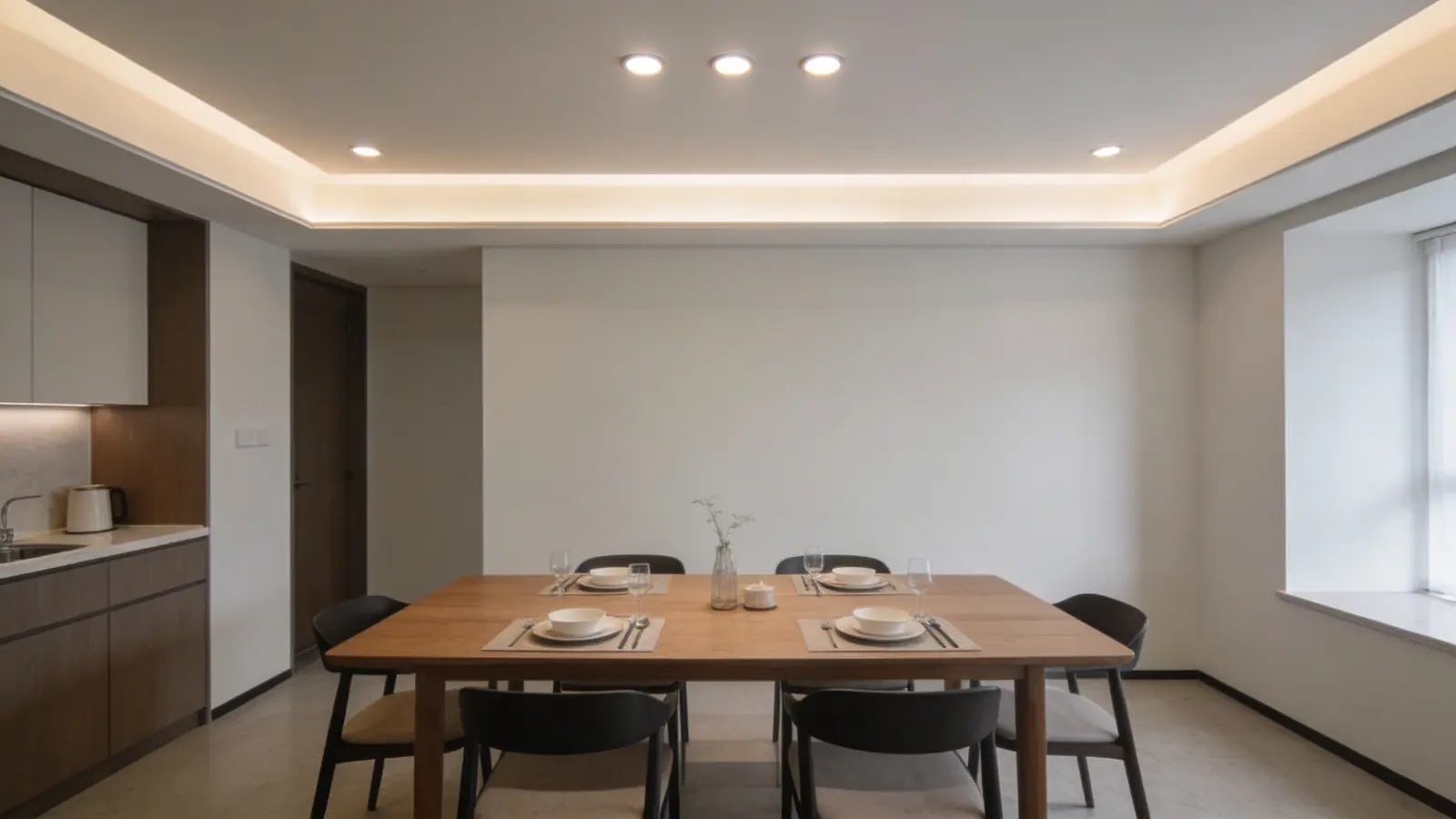
Recessed lights sit flush with the ceiling and direct light downward without a visible fixture. They’re ideal for low-ceiling spaces or minimalist interiors where you don’t want the fixture to be the focus.
The trade-off is that recessed lighting lacks a visual anchor. The table zone may feel undefined without a hanging element to ground it. It works best as a supplement to other lighting, not as the sole source above the table.
Quick Comparison of Lighting Ideas:
| Fixture Type | Best For | Light Spread | Ideal Room Size |
|---|---|---|---|
| Single Pendant | Small/medium round or square tables | Focused, direct | Small to medium |
| Chandelier | Statement dining rooms | Ambient + focal | Medium to large |
| Linear Suspension | Rectangular tables | Even across length | Any |
| Cluster Pendants | Contemporary spaces | Layered, decorative | Medium |
| Recessed Lighting | Minimalist or low-ceiling rooms | Subtle, indirect | Any (as a supplement) |
Ideal Placement Rules Most People Get Wrong
Most people focus on finding the right fixture and forget that placement determines whether it actually works.
These are the rules that quietly make or break your dining lighting setup.
- Hang at the right height: Position your fixture 30 to 36 inches above the tabletop.
- Match fixture width to table width: Aim for half to two-thirds of your table’s total width.
- Center over the table, not the room: The light follows the table’s position, not the ceiling’s midpoint.
How to Choose the Right Lighting Based on The Table and Room?
Picking a fixture you love is only half the decision. It also needs to match your table shape, room size, and interior style.
Based on The Table Shape
- Round table → A single central pendant or compact chandelier works best. It mirrors the shape and distributes light evenly.
- Rectangular table → Linear fixtures or a row of pendants align naturally with the length.
- Square table → A cluster or smaller chandelier centered above keeps proportions balanced.
Matching the fixture shape to the table shape ensures light falls where it’s needed — not just in the middle.
Based on Room Size
Scale is everything when it comes to room size. In a small room, a large chandelier will make the space feel cramped and top-heavy. Compact, streamlined fixtures keep things proportional.
In larger rooms, a single small pendant gets lost; it won’t provide enough light or visual presence.
The rule of thumb: the bigger the room, the more layered or substantial the lighting can be.
Based on Interior Style
Your lighting fixture is part of your room’s design language. It needs to speak the same style as the rest of the space.
- Modern or contemporary → Clean lines, metal finishes, glass shades
- Traditional or classic → Ornate chandeliers, warm tones, candle-style bulbs
- Rustic or farmhouse → Wood elements, rattan, matte black or aged finishes
When the fixture clashes with the room’s style, even a well-placed light feels out of place.
Conclusion
The right lighting above your dining table does more than brighten the room. It sets the mood, defines the space, and makes every meal feel more intentional.
Trying over dining table lighting ideas, from pendant lights to chandeliers to linear fixtures, each option serves a different purpose. The best choice comes down to your table shape, room size, and the style you’re going for.
Get those three things right, and the rest falls into place. Now you have the knowledge to move forward with confidence.
Start by measuring your table, then work outward from there, scale, style, and placement.
Got a lighting setup you love, or still figuring out what works for your space? Drop a comment below, we’d love to hear what you’re working with.
Frequently Asked Questions
Should Dining Room Lighting Match the Rest of The House?
It doesn’t need to match exactly. Consistency in finish or material, like repeating a metal tone, is enough to create a cohesive, pulled-together look.
Is It Okay to Hang Lights in Odd Numbers Above a Dining Table?
Yes. Odd numbers, usually three or five pendants, create a natural focal point. Even numbers leave a visual gap that feels unbalanced to the eye.
Should I Add a Dimmer Switch to My Dining Table Light?
Absolutely. A dimmer lets you shift from bright family dinners to soft, relaxed evening moods using the same fixture, no changes needed.