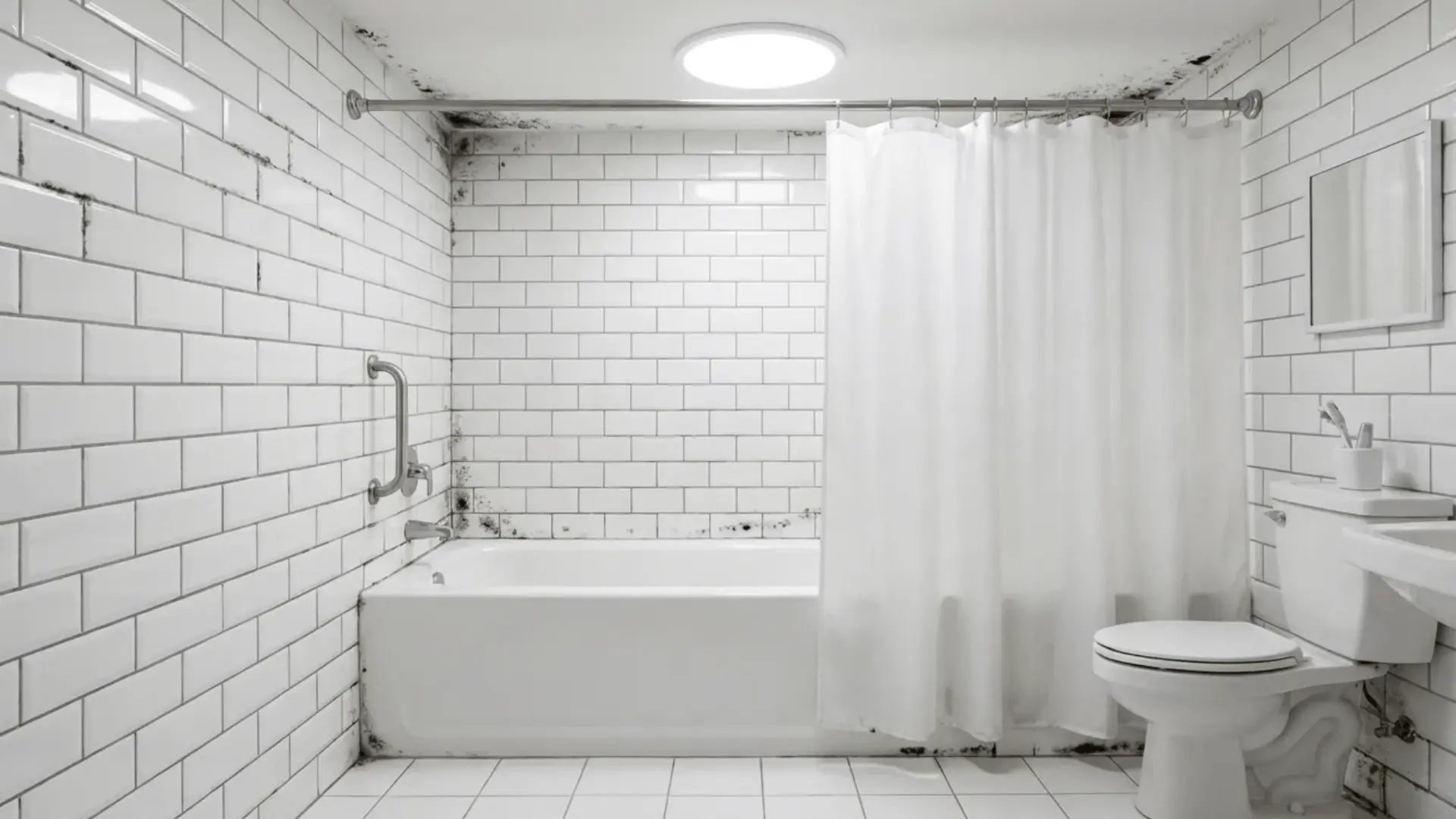
How to Remove Mold in Bathroom Safely
Bathroom mold does not appear randomly. It follows a pattern tied to moisture, airflow, and how surfaces are used every day.
If you have cleaned it before and seen it return, there is a clear reason behind it.
Today, I will break down why bathroom mold forms so easily, where it hides even when you cannot see it, and what actually works when removing it.
You will also learn why some cleaning methods fail and how to stop the cycle for good. Once you understand what is really happening, the fixes become much more straightforward.
Why Bathrooms Are the Perfect Environment for Mold
Bathrooms are not just damp spaces. They are one of the most mold-friendly environments in any home, and the conditions that cause growth happen multiple times every single day.
The Three Conditions Mold Needs to Grow
Mold requires three things to survive and spread: moisture, warmth, and an organic surface to feed on.
Bathrooms provide all three simultaneously after every shower or bath. Warm steam fills the air, moisture settles on every surface, and grout, caulk, paint, and drywall give mold exactly the material it needs to establish and grow.
How Humidity Triggers Mold Growth
Mold begins growing once humidity levels consistently exceed 60 percent. During a hot shower, bathroom humidity can spike to between 80 and 100 percent.
If that moisture is not removed quickly through ventilation, it lingers on surfaces and in the air. Poor airflow traps humidity against walls and ceilings, creating the exact conditions mold needs to activate and spread.
How Fast Mold Can Start Growing
In damp conditions, mold can begin growing within 24 to 48 hours of moisture settling on a surface. This is why drying time matters more than how hard you scrub.
A surface that stays wet after cleaning will simply grow mold again. A surface that dries quickly after every shower gives mold far less opportunity to take hold.
Where Bathroom Mold Commonly Grows
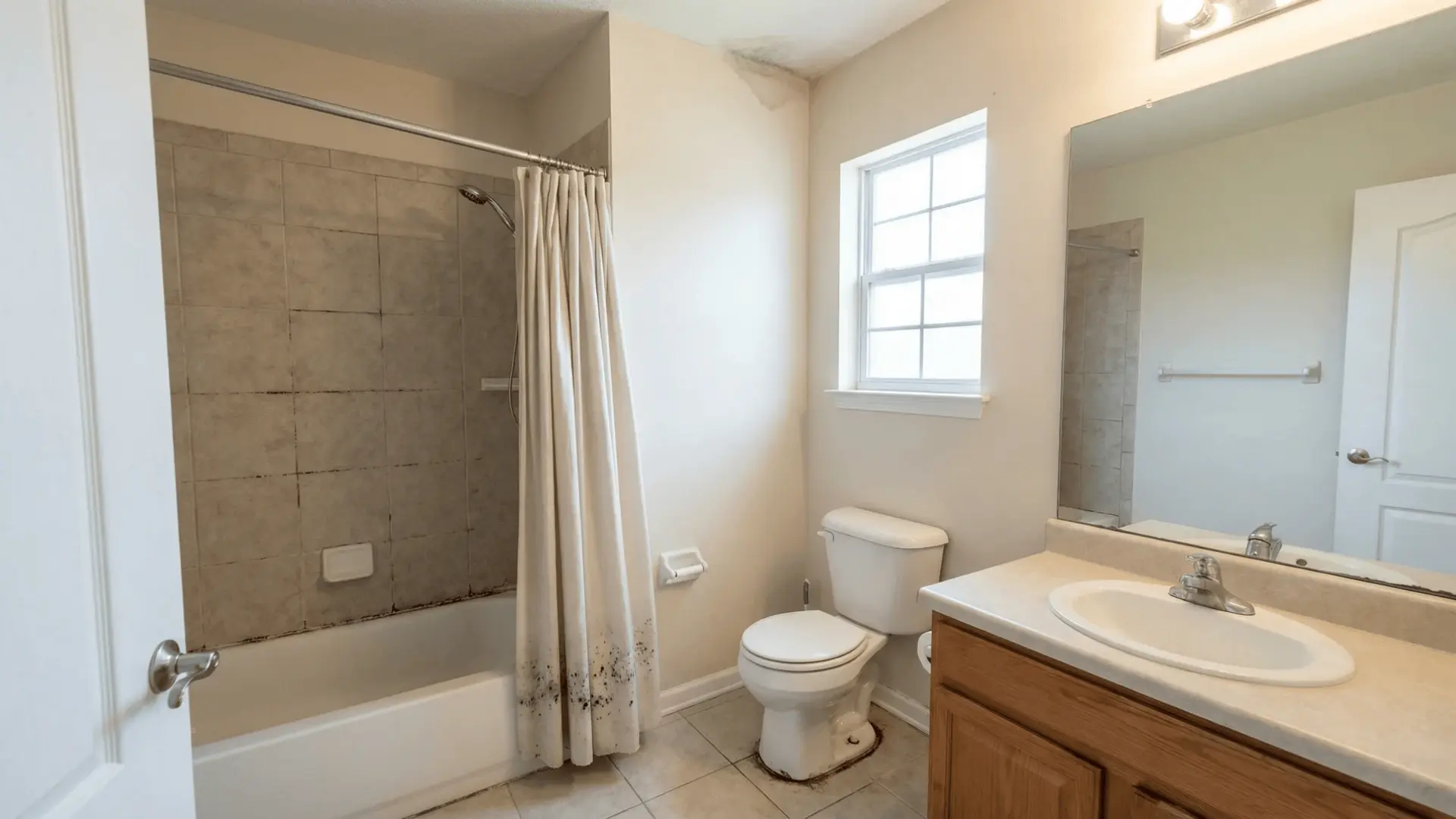
Before you start cleaning, check every area where mold is likely hiding. Missing even one source means the problem will return regardless of how well you treat everything else.
Visible Areas You Should Check First
These are the places mold appears most often and the ones you should inspect before starting any cleaning session.
- Grout lines: Porous and moisture-retaining, giving mold a deep embedded foothold.
- Caulk edges: The flexible seal around tubs and showers traps moisture and breaks down over time.
- Shower curtains: Stay damp after every use and are rarely dried properly.
- Ceiling corners: Warm air rises and condenses on cooler surfaces above, making corners a consistent mold zone.
- Around the toilet base: Condensation and floor moisture collect here regularly and often go unnoticed.
Checking all of these before you start ensures you treat every visible source in the same session.
Hidden Areas Most People Miss
Not all mold is visible, and hidden growth is often more serious than what appears on the surface.
- Behind tiles and walls: Moisture penetrates grout over time and accumulates in wall cavities.
- Under sinks and vanities: Slow pipe leaks or condensation create persistent damp zones beneath cabinets.
- Inside drywall: Once moisture enters the wall structure, mold can spread extensively before any sign appears on the surface.
How to Remove Bathroom Mold Safely
The right cleaning method depends entirely on the surface you are treating. Using the wrong one gives the appearance of removal without actually solving the problem.
Safety Precautions Before You Start
Put on gloves and a mask before touching any mold. Scrubbing releases spores into the air, and inhaling them causes irritation and allergic reactions.
Open a window or run the exhaust fan throughout the entire process. Never mix bleach and vinegar, as the combination produces toxic chlorine gas.
Best Cleaning Methods by Surface Type
Different surfaces respond to different treatments. Choosing the right one is what determines whether the mold stays gone.
1. White Vinegar
Best for general surface mold on tiles, walls, and fixtures.
Spray undiluted white vinegar directly onto the surface and leave it for one full hour before scrubbing and rinsing.
The acetic acid penetrates porous surfaces and kills mold at the root rather than just bleaching the stain. Diluting it too much reduces its effectiveness on stubborn growth.
2. Bleach Solution
Best for non-porous surfaces like glazed tiles, glass, and fixtures.
Mix one cup of bleach per gallon of water, apply, leave for ten to fifteen minutes, then scrub and rinse thoroughly.
Bleach does not penetrate porous materials effectively. Using it on grout removes the visible stain but leaves the mold roots intact, which is why the same spots return so quickly after treatment.
3. Baking Soda Paste
Best for grout lines, caulk seams, and textured surfaces where liquid cleaners run off too quickly.
Mix baking soda with warm water to form a thick paste, apply directly to the area, and leave for ten to twenty minutes before scrubbing with a stiff brush.
The alkaline paste stays in contact with the porous surface and disrupts the mold’s cell structure. Rinsing too soon is the most common mistake and significantly reduces effectiveness.
Step-by-Step Process to Remove Bathroom Mold
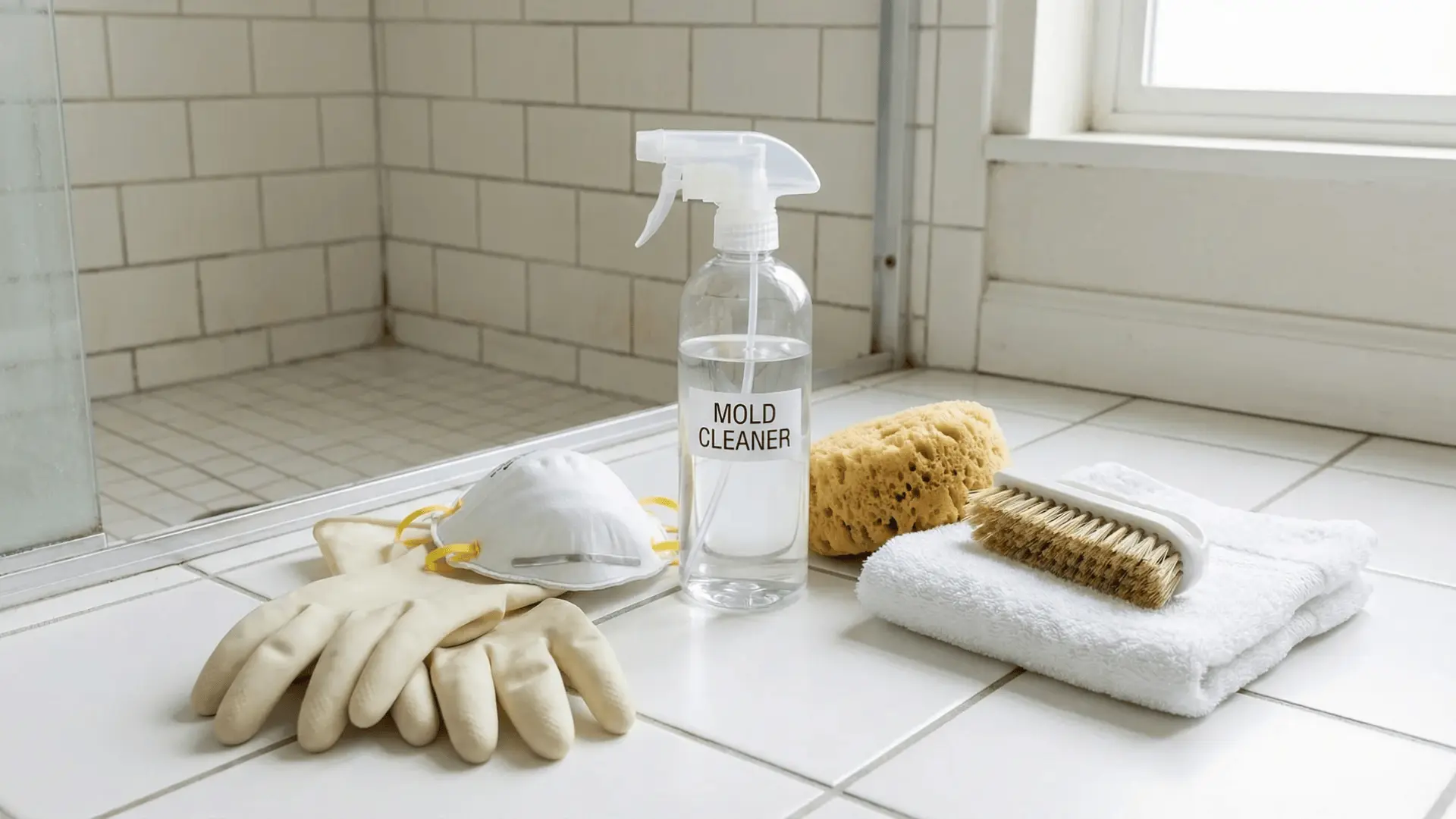
Follow these steps in order for the most effective, lasting results:
- Prepare the area: Put on gloves and a mask, open a window, and run the exhaust fan.
- Identify the surface type: Determine whether the surface is porous or non-porous before choosing a cleaning method.
- Apply the right cleaning method: Use vinegar for general surfaces, bleach for non-porous tiles, and baking soda paste for grout and caulk.
- Scrub and rinse thoroughly: Use a stiff brush for grout and a sponge or cloth for tiles and walls. Rinse completely and remove all cleaning residue.
- Dry the area completely: Use a dry cloth or towel to remove remaining moisture after rinsing. Do not leave surfaces wet.
- Check for more serious damage: If the mold returns within days or the smell persists, check for hidden growth behind walls or under surfaces.
How to Treat Mold on Specific Bathroom Surfaces
Different surfaces need different approaches. Using the right method for each one is what separates a result that lasts from one that needs repeating within weeks.
Bathroom Ceiling
Apply undiluted vinegar or diluted bleach using a sponge or spray bottle, leave it to sit, then scrub gently and wipe clean. After removal, prime the area and repaint with semi-gloss or mold-resistant paint to reduce future adhesion.
Never paint over mold without treating it first. Paint traps the growth and allows it to continue spreading unseen behind the new surface.
Grout and Tile
Use the baking soda paste method first, then follow up with a vinegar spray to address remaining growth.
For severe mold that does not respond to repeated cleaning, regrouting is the only reliable long-term solution.
Grout that has been deeply penetrated by mold cannot be fully cleaned from the surface, and continuing to treat it without replacing it only delays the inevitable.
Shower Curtains and Liners
Remove and machine wash with hot water and a cup of white vinegar or a small amount of bleach. Dry fully before rehanging, as a damp curtain bunched against the wall immediately recreates mold conditions.
Replace plastic liners regularly as they become permanently contaminated once mold penetrates the material.
Why Bathroom Mold Keeps Coming Back
If you have cleaned mold from the same spots multiple times and it keeps returning, the cleaning method is not the problem. The moisture conditions that caused it were never resolved.
Cleaning vs. Moisture Control
Cleaning removes visible mold, but the moment humidity returns after your next shower, new growth begins on the same surfaces.
Mold is a moisture problem first and a cleaning problem second. Treating only the visible growth without fixing the conditions is exactly why it keeps coming back.
No cleaning product permanently kills mold because no product controls what happens in the room after it has been applied. Prevention is the only permanent solution.
How Mold Spores Reactivate
Mold spores are always present in the air. They do not need to be introduced from outside. They simply activate when moisture lingers on a surface long enough to support growth.
Without consistently keeping humidity below 60 percent, any surface you clean will re-colonize within days or weeks. The cycle continues until the moisture source is removed.
How to Prevent Bathroom Mold Long-Term
These habits break the mold cycle rather than just manage it. Doing most of them inconsistently produces partial results while the remaining moisture sources continue fueling growth.
1. Control Humidity After Every Shower
Run the exhaust fan at the start of every shower and leave it on for at least thirty minutes afterward. Running it only during the shower removes a fraction of the moisture that actually needs to go.
Test and clean the fan every three months. A clogged fan moves almost no air, regardless of how long it runs.
2. Improve Airflow and Ventilation
Leave the shower door or curtain open after use to allow air to circulate inside the enclosure. A closed shower traps humidity against the walls and floor long after the rest of the bathroom has dried.
Keep the bathroom door open when possible to allow fresh air to move through the space and reduce overall humidity levels.
3. Remove Moisture Immediately
Wipe down shower walls, doors, and fixtures with a squeegee or towel after every use. This single habit removes the standing moisture that mold feeds on before it has a chance to linger.
It takes less than a minute and is one of the most effective mold prevention steps available.
4. Fix Ongoing Moisture Sources
A dripping faucet, a slow showerhead leak, or condensation around pipes creates a persistently damp zone that continuously feeds mold. No other habit can compensate for a surface that never fully dries.
Fix leaks as soon as they appear. Until a leak is repaired, mold in that area will return regardless of how thoroughly it is cleaned.
When You Should Not Handle Mold Yourself
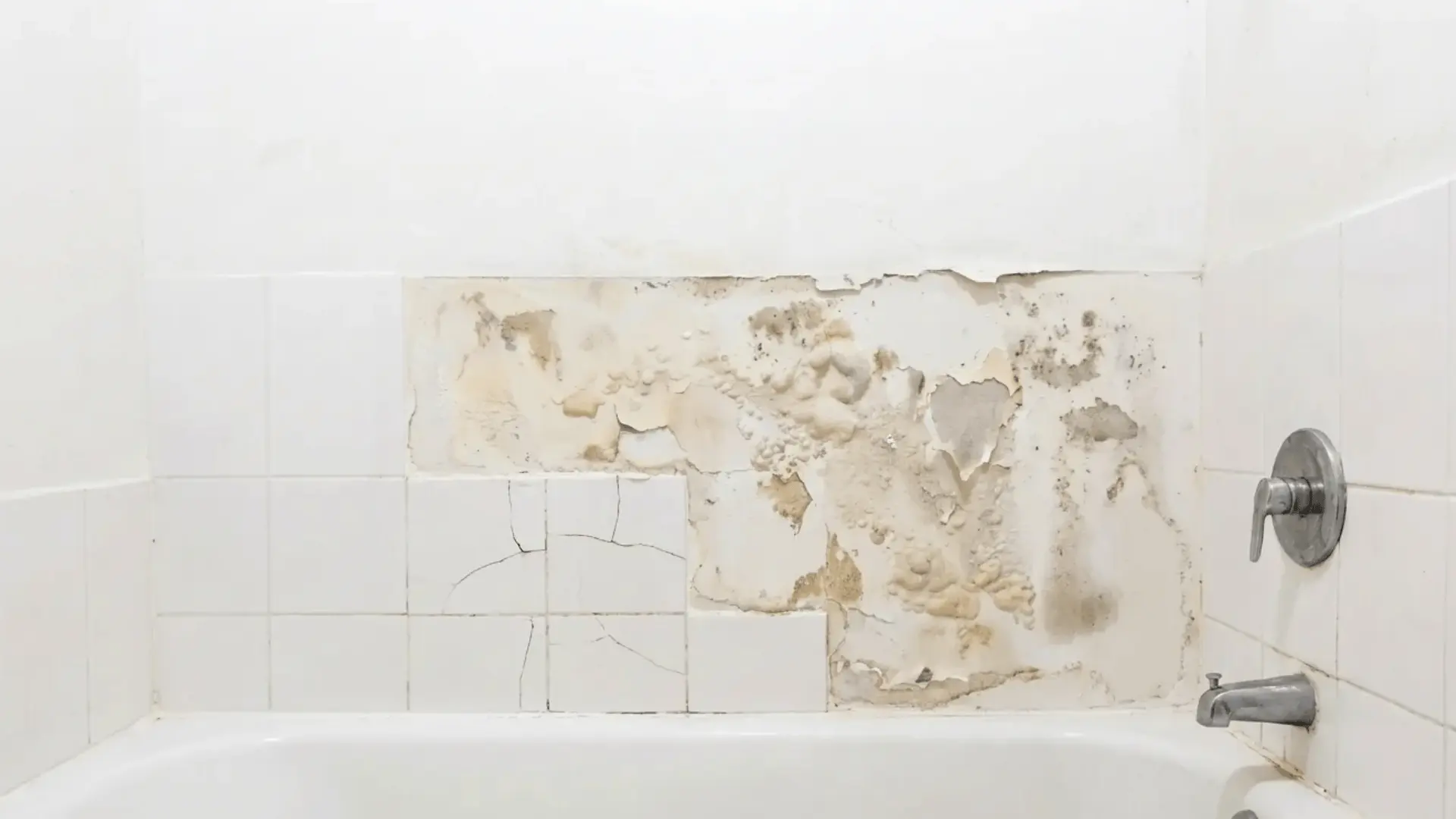
Surface mold on tiles, grout, and ceilings can usually be treated at home. But there are situations where DIY cleaning is not enough and professional help is the only safe option.
Signs of Hidden Mold
If you can smell mold but cannot see it, it is almost certainly growing somewhere out of sight.
Key signs include a musty odor that lingers after cleaning, peeling or bubbling paint, and surfaces that stay damp longer than they should.
Surface cleaning will not reach hidden mold. The smell will keep returning until the source is found and properly addressed.
Signs the Problem is Beyond Surface Cleaning
If the musty smell persists after cleaning all visible mold, the growth is likely inside a wall, under the floor, or in a cavity that cannot be reached with surface treatments.
Other warning signs include mold that covers a large area, soft or discolored sections of drywall, and growth that returns within days of thorough cleaning despite addressing the moisture source.
Why Professional Help May Be Needed
When mold has spread into structural materials like drywall, insulation, or subflooring, removing it safely requires specialist equipment and containment methods that are not available to most homeowners.
Attempting to clean mold inside walls without proper containment can spread spores throughout the rest of the home and make the problem significantly worse.
If the growth is extensive or recurring despite your best efforts, contacting a professional mold remediation service is the right next step.
Conclusion
Bathroom mold is not just a surface problem. It is a signal that moisture is staying in your bathroom longer than it should.
Cleaning removes what you can see, but without fixing ventilation, drying habits, and moisture sources, the same spots will keep growing back.
Use the removal methods in this guide for each surface type, build the prevention habits into your daily routine, and address any hidden sources before they spread further.
Start with one change today, and your bathroom will be significantly harder for mold to grow in going forward.
Frequently Asked Questions
What Causes Mold to Grow in Bathrooms?
Mold grows in bathrooms due to high humidity, poor ventilation, and moisture on organic surfaces like grout, caulk, and drywall, creating ideal conditions for spores to develop and spread.
How Quickly Can Bathroom Mold Grow?
Bathroom mold can begin growing within 24 to 48 hours after moisture settles on a surface, especially when humidity levels remain above 60 percent and ventilation is insufficient.
What Is the Best Way to Remove Bathroom Mold?
The best removal method depends on the surface: use white vinegar for general areas, bleach for non-porous surfaces, and baking soda paste for grout and caulk to ensure effective treatment.
Why Does Bathroom Mold Keep Coming Back?
Bathroom mold returns when underlying moisture issues remain unresolved. Without controlling humidity, improving ventilation, and fixing leaks, mold spores quickly reactivate and recolonize cleaned surfaces.