How to Get Rid of Carpet Beetles Fast & Prevent Damage
Most people don’t realize they have a carpet beetle problem until visible damage starts showing up on clothes, carpets, or furniture.
What seems like minor wear at first can quickly turn into a bigger issue if the source isn’t identified early.
Carpet beetles tend to stay hidden in quiet, undisturbed areas, which makes them easy to overlook and harder to deal with once they spread.
This article covers everything you need to know, including how to identify them, understand the signs, remove them properly, keep them from coming back, and where they come from.
What is a Carpet Beetle and Where Do They Come From?
Carpet beetles are tiny insects that feed on natural materials like wool, silk, leather, and pet hair.
They belong to the Dermestidae family and are one of the most common household pests.
They live both indoors and outdoors. Outside, they feed on pollen and nectar. Inside, they target your carpets, clothing, and stored fabrics.
They enter homes through cut flowers, open windows, infested clothing, or pet fur buildup in carpets. Once inside, they settle in dark spots, lay eggs, and the larvae start feeding right away.
It’s the larvae called “woolly bears” that do the real damage. The longer they go unnoticed, the worse it gets.
Carpet Beetle Life Cycle (Why They Spread So Fast)
Understanding the life cycle helps you stop carpet beetles before they spread.
Carpet beetles go through four stages:
- Egg: Females lay 50–100 eggs in hidden areas like carpets, closets, or fabric folds
- Larva: Eggs hatch into larvae within 1–2 weeks, and this is the stage that causes damage
- Pupa: After feeding, larvae transform into pupae in protected areas
- Adult: Adults emerge, fly toward light, and lay more eggs to restart the cycle
The larval stage can last several months, which is why infestations often go unnoticed until damage appears.
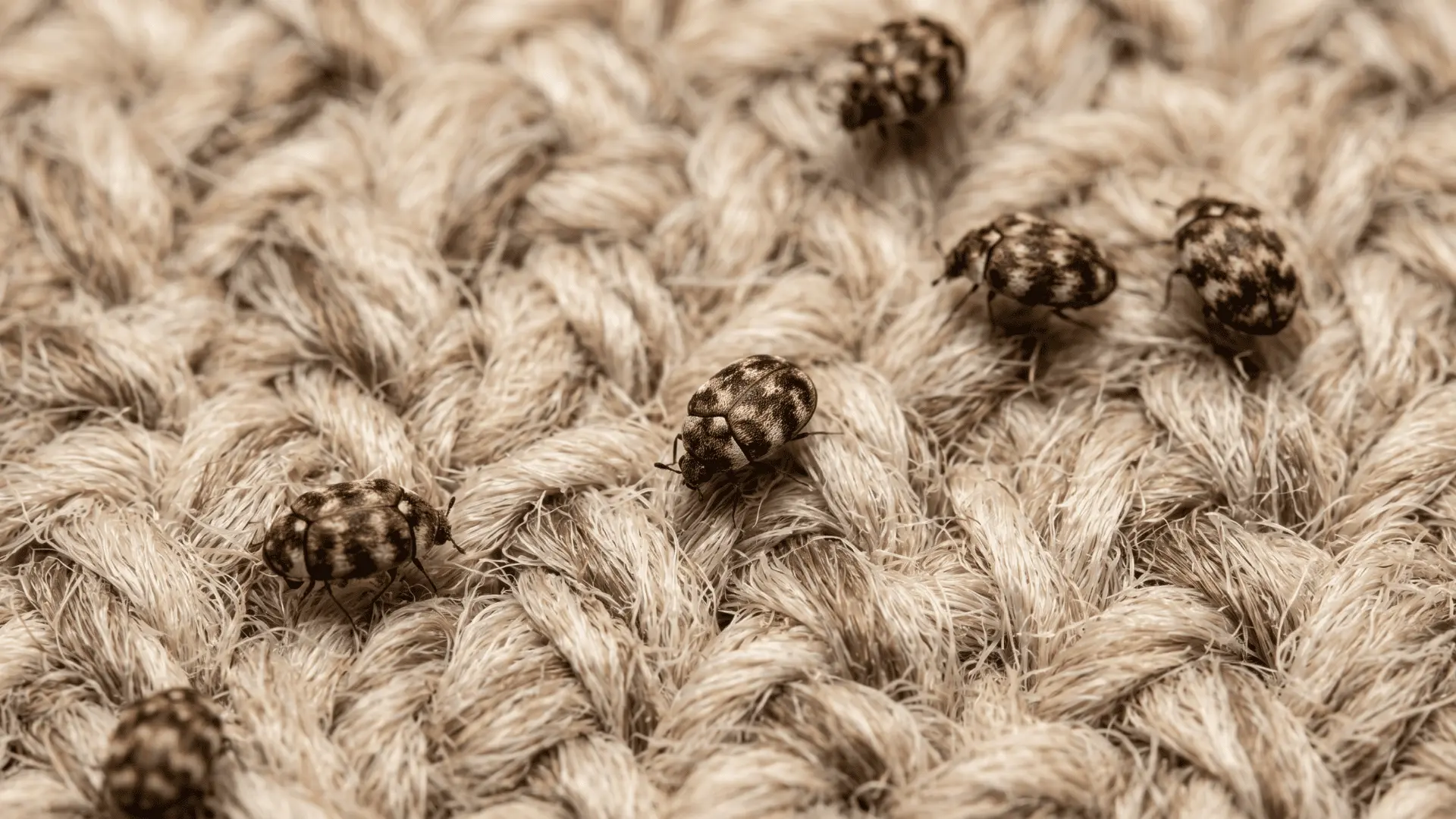
What Does a Carpet Beetle Look Like?
| Feature | Description |
|---|---|
| Color | Varied carpet beetles are black with white, brown, and yellow scales. Black carpet beetles are solid dark brown to black. |
| Size | Adults: 1/8 to 3/16 of an inch; Larvae: slightly longer, resembling fuzzy worms or caterpillars. |
| Antennae | Short, clubbed antennae tucked into a groove beneath the body. |
| Shape | Adults: flat, oval-shaped with a hard shell. Larvae: banded body with long, bristly, hair-like extensions. |
| Flight | Adults have wings and can fly; they are attracted to light, often found near windows or on windowsills. |
Carpet beetles are often hard to spot due to their small size, but knowing these key features helps catch them before they cause significant damage.
Signs of a Carpet Beetle Infestation
Carpet beetles are hard to catch in the act. Most of the time, it’s the damage they leave behind that gives them away. Watch for these four warning signs.
1. Small, Irregular Holes in Carpets and Fabric
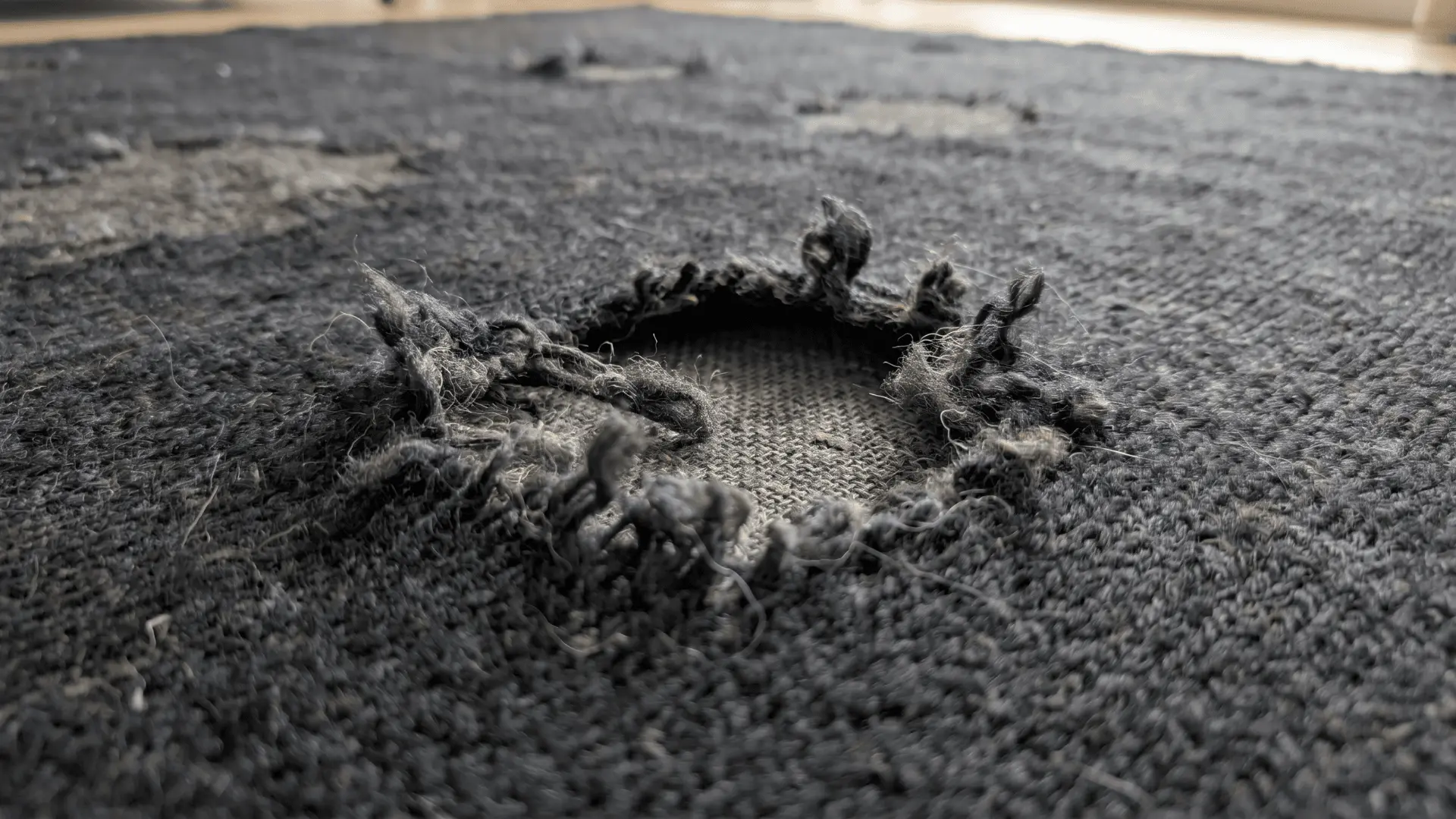
Carpet beetles chew through one concentrated area, leaving behind large, ragged holes in rugs, sweaters, curtains, and upholstered furniture.
Unlike moths that scatter tiny holes across a garment, carpet beetles tend to eat one big patch at a time. If you see that kind of damage, larvae are likely the cause.
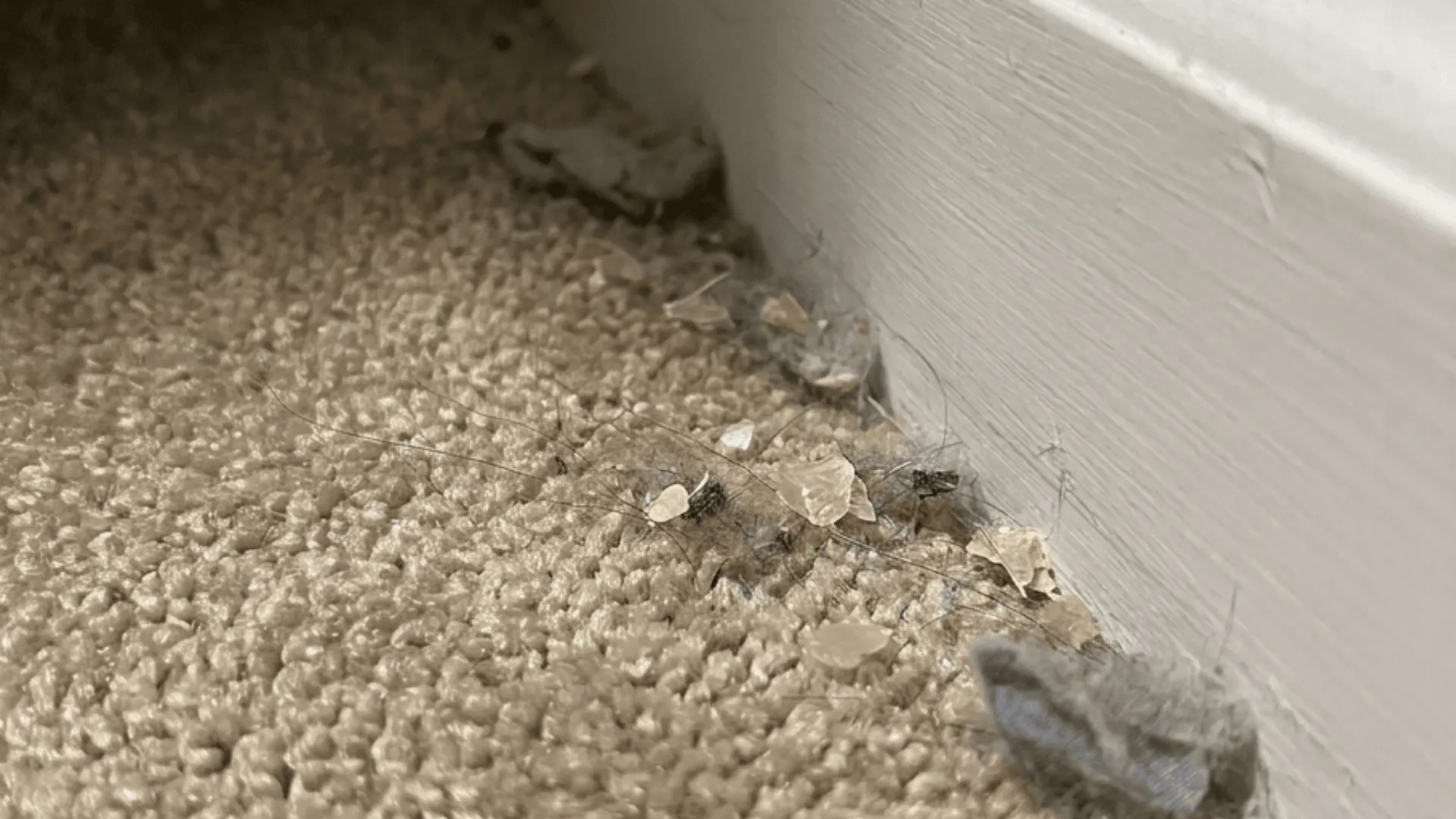
2. Shed Larval Skins Near Infested Items
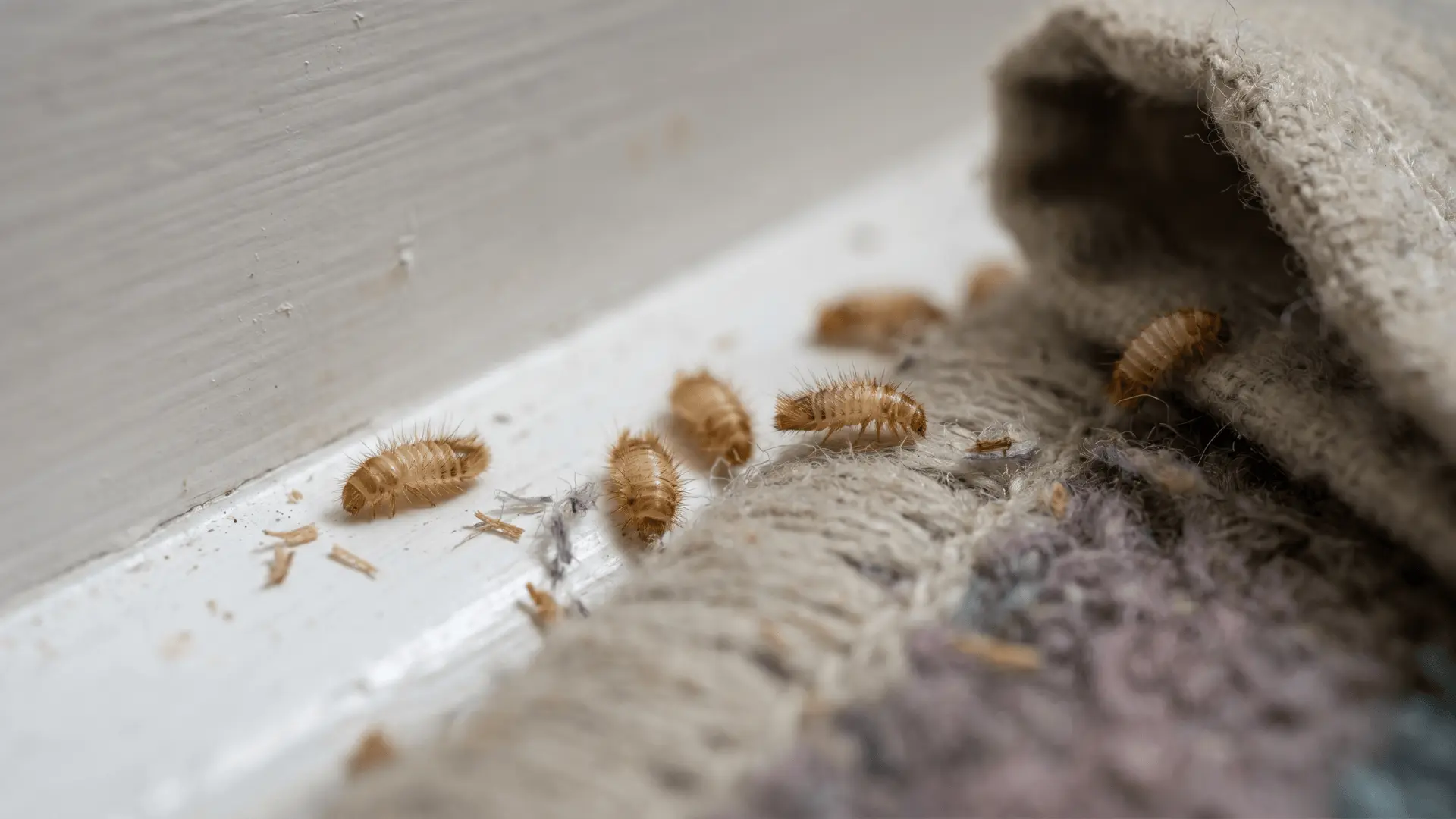
As larvae grow, they shed their skin multiple times. These cast skins are light brown, bristly, and hollow, almost like a tiny shell.
You’ll find them along baseboards, inside closets, under furniture, and near damaged fabrics. A buildup of shed skins means the infestation has been active for a while.
3. Tiny, Oval-Shaped Beetles on Windowsills or Light Fixtures
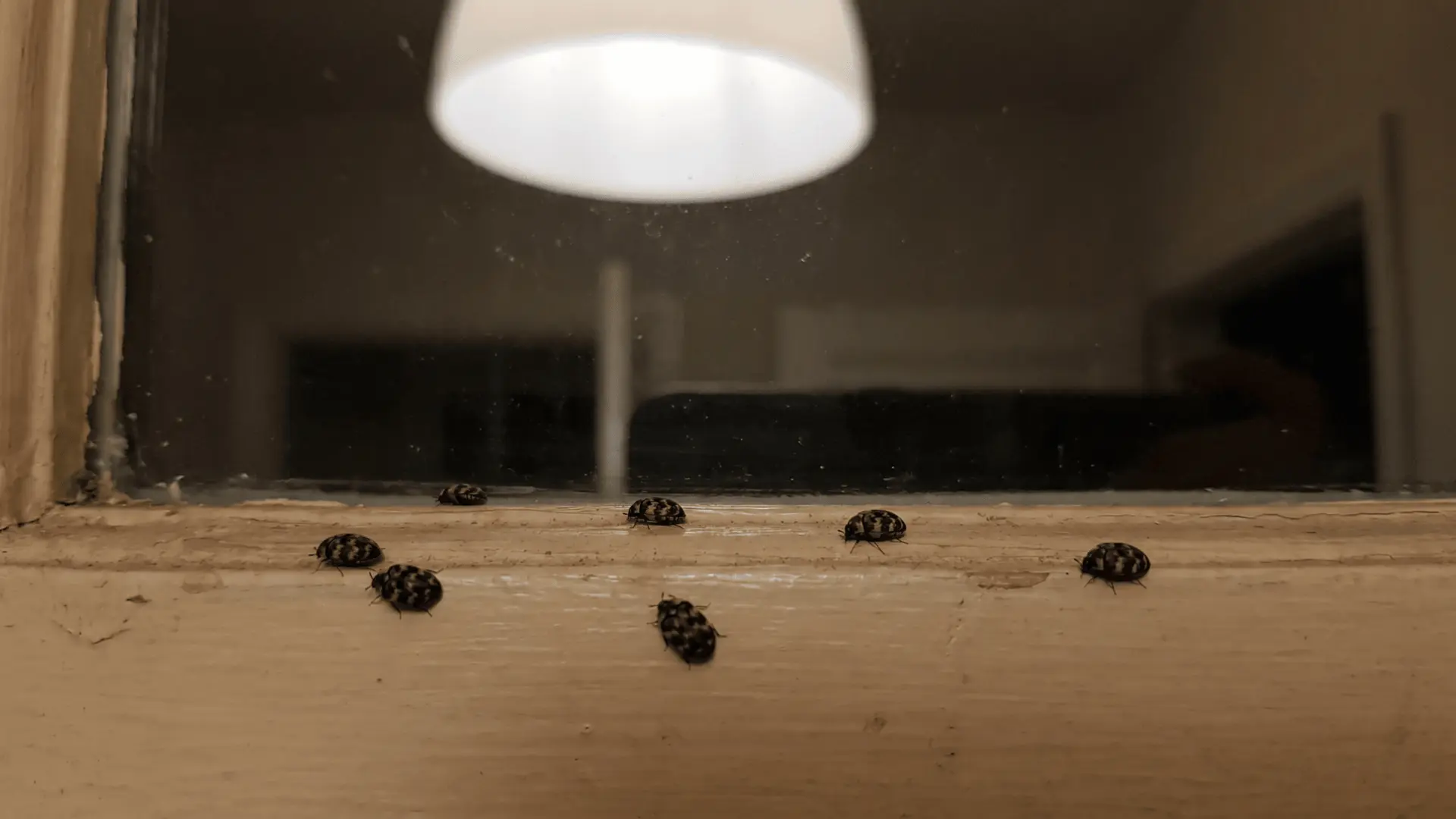
Adult carpet beetles are drawn to light. If you spot small, oval beetles crawling near windows or light fixtures, that’s a strong sign larvae are feeding somewhere nearby.
Don’t ignore even one or two beetles on a windowsill. It’s worth checking the rest of your home right away.
4. Allergic Reactions From Larval Bristles in Some Individuals
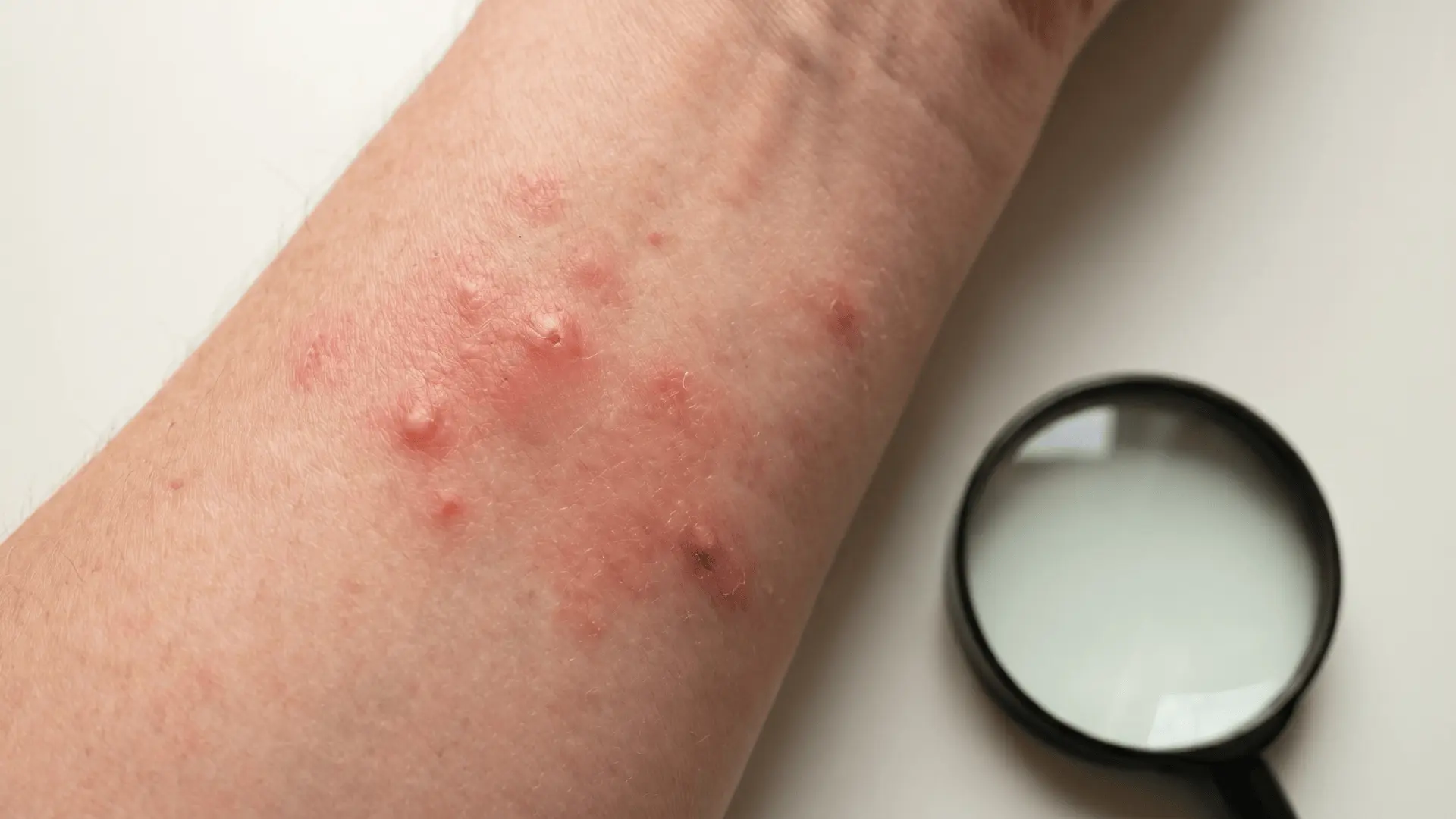
Some people develop red, itchy bumps after coming into contact with carpet beetle larvae. These reactions come from the tiny bristles on the larvaem, not from a bite.
The rash is often mistaken for bed bug bites. If you’re waking up with unexplained skin irritation and can’t find any bugs in your bed, carpet beetles could be the real culprit.
Where Carpet Beetles Hide Inside Your Home
Carpet beetles stay out of sight, which is why they spread easily before you notice them.
Check these common hiding spots:
- Closets and storage areas: Especially where wool, silk, or unused clothes are stored
- Under furniture: Sofas, beds, and heavy cabinets that rarely get moved
- Along carpet edges and baseboards: Dust and fibers collect here, creating a food source
- Inside air ducts and vents: Warm, undisturbed spaces where lint builds up
- Attics and wall voids: Often linked to bird nests or dead insects
If you’re not checking these areas, you’re likely missing the source of the problem.
Are Carpet Beetles Dangerous?
Carpet beetles are not dangerous like bed bugs or fleas, but they still create problems if ignored.
They are not harmful like bed bugs because they do not bite, sting, or feed on blood, and they do not target humans or pets. Their focus stays on natural fibers and quiet, hidden areas where they can lay eggs and grow.
The larvae can still affect people by causing skin irritation. Their tiny bristles can trigger red, itchy bumps when they come into contact with skin, and repeated exposure may lead to mild respiratory irritation in sensitive individuals.
The biggest concern is damage to clothes and fabrics. Larvae feed on wool, silk, leather, and fur, which leads to holes, thinning, and ruined items.
Stored clothing, rugs, and upholstered furniture are more vulnerable, especially when kept in dark, undisturbed spaces where infestations can grow unnoticed.
How to Get Rid of Carpet Beetles: Step-by-Step Guide
Removing carpet beetles requires cleaning and targeted treatment. Follow these steps to remove them effectively.
Tools and Supplies You’ll Need
- Vacuum cleaner with attachments
- Steam cleaner (optional but helpful)
- Laundry detergent
- Access to hot water and a high-heat dryer
- Carpet beetle insecticide spray
- Insecticidal dust (for wall voids or tight spaces)
- Diatomaceous earth (food-grade)
- Face mask (for dust application)
- Gloves (optional for handling treatments)
Step 1: Vacuum and Thoroughly Clean
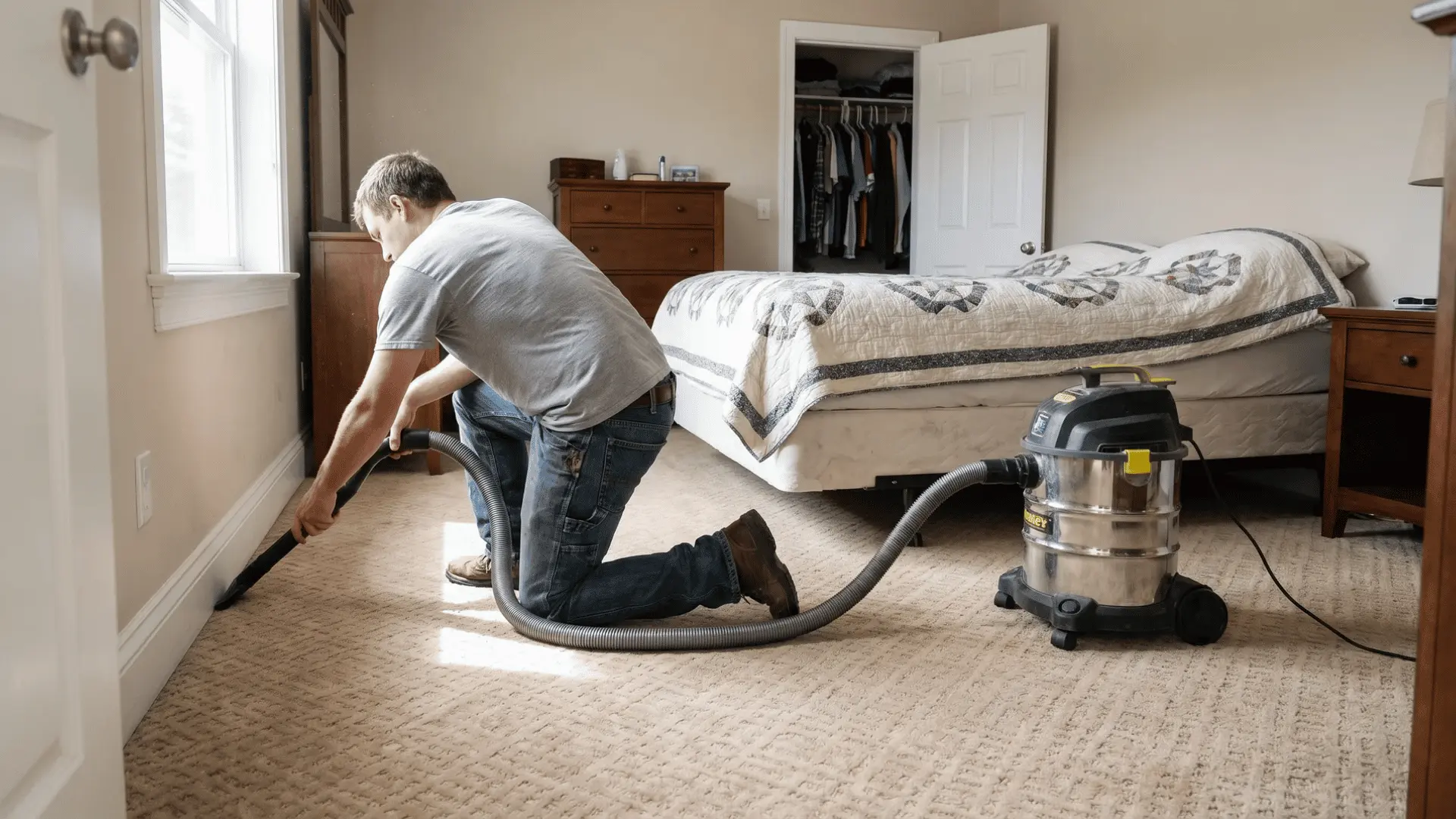
This is always the first and most important step. Start by vacuuming every room, especially dark areas like closets, under furniture, and along baseboards.
- Vacuum daily while treating for carpet beetles
- Use attachments to reach crevices, curtains, and upholstered furniture
- After each session, seal the vacuum bag and throw it outside immediately
- Wash all fabrics in hot water and dry on high heat over 120°F to kill beetles, larvae, and eggs
Steam cleaning works great, too. It penetrates deep into fibers and kills eggs that vacuuming might miss.
Step 2: Apply Carpet Beetle Spray
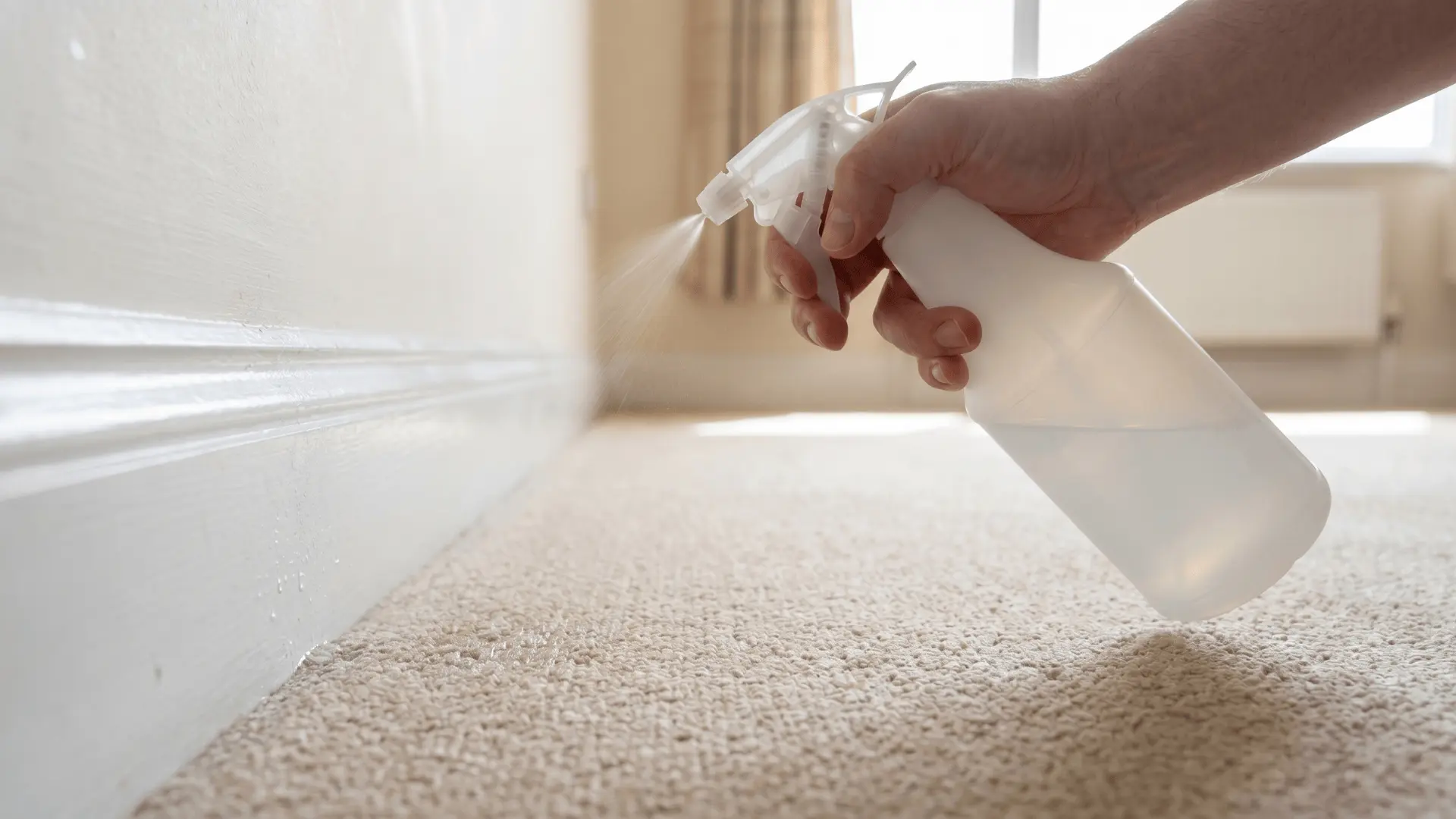
Once the area is clean, treat it with an insecticide labeled for carpet beetles. Look for products containing cyfluthrin, bifenthrin, or deltamethrin for best results.
- Spray along carpet edges, under furniture, and inside cracks and baseboards
- Apply as spot treatments, don’t spray directly on clothing or bedding
- Keep children and pets out of treated rooms until fully dry, usually 1 to 2 hours
- Test the spray on a hidden area first to avoid staining or fabric damage
For hard to reach spots like wall voids or attics, use an insecticidal dust instead of a spray.
Step 3: Locate Carpet Beetle Larvae Nests
Finding the source is the key to stopping the infestation completely. Without this step, beetles will keep coming back, no matter how much you clean.
- Check inside closets, under heavy furniture, along carpet edges, and inside air ducts
- Look for shed skins, fecal pellets, and damaged fabric as clues leading back to the nest
- Pay close attention to stored natural fiber items like wool coats, silk scarves, and feather pillows
- Once you find the source, clean and treat that area first before moving outward
Most nests are found in undisturbed storage areas that rarely get vacuumed.
Step 4: Use Diatomaceous Earth
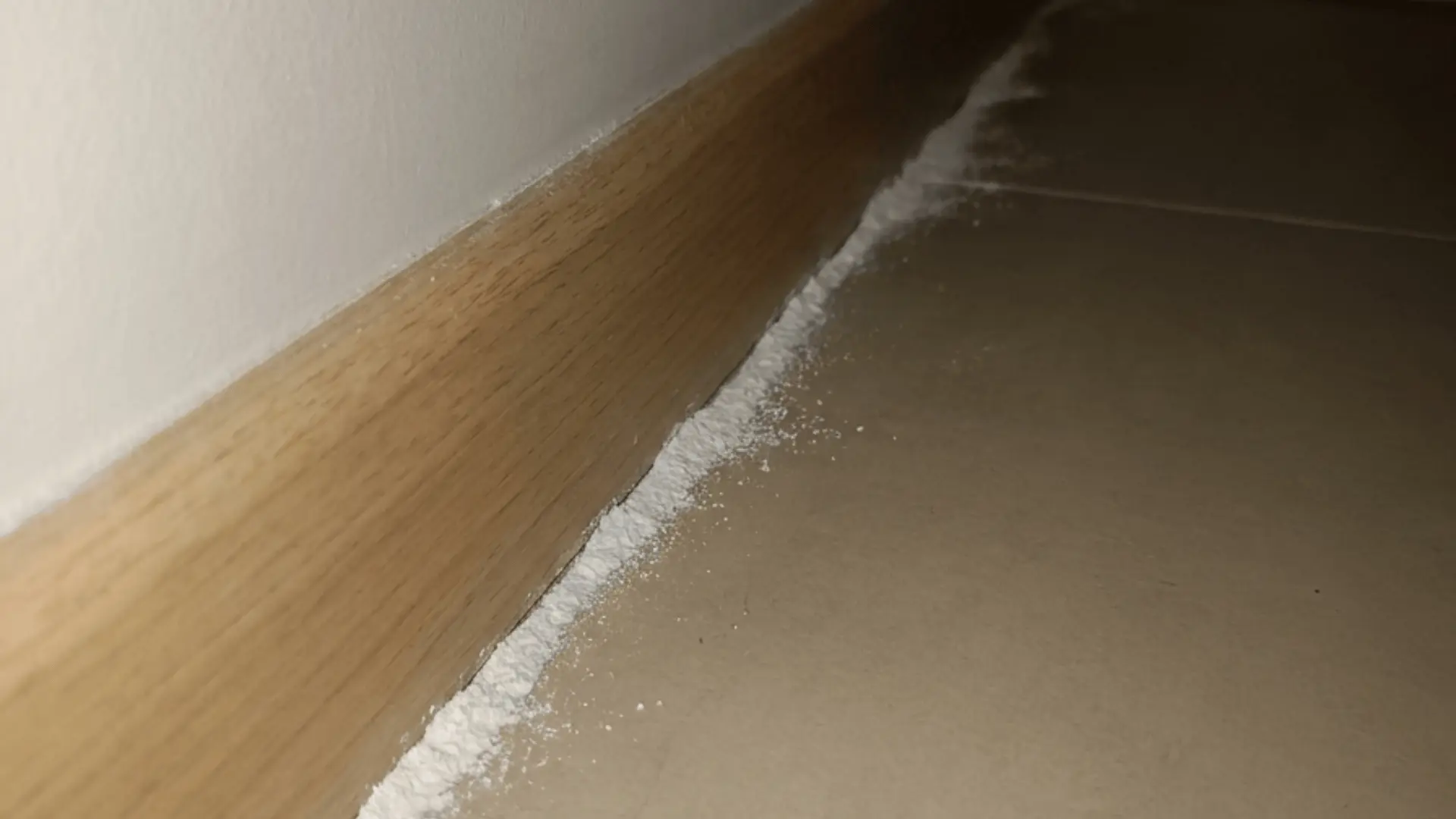
Diatomaceous earth is a safe, non-toxic option, especially useful in areas where sprays can’t be applied easily.
Sprinkle food-grade diatomaceous earth along baseboards, inside closets, and under appliances. Leave it in place for at least 48 hours before vacuuming it up. Wear a mask when applying to avoid inhaling the fine powder. Reapply after vacuuming if the infestation is still active.
It works by dehydrating beetles and larvae on contact. It’s slow but steady and safe to use around kids and pets once it settles.
How to Stop Carpet Beetles From Coming Back
Getting rid of carpet beetles once is not enough. If the source isn’t removed, they will return.
Focus on these key actions:
- Remove the source completely: This could be infested clothing, old rugs, pet hair buildup, or even a bird nest nearby
- Break the life cycle: Continue cleaning for at least 2–3 weeks to catch newly hatched larvae
- Eliminate hidden food sources: Dust, lint, hair, and dead insects all feed larvae
- Monitor problem areas: Check closets, baseboards, and storage spaces regularly
If you skip this step, even a small number of leftover eggs can restart the infestation.
Simple Ways to Keep Carpet Beetles Away
Stopping carpet beetles from coming back is just as important as removing them. These habits help keep your home clean and less attractive to them:
| Preventive Step | What to Do |
|---|---|
| Keep Carpets and Fabrics Clean | Wash rugs, curtains, and furniture covers often. Focus more on wool, silk, and leather items since beetles are drawn to them. |
| Store Clothes in Sealed Containers | Use airtight bins or vacuum-sealed bags for storage. Add cedar blocks or mothballs for extra protection. |
| Regular Vacuuming | Vacuum once or twice a week. Cover hidden areas like under beds, corners, closets, and upholstery. |
| Seal Cracks and Entry Points | Check windows, doors, and walls for gaps. Fix damaged screens and seal cracks to block entry. |
| Avoid Storing Dirty Fabrics | Always wash clothes before storage. Sweat, food stains, and oils attract larvae quickly. |
Following these simple steps keeps your space clean and reduces the chances of another infestation.
Wrapping Up
Carpet beetles are sneaky, but they’re not unbeatable. They thrive in dark corners, feed on your favorite fabrics, and multiply fast when left alone. The damage they cause can add up quickly if you wait too long to act.
The good news is that you don’t need to panic. A consistent routine of vacuuming, hot washing, targeted sprays, and sealing entry points is all it takes to remove carpet beetles and keep them from coming back.
The sooner you start, the less damage you’ll deal with. Take action today, follow the steps in this guide, and take back control of your home, one clean corner at a time.
Frequently Asked Questions
What Causes Carpet Beetles in the First Place?
Carpet beetles usually enter homes through open windows, cut flowers brought inside, or infested clothing and furniture. Once inside, they’re attracted to natural fibers, pet hair, lint, and dust buildup in dark corners.
How Can Carpet Beetles Be Permanently Removed?
There’s no single magic fix. Permanent removal comes from combining deep cleaning, targeted treatment, and sealing entry points, all done consistently.
Does Baking Soda Kill Carpet Beetles?
No, baking soda does not kill carpet beetles. It doesn’t dehydrate or poison them the way diatomaceous earth or boric acid does.
What Kills Carpet Beetles Instantly?
Steam cleaning is one of the fastest ways to kill carpet beetles, larvae, and eggs on contact. Insecticide sprays containing cyfluthrin, bifenthrin, or deltamethrin also work quickly on direct contact.