How to Clean Area Rugs at Home Properly
Area rugs go through daily wear from shoes, pets, and spills, which can make them look dull and smell over time. Even good-quality rugs lose their look if they are not cleaned properly.
Regular cleaning is important because dirt can settle deep and allergens can affect air quality. Proper care also helps maintain the rug’s texture, color, and life.
The good part is you don’t always need professional tools to clean rugs. You can hand-wash, use a machine, or freshen them with simple dry methods like baking soda.
In this post, I’ll show you simple, step-by-step ways to clean your rug at home. You’ll also find basic methods for cleaning safely and effectively.
Quick Answer: Best Way to Clean Area Rugs at Home
Keeping your area rugs clean doesn’t have to be complicated. Following a simple and effective process helps maintain their appearance, freshness, and durability.
- Vacuum both sides to remove loose dirt and dust.
- Spot-treat stains with a mild cleaning solution.
- Wash with mild soap and water or use baking soda for dry cleaning.
- Rinse thoroughly to remove any residue.
- Dry completely to prevent odors, mold, and mildew.
By following these steps, you can keep your area rugs clean, hygienic, and looking their best for years to come.
Things to Check Before You Start Cleaning
Before you begin, take a few minutes to assess your rug. The right preparation prevents damage, protects colors, and ensures better cleaning results.
Check the Rug Material First
Different materials require different cleaning methods. Identifying the fiber helps you choose the safest approach.
- Wool: Use cold water and a mild detergent. Avoid excess moisture and harsh scrubbing to prevent shrinkage and fiber damage.
- Synthetic: Durable and easy to maintain. Can withstand mild scrubbing and water-based cleaning solutions.
- Cotton: Lightweight and washable. Suitable for gentle hand washing and, in some cases, machine washing.
- Jute / Natural Fiber: Highly absorbent and moisture-sensitive. Avoid soaking; opt for dry cleaning or light spot cleaning.
Choosing the right method based on the material helps you clean effectively while keeping your rug in good condition for longer.
Do a Color Test
Testing for colorfastness ensures that the dye will not bleed or fade during cleaning.
How to Test Safely:
- Mix a small amount of your cleaning solution.
- Apply it to an inconspicuous corner of the rug.
- Blot with a white cloth.
- If color transfers, avoid using that solution.
This helps prevent discoloration and permanent damage while allowing you to choose the safest and most effective cleaning solution for your rug.
Rug Care Label Symbols Explained
Before cleaning your rug, always check the care label. These symbols tell you what cleaning method is safe to use. Here’s a quick guide to the most common ones:
| Symbol | Meaning | What It Allows | What to Avoid |
|---|---|---|---|
| W | Water-Based Cleaning | Safe to use water and mild detergent | Harsh chemicals |
| S | Solvent Cleaning Only | Use solvent-based cleaners (no water) | Water-based cleaning |
| WS | Water or Solvent | Safe to use either water-based or solvent cleaners | Over-saturating the rug |
| X | Vacuum Only | Vacuum or light brushing only | Any liquid cleaning |
| Machine Washable | Safe for Machine Wash | Gentle cycle with mild detergent | High heat drying |
Important: Even if a symbol allows water, always do a small color test first to prevent dye bleeding.
Step-By-Step: How to Clean Area Rugs at Home
Cleaning an area rug at home is simple when you follow the right steps. This method removes dirt, eliminates odors, and helps preserve the rug’s texture and color.
Tools and Supplies You’ll Need
- Vacuum cleaner
- Mild detergent/dish soap
- Soft brush
- Bucket or hose
- Towels / wet vacuum
- Baking soda (optional)
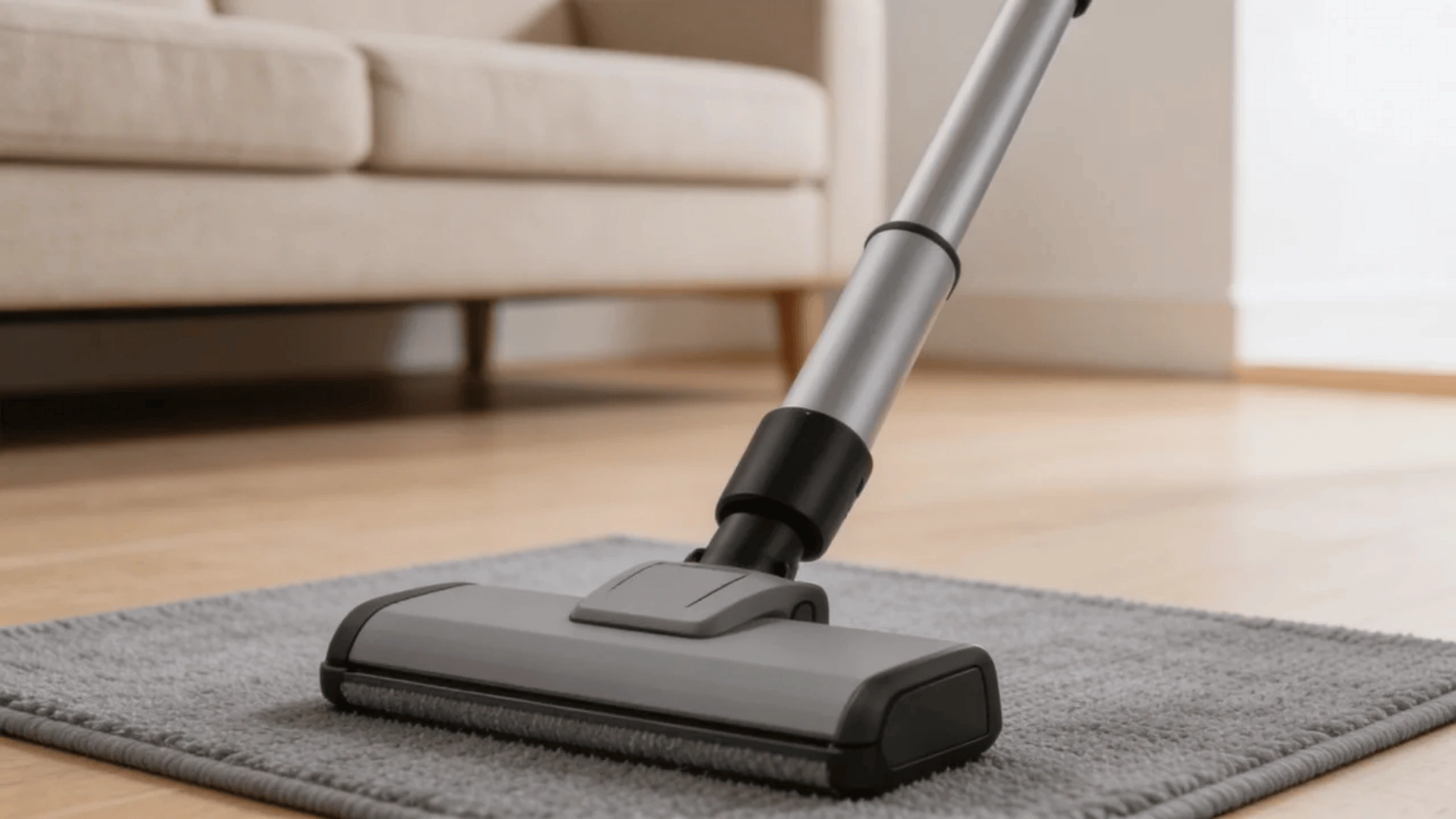
Step 1: Vacuum Thoroughly
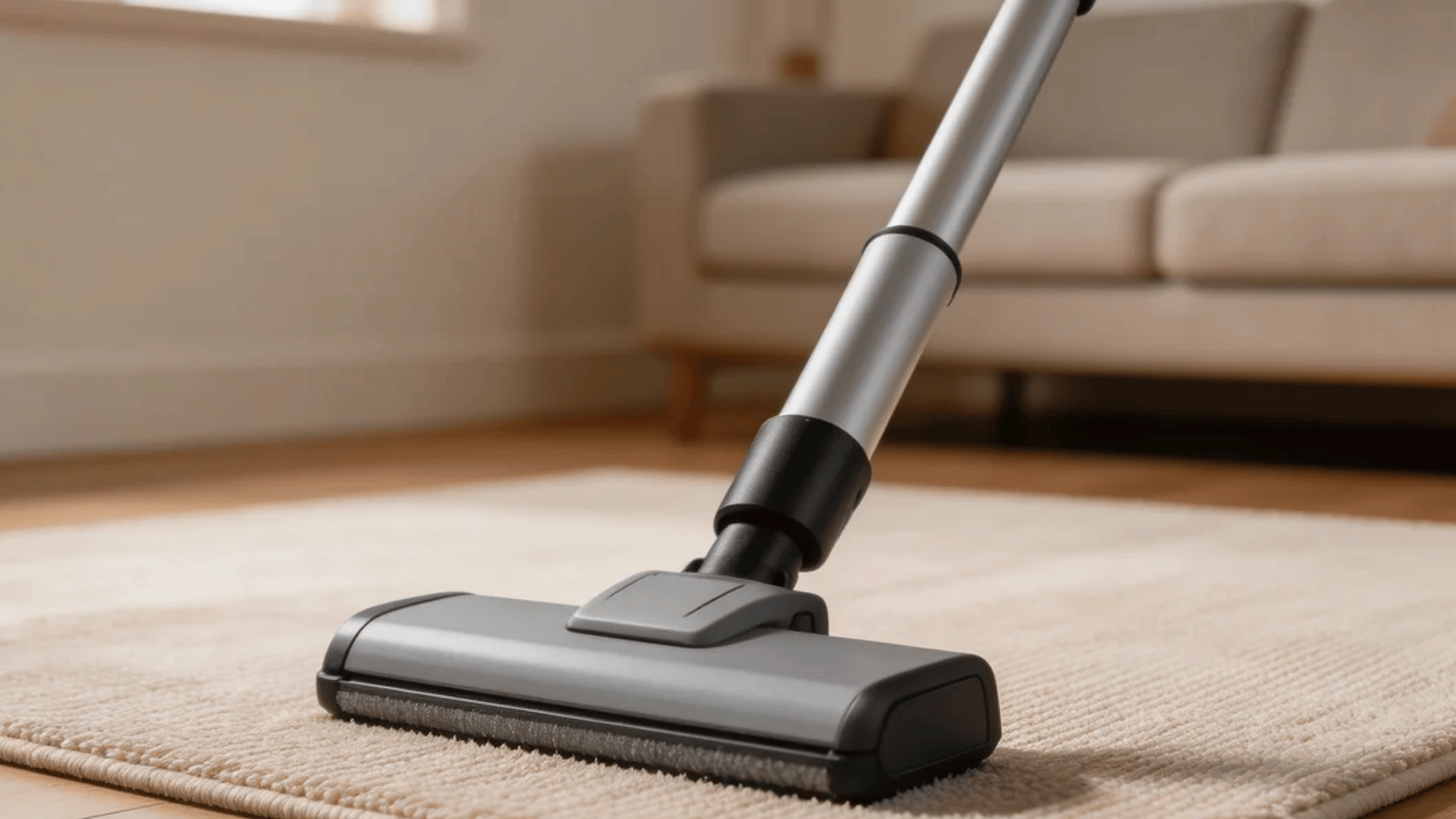
Vacuuming removes loose dirt and prepares the rug for deeper cleaning.
- Vacuum the top surface to remove dust and debris.
- Flip the rug and vacuum the underside to dislodge trapped dirt.
- Repeat high-traffic areas for better results.
Why this matters: Dry soil acts like sandpaper. Removing it first prevents fiber damage and ensures a more effective wash.
Step 2: Shake out Dirt (for Small Rugs)
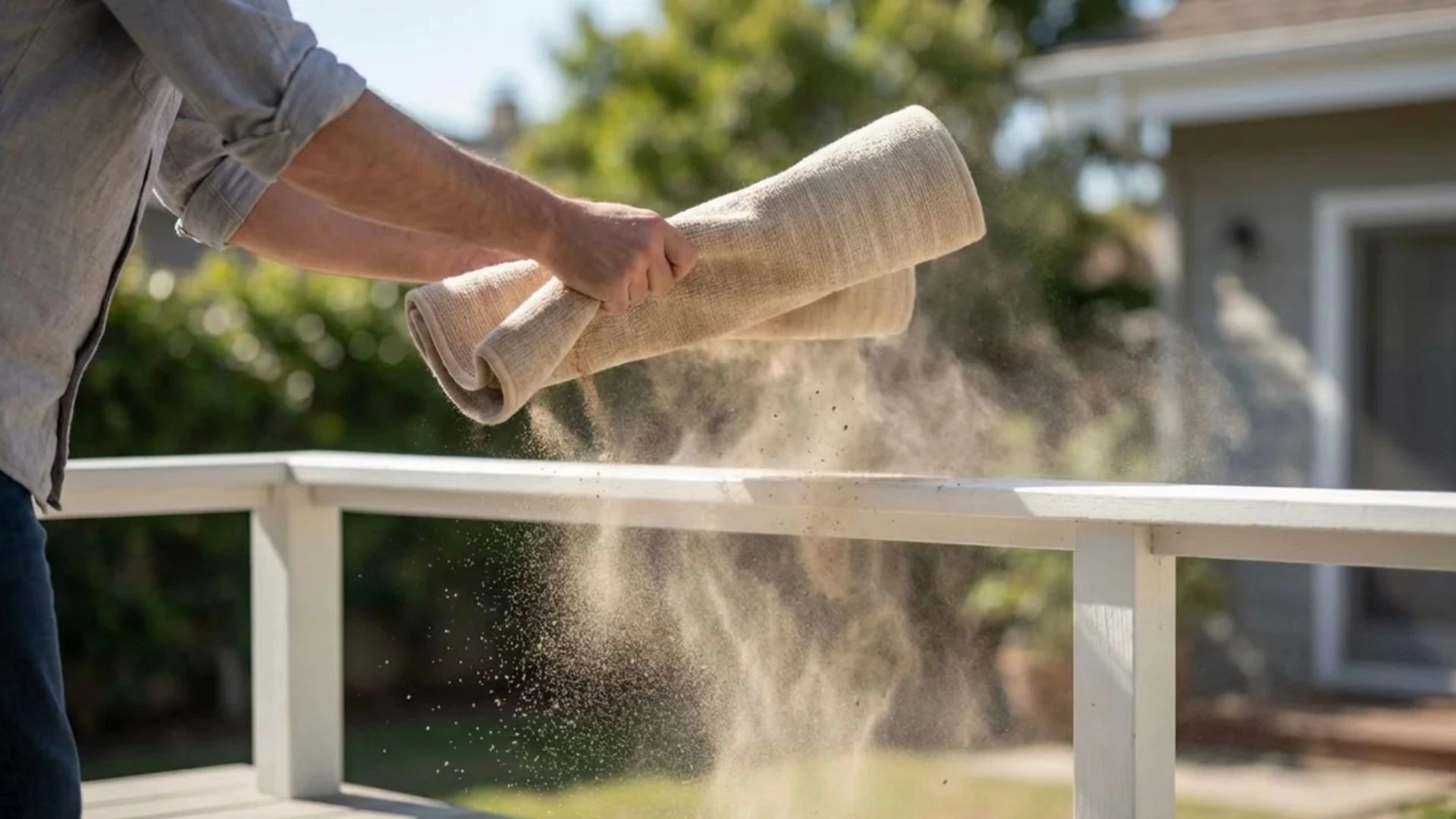
This step helps remove embedded dust that vacuuming may miss.
- Take smaller rugs outdoors.
- Hold them firmly and shake them out.
- Alternatively, hang them over a railing or clothesline and beat gently.
Choose a clean, dry area such as a driveway or balcony for best results.
Step 3: Spot Treat Stains
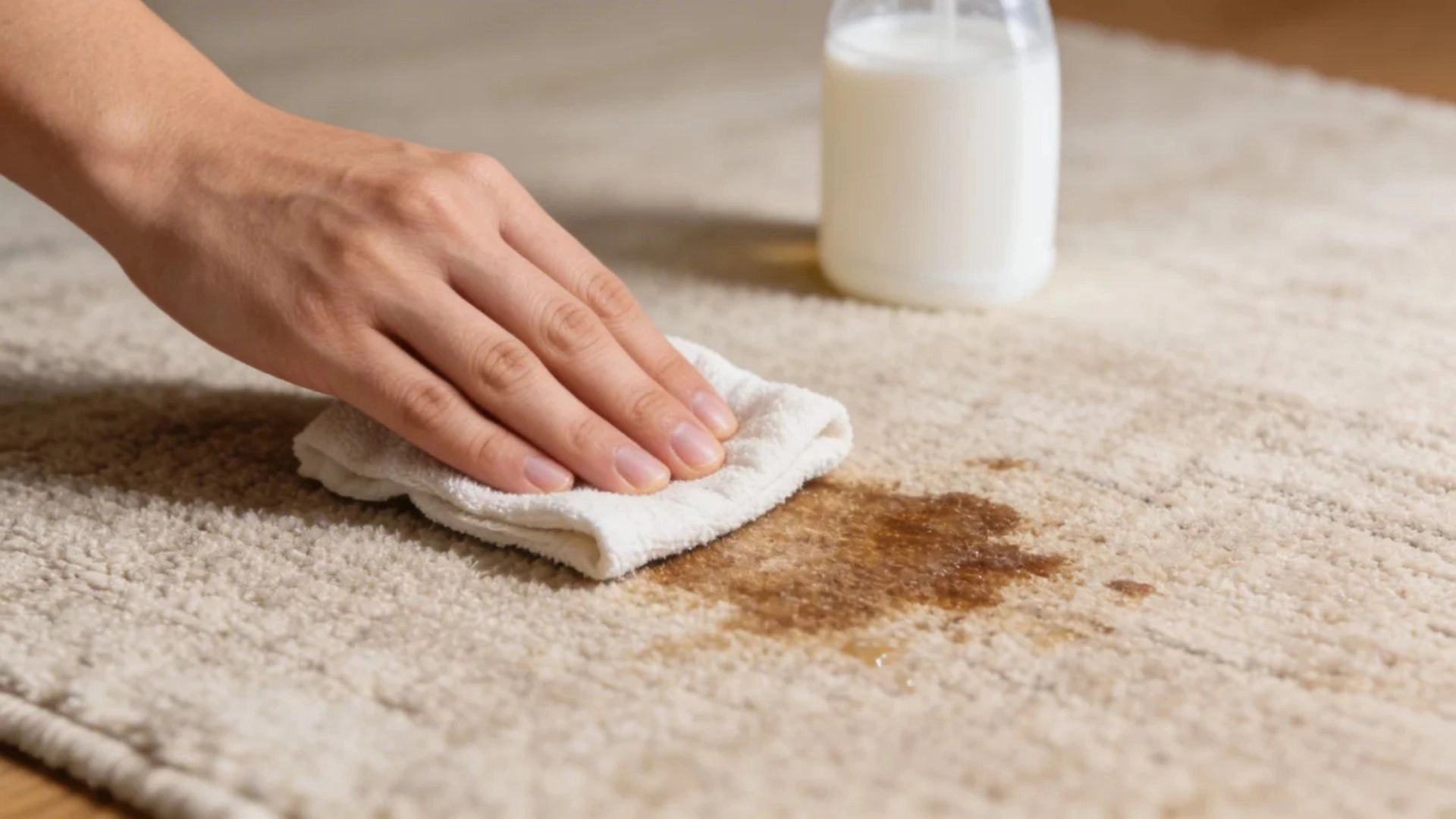
Treat visible stains before washing the entire rug.
- Blot the stain gently with a clean cloth. Do not rub.
- Mix a few drops of mild dish soap with warm water.
- For stubborn stains, use a solution of equal parts white vinegar and water.
- Dab the solution onto the stain and blot until it lifts.
Tip: Always test the solution on an inconspicuous area first, as different cleaning formulas may hurt certain fibers.
Step 4: Wash the Rug
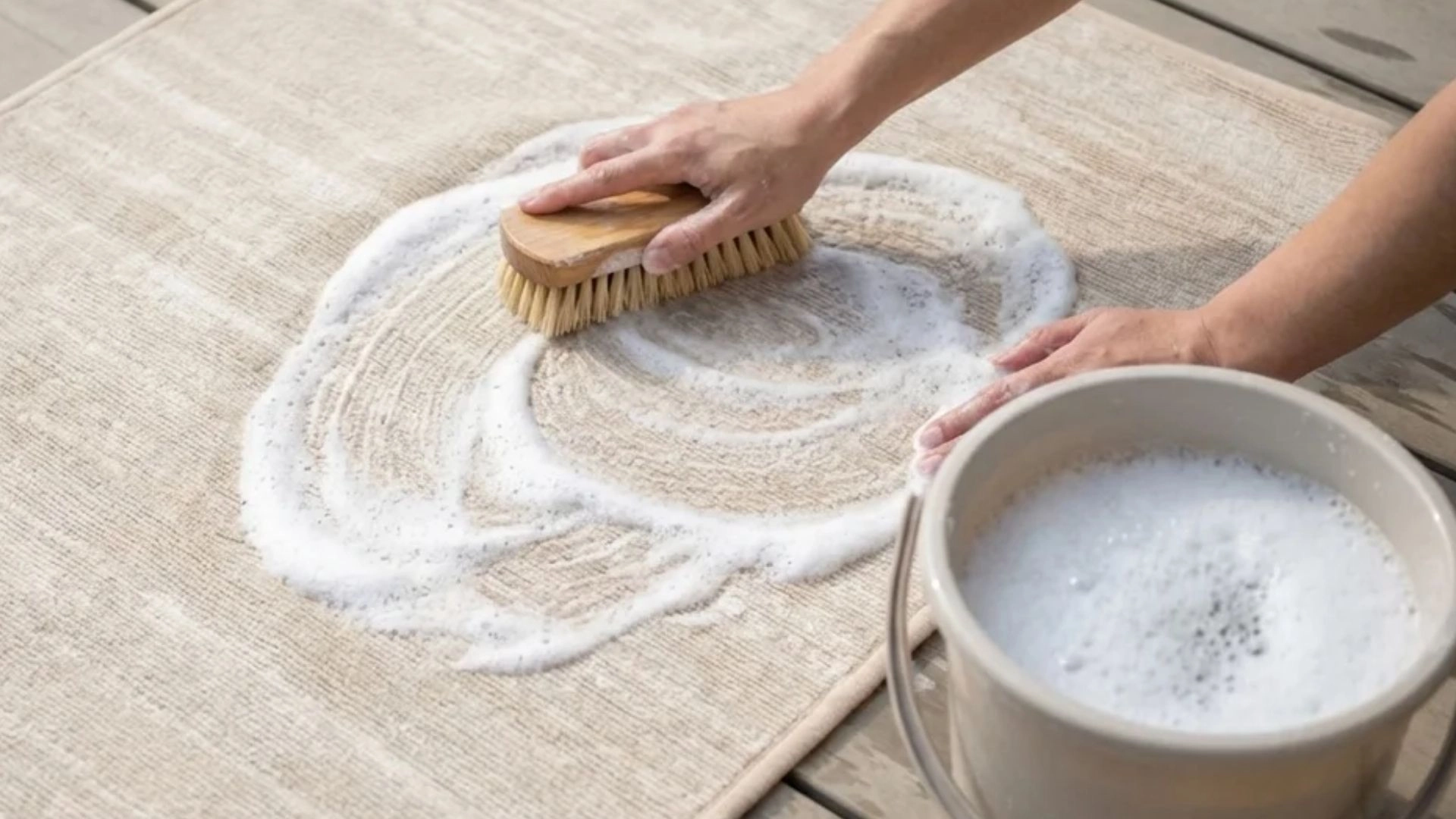
Select the most suitable method based on the rug’s size and material.
Method 1: Hand Washing (Best for Most Rugs)
This is the safest option for many household rugs.
- Lay the rug flat on a clean surface.
- Mix mild detergent with lukewarm water.
- Apply the solution using a sponge or soft-bristle brush.
- Gently scrub in the direction of the fibers.
- Avoid oversaturating the rug.
Method 2: Using a Carpet Cleaner
This method is ideal for large rugs and deep cleaning. It works best for heavily soiled rugs and those placed in large or high-traffic areas, where dirt and grime build up more quickly and require thorough extraction.
- Fill the machine with water and a mild cleaning solution.
- Test on a small hidden area.
- Clean with slow, even passes, avoiding over-wetting.
- Rinse with clean water and let the rug dry completely.
Method 3: Outdoor Hose Method
Best suited for durable synthetic rugs.
Step-by-step:
- Lay the rug on a clean driveway or tarp.
- Rinse thoroughly with a garden hose.
- Apply a mild soap solution.
- Scrub gently with a soft brush.
- Rinse until the water runs clear.
Step 5: Rinse Properly and Remove excess water
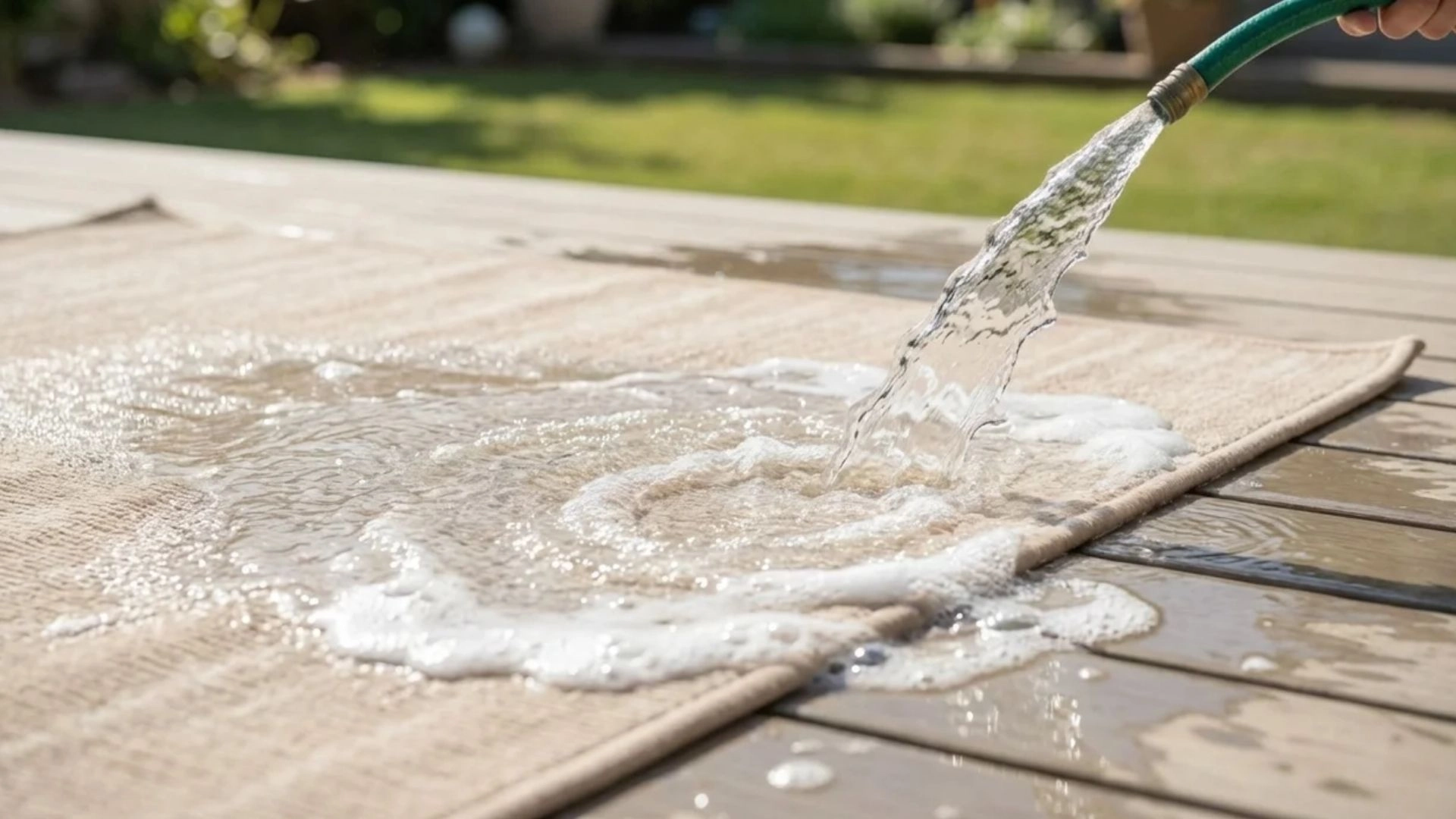
Proper rinsing and moisture removal are essential to prevent residue, speed up drying, and protect the rug from damage.
- Rinse thoroughly with clean water until no suds remain.
- Remove excess moisture using dry towels, a squeegee, or a wet/dry vacuum.
- Avoid wringing or twisting the rug to prevent fiber distortion.
Soap residue attracts dirt, stiffens fibers, and causes discoloration, while efficient moisture removal prevents mold, odors, and long-term damage.
Step 6: Dry Completely
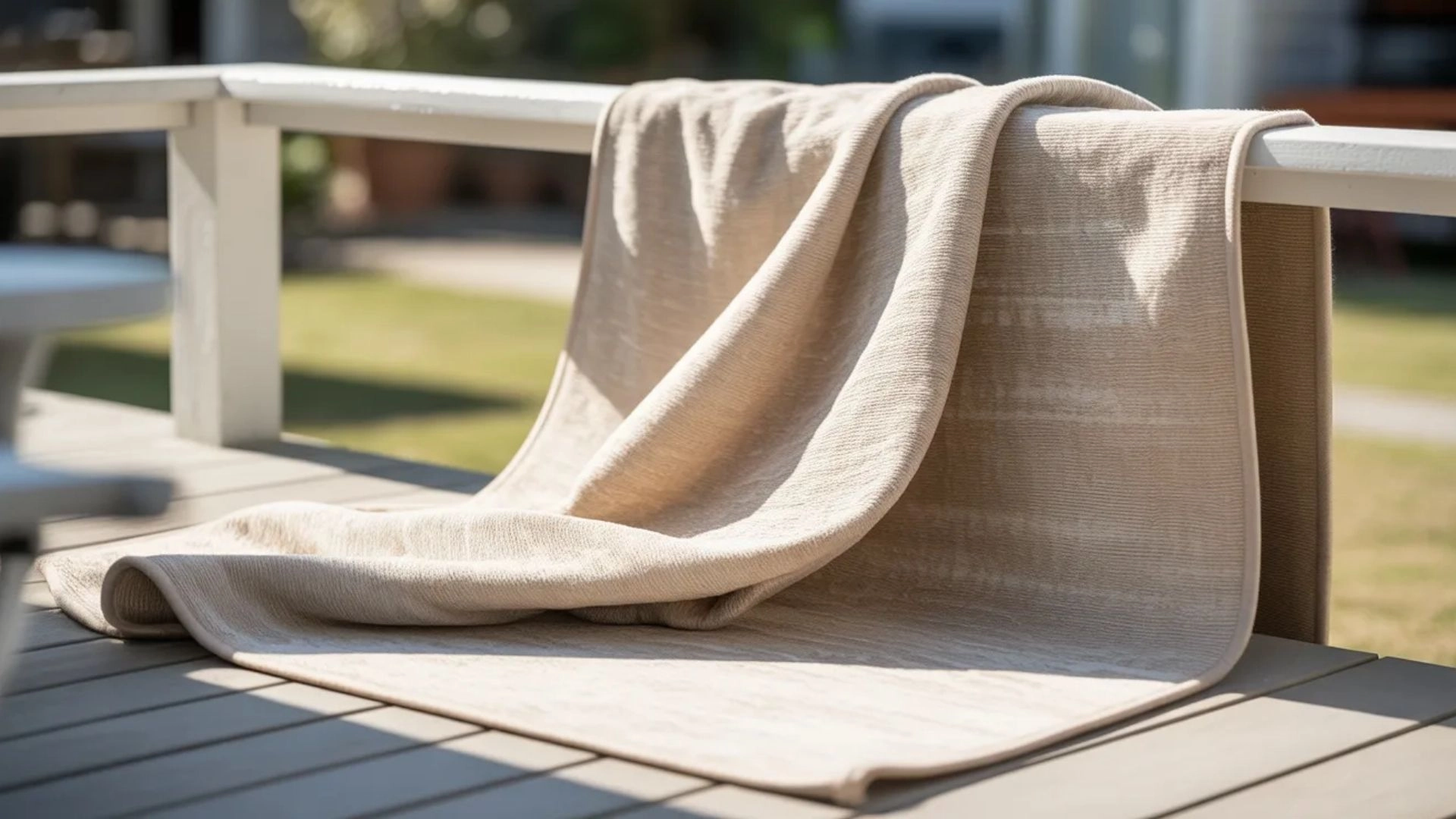
Thorough drying is essential to prevent odors and mold.
- Hang the rug over a railing, fence, or drying rack.
- Allow it to dry in the sun when possible.
- Flip the rug midway to ensure even drying.
Airflow Tips:
- Use fans indoors to speed up the process.
- Open windows to improve ventilation.
- Place the rug in a well-ventilated area.
Why this is critical: Improper drying can lead to mold, mildew, and unpleasant odors. Ensure the rug is fully dry before placing it back indoors.
How to Clean Area Rugs without Washing (Dry Methods)
If your rug cannot withstand water or needs a quick refresh, dry cleaning is a safe and effective option. They remove odors and loosen dirt without the risk of over-wetting.
Using Baking Soda
Baking soda is an affordable solution for removing odor and lightly cleaning rugs.
- Vacuum the rug thoroughly.
- Sprinkle an even layer of baking soda.
- Gently brush it into the fibers.
- Let it sit, then vacuum thoroughly.
Time Needed For:
- Light odors: 30–60 minutes
- Moderate odors: 2–4 hours
- Strong odors: Overnight
Dry Carpet Powder
Dry carpet powders clean and freshen rugs without water.
How It Works:
- Vacuum to remove loose dirt.
- Sprinkle powder evenly across the rug.
- Work it in with a soft brush or broom.
- Let it sit for 15–30 minutes.
- Vacuum thoroughly.
This method is ideal for delicate or moisture-sensitive rugs, quick touch-ups between deep cleans, and apartments or indoor spaces where washing isn’t practical.
It provides a convenient way to keep rugs fresh without using water or heavy equipment.
How to Clean Different Types of Rugs (Material Guide)
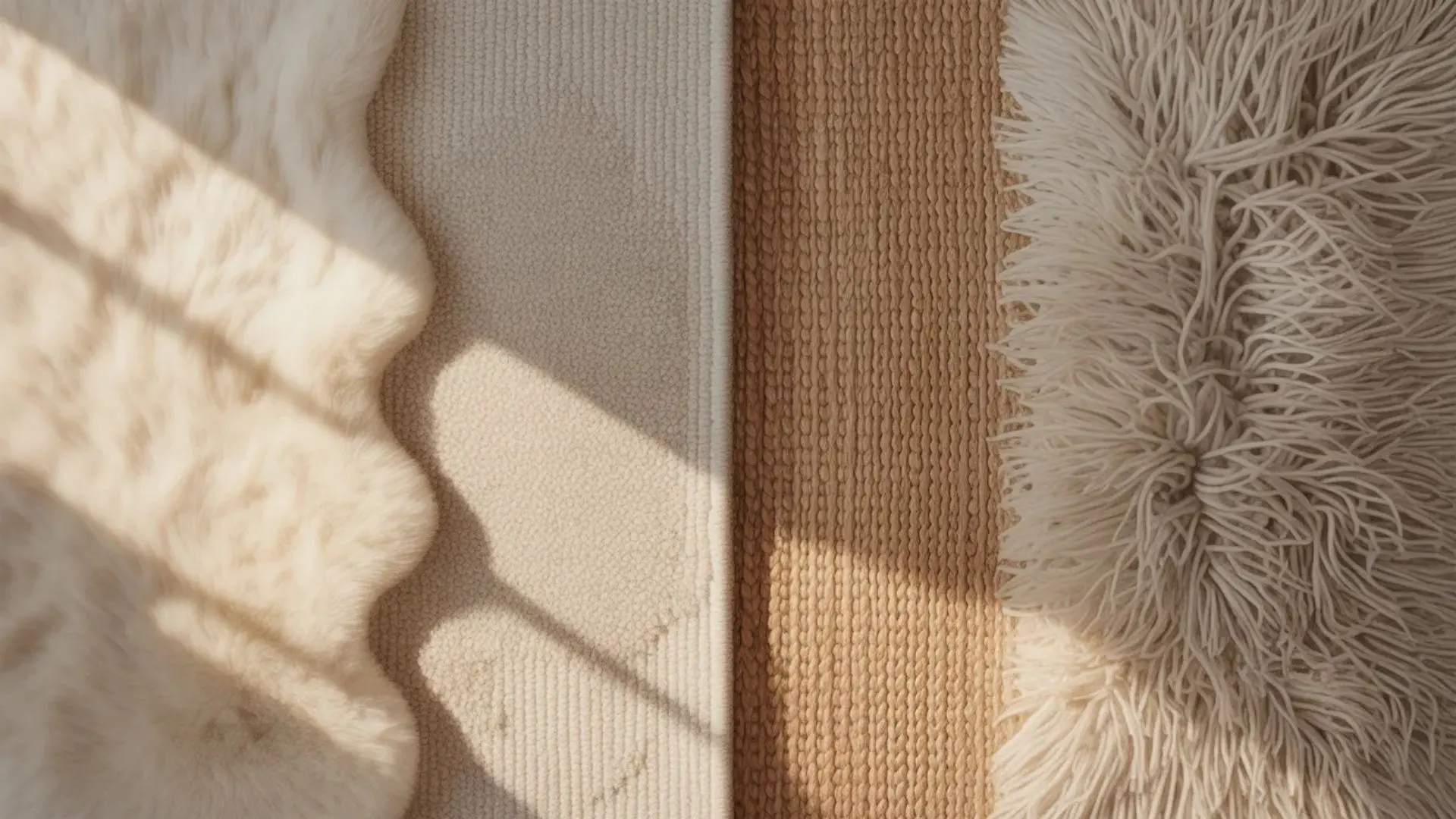
Not all rugs can be cleaned the same way. Understanding the material helps you choose the safest method and prevents damage. Follow these guidelines to keep each type looking its best.
1. Wool Rugs
Wool rugs are soft, durable, and naturally resistant to dirt, but they require gentle care.
- Use cold water only to prevent shrinking and fiber damage.
- Choose a mild, wool-safe detergent.
- Blot stains instead of scrubbing aggressively.
- Avoid soaking the rug, as excess moisture can weaken fibers.
- Dry flat in a well-ventilated area to maintain shape.
2. Synthetic Rugs
Synthetic rugs, such as polyester, nylon, and polypropylene, are among the easiest to clean.
- Highly durable and stain-resistant.
- Can handle mild scrubbing without damage.
- Suitable for carpet cleaners and outdoor washing methods.
- Clean with warm water and mild detergent.
- Air-dry thoroughly to prevent mildew.
3. Jute and Natural Fiber Rugs
Jute, sisal, and seagrass rugs are sensitive to moisture and require extra caution.
- Avoidsoaking, as water can weaken and discolor the fibers.
- Use spot cleaning with minimal moisture.
- Blot spills immediately to prevent staining.
- Apply baking soda to remove odors and vacuum afterward.
- Keep the rug as dry as possible during cleaning.
4. Shag Rugs
Shag rugs have long, plush fibers that trap dirt and require special handling.
- Vacuum using suction only; avoid beater bars.
- Shake out smaller rugs outdoors to remove debris.
- Use a mild detergent for spot cleaning.
- Avoid excessive scrubbing, which can tangle the fibers.
- Brush gently with a soft brush to restore fluff after drying.
- Ensure thorough drying to prevent odors and matting.
By matching the cleaning method to the rug material, you can maintain its texture, color, and longevity while avoiding unnecessary damage.
How to Remove Common Stains from Area Rugs
Stains are easier to remove when treated quickly. Use the right method for each type and always blot rather than rub. Before applying any solution, test it on a hidden corner of the rug.
Pet Stains
Pet accidents can leave stubborn stains and lingering odors if not treated promptly.
- Blot the area immediately with paper towels.
- Spray a 1:1 solution of white vinegar and water, then blot until the stain lifts.
- Sprinkle baking soda, let it dry, and vacuum to remove odor.
Food and Drink Spills
Spills from coffee, juice, or sauces can set quickly if not treated right away.
- Blot immediately to absorb excess liquid.
- Dab with a mixture of mild dish soap and warm water.
- Rinse lightly with clean water and blot dry.
Oil and Grease
Greasy stains require an absorbent and a grease-cutting solution.
- Sprinkle baking soda or cornstarch over the stain.
- Let it sit for 15–30 minutes to absorb the oil, then vacuum thoroughly.
- Apply a small amount of dish soap mixed with warm water and blot gently.
- Rinse with a damp cloth and pat dry with a clean towel.
Mud and Dirt
Mud stains are easier to remove once they dry.
- Allow the mud to dry completely, then vacuum to remove loose dirt and debris.
- Mix a few drops of mild dish soap with warm water.
- Gently blot the stained area with a soft cloth using the solution.
- Rinse lightly with clean water and blot dry.
These quick and effective methods help keep your area rugs clean, fresh, and free from stubborn stains.
Common Mistakes to Avoid when Cleaning Rugs
- Using Too Much Water: Excess moisture can damage fibers and cause mold growth. Use minimal water and avoid soaking, especially for delicate rugs.
- Scrubbing Too Hard: Aggressive scrubbing frays fibers and spreads stains. Always blot gently and use a soft-bristle brush when needed.
- Not Rinsing Properly: Soap residue attracts dirt, leaving rugs stiff and dull. Rinse thoroughly until the water runs clear.
- Drying Indoors Without Airflow: Poor ventilation traps moisture, leading to mildew and odors. Dry rugs in sunlight or use fans to improve airflow.
- Skipping Vacuuming: Dirt left behind can turn into mud during washing and damage fibers. Vacuum both sides before deep cleaning for better results.
When to Avoid DIY Cleaning and Call a Professional
While many area rugs can be cleaned at home, some situations require expert care. Professional cleaning helps protect delicate fibers, preserve color, and prevent costly damage that can happen with improper washing.
1. Antique Rugs
Antique and heirloom rugs are often made with fragile fibers and natural dyes that can bleed or fade easily. Excess water, harsh detergents, or aggressive scrubbing may permanently reduce their value.
Professional rug cleaners use controlled washing methods, specialized drying rooms, and gentle solutions designed for restoration.
Estimated cost: $3 to $8 per square foot, depending on size and condition.
2. Expensive Wool Rugs
High-quality wool rugs are durable but sensitive to over-wetting and improper detergents. DIY cleaning can lead to shrinkage, color bleeding, fiber distortion, or lingering odors if not dried correctly.
Professionals use wool-safe products and proper moisture control to clean without weakening the fibers.
Estimated cost: $2 to $6 per square foot for standard professional cleaning.
3. Severe Stains or Strong Odors
Deep-set stains from pets, wine, grease, or smoke often penetrate beyond the surface into the rug backing. Surface cleaning may not fully remove the source, leading to recurring odors.
Professional cleaners use enzyme treatments, odor-neutralizing solutions, and commercial extraction equipment for thorough results.
Estimated cost: Base cleaning plus $25 to $75 extra per stain or odor treatment.
If your rug is valuable, sentimental, heavily soiled, or structurally delicate, professional cleaning can help prevent costly replacement.
‘In many cases, spending a few hundred dollars on expert care is safer than risking permanent damage with DIY methods.
Pro Tips to Keep Rugs Clean Longer
- Vacuum Regularly: Frequent vacuuming removes dirt and debris before they settle deep into the fibers, preventing wear and maintaining the rug’s appearance.
- Use Rug Pads: Rug pads reduce friction, prevent slipping, and provide cushioning, helping extend the life of your rug.
- Rotate Rugs Every 3–6 Months: Rotating ensures even wear and prevents fading from foot traffic and sunlight.
- Clean Up Spills Immediately: Prompt blotting prevents stains from setting and reduces the risk of long-term damage and lingering odors.
Wrapping Up
Keeping rugs fresh doesn’t require expensive tools or complicated techniques. Once you understand how to clean area rugs at home the right way, regular care becomes easy and manageable.
From vacuuming and spot treatment to proper drying and material-specific care, each step protects the fibers and extends the rug’s life.
Small habits make the biggest difference over time. By staying consistent and choosing the right method for your rug type, you can prevent damage and keep your space feeling clean and comfortable.
Start applying these simple steps today and give your rugs the care they deserve.
Frequently Asked Questions
What’s the Easiest Way to Clean an Area Rug at Home?
Vacuum, spot clean stains, then wash with mild soap and water. Let it dry fully to prevent odor or mold buildup.
Can I Use Dish Soap to Clean a Rug?
Yes, mild dish soap works well for most rugs. Always dilute it with water and test on a small hidden area first.
Does Baking Soda Really Clean Rugs?
Baking soda helps remove odors, not deep dirt. It works best as a dry cleaning option for freshening rugs.
How Long Does a Rug Take to Dry After Washing?
It can take 1 to 3 days, depending on thickness and airflow. Proper drying is essential to avoid mold and smell.