
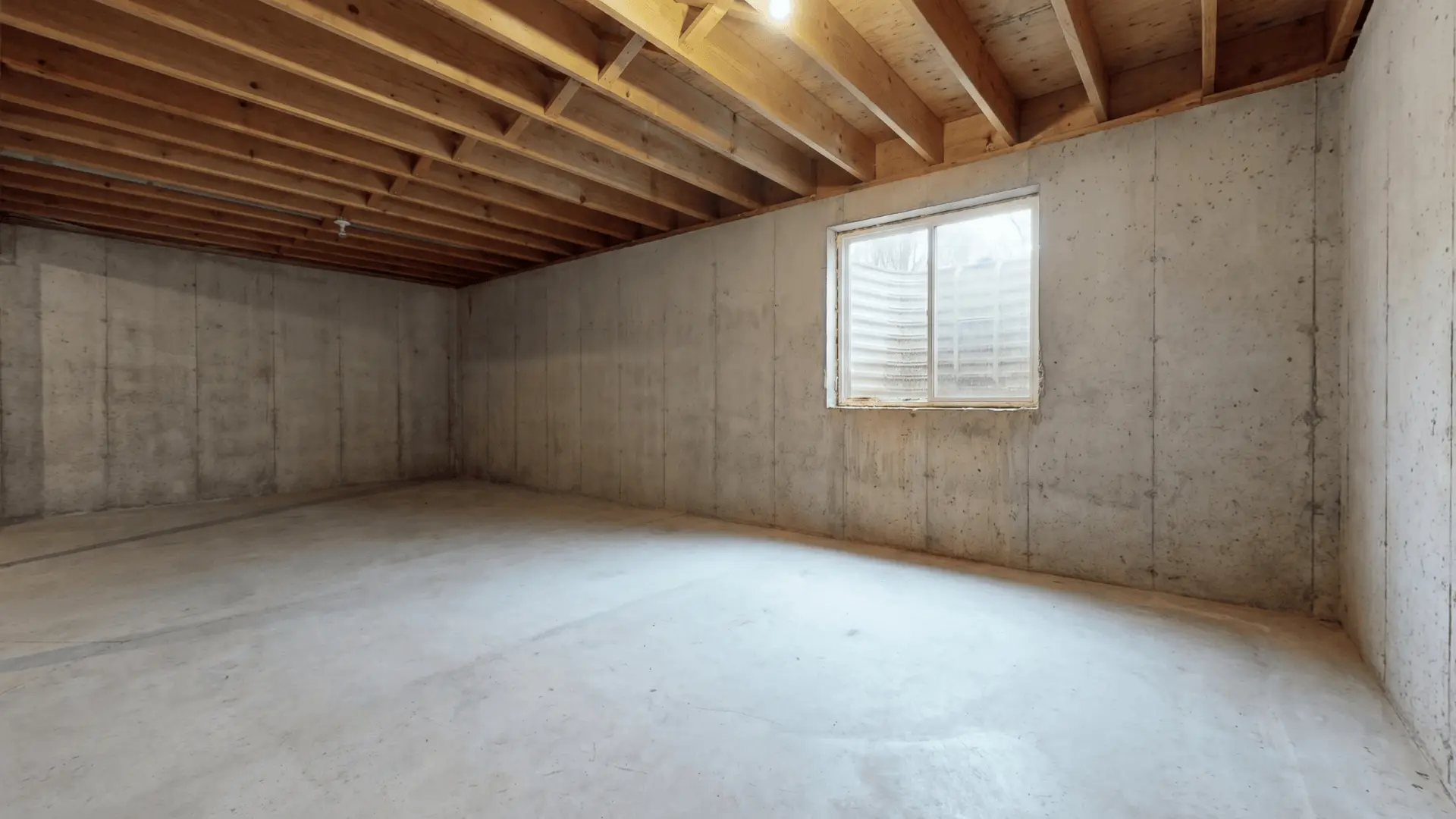
15 Finished Basement Design Ideas for Every Home
An unfinished basement often sits unused and wasted. You may want more space, but adding a room is costly and time-consuming. That’s where smart basement finishing ideas can help.
They turn unused space into something practical, comfortable, and easy to use every day.
With the right planning and setup, you can create areas for work, relaxation, storage, or guests. It also adds value to your home without major construction.
In this blog, you will learn the best basement finishing ideas, planning tips, and ways to make the most of your basement.
Why Finishing Your Basement Is a Smart Investment
The basement is often the most underused space in a home, yet it offers strong potential.
- Adds usable living space: A finished basement increases square footage without building an addition.
It can be used as a playroom, office, gym, or entertainment area. - Improve home value and ROI: It adds real value and appeals to a wider range of buyers. A good finish can return a large part of the cost at resale.
- Create multi-purpose areas: Modern homes need flexible spaces. A basement can easily serve as both a guest room and office or a gym and hobby area.
A well-planned basement makes unused space practical and more useful for daily living.
Build Better by Planning Ahead
Before you start finishes and furniture, focus on getting the basics right first. Good preparation helps prevent costly problems and delays later.
- Check for moisture after heavy rain, seal any cracks, and install a reliable sump pump to prevent water damage
- Confirm ceiling height, egress windows, and ventilation rules with your local building department, especially if adding a bedroom
- Plan your layout early and keep access to utilities, water heater, electrical panel, and HVAC clear at all times
- Set a clear budget for each stage and keep 15–20% extra aside for unexpected cost.
Getting these basics right sets a strong foundation for a smoother and more reliable basement project.
Basement Finishing Ideas for Every Home
Finished basements can be shaped to fit different needs and daily use. These design ideas help turn the space into something practical and comfortable.
1. Creating Multi-Use Zones
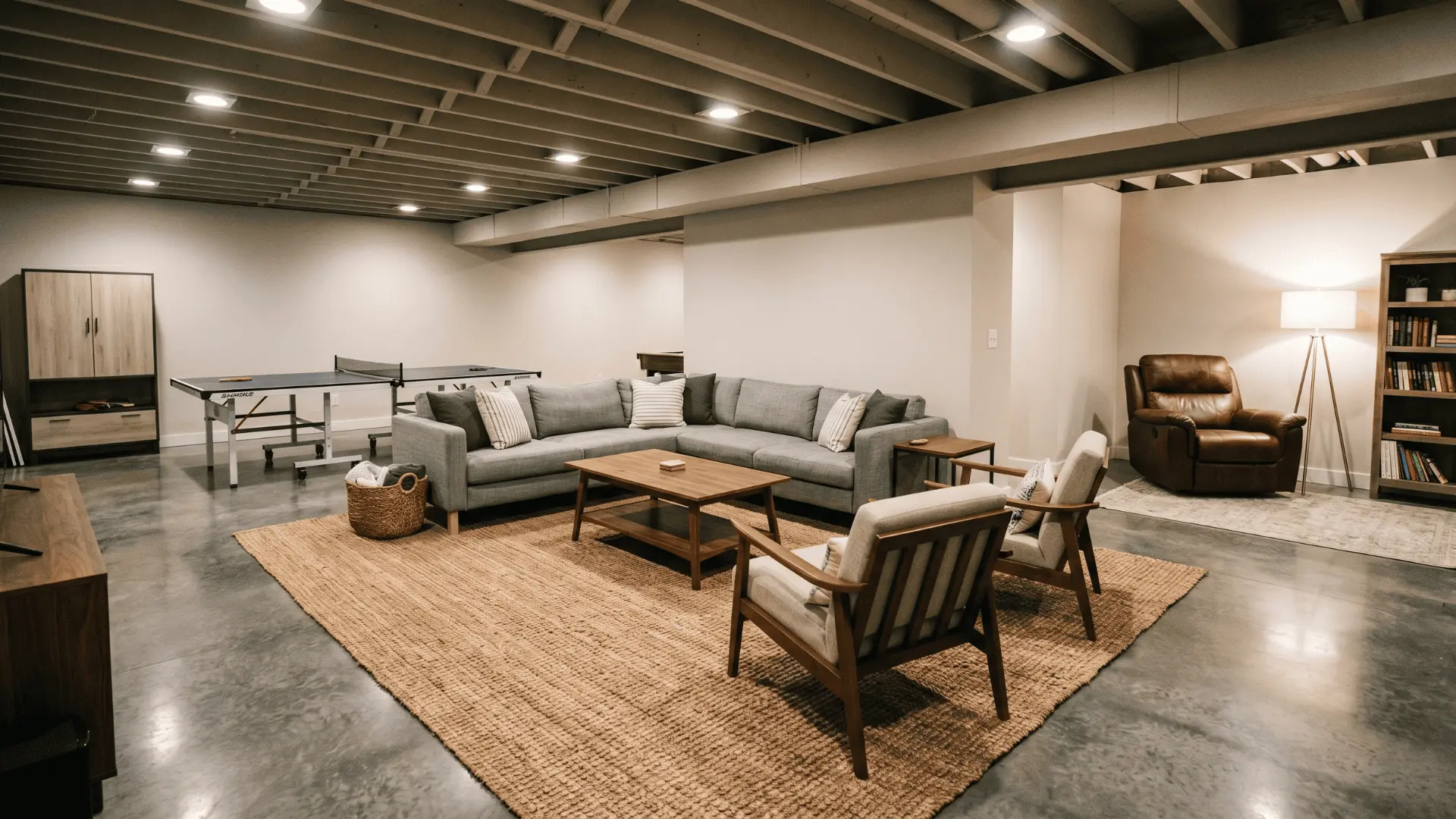
Most basements need to serve more than one purpose, and the key is assigning each function a dedicated zone before any walls go up. Group compatible uses together: office and reading nook, gym and storage.
Use furniture, rugs, and lighting to define boundaries in open areas. Plan electrical outlets and lighting for each zone individually so every area is properly equipped for its actual use.
2. Storage-Focused Basement Setup
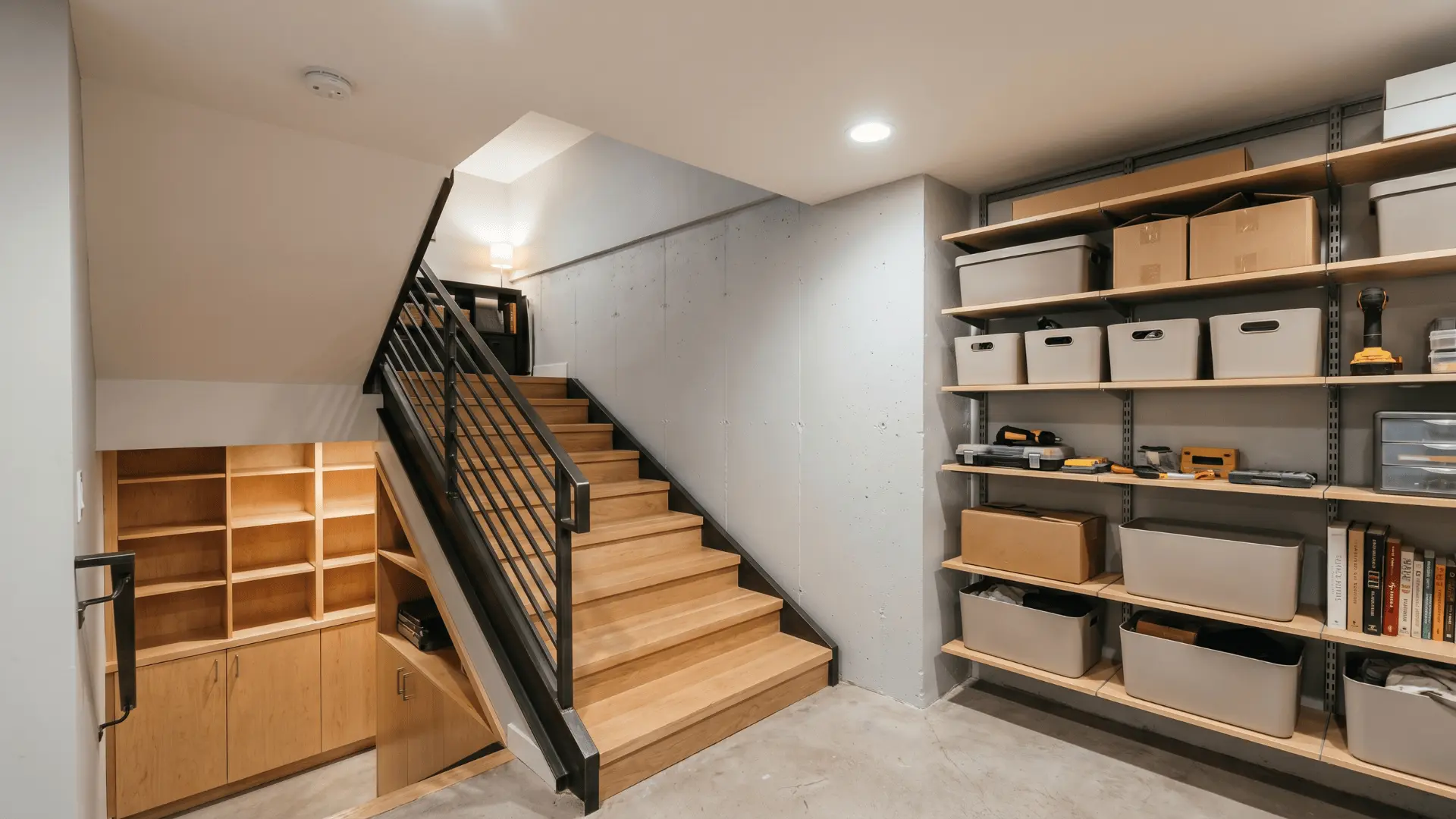
Storage is a major benefit of a finished basement, so plan it early. Use under-stair space, add full-height shelving, and include closets during framing before drywall is installed.
Dedicate a separate utility room for seasonal items and mechanical systems, keeping the living areas uncluttered.
3. Home Office or Work Area
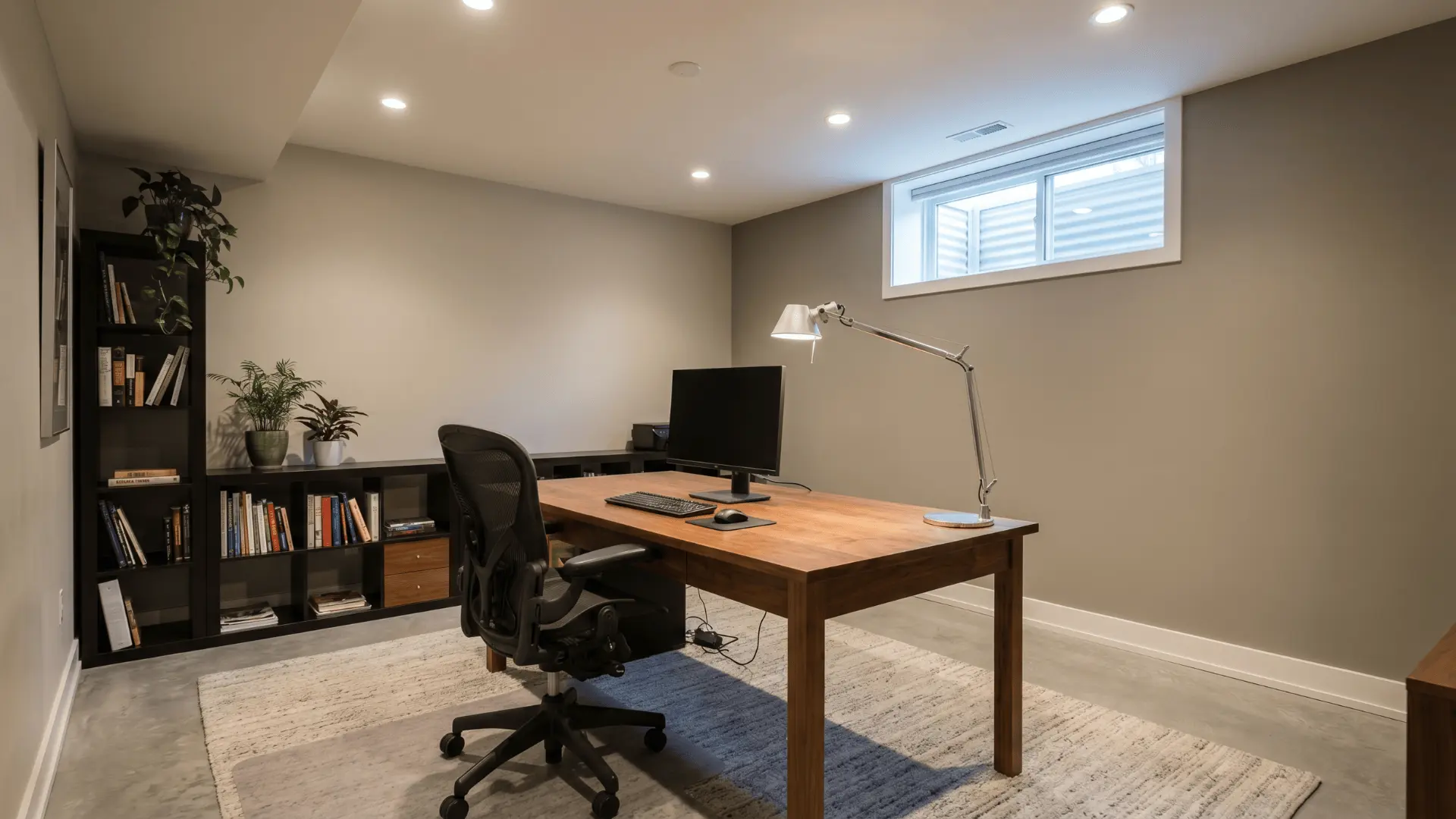
A basement home office gives you quiet and separation from daily activities. Choose a spot with enough ceiling height for comfort. Add outlets and data connections before drywall.
Use proper lighting to make up for low natural light. Include a door to create a true office space.
4. Family Room or Lounge Space
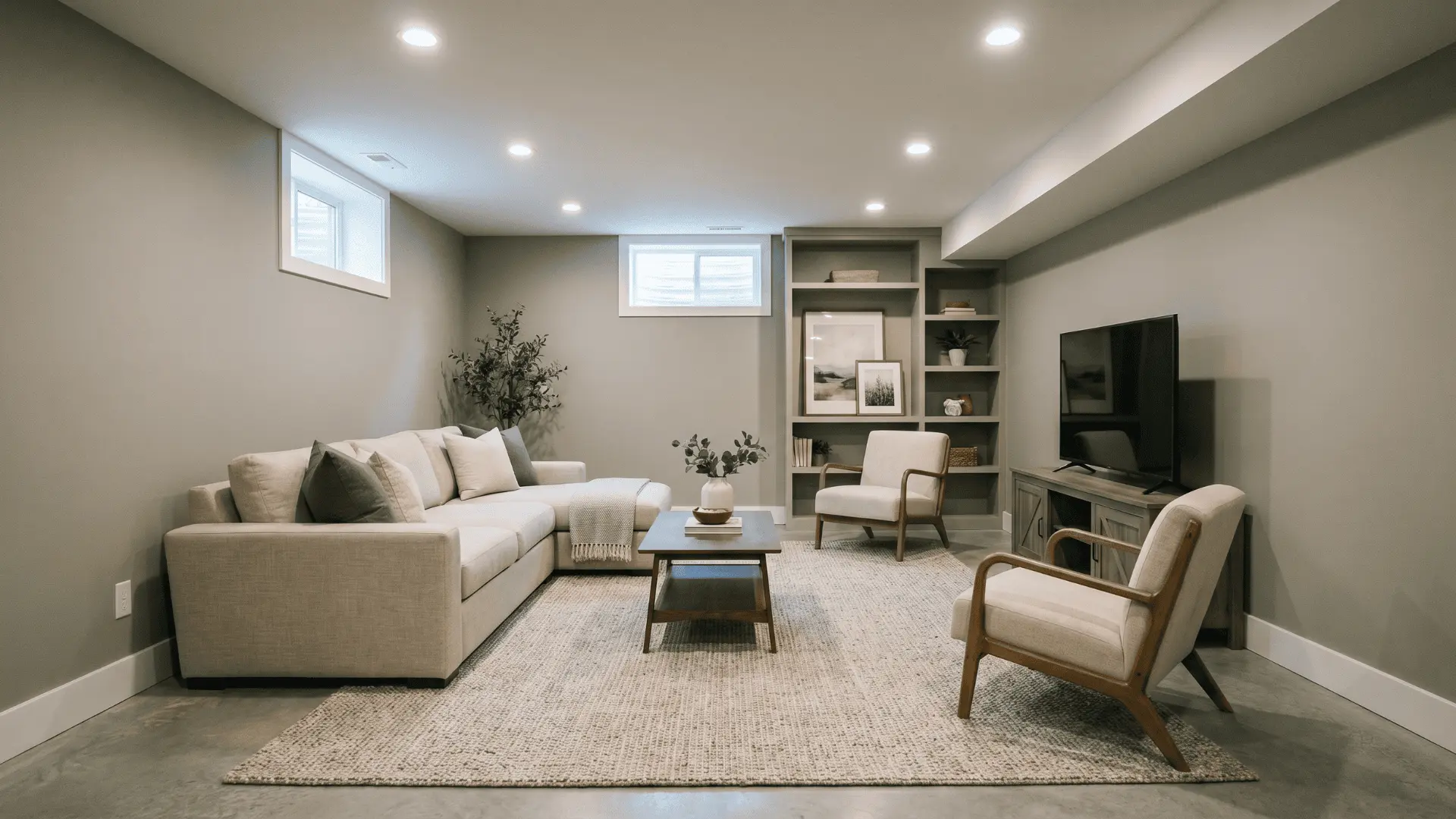
A basement family room gives you a separate space to relax without crowding the main living area.
Keep the layout open so it works for movies, games, and daily use, and use warm lighting, rugs, and soft furniture to balance the cooler feel.
Plan enough electrical outlets along the walls to avoid messy cables, and add carpet or acoustic panels to reduce echo and improve sound.
5. Basement Gym or Wellness Room
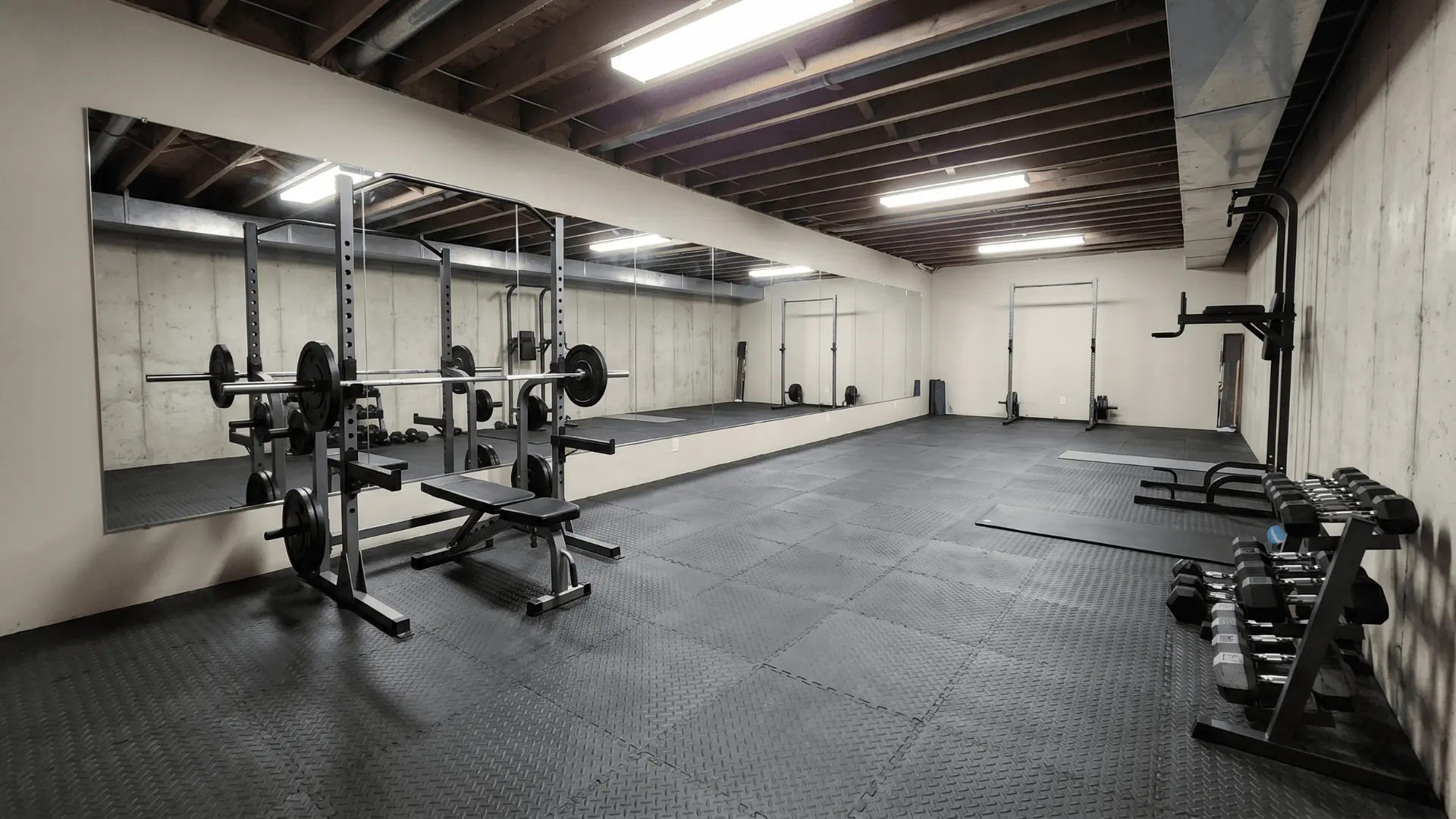
A basement gym is a practical setup that saves time and cost. Use rubber or foam flooring to protect joints and the concrete base. Add mirrors to support workouts and make the room feel larger.
Ensure proper ventilation to keep the space comfortable. Set aside a small area for stretching or yoga if space allows.
6. Guest Bedroom or Private Suite

A basement guest bedroom adds comfort and value, but must meet code requirements. Confirm egress window rules before building walls. Use warm lighting and soft finishes to improve the feel of the space.
Include a closet during framing for storage and compliance. Add a bathroom to turn it into a full private suite
7. Laundry Room Setup
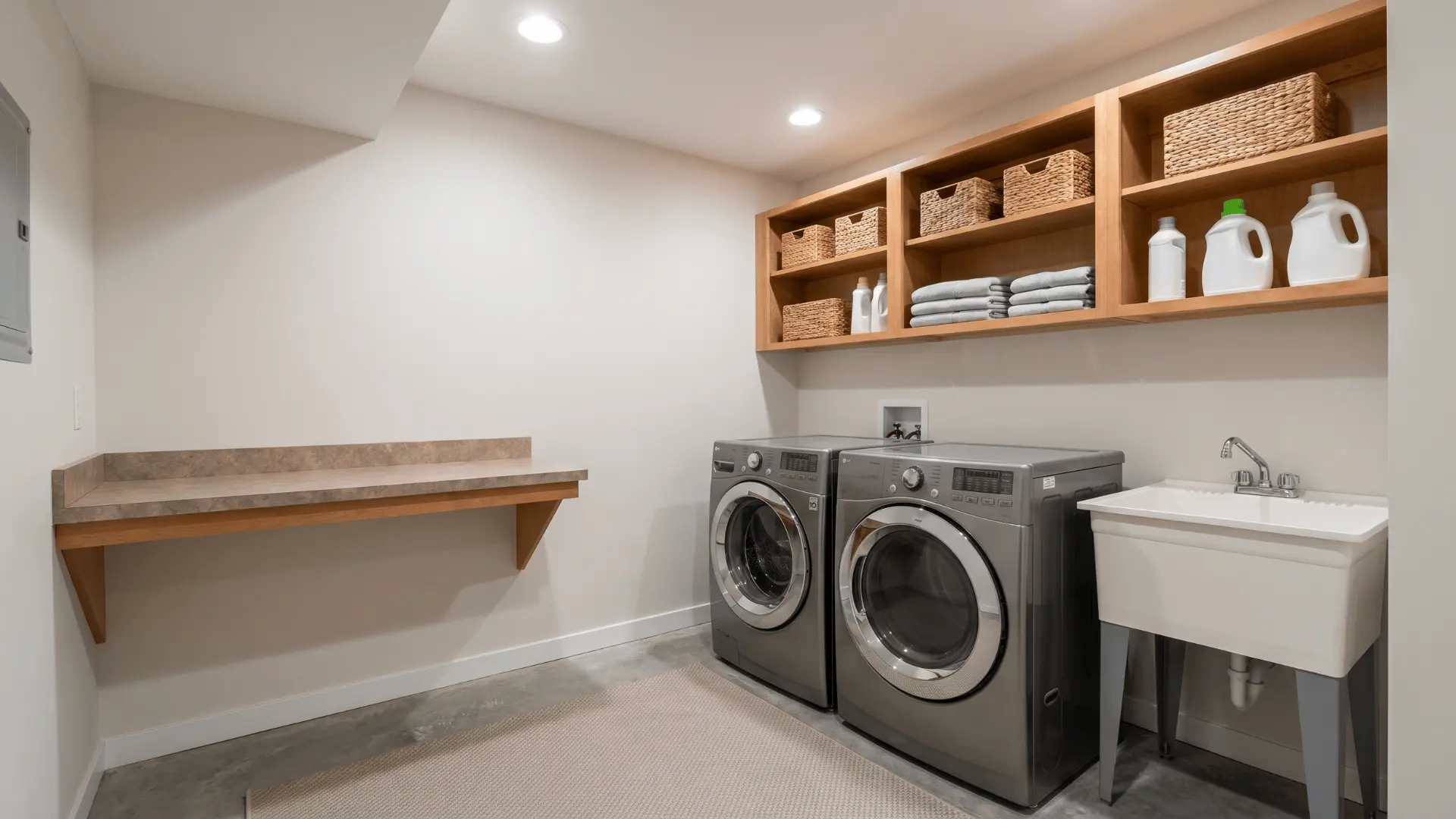
A finished laundry area improves daily use and keeps things organized. Enclose the space to control noise and moisture. Add shelving above machines for storage.
Install a utility sink, if possible, for added functionality. Use a counter over front-load machines for folding and sorting.
8. Upgrade Your Flooring and Finishes
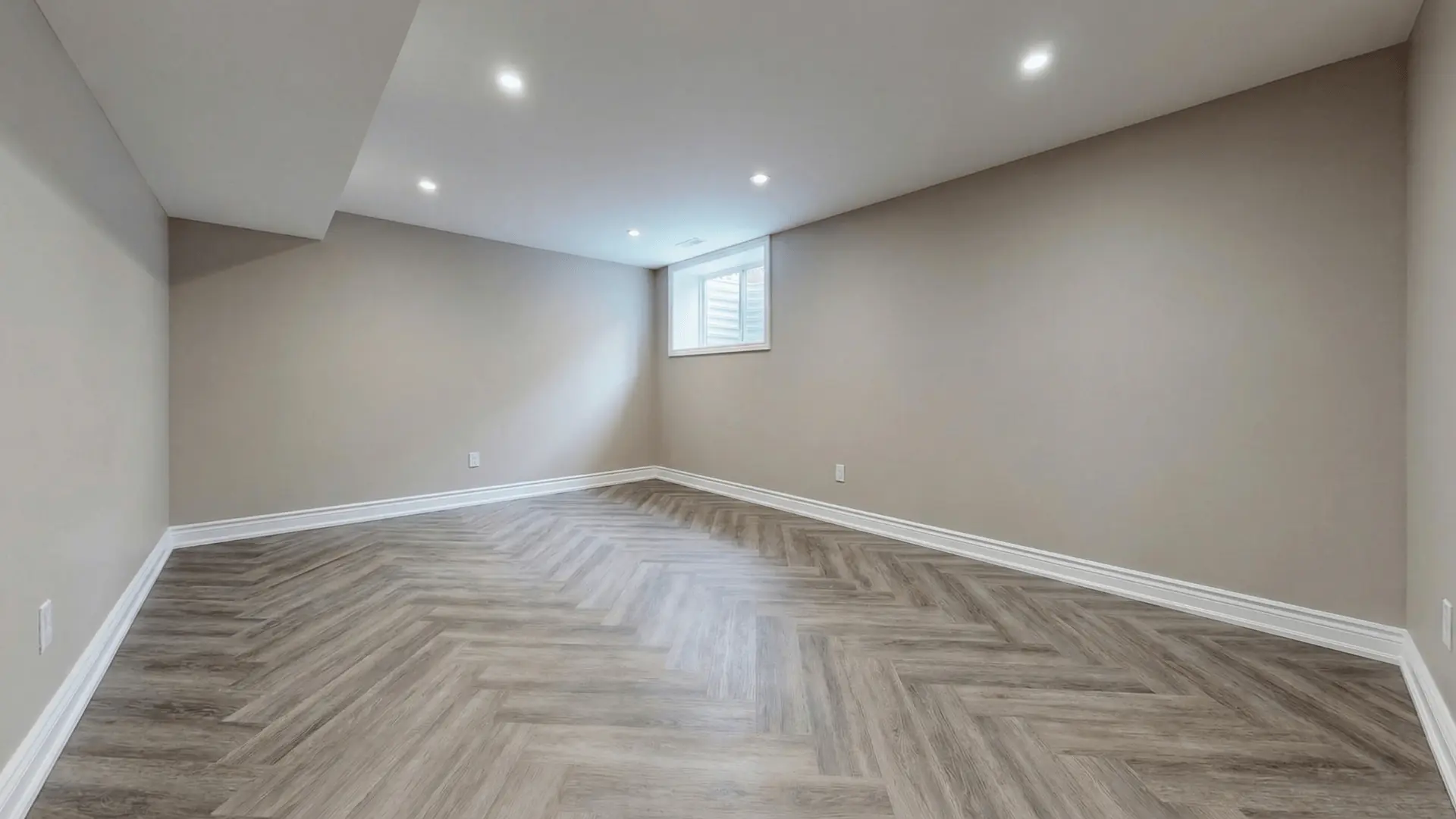
Good flooring makes the space feel complete and well-planned. Use luxury vinyl for durability and water resistance. Engineered wood works if moisture is controlled.
Pair flooring with simple wall colors for a clean look. Replace drop ceilings with drywall for a better finish.
9. Game Room or Hangout Area
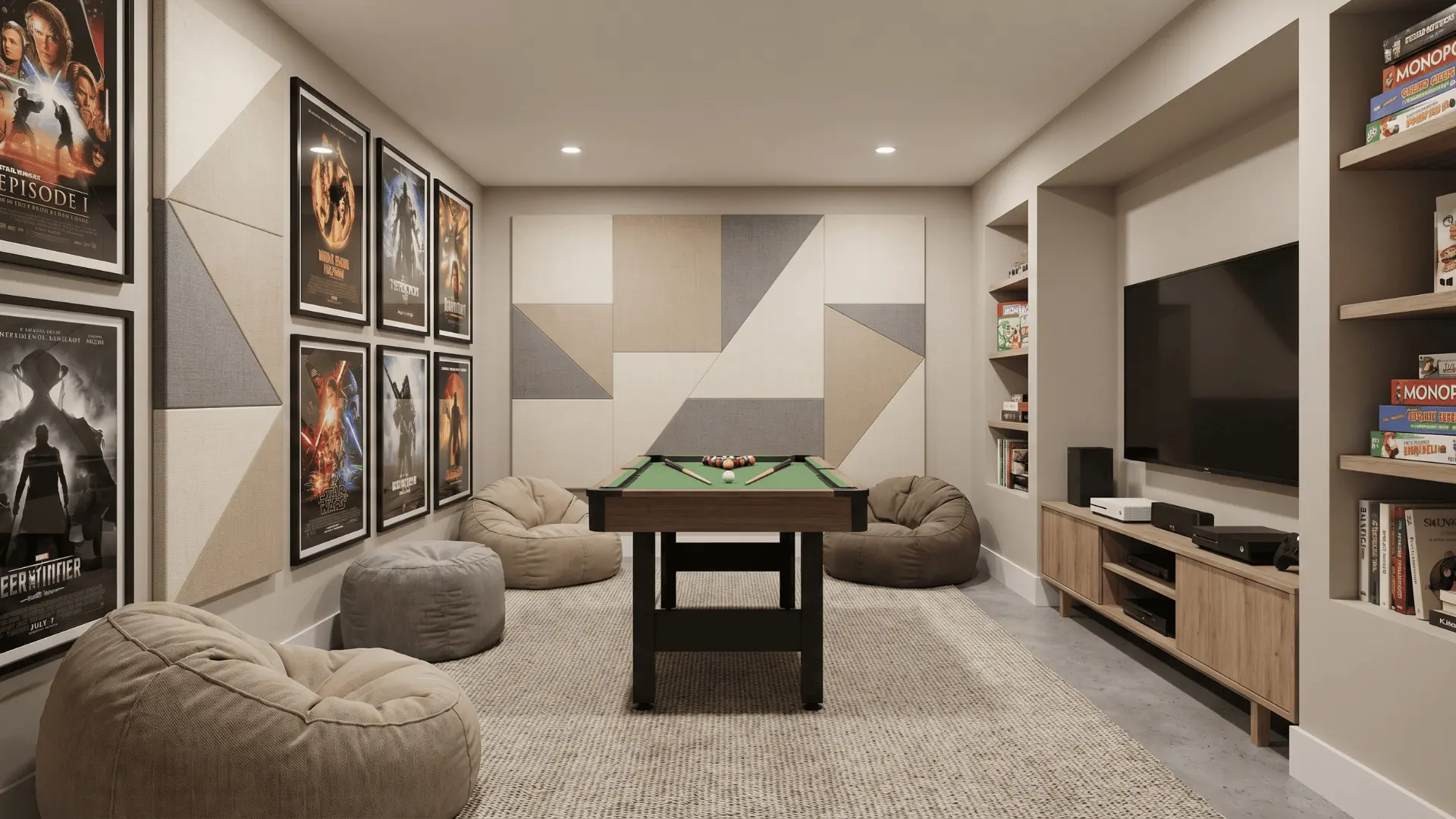
A game room keeps noise and activity in one place. Keep the layout open so it can be used for different activities. Use durable, easy-to-clean flooring for everyday use.
Add enough outlets for gaming consoles, screens, and other devices. Use carpet or wall panels to reduce noise and echo. Include storage for games, controllers, and accessories to keep the space organized.
10. Kids’ Playroom
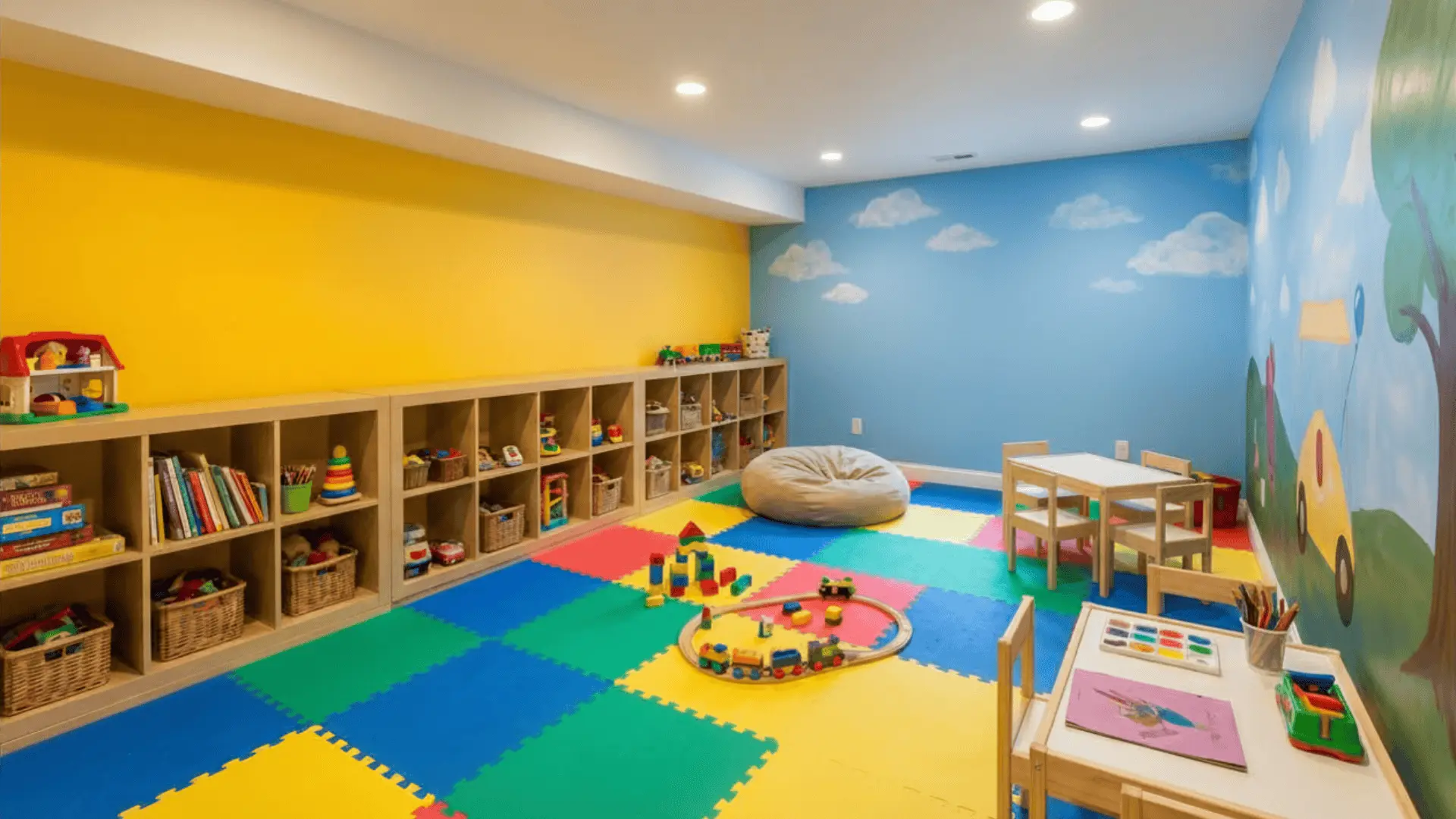
A basement playroom keeps toys and activities out of the main areas. Use soft and safe flooring like foam or carpet for comfort. Choose washable paint to make cleaning easier.
Add low, easy-to-reach storage so kids can stay organized. Keep the center area open for play and movement. Use bright lighting to make the space feel active and inviting.
11. Hobby or Music Room
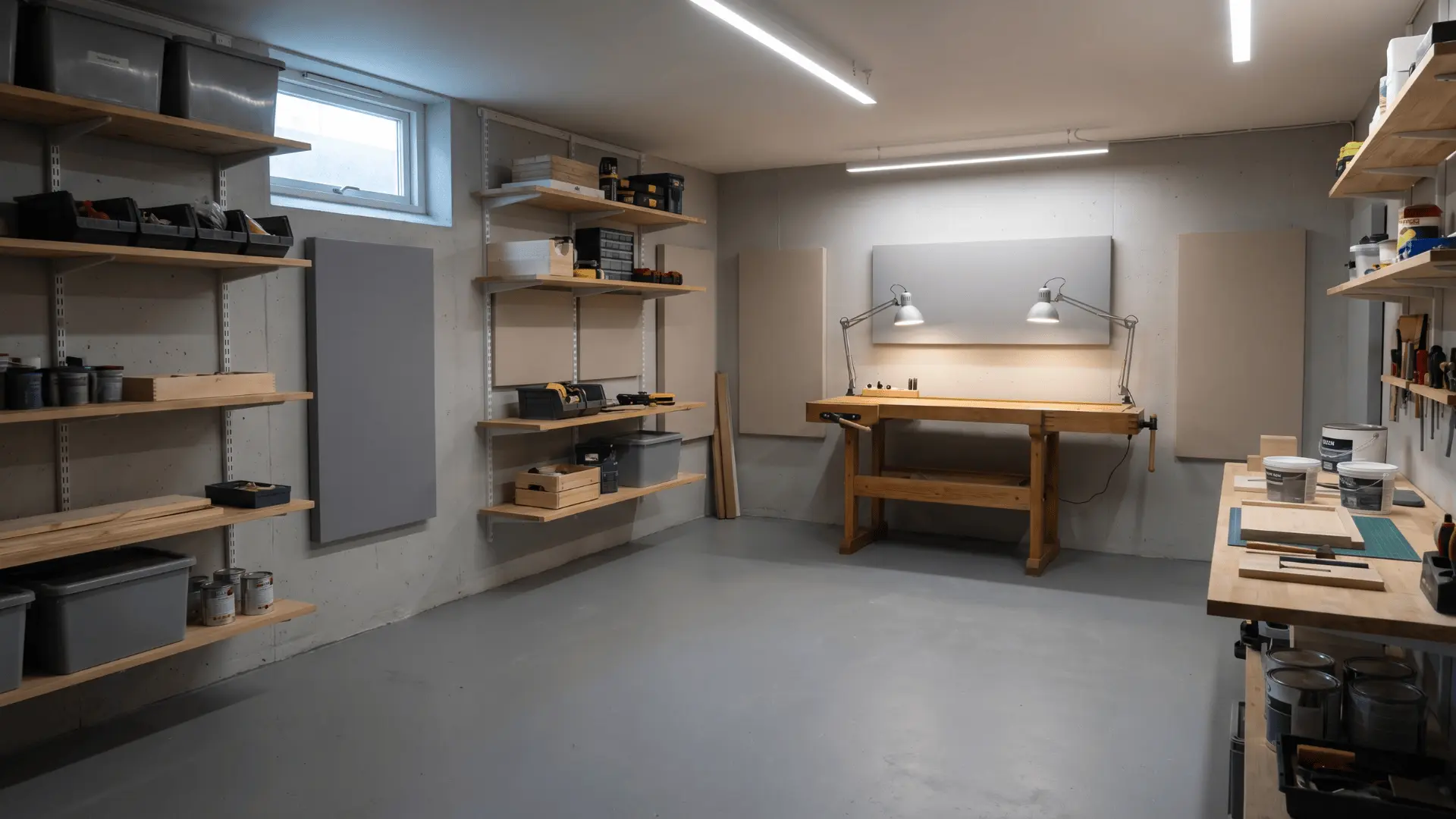
A hobby or music room gives a dedicated space for creative work. Add sound control before finishing walls. Use flooring that handles tools or materials. Install proper task lighting.
Include storage for supplies and equipment. Keep the layout simple so movement is easy. Plan extra outlets for tools or instruments. Leave some open space for flexibility.
12. Home Theater or Cinema Room
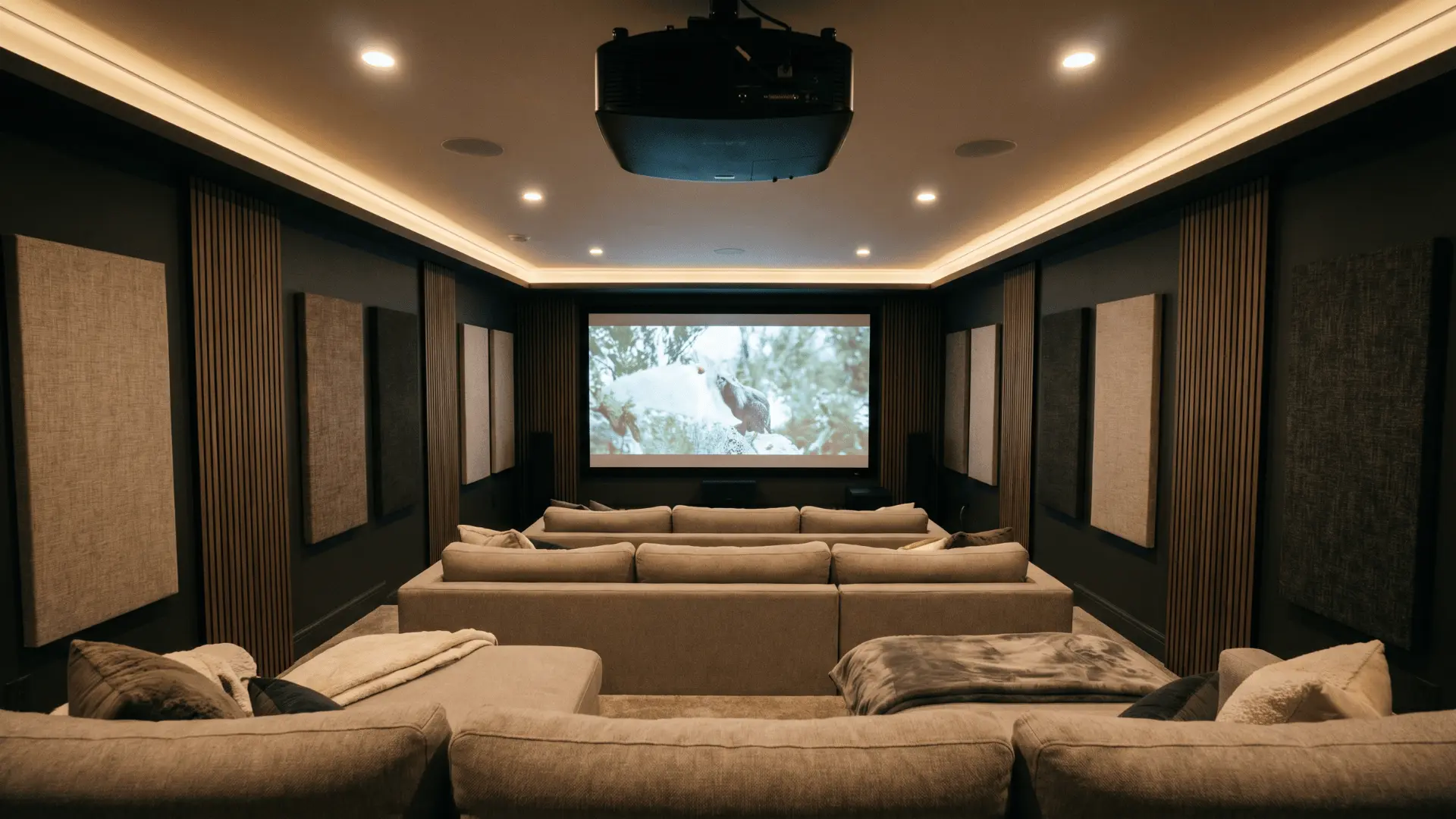
A home theater creates a focused entertainment setup. Add sound insulation before drywall. Use raised seating for better viewing. Install a large screen or projector with a sound system.
Control light with blackout options and dim lighting. Keep wiring hidden for a clean look. Use dark tones to improve screen visibility. Add comfortable seating for longer use.
13. Spa-Style Bathroom
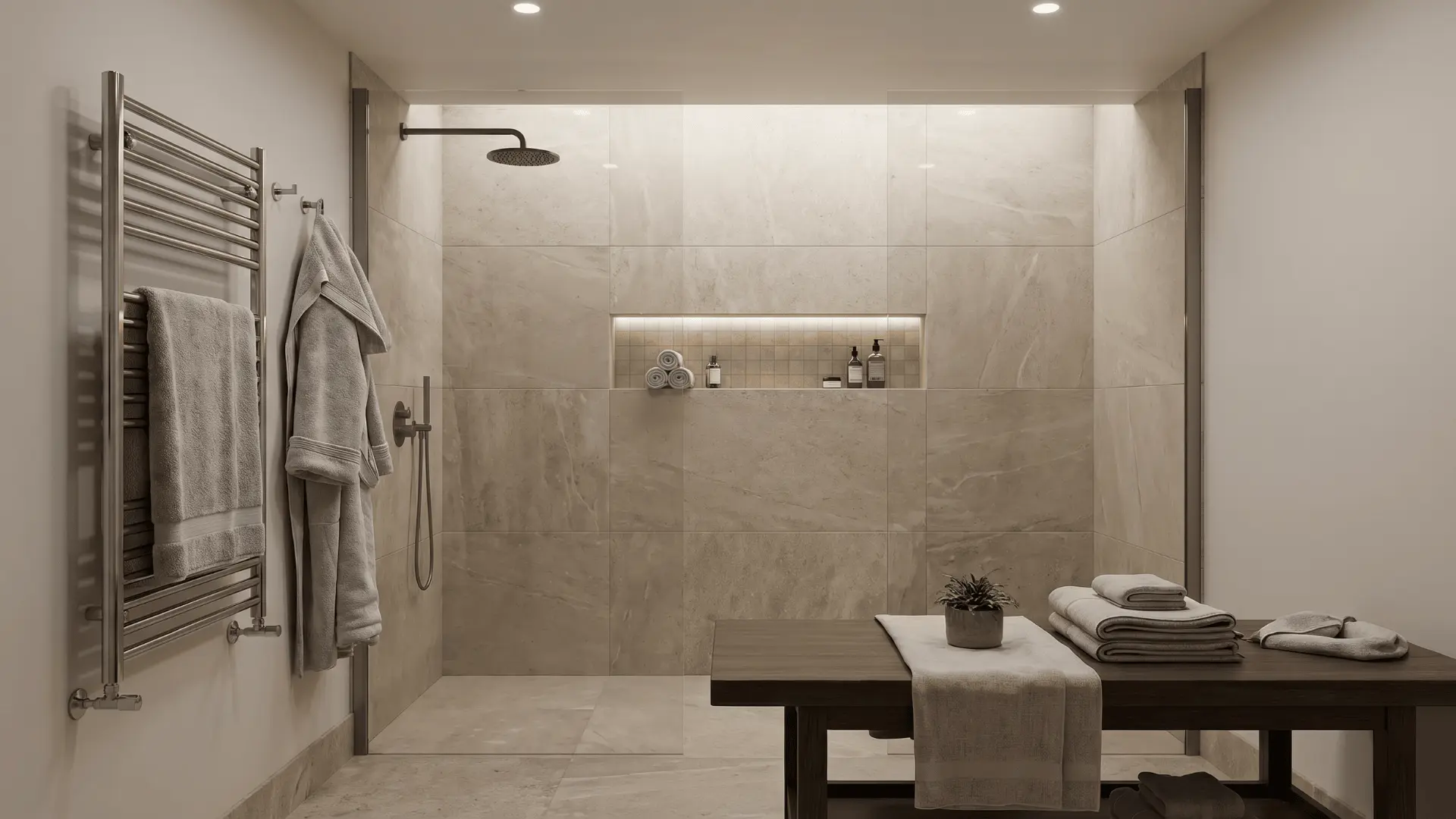
A basement bathroom can add comfort and function. Install a walk-in shower with full tile. Use heated floors for better comfort. Choose large tiles and glass enclosures to open up the space.
Add small upgrades, such as towel rails and storage niches. Use proper ventilation to manage moisture. Keep lighting soft but bright enough for daily use. Choose simple fixtures for a clean finish.
14. Custom Wine Cellar or Home Bar
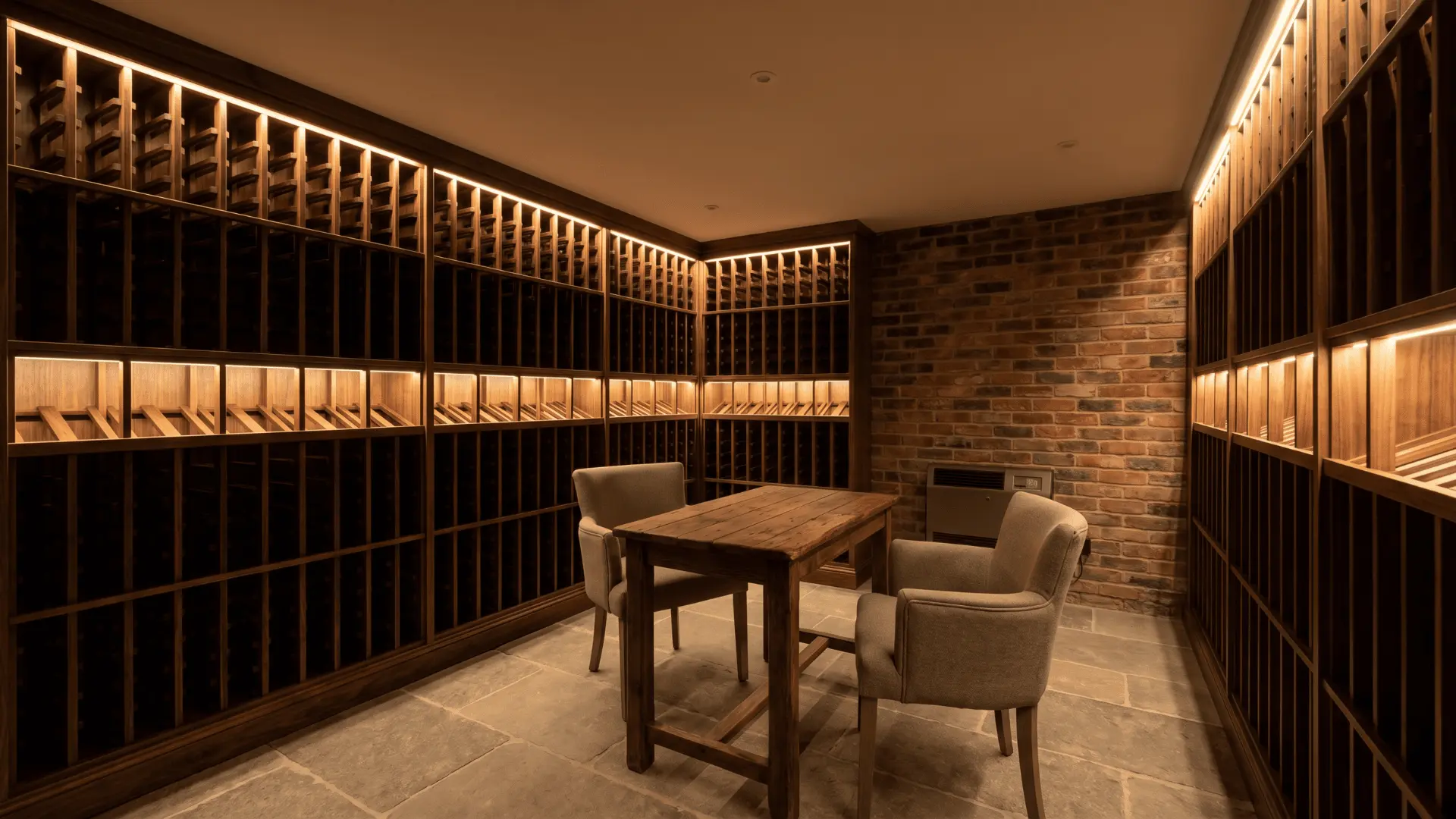
A wine cellar uses the basement’s natural conditions for storage. Add floor-to-ceiling racks to maximize capacity. Use lighting that does not affect temperature. Include a small seating area if space allows.
It can also double as a home bar for serving and relaxing. Keep temperature and humidity stable for proper storage. Use moisture-resistant materials to prevent damage. Plan extra space to allow your collection to grow over time.
15. Style Your Basement Your Way
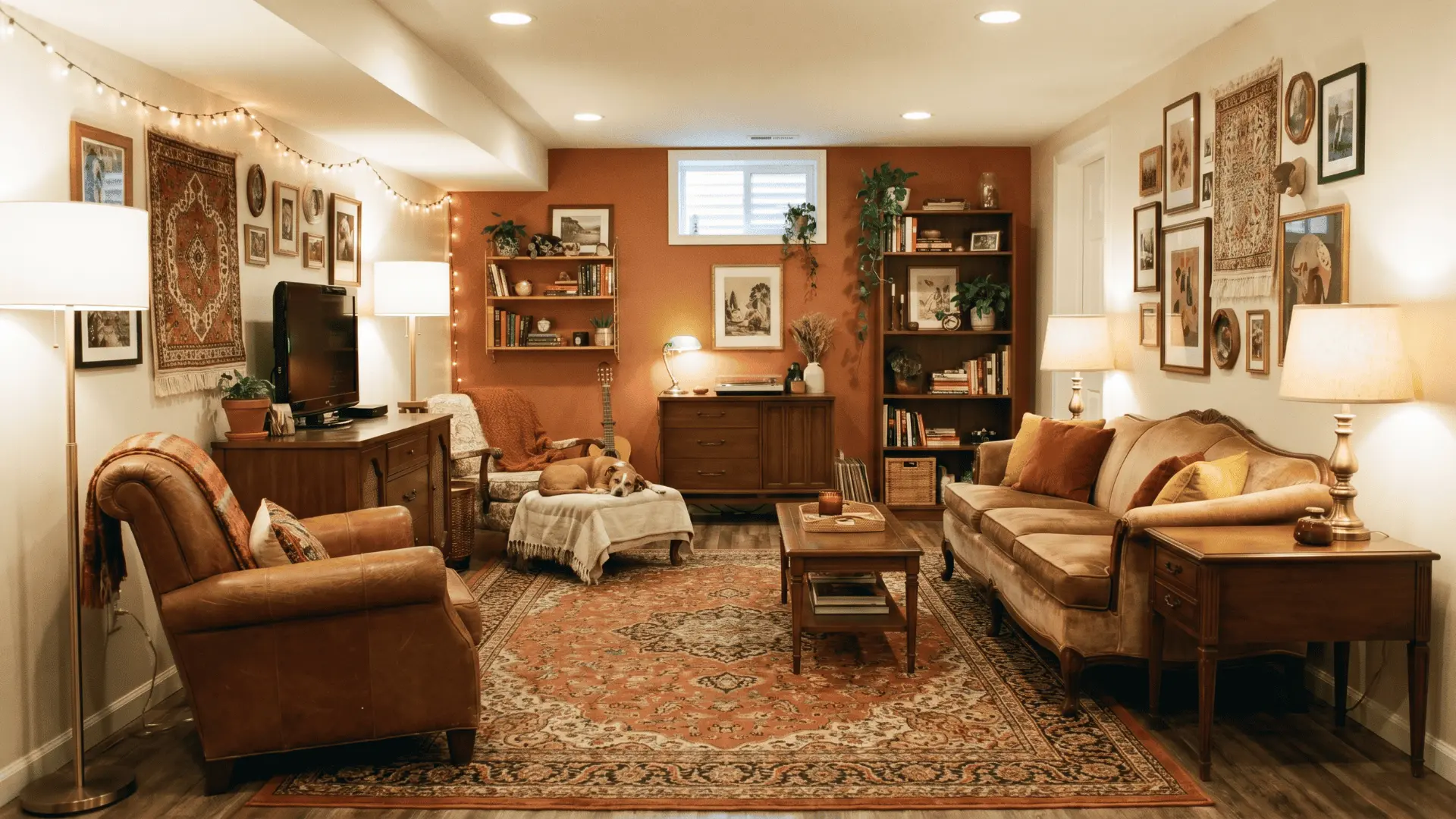
Style is what makes a finished basement feel comfortable and enjoyable to use every day. A rustic setup with exposed beams, raw wood, and warm lighting creates a cozy and grounded feel.
A cozy eclectic setup mixes different furniture, warm tones, and personal items to make the space feel more lived-in and full of character.
Common Mistakes to Avoid When Finishing a Basement
Planning ahead helps you avoid costly problems later. It also makes the entire project smoother and easier to manage.
- Ignoring moisture protection: Skipping waterproofing can lead to mold, damage, and expensive repairs.
- Poor lighting planning: Relying on one light source makes the space feel dark and less usable.
- Choosing the wrong materials: Standard drywall or wood can fail in damp conditions. Use moisture-resistant options.
- Blocking access to utilities: Covering HVAC units, panels, or plumbing makes maintenance more difficult.
- Skipping permits and safety codes: Missing approvals or exits can lead to safety and legal issues.
Conclusion
Using the right basement design helps you turn unused space into something functional and valuable.
It improves daily living, adds flexibility, and makes better use of your home.
With simple planning and the right setup, you can create a space that fits your needs without overspending. It also helps avoid common mistakes and keeps the project smooth.
Start by planning your layout and priorities before making changes. Take the first step today and begin turning your basement into a space you will actually use.
Frequently Asked Questions
What Not to Do when Finishing a Basement?
Never skip waterproofing, ignore building codes, or close walls before testing systems. Rushing the base work leads to the most expensive Mistakes.
How Much Does It Cost to Finish a 2000 Sq Ft Basement?
A 2000 sq ft basement usually costs between $20,000 and $60,000. The final price depends on the work involved, finish quality, and labor rates. Basic finishing stays on the lower end.
What Is the Most Expensive Part of Finishing a Basement?
Plumbing and electrical work are usually the highest costs, especially with panel upgrades. Waterproofing, egress windows, and HVAC changes are other common high expenses.


