How to Keep Plants Alive: A Beginner’s Real-World Guide
Killing a plant does not mean you lack a green thumb. People who struggle with houseplants often make one small mistake: they give them too much care, not too little.
Learning how to keep plants alive starts with knowing why plants die, then fixing the habit that causes it.
This post covers watering, light, heat, cold, and the simple daily habits that keep any plant healthy, for new plant owners and for anyone still trying again after past losses.
Why Do Plants Really Die?
Most plants die from too much water, not too little. Overwatering fills the soil with water and pushes air away from the roots, so the roots rot and the plant slowly starves.
Wrong light and poor drainage cause damage too, but water is the main problem for most home growers, according to the University of Illinois Extension.
The tricky part is that an overwatered plant and an underwatered plant often look the same: droopy, yellow, and sad. That is why so many people water a dying plant even more, which only makes things worse.
How to Tell if You’re Overwatering or Underwatering
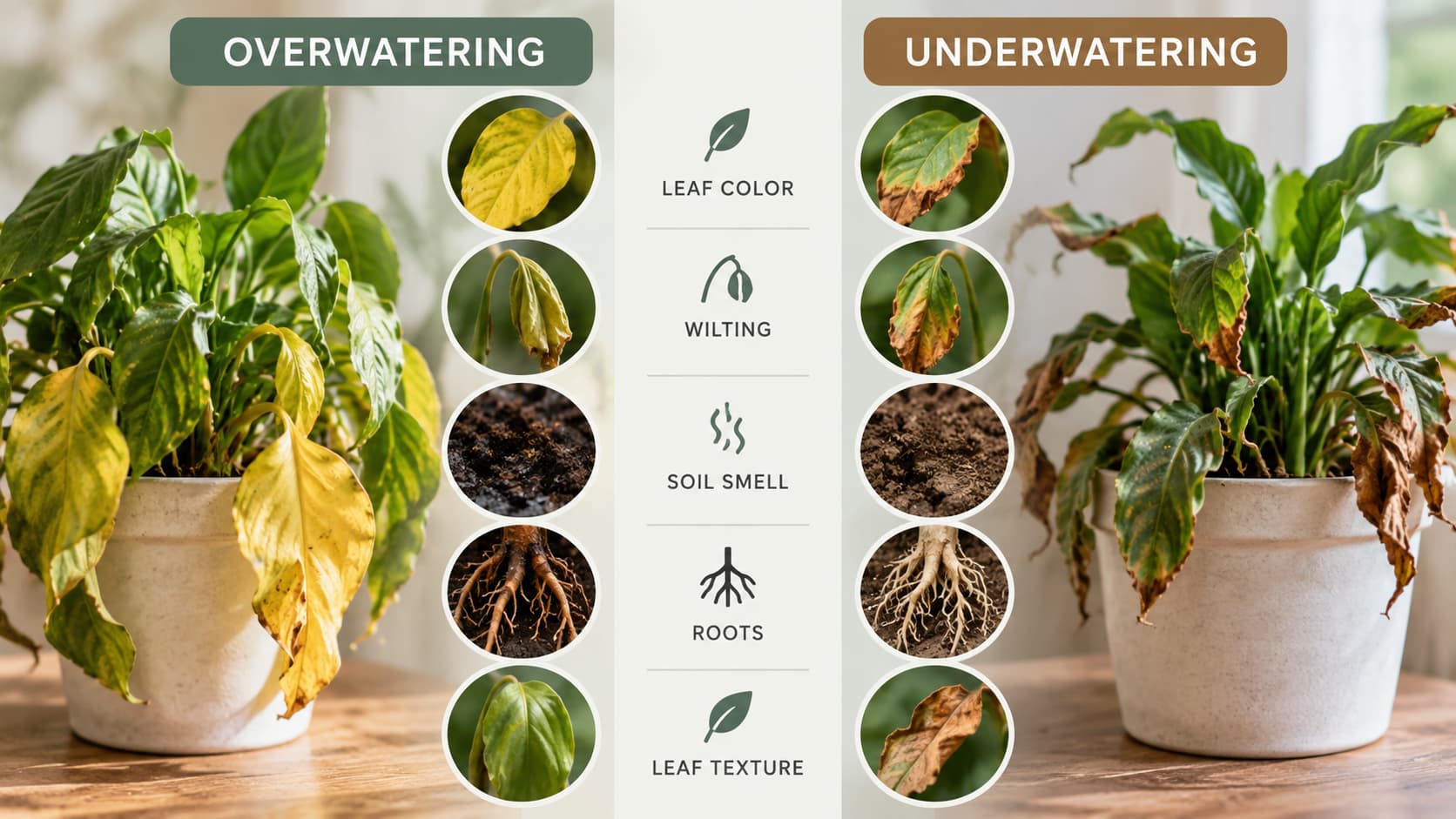
The two problems can look nearly the same on the outside, but they need opposite fixes. Here is how to tell them apart before you make things worse.
|
Symptom |
Overwatering |
Underwatering |
|---|---|---|
|
Leaf color |
Yellow leaves, sometimes with soft, mushy stems |
Leaves fade or turn crispy at the edges |
|
Wilting |
Droopy even though soil is wet |
Droopy and soil feels bone dry |
|
Soil smell |
Musty or sour smell |
No smell, soil looks and feels dusty |
|
Roots (if you check) |
Brown, black, or mushy |
White or pale tan, still firm |
|
Leaf texture |
Soft and limp |
Dry, crispy, or curling |
The Drainage Rule Nobody Follows
Every pot needs a hole for water to escape. Without one, extra water sits at the bottom, the soil stays wet for days, and the roots start to rot even if you water at the right times.
If you love a pot without a hole, keep the plant in a plastic nursery pot with drainage and set that inside the decorative one. Lift it out to water, let it drain fully in a sink, then place it back once the dripping stops.
Simple Habits That Keep Any Plant Alive
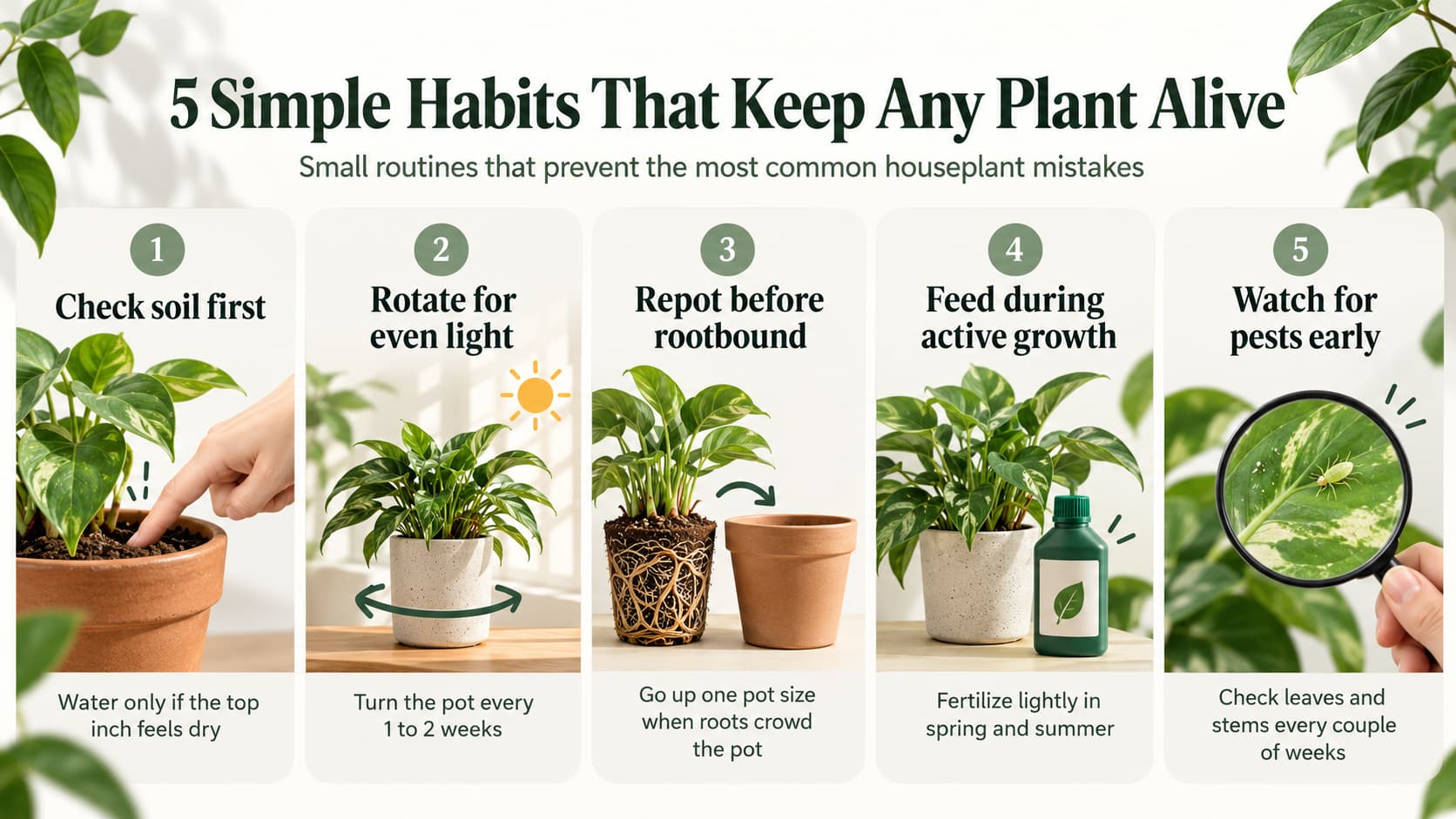
A few small habits, done regularly, do more for a plant than any single trick or product. These five habits cover almost every common mistake home growers make.
1. Check the Soil Before You Water
Push a finger about an inch into the soil before you water on any fixed schedule. If it feels dry, water it. If it feels damp, wait a few more days. This habit prevents most overwatering deaths and takes about five seconds.
2. Rotate the Plant for Even Light
Plants lean toward their light source, so one side often gets more sun than the other. Turn the pot a quarter turn every week or two to keep growth even on all sides. This also gives you a chance to spot pests or yellow leaves you might otherwise miss.
3. Repot Before Roots Get Crowded
Roots that circle tightly around the inside of a pot cannot take up water or food well. Move up one pot size, about one to two inches wider, once roots poke out of the drainage hole or the plant dries out unusually fast. Spring and early summer are the best times to do this.
4. Feed Only When the Plant Is Growing
Most houseplants grow actively in spring and summer, then rest in fall and winter. Feed lightly during the growing months and skip fertilizer entirely once growth slows. Too much fertilizer builds up salt in the soil, and that damages roots faster than skipping a feeding ever would.
5. Watch for Pests Early
Check the underside of leaves and along stems every couple of weeks for small bugs, webbing, or a sticky coating. Catching pests early usually means a damp cloth or a bit of insecticidal soap solves the problem. Waiting until an infestation spreads makes treatment much harder.
How Much Light Does Your Plant Actually Need
Most houseplants want bright, indirect light, meaning sunlight filtered through a curtain or bounced off a nearby wall instead of hitting the leaves directly.
A spot a few feet back from a south- or east-facing window usually works well for most common varieties, per general guidance from the University of Illinois Extension.
If leaves turn pale or the plant stretches and gets leggy, it needs more light. If leaves develop crispy brown patches, move it back from direct sun.
How to Keep Plants Alive in Extreme Heat
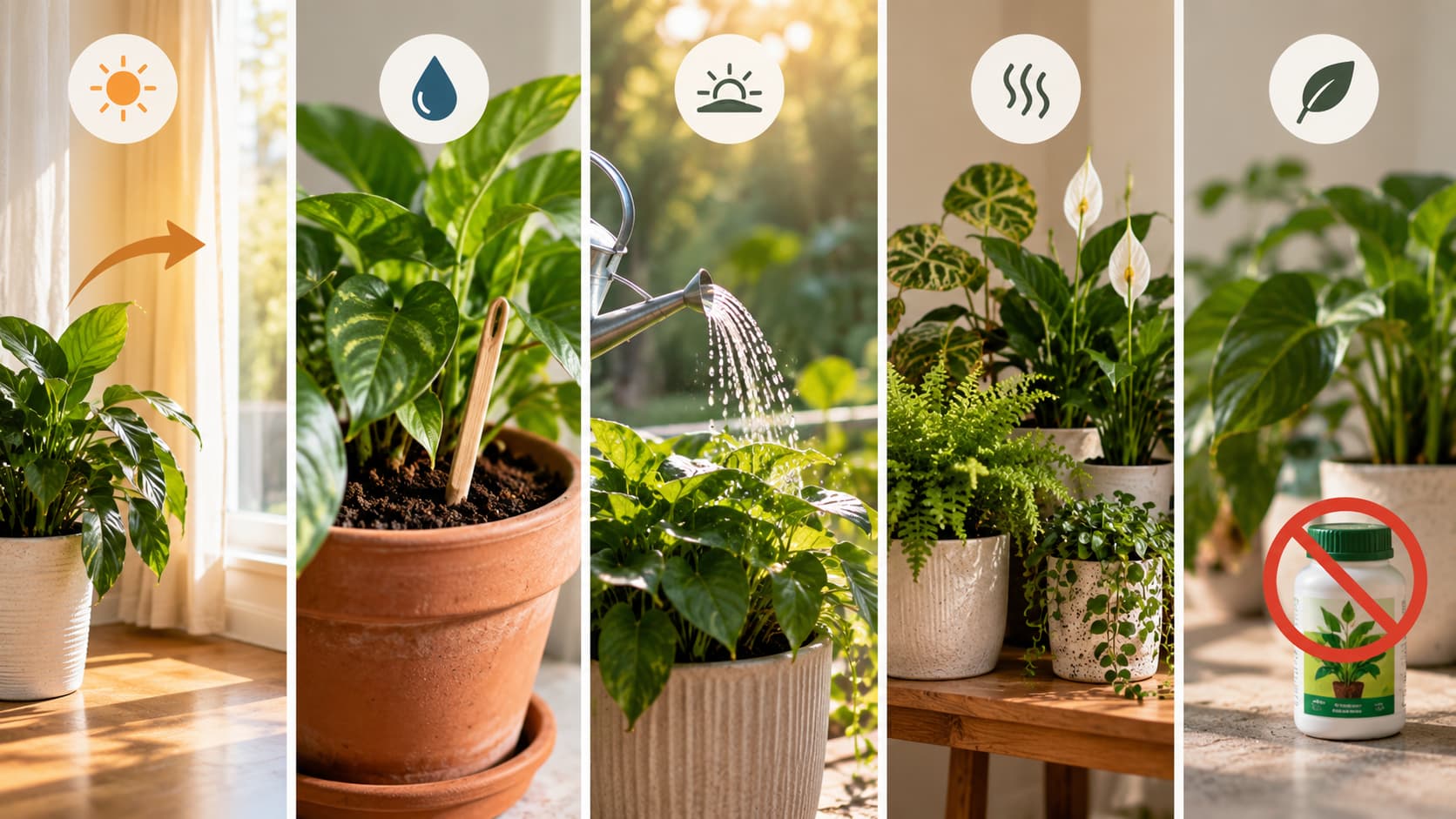
Heat above 90°F stresses plants fast, mostly by drying out soil and water before roots can use it. A few quick adjustments keep plants alive through a heat wave.
- Move plants back from direct afternoon sun, even indoors near hot windows.
- Check soil moisture daily instead of on a set schedule, since heat dries soil fast.
- Water in the early morning so roots have moisture before the heat peaks.
- Group plants together to raise humidity around the leaves.
- Skip fertilizer during a heat wave, since stressed roots cannot use it well.
How to Protect Plants When It Gets Cold
Most houseplants start showing stress below 50°F and can suffer real damage below 40°F, including blackened or mushy leaves. Move outdoor potted plants indoors or against a sheltered wall before a frost warning, and keep indoor plants away from cold windows and drafty doors.
Checking your USDA hardiness zone helps you know how much protection outdoor plants need each winter. A simple sheet or frost cloth over outdoor plants overnight can be the difference between a plant that survives winter and one that does not.
Watering Mistakes That Kill Plants
Most watering mistakes are not about how much water a plant gets, but how and when it gets it. This table covers the most common ones and how to fix each.
|
Mistake |
Why It Hurts the Plant |
Fix |
|---|---|---|
|
Watering on a fixed schedule |
Ignores season, pot size, and light, so plants get water when they do not need it |
Check soil moisture before every watering |
|
Using ice-cold tap water |
Shocks the roots and slows water uptake |
Use room temperature water |
|
Letting pots sit in a full saucer |
Keeps roots sitting in water long after watering |
Empty the saucer 20 to 30 minutes after watering |
|
Watering the leaves instead of soil |
Can invite fungus and leaf spot |
Aim water at the soil, not the foliage |
|
Skipping drainage checks |
Water builds up unseen and rots roots from below |
Water until it runs from the drainage hole |
How Long Can Plants Go Without Water
How long a plant can go without water depends heavily on the plant type and the season. Here is a quick guide by plant type.
- Succulents and cacti: up to 3 to 4 weeks without water.
- Snake plants and ZZ plants: 2 to 3 weeks, longer in cooler months.
- Pothos and philodendron: about 1 to 2 weeks before they show stress.
- Ferns and peace lilies: only a few days before they wilt noticeably.
- Outdoor potted plants in summer heat: as little as 1 to 2 days in full sun.
Keeping Plants Alive While You’re Away
A short trip does not have to mean coming home to dead plants. A little prep before you leave covers most of the risk.
- Move plants away from direct sun so soil dries out more slowly while you are gone.
- Water thoroughly right before you leave, then skip fertilizing until you return.
- Try the bathtub or tray method: set pots on a wet towel or in an inch of water so they can soak up moisture as needed.
- Ask a neighbor or friend to check on plants once if you will be gone more than a week.
- Group plants close together to help them retain humidity while you’re away.
How to Revive a Dying Plant
Start by checking the roots. If they are white or pale tan and still firm, the plant just needs better light or a steadier watering routine.
If roots are brown, black, or mushy, trim away the damaged parts with clean scissors and repot in fresh, dry soil. Move the plant to bright, indirect light, hold off on fertilizer, and water only once the top inch of soil dries out. Recovery often takes a few weeks, so patience matters more than any single fix you try.
Conclusion
Keeping plants alive comes down to a handful of repeatable habits, not luck or a special gift.
Check the soil before watering, give plants the right light, protect them from extreme heat and cold, and act early when something looks off.
Most plant deaths trace back to one fixable mistake, usually too much water rather than too little. Start with one or two habits from this guide, apply them consistently, and your plants will have a much better chance now.
Frequently Asked Questions
What is the best way to keep plants alive while away?
Water thoroughly before you leave, move plants out of direct sun, and use a wet towel or tray method so pots can soak up moisture on their own.
Does adding sugar to water help plants?
No. Sugar does not feed a plant in any meaningful way and can encourage mold and bacteria in the soil instead.
What will revive a dying plant?
Check the roots, trim away any brown or mushy parts, repot in fresh soil, move to bright indirect light, and water only once the top inch of soil dries out.
How to keep plants alive in 100-degree weather?
Move plants out of direct afternoon sun, check soil daily, water in the early morning, and group plants together to raise humidity.
Is 90 degrees too hot for plants?
It is hot enough to stress most houseplants, so extra shade and more frequent soil checks help at this temperature.
Can plants survive 2 weeks without water?
Many can, especially succulents, cacti, snake plants, and ZZ plants. Ferns and peace lilies usually cannot go that long.
Should I cover my plants at 40 degrees?
For sensitive outdoor plants, yes. A sheet or frost cloth overnight can prevent cold damage once temperatures drop this low.