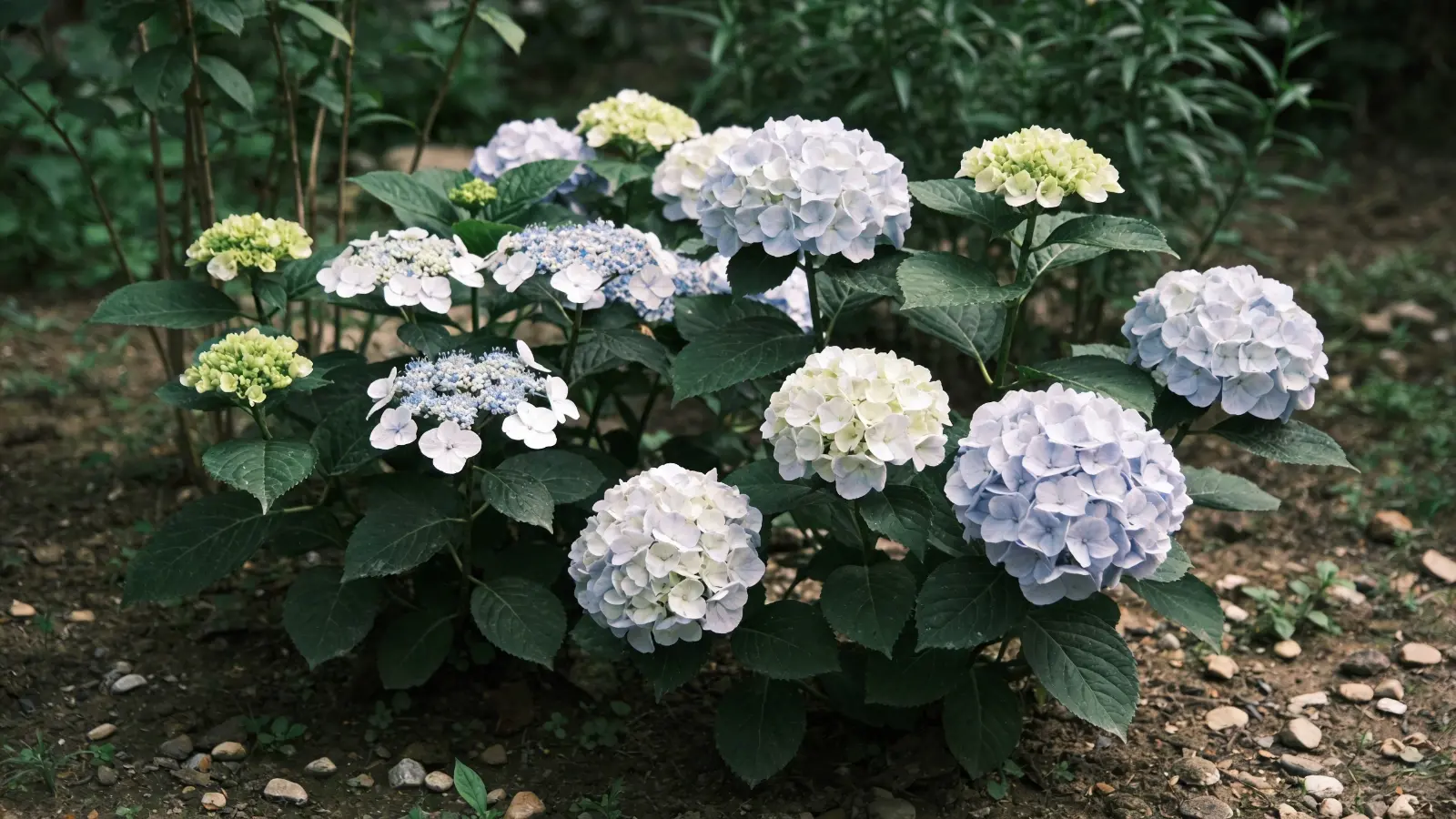
When to Prune Hydrangeas: Exact Timing Guide
Hydrangeas are some of the most rewarding plants you can grow. But one wrong cut at the wrong time, and you could lose an entire season of flowers.
The tricky part? There’s no single “right month” that works for every hydrangea. The timing depends on your specific plant and how it grows its flower buds.
Once you understand that, pruning becomes much less stressful. This guide breaks down everything you need to know, including the biology behind it, so you can prune with confidence every time.
The Core Rule that Determines when You Prune Hydrangeas
Everything comes down to one concept: old wood vs. new wood.
- Old wood refers to stems that grew last season. Buds form on these stems in late summer or fall, then bloom the following year.
- New wood refers to stems that grow in the current season. Buds form after new growth begins in spring.
If you prune old wood at the wrong time, you physically cut off the buds that were set to bloom. The plant isn’t damaged, but your flowers are gone for that year.
New wood plants are more forgiving. They grow fresh stems and set new buds after you prune, so timing isn’t as critical.
The most common mistake gardeners make is treating all hydrangeas the same. They don’t follow the same schedule, and pruning based on the wrong rule is the #1 reason plants fail to bloom.
Hydrangeas that Bloom on Old Wood (and Why Timing is Critical)
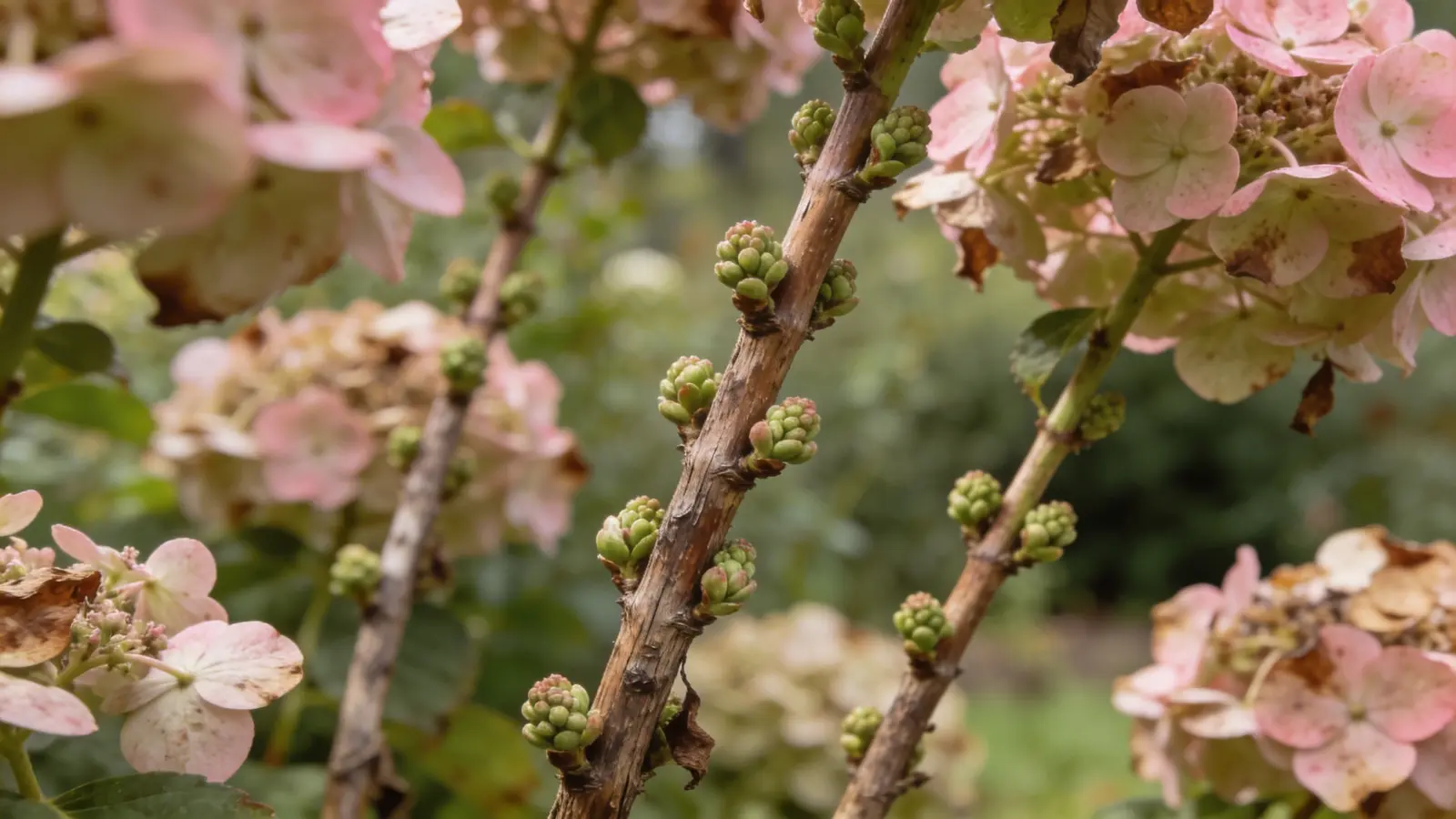
These are the types most gardeners accidentally prune at the wrong time.
Types that bloom on old wood:
- Bigleaf hydrangeas (mophead and lacecap)
- Oakleaf hydrangeas
- Some climbing hydrangeas
For these plants, the window to prune is immediately after flowering, typically mid to late summer, around June or July, depending on your climate.
Here’s why that window matters:
Right after the blooms fade, the plant starts forming buds for the following year. Those buds sit on the stems through fall and winter, waiting to open in spring.
If you prune in fall or spring, those buds are already there, and you’re cutting them off. The plant survives just fine, but you won’t see any blooms that season.
The rule: Finish pruning old wood types before late summer. Once August arrives, the risk of removing next year’s buds becomes very real.
Hydrangeas that Bloom on New Wood (and Why They’re More Forgiving)
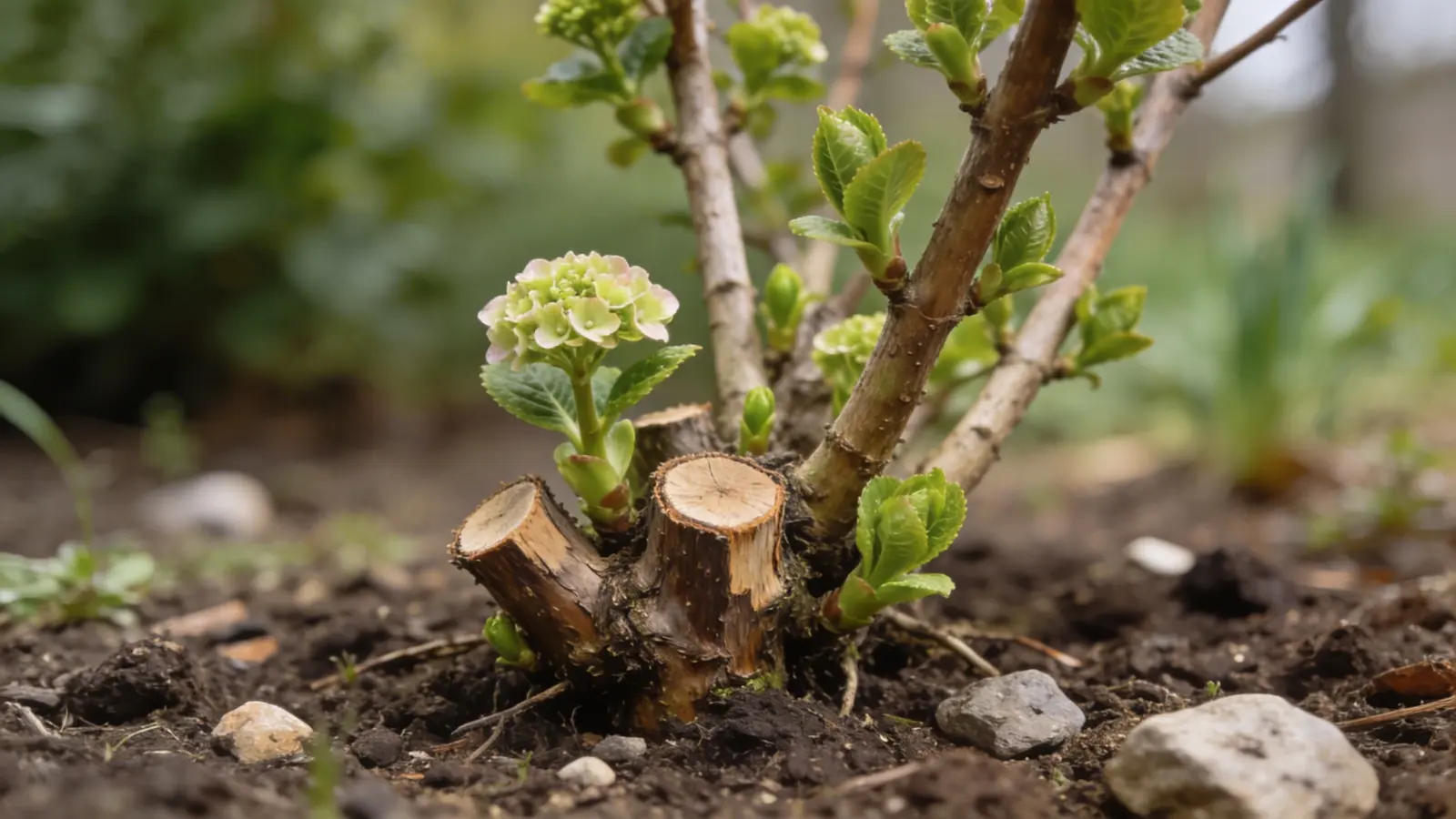
These types give you much more flexibility.
Types that bloom on new wood:
- Panicle hydrangeas (Hydrangea paniculata)
- Smooth hydrangeas (Hydrangea arborescens, like ‘Annabelle’)
The best time to prune these is late winter to early spring, just before new growth begins. Since buds develop on fresh stems after pruning, the plant simply regrows and sets new buds on the current season’s shoots.
Pruning hard can actually work in your favor here. Cutting smooth hydrangeas back significantly often results in larger, stronger blooms.
One misconception worth clearing up: “You can prune new wood types anytime.” That’s not quite right.
Very late pruning, say, in early summer when growth is already underway, can delay flowering or reduce bloom size. It won’t eliminate blooms entirely, but timing still matters.
Reblooming Hydrangeas: A Special Case
Some hydrangeas do not fit neatly into the old wood or new wood categories. Known as reblooming or remontant hydrangeas, these varieties produce flowers on both old and new growth, offering greater flexibility in pruning.
Common Reblooming Varieties:
- ‘Endless Summer’
- ‘BloomStruck’
- ‘Twist-n-Shout’
- ‘Let’s Dance’ series
How They Differ:
- Bloom on both last year’s stems and current season’s growth.
- Provide multiple flowering cycles throughout the growing season.
- Offer a margin of error if pruned incorrectly.
Best Pruning Practices:
- Remove dead or winter-damaged stems in early spring.
- Lightly prune after the first bloom to encourage a second flush.
- Avoid heavy pruning in late summer or fall.
- Focus on shaping rather than cutting back aggressively.
They’re more forgiving because they set buds on both old and new wood. Reblooming hydrangeas can still flower even if some buds are removed. This makes them ideal for gardeners who want reliable blooms with less risk.
Why Timing Matters: The Growth Cycle Behind Hydrangea Flowering
Most pruning guides tell you when to prune. Very few explain why those windows exist. Here’s the biology.
Hydrangeas follow a seasonal growth cycle:
- Spring: New growth emerges from the stems
- Summer: The plant flowers
- Late summer–fall: Old wood types begin forming buds for next year
- Winter: The plant goes dormant, with buds already set on the stems
Buds are not spontaneous. They’re pre-formed structures that develop at specific points in the season. By the time fall arrives, old wood hydrangeas already have next year’s flowers locked in.
Pruning timing isn’t really about shaping the plant; it’s about working around bud development. Cut too early in the season, and you miss the bloom entirely. Cut at the right time, and you encourage healthy regrowth without disrupting the flowering cycle.
This is why general advice like “prune in spring” fails so many gardeners. For old wood types, spring pruning removes buds that have been developing for months.
What Happens if You Prune Hydrangeas at the Wrong Time
Mistakes happen. Here’s what to expect based on the type of error.
If you prune old wood types at the wrong time (fall or spring):
- The plant will likely produce no blooms that year
- The stems and leaves will grow back normally
- You’ll need to wait a full season for flowering to return
If you prune new wood types too late (early summer):
- Blooms may be delayed by several weeks
- Flower size might be smaller than usual
- The plant will still flower, just not as impressively
If you over-prune any type:
- The plant puts energy into recovering rather than flowering
- Weaker, fewer blooms are common the following season
A common fear after a pruning mistake is that the plant is dying. It rarely is.
What you’ve done is remove the flower buds, not harm the plant itself. Recovery usually takes one full growing season, and the plant bounces back with proper care.
How to Quickly Identify Your Hydrangea Type Before Pruning
Before you pick up the shears, you need to know what you’re working with. Getting this wrong leads directly to pruning mistakes.
Visual Identification Clues
Look at the flower shape and leaf structure.
- Mophead/lacecap (Bigleaf): Large, rounded flower clusters or flat lacy heads; broad, glossy leaves.
- Oakleaf: Cone-shaped white flower clusters; distinctly lobed leaves resembling oak leaves.
- Panicle: Elongated cone-shaped flower clusters; smaller, matte leaves.
- Smooth (Annabelle): Large, round, white flower heads; simpler leaf shape than bigleaf.
Flower shape is usually the fastest way to tell them apart. If the blooms are cone-shaped, you’re almost certainly looking at a panicle or oakleaf type.
Bud Check Method (Spring Test)
If you’re unsure, check the stems in early spring before growth fully begins.
- Look for small, swollen buds already forming along the stems
- If buds are present → old wood type → prune only after flowering
- If no visible buds yet → likely new wood type → safe to prune now
This is one of the most reliable ways to confirm what you have, especially for unlabeled plants.
Why Misidentification Leads to Pruning Mistakes
If you mistake a bigleaf hydrangea for a panicle type, you might prune it in late winter, thinking it’s safe. The result: no blooms that summer.
Correct identification is the foundation of correct timing. Take five minutes to confirm the type before pruning, and you avoid a full season of disappointment.
Hydrangea Pruning Timing at a Glance
Here’s a fast reference based on everything covered above.
| Hydrangea Type | Botanical Name | Blooms On | Best Time to Prune | Notes |
|---|---|---|---|---|
| Bigleaf (Mophead & Lacecap) | Hydrangea macrophylla | Old Wood | Right after flowering (June–July) | Prune before late summer to avoid cutting next year’s buds. |
| Oakleaf | Hydrangea quercifolia | Old Wood | Immediately after blooming | Requires minimal pruning; mainly for shaping. |
| Climbing Hydrangea | Hydrangea anomala petiolaris | Old Wood | After flowering in summer | Prune lightly to control size and growth. |
| Panicle | Hydrangea paniculata | New Wood | Late winter to early spring | Tolerates hard pruning and produces larger blooms. |
| Smooth (Annabelle) | Hydrangea arborescens | New Wood | Late winter to early spring | Can be cut back significantly for vigorous growth. |
| Reblooming Varieties | e.g., ‘Endless Summer’, ‘BloomStruck’ | Old & New Wood | After first bloom or early spring | Flexible pruning due to dual bloom cycles. |
Tip: Always adjust pruning timing based on your local climate and your plant’s growth cycle.
Conclusion
Knowing when to prune hydrangeas comes down to one thing: understanding your plant’s flowering cycle. Old wood types need pruning right after blooming in summer.
New wood types can be cut back in late winter or early spring. When you work with the plant’s natural rhythm, you protect the buds and keep the blooms coming year after year.
If you’ve made a mistake this season, don’t worry, one season of patience is usually all it takes to get back on track.
Which hydrangea type are you growing? Drop a comment below and let us know, we’d love to help you get it right!
Frequently Asked Questions
What Month Should You Prune Hydrangeas?
There is no single month that works for all hydrangeas. Old wood types should be pruned in summer, immediately after blooming. New wood types are best pruned in late winter or early spring. The correct timing depends on the variety you are growing.
Is It Ever Too Late to Prune Hydrangeas?
Yes, it can be too late to prune certain types. Pruning old wood hydrangeas after late summer removes next year’s buds. New wood hydrangeas are more forgiving, but very late pruning may delay blooms or reduce their size.
Can You Prune Hydrangeas in Fall?
Fall pruning is generally not recommended. Old wood varieties, such as bigleaf and oakleaf hydrangeas, already have buds set by fall. Pruning them removes future blooms. New wood types tolerate fall pruning, but late winter or early spring is preferable.
Why Didn’t My Hydrangea Bloom This Year?
The most common reason is pruning at the wrong time. Cutting back old wood hydrangeas in fall or spring removes the flower buds. Other causes may include frost damage, insufficient sunlight, or improper fertilization. Proper timing usually restores blooms the following season.