How To Water Houseplants: Steps, Tips And Mistakes
Most houseplants don’t die from neglect; they die from wrong watering. Too much water cuts off oxygen to the roots.
Too little, and the plant struggles to survive. The tricky part is that both problems look almost identical at first.
Yellowing leaves, drooping stems, it’s easy to misread the signs. Knowing how to water houseplants correctly comes down to reading your plant, your soil, and your environment.
In this blog, you’ll find a clear step-by-step approach, from checking moisture levels to picking the right watering method.
Follow these steps, and your plants will actually stay healthy for the long run.
How To Know When To Water?
Skip the fixed schedule and let your plant guide you instead. Check the soil first if the top 1–2 inches feel dry, it’s time to water; if still moist, hold off.
Watch for drooping or dull leaves as signs of dehydration, but always confirm with the soil since overwatered plants droop too.
Fixed schedules fail because water needs shift with temperature, light, and season your plant’s thirst isn’t tied to a calendar.
Step-By-Step: How To Water Houseplants Correctly
Follow these steps every time you water. They’re simple, but each one matters.
Step 1: Check If The Plant Actually Needs Water
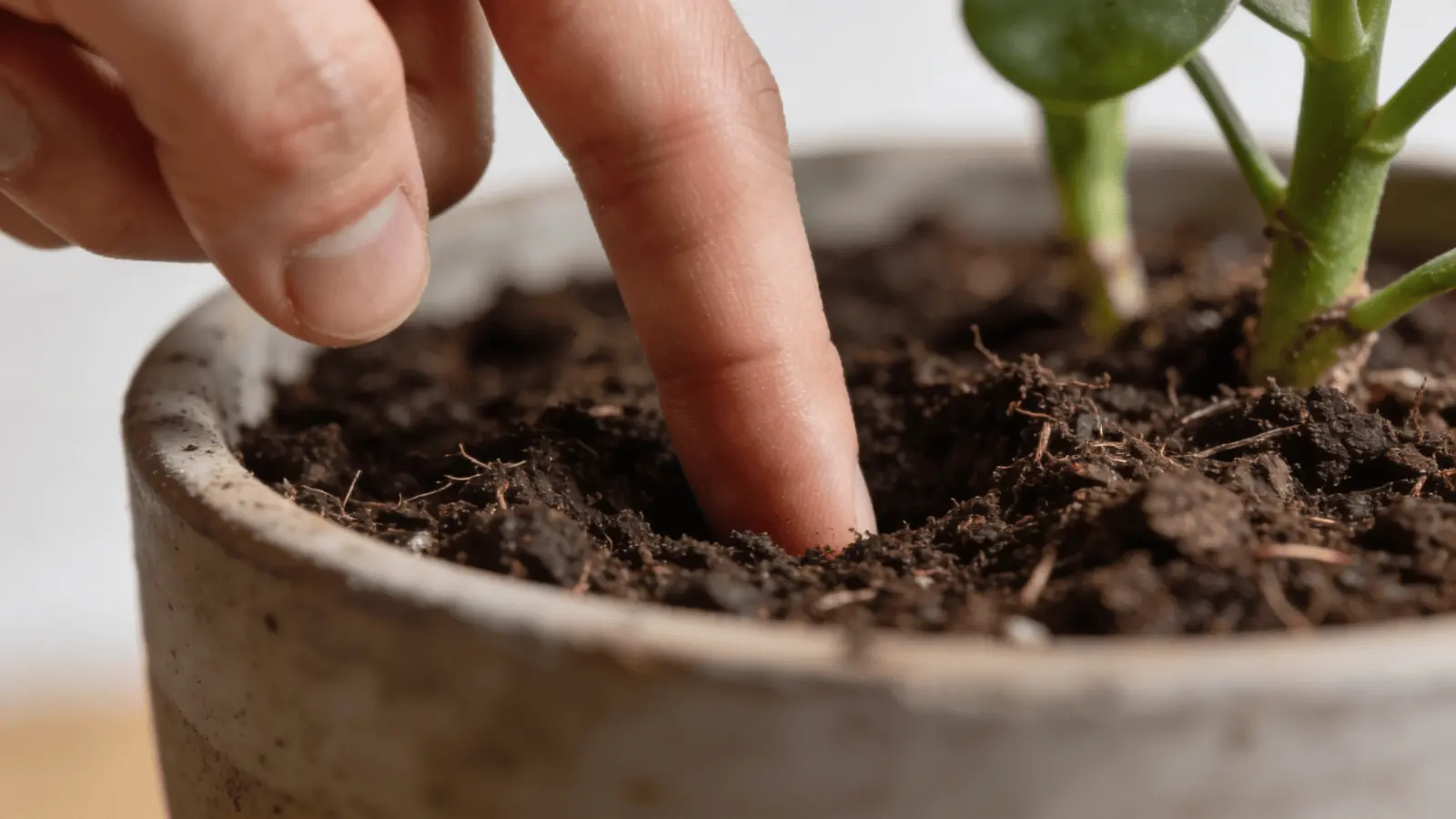
Before pouring anything, test the soil. Stick your finger about 1–2 inches deep. If it feels dry at that depth, it’s time to water. If it still feels moist, wait.
You can also lift the pot. Dry soil weighs noticeably less than moist soil. This works well once you get used to how a pot feels when it needs water.
Roots sit below the surface. The topsoil can look dry while the root zone is still wet. Watering based on surface appearance alone is one of the fastest ways to cause root rot.
Step 2: Water The Soil Evenly And Thoroughly
Pour water slowly and move around the entire surface of the pot. Don’t just pour in one spot.
Every part of the root system needs water. If you only wet one area, the rest stays dry. Over time, roots grow only toward the moist zone, making the plant unstable and weak.
Step 3: Continue Until Water Drains Out
Keep watering until you see water coming out of the drainage holes at the bottom.
This confirms two things:
- The entire root zone has been saturated
- Excess salts and minerals are being flushed out
Stopping too early leaves dry pockets inside the soil. Those pockets starve certain roots while others get enough.
Step 4: Let Excess Water Drain Completely
Once water drains out, don’t let the pot sit in it. Empty the saucer within 30 minutes.
Standing water blocks oxygen from reaching roots. Without oxygen, roots suffocate and start to decay. This is one of the main causes of root rot, even when you haven’t overwatered.
Proper Watering Techniques And When To Use Them
Not all watering methods are equal. Here’s when to use each one.
Top Watering (Default Method)
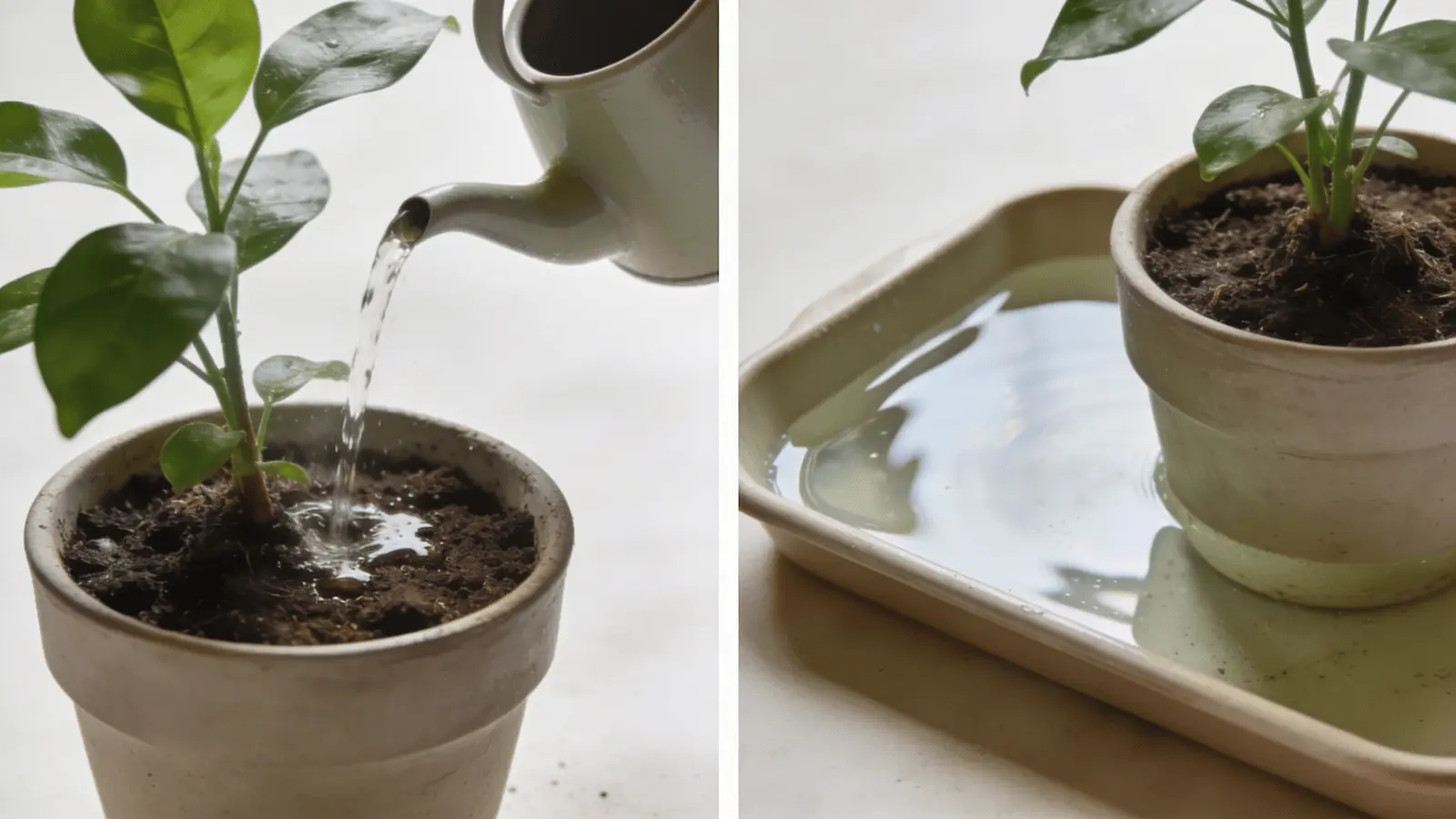
Pour water from above until it drains out the bottom. This is the standard method for most houseplants.
It flushes mineral and salt buildup from the soil and distributes water evenly across the root zone. The key is to pour slowly; pouring too fast creates channels in the soil where water runs straight through without actually soaking in.
Bottom Watering (Situational Use)
Place the pot in a tray or basin filled with water and leave it for 30–60 minutes.
Water is pulled upward through the drainage holes by capillary action. This works well when:
- You’re dealing with fungus gnats (keeps the topsoil dry)
- The plant has sensitive leaves that shouldn’t get wet
Don’t rely on this method exclusively. Over time, it causes salt and mineral buildup in the upper soil since nothing flushes it out from above.
Deep Watering Vs Shallow Watering
Deep watering, soaking the entire soil column, pushes roots downward. Deeper roots mean a more stable, drought-resistant plant.
Shallow watering, just wetting the surface, keeps roots near the top. Those roots are fragile and highly sensitive to any changes in moisture.
Factors That Change How Often You Should Water
Watering frequency isn’t fixed. These factors shift how fast your plant uses water.
Light And Temperature
More light means faster photosynthesis, which means more water demand. Bright, sunny spots dry out soil faster.
Warm rooms also speed up evaporation. A plant sitting near a sunny window in summer may need water twice as often as it does in winter.
Low light slows everything down, water use drops, and the risk of overwatering goes up.
Pot And Soil Type
The container your plant is in matters a lot:
- Terracotta pots → porous walls let moisture escape → soil dries faster
- Plastic or glazed pots → moisture stays in longer → slower drying
- Dense or compacted soil → holds water longer → needs less frequent watering
Ignoring pot type is a common reason watering schedules go wrong, even when you’re following other rules correctly.
Plant Type And Growth Phase
Fast-growing plants pull more water. Slow-growing or dormant plants need much less.
Many people water dormant plants at the same rate as active ones; that’s a mistake. In dormancy, water demand can drop by more than half.
Water Quality And Temperature: What Actually Matters
The type of water you use has a real effect on plant health. Always use room-temperature water. Cold water shocks the roots and slows their ability to absorb nutrients.
Tap water is fine for most plants. However, chlorine in tap water can stress sensitive species like ferns or calatheas. Letting tap water sit out for 24 hours allows the chlorine to dissipate naturally.
Rainwater or distilled water is a better option for plants that are highly sensitive to minerals. It’s worth collecting rainwater if you grow delicate tropical varieties.
Conclusion
Good watering isn’t about schedules; it’s about reading your plant and soil. Check moisture before watering, water deeply, and always drain fully.
Adjust based on light, season, and pot type. These small habits protect your roots and keep your plants healthy for the long run.
Once you stop guessing and start observing, everything gets easier. Got a houseplant you’ve been struggling to keep alive?
Drop your question in the comments, I’d love to help you figure out what it needs.
Frequently Asked Questions
Is It Better To Overwater Or Underwater?
Underwatering is easier to recover from. Overwatering deprives roots of oxygen and causes root rot, which is much harder to reverse once it sets in.
Should I Water Plants From The Top Or Bottom?
Top watering works best for most plants. Bottom watering is a useful occasional method, but shouldn’t fully replace top watering, which flushes out salt buildup.
Can I Use Tap Water For Houseplants?
Yes, for most plants. Let it sit out for 24 hours to reduce chlorine. If your plant is particularly sensitive to minerals, filtered or distilled water is a safer option.