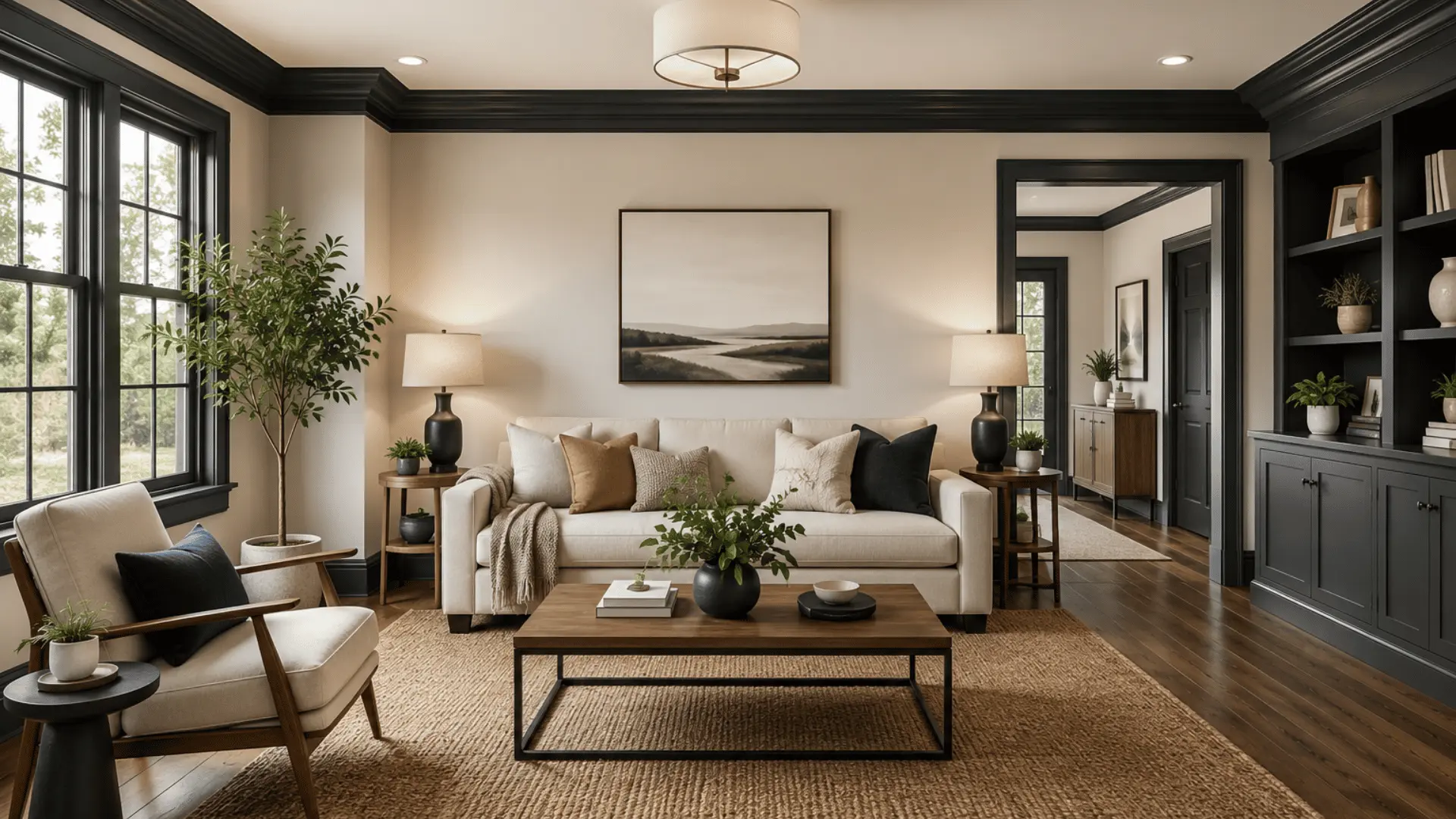
Traditional Interior Design: Key Features, Types, and Tips
You keep seeing “traditional interior design” online, but the term covers many looks, from formal dining rooms to cozy family homes.
That mix-up makes it hard to know what this style means. Traditional interior design has a clear definition. It comes from classic European decor, rich color, and matched furniture.
This full post explains what the style is, where it started, how it compares to other looks, and how you can add it to your home today.
What Is Traditional Interior Design
Traditional interior design is a style built on classic European decor from the 1700s and 1800s. It uses rich color, formal furniture, and balanced room layouts to create a warm, polished look.
Think dark wood, velvet fabric, matched furniture pairs, and detailed trim work. The style favors order over trend, so a traditional room tends to look the same in ten years as it does today.
It fits people who want a home that feels put together without chasing a new look every season.
Where Traditional Interior Design Comes From
Traditional interior design goes back to Georgian Britain, a period that ran from 1714 to 1830 under four kings named George. During this time, furniture maker Thomas Chippendale (1718 to 1779) published a book called The Gentleman and Cabinet-Maker’s Director in 1754.
It set the shapes and details still used in traditional furniture today. Thomas Sheraton (1751 to 1806) added his own pattern book starting in 1791, with lighter, more refined shapes.
The Victorian era, from 1837 to 1901, then added heavier carving and more pattern to the same base style. In America, colonists carried these British design ideas across the Atlantic from the 1600s onward, creating a more relaxed Colonial version of the same look.
These layers, Georgian order, Victorian detail, and Colonial ease, built the traditional style we recognize today.
Key Characteristics of Traditional Interior Design
Traditional design isn’t a single theme. It is a set of specific choices that show up again and again in every traditional room.
-
Symmetry: Furniture and decor sit in matched pairs around a center point.
-
Rich, warm colors: Deep red, navy, forest green, and gold sit against soft neutral walls.
-
Classic furniture shapes: Curved legs, wingback chairs, and carved wood frames define most pieces.
-
Fine fabrics: Velvet, silk, and other heavy fabrics give rooms a formal feel.
-
Detailed trim: Crown molding, wainscoting, and paneling add texture to walls and ceilings.
-
Layered pattern: Florals, plaids, and stripes appear together, chosen with a plan rather than by chance.
-
Formal lighting: Chandeliers and matched lamps light most traditional rooms.
Traditional Interior Design vs Other Styles

Traditional is often compared to a few other styles. Here is how it stacks up against the looks people most often confuse it with.
|
Style |
Color Palette |
Furniture Lines |
Formality Level |
|---|---|---|---|
|
Traditional |
Deep, warm tones (navy, burgundy, forest green) |
Curved, carved wood |
Formal |
|
Soft neutrals with light accent color |
Simple, slightly curved |
Semi-formal |
|
|
Neutral with one bold accent |
Straight, clean lines |
Relaxed |
|
|
Light, worn wood tones |
Simple, sturdy |
Casual |
|
|
Warm wood tones, muted color |
Straight-backed, simple carving |
Formal but plain |
Types of Traditional Interior Design
Traditional design also splits into a few regional styles. Each one keeps the same base look but adds its own local touch.
1. English Traditional

English traditional design leans on dark wood, deep jewel tones, and pattern-on-pattern layering. Chesterfield sofas and Chippendale chairs are common anchor pieces. Rooms often feel formal and a little heavy, built for cooler weather and long evenings indoors.
2. French Traditional

French traditional design uses lighter wood tones and curved legs, often finished in cream or gold paint. Toile fabric, gilt mirrors, and soft colors keep rooms formal without feeling heavy. This version borrows more from palace style than everyday country life.
3. American Traditional (Colonial)

American traditional design grew out of the Colonial period, so it favors simple curved lines over the heavy carving found in British versions. Windsor chairs, brick fireplaces, and a slightly more relaxed formality are common. It fits a wider range of home styles across the US today.
How to Add Traditional Style to Your Home

Adding this style to your home doesn’t require a full remodel. A few focused changes get you most of the way there.
1. Pick One Wood Tone
Choose a warm, dark wood tone and repeat it across your main furniture pieces. Mixing five different wood shades breaks the formal look traditional design depends on. Stick to one or two finishes at most.
2. Add a Jewel-Tone Accent Color
Pick one deep color, like navy, burgundy, or forest green, and use it on upholstery or drapery. Keep your walls a soft neutral so the accent color can stand out.
3. Bring In One Classic Furniture Shape
Add a wingback chair, a camelback sofa, or a chair with curved legs. One strong classic piece does more for the look than several smaller changes spread across the room.
4. Layer at Least Two Fabric Patterns
Mix a plaid or stripe with a floral or paisley in a shared color family. This layered pattern is a signature part of traditional rooms, so do not skip it.
5. Add Trim if Your Budget Allows
Crown molding, wainscoting, or raised panel trim on the walls adds an instant formal feel. Even one accent wall with trim work can make a room read as traditional.
6. Arrange Furniture in Symmetrical Pairs
Place matching lamps, chairs, or side tables on either side of a fireplace, bed, or sofa. This balance is one of the fastest ways to make a room feel traditional.
7. Finish With a Classic Light Fixture
A chandelier, lantern-style fixture, or pair of matching sconces finishes the look. Lighting is often the last detail that ties a traditional room together.
Traditional Design Ideas by Room

The traditional look shows up a little differently in each room. Here is what it typically includes in the spaces people ask about most.
Living Room
-
Symmetrical seating around a fireplace or the main focal point
-
A tufted or camelback sofa in a solid, deep color
-
A statement chandelier or a pair of matching table lamps
-
A patterned area rug with a light border
Bedroom
-
An upholstered or carved wood headboard
-
Matching nightstands and lamps on either side of the bed
-
Layered bedding with at least one patterned throw or pillow set
-
Heavy drapery in a rich color, floor-length when possible
Dining Room
-
A pedestal or wood dining table with a formal chair set
-
A chandelier centered directly above the table
-
A china cabinet or sideboard for display
-
Wall paneling or a chair rail for added detail
Kitchen
-
Raised panel or inset cabinetry in a warm wood tone
-
A furniture-style island with turned legs
-
Brass or bronze hardware and fixtures
-
A plate rack or open shelving for display pieces
See these traditional kitchen design ideas for more ways to bring the style into your home.
Common Mistakes to Avoid in Traditional Interior Design
A few mistakes can make a traditional room feel dated instead of classic. Here is what to watch for and how to fix it.
|
Mistake |
Why It Hurts the Room |
Quick Fix |
|---|---|---|
|
Mixing too many wood tones |
Makes the room feel cluttered instead of formal |
Pick one main wood tone and repeat it |
|
Going too dark with no light contrast |
Rooms feel heavy and smaller than they are |
Balance dark furniture with a lighter wall color |
|
Skipping symmetry |
Breaks the balanced look the style depends on |
Arrange key pieces in matched pairs |
|
Overloading pattern |
Turns a layered look into visual noise |
Limit pattern to two or three coordinated prints |
|
Buying reproduction furniture that looks cheap |
Makes the room look cheap instead of built to last |
Invest in one or two real wood pieces over many low-cost ones |
Is Traditional Interior Design Still Popular
Traditional interior design is growing in popularity again. Houzz’s 2026 home design report found that the share of homeowners who chose traditional style rose five percentage points from the year before, based on the 2025 U.S. Houzz Kitchen Trends Study.
Today’s version looks different from older traditional rooms. It softens the formal look with warmer color, simpler lines, and a mix of old and new pieces instead of copying a period room exactly.
Design writers often call this softer take grandmillennial or modern traditional, and it is a big reason the style now works for younger homeowners too.
Conclusion
Traditional interior design comes down to a few clear ideas. Classic furniture, rich color, balance, and detail.
It started in Georgian Britain, grew through the Victorian era, and still works in homes today. The style shifts each decade, but its base stays the same. If you want this look, start small.
Pick one wood tone, one accent color, and one classic piece, then add symmetry and good lighting. Traditional design rewards patience over trends, which is why it lasts.
Frequently Asked Questions
What is traditional interior design in simple terms?
It is a decorating style based on classic European furniture and decor from the 1700s and 1800s, built around rich color, matched furniture, and formal room layouts.
What is the difference between traditional and transitional interior design?
Transitional design uses lighter colors and simpler furniture lines. Traditional design keeps darker wood, bolder color, and more carved detail throughout the room.
What colors work best in traditional interior design?
Deep tones like navy, burgundy, and forest green work well as accents, paired with soft neutral walls in cream, beige, or soft gray.
Can traditional design work in a small home?
Yes. Use one or two classic furniture pieces, keep the color palette simple, and add trim detail on just one wall so the look does not feel heavy.
What furniture styles count as traditional?
Queen Anne, Chippendale, and Sheraton pieces are the clearest examples, along with wingback chairs and camelback sofas.