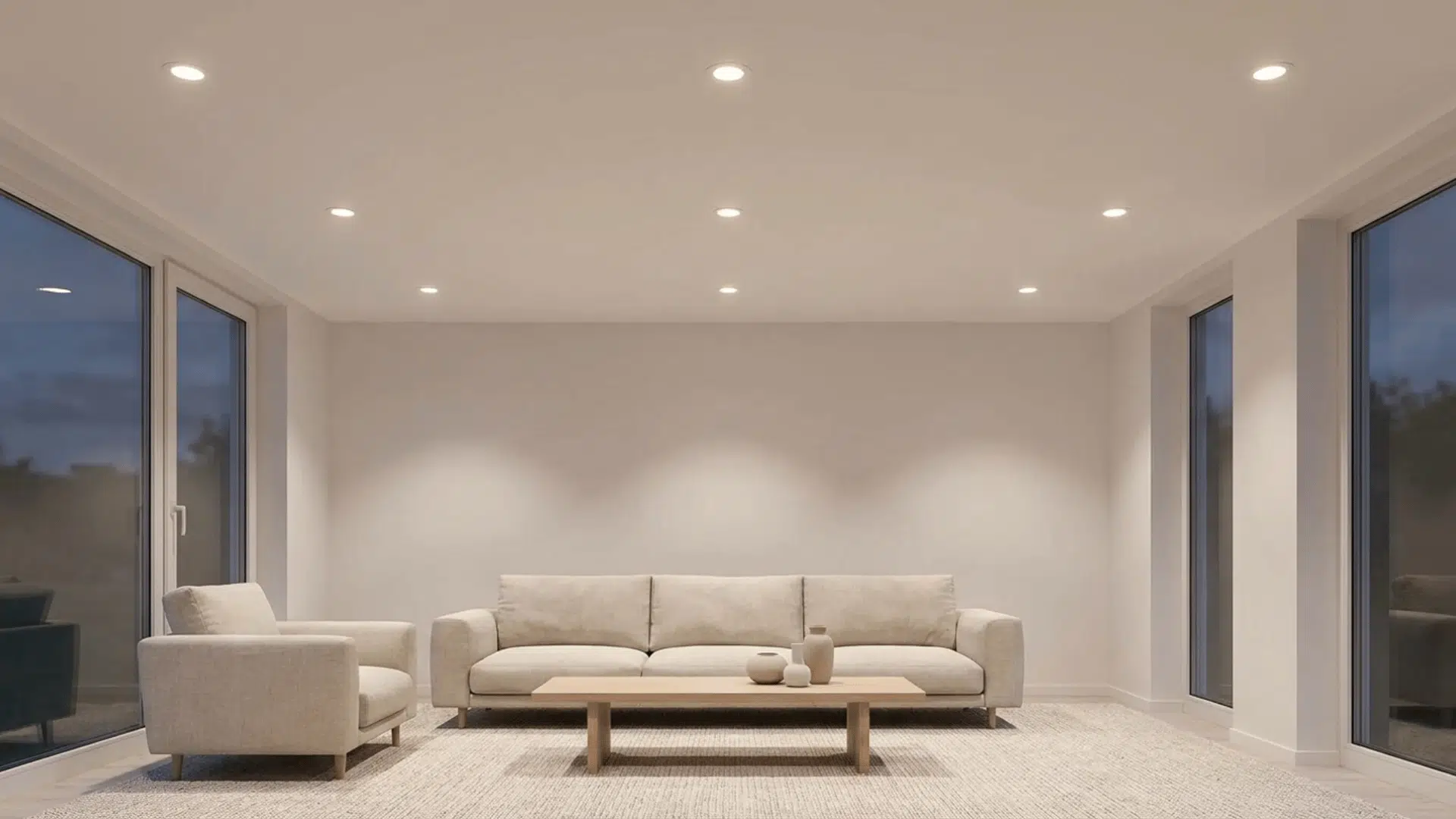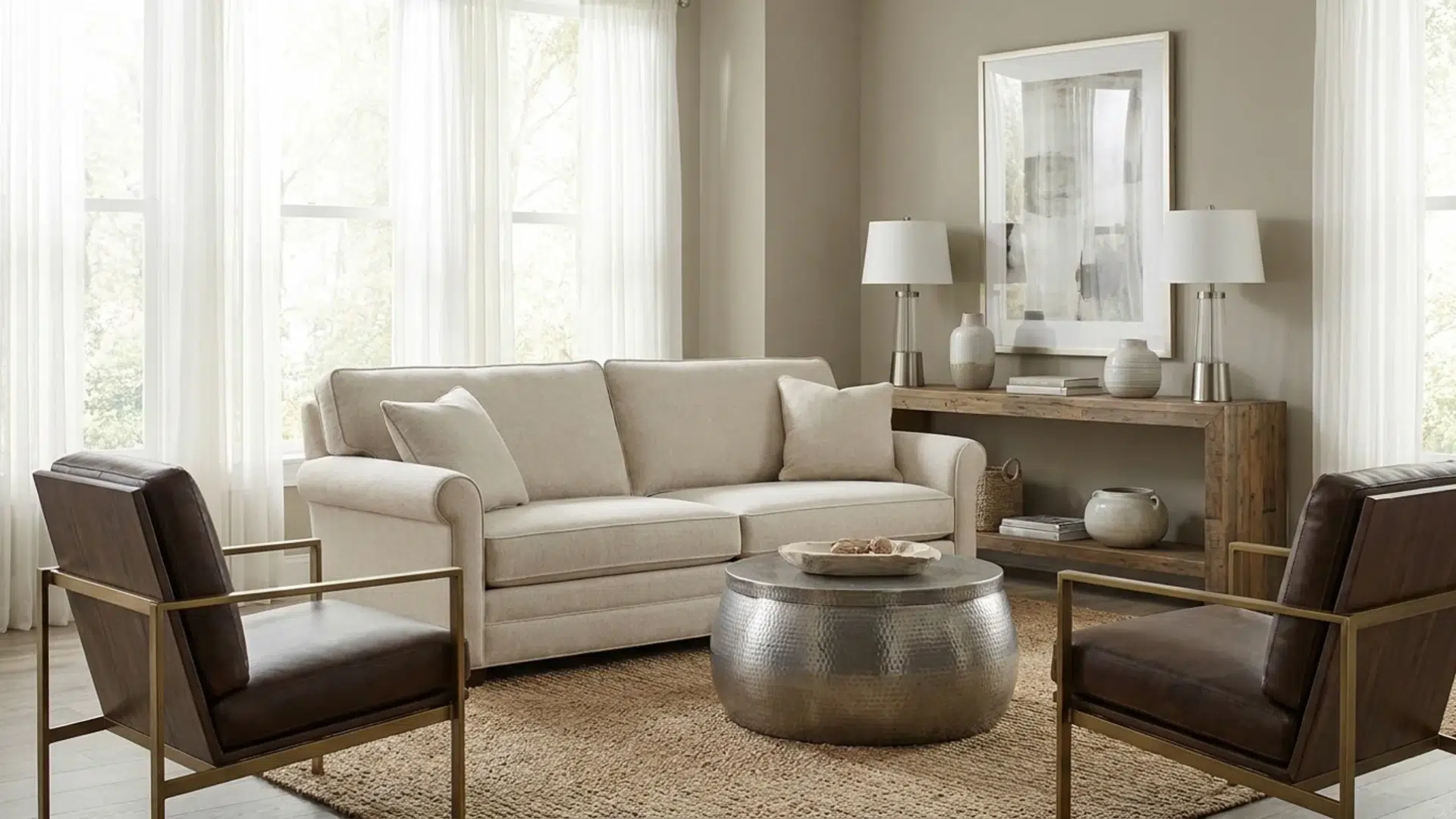
Transitional Interior Design: Tips for Every Room
Choosing between a classic, elegant home and a clean, modern one can feel impossible. You love the warmth of traditional design but also want something fresh and uncluttered.
That tension is exactly where transitional interior design lives. It brings both worlds together without leaning too hard in either direction.
The result is a space that feels polished, enduring, and easy to live in, not tied to a specific trend or era. from key characteristics and color choices to room-by-room tips and common mistakes to avoid.
Whether you’re starting fresh or refreshing a few rooms, this style is more versatile than most people realize.
What Is Transitional Interior Design?
Transitional interior design is a style that sits between traditional and contemporary. It takes the best elements of both and combines them into one balanced, cohesive look.
Think classic furniture silhouettes paired with cleaner lines. Think warm textures alongside modern finishes, nothing too ornate, nothing too stark.
The goal is harmony. Every piece in a transitional space feels intentional, whether it leans slightly classic or slightly modern.
How Did Transitional Style Come About?
For decades, homeowners had to pick a side. You were either drawn to the ornate detailing of traditional design or the stripped-back simplicity of modernism.
By the late 20th century, that binary started to feel limiting. People wanted homes that felt refined but not rigid spaces that could grow with them over time.
Designers began experimenting with mixing periods and pieces. A wingback chair next to a sleek sofa. Crown molding in a room with minimal decor. It worked, and clients loved it.
The style gained its own identity through the 1990s and 2000s. What started as a practical solution became one of the most requested looks in residential design.
Today, it’s recognized as a distinct style in its own right, not a compromise, but a deliberate design choice.
Key Characteristics of Transitional Style
Transitional design has distinct qualities that set it apart from other styles. Once you know what to look for, you’ll spot it immediately.
1. Clean Lines with Subtle Detail
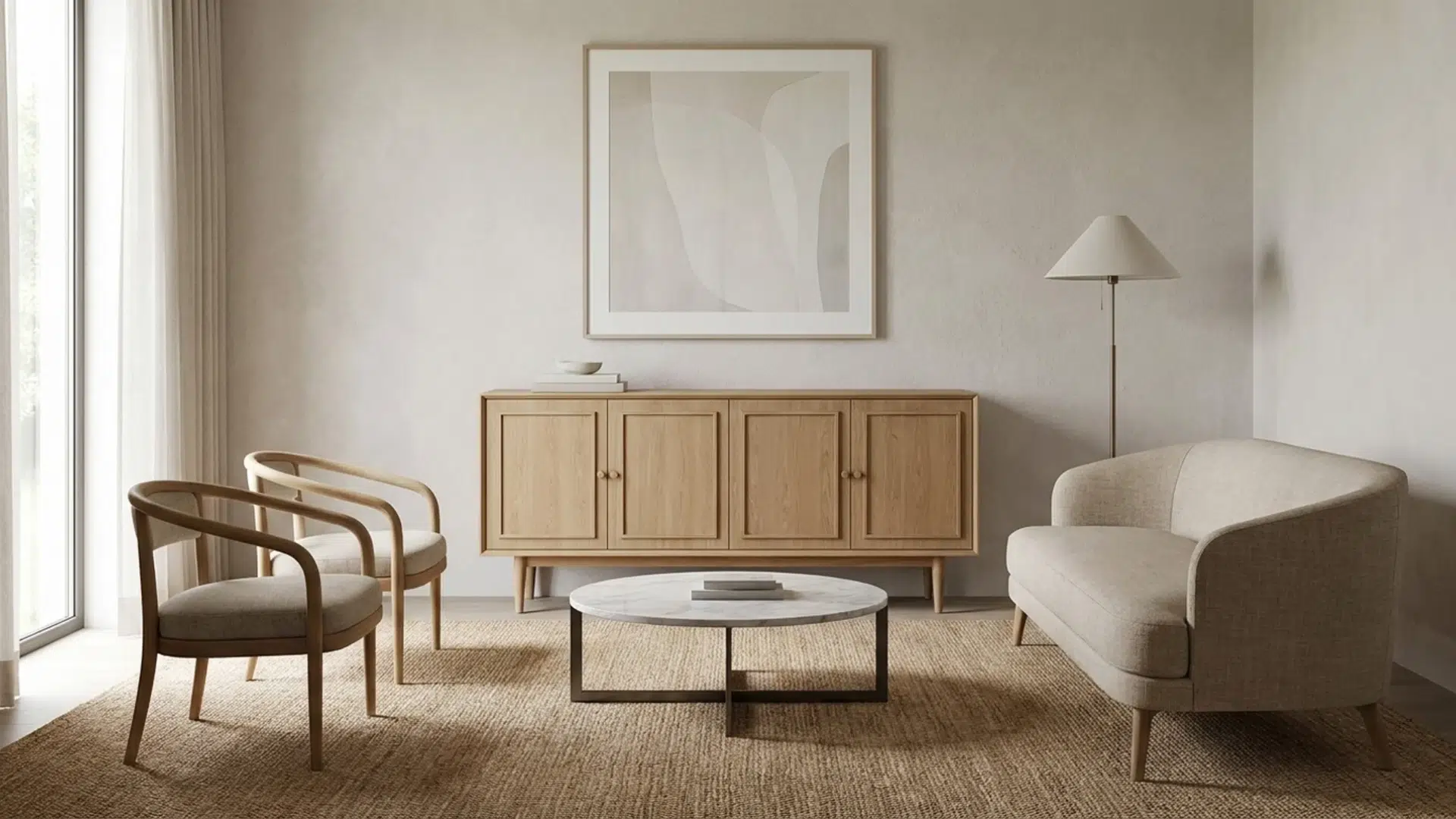
Furniture and architecture in transitional spaces avoid extremes. You won’t find heavy carved wood or ultra-minimalist slabs; the shapes sit comfortably in between.
Subtle details like simple molding, tapered legs, or gentle curves add character without overwhelming the room.
2. Neutral Color Palette
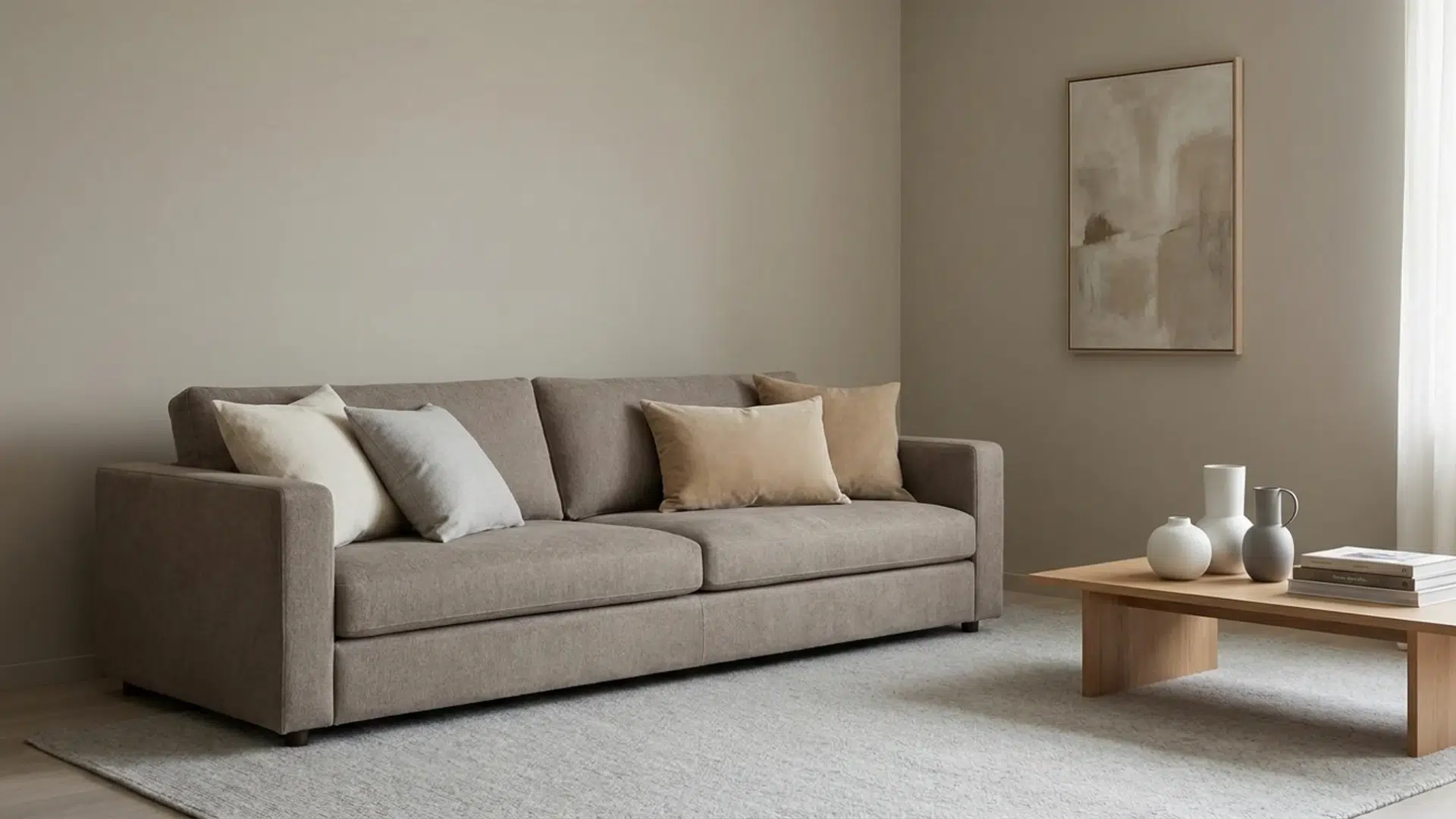
Color in transitional interiors is intentionally understated. Warm whites, soft grays, taupes, and greiges form the foundation of most transitional spaces.
This restraint keeps the room feeling open and adaptable, easy to refresh with new accents without a full redesign.
3. Mix of Materials and Textures
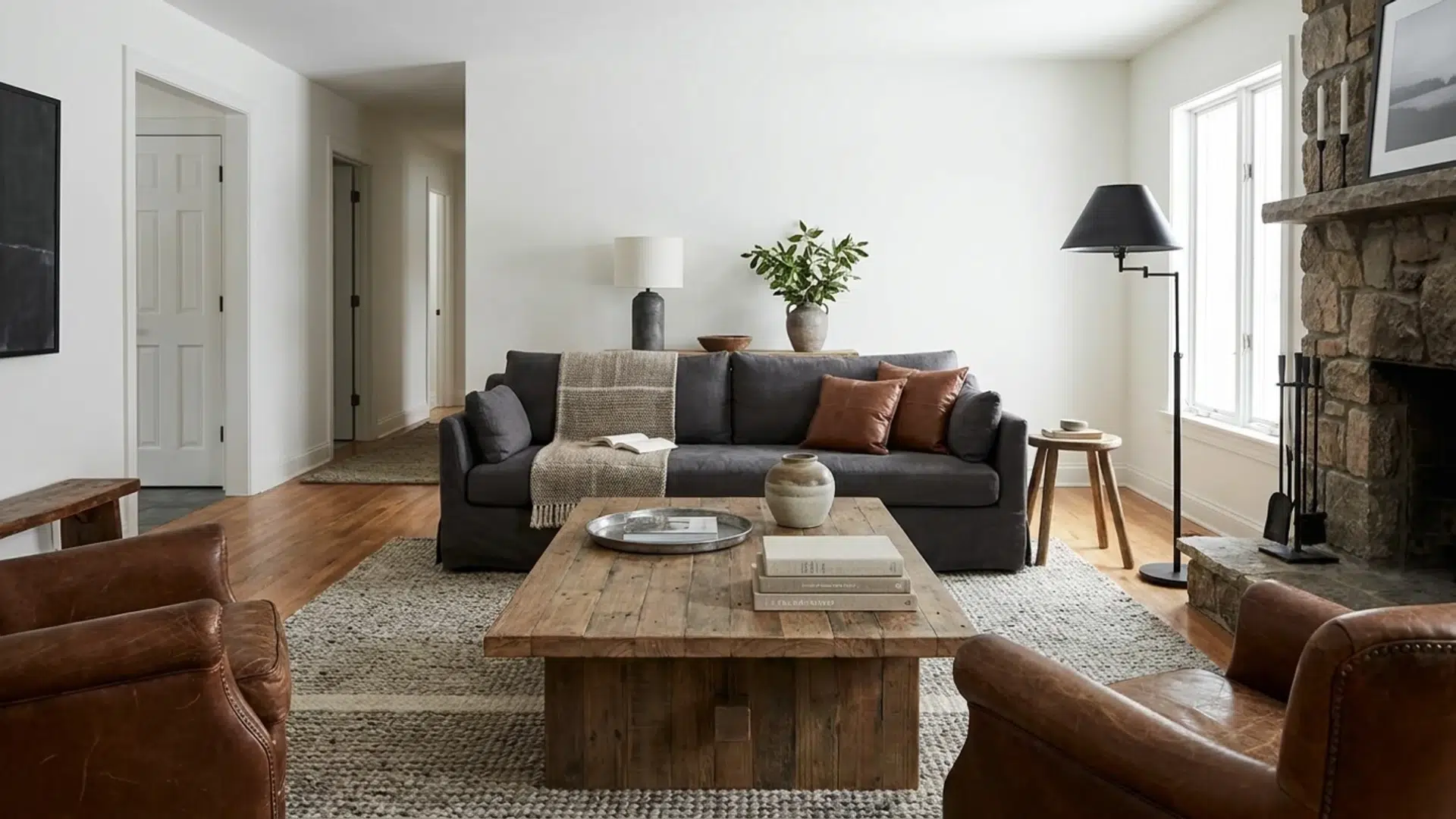
Layering materials is where transitional design gets interesting. Wood, metal, linen, leather, and stone can all share the same room without competing.
Texture does a lot of the heavy lifting here. It adds depth and warmth in a way that bold color or pattern doesn’t need to.
4. Balance of Old and New
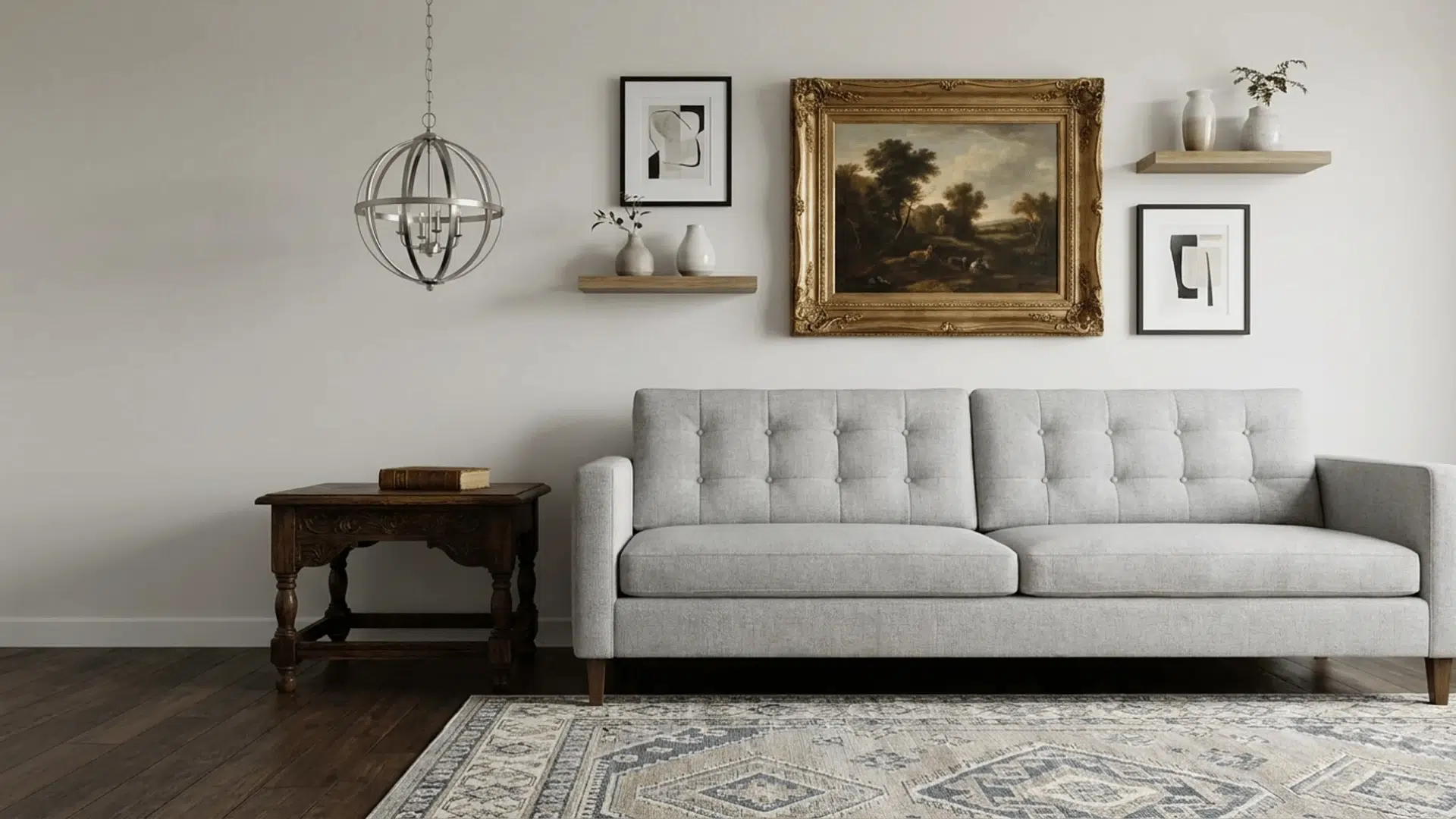
A transitional room might pair an antique side table with a contemporary pendant light. Or a tufted sofa with a geometric rug.
The key is proportion and intention. Neither the old nor the new piece should feel out of place or forced.
5. Restrained Ornamentation
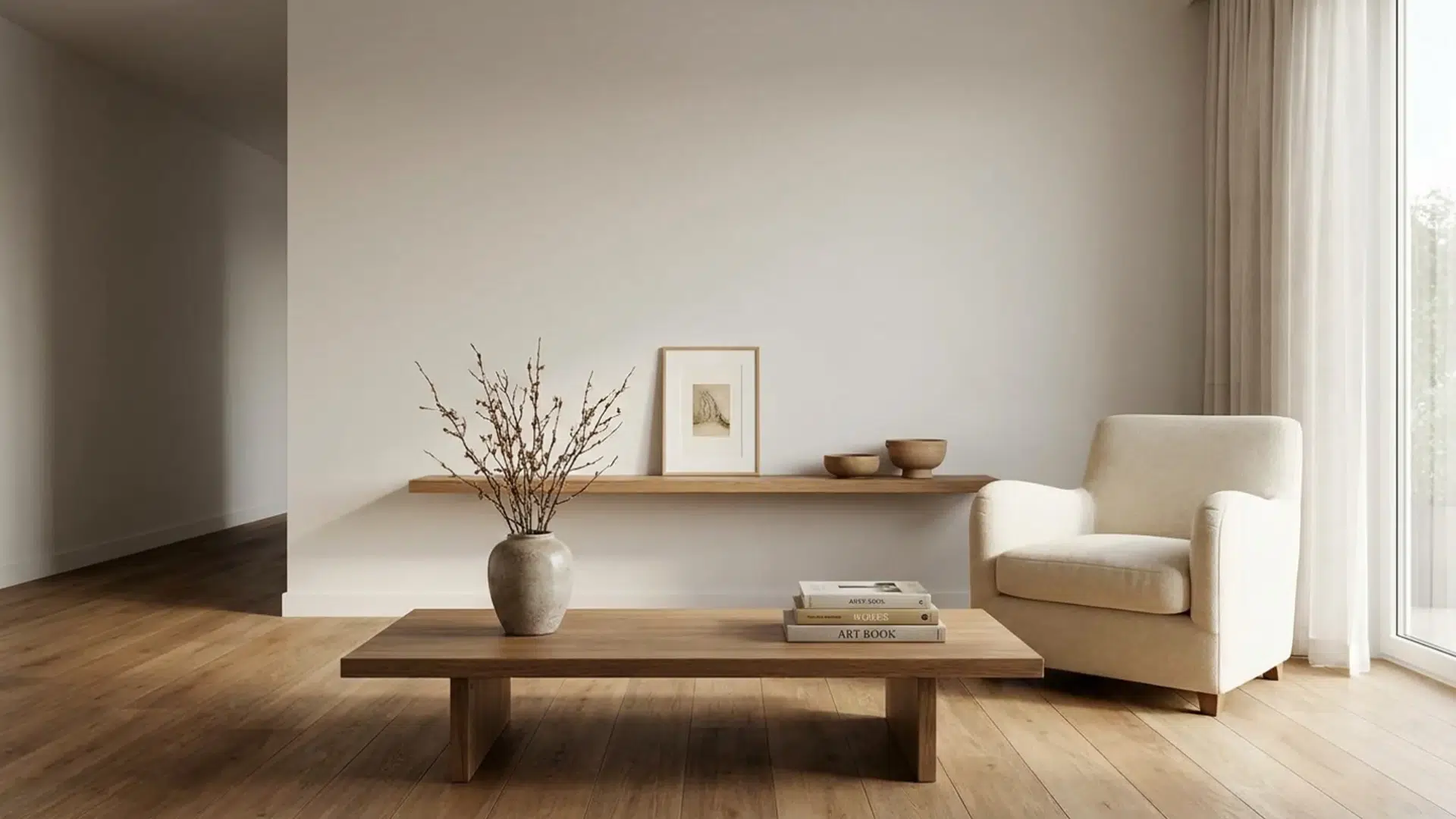
Accessories are carefully chosen for transitional spaces. A few well-placed pieces carry more weight than a room full of competing decor.
Less is more, but not in a cold or empty way. The space still feels lived in and welcoming.
Transitional Style Colors that Work Best
Color choices can shape how a transitional space feels. The right mix keeps it balanced and easy on the eyes.
| Category | What Works | Why It Works | What to Avoid |
|---|---|---|---|
| Neutrals (Base) | Warm whites, soft taupe, greige | Creates a calm base and supports other elements | Stark white or overly cool gray tones |
| Popular Paint Picks | Benjamin Moore Pale Oak, Sherwin-Williams Accessible Beige | Adjust well in natural light without looking dull | Flat or overly dark neutral shades |
| Accent Colors | Navy, sage green, muted gold, dusty blue | Adds depth without making the space feel trendy | Bright or highly saturated colors |
| How to Use Accents | Throw pillows, drapes, upholstered chair | Easy to update without long-term commitment | Bold wall colors that dominate the room |
| Overall Balance | Soft, warm, and subtle tones | Keeps the space timeless and cohesive | Trend-driven shades that may not age well |
Transitional Style Room by Room
Every room in a home can carry a transitional design, but each space has its own priorities.
Here’s how the style translates across the most common rooms:
1. Living Room
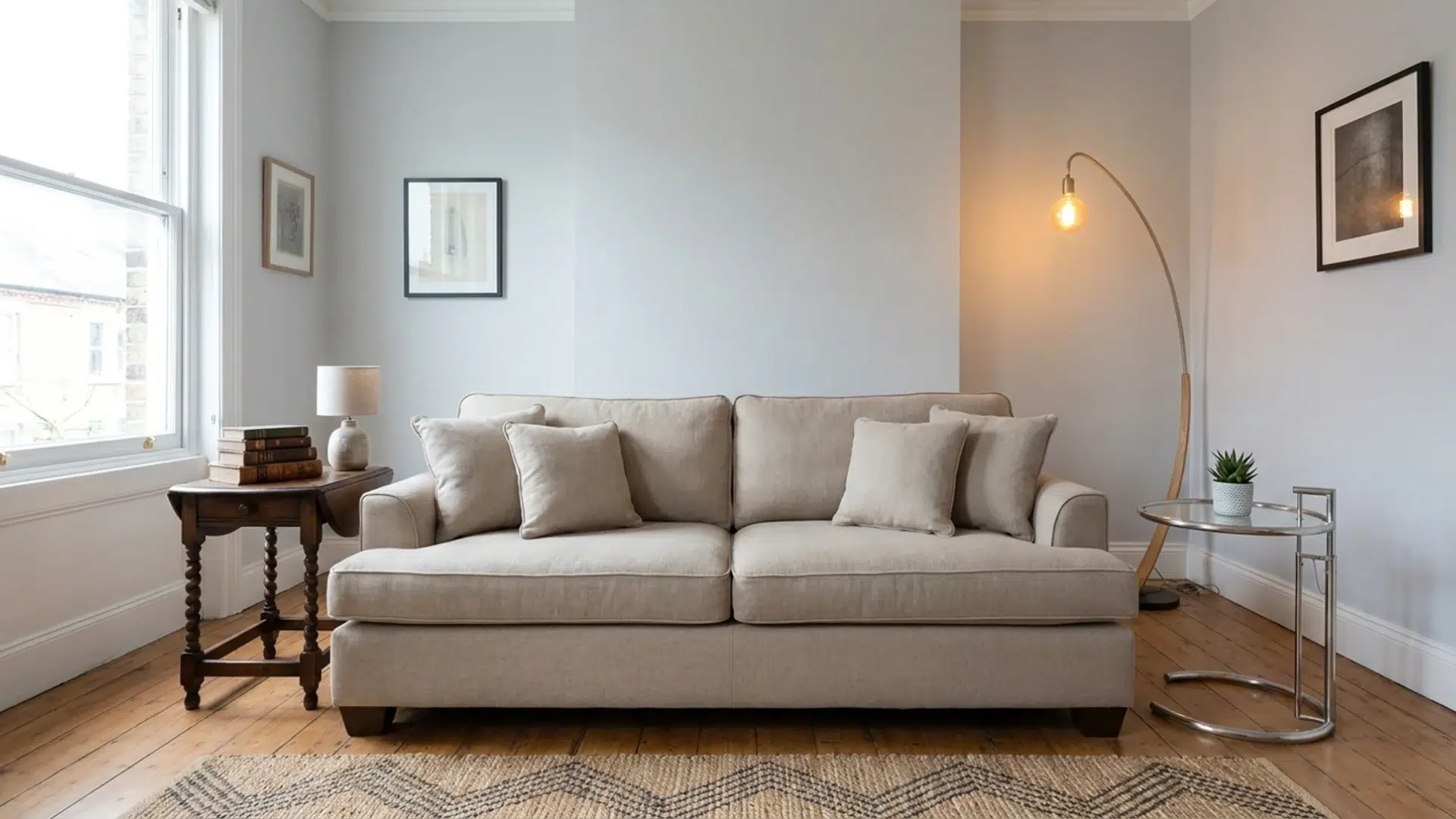
The living room is where transitional design tends to shine most. A well-proportioned sofa in a solid neutral fabric anchors the space, while a mix of side tables, one vintage, one contemporary, adds personality without visual noise.
Lighting is worth paying close attention to here. A statement pendant or sculptural floor lamp can bridge both aesthetics in a single fixture.
2. Bedroom
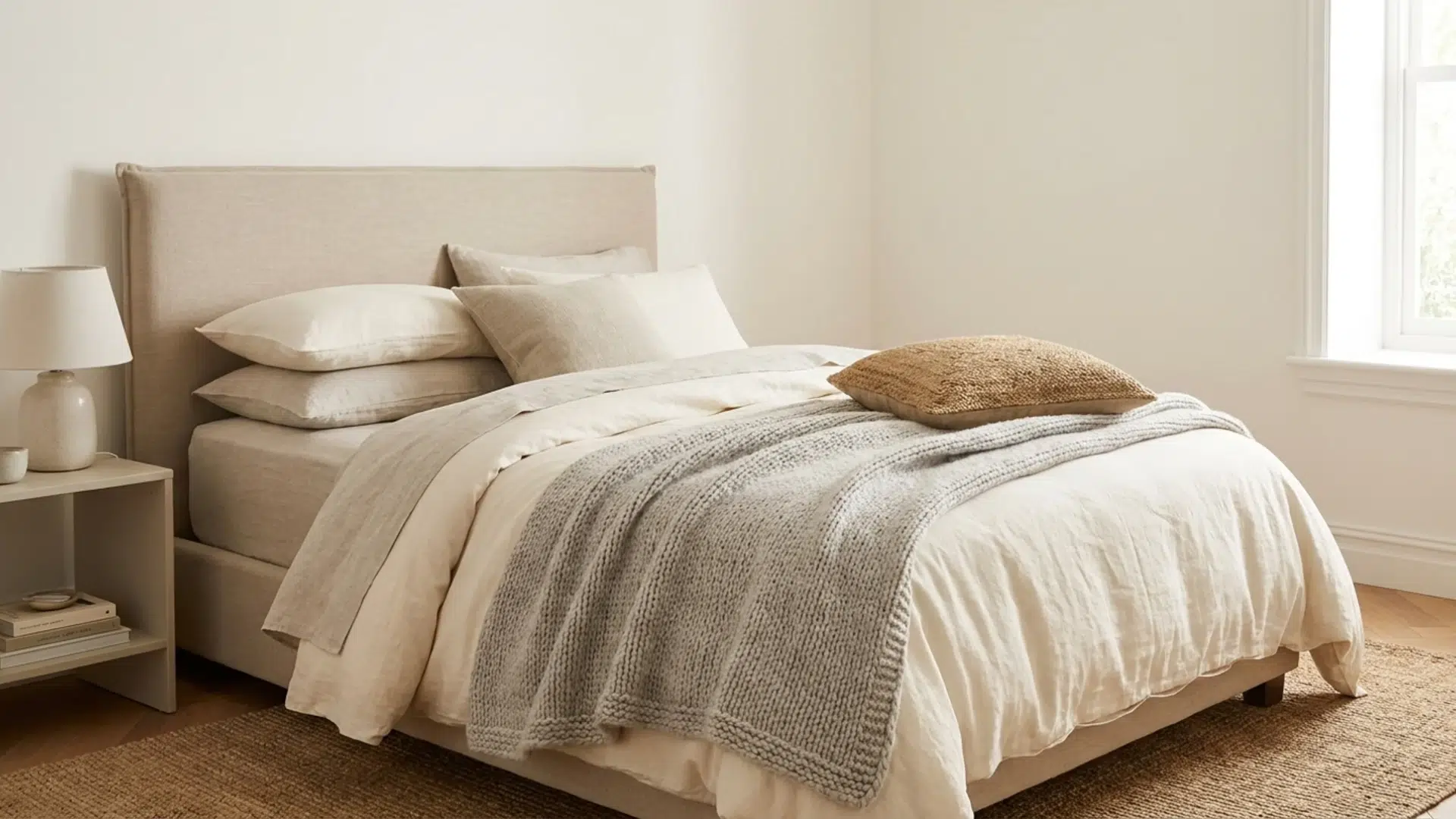
An upholstered headboard in linen or velvet is a natural fit for transitional bedrooms. It adds softness and a slight traditional reference without looking dated.
Keep bedding simple and layered in tonal neutrals. Let texture do the decorative work rather than pattern or print: a chunky knit throw, a woven cushion.
3. Kitchen
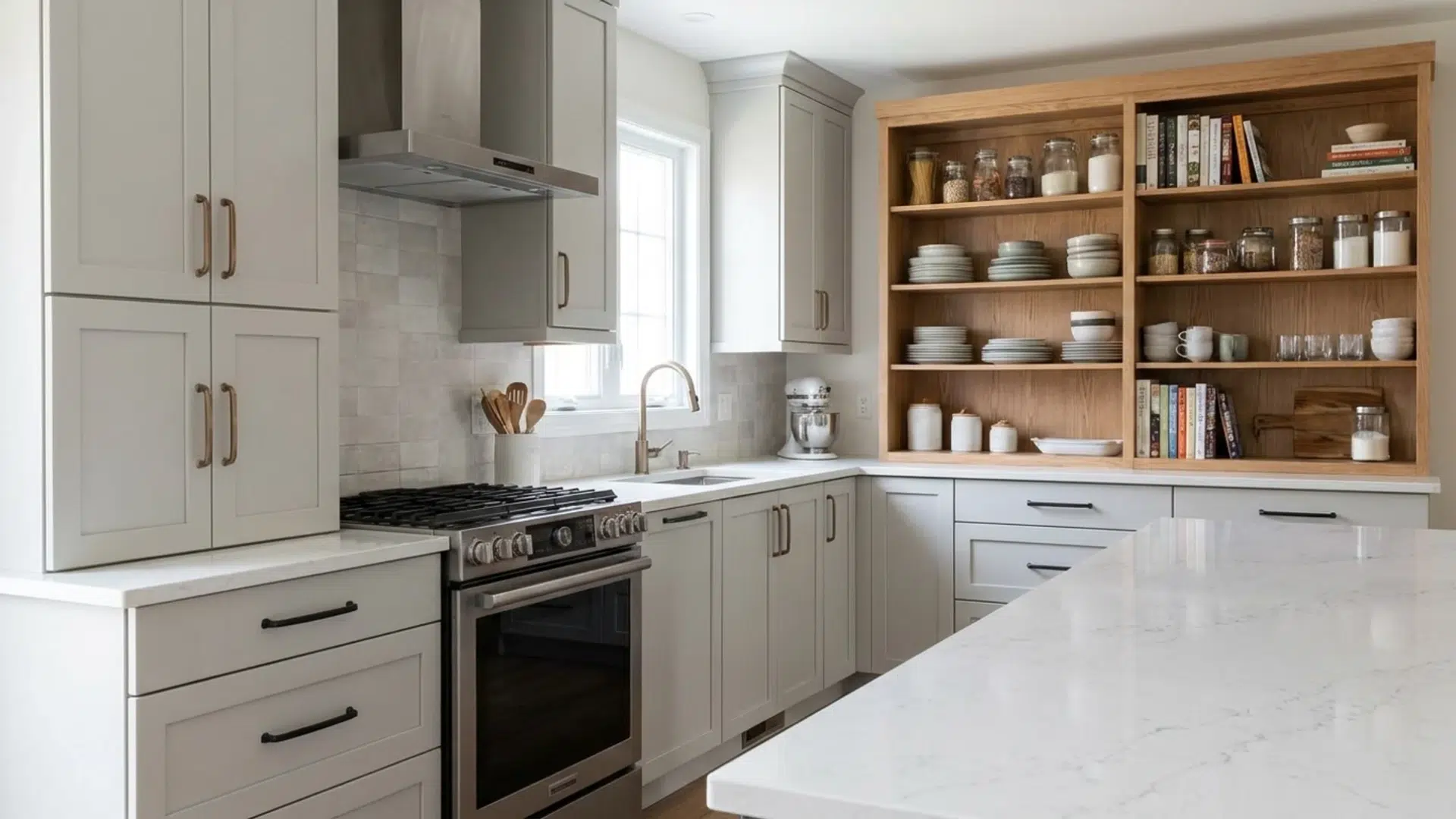
Shaker-style cabinets are a transitional staple because they work in almost any direction. Pair them with stone or quartz countertops and mixed metal hardware to keep things from feeling too uniform.
One wall of open shelving introduces a contemporary touch while keeping the overall feel grounded and practical.
4. Bathroom
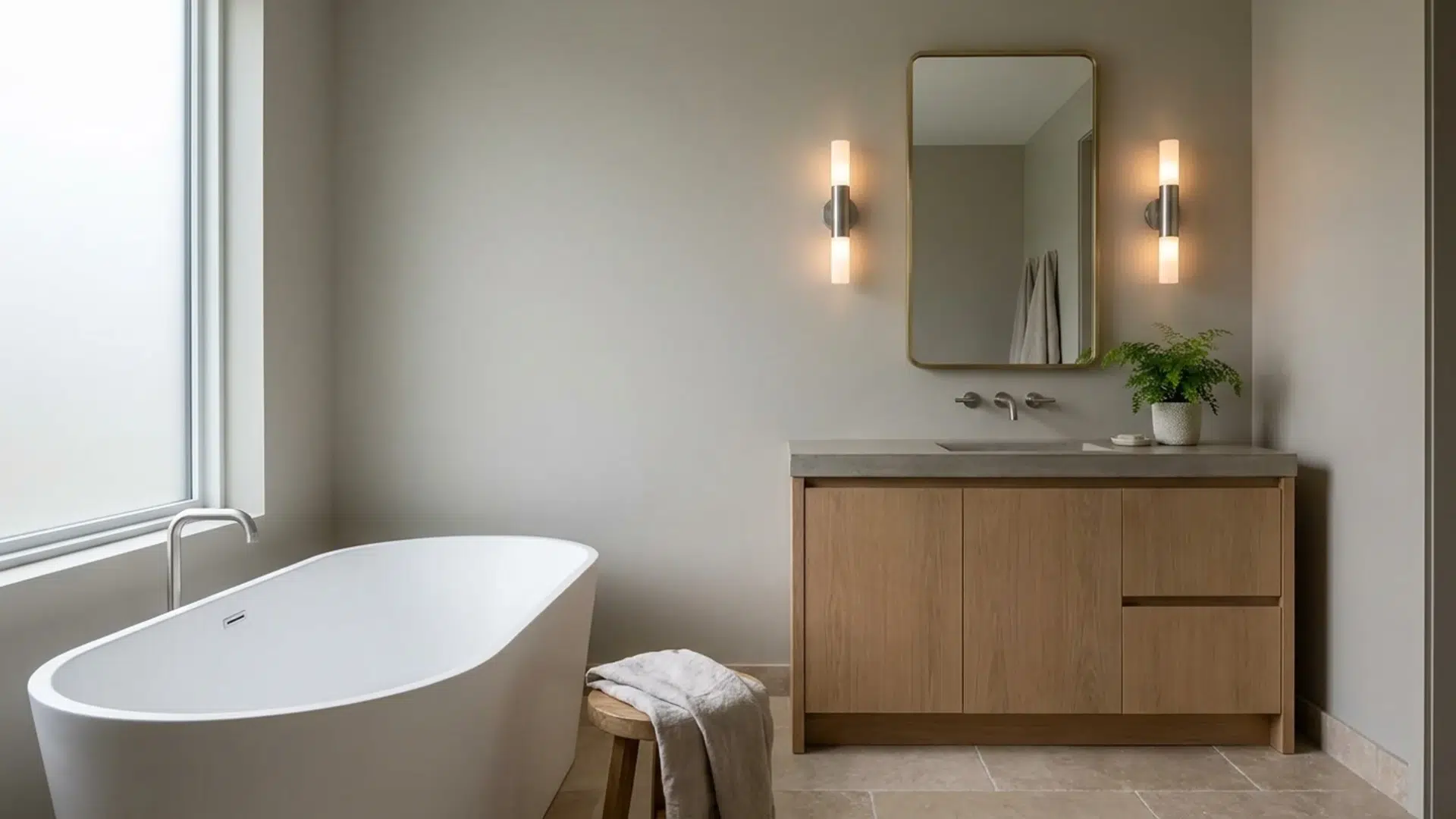
A framed mirror with clean edges, simple wall sconces, and a freestanding bath, where space allows, give a transitional bathroom its character.
Stick to a tight material palette. Two or three finishes, at most, keep the space feeling intentional rather than busy.
5. Home Office
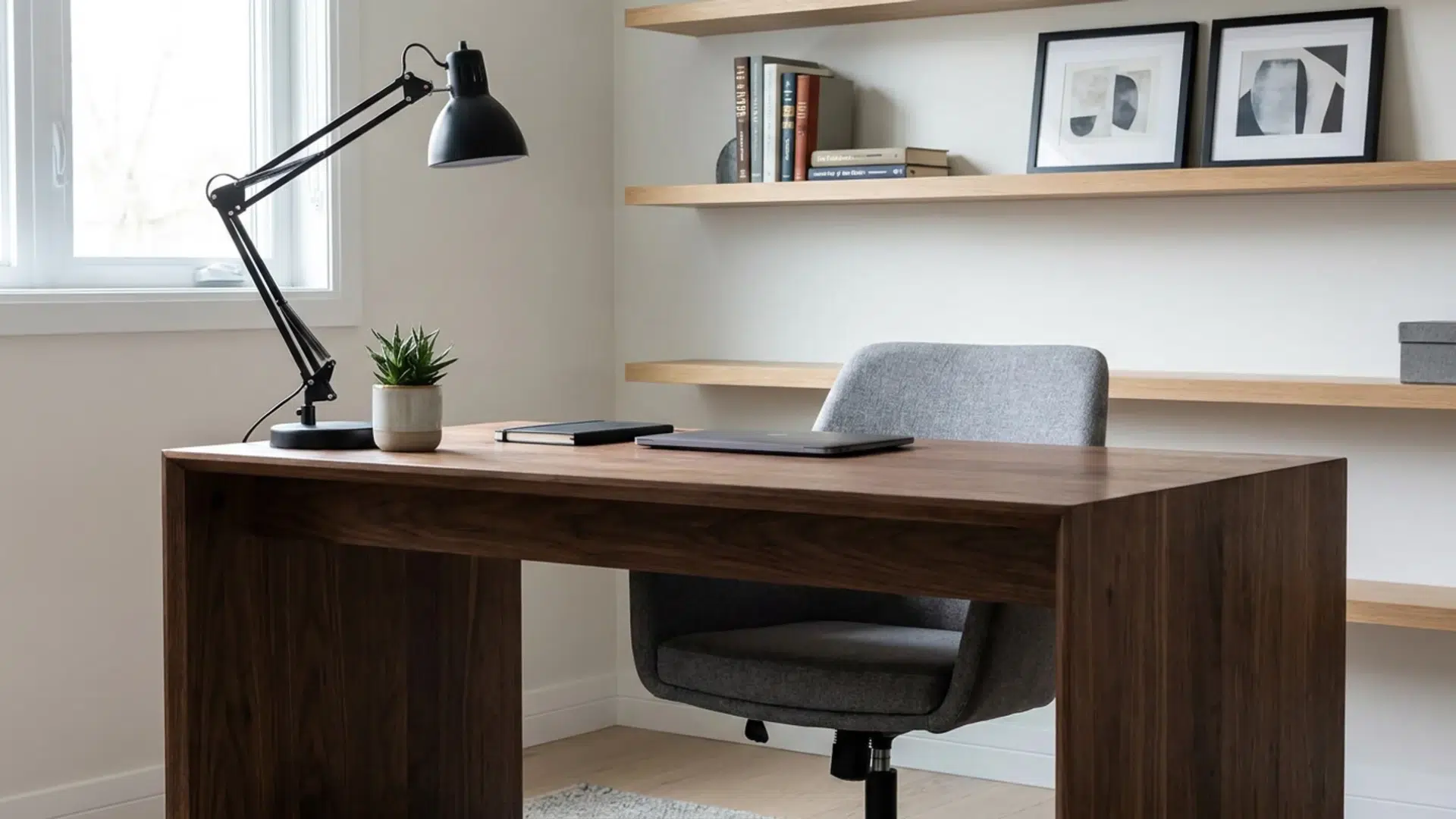
Function leads in a transitional home office, but it doesn’t have to look purely utilitarian. A solid-wood desk with clean lines, paired with an upholstered chair and simple shelving, strikes the right balance.
A quality desk lamp, a small plant, and one or two framed pieces are all the accessories this space needs.
Furniture Choices for Transitional Interiors
Furniture is where transitional design either comes together or falls apart. The pieces you choose need to feel collected and intentional, not matchy-matchy, but not random either.
What to Look For:
- Classic silhouettes with simple, modern execution
- Rolled arms, tapered legs, or subtle panel detailing
- Durable, neutral fabrics like linen, cotton, or wool blends
- Solid wood or quality upholstery over trend-driven materials
- Well-proportioned scale that suits the room size
- Mixed wood tones and finishes for a layered feel
- Quality construction that lasts beyond passing trends
What to Avoid:
- Heavily carved or ornate traditional pieces
- Ultra-minimalist or industrial-style furniture
- Matching furniture sets from a single collection
- Overly bold patterns or loud upholstery prints
- Cheaply made statement pieces without lasting quality
- Oversized or undersized furniture that throws off scale
- Trend-driven shapes that date the room quickly
3-5-7 Rule: How It Applies to Transitional Design
The 3-5-7 rule is a simple way to make any space look balanced. It works by grouping decor in odd numbers like three, five, or seven. Odd groupings feel more natural than even ones.
They help the eye move easily without making the setup look too perfect. This fits well with transitional design, which focuses on balance.
It keeps the space clean but not too strict. For example, use a lamp, a vase, and books on a table. Or place five items with different heights on a shelf.
You can also try three pillows on a sofa or three lights over an island. Mix sizes and textures to keep it interesting. If something feels crowded, remove one item instead of adding more. This keeps the space simple and well-put-together.
Is Transitional Design Outdated?
It’s a fair question, especially with bold and expressive interiors getting a lot of attention lately.
But transitional design is far from outdated.
This style was never tied to a specific time or trend. It blends classic and modern elements in a way that stays relevant over the years.
It does not depend on one color, material, or shape that can go out of style. Its focus on balance helps it adapt as trends change.
Homes designed this way even decades ago still feel fresh today. Very few styles can hold that kind of long-term appeal.
It also works well for many people and tastes. That makes it a strong choice for both everyday living and resale value.
Transitional Style vs. Other Design Styles
Transitional design is often confused with the styles it sits close to.
Here’s how it actually compares to the most common alternatives in one quick view:
| Feature | Transitional | Traditional | Contemporary | Modern |
|---|---|---|---|---|
| Lines | Clean with subtle detail | Ornate and heavily detailed | Sleek and minimal | Sharp and precise |
| Color Palette | Warm neutrals with soft accents | Rich, deeper tones | Often monochromatic | Bold contrasts, mostly neutral |
| Furniture | Classic silhouettes in simpler forms | Carved, embellished pieces | Streamlined and restrained | Industrial, geometric shapes |
| Materials | Mixed wood, metal, linen, stone | Dark wood, heavy fabrics | Glass, polished metal | Steel, glass, concrete |
| Texture | Layered and varied | Rich and decorative | Restrained and smooth | Minimal and uniform |
| Ornamentation | Subtle and intentional | Detailed and elaborate | Light and selective | Virtually none |
| Origins | Blended, no fixed era | Rooted in 18th–19th century | Always evolving with time | Mid-century, post-war |
| Overall Feel | Relaxed elegance | Formal and structured | Current and evolving | Stark and approachable |
Common Mistakes to Avoid
Transitional design looks effortless when done well, but a few missteps can quickly throw the harmony off.
These are the most common ones I’ve seen, and how to sidestep them:
- Going too formal or too minimal: Leaning too far in either direction breaks the core equilibrium, which the transitional design depends on.
- Ignoring texture variety: Relying only on smooth or flat surfaces makes the room feel dull. Layer linen, wood, metal, and woven materials.
- Choosing trendy over timeless: Too many on-trend pieces date the space quickly. If something feels very“right now,” use it sparingly.
- Matching everything too closely: A fully matched furniture set removes the depth and character that transitional interiors depend on.
- Neglecting lighting: Lighting bridges traditional and contemporary effortlessly; treating it as an afterthought is a missed opportunity.
Conclusion
Transitional interior design has staying power because it was never built around a moment. It doesn’t chase trends; it outlasts them.
The spaces it creates feel grounded, comfortable, and considered.
That’s a harder combination to achieve than it looks, and it’s why the style continues to resonate with so many homeowners.
If you’re ready to try it, start with one room. Get your neutrals right, choose furniture with intention, and let texture do the rest. The results tend to speak for themselves.
Frequently Asked Questions
Can Transitional Design Work in Small Spaces?
Yes, it works well in small spaces. Clean lines, neutral colors, and simple layouts help the room feel open, light, and less visually crowded.
How Do I Start Transitioning My Home Without a Full Redesign?
Start with small updates like new cushions, lighting, or decor. Mix a few modern pieces with classic ones to slowly shift the overall look.
Can I Add Personality to A Transitional Space?
Yes, personality can be added through art, textiles, or one standout piece. Keep it minimal so the space stays balanced and not overly busy.