Marigold Seeds: How to Plant, Grow, and Care for Them
Marigolds are one of the easiest flowers to grow quickly from seed. Yet many first-time gardeners end up with seeds that never sprout, or with seedlings that die within days.
Most failures come down to two simple mistakes: planting too deep or watering too much.
This post shows you how to plant marigold seeds the right way, indoors and outdoors. You will learn how long it takes for marigolds to grow, so you know what to expect at every stage.
What You Need Before You Start
Good results start with the right basics. Gather these simple items before you plant your first marigold seed.
|
Item |
Why You Need It |
|---|---|
|
Marigold seeds (French, African, or Signet) |
Your starting point. Pick a type based on space and bloom time. |
|
Seed-starting mix or garden soil |
Gives roots a light, well-draining base. |
|
Small pots or trays (for indoor starts) |
Holds seedlings until they are ready to move outside. |
|
A sunny spot or grow light |
Marigolds need 6 or more hours of light a day. |
|
Watering can |
Keeps soil moist without soaking it. |
|
Mild fertilizer (optional) |
Supports growth once true leaves appear. |
Types of Marigolds

Not all marigolds grow the same way. Knowing the type you have helps you plant it right.
French Marigolds
French marigolds are small and compact, growing 6 to 12 inches tall. They bloom fast, often within 45 to 60 days from seed. This makes them a solid pick for beginners and container gardens.
African (Mexican) Marigolds
African marigolds grow taller, often 2 to 3 feet, with bigger blooms. They need more time to mature, usually 70 to 100 days from seed. Give them extra room, about 12 to 16 inches apart.
Signet Marigolds
Signet marigolds have thin, fern-like leaves and small edible petals. They bloom on a schedule close to French types and work well in borders. Their light scent also makes them a nice fit near herb gardens.
When Is the Best Time to Plant Marigold Seeds
The best time to plant marigold seeds is one to two weeks after your last spring frost date. By then, soil has warmed enough for good germination.
If you want a head start, sow seeds indoors 5 to 8 weeks before that frost date. Move seedlings outside once the frost danger has passed.
Gardeners in warm climates, like Zone 9 or 10, can plant a second round too. Try sowing again in mid to late summer for fall color.
How to Plant Marigold Seeds Outdoors
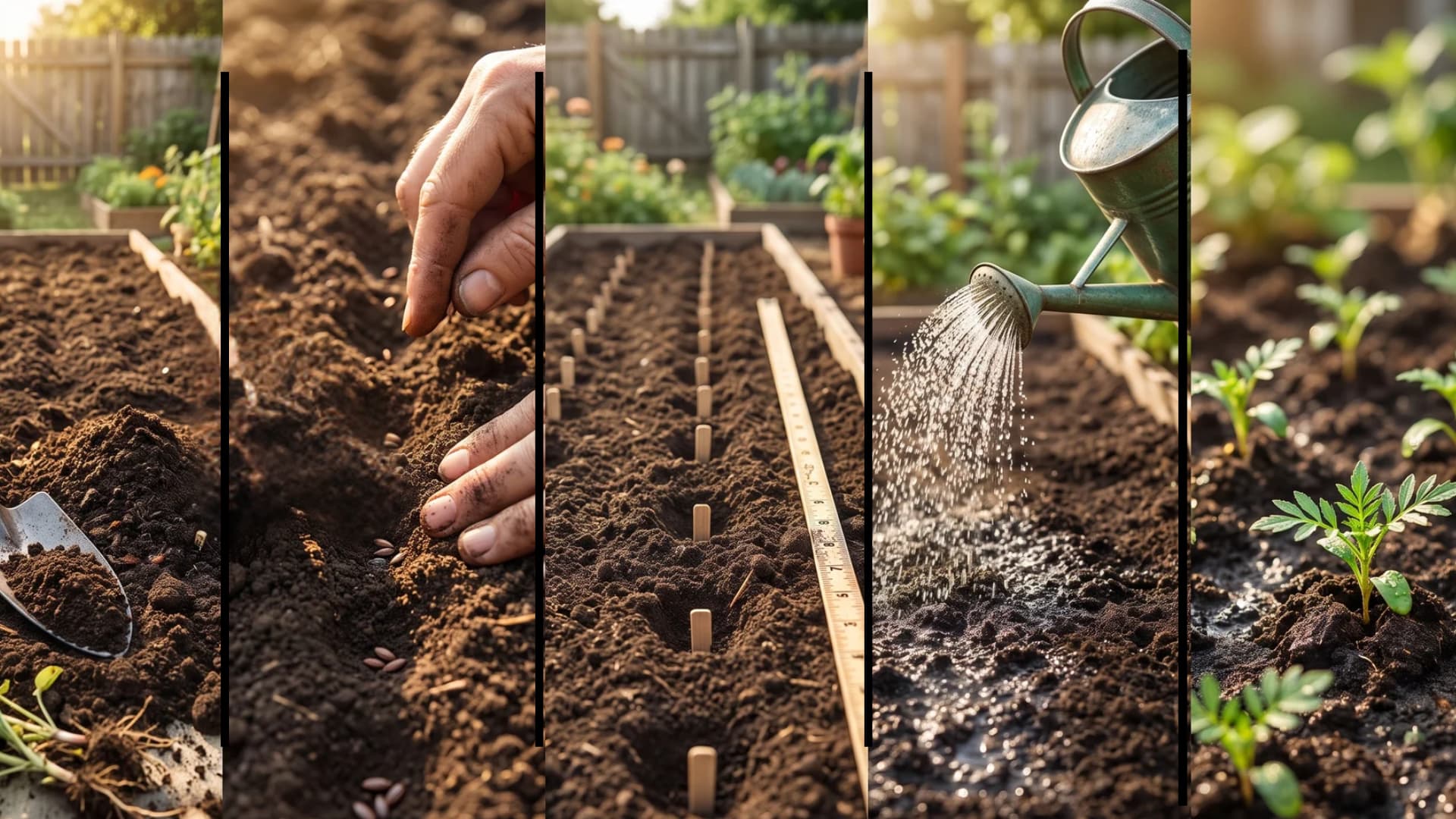
Direct sowing is the easiest way to start marigolds outdoors. Follow these five steps for strong, even germination.
Step 1: Prepare the Soil
Loosen the top 6 inches of soil in a sunny spot. Mix in compost if your soil is heavy or nutrient-poor. Marigolds are not fussy, but loose soil helps roots spread. Remove weeds and large rocks before you sow.
Step 2: Sow the Seeds
Plant marigold seeds about ¼ inch deep. Seeds planted too deep often fail to sprout. Place seeds directly in the soil and cover them lightly. Gently press the soil down so the seeds make good contact.
Step 3: Space the Seeds Properly
Give French marigold seeds 8 to 10 inches of space. African types need 12 to 16 inches to grow well. Proper spacing keeps air moving between plants. Good airflow lowers the risk of fungal problems later.
Step 4: Water Right After Planting
Water the soil gently right after you sow the seeds. Use a light spray so you do not wash seeds away. Keep the top inch of soil moist until sprouts appear. This usually takes 5 to 7 days in warm soil.
Step 5: Keep the Soil Moist Until Seedlings Appear
Check the soil daily while you wait for germination. Water whenever the surface feels dry. Avoid soggy soil, since it can rot seeds before they sprout. Once seedlings appear, you can water a little less often.
How to Start Marigold Seeds Indoors

Starting seeds indoors gives you earlier blooms and more control. Here is how to do it step by step.
Step 1: Fill Trays With Seed-Starting Mix
Use clean trays or small pots with drain holes. Fill them with a light seed-starting mix, not garden soil. This mix holds moisture but still drains well. It also lowers the risk of disease in young seedlings.
Step 2: Plant the Seeds
Sow marigold seeds about ¼ inch deep, one or two per cell. Cover them lightly with more seed mix. Gently press down to help the seeds settle. Label each tray if you are starting more than one type.
Step 3: Keep Soil Warm
Marigold seeds germinate best at 70-75°F. Place trays in a warm spot, or use a heat mat. Keep the mix moist but never soggy. Sprouts usually appear within 5 to 7 days.
Step 4: Give Seedlings Plenty of Light
Move trays to a bright spot or under grow lights once seedlings appear. Aim for 12 to 16 hours of light a day. Low light causes tall, weak seedlings. Turn trays often, so plants grow straight.
Step 5: Harden Off Before Transplanting
About a week before moving seedlings outside, start hardening them off. Set trays outside for an hour on the first day. Add an hour each day, increasing sun and wind exposure. This step lowers the chance of transplant shock.
Step 6: Transplant Outdoors
Move seedlings to the garden after your last frost date. Choose a cloudy day or early evening to reduce stress. Space them the same as you would direct-sown seeds. Water well right after transplanting to help roots settle.
How Long Does It Take for Marigolds to Grow?
Marigold seeds usually sprout in 5 to 7 days in warm soil. Cooler conditions can stretch this to 14 days. French marigolds reach their first blooms in about 45 to 60 days from seed. African or Mexican marigolds take longer, often 70 to 100 days, since they grow bigger plants. Signet marigolds bloom on a schedule close to French types. Most marigolds go from seed to flower within two to three months.
Marigold Seed Care After Planting
Once seedlings are up, care becomes simple upkeep. These five habits keep your marigolds healthy through the season.
-
Watering: Give plants about 1 inch of water per week, and let soil dry slightly between waterings.
-
Sunlight: Keep marigolds in full sun for at least 6 hours a day for the most blooms.
-
Thinning: Once seedlings reach 2 to 3 inches, thin them to the recommended spacing.
-
Fertilizing: Feed lightly every 4 to 6 weeks, since too much nitrogen means fewer flowers.
-
Deadheading: Remove spent blooms often to keep new flowers coming all season.
Common Problems When Growing Marigolds From Seed
Even easy flowers run into trouble sometimes. Most marigold problems trace back to soil, water, or light. Here are the issues you are most likely to see, and simple fixes for each.
-
Seeds not sprouting: Often caused by planting too deep, cold soil, or too much water. Keep depth at ¼ inch and soil above 70°F.
-
Leggy, weak seedlings: Usually means they don’t get enough light. Move trays to a brighter spot or add a grow light.
-
Yellowing leaves: Often a sign of overwatering or poor drainage. Let soil dry out between waterings.
-
Powdery mildew or damping-off: Caused by crowded plants and damp leaves. Space plants well and water at the base, not overhead.
Marigolds in Containers vs. In the Ground
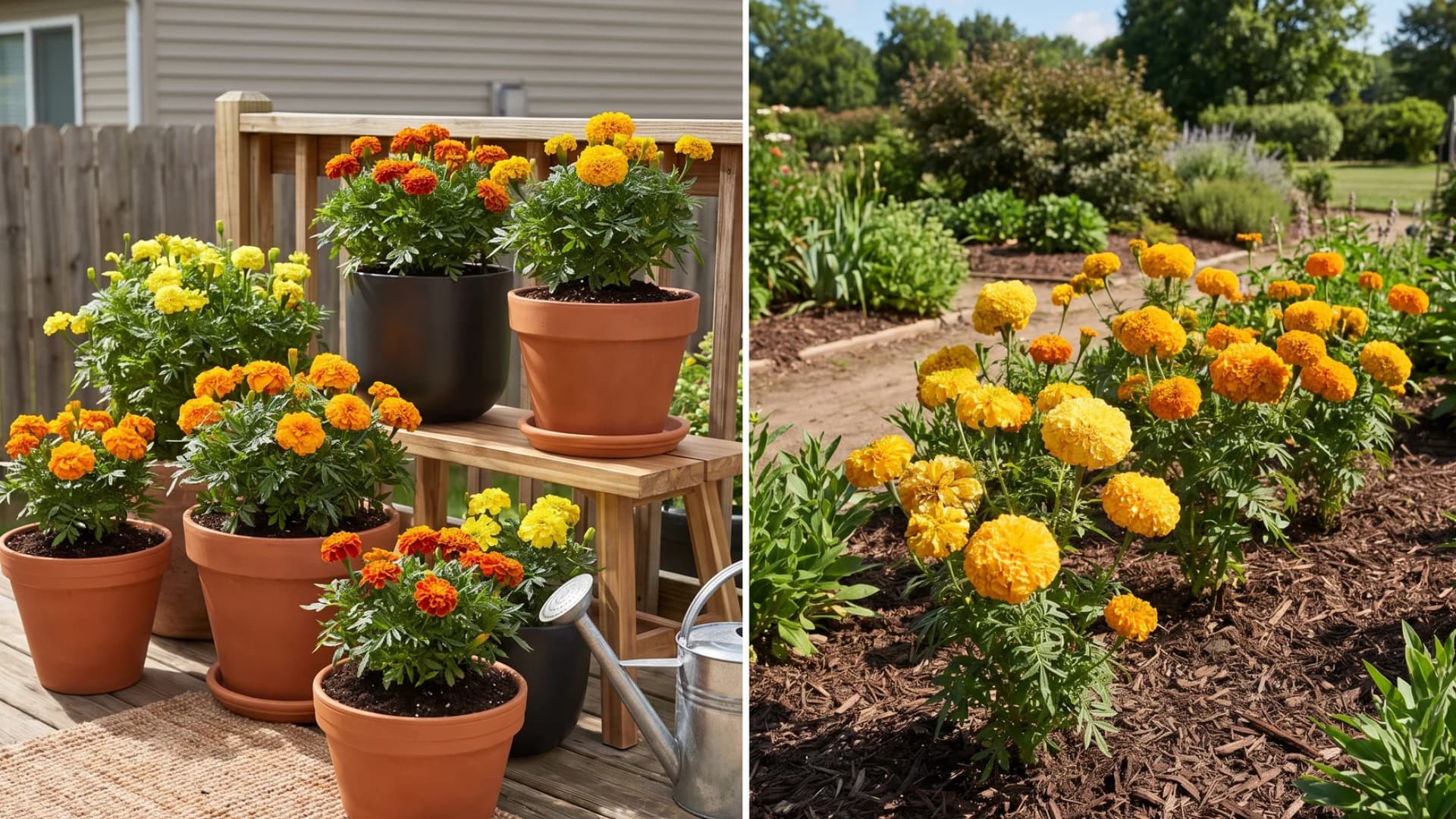
Marigolds grow well in containers or straight in garden beds. Your choice depends on space, style, and how much care you want to give.
|
Factor |
Containers |
In the Ground |
|---|---|---|
|
Best for |
Small spaces, patios, porches |
Larger gardens, beds, borders |
|
Watering needs |
Dries out faster; check often |
Holds moisture longer |
|
Growth size |
Smaller varieties do best |
Room for taller African types |
|
Soil control |
Easy to use fresh potting mix |
Depends on existing garden soil |
|
Mobility |
Easy to move for sun or shelter |
Fixed once planted |
What to Plant (and Not Plant) Near Marigolds
Marigolds pair well with tomatoes, peppers, beans, and cucumbers in a mixed garden bed. Gardeners often plant them nearby to support these vegetables and add color between rows.
Some marigold types, like ‘Tangerine’ French marigolds, can reduce certain root-knot nematodes. This works best when grown as a full cover crop the season before planting vegetables.
That guidance comes from the University of Florida IFAS Extension. But that same research found something different for casual planting.
Simply placing a few marigold plants next to your vegetables does not protect them from nematodes the same way. For pest control, avoid planting marigolds too close to beans in tight rows. Crowding can limit airflow for both plants.
Conclusion
Planting marigold seeds is simple once you know the small details that matter: shallow depth, warm soil, and steady moisture.
Get those right, and you will see sprouts within a week and blooms within two months. These flowers reward beginners fast, which is why they remain a garden favorite for new and experienced growers alike.
Pick your favorite type, sow a few seeds this weekend, and watch your garden fill with color by early summer. Your marigolds are waiting now.
Frequently Asked Questions
Can I just throw marigold seeds in the ground?
You can scatter marigold seeds on the soil, but covering them lightly works better. A light layer of soil, about ¼ inch, protects seeds from birds and helps them stay moist. Seeds left fully exposed often dry out before they sprout.
How many marigold seeds do you plant in one hole?
Plant 1 to 2 marigold seeds per hole or per cell. If both sprout, thin to the strongest seedling once true leaves appear. This gives each plant enough room to grow well.
Do marigold seeds need to be soaked before planting?
No, marigold seeds do not need to be soaked before planting. They germinate well without it, usually within 5 to 7 days in warm soil. Some gardeners soak seeds anyway to speed things up slightly, but it isn’t required.
Do marigolds come back every year?
Most marigolds are annuals, so they complete their life cycle in one season and do not return on their own. But they often reseed themselves if you let a few blooms dry on the plant. Save seeds each fall to replant next spring.
What should not be planted near marigolds?
Avoid planting marigolds too close to beans in tight spacing, since it can limit airflow. Keep them away from areas with heavy shade, since low light reduces blooms. Give each plant enough space so vegetables and marigolds don’t compete for room.