How to Clean Concrete Floors: A Complete Guide for Every Room
Concrete floors look tough, but they still need real care. If you mopped one and watched dull patches return within days, plain water wasn’t enough.
Learning how to clean concrete floors starts with understanding what your floor is made of and what it can handle.
This post walks through the tools, the routine, and the exact steps for garages, basements, and finished floors, plus the mistakes that quietly wear concrete down so you can avoid them for good.
What Is the Best Way to Clean Concrete Floors?
The best way to clean concrete floors is to sweep away loose dirt first, then mop with a pH-neutral cleaner mixed with warm water, working in small sections so the solution does not dry on the surface before you rinse it. Follow with a clean water rinse, then dry the floor fully before anyone walks on it.
This basic routine keeps most sealed and finished concrete looking good. Unsealed or heavily stained floors need a slightly different approach, which we cover later in this guide.
Sealed vs. Unsealed Concrete: Know Your Floor Before You Clean

Not every concrete floor reacts the same way to water and cleaners, and picking the wrong one can leave lasting marks. A quick test tells you exactly what you are working with.
|
What to Check |
Sealed Concrete |
Unsealed Concrete |
|---|---|---|
|
Water drop test |
Water beads up on the surface |
Water soaks in and darkens the spot |
|
Look and feel |
Smooth, glossy, or semi-glossy |
Matte, slightly rough, sometimes chalky |
|
Common locations |
Living spaces, polished floors, coated garages |
Basements, older garages, unfinished slabs |
|
Safe cleaner type |
Wider range, including mild degreasers |
pH-neutral only, no acids or alkaline products |
How to Clean Concrete Floors (Regular Routine)

This is the routine worth repeating weekly on most concrete floors. Skip a step, and you will likely end up redoing the whole job.
Tools and Supplies You’ll Need
Most of what you need for concrete floor maintenance is already sitting in your cleaning closet. Here is the short list to gather before you start.
|
Tool or Supply |
What It’s For |
|---|---|
|
Broom or shop vacuum |
Removes loose dirt and grit before mopping |
|
Microfiber mop |
Spreads cleaner evenly without scratching the surface |
|
Two buckets |
One for cleaning solution, one for clean rinse water |
|
Stiff bristle brush |
Loosens dried stains and ground-in dirt |
|
pH-neutral cleaner |
Safe for daily cleaning on most concrete types |
|
Rubber gloves |
Protects your hands from cleaning solutions |
|
Dry towels or cloths |
Speeds up drying and prevents water spots |
Tip: If you want extra assurance about indoor air quality, look for a cleaner carrying the EPA Safer Choice label, which marks products reviewed for safer ingredients.
Step 1: Clear the Area
Move furniture, mats, and boxes off the floor before you start. Cleaning around objects leaves patchy results and often traps moisture underneath them, which can lead to stains or mildew later.
Step 2: Sweep or Vacuum
Sweep or vacuum the entire floor to lift dust, grit, and loose debris. This step matters more than people expect, since dragging a wet mop over gritty dirt can scratch the surface.
Step 3: Mix Your Cleaning Solution
Combine warm water with a small amount of pH-neutral cleaner in your bucket, following the label’s ratio. Avoid adding extra cleaner thinking it will clean better, since leftover residue attracts more dirt.
Step 4: Mop in Small Sections
Work across the floor a few feet at a time, not the whole room at once. This keeps the cleaner from drying on the surface before you can rinse it off.
Step 5: Rinse With Clean Water
Go back over the floor with a second mop and plain water to lift any leftover soap or cleaner. Skipping this step is one reason floors look dull again within days.
Step 6: Dry Completely Before Foot Traffic
Use dry towels, fans, or open windows to speed up drying. Walking on a damp floor too soon can leave footprints, streaks, or, in some cases, new water marks on unsealed concrete.
How Often Should You Clean Concrete Floors?
How often you clean depends mostly on foot traffic and location. Indoor concrete floors in living areas usually need a quick sweep every few days and a full mop once a week, while garage and basement floors can often go two to three weeks between deep cleans unless they see heavy use or spills.
High-traffic commercial or industrial concrete usually needs daily sweeping and mopping at least once a week to keep dirt from grinding into the surface over time.
Staying on top of this kind of concrete floor maintenance now prevents deeper stains and costly resealing later.
How to Clean Concrete Floors in the Garage

Garage floors deal with oil, grease, road salt, and whatever the car tracks in. These two problems come up more than any other in a garage setting.
Removing Oil and Grease Stains
-
For fresh stains, cover the spot with cat litter, sawdust, or baking soda and let it sit for a few hours to soak up the oil before sweeping it away
-
For older stains, apply a concrete-safe degreaser and scrub with a stiff-bristle brush
-
Rinse with clean water and let the area dry fully before parking on it again
Road Salt and Rust
-
Mop salt residue with warm water and a mild detergent as soon as the season allows, since salt left sitting can eat into an unsealed surface
-
For rust spots, a paste of lemon juice and salt or a commercial concrete rust remover usually works, left on for five to ten minutes before scrubbing
-
Rinse thoroughly, since leftover rust remover can sometimes discolor concrete if left too long
How to Clean Concrete Floors in the Basement
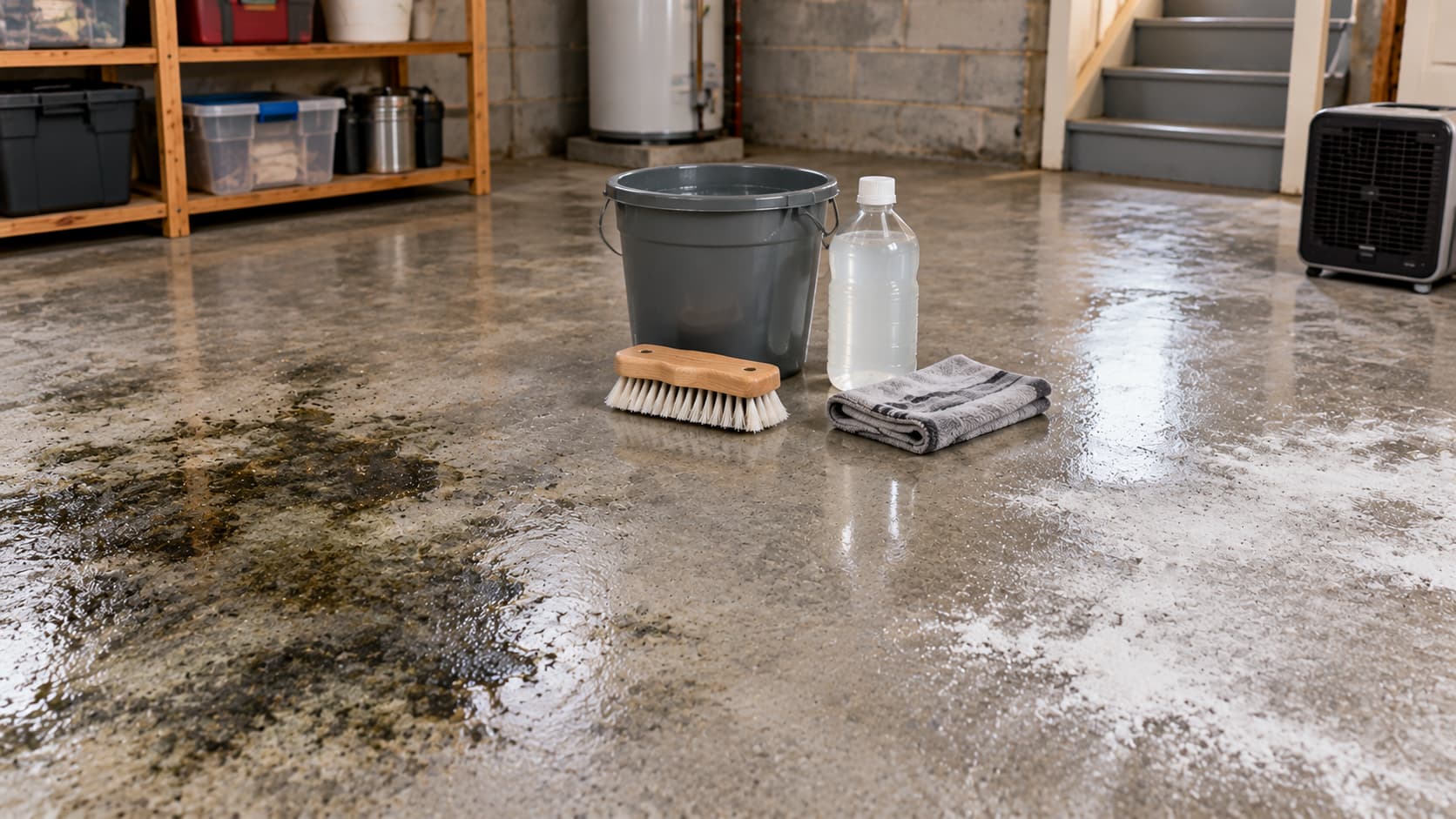
Basement concrete floors bring their own set of problems, mostly tied to moisture. Mold, musty smells, and white powdery patches are the most common complaints.
Mold, Mildew, and Musty Odors
-
Mix equal parts water and white vinegar, apply to the affected area, and let it sit for ten to fifteen minutes before scrubbing with a stiff brush
-
Rinse well and dry the space completely, ideally with a fan running to cut down on the humidity that let the mold grow in the first place
-
If the smell returns quickly, check for a moisture source such as a small leak or poor drainage nearby
What Is Efflorescence (and How to Remove It)
-
Efflorescence is the white, chalky powder that appears when moisture pulls mineral salts up through the concrete to the surface
-
Scrub the area with a stiff brush and plain water first, since many light cases lift off without any chemical cleaner at all
-
For stubborn buildup, a mild acidic cleaner made for efflorescence can help, but sealing the floor afterward is what actually stops it from coming back
How to Clean Unsealed Concrete Floors Indoors
Unsealed concrete is more porous, so it needs a gentler approach than a sealed floor. A few simple rules keep it looking its best.
-
Use only pH-neutral cleaners: Acidic or alkaline products can permanently discolor porous concrete.
-
Avoid Oversaturating the Floor: Too much water soaks in and can weaken the surface over time.
-
Dry the Surface Quickly: Open windows or run a fan so moisture does not sit and invite mold.
-
Skip Steel Wool and Metal Brushes: Metal fragments can rust inside the pores and leave permanent stains.
How to Clean Polished, Sealed, Stained, or Painted Concrete Floors

Each finished concrete floor needs a slightly different approach to protect the top coating. Here is a quick reference for the most common finishes.
|
Finish Type |
How to Clean |
What to Avoid |
|---|---|---|
|
Polished concrete |
Dry dust mop often; damp mop with a cleaner made for polished floors |
Vinegar, citrus cleaners, and abrasive pads |
|
Sealed or stained concrete |
pH-neutral cleaner and warm water; reseal every few years |
Ammonia, bleach, and standing water |
|
Epoxy- or polyurea-coated |
Mild soap and water, gentle scrubbing only on stains |
Harsh solvents and metal scrapers |
|
Dry mop most days, damp mop weekly with minimal water |
Soaking the surface, which can peel the paint |
Is Vinegar Safe for Concrete Floors?
Vinegar is a mixed answer, and it depends on your floor.
On unsealed or plain concrete, a diluted vinegar solution can help lift mild mold, mildew, or light stains without harsh chemicals. On sealed, polished, or stained concrete, though, vinegar’s acidity can slowly etch the surface and dull the finish, especially with repeated use.
If your floor is finished in any way, it is safer to reach for a pH-neutral cleaner and save vinegar for the plain, unsealed areas like an older garage or basement slab.
Common Stains and How to Remove Them
Different stains call for different fixes, and using the wrong method can push a stain deeper into the concrete. Here is a quick guide for the ones people run into most.
|
Stain Type |
Removal Method |
|---|---|
|
Oil and grease |
Absorb with cat litter or baking soda, then scrub with a degreaser and stiff brush |
|
Rust |
Apply a lemon juice and salt paste or a concrete-safe rust remover, let sit, then scrub |
|
Paint splatter |
Scrape off dried paint gently, then use a paint stripper made for concrete on residue |
|
Mold and mildew |
Diluted vinegar or an enzymatic cleaner, scrubbed in and rinsed thoroughly |
|
Efflorescence |
Dry brush first, then a mild acidic cleaner made for mineral deposits if needed |
Mistakes to Avoid When Cleaning Concrete Floors
The biggest mistake I made early on was using whatever cleaner was already under the sink, including a bleach solution on a stained garage floor that left a faded patch I still notice years later.
Since then, I check what a floor is made of before touching it with anything stronger than dish soap.
Other common mistakes include skipping the rinse step, which leaves a dull film behind, and letting a floor air dry slowly instead of speeding it up, since standing water is often what causes staining in the first place, not the dirt itself.
Conclusion
Cleaning concrete floors is not complicated once you know your floor type and stick to a routine.
Sweep first, use a pH-neutral cleaner for most surfaces, rinse well, and dry the floor completely every time. Garages, basements, and finished floors each need small adjustments, but the core steps stay the same.
Skip harsh chemicals unless a stain truly calls for them, and reseal when needed. A little consistency now saves you from stubborn stains and a dull floor later.
Frequently Asked Questions
What is the best thing to clean concrete floors with?
A pH-neutral cleaner mixed with warm water works best for most concrete floors, whether sealed, polished, or plain. It cleans effectively without stripping wax, dulling a finish, or eating into the surface over time.
Will Dawn and vinegar clean concrete?
Yes, a diluted mix of Dawn dish soap and vinegar can clean unsealed or plain concrete, especially for cutting through grease and mild stains. Avoid using it on sealed, polished, or stained floors, since repeated the can etch the finish.
What not to clean concrete with?
Avoid bleach, ammonia, acidic cleaners, and abrasive scrub pads on finished concrete floors. These can discolor the surface, strip sealers, or leave permanent scratches, especially on polished or coated floors.
How to clean unsealed concrete floors indoors?
Sweep first, then mop with a pH-neutral cleaner and a barely damp mop, since unsealed concrete absorbs water quickly. Dry the area fast with a fan or open window to prevent staining or mold.
What is the best cleaner for unfinished concrete floors?
A mild, pH-neutral dish soap diluted in warm water is usually the safest choice for unfinished or unsealed concrete. It cleans without leaving behind harsh residue that can soak into the porous surface.