Lawn Mower Tires: How to Choose the Right Ones for Your Yard
Every homeowner knows that a beautiful garden takes time, patience, and hard work. That’s true even without raised flower beds or fruit and vegetable patches. Even plain grass requires attention to look healthy and vibrant, and it isn’t just about mowing height, watering, and fertilizing.
Tools, lawn mower condition, and lawn care routine can have a big impact on how your grass looks. If your lawn mower tires are worn or unsuitable, they can leave ruts in the lawn or tear the grass during turns. Tires in poor condition can also struggle on slopes, lose traction after rain, or generally make mowing uneven and frustrating. To make this chore easier, let’s take a look at what kind of yard you have and what lawn mower tires you need.
Why Your Lawn Mower Tires Matter for Your Grass
After you’ve determined you have the right type of grass and soil for the area you live in, you want to make sure the tires are suitable for your turf. Choosing the right lawn mower tires helps prevent grass damage and avoids deep tracks in soft soil. A suitable tire should maintain proper traction on slopes and make turns without tearing up the turf. Mowing your lawn shouldn’t be a struggle, and with the right tires it can be a comfortable, controlled experience.
Start by Looking at Your Yard
Whether you have a luxurious oasis or a simple patch of green grass in your backyard, consider the turf you’re working with.
Is Your Lawn Flat or Sloped?
In general, maintaining a flat lawn is much easier. Mowing a flat lawn takes much less time and physical effort. When it comes to sloped lawns, steep inclines can be difficult and even dangerous, so they need tires that provide dependable grip and help the mower feel stable. Always mow up and down slopes to prevent rollover.
Is Your Soil Often Wet?
Mowing on damp, soft ground can cause long-lasting consequences. Wet soil compresses under the mower’s weight, squeezing out air pockets. This restricts oxygen and prevents water infiltration, which stunts root growth.
Waiting to mow dry grass not only ensures a clean, uniform cut, but also reduces plant disease and provides optimal tire and shoe grip to prevent accidents.
Do You Have Rough or Uneven Ground?
Mowing uneven turf requires more time. When mowing a lawn with bumps, tree roots, and uneven areas, you need to adjust mower settings, slow down, and protect the turf and equipment.
Speeding over uneven ground can cause the deck to bounce violently, producing not only an erratic cut but possible issues with the mower. To prevent the blades from hitting high spots, striking hidden rocks, or bottoming out in depressions, set your mower deck to its highest level.
How Large Is Your Lawn?
There is a big difference between mowing a small suburban lawn and one that is several acres large. A small one relies on precision, compact equipment, and maneuvering around tight corners, while a large one requires efficiency, speed, and powerful machinery.
Choose a Lawn Mower Tire Tread That Fits Your Garden
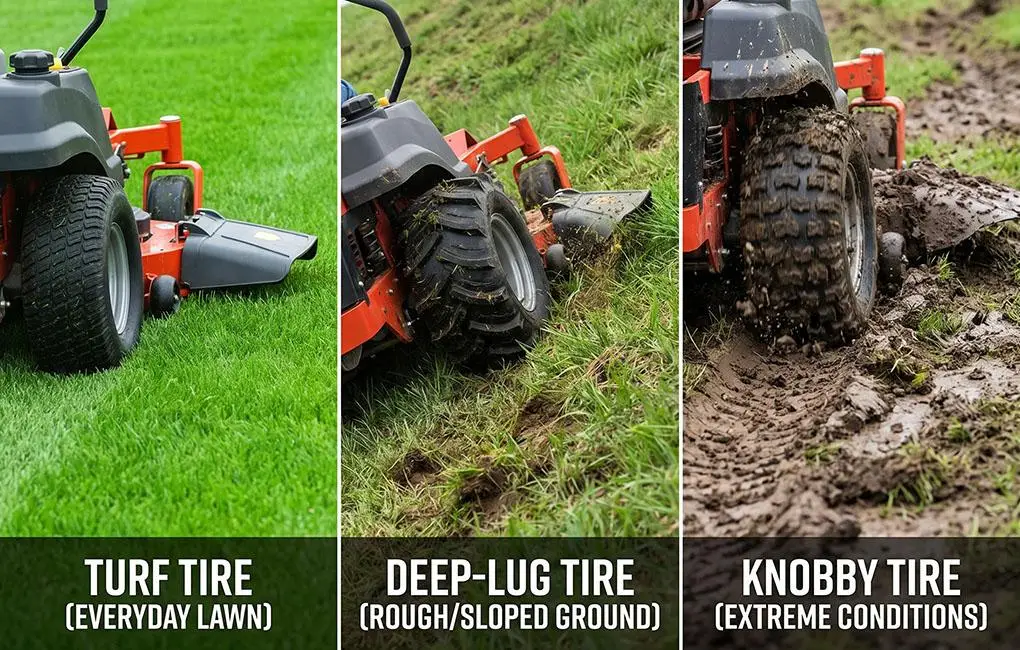
Not every turf requires the same lawn mower tires. Different tire treads directly impact soil compaction, grass health, and overall lawn appearance, so it’s important to distinguish what type of tire is needed for your garden.
Turf Tires for Everyday Lawns
Turf tires are specially designed to protect delicate grass and sensitive surfaces from damage. They have a wide, shallow tread pattern so they provide excellent traction while staying gentle on grass. Homeowners who care about protecting their grass mostly use turf tires on residential lawns, relatively flat yards, and well-maintained turf.
More Aggressive Treads for Rougher Ground
For gardens with rough, uneven, muddy, or challenging terrain, it’s better to use tires that feature deeper, more aggressive tread. However, keep in mind that more aggressive tread has a harsher grip, which causes more disturbance to the lawn. While more aggressive tread provides better traction, less sliding, and fewer muddy ruts, it can cause turf damage during sharp turns.
Tires for Sloping Lawns
It’s not recommended to simply choose the most aggressive tread for a sloping lawn. A tire tread must be perfectly balanced to provide excellent traction and turf protection. Good traction ensures stability and prevents sliding and rollovers, and protection avoids tearing up the grass and causing ruts.
Think About Your Lawn Through the Seasons
When it comes to seasonal maintenance, your grass is no different than the flowers, fruits, and vegetables in your garden. It reacts to changing weather, so adjusting your lawn care routine with the seasons is key to keeping the grass healthy.
Spring
Springtime typically involves thawing ground and wet soil. This means that the soil is vulnerable and can be easily damaged by heavy equipment. The first cut of the season should be done when the grass is dry enough so the mower tires won’t leave ruts or compact soggy soil.
Summer
While dry, firm ground in summertime provides better traction, hard turf can be a challenge for equipment. If the grass is heat-stressed, it’s better not to mow it because heavy mower tires will compress the dry grass blades and leave permanent dead tracks across the lawn.
Fall
Fall is the time when the grass transitions into winter dormancy. Cut the grass as long as it grows, and avoid mowing it when it’s wet. Cut it shorter to prevent long blades from bending and matting under snow, ice, or heavy frost. This reduces the risk of fungal diseases. You can run the mower over the thin leaf coverage to shred them; they will break down over winter and turn into beneficial organic matter.
After Rain
Even the most suitable lawn mower tires can leave tracks and compact the soil if used on a saturated lawn. Because of this, it’s best to avoid mowing after rain because not only can there be damage done to the grass and soil, but wet clippings will stick together and clog the mower deck.
How to Choose Lawn Mower Tires Without Damaging Your Lawn
When choosing lawn mower tires, it’s crucial to find the least aggressive ones to avoid damaging your grass and soil. However, they still need to provide enough traction to successfully and safely finish the job.
Find tires with a tread suitable for your lawn and enough traction for your garden. Avoid an aggressive design that will unnecessarily tear up the turf. Make sure they are the right size and fit for your mower and durable enough to withstand your mowing routine.
Signs Your Lawn Mower Tires Need Replacing
Every tire has a limited service life. Regularly check your lawn mower tires for visible cracks and worn tread. Before you start mowing, check whether the tires are flat, look uneven, or may be losing air. Pay attention to the mower leaving any unusual tracks or if it is slipping. Don’t disregard it if you notice any reduced traction. If the lawn mower feels less stable or starts damaging grass during turns, check the tires thoroughly; they might need to be replaced.
Simple Tips for Protecting Your Lawn While Mowing
Lawn maintenance isn’t just about regular watering and fertilizing. Using quality equipment is also crucial, considering that lawn mower tires can significantly damage the turf. Make sure that tires are properly inflated according to the manufacturer’s instructions and that you store the mower accordingly where it’s dry and protected. Always use a mower with sharp blades to ensure a clean cut. To avoid damage to the turf and clogging the mower, avoid cutting wet grass and saturated soil. To achieve a uniform look, avoid making repeated tight turns in the same area, be especially careful around garden borders and newly planted areas, and regularly change the mowing pattern.
Conclusion
A lush, healthy lawn takes time and hard work. Instead of choosing the biggest, toughest, and most aggressive tires for your lawn mower, consider the type of grass and soil in your garden. Make sure the tread type matches the terrain and that the tires have excellent traction. Look for tires with wide profiles that distribute the mower’s weight evenly and eliminate sharp pivot points that can damage the grass when making turns.
By opting for the correct tires for your lawn mower, not only are you ensuring a safe and smooth operation, but you’re elevating your cut quality, safeguarding your soil, and keeping your lawn looking its best season after season.