Ideas for a Stylish Movie Room at Home
Turning a spare room into a movie room takes more than a big TV and a comfy couch. The right choices in layout, sound, and light change how a space feels every time you sit down to watch. Here are practical ideas that hold up once the popcorn is gone and the room gets daily use.
Start With the Screen and Seating Layout
Screen size should match viewing distance, not the other way around. For a 4K screen, sit at a distance of roughly 1.5 times the screen’s diagonal measurement. Closer than that and you will notice pixel structure. Farther than that and the image loses impact.
Seating comes next. A riser platform of 6 to 8 inches between rows keeps sightlines clear, so the person behind isn’t staring at a headrest. If space is tight, a single row with a deep sectional works just as well and keeps the room flexible for other uses, like game night or a kid’s sleepover.
Before locking in furniture, sketch the room digitally first. Tools built around interior design for AI can map furniture placement, sightlines, and traffic flow before a single piece gets ordered. That step alone saves a lot of returns and rework once the couch actually arrives.
Give the Room a Real Acoustic Setup
Bare drywall bounces sound around and muddies dialogue. Acoustic panels on the side walls, placed at ear height at the seating position, cut down on that reflection. A rug with a thick pad does the same job for the floor.
A few upgrades make the biggest difference without a full renovation:
- Acoustic panels on first-reflection points (the walls beside and behind the main seat)
- A thick area rug to absorb footstep noise and reduce echo
- Heavy curtains on any windows to block outside light and dampen sound
- A solid-core door instead of a hollow one, to cut noise bleed to the rest of the house
None of these require contractor-level work. Most can go in over a weekend.
Sound System Basics That Matter
A soundbar is fine for casual viewing, but a real movie room benefits from a proper 5.1 or 7.1 setup with a dedicated subwoofer. Placement matters as much as the gear itself. The subwoofer usually performs best in a front corner, and front speakers should sit at ear level, angled toward the main seat.
Demand for this kind of setup keeps climbing. Over 40% of US households now have some form of dedicated theater setup, a share that grew sharply after 2020 as more people invested in home entertainment spaces, according to data from Theater Seat Store. That growth is part of why builders now treat a media room as a real selling point rather than a bonus feature.
Lighting Sets the Mood
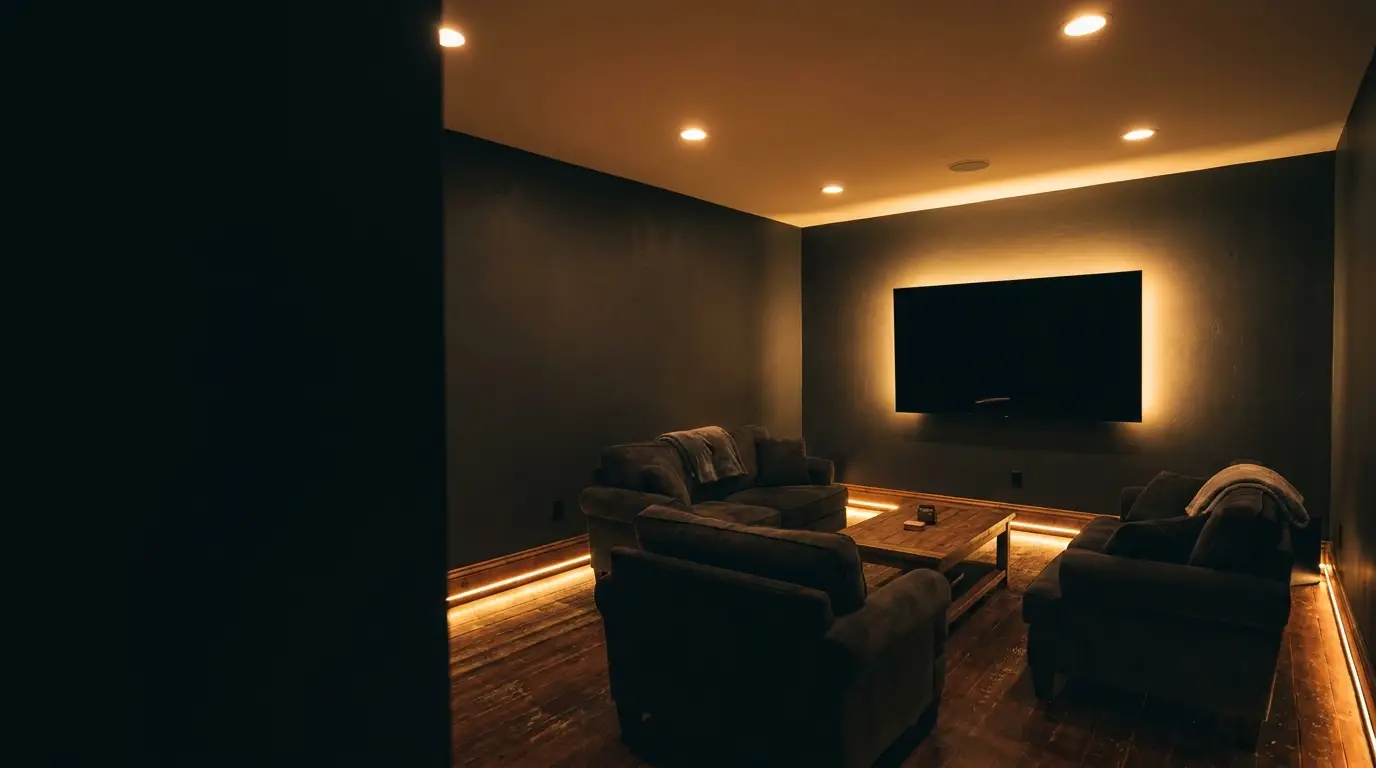
Overhead lighting kills a movie room’s atmosphere fast. Bright, flat light flattens contrast on the screen and makes the whole space feel like an office. Dimmable, layered lighting solves this.
A few layers work together well:
- Bias lighting behind the screen, which reduces eye strain during dark scenes
- Recessed dimmers on a low, warm setting for general ambiance
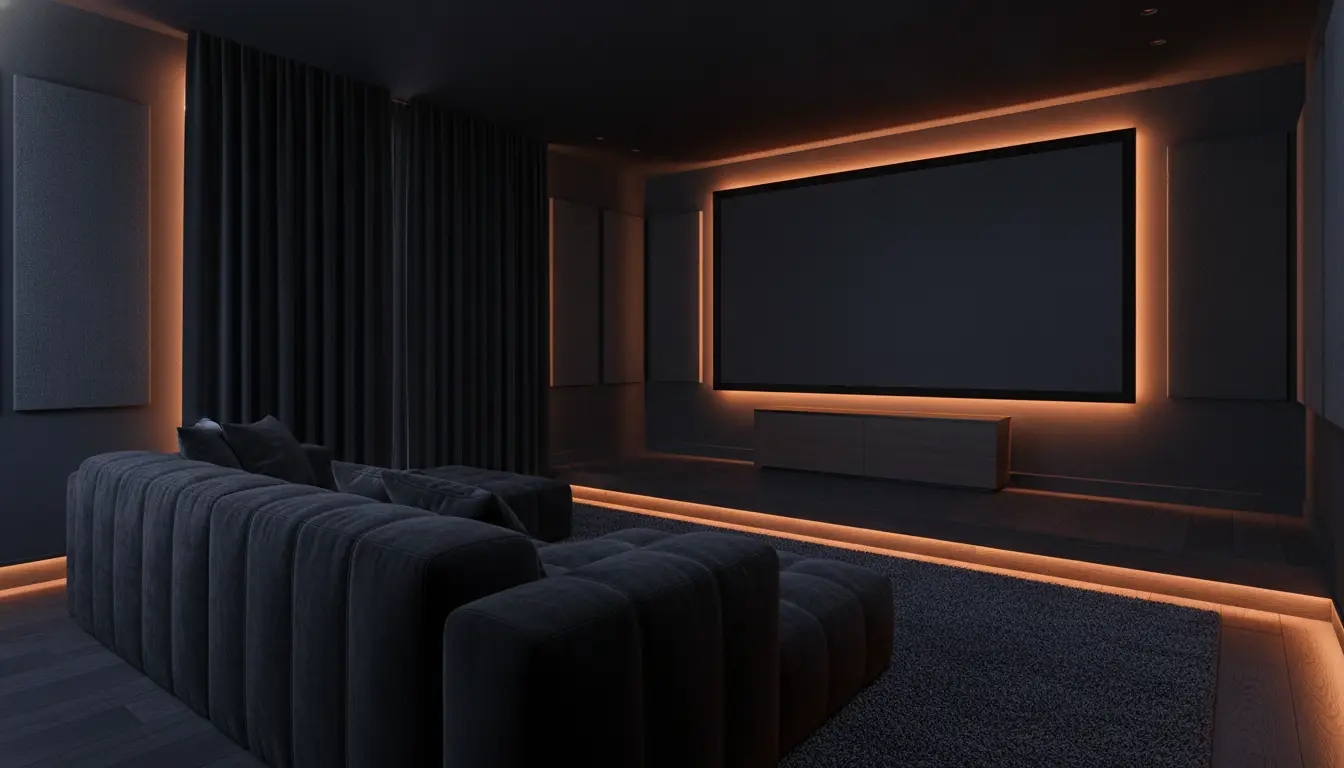
- LED strip lighting along baseboards or shelving for a subtle glow
- Blackout shades on any windows so daytime screenings actually work
Warm color temperatures, around 2700K, feel more cinematic than cool white light. Save the brighter settings for cleaning up after the movie ends.
Wall Decor and Personality
Once the technical side is sorted, the room needs personality. Framed movie posters, a gallery wall of ticket stubs, or a shelf of physical media all add character without competing with the screen.
Signage is having a moment in these spaces too. A custom neon Netflix sign near the entry or above a media console gives the room an easy focal point and photographs well for anyone who wants to show the space off.
Keep wall colors dark and matte. Glossy paint reflects light off the screen and creates distracting glare during playback. Deep charcoal, navy, or a true matte black work well and make the screen the obvious focal point.
Storage and Comfort Details
Cable management is easy to overlook until the room is finished and cords are visible everywhere. In-wall conduits or a cable raceway behind the media console keep things clean. A closed cabinet for the receiver and console also cuts down on fan noise during quiet scenes.
Blankets, snack storage, and a small mini fridge round out the comfort factor. None of it is flashy, but it’s the difference between a room people use once and a room people use every week.
A movie room doesn’t need a studio budget to feel intentional. Solid acoustic basics, layered lighting, and a few personal touches go further than any single piece of expensive gear.