
How to Fix the Hidden Factors That Affect Your Home’s Air Quality
Most people do not think about indoor air until something feels slightly off. Air inside a home changes slowly based on systems, habits, and environmental conditions that are often invisible. These changes build up over time and can affect comfort without being immediately obvious. Once you understand what drives those changes, it becomes easier to control how your home feels.
When a Sealed Home Starts to Feel Different
Modern homes are designed to keep air inside for energy efficiency. This helps with temperature control and lowers energy use, but it also limits natural airflow. At first, the temperature stays steady and outside noise is reduced. After some time, tyou may notice:
- Rooms feel slightly stagnant in the morning
- Odors take longer to clear
- Air feels still even after cleaning
- A mild sense of heaviness in closed rooms
This usually happens when indoor air is not being refreshed at a steady rate. Bringing in controlled ventilation helps restore balance without affecting efficiency.
Air Filters and What They Quietly Control
Air filters are small components inside HVAC systems, yet they have a direct impact on indoor air quality. They collect dust, pollen, and fine particles that move through the system. When filters are clean, airflow moves easily and consistently. When they are clogged, air circulation becomes uneven and particles begin moving back into living spaces. Replacing filters regularly keeps airflow stable and reduces buildup inside the system.
Moisture That Builds Up in Hidden Spaces
Moisture can exist in places that are rarely checked, such as behind walls or inside ductwork. Common sources include small leaks, condensation, and areas with limited airflow. When this moisture stays in place for long periods, it can create conditions where mold may eventually develop. Managing moisture early helps reduce the risk of long-term air quality issues and prevents hidden damage from forming inside the home.
Dust That Keeps Circulating Indoors
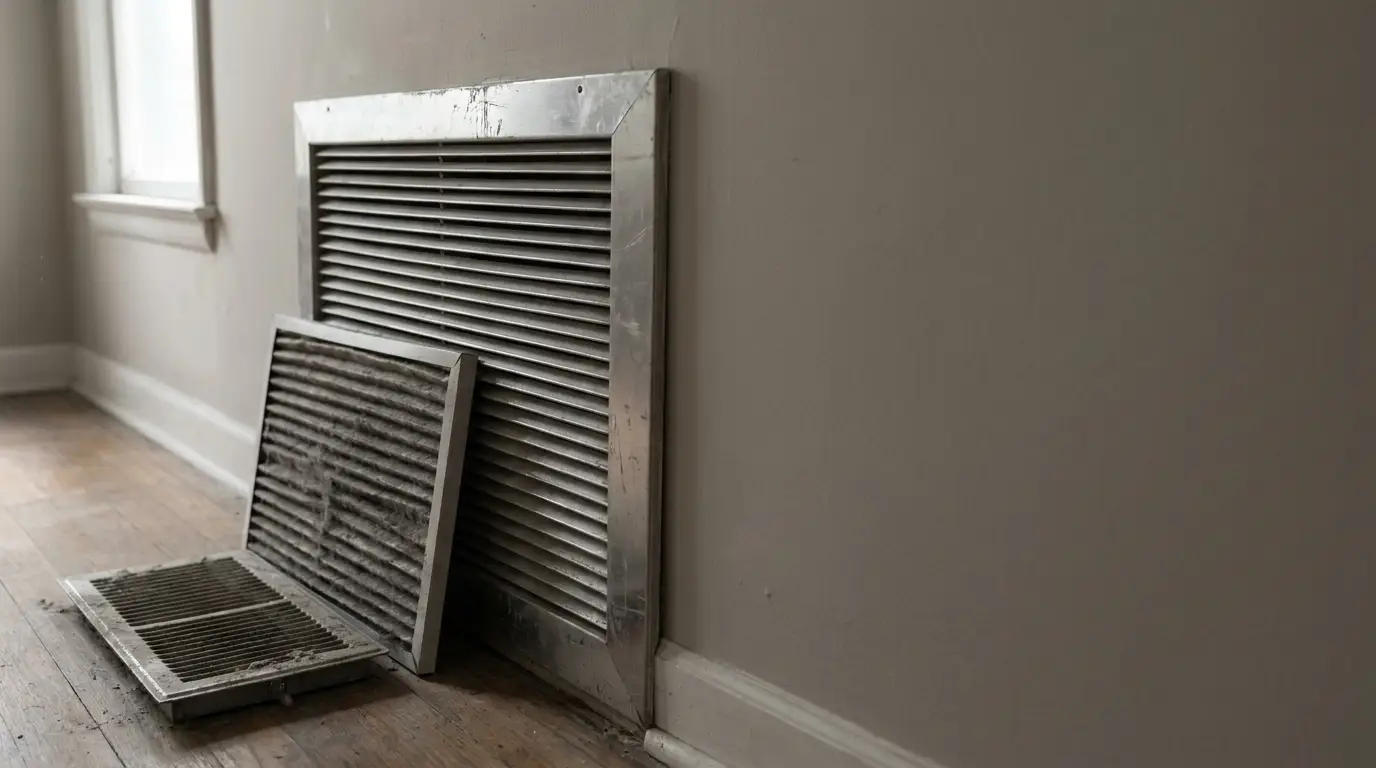
Dust moves continuously through indoor air. It is carried by airflow from HVAC systems, walking movement, and general circulation in the home. Even after cleaning surfaces, particles remain in the air and resettle over time.
A portion of this dust collects inside HVAC components such as ducts, filters, and coils. When the system runs, airflow can lift and redistribute these particles into different rooms. This is why system condition matters as much as surface cleaning. When HVAC components are not maintained, the system itself becomes part of the dust cycle instead of controlling it.
When Airflow Problems Affect Comfort
Air quality and comfort issues often show up in subtle ways before they are recognized as system problems. A room may take longer to reach a comfortable temperature, or different areas of the home may feel slightly out of sync even while the system is running normally.
In many cases, this is not related to thermostat settings. It is usually connected to how air is moving through space and whether that airflow is evenly distributed. In regions where cooling systems run for long periods, these imbalances become easier to notice. Over time, homeowners may need professional servicing such as AC repair Phoenix when airflow consistency and overall system performance begin to affect everyday comfort.
Everyday Products That Influence Indoor Air
Many common household items release substances into the air that remain for hours or days after use. These include cleaning sprays, scented products, paint, and new furniture. Some examples include:
- Cleaning sprays that release airborne compounds during use
- Fragranced products that remain in the air after application
- New furniture that slowly releases materials into indoor air
- Paint and finishes that continue to release compounds over time
Ventilation during and after use helps reduce buildup and keeps air conditions more stable.
Humidity as a Constant Background Factor
Humidity affects how indoor air is experienced throughout the day. It is shaped by changes in weather, household activity, and how often heating or cooling systems are running. As moisture levels increase, air can feel denser and less comfortable, while also creating conditions that support unwanted biological growth in certain environments.
When levels drop, the air tends to feel drier and can cause discomfort in the skin, throat, and eyes. Since these changes happen gradually and fluctuate throughout the day, they often influence overall indoor comfort without drawing direct attention.
Endnote
Indoor air quality is shaped by small conditions that build up over time rather than a single visible issue. Ventilation, filtration, moisture levels, and everyday household habits all interact in ways that influence how a home feels and functions.
When these elements are left unbalanced, the changes are usually gradual. Air may feel less fresh, comfort can become inconsistent, and hidden buildup inside systems or materials can begin to affect overall living conditions.
Improving air quality is less about major interventions and more about steady awareness. Regular maintenance, mindful use of household products, and attention to airflow and humidity help keep the indoor environment stable and comfortable throughout the year.