Blurring Indoors and Out: Designing Seamless Living Spaces with Tile
There’s been a noticeable shift in how we think about home. It’s now less about rooms with defined edges and more about spaces that blend seamlessly into one another. The line between inside and outside has softened.
This kind of living feels calm, expansive, and effortless. And while the architecture plays its part, it’s often the surfaces underfoot and around us that quietly hold it all together. Good spatial design isn’t just about what you see. It’s about how you move. Following lines, light, and material from one space to the next. When that visual path hits an abrupt colour shift or a mismatched surface, something feels off.
Flooring is one of the most powerful tools for creating continuity. A single surface running through connected spaces gives the home a visual base that feels grounded and intentional. It doesn’t demand attention, it just lets you move through your home without friction.
This is where tiles become something more than a practical choice. In the right format and finish, they become the thread that stitches a home together, whether linking the hallway to the living area or the dining space to the garden.
Where Indoors Meet Outdoors
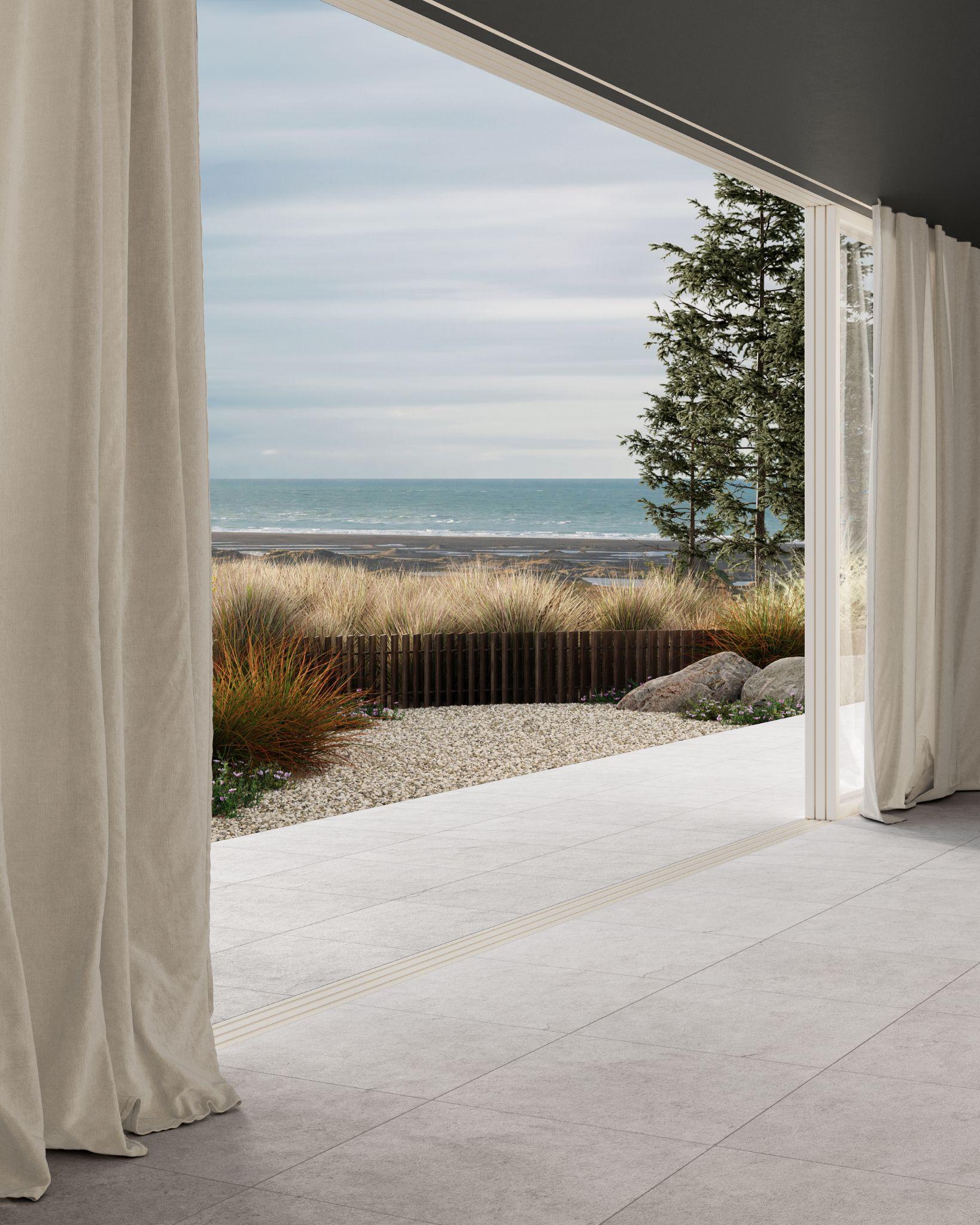
The most compelling homes today treat outdoor spaces not as separate additions, but as natural extensions of the interior. A dining area that opens onto a terrace. A living room that spills into a planted courtyard. The divide between inside and outside becomes almost invisible, especially when the materials carry through.
Sliding or folding doors help, of course. However, what really sells the continuity is the floor, when the same material, or a complementary tone and texture, runs from the interior floor to the patio or deck, the transition feels purposely seamless.
Choosing outdoor tiles that echo or match your interior surfaces is one of the simplest ways to achieve this. It’s an underappreciated detail that does a surprising amount of heavy lifting, visually expanding your living space without adding a single square metre.
A Single Material, Multiple Moods
Here’s what makes this approach so interesting: the same surface takes on a different character depending on where and when you see it. A large-format tile in a soft stone finish will feel cool and still in a shaded hallway at midday. Move that same tile out to a sun-drenched terrace in the late afternoon, and it warms up, catching golden light, throwing long shadows from nearby planters or overhead beams. By evening, it reflects the glow of outdoor lighting, something quieter, more intimate.
It’s one material, but the mood shifts with the hour, the season, the weather. Indoors, the tile might feel polished and restful, but outdoors it takes on a more raw, textured look. Natural light, tree shadows, and even rain all change the way a surface looks and feels, adding depth without adding more materials. This is the beauty of restraint, where one considered surface is allowed to change in response to its surroundings.
Texture, Tone, and Layering
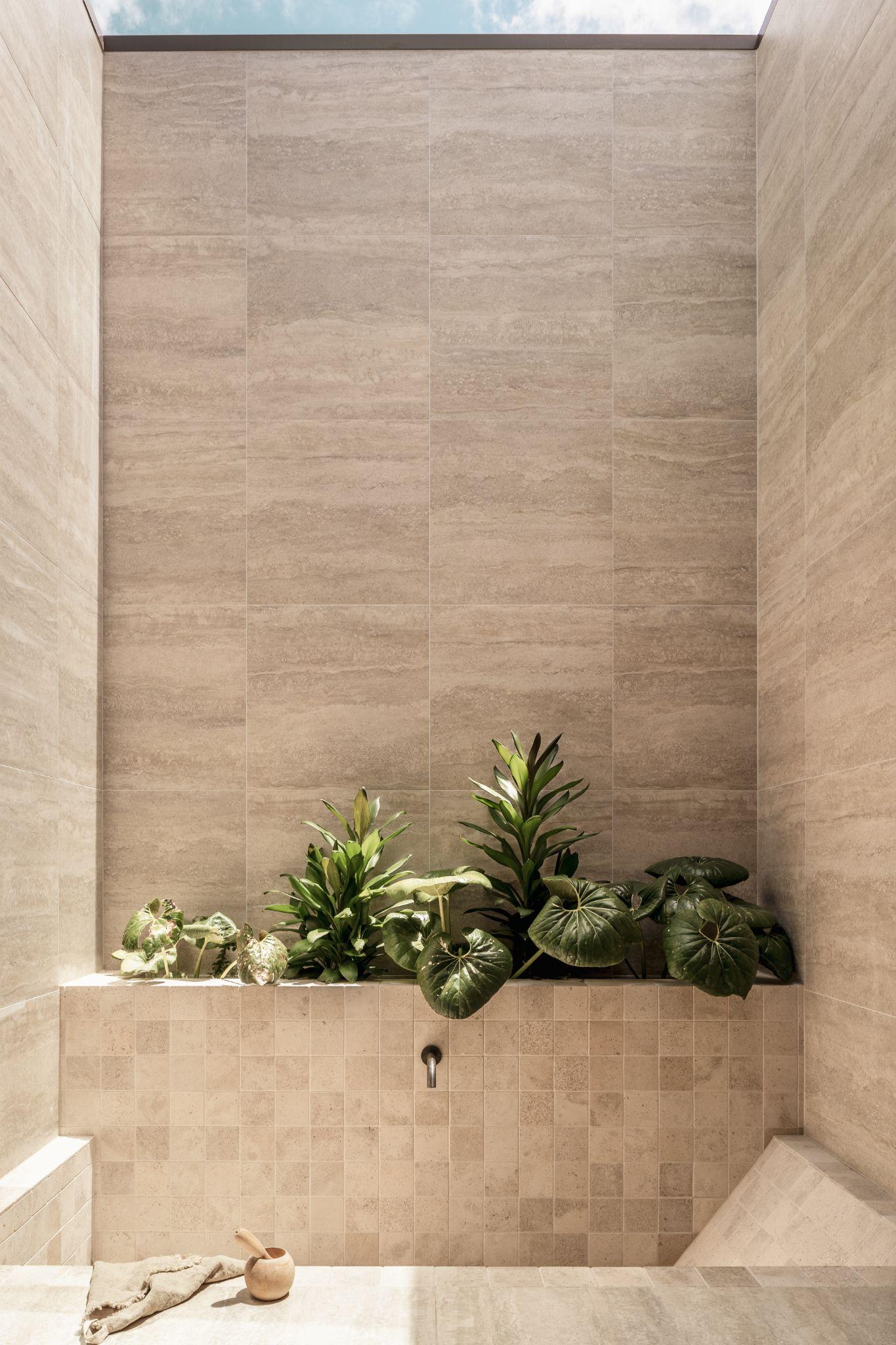
A continuous tile surface works best when it has something to play against. For example, raw timber furniture on a smooth stone-look floor or linen curtains falling beside a concrete-toned wall tile.
The palette tends toward the earthy and the neutral: warm whites, sand, clay, soft greys. Not because colour isn’t welcome, but because restraint in the base materials lets the layered elements, the textiles, the plants, the light, stand out.
The Details That Shape the Experience
The subtlest decisions often have the most impact. Take grout colour: a tone-matched grout creates an unbroken surface, while a contrasting grout emphasises pattern and grid. Neither is better, they simply set a different mood.
Tile size matters too. Larger formats feel more contemporary and open, with fewer visual interruptions. Layout direction can guide the eye: lengthwise to elongate a narrow space, or in a staggered pattern for a more organic feel.
And then there’s where the two surfaces meet. A seamless transition, no step, no trim, is the small detail that makes the whole concept land. It’s the difference between two connected spaces and one continuous one.
At its heart, this approach isn’t about tile at all. It’s about how a home feels when the boundaries between spaces dissolve, when you stop noticing where inside ends and outside begins. It’s about choosing flow over separation, cohesion over contrast, and trusting that a quiet foundation can shape how an entire home feels.
Ryan Prescott, with a Master’s in Interior Design from the Pratt Institute, has established himself as a functional room designer over the past decade. Since joining our platform in 2020, Ryan has been a key voice in guiding homeowners and designers alike through the intricacies of optimizing living spaces. Before his current role, he worked with several clients as a freelance designer, focusing on creating multi-functional and space-efficient interiors. He is a traveler, and his travels inspire his work.