How to Arrange Living Room Furniture Right?
A living room can look pulled together or feel completely off, and most of the time, furniture placement is the reason. The way you position a sofa, angle a chair, or leave space around a coffee table shapes how the entire room feels to live in.
Here you will learn how to approach furniture arrangement with confidence, whether you are working with a small space, a long, narrow room, or an open floor plan.
You will also pick up practical tips on traffic flow, layout patterns, and the small adjustments that make a room feel both comfortable and visually balanced.
Key Principles of Living Room Furniture Arrangement
Before moving any furniture, it helps to understand a few basic rules. These principles cover everything from where to place your sofa to how much walking space to leave around it.
- Start with a Focal Point: Pick one main element like a TV, fireplace, or artwork, and arrange all seating around it. This gives the room a natural, well-planned center.
- Consider Traffic Flow: Keep main walkways at least 30 to 36 inches wide so people can move through the room without bumping into furniture.
- Use Zones: Use rugs or furniture placement to separate areas for sitting, reading, or working. This keeps the room organized without making it feel crowded.
- Balance and Symmetry: Matching pieces on both sides create a calm, structured look. Mixing different furniture pieces and varying heights gives the room a more modern, relaxed feel.
Getting these basics right from the start makes every other furniture decision much easier and more confident.
Common Layout Patterns
Choosing the right layout is the first step to making your living room feel comfortable and well-organized.
Here are four common patterns that work for different room shapes and sizes:
1. The L-Shaped Layout

A sofa and a sectional are placed at a right angle to form an “L” around a coffee table. This works well in corners and open-plan spaces.
It is one of the best setups for both TV viewing and conversation, as everyone has a clear line of sight to the focal point.
2. The U-Shaped Layout

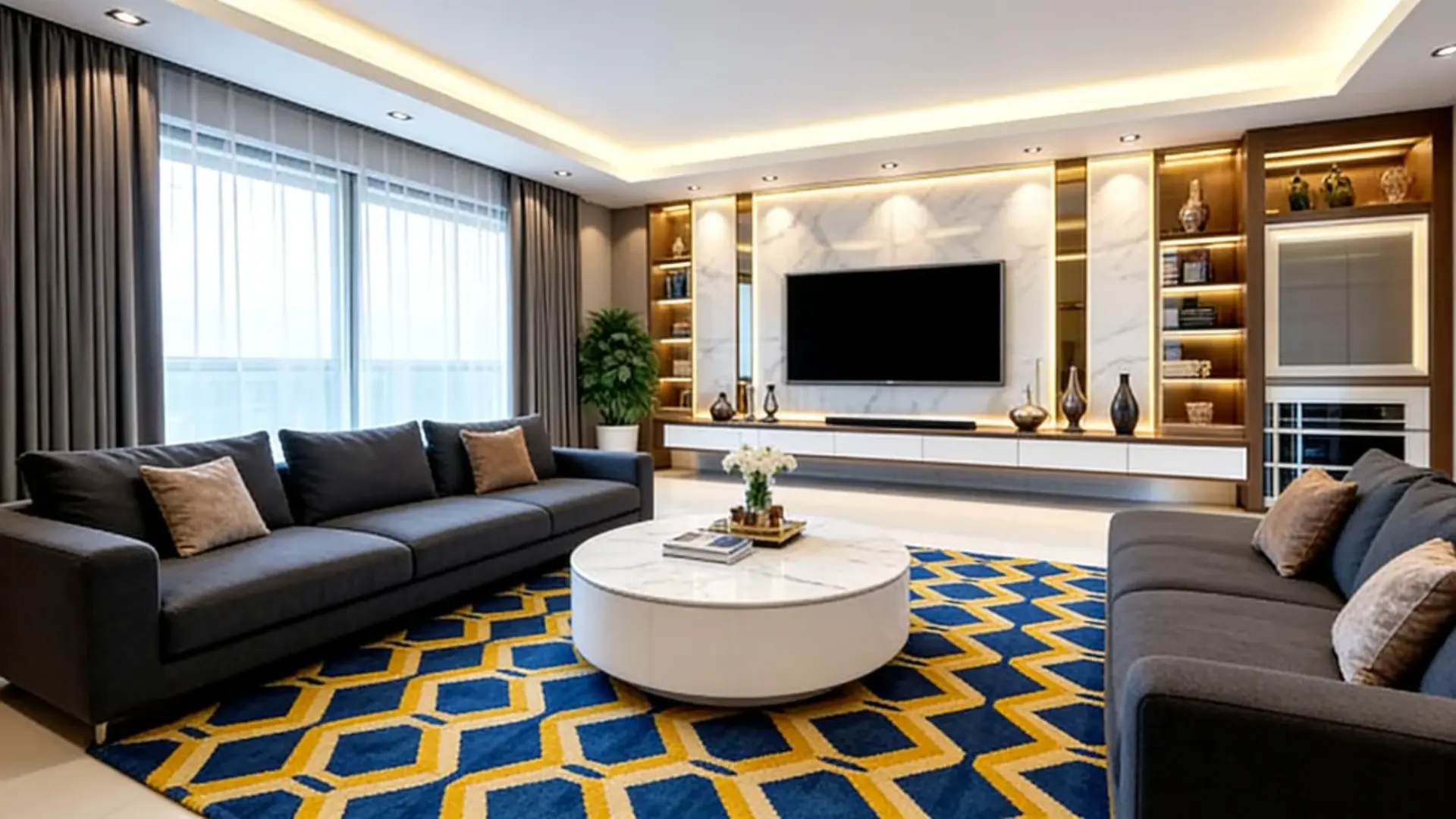
Two sofas and a chair or loveseat are arranged in a “U” shape around a coffee table. This layout suits larger rooms well.
Place the TV or fireplace at the open end of the U. It keeps the setup balanced and gives everyone a good view.
3. Parallel Arrangement

The parallel arrangement is simple: two sofas face each other directly across a rug. A coffee table usually sits in the middle between them.
This layout works best in square rooms where both sides of the space are roughly equal. It creates a clean, balanced look and makes conversations feel natural and easy.
4. Floating Furniture

Keep seating away from the walls instead of pushing everything back. This makes the room feel more open and spacious.
Use a rug under the seating group to anchor the furniture and keep the zone looking neat and intentional.
Small Living Room Strategies
Small living rooms need careful planning to stay functional, open, and inviting while making the most of limited space and maintaining comfortable movement.
- Two-Thirds Sofa Rule: Place the sofa along two-thirds of the wall. This prevents overcrowding while leaving space for easy movement.
- Use Multifunctional Furniture: Choose ottomans with storage, nesting tables, or wall-mounted shelves. These save space and keep the room organized.
- Light and Visibility: Keep furniture low-profile to maintain an open feel. Mirrors can make the room appear larger.
- Rugs to Define Zones: Use small rugs to mark sitting areas. They separate zones without making the space feel cluttered.
Following these tips helps small living rooms feel open, organized, and comfortable without overcrowding.
Furniture Placement Tips
Proper furniture placement improves comfort, flow, and usability in any living room. Small adjustments can make a big difference in how the space feels.
Following these tips keeps the room functional, visually appealing, and easy to navigate:
- Place rugs under seating areas to define zones and keep furniture organized.
- Add side tables and lamps near seating for convenience and balanced light.
- Leave 2–3 feet near entries to allow clear pathways.
- Position the TV at eye level and leave space around it for comfortable viewing.
- Include floor lamps, side tables, and shelves to add dimension and interest.
Common Mistakes to Avoid While Arranging Living Room Furniture
Pushing all furniture against the walls can make rooms feel empty and reduce comfort, leaving the center unused and limiting functional space.
- Center Space Impact: Leaving the middle empty can make movement easier, but also create a hollow look.
- Overuse of Small Pieces: Too many small items clutter visual space and make rooms feel cramped. Larger, fewer pieces improve openness.
- Unbalanced Layouts: Heavy furniture on one side can make the room feel uneven. Distributing pieces evenly creates visual balance.
These mistakes can affect comfort, usability, and appearance. Proper spacing, balanced pieces, and attention to key elements make living rooms feel inviting and functional.
Conclusion
Getting your living room furniture arrangement right doesn’t have to be complicated.
A clear focal point, good traffic flow, and the right layout can make any room feel comfortable and put-together.
There is no single perfect setup, just the one that works best for how you live. Keep experimenting until the space feels like yours.
Drop a comment below and let us know how you arranged your space!
Frequently Asked Questions
What Makes a Room Look Tacky?
A room looks tacky when it’s overcrowded, mismatched in style, overloaded with patterns or colors, uses cheap materials, has poor lighting, visible clutter, or furniture that’s the wrong size.
What is the New Trend in Furniture?
The new furniture trend favors curved, sculptural shapes, warm wood tones, textured upholstery, and a mix of vintage and modern pieces.
What is the 2/3 Sofa Rule?
The 2/3 sofa rule means your sofa should take up about two‑thirds of the wall or seating area to keep the room balanced and avoid overcrowding.