How to Organize Kitchen Drawers the Right Way
You open the drawer. Chaos. Spatulas tangled with spoons, gadgets you forgot you owned, and nothing where it should be.
A messy kitchen drawer wastes time and adds stress to your day. But a few simple changes can fix that fast.
Learning how to organize kitchen drawers transforms your cooking routine. You find things quicker. Your kitchen feels calmer. And the right kitchen drawer organizer makes it easy to keep things that way.
What Should You Do Before Organizing Kitchen Drawers?
Getting started with organized drawers makes daily cooking easier and keeps clutter under control.
- Clear Everything: Empty the drawer completely to reset the space.
- Sort by Category: Group similar items together to see what you have.
- Remove Extras: Discard broken, duplicate, rarely used, or unrelated items.
- Clean the Drawer: Wipe crumbs, dust, and residue for a fresh start.
- Tackle One at a Time: Start with the most frustrating drawers for easier results.
How to Organize Kitchen Drawers: Step-by-Step Guide
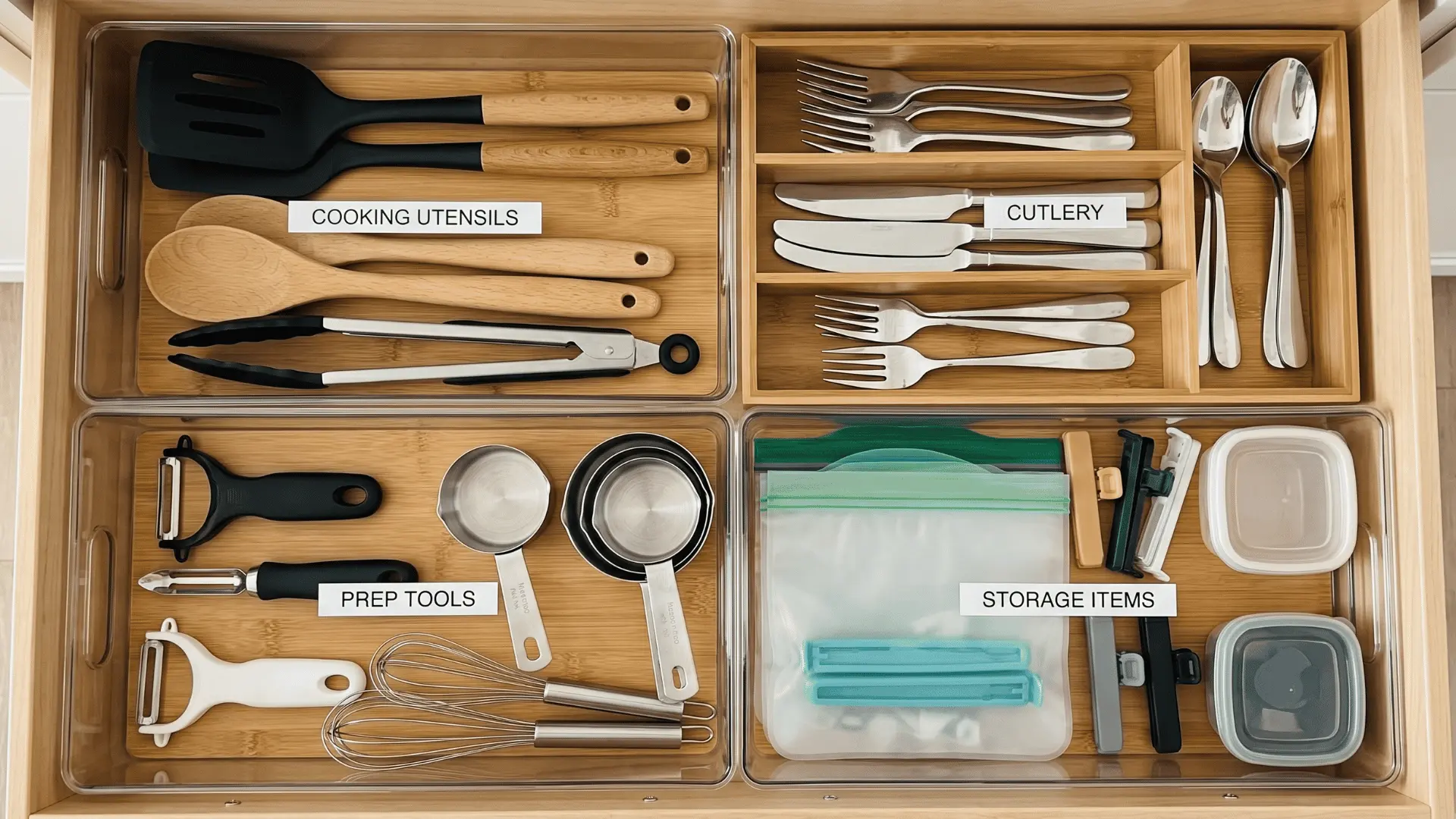
A functional drawer system works best when items are grouped by use, assigned a dedicated space, and separated with simple containment tools.
Step 1: Sort Items by Use
Divide kitchen tools into categories such as cooking utensils, baking tools, eating utensils, prep gadgets, and storage items.
Sorting by type makes it easier to see what you have and prevents duplicate purchases. Lay everything out on a counter first so you can see the full inventory before assigning drawer space.
Step 2: Assign Dedicated Spaces
Give each category its own drawer or section. Place frequently used items near prep zones or cooking areas, while tools used occasionally can go in secondary drawers.
Clearly defined spaces also help everyone in the household know where items belong. Avoid mixing categories, even in larger drawers, to keep the system easy to maintain over the long term.
Step 3: Use Containment Tools
Add drawer dividers, trays, or small bins to prevent items from shifting, tangling, or overlapping during daily use.
This also protects delicate tools and keeps everything accessible at a glance. Adjustable dividers work best as they can be repositioned when categories grow or change over time.
Step 4: Adjust and Refine
After living with the system for a while, evaluate its functionality. Make small adjustments to overcrowded drawers, relocate items used more or less frequently, or expand sections to accommodate new tools.
Periodic review ensures the system continues to meet your changing needs. Even small changes made every few months can keep the system working smoothly without a full reorganization.
Pro Tip: Take a photo of your organized drawer once it is set up. Use it as a reference to quickly reset the system after heavy cooking days or when items get moved around.
How Do You Decide Where Each Item Should Go?
Place items based on where and how often they are used. Proper placement makes drawers easier to maintain and reduces clutter.
Keep prep tools like knives, peelers, and measuring cups near prep areas. Cooking utensils go near the stove, and plates, cutlery, and serving tools near dining areas.
Daily-use items should stay in easy-to-reach drawers. Less-used tools can go into deeper or secondary spaces.
Top drawers work best for utensils and prep tools. Deep drawers are better for pots, pans, bowls, and larger containers.
How Should Different Types of Kitchen Drawers Be Organized?
Different kitchen drawers need different organization methods. The setup should match the type of items stored inside and how often the drawer is used.
1. Cutlery and Utensil Drawers
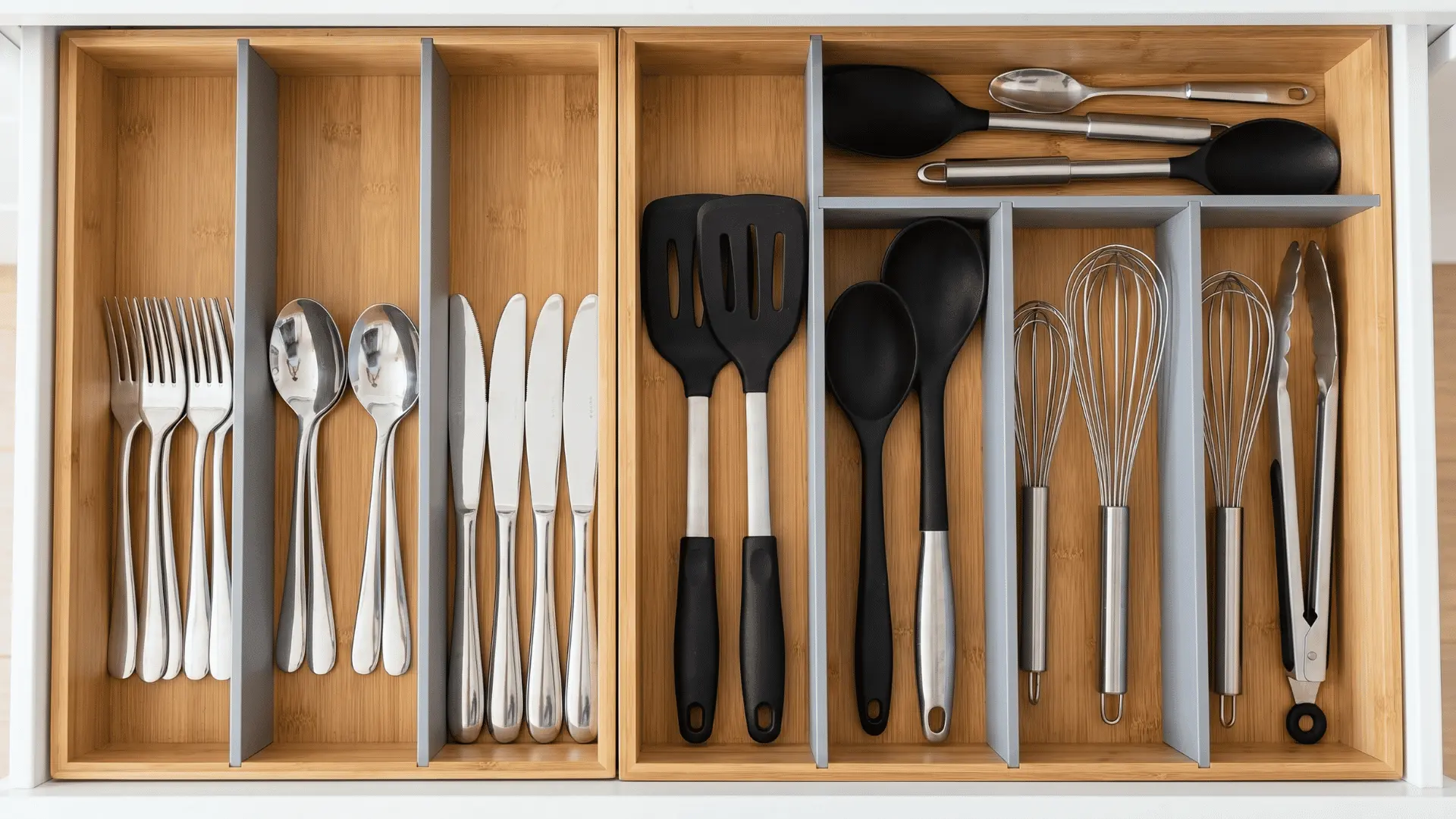
Keep forks, knives, and spoons in separate sections to prevent overlap, and store cooking utensils and prep tools in wider spaces for easy access.
Avoid mixing eating utensils with cooking tools in one drawer, as stacking or overlapping makes it harder to maintain organization.
2. Deep Drawers
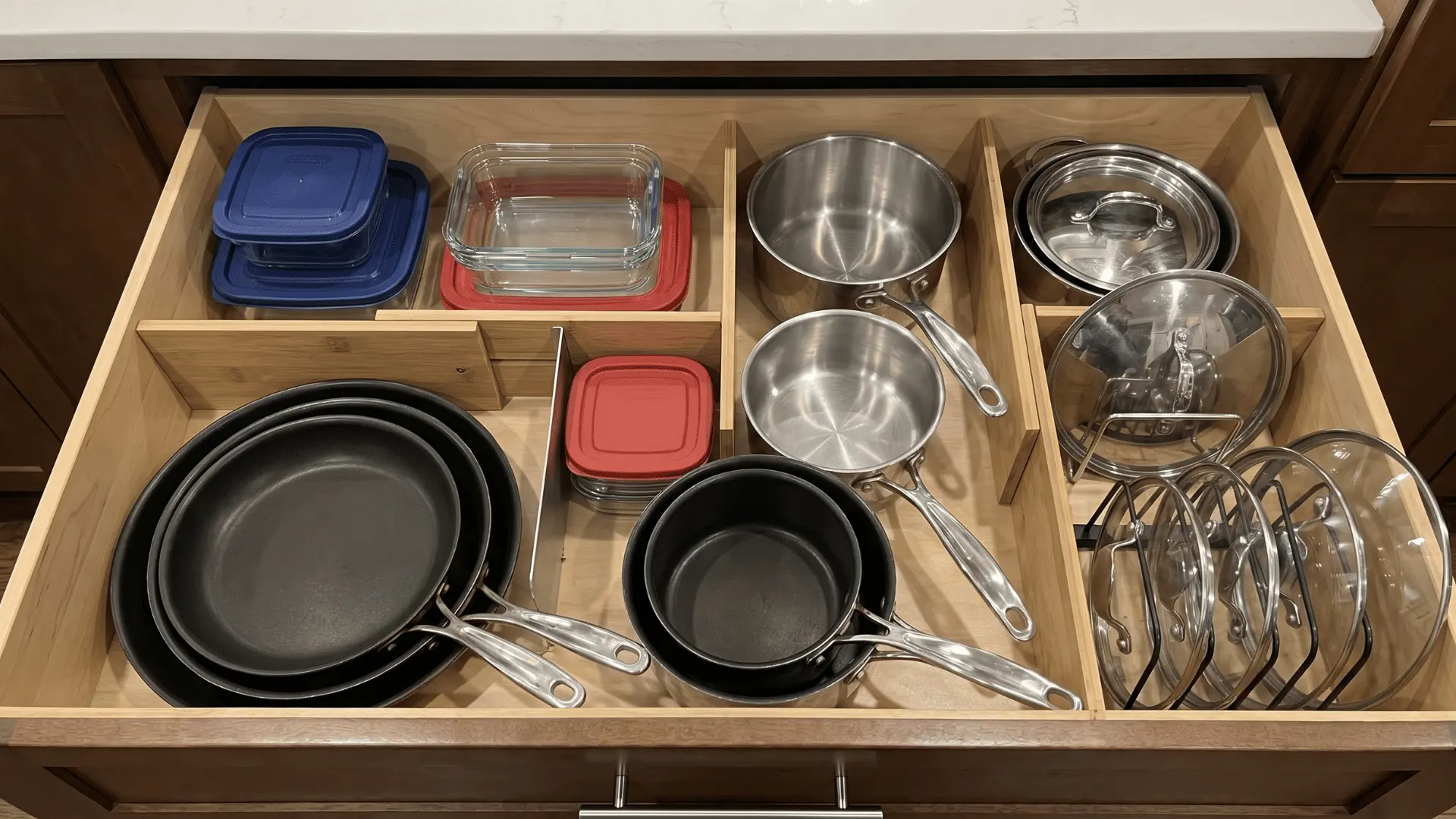
Deep drawers need structure because larger items can shift easily. Store pots and pans by size or type, and keep lids separate rather than stacking them loosely.
Food containers should stay grouped with matching lids, and dividers or peg systems can prevent items from sliding or collapsing into piles.
3. Junk Drawers
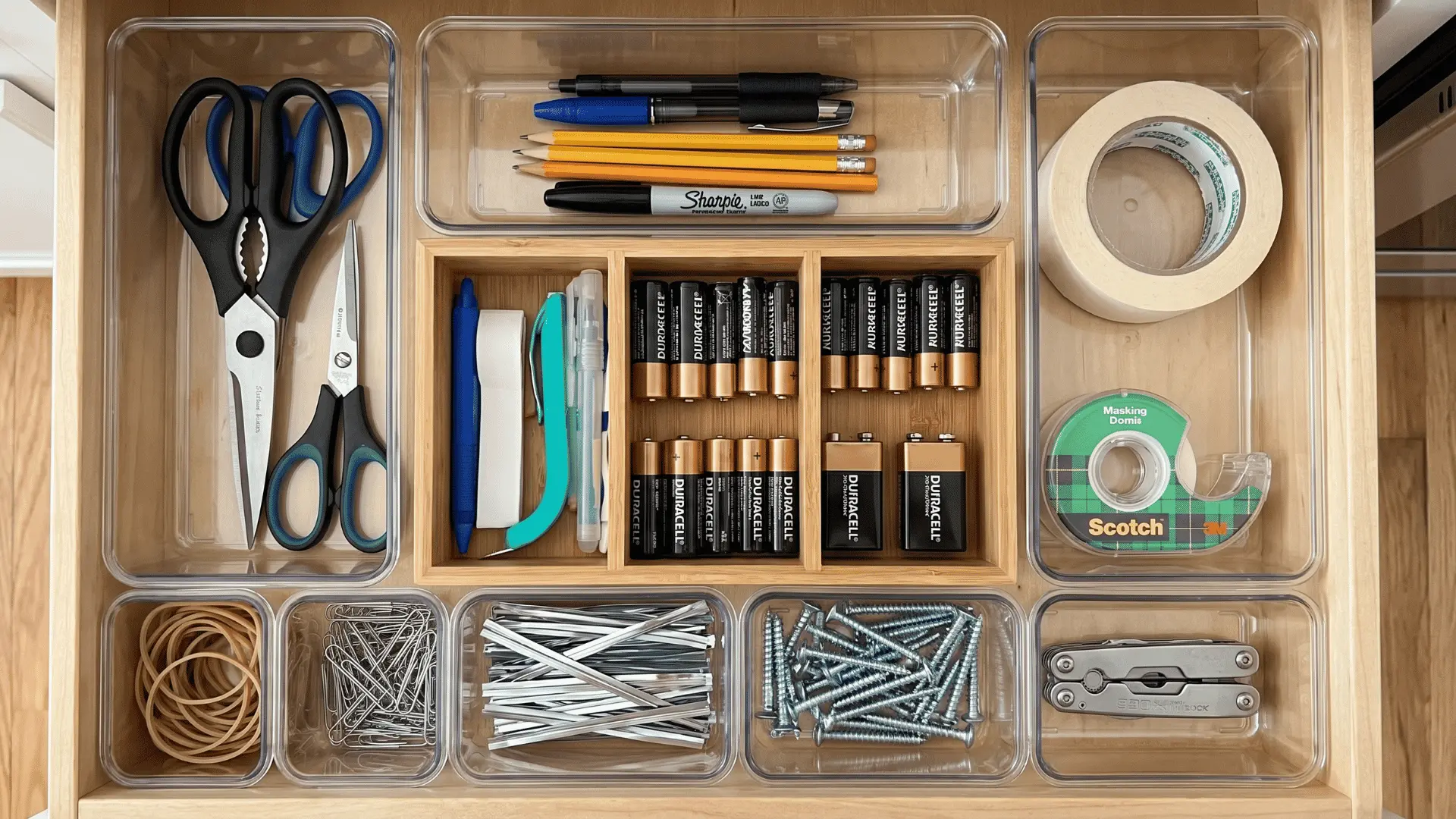
Junk drawers should hold only small, everyday miscellaneous items. Pens, scissors, tape, batteries, and small household tools usually work well here.
Use small trays or bins to separate loose objects. Avoid turning the drawer into overflow storage for random kitchen items because clutter builds quickly once categories disappear.
4. Spice Drawers
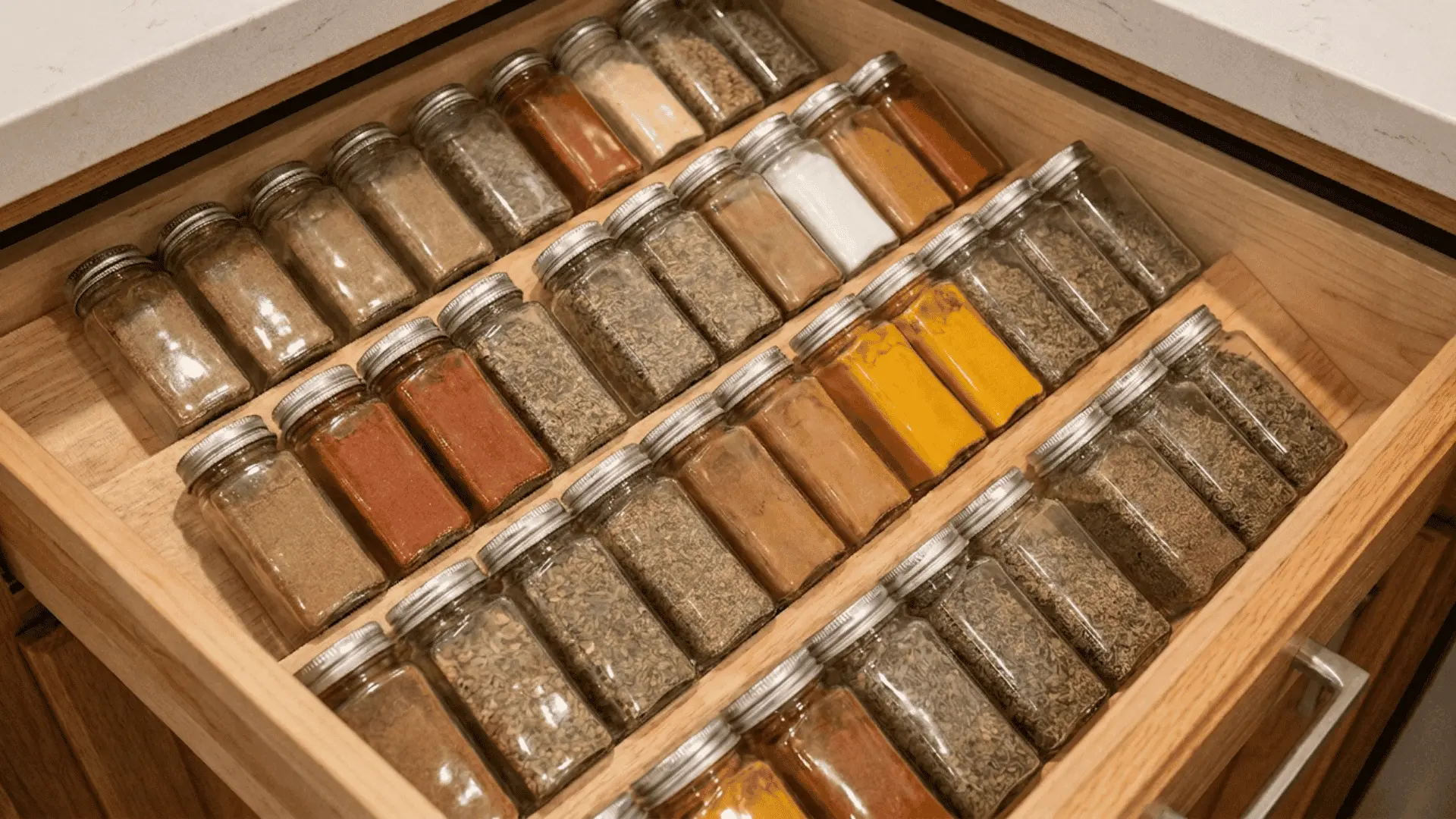
Spice drawers should keep labels visible and easy to read. Store frequently used spices closest to reach and keep jars arranged in a consistent order.
Spice inserts or angled organizers help prevent jars from hiding behind each other. Avoid overcrowding the drawer with duplicate or unused containers, as it makes visibility harder to maintain.
How to Keep Kitchen Drawers Organized?
Kitchen drawer organization lasts when small habits prevent clutter from building up over time.
- Weekly Reset: Return misplaced items, clear overcrowded sections, and wipe crumbs from high-use drawers before mess spreads further.
- Monthly Reviews: Check for overflowing drawers, duplicate tools, or categories that no longer fit the space properly.
- One In, One Out Rule: Avoid adding new tools without removing old or unused ones to prevent drawers from becoming overcrowded.
- Fixed Sections: Keep every item in a dedicated spot so the system stays easy to follow for everyone in the household.
- Avoid Temporary Spots: Temporary storage areas quickly become permanent clutter zones that are harder to clear later.
- Junk Drawer Boundaries: Do not use junk drawers as overflow storage, as clutter spreads fast once categories disappear.
The goal is not perfect drawers.
The goal is to keep the system easy to maintain in the long term.
Best Kitchen Drawer Organizers to Buy
Choosing the right organizer makes it easier to maintain a functional drawer system over the long term.
The options below cover different drawer types, budgets, and storage needs available across the US.
| Organizer Type | Best For | Price Range | Where to Buy |
|---|---|---|---|
| Adjustable Drawer Dividers | Deep and wide drawers with mixed tools | $10 – $30 | OXO, The Container Store, Amazon |
| Utensil Tray | Everyday cutlery and cooking utensils | $8 – $25 | Target, Bed Bath and Beyond, Walmart |
| Bamboo Organizer | Eco-friendly and natural kitchen styles | $15 – $40 | Totally Bamboo, Grove Collaborative, Amazon |
| Stackable Bin Inserts | Deep drawers with bulky tools | $12 – $35 | iDesign, The Container Store, Target |
| Spice Drawer Insert | Dedicated spice storage | $20 – $50 | Lynk Professional, Rev-A-Shelf, Amazon |
| Junk Drawer Tray | Small miscellaneous household items | $6 – $20 | Rubbermaid, Madesmart, Walmart |
Conclusion
An organized kitchen is not about being perfect. It is about making your daily routine easier and less stressful.
Once you know how to organize kitchen drawers the right way, everything clicks. Cooking feels smoother. Mornings feel calmer. And you stop wasting time searching for things that should be right there.
Start with one drawer today. Pick the most frustrating one and sort it out.
The right kitchen drawer organizer can make that first step surprisingly simple, and the results will motivate you to keep going.
What does your most chaotic drawer look like right now? Drop a comment below; we would love to hear!
Frequently Asked Questions
What are the Best Kitchen Drawer Organizers?
Drawer dividers, utensil trays, and small bins work best because they keep categories separated and prevent items from shifting during daily kitchen use.
Should You Use Drawer Liners?
Drawer liners help reduce sliding, protect surfaces, and make cleaning easier. They are optional but useful in frequently used kitchen drawers.
What is the Fastest Way to Organize Kitchen Drawers?
Empty one drawer, remove unused items, group similar tools together, and use simple dividers to create clear sections without overcomplicating the setup.