Cozy and Ergonomic: Designing the Ultimate Family Home Theater Corner with Luxury Zero Gravity Seating
A comfortable family home theater corner starts with the right seating position, clear sightlines, controlled light, and sound that supports dialogue without overwhelming the room.
If movie night often ends with someone stretching their neck, shifting on the sofa, or fighting glare from a nearby window, the problem is usually the layout, not the screen. A compact corner can feel premium when the seating, lighting, acoustics, and storage are planned together instead of added one piece at a time. Here is how to design a cozy, ergonomic theater corner that works for adults, children, and everyday family use.
Start With the Corner, Not the Equipment
Match the Layout to Real Viewing Habits
Before choosing a projector, TV, or luxury recliner row, define how the family will actually use the space. A couple watching two-hour films needs different seating depth than a family of five mixing movies, cartoons, sports, gaming, and snacks. For a dedicated room, Govee’s home theater planning guidance notes that typical home theater spaces often range from about 12 x 20 feet to 20 x 30 feet, but smaller nooks, bedrooms, basements, and attic areas can also work when the layout is compact and intentional.
For a family theater corner, start by measuring three zones: the screen wall, the seating footprint, and the walking path. A 3-seat reclining row may look perfect online, but it needs clearance behind and in front so the footrests can open without blocking drawers, doors, or traffic. In a multipurpose living room, leave enough side access for kids to move in and out without stepping over reclined adults.
Choose a Low-Glare, Low-Traffic Spot
Basements are often recommended for home theaters because they are naturally more secluded and usually have less daylight. If a basement is not available, look for the quietest corner of a family room, den, or bonus room, preferably away from kitchen noise, bright windows, and main walkways. The goal is not total isolation; it is creating a viewing zone where the screen, seats, and sound feel protected from daily household movement.
A practical test is to sit in the proposed corner at the same time of day your family usually watches movies. Check whether light hits the screen, whether people pass between the seating and display, and whether nearby appliances or HVAC noise make dialogue harder to hear. This five-minute test often reveals more than a floor plan.
Choose Zero Gravity Seating for Long-Session Comfort
Look for Support, Not Just Recline
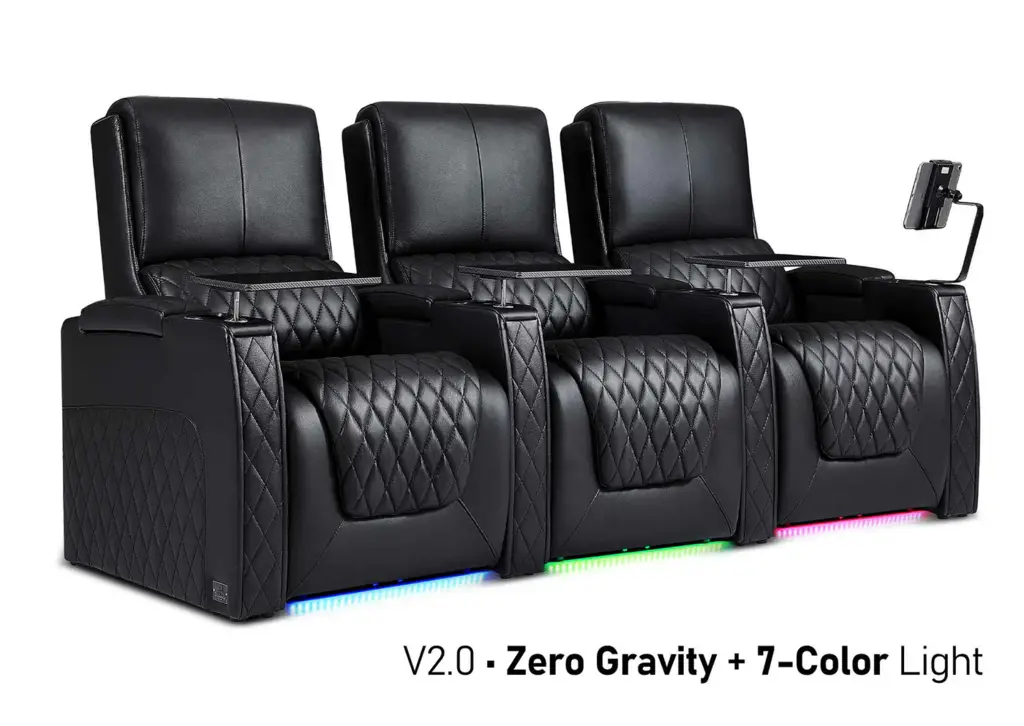
Zero gravity recliners are popular in premium home theater seating because the reclined position is designed to distribute body weight more evenly and reduce pressure on the spine. Weilianda’s Astronaut Series, for example, describes its zero-gravity theater recliners as seating built to reduce spinal pressure, with power recline, power headrests, and power footrests. For family use, the important point is adjustability: adults, teens, and children rarely share the same ideal head, back, and leg position.
Power headrests matter more than many buyers expect. If the chair reclines deeply but the headrest does not adjust, viewers may crane their necks forward to see the screen. A power headrest lets the body recline while keeping the face oriented naturally toward the TV or projector image, which is especially useful during longer films, double features, or weekend sports viewing.
Compare Features That Change Daily Use
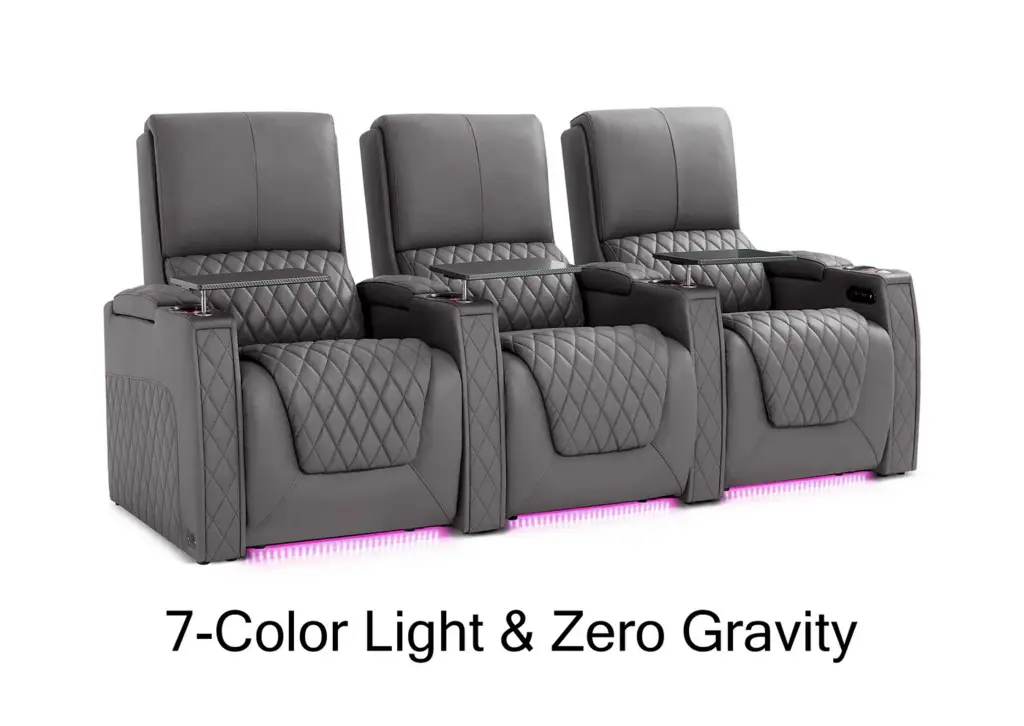
A luxury theater recliner should solve everyday problems, not just look impressive. Weilianda’s listed models include common family-friendly features such as cup holders, tray tables, phone or tablet holders, built-in storage, USB-A and USB-C charging ports, and 7-color LED ambient lighting with three brightness levels on comparison models. Those details reduce clutter because snacks, remotes, controllers, and devices have assigned places.
For upholstery, top grain or genuine leather can offer durability and a polished look, while darker colors such as black, grey, brown, or blue tend to hide daily wear better than cream or tan in a high-use family corner. If children will use the seats often, prioritize wipeability, stable cup holders, and storage over delicate finishes. A beautiful chair that makes parents nervous during popcorn night is not the right chair for a family theater corner.
Plan the Budget Honestly
Home theater budgets vary widely. Govee’s planning notes suggest budget setups can come in under $1,000, mid-range home theaters often land around $5,000 to $10,000, and luxury builds can exceed $20,000. Seating is one of the biggest cost drivers, especially when moving from a standard sectional to powered zero gravity recliners.
As a practical benchmark, Weilianda’s Astronaut Series listing includes multiple 3-seat recliner configurations with sale prices around $2,599 and regular prices reaching up to $5,098. That means a family can sometimes add premium powered seating for less than a full custom theater build, but the seating still needs to fit the room’s scale. Spending heavily on recliners while ignoring lighting, acoustics, and screen height usually produces a less comfortable result than a balanced plan.
For families comparing recliner styles, the Weilianda AstroUltra Series can be a useful reference point for zero-gravity comfort, modular layouts, and everyday movie-night support.
Set Sightlines and Screen Height Before Finalizing Seating
Keep the Screen Comfortable at Eye Level
A family theater corner should prevent the two most common comfort problems: looking too far upward and sitting too close. When seated in the main viewing position, the center of the screen should feel easy to look at without lifting the chin for the whole movie. If the TV must be mounted above a console or fireplace-style feature, use a mount or layout that lowers the viewing angle as much as possible.
A simple field test works well: sit in the proposed recliner position, lean back as you would during a movie, and look straight ahead. If your eyes naturally land near the top third of the screen, the screen is probably too high. If you feel your chin rising or your shoulders tensing, adjust the mount height or move seating farther back before buying more equipment.
Use Recline Depth in the Floor Plan
Zero gravity seating changes the geometry of a room because the viewer’s body position shifts when the chair reclines. A chair that looks correctly placed upright may become too close to the screen when fully reclined, or it may block a walkway when the footrest is extended. Measure the recliner in both closed and open positions, then mark the footprint on the floor with painter’s tape.
For a second row, raised platforms can improve visibility, as Govee notes in its home theater layout ideas, but platforms are usually better for dedicated rooms than small corners. In a compact family area, a single row of three recliners, a loveseat plus one recliner, or a recliner row paired with children’s floor cushions may be more practical. Poufs, beanbags, and washable floor cushions can give children flexible seating without forcing the room into a full theater layout.
Layer Lighting for Comfort, Safety, and Atmosphere
Control Daylight First
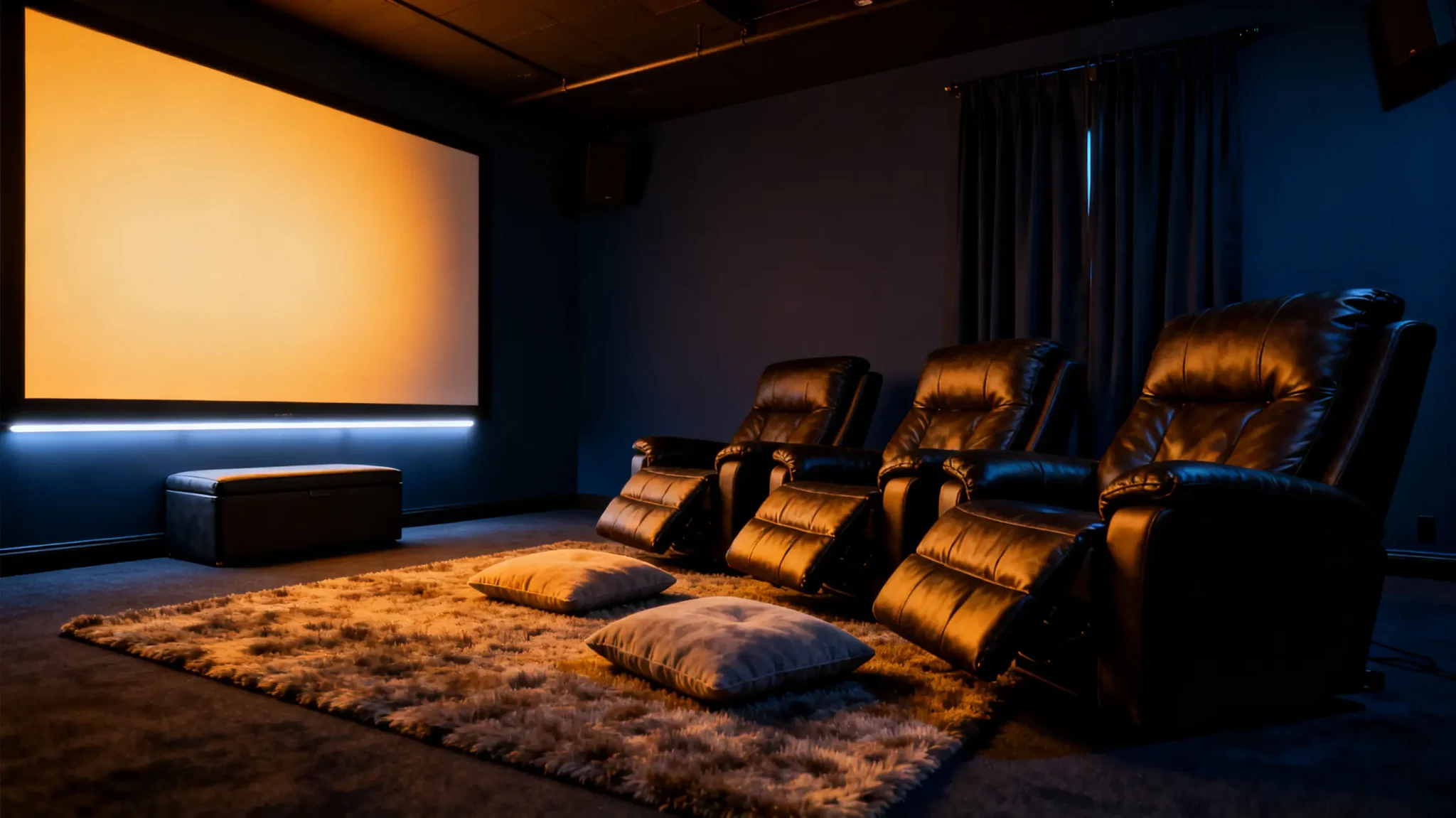
Lighting should begin with glare control, not decoration. Blackout curtains are one of the highest-impact upgrades for a theater corner near windows because they improve screen visibility and make the space feel more intentional. Darker wall colors around the screen can also reduce reflected light, while carpet or rugs help soften both the look and the sound.
Govee’s home theater guidance highlights several lighting options, including TV backlights, RGBIC light bars, LED strips, star projectors, ambient step lighting, string lights, and blackout ceiling paint. In a family corner, use these selectively. One or two lighting layers are usually enough; too many colors and effects can distract from the movie and make the room feel busy.
Use Low, Indirect Light Around the Seats
The best family theater lighting lets people find drinks, blankets, remotes, and exits without washing out the screen. LED strips behind the TV, dimmable side lamps, or low-level seat lighting can create a soft glow while keeping the image clear. If your recliners include built-in ambient LEDs, use the lowest brightness setting during movies and reserve brighter colors for game nights or parties.
For safety, avoid loose cords and floor lighting that creates glare at eye level. If children frequently get up during a movie, small path lights or subtle step lighting are more useful than bright ceiling lights. The goal is a corner that feels cozy when the film starts but still works when someone needs another snack halfway through.
Improve Sound Without Turning the Room Into a Studio
Make Dialogue the Priority
Family home theaters often fail because explosions sound loud but dialogue still feels muddy. Before adding more speakers, improve the room’s surfaces. Govee’s acoustic suggestions include thick curtains, heavy rugs, bookshelves, acoustic panels, fabric-covered wall treatments, carpet, and insulation. These materials reduce harsh reflections and help speech sound clearer at normal volumes.
In a shared household, clear dialogue is more valuable than maximum bass. A wireless surround system can be useful, but it should be positioned so sound reaches the seating evenly rather than blasting the nearest viewer. If the theater corner shares a wall with a bedroom or nursery, use rugs, curtains, upholstered seating, and bookcases first, then fine-tune speaker volume and subwoofer placement.
Use Soft Furnishings as Acoustic Tools
A family-friendly theater corner already needs blankets, cushions, curtains, and rugs, so use them strategically. A thick area rug between the seating and screen can reduce floor reflections. Bookshelves along a side wall can break up sound reflections while storing games, movies, and baskets. Fabric panels or upholstered wall sections can make the corner feel more finished without making it look like a recording booth.
CinemaTech, a luxury home theater design and seating company founded in 1998, emphasizes the connection between seating, acoustic treatment, and overall cinematic performance. That principle applies even in modest homes: comfort and sound quality should be designed together. A premium recliner row in a reflective, echo-prone corner will not feel as luxurious as a simpler seating setup in a quieter, softer room.
Add Family-Friendly Details That Keep the Corner Usable
Build Around Storage and Cleanup
A family theater corner should be easy to reset in five minutes. Built-in storage in recliner arms can hold remotes, charging cables, wipes, and small headphones. Tray tables help with snacks, but they should be removable or foldable so the seats still feel relaxed when the movie is over. Cup holders are especially valuable for children because they reduce spills on upholstery and rugs.
Use one nearby cabinet, ottoman, or shelf for shared items: blankets, game controllers, extra batteries, headphones, and age-appropriate snacks. If the space becomes a dumping ground for unrelated household items, it will stop feeling like a theater. The most successful family setups make the desired behavior obvious: sit down, dim lights, charge devices, put drinks in holders, and start the movie.
Balance Adult Comfort With Kid Flexibility
Adults usually benefit most from ergonomic recliners with lumbar support, adjustable headrests, and footrests. Children often prefer flexible seating because they move around more during movies. A strong layout might use a 3-seat zero gravity recliner row for adults and older children, with two washable floor cushions or beanbags in front for younger kids during casual viewing.
This approach also protects the investment in luxury seating. Kids can use the recliners for family movie nights, but the room still has lower-stakes seating for sleepovers, gaming, and animated films with snacks. Choose fabrics, rugs, and accessories that can handle repeat use rather than designing a corner that only looks good when untouched.
Key Takeaways
Designing the ultimate family home theater corner is less about buying the largest screen and more about coordinating comfort, viewing angles, sound, light, and storage. Start with the room’s real constraints: where daylight enters, how far the seats can recline, how children move through the space, and whether dialogue is easy to hear at a reasonable volume.
For seating, luxury recliners can be a strong choice when they include practical ergonomic features such as power recline, adjustable headrests, supportive footrests, durable upholstery, storage, cup holders, tray tables, and charging ports. Use the fully reclined footprint to plan the layout, not just the showroom dimensions.
A cozy, ergonomic family theater corner should include:
- A low-glare screen wall with comfortable eye-level viewing
- Seating that supports different body sizes and viewing habits
- Enough clearance for reclining, walking paths, and child movement
- Blackout curtains or other daylight control
- Soft acoustic materials such as rugs, curtains, panels, or bookshelves
- Low, indirect lighting that supports safety without washing out the screen
- Storage for remotes, devices, blankets, snacks, and cleanup supplies
When those choices work together, even a small corner can feel like a dedicated cinema space: comfortable enough for adults, flexible enough for children, and polished enough to make movie night feel intentional every time.