Office Pod vs Home Office: Which One Makes More Sense?
When choosing between a home office and an office pod, your decision depends on your daily noise levels and available square footage. A traditional layout works well if you have a quiet, empty room with a solid door you can close. However, if you share your home with active family members or need total silence for video calls, a standalone soundproof unit makes more sense.
Remote workers often struggle because they force regular desks into busy living rooms, fighting background noise and endless interruptions. Data shows that using dedicated acoustic solutions to block this noise improves task accuracy by up to 30%. Building a productive workspace requires setting clear physical boundaries.
In this guide, we break down both options to help you choose the right setup for your daily routine.
Why This Choice Matters More Than People Think?
Most people treat building a workspace as a quick weekend chore. They grab a spare desk, push it against a wall, and start working. The physical space you choose affects how you handle stress, how you communicate with your team, and when your workday officially ends.
If you make the wrong choice, you will spend months fighting daily distractions or feeling trapped in your own house. Picking the right setup secures your long-term focus, protects your personal time, and your overall career output.
Also read: 17 Scandinavian Style Home Office Decor Ideas
What a Home Office Does Well?
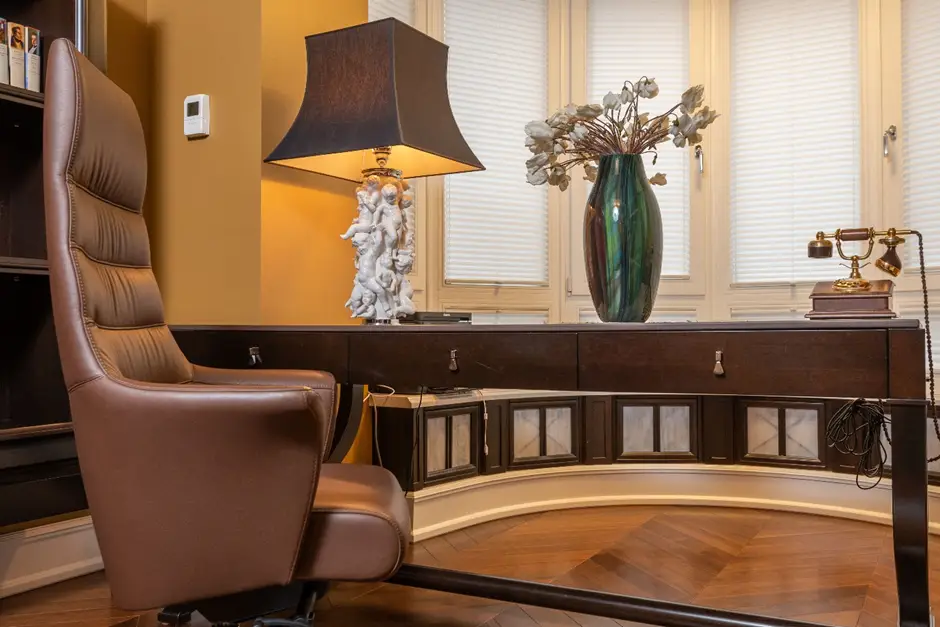
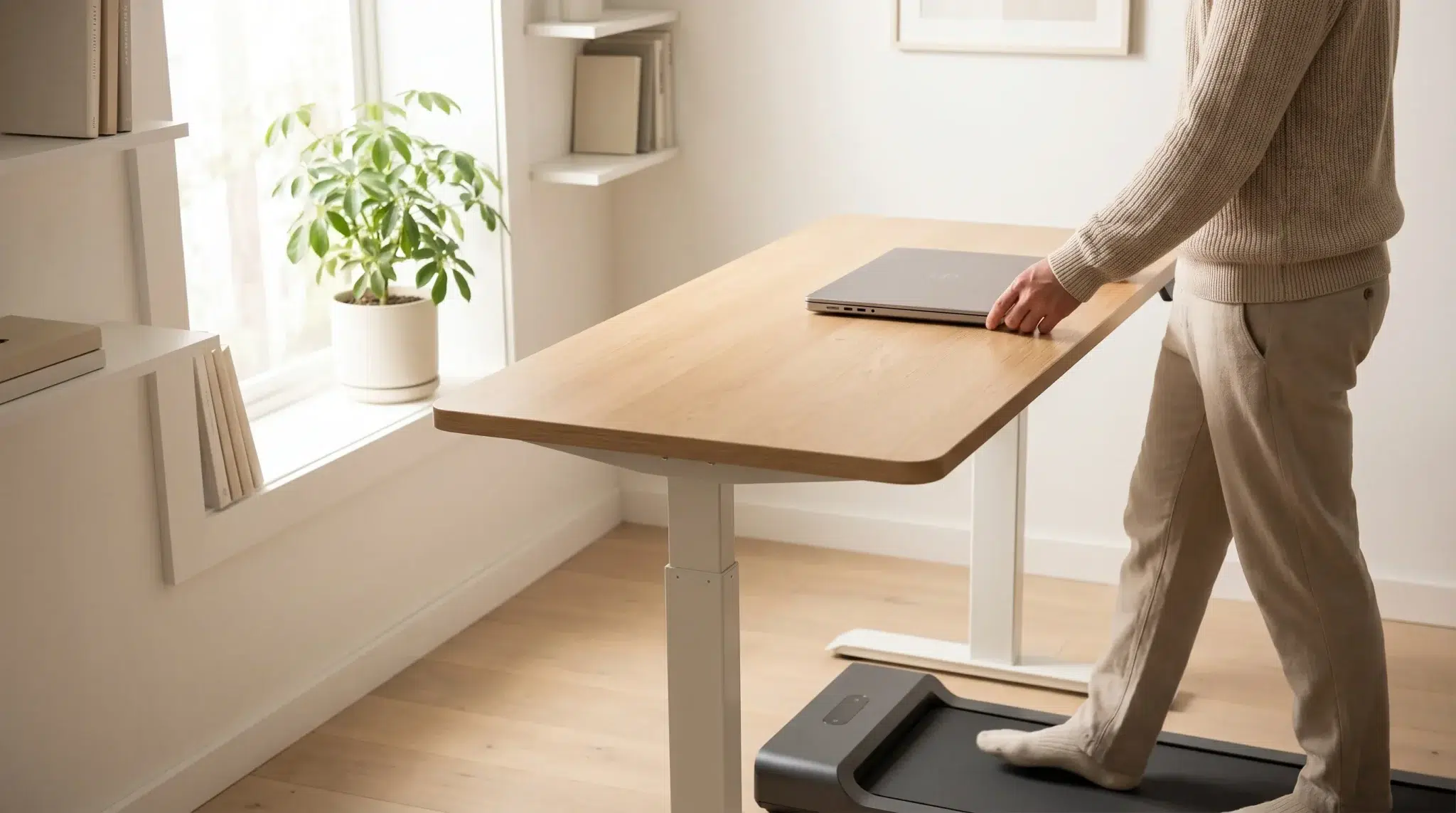
A traditional room conversion gives you plenty of physical room to expand. If you have an empty bedroom, you can build a massive desk to hold multiple large monitors, printers, and heavy equipment. You control the layout completely. You can paint the walls, hang large whiteboards, and add custom storage cabinets for your files.
If you live entirely alone or have a dedicated room far away from the main living areas, a standard setup works beautifully. It provides a permanent base of operations without requiring specialized acoustic furniture.
Where a Home Office Starts to Fall Short?
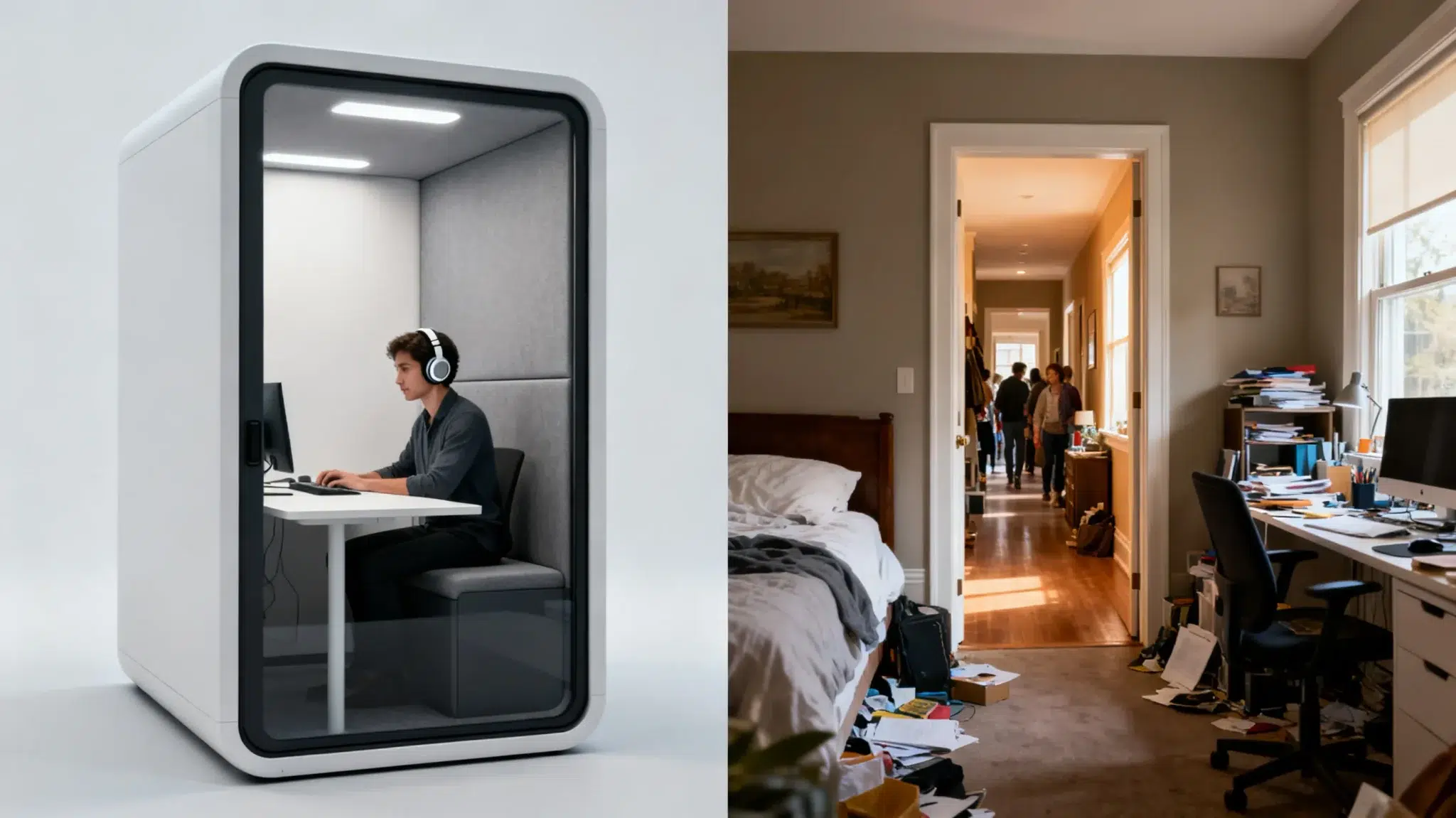
The standard room conversion fails the moment you share your house with other people. Interior residential walls have almost zero soundproofing. When your kids watch television in the living room or your partner takes a phone call in the kitchen, you hear every single word.
We notice that remote workers also struggle to disconnect when their desks are in a common room or their own bedroom. The boundary between corporate hours and evening rest disappears completely. You end up staring at your work computer while trying to relax, which leads straight to mental burnout.
When Privacy and Focus Become the Real Issue?
Some jobs require strict confidentiality and unbroken concentration. If you handle sensitive financial data, run human resources meetings, or take back-to-back client video calls, a standard hollow wooden door will not protect your privacy. Your household will hear your corporate conversations, and your microphone will pick up the dog barking outside.
When you reach this level of professional demand, fixing the problem requires more than a pair of noise-canceling headphones. You need an environment that physically blocks sound from entering or leaving the space so you can do your job properly.
A Better Fit for Calls, Deep Work, and Boundaries
When your job demands non-stop client calls or heavy data analysis, relying on a basic desk in the corner of your living room will hurt your performance. You need an environment that physically blocks out distractions. People who switch to purpose-built, enclosed spaces report being able to handle their daily meetings with much less stress.
They don’t have to mute their microphones every time a dog barks or a delivery truck drives by. Having a dedicated, soundproof space provides a hard physical boundary that tells your brain, and your family, that you are strictly on the clock.
Why More People Now Look at Office Pods?
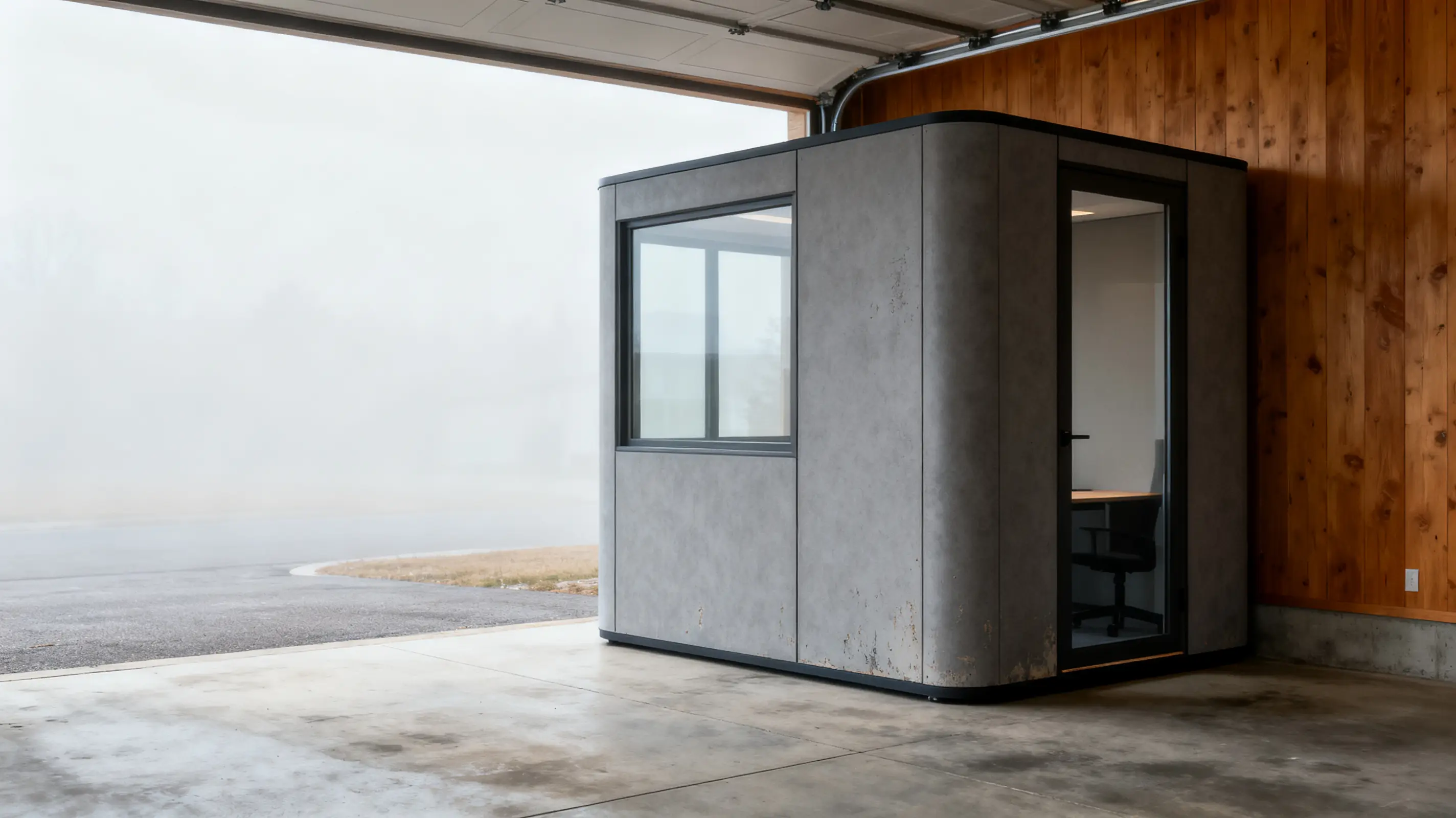
Remote workers are tired of fighting for a quiet corner in their own houses. This constant frustration explains why so many professionals are turning to office pods as a long-term solution. These standalone units offer heavy sound insulation and built-in ventilation right out of the box.
You don’t need to hire a contractor, pull building permits, or tear down your drywall to get a quiet room. You just place the unit in your basement, garage, or large living area. It gives you an instant, professional workspace that completely shuts out the chaos of a busy household.
What Should You Think About Before You Choose?
You need to look closely at your daily environment before spending any money. Ask yourself how much background noise your household makes during your working hours. If you live alone in a quiet neighborhood, converting a spare bedroom works perfectly well. If you live with roommates, have young children running around, or share the space with a partner who also works from home, you need serious soundproofing.
You must also measure your available floor space. A standard home office requires a full, dedicated room. A soundproof booth, on the other hand, can fit tightly into the corner of a larger room without taking over the entire floor plan.
Related: 30 Ideas to Inspire Your Farmhouse Office Styled for Home
Which Option Makes More Sense for Remote Workers?
For most remote workers, the choice comes down to mobility and property ownership. If you own your house and plan to live there for the next twenty years, renovating a spare room into a custom office makes sense. However, many remote workers rent their homes or move frequently.
If you spend thousands of dollars adding soundproof drywall to a rental property, you leave that investment behind when your lease ends. A modular office pod travels with you. You can take it apart, pack it onto a moving truck, and set it up in your next apartment. This flexibility makes it a much smarter purchase for people who move around.
Which One Is Better for Small Teams or Shared Homes?
Shared living spaces create the biggest headaches for daily productivity. If you and your spouse both work from home, taking video calls in the same room is impossible. You end up talking over each other and annoying your coworkers. In these situations, bringing a standalone booth into the house solves the problem immediately.
One person can work at the kitchen table or the spare bedroom while the other uses the soundproof unit for their heavy meetings. The same logic applies to small business teams sharing a tight commercial rental. A booth provides a dedicated quiet room for confidential calls without forcing the rest of the team to stay completely silent.
Is the Extra Cost Worth It?
People often look at the price of a modular booth and think it’s too expensive. But you need to compare it to a real room renovation. Tearing open walls to add heavy acoustic insulation and hiring a contractor are expensive. The construction work also takes weeks to finish and leaves your house a mess.
A modular unit costs money upfront, but it arrives ready to use. You just plug it into the wall. If you rent your house or decide to move, you can pack the booth and take it with you. You cannot pack up renovated drywall. When you factor in the portability and the instant quiet, the purchase makes a lot of sense for most remote workers.
The Bottom Line
Your physical workspace influences the quality of the work you produce. Trying to push through constant interruptions drains your mental energy and makes an eight-hour shift feel twice as long. Whether you clear out a spare bedroom or bring in a modular booth, the end goal remains the same: you must build a firm wall between your job and your personal life.
Ultimately, make the choice that lets you handle your daily tasks efficiently without adding stress. Choose the setup that allows you to log off at the end of the day feeling accomplished, rather than completely exhausted from fighting your environment