

11 Types of Textured Walls Every Homeowner Should Know
Choosing a wall texture feels like a design decision, but it’s equally a maintenance decision.
The types of textured walls available range from simple spray finishes to intricate hand-applied techniques, and each one comes with a different set of trade-offs that only become obvious after the paint dries.
Walk through enough renovated homes and a pattern emerges: the walls that cause the most trouble are rarely the ones with bad paint. They’re the ones where someone chose a complex texture without thinking past the first coat.
There’s no single right answer here, but there is a smarter way to decide.
What Are Textured Walls?
Textured walls are drywall surfaces finished with a layer of joint compound shaped into a decorative pattern before painting.
They serve two purposes: adding visual depth to a room and hiding surface flaws like dents, seams, and tape lines.
The mechanism is simple, irregular, random patterns scatter light and break up the visual plane, making imperfections disappear.
The more irregular the pattern, the better it hides flaws. Smooth walls show everything; textured walls forgive a lot.
Types of Textured Walls
Interior walls don’t have to be flat; textured finishes add depth, personality, and practical benefits like hiding drywall imperfections.
From quick spray-applied options to high-craft hand-applied finishes, here are the most common types of textured walls and what sets each one apart:
1. Orange Peel

The most common wall texture in American homes is named after the dimpled skin of a citrus fruit.
Applied with a hopper gun, it creates soft, rounded bumps that hide minor flaws well and work in nearly any room or style. It’s subtle enough to blend into the background while still adding depth to flat drywall.
2. Knockdown
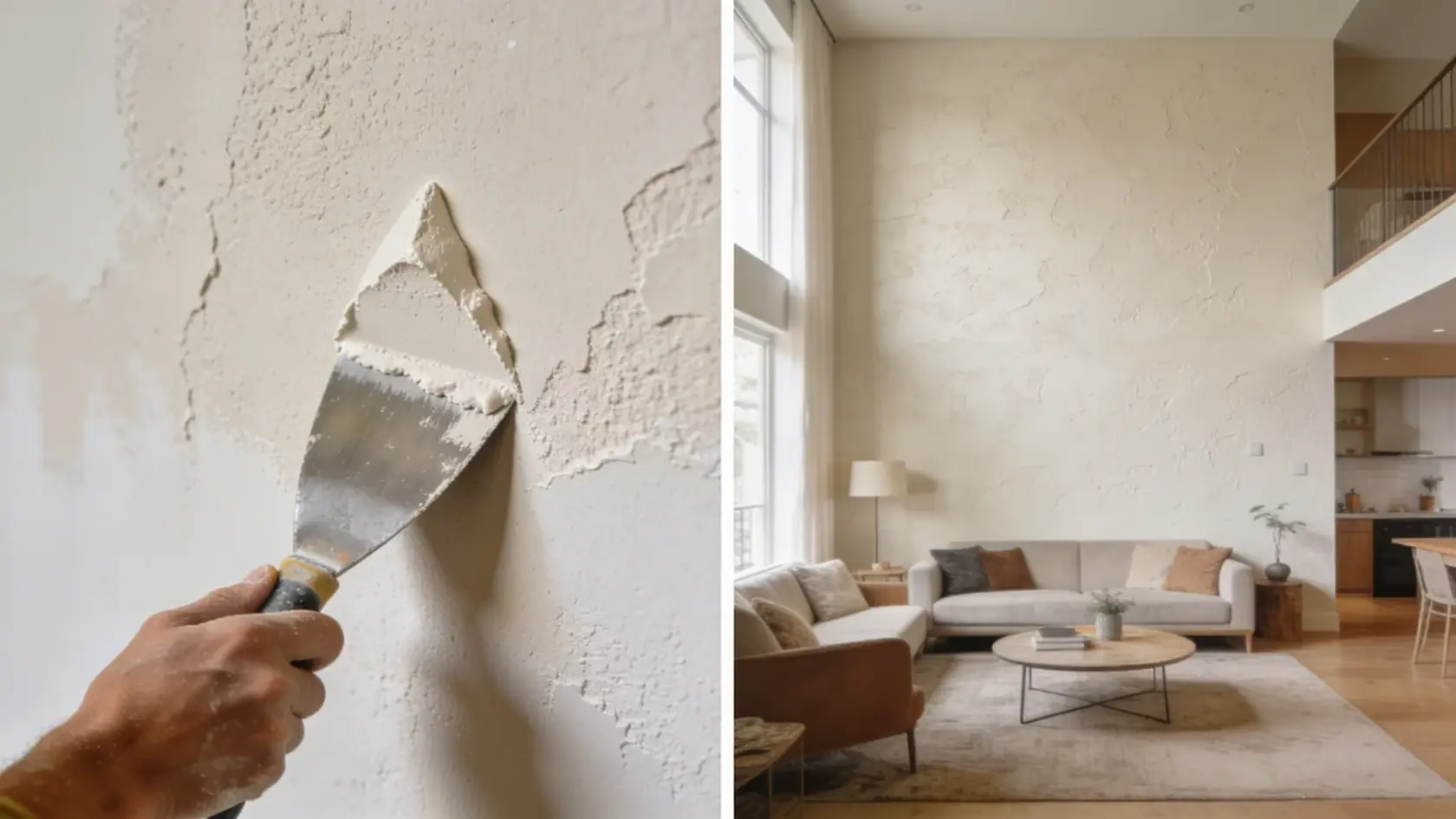
The compound is sprayed onto the wall, then a drywall knife lightly flattens the peaks before they dry, leaving irregular, flattened shapes with subtle shadows between them. It adds more visual depth than orange peel without being overwhelming.
One of the most requested textures in modern renovations, it works especially well in living rooms and open-plan spaces.
3. Skip Trowel
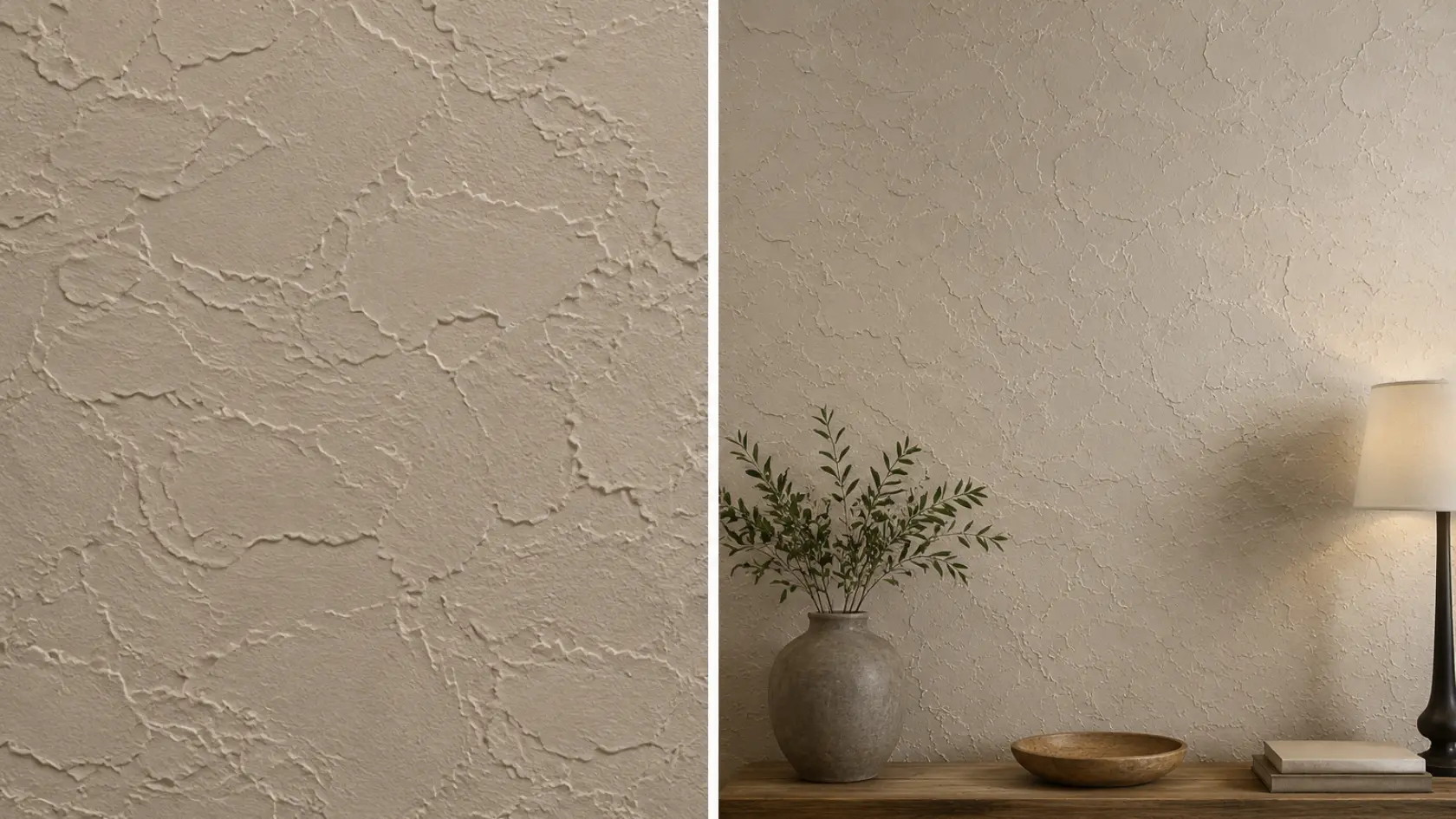
A hand-applied finish where a trowel is dragged across the wall at an angle, skipping and catching to leave organic, irregular patches of compound across the surface.
No two walls look exactly the same, which gives it a handcrafted quality. It’s a favorite in transitional and rustic-modern interiors and pairs well with warm, earthy color palettes.
4. Smooth (Level 5)

Not the absence of texture, but the hardest finish to execute multiple thin layers of compound are applied, dried, and sanded until the surface is completely flat and seamless. It’s the current standard in high-end new construction and minimalist interiors.
The catch: it shows every imperfection, so surface preparation has to be near perfect before painting.
5. Sand Swirl
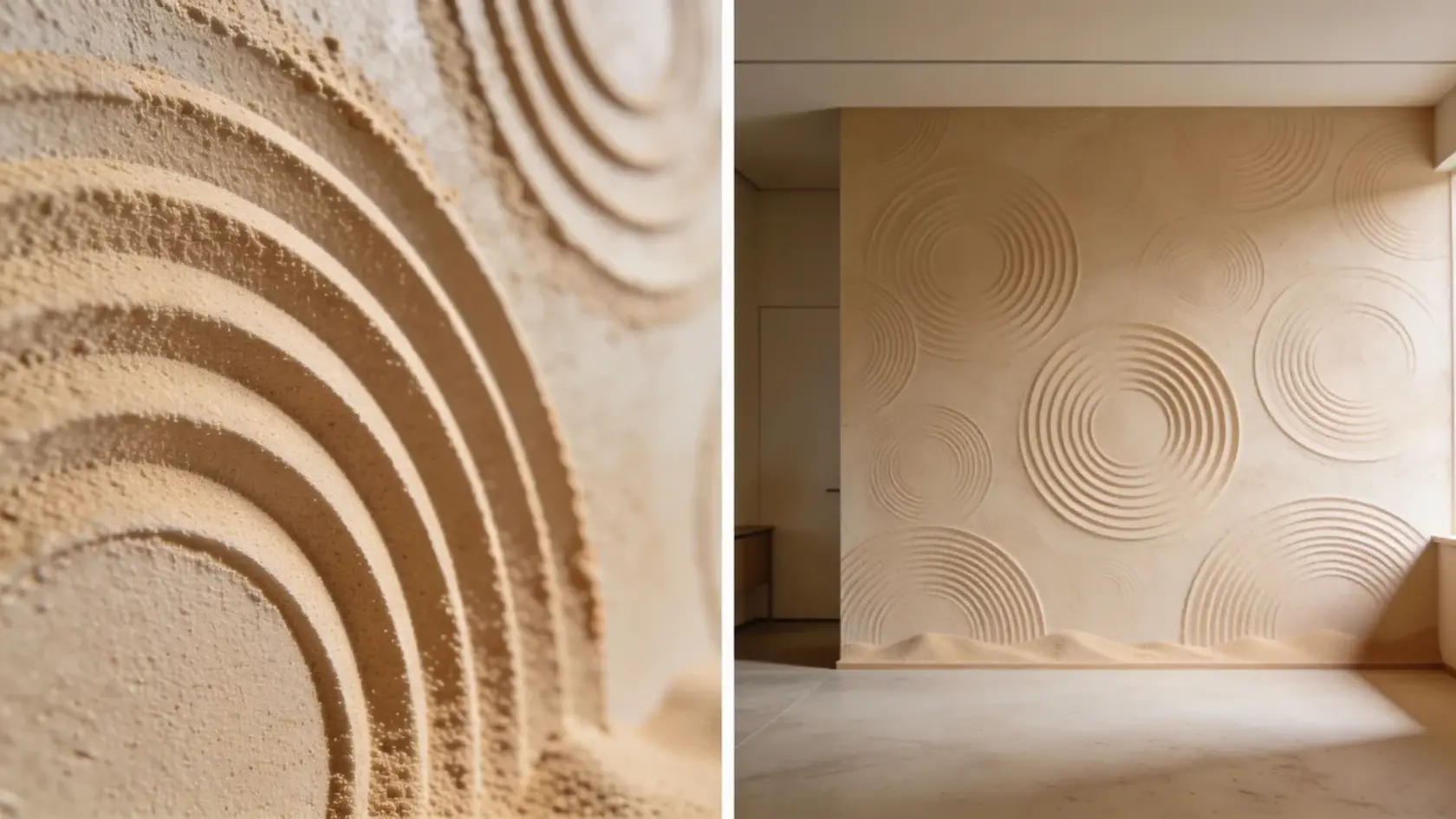
Sand is mixed into the drywall compound before application, then a brush pulls half-circle arcs through the wet mixture in a consistent overlapping pattern.
The sand gives the surface a slightly gritty feel while the swirls create a soft, flowing visual rhythm. It suits coastal, cottage, and relaxed-style spaces particularly well and adds warmth to larger walls.
6. Slap Brush
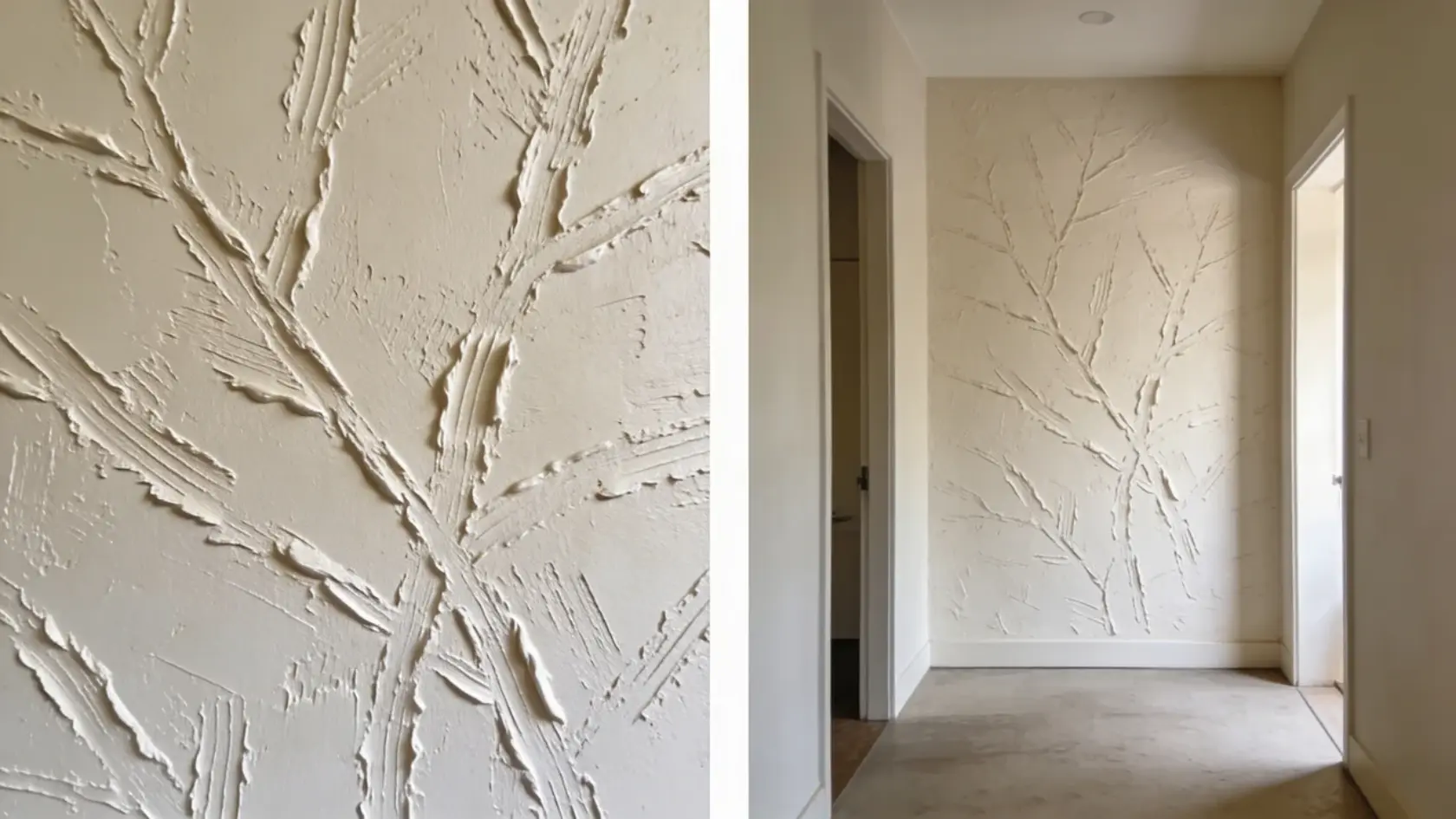
A brush is dipped into drywall compound and pressed firmly against the wall, then pulled back, leaving random branching lines and ridges across the surface.
The pattern is intentionally irregular, so there’s no specific technique to master, making it one of the easiest textures for a confident DIYer to attempt. It works well in hallways, utility rooms, and secondary spaces.
7. Stomp Brush
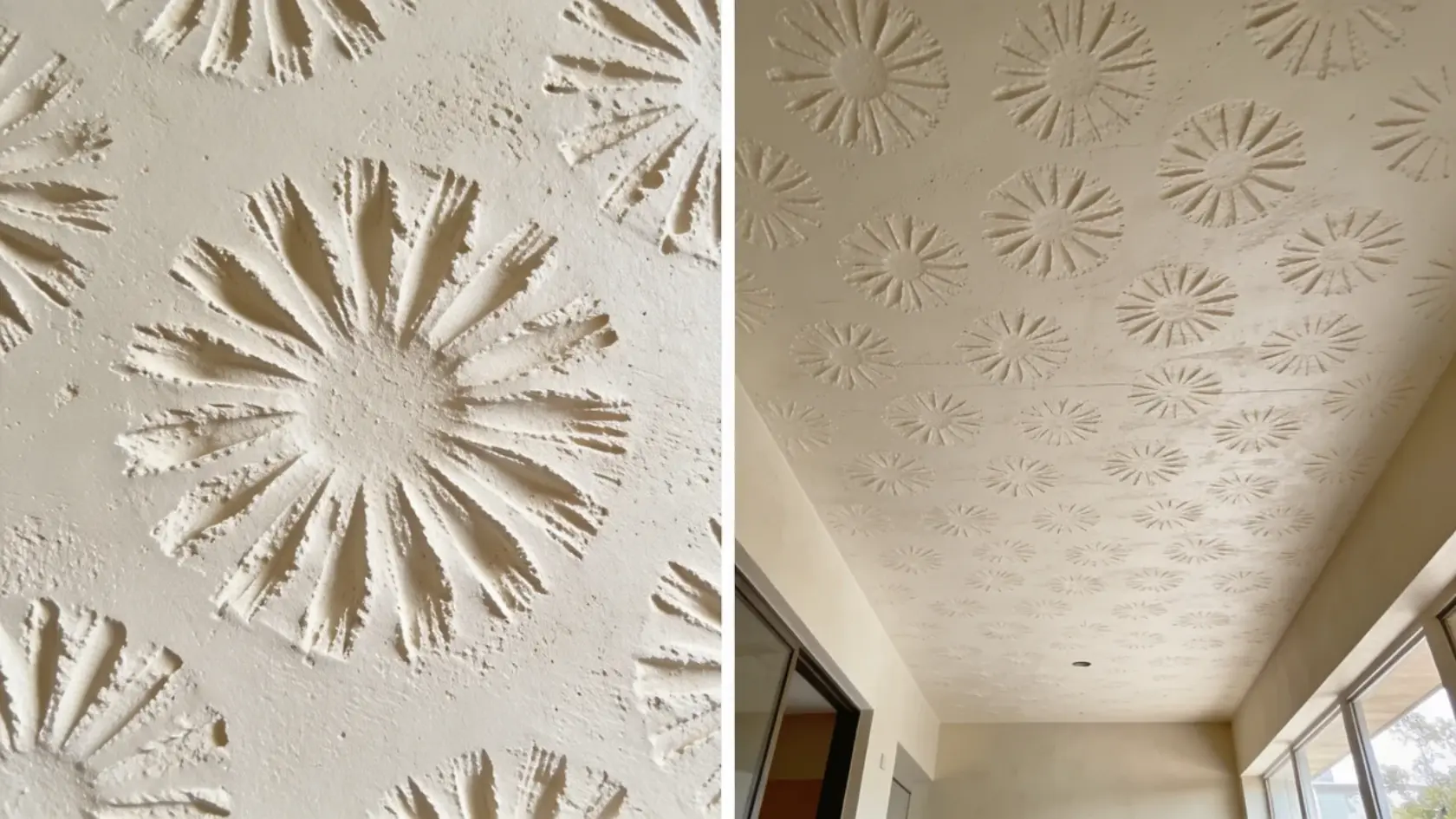
A large dry brush is pressed into a layer of wet compound in a repeated stamping motion, creating starburst or petal-like impressions across the surface. The key is keeping the compound layer consistent so the pattern stays even throughout.
It’s most commonly used on ceilings rather than walls and is straightforward enough for a first-time texturer to pull off.
8. Comb
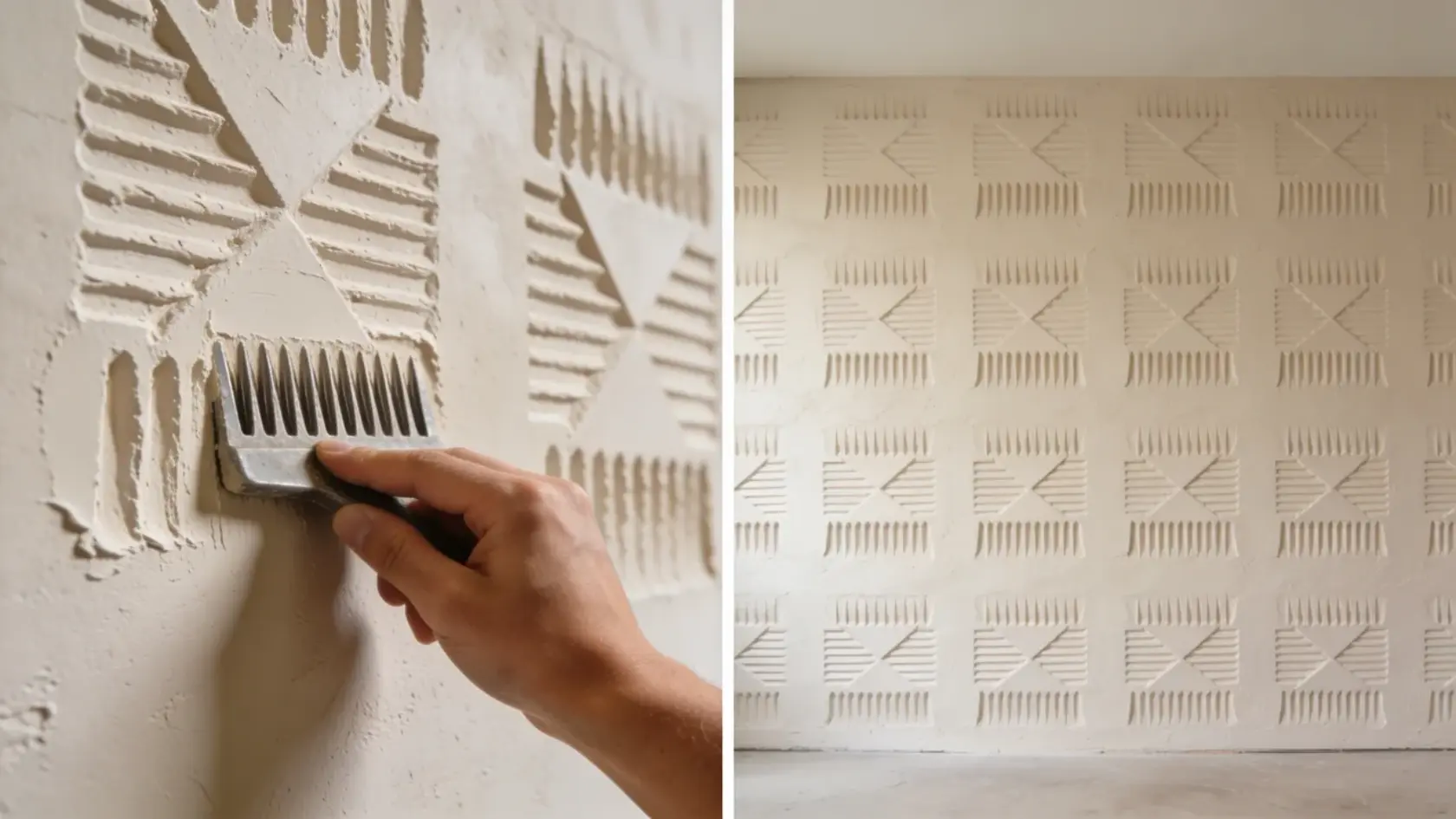
A toothed trowel is dragged through wet compound to create straight lines, waves, or fan shapes, depending on how it’s handled.
Unlike most textures, comb follows a repeating geometric pattern rather than a random one, which means any inconsistency in spacing or direction is immediately noticeable.
9. Lace
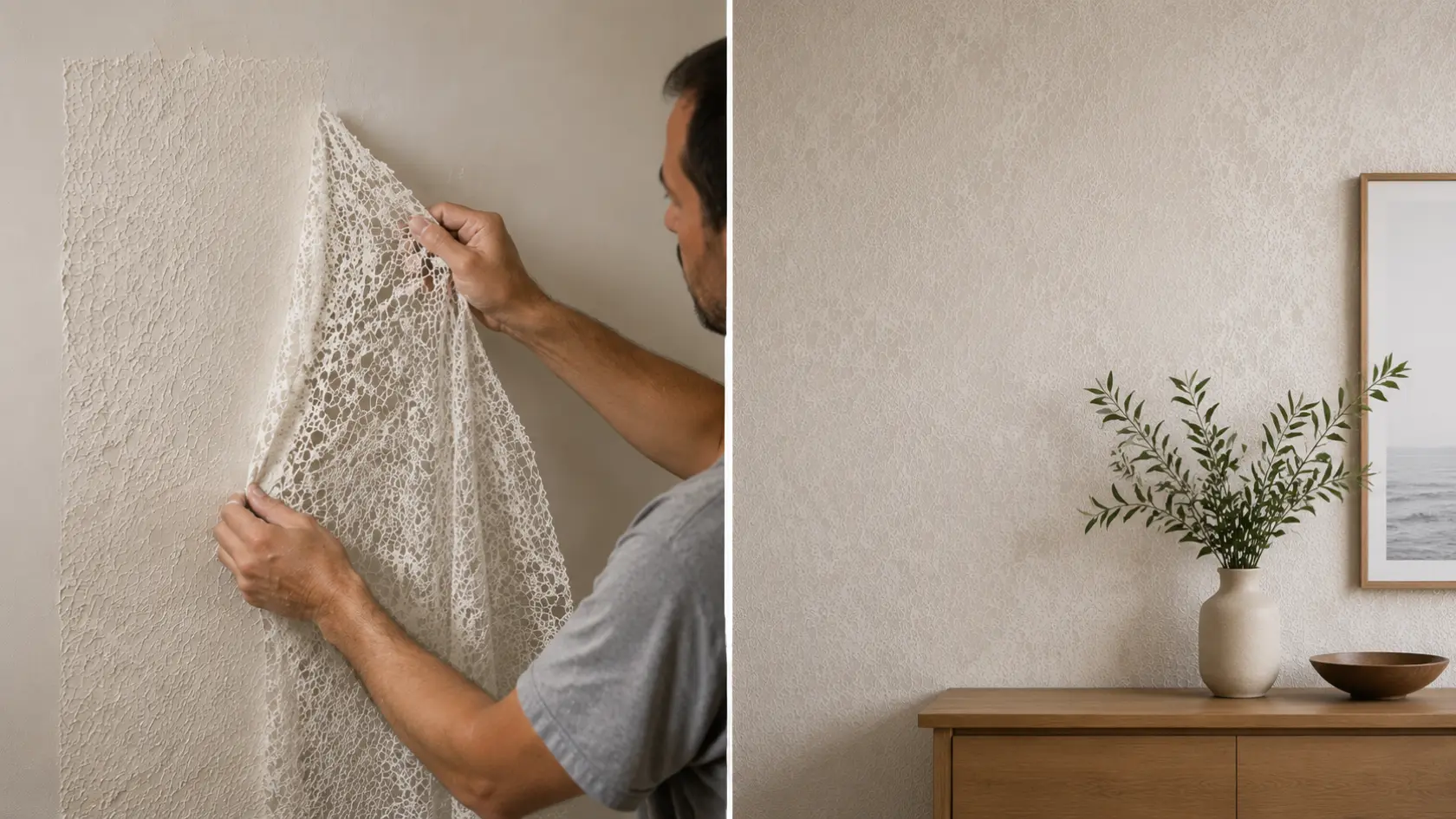
A fine, web-like finish was sprayed onto the wall without sand, creating a subtle all-over texture that reads as delicate rather than bold. The pattern is light enough not to compete with furniture or artwork, making it one of the more versatile options for interior spaces.
It suits bedrooms, dining rooms, and quieter spaces where you want depth without visual weight.
10. Popcorn
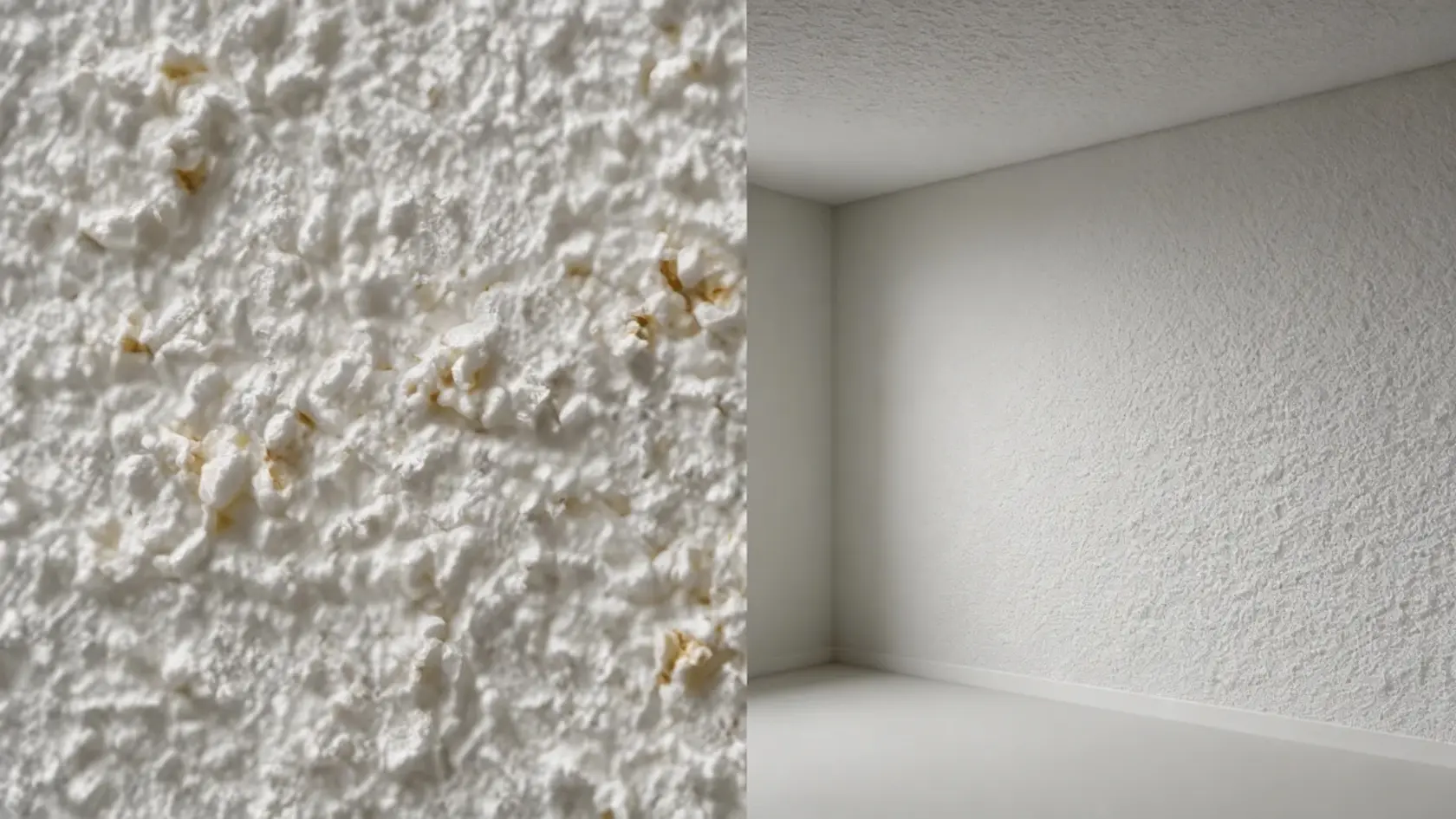
A heavy, rough spray finish that creates irregular bumps resembling popcorn, once widely used on ceilings from the 1950s through the 1980s for its sound-dampening qualities. It’s considered dated today and rarely used in new construction.
One important note for older homes, popcorn texture applied before 1980 may contain asbestos, so always test before sanding or removing it.
11. Venetian Plaster
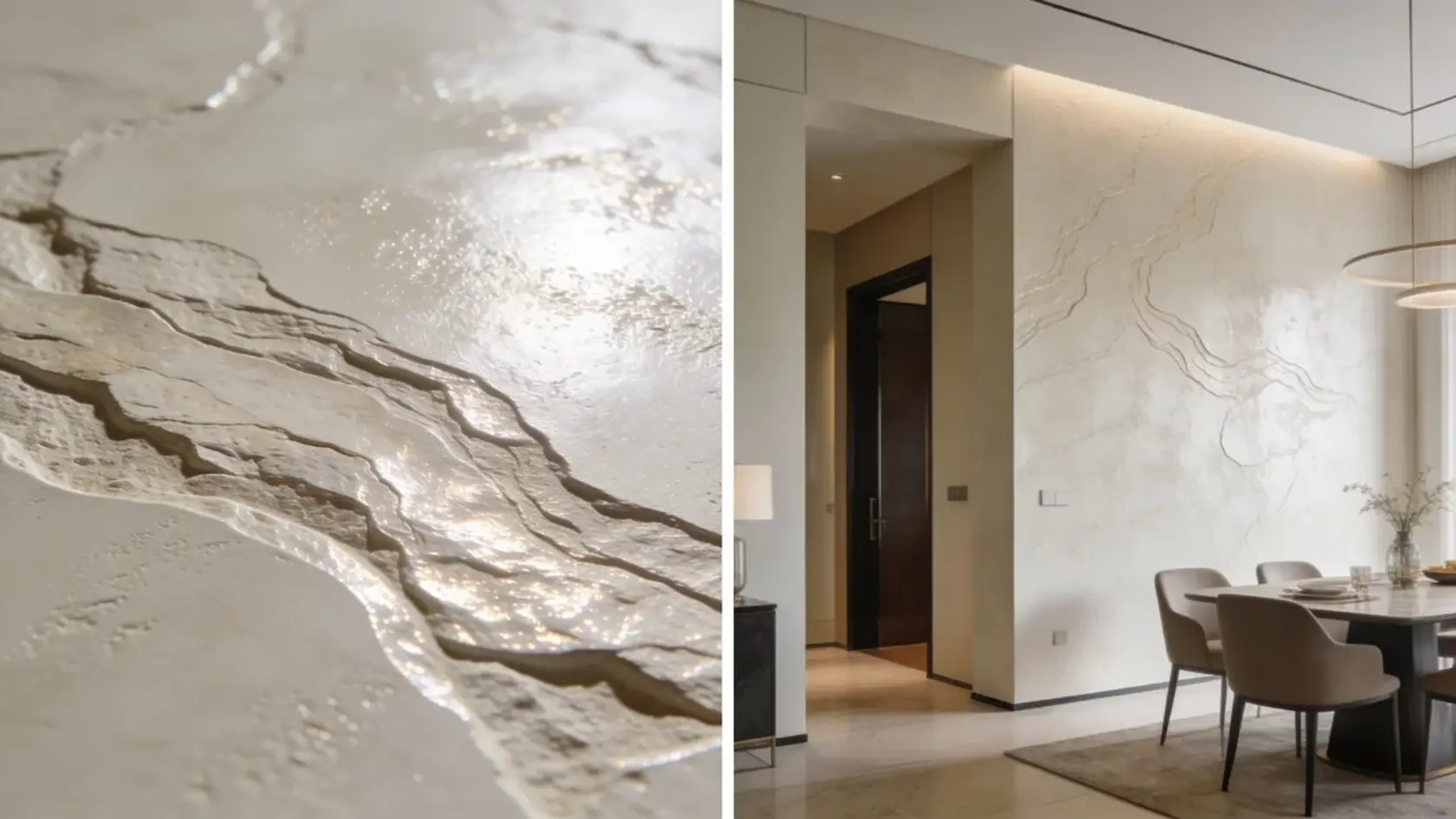
Marble dust is mixed into the compound and applied in thin overlapping layers with a trowel, then burnished to a polished, almost luminous finish that mimics the look of natural stone. The depth and sheen it creates are unlike anything a spray texture can achieve.
It’s a pro-level technique best suited for dining rooms, entryways, and accent walls where a high-end finish is the goal.
How to Choose the Right Wall Texture for Your Home?
The right texture is not the one that looks best in a photo. It is the one that holds up in your specific room, under your specific light, and fits the level of upkeep you are actually willing to do.
Run through these four filters before deciding:
- Wall condition: Rough or patchy surfaces need depth to absorb imperfections. Walls in good shape open up flatter, cleaner options.
- Lighting: Strong side light makes the texture far more prominent than showroom samples suggest. Always test a panel in the actual room first.
- Room type: High-traffic areas need tougher, simpler finishes. Quieter spaces can carry a more delicate tone.
- Repairability: A texture that is costly to patch after damage is a long-term trade-off worth thinking through before committing.
Design style matters too, but it should come last. Once you know what your walls can take, what your light will do to the surface, and what you are willing to maintain, the style decision becomes much easier to make.
Conclusion
Textured walls are one of the easiest ways to add character and depth to a space without a full renovation.
Whether you go with something simple like orange peel or invest in a hand-crafted finish like Venetian plaster, the key is matching the texture to the room, the lighting, and your long-term plan.
Take your time, test a sample panel before committing, and factor in repairability before falling in love with a complex finish.
We’d love to know which texture you’re considering for your space. Drop a comment below.
Frequently Asked Questions
What Is the Most Popular Texture for Walls?
Orange peel is the most widely used wall texture in the United States because it is quick to spray, easy to repair, and works in almost any room. Knockdown is a close second, especially popular in remodels and open-plan spaces.
Which Wall Textures Are Outdated?
Popcorn texture is the most dated and rarely used in new construction today. Heavy comb and stomp brush patterns also read as older styles in most contemporary spaces.
Do High-End Homes Have Textured Walls?
High-end new builds increasingly use smooth Level 5 walls for a clean contemporary look. However, hand-applied finishes like Venetian plaster and skip trowel are also considered premium choices when applied with intention and skill.


