Why Mid-Century Modern Design Still in Trend?
Some design styles come and go, but others stand the test of time. Mid-century modern is one of them.
To truly understand its lasting appeal, you need to know the origin of mid-century modern design and the ideas that shaped it.
This style grew from a need for practical living, simple forms, and thoughtful use of materials.
Here, you’ll learn how it developed, what defines its look, and why it still fits beautifully in modern homes. I’ll also cover how its colors, materials, and principles continue to influence today’s interiors.
The Origin of Mid-Century Modern Design
Mid-century modern design developed between 1945 and 1970, shaped by social change, global influence, and industrial progress. Here’s how it evolved across distinct phases.
Pre-Foundation Phase (1930s–Early 1940s)
European modernist and Bauhaus designers introduced functional design principles to America. Their emphasis on simplicity, clean geometry, and usability began shaping the core philosophy that would later define mid-century modern design.
Post-War Expansion Phase (1945–Early 1950s)
After World War II ended, suburban housing expanded rapidly across the United States. Families needed affordable, practical, and space-efficient furniture for these new homes. As a result, design became more streamlined, functional, and purpose-driven.
Innovation and Mass Production Phase (1950s)
During the 1950s, materials developed for wartime use began entering residential design. Molded plywood made curved furniture forms possible, while plastic, fiberglass, and steel supported efficient large-scale production.
As manufacturing improved, modern furniture became more affordable and accessible to the middle class.
Mainstream Popularity Phase (1960s–1970)
By the 1960s, mid-century modern became widely popular. Open floor plans and indoor–outdoor living defined residential design, making it a dominant American home style until the early 1970s.
In the early 2000s, trends began shifting, but the design language created during these decades continues to define the style today.
Why Mid-Century Modern Design Still Matters Today?
Mid-century modern design never fully disappeared. It keeps resurfacing in homes, remodels, and design trends. That consistency isn’t accidental. Let’s look at what keeps it relevant.
- Simplicity that Fits Modern Living: today’s homes favor clean, uncluttered spaces. Mid-century modern supports this with practical furniture and simple forms that make daily living easier.
- Works in Small and Open Spaces: Low-profile furniture and open layouts make rooms feel larger and more connected, making the style ideal for apartments and open-plan homes.
- Easy to Blend with Other Styles: Mid-century modern mixes easily with contemporary, minimalist, or traditional spaces. Even one piece can blend in without overpowering the room.
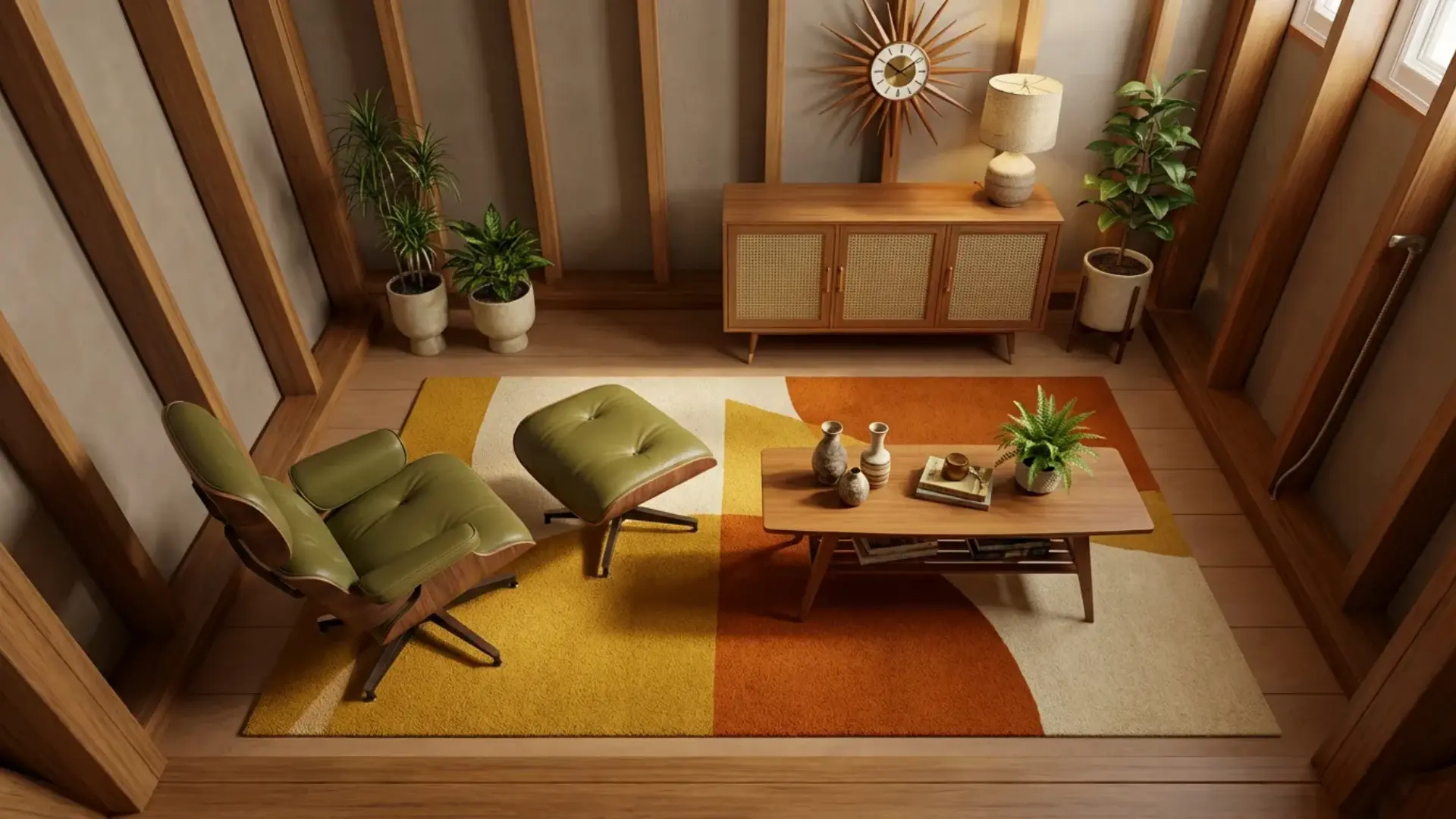
- Balanced Look: Mid-century modern adds warmth to clean spaces with wood tones and soft curves, keeping them simple but inviting.
Its lasting appeal lies in combining structure with warmth in a way that continues to suit modern homes.
Role of Color Theory in Mid-Century Modern Design
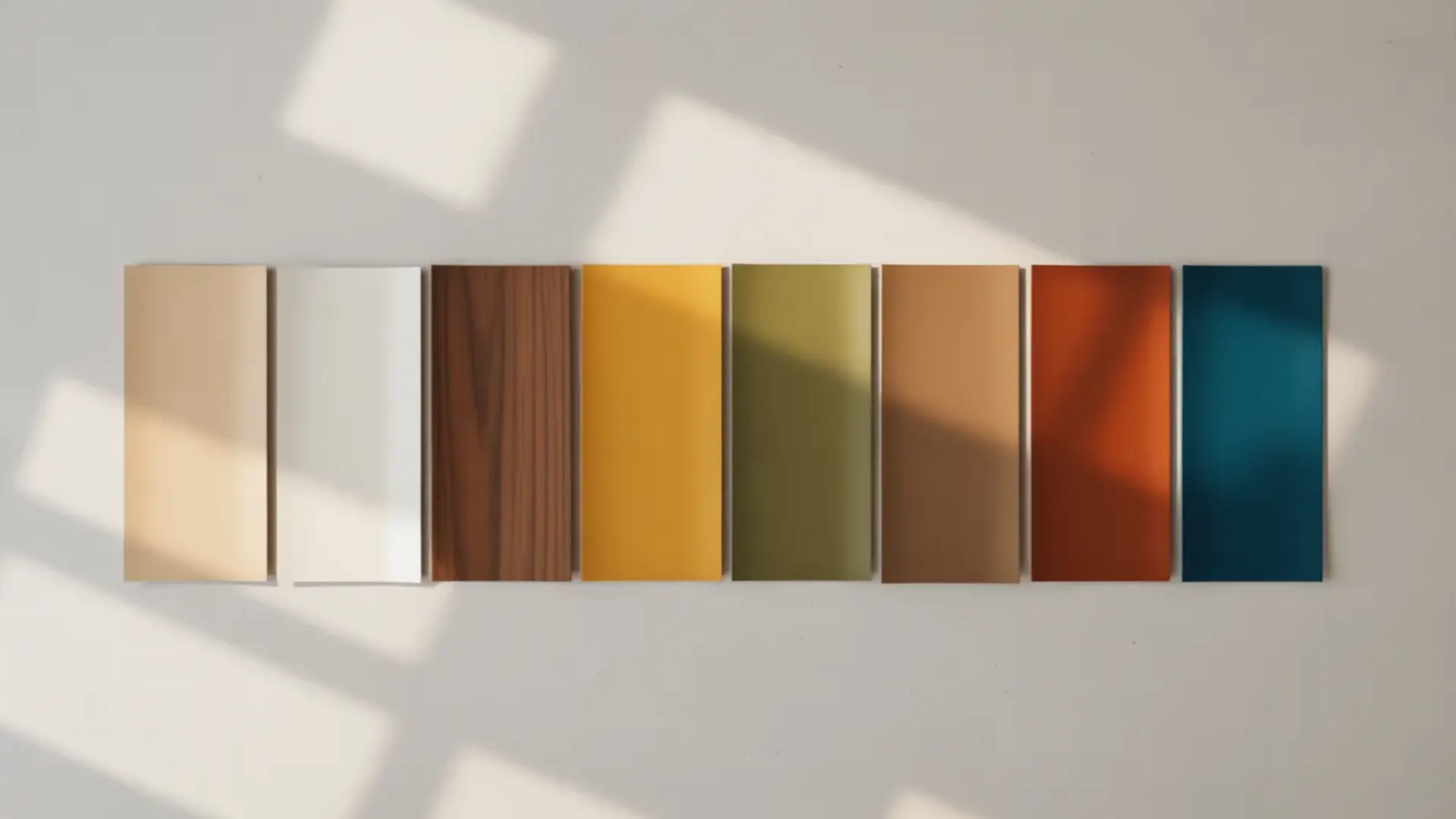
Color plays a structured role in mid-century modern interiors. It is not random or purely decorative. The palette follows clear principles built on contrast, balance, and control.
Neutral Base Colors for Stability
Mid-century spaces usually start with a calm foundation.
- White
- Beige
- Warm wood tones
These neutral shades create visual stability. They allow furniture shapes and materials to stand out without overwhelming the room. Wood, especially in walnut and teak finishes, often acts as both structure and color anchor.
Bold Accent Colors for Contrast
Once the base is set, stronger hues are introduced in controlled amounts.
- Mustard yellow
- Olive green
- Rust
- Teal
These colors add energy and personality. They are typically used in upholstery, artwork, or decor pieces rather than across large wall surfaces.
A key principle in this style is temperature balance. Warm woods and earthy tones are often paired with cooler accents like teal or muted blues. This contrast prevents the space from feeling flat while maintaining harmony.
How to Build a Mid-Century Color Palette at Home
The structure is simple and intentional.
- Start with a neutral base.
- Introduce one or two accent colors.
- Distribute color evenly instead of concentrating it in one area.
- Avoid overuse to maintain clarity and balance.
The goal is not boldness for its own sake. It is measured contrast that supports the overall simplicity of the design.
Materials that Define Mid-Century Modern Style
Materials are central to mid-century modern design. The style is not only about shape and layout. It is equally defined by what furniture and interiors are made of. A clear contrast between natural and industrial materials gives the style its identity.
Natural Woods
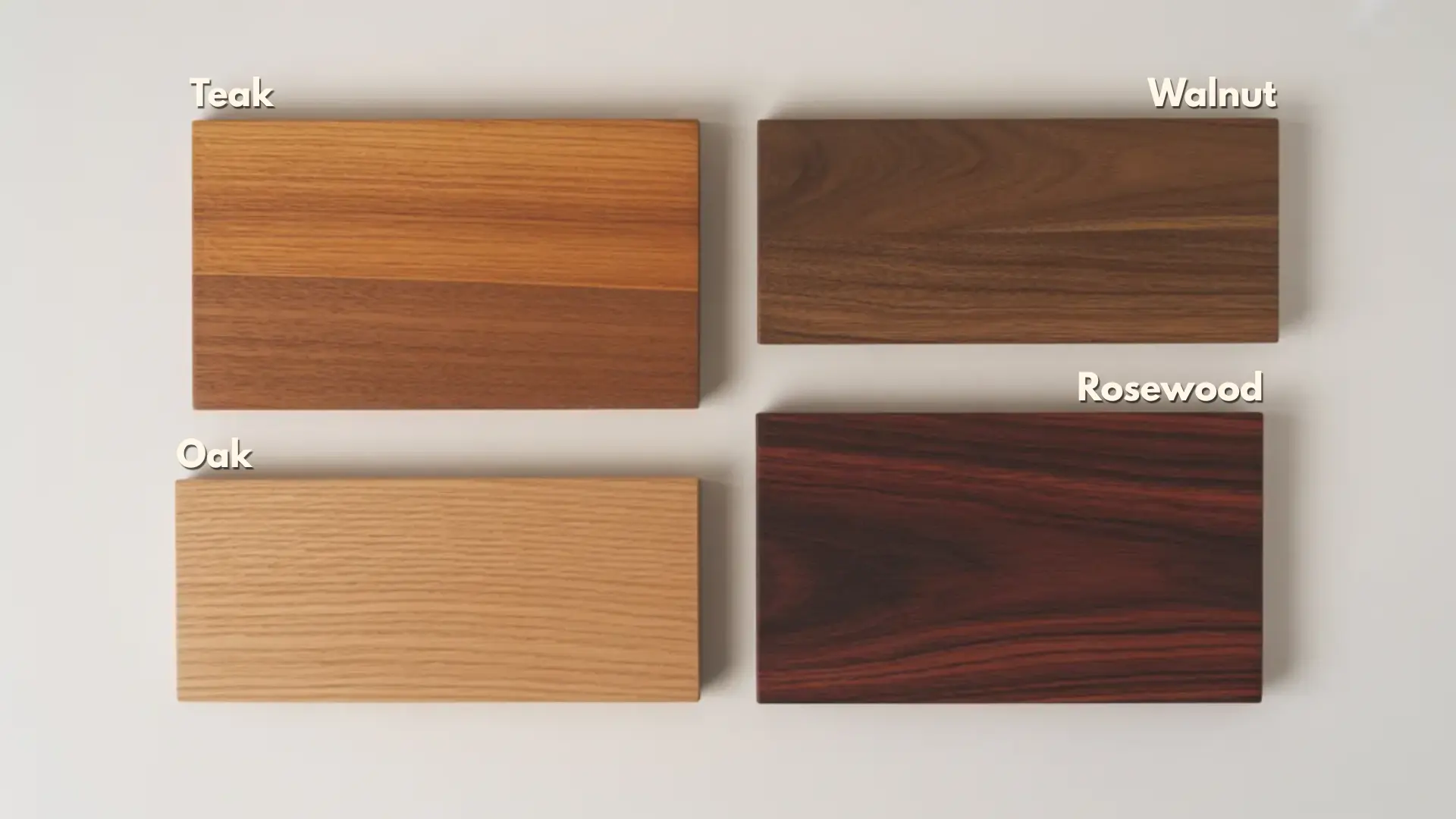
Wood is the foundation of mid-century modern interiors. It brings warmth and depth to otherwise simple forms.
- Teak – Known for its smooth grain and durability, widely used in furniture.
- Walnut – Darker tone, often used in cabinets and statement pieces.
- Oak – Lighter and more subtle, common in flooring and structural elements.
- Rosewood – Rich and bold, often seen in high-end furniture pieces.
These woods are typically finished to highlight their natural grain rather than cover it.
Industrial and Innovative Materials
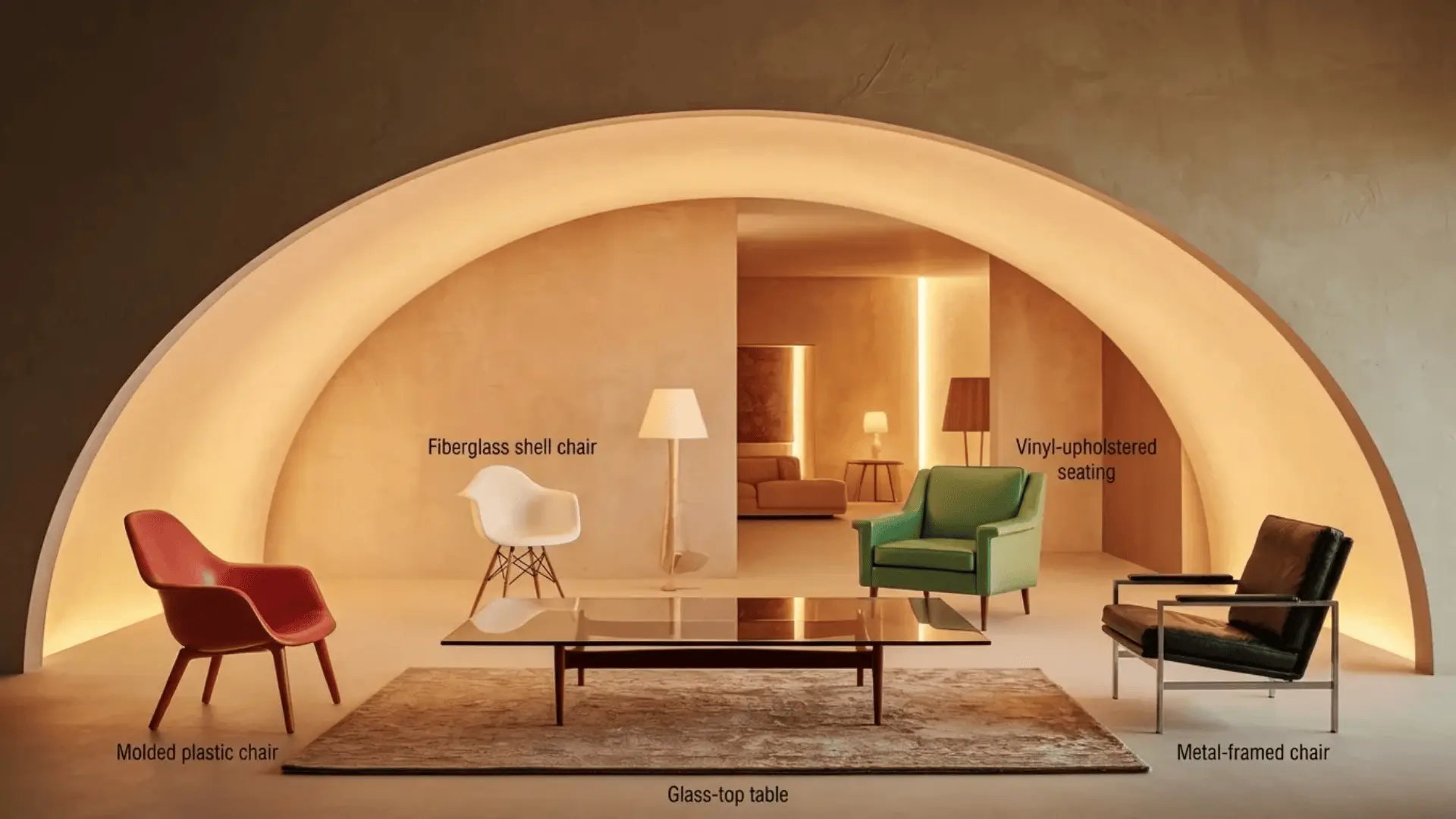
The mid-20th century introduced new production methods and materials. Designers embraced them.
- Molded plastic – Allowed fluid, curved chair designs.
- Fiberglass – Lightweight and adaptable for mass production.
- Metal – Used in legs, frames, and structural supports.
- Glass – Added openness and lightness to interiors.
- Vinyl – Practical upholstery option during the era.
These materials made modern furniture accessible and efficient to produce.
Why This Material Combination Works
The strength of the style lies in contrast.
Warm wood tones soften the look of metal and plastic, while industrial materials add structure and practicality. Natural textures balance smooth, manufactured surfaces.
This combination creates interiors that feel grounded yet streamlined, practical yet visually balanced.
Mid-Century Modern vs. Modern Design
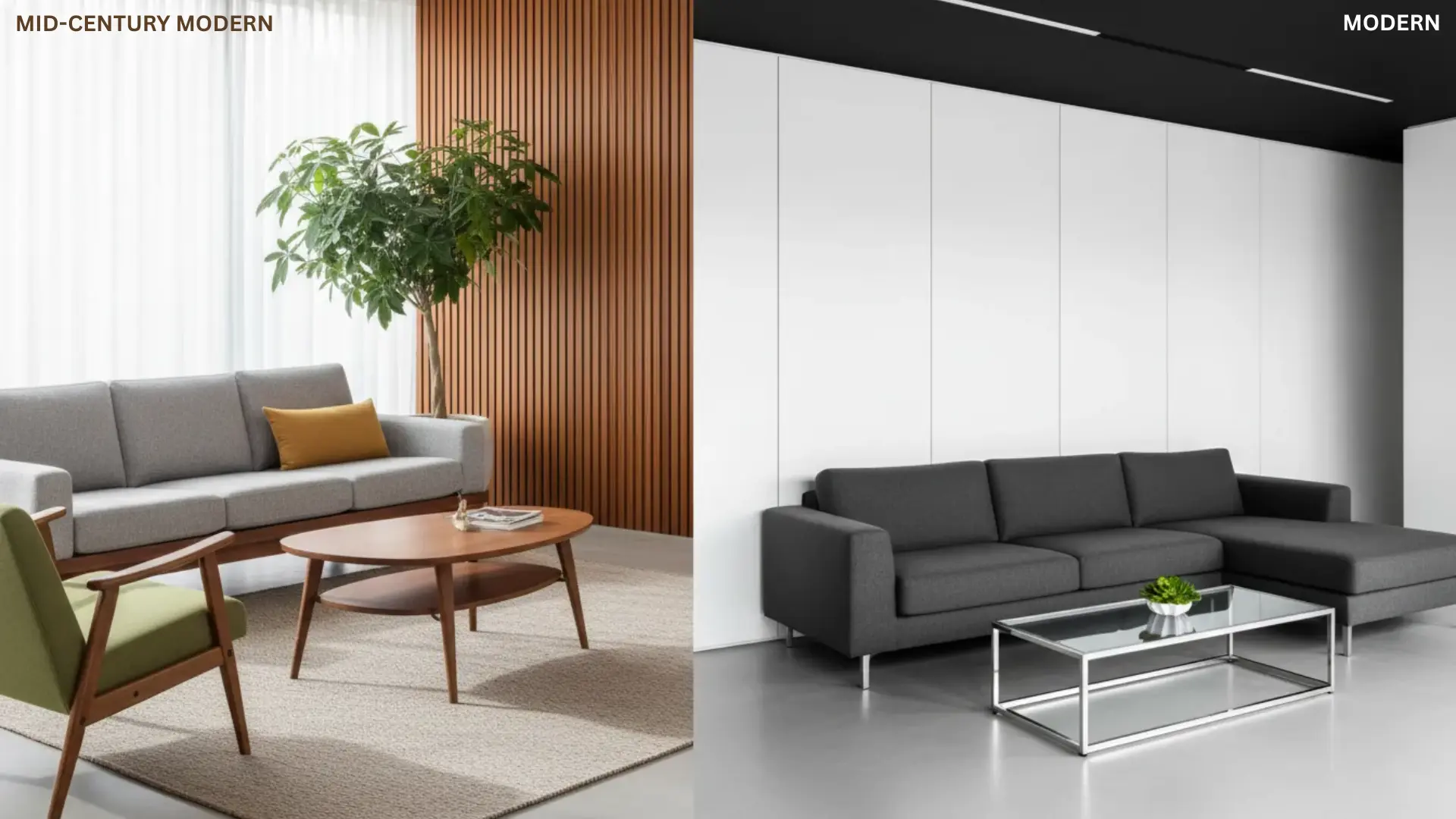
Both styles share a foundation in simplicity and functional design, which is why they are often grouped together. However, they differ in expression.
| Aspect | Mid-Century Modern | Modern |
|---|---|---|
| Time Period | 1945–1970 | Early 20th century origins, evolved over time |
| Core Philosophy | Human-centered function with warmth | Minimalism with sharp simplicity |
| Overall Feel | Warm, inviting, structured | Sleek, clean, refined |
| Materials | Teak, walnut, oak, molded plastic, fiberglass | Glass, steel, chrome, concrete |
| Color Palette | Neutral base with bold accents (mustard, olive, rust, teal) | Mostly neutral tones (black, white, gray, monochrome) |
| Shapes & Forms | Clean lines with organic curves | Straight lines with sharper geometry |
| Furniture Style | Low-profile, tapered legs, sculptural forms | Streamlined, flat surfaces, minimal detailing |
| Best For | Homes that need warmth with simplicity | Homes that favor crisp, uncluttered minimalism |
Modern design moves toward sharper minimalism and stricter restraint, while mid-century modern introduces warmth, organic curves, and controlled color contrast.
That balance between structure and comfort is exactly why mid-century modern continues to stay in trend. It carries the clarity of modernism but softens it in a way that still feels livable today.
Should You Choose Mid-Century Modern Design?
Mid-century modern design is not just a style from the past. It reflects a structured approach built on clean lines, functional furniture, controlled color, and a balanced mix of natural and industrial materials.
Although it developed between 1945 and 1970, its core ideas still suit the way many homes are designed today.
If you appreciate simple layouts with warmth, open spaces, and purposeful color choices, this style provides a solid base. It creates clarity without feeling bare and structure without feeling strict.
In the end, the decision depends on how you want your home to look and operate. If you value proportion, practicality, and comfort within a clean framework, mid-century modern remains a dependable and enduring option.
Conclusion
Understanding the origin of mid-century modern design helps you see why it remains popular even today.
Its clean lines, functional layouts, and balanced use of color and materials make it both practical and classic. This style proves that good design doesn’t need to be complicated to be effective.
By learning its key principles, you can create spaces that feel simple and well-structured.
Whether you introduce a single piece or redesign an entire room, its influence is easy to incorporate. Start applying these ideas today and bring the appeal of mid-century modern design into your home.