Transition Rhythm In Interior Design Explained
Ever walked into a room that felt smooth and easy to move through, even without knowing why? That feeling often comes from transition rhythm in interior design.
Without it, even well-designed rooms can feel broken or confusing.
In this blog, you’ll learn how transition rhythm works, why it matters, what techniques create it, where it commonly fails, and how it compares to other rhythm types used in interior design.
What is Transition Rhythm In Interior Design?
Transition rhythm in interior design is the use of gradual visual changes to guide the eye smoothly from one element or space to another, creating a continuous sense of flow.
It works by linking parts of a space through subtle shifts rather than sharp changes, so the eye moves naturally without interruption.
Instead of relying on strong contrast or exact repetition, the design connects elements in a steady and cohesive direction
Why It Matters
- Impact on Visual Flow: The transition rhythm creates a clear path for the eye, reducing mental effort and enabling smooth movement across connected elements. Strong sightlines support this by linking one area to the next.
- Impact on Spatial Cohesion: Gradual transitions connect different parts of a space, making them feel unified. This strengthens the spatial hierarchy and keeps the layout organized rather than fragmented.
- Impact on User Movement: Visual direction guides physical movement, especially in open layouts. However, too many smooth transitions can make the space feel flat and reduce visual interest.
Transition rhythm is not just visual. It directly affects how a space is experienced, from how easily it is understood to how naturally people move through it.
How Does Transition Rhythm Actually Guide the Eye?
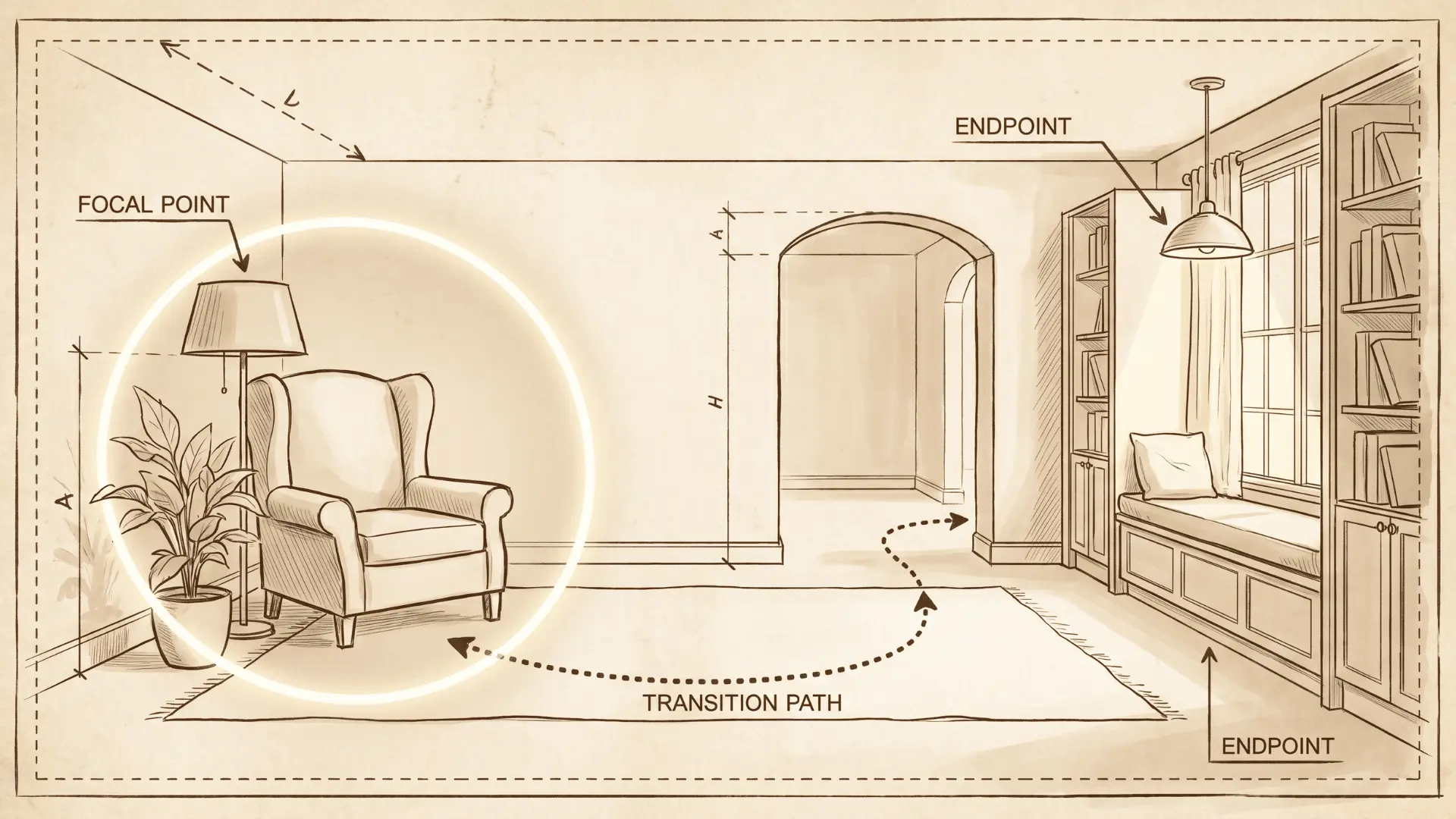
A transition rhythm guides the eye along a clear visual path. The eye starts at a focal point, follows gradual changes, and moves to the next point without interruption.
If alignment, spacing, or contrast is inconsistent, the eye loses direction and stops.
- Starting Point (Visual Anchor): The eye begins at a strong focal point, such as a bold color, shape, or key area, that sets the direction for movement.
- Transition Path (Gradual Change): The eye follows gradual, consistent changes in elements such as color, size, or shape, creating a smooth, uninterrupted path.
- End Point (Next Focal Area): The eye lands on the next focal point, forming a continuous visual chain across the space.
Each step must connect smoothly. If one transition is inconsistent, the chain weakens, and the layout feels disconnected.
What Techniques Create Transition Rhythm In Interiors?
Transition rhythm is created by introducing gradual changes that connect elements and guide the eye smoothly.
Each technique links one point to the next without sharp breaks. The choice depends on layout and scale, and mixing unrelated methods can disrupt flow.
1. Color Gradation (Light → Medium → Dark)
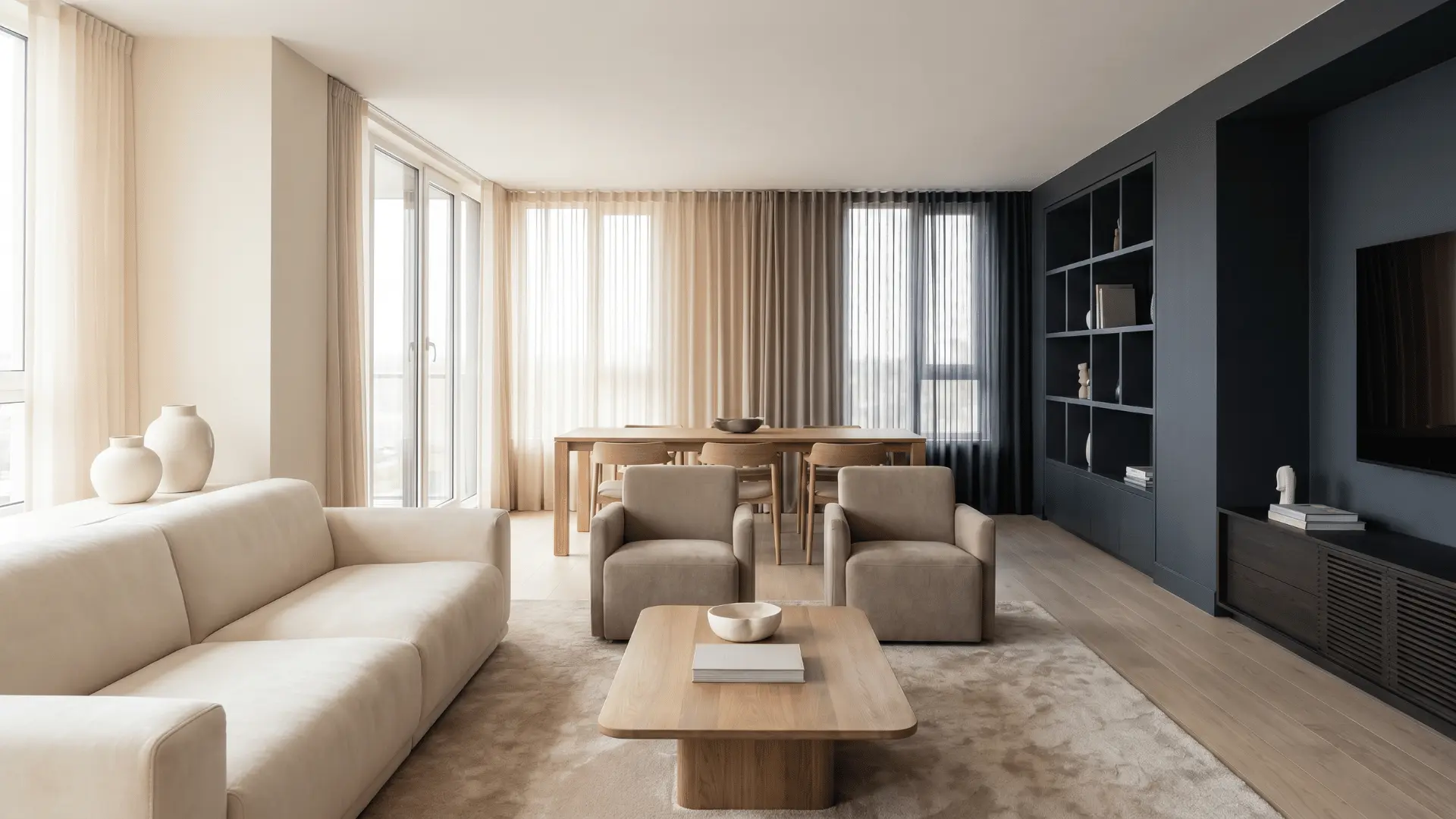
Color gradation works by shifting tones in steps so the eye can move without stopping. Instead of jumping between unrelated colors, each shade leads into the next.
This is effective when moving across zones, as it visually connects areas without needing physical separation.
2. Material Continuity (Flooring, Finishes)
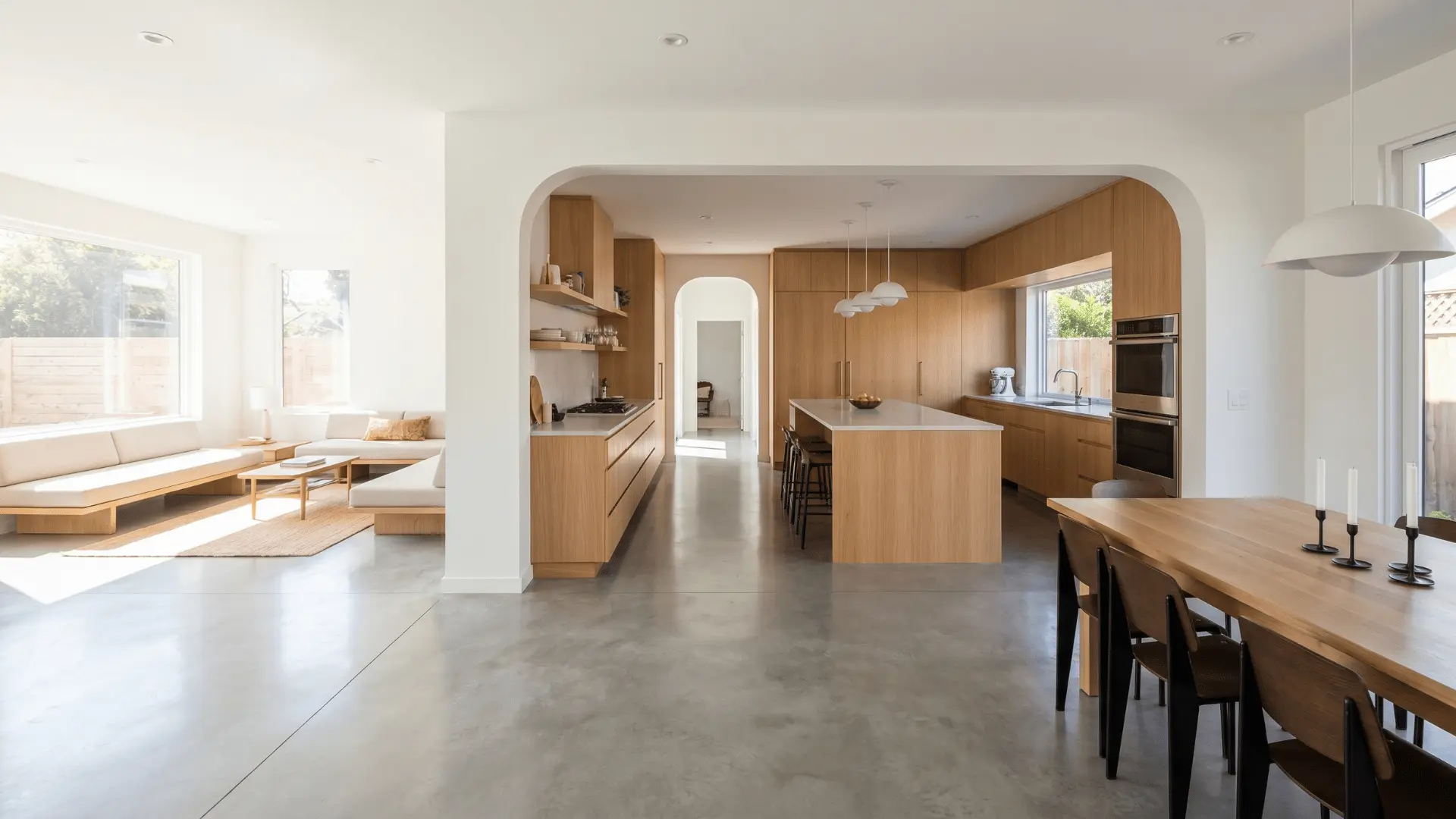
Material continuity removes visual breaks by keeping surfaces consistent or closely related.
When flooring or finishes stay the same, the eye does not pause at boundaries and moves freely across spaces. Even slight variations should feel connected, not contrasting.
3. Shape and Line Transitions (Curves, Pathways)
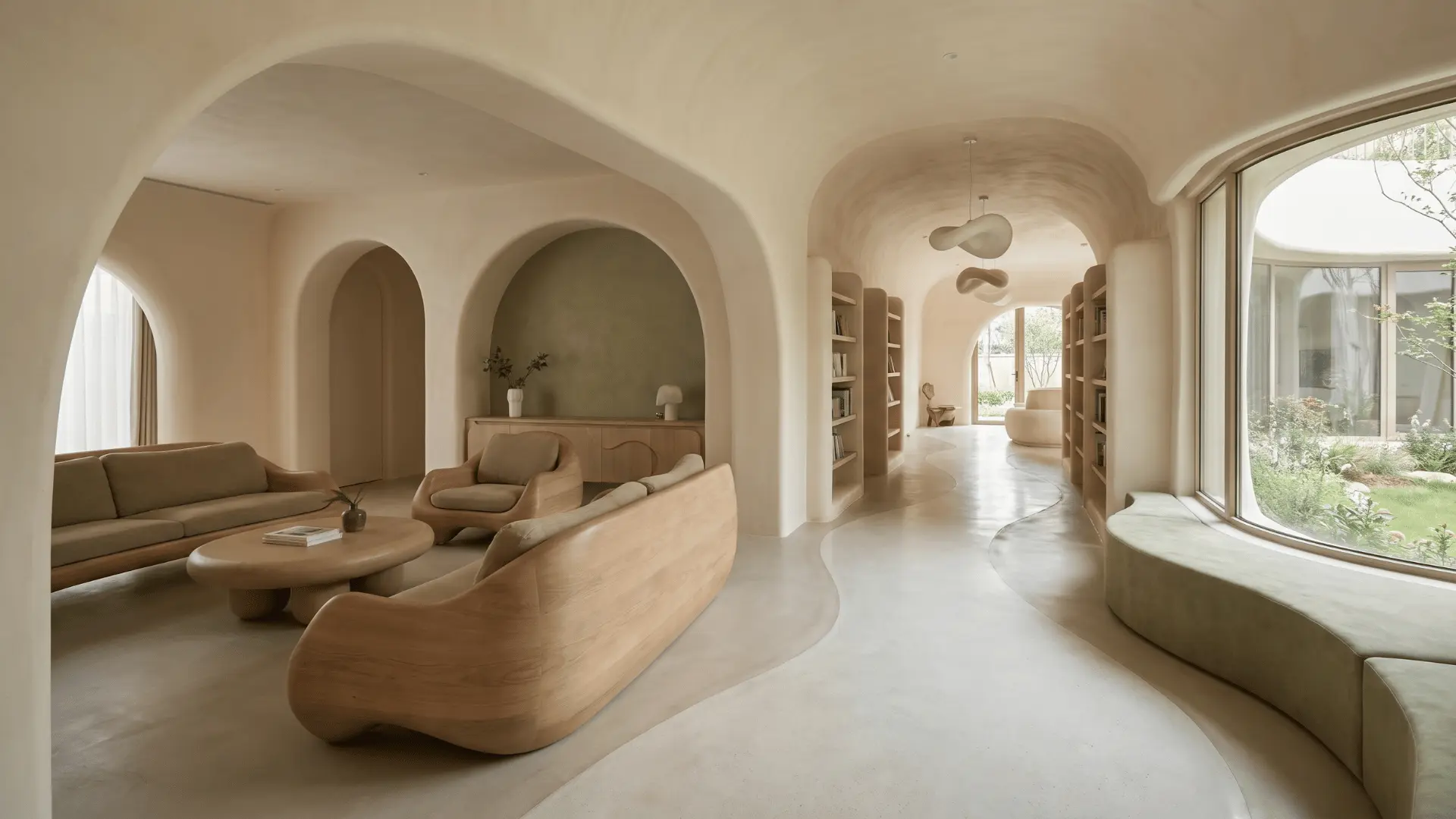
Shapes and lines guide direction. Curved edges and soft pathways lead the eye naturally, unlike sharp angles that create stops.
These transitions help define movement across a space without making it feel rigid or segmented.
4. Furniture Placement and Spacing
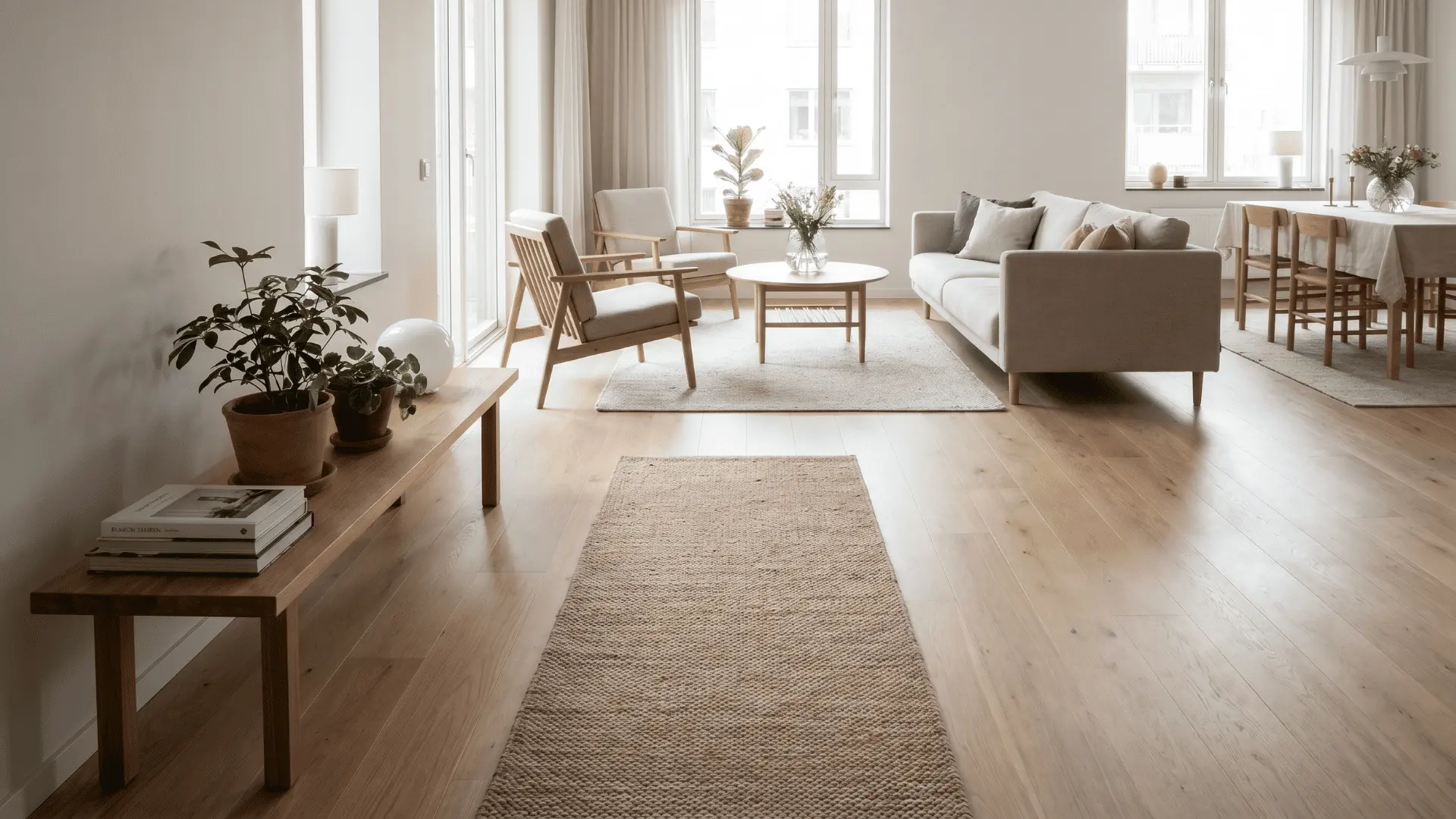
Furniture creates visual direction through placement and spacing. Gradual changes in size, alignment, or distance between pieces form a path the eye can follow. When arranged with intention, furniture connects zones without the need for walls or barriers.
These techniques work best when they create clear, gradual connections between elements. When used consistently, they keep the visual path smooth and the space cohesive.
Where Does Transition Rhythm Break Down In Real Spaces?
Transition rhythm breaks when the visual path is interrupted. If one transition fails, the eye stops and resets, breaking the connection to the next element.
This creates a chain reaction where the entire layout feels disjointed, even if individual elements look fine.
- Abrupt Visual Changes: Sudden shifts in color, material, or scale create abrupt breaks in flow. Fix this by adding a linking element, such as a shared tone or material.
- Conflicting Focal Points: Multiple focal points without connection cause the eye to jump rather than follow a path. Fix this by creating a clear visual hierarchy.
- Over-Segmentation Of Space: Too many zones without smooth transitions isolate areas and disrupt flow. Fix this by reducing hard boundaries and reconnecting zones with gradual changes.
The transition rhythm fails when the connections between elements are weak or missing. Maintaining consistent, gradual transitions keeps the visual path intact and the space cohesive.
How is Transition Rhythm Different from Other Rhythm Types?
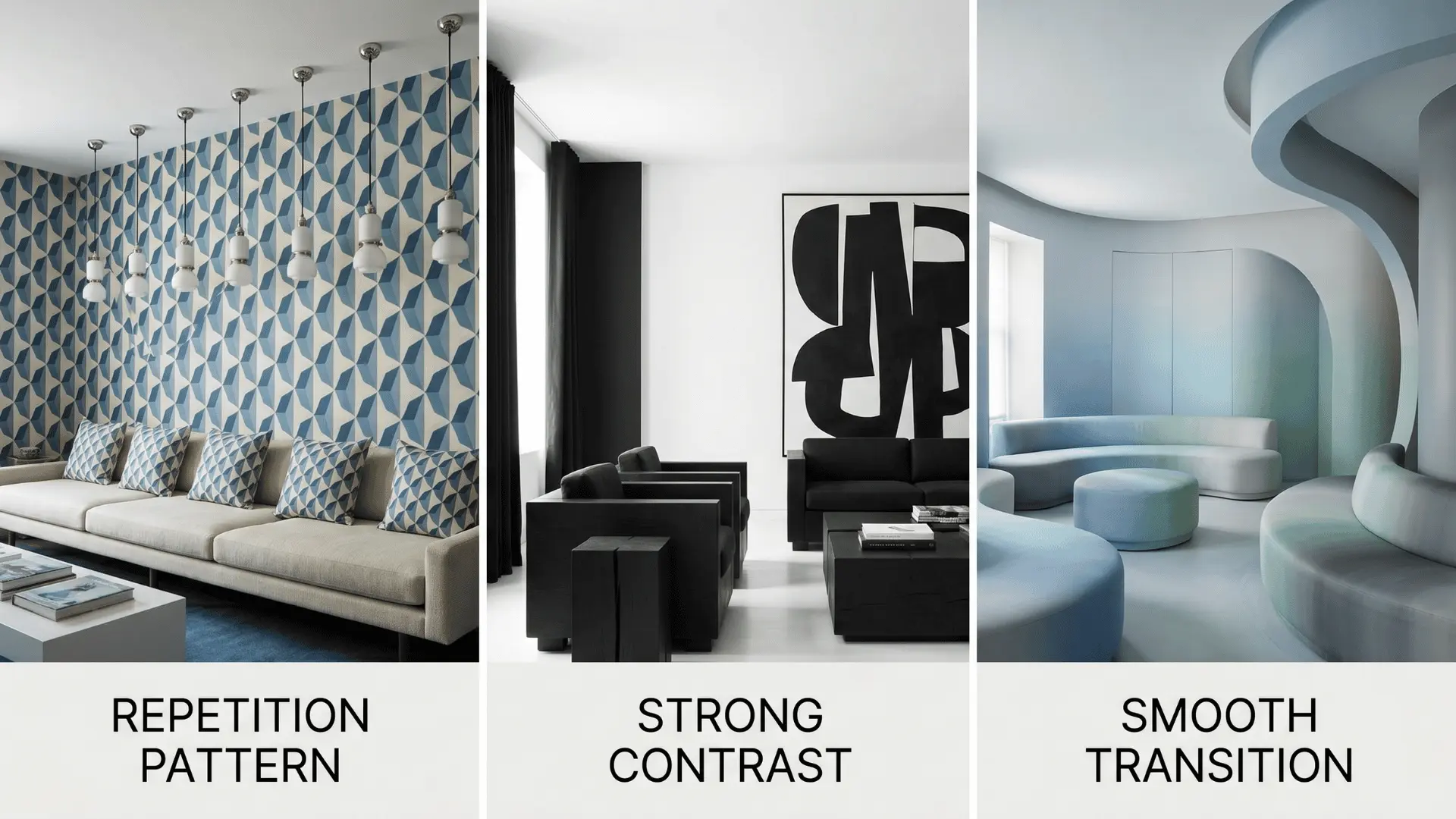
Transition rhythm guides the eye through gradual change, while other rhythm types rely on repetition, contrast, or structured progression. Each creates a different movement pattern, and using the wrong one can disrupt flow.
| Feature | Transition Rhythm | Repetition Rhythm | Gradation Rhythm | Contrast Rhythm |
|---|---|---|---|---|
| Main Focus | Smooth visual movement | Repeated elements | Gradual progression | Strong visual differences |
| How It Works | Uses subtle shifts between elements | Repeats colors, shapes, or patterns | Changes elements in a sequence | Places opposite elements together |
| Visual Effect | Creates flow and connection | Creates consistency and order | Creates direction and depth | Creates energy and attention |
| Eye Movement | Moves naturally across the space | Follows a predictable path | Moves step by step | Jumps between focal points |
| Best Used For | Open layouts and connected spaces | Organized and balanced rooms | Layered or progressive designs | Bold and dramatic interiors |
Transition rhythm is not about matching or opposing elements, but about how they shift across space. The focus is on movement, not on similarity or difference, which sets it apart from other rhythm types.
Conclusion
A space feels connected when the eye can move without effort. That flow comes from how elements relate, not just how they look on their own.
Small, consistent shifts create a stronger impact than bold but disconnected choices.
One key insight is that even a single broken transition can affect the entire layout, making everything feel off. Another is that flow can be improved without major changes, often by adjusting what already exists.
Start by observing how your eye moves through your space, then refine the weak links to create a smoother experience.
Frequently Asked Questions
What Colors Create the Smoothest Visual Transitions?
Colors from the same tone family, such as warm neutrals or layered earth tones, create the smoothest visual movement.
Does Ceiling Design Affect Transition Rhythm?
Yes, ceiling beams, lighting lines, or repeated shapes can guide the eye and strengthen movement across a room.
Why Do Some Rooms Feel Choppy Even with Good Furniture?
The problem is often a weak visual connection between elements, not the furniture itself