
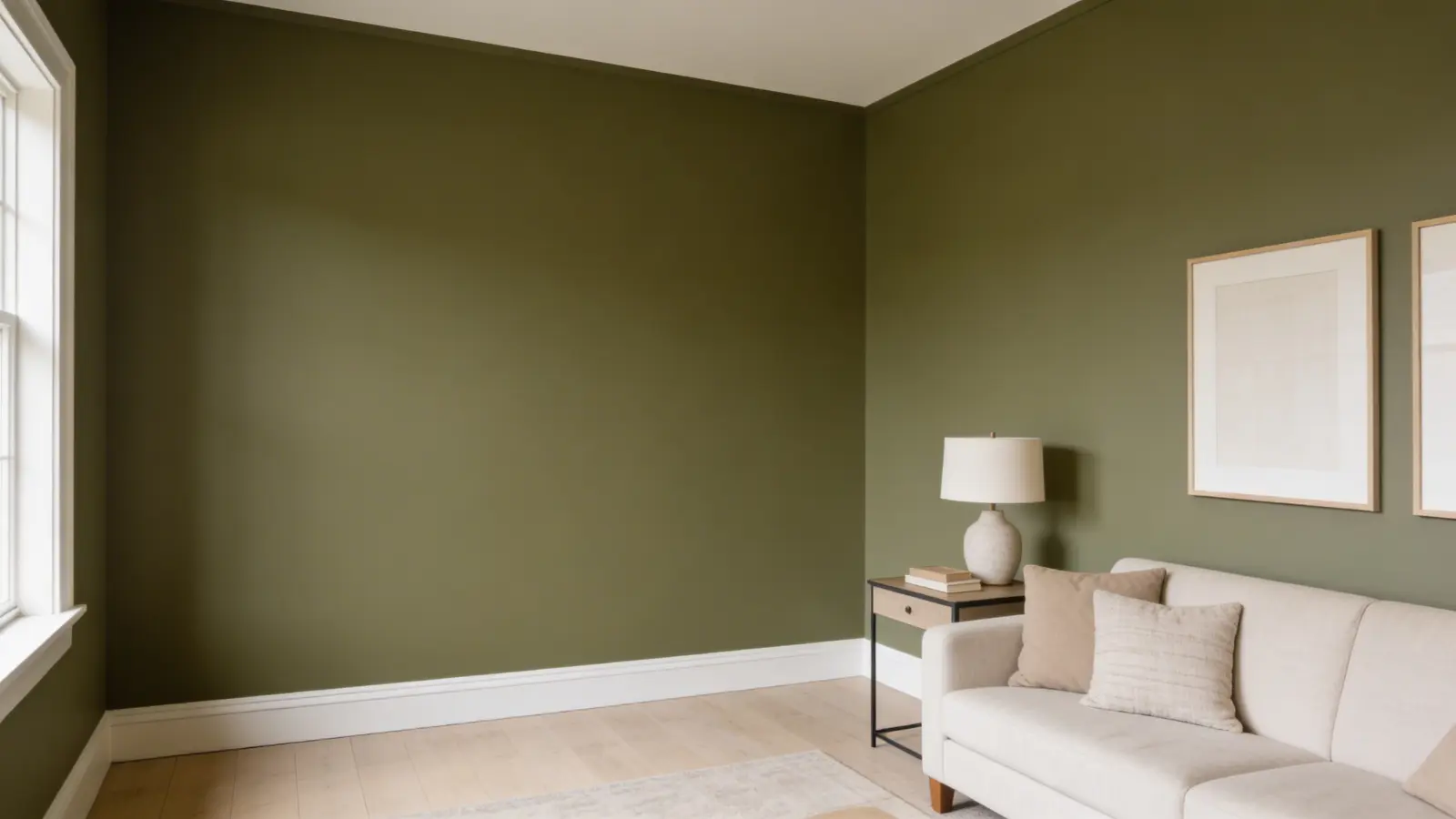
Roycroft Bronze Green (SW 2846): Undertones & Tips
Choosing the right green paint isn’t as simple as picking your favorite shade on a chip. Roycroft Bronze Green (SW 2846) looks completely different depending on the room, the light, and what you put next to it.
I’ve seen people fall in love with it on a swatch and then feel thrown off once it’s on the wall.
That’s exactly why I put this guide together. I’ll walk you through the undertones, how lighting shifts the color, where it performs best, and what to pair it with.
By the end, you’ll know exactly whether this shade fits your space, or whether you should keep looking.
What Roycroft Bronze Green Actually Looks Like in Real Spaces
Sherwin-Williams Roycroft Bronze Green (SW 2846) looks like a dark, olive-tinged green with a brownish cast. On the wall, it shifts. What surrounds it, flooring, furniture, trim, and natural light, changes how your eye reads it.
In some rooms, it looks clearly green. In others, it can slide toward olive. In dim conditions, it can read as near-charcoal or dark gray.
That chameleon quality is what makes this color so appealing. It’s never flat or one-note. But it also means you need to test it before committing to the full room.
Undertones Explained
Most greens read as fresh, bright, or crisp. Roycroft Bronze Green does none of that, and that’s intentional.
Here’s a quick look at what this color is built from:
- HEX code: #575449
- LRV: ~9
- Color family: Deep muted green with warm bronze undertones
LRV and What It Means: Roycroft Bronze Green has an LRV of approximately 9. That’s very dark. Most walls reflect a significant amount of light into the room; this one absorbs almost all of it.
The base is green, but it’s layered with yellow (olive) and brown (bronze). That combination knocks out any brightness or saturation. What you’re left with is a color that feels earthy, historic, and grounded.
The undertone is driven by a hue angle of around 47°, which places it firmly in warm/neutral territory. It reads warm, not cool, not neutral. The olive and bronze components make sure of that.
This is not a forest green. Forest greens tend to be richer and more vivid.
Roycroft Bronze Green is quieter, more layered, and more complex. If you’re expecting something crisp, this will surprise you.
How Lighting Changes Roycroft Bronze Green
Lighting is the single biggest factor with this color. Get it right, and the room feels rich and layered. Get it wrong, and the space feels heavy or flat.
How Different Light Affects It:
- Bright natural daylight: Green tones come forward. The color looks its most alive.
- Low or dim light: It deepens toward near-black and loses its green identity.
- Warm artificial lighting: The bronze undertones activate. The room feels cozy and moody.
- Cool or fluorescent lighting: The color can look flat or muddy.
When It Goes Wrong:
North-facing rooms are the biggest risk. Without enough direct light, the green disappears, and the color just reads dark and heavy.
Always test a large swatch on your actual wall, and check it at different times of day before committing.
Where This Color Works Best (and Why It Performs Well There)
Roycroft Bronze Green isn’t a background color; it’s a statement. These are the placements where it consistently delivers.
1. Dining Rooms
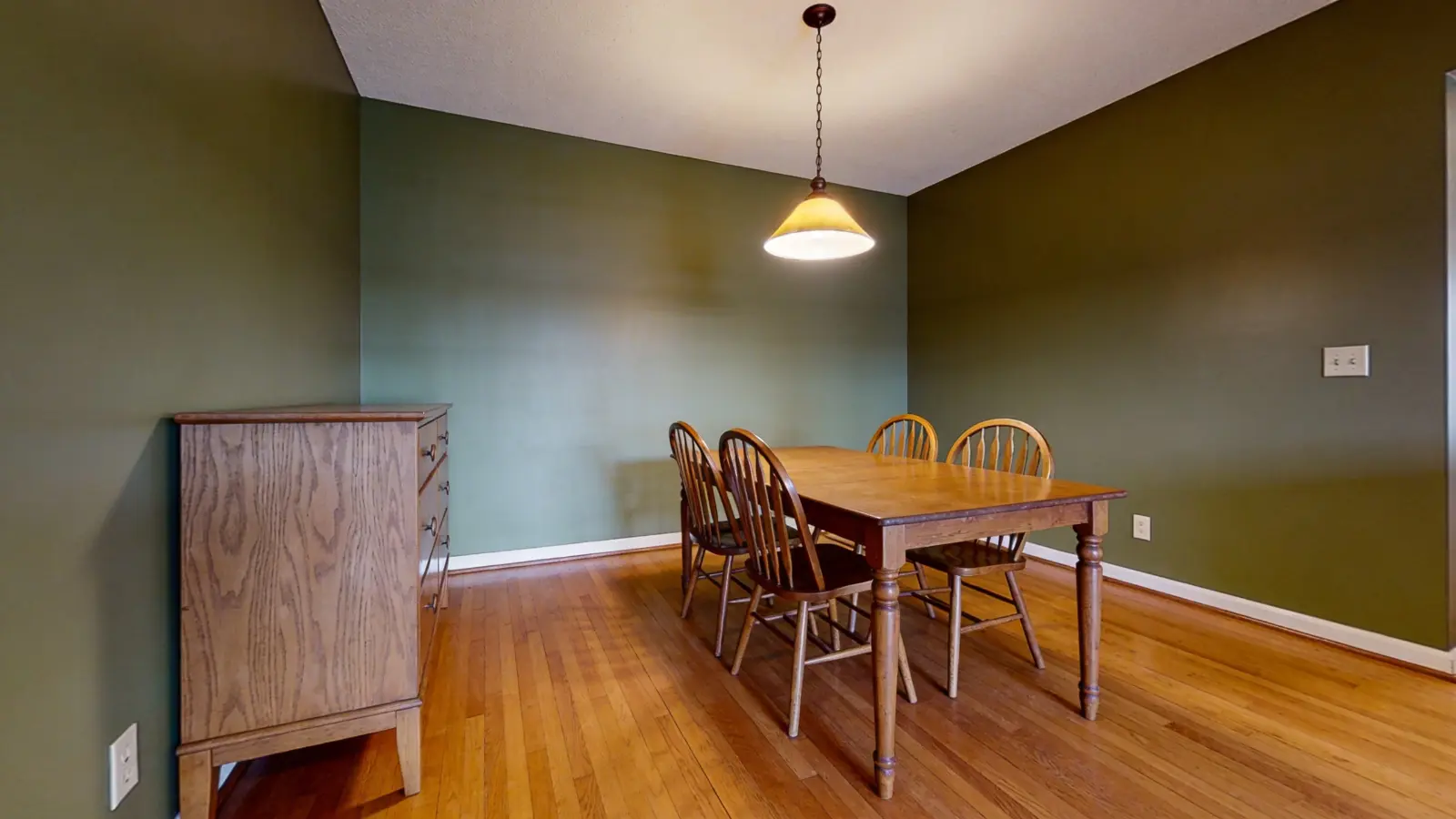
Roycroft Bronze Green thrives in dining rooms. Dark, warm tones compress a space visually and create a sense of intimacy.
In a dining room, that translates to a cozy, elevated atmosphere, especially with warm pendant lighting and wood furniture to reinforce the earthy palette.
2. Home Offices
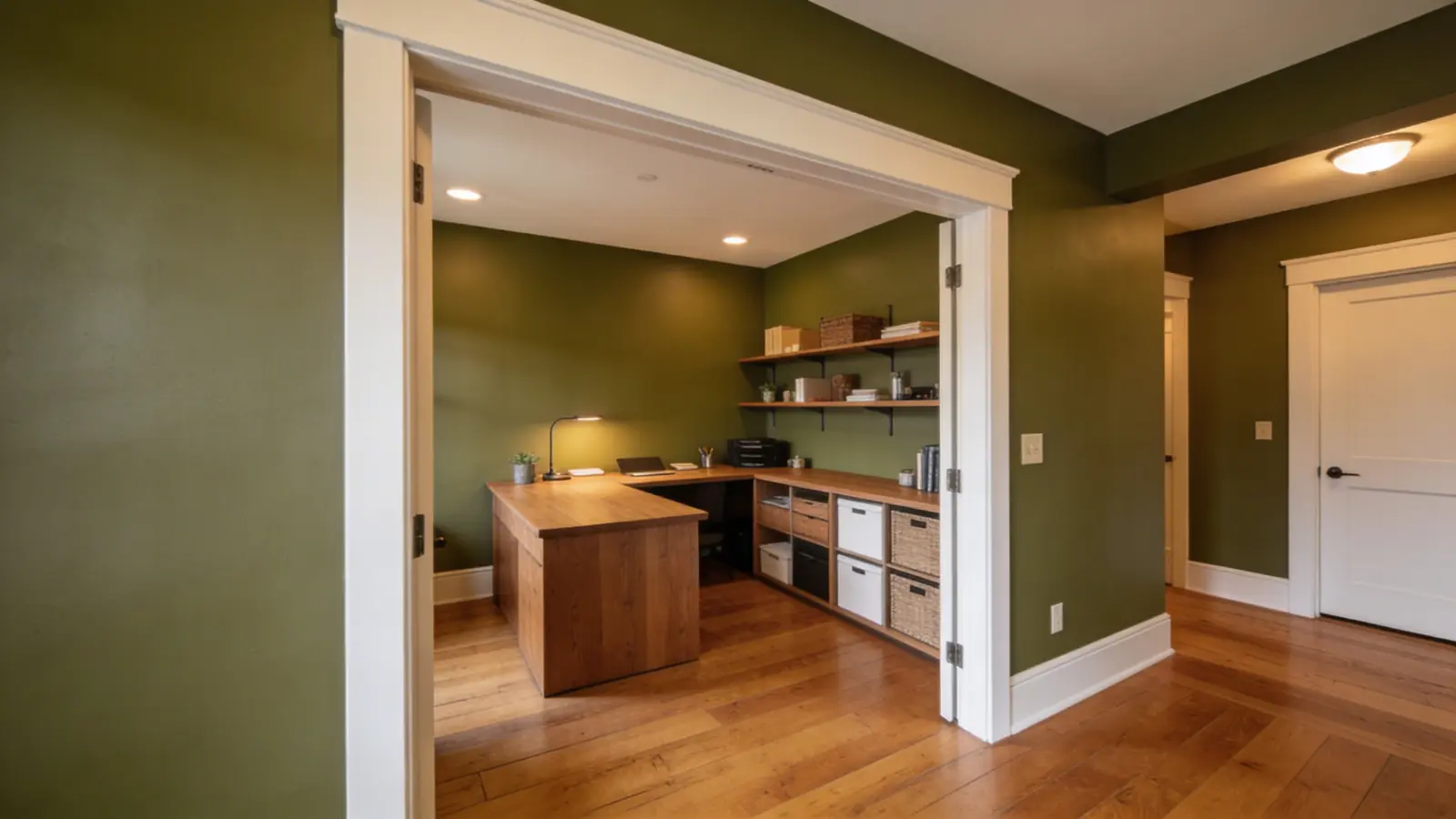
This color is a natural fit for a home office. The depth and warmth of SW 2846 create a focused, grounded environment.
It adds character without feeling chaotic or distracting. Pair it with warm wood shelving and brass or matte black hardware for a polished, moody workspace.
3. Bedrooms
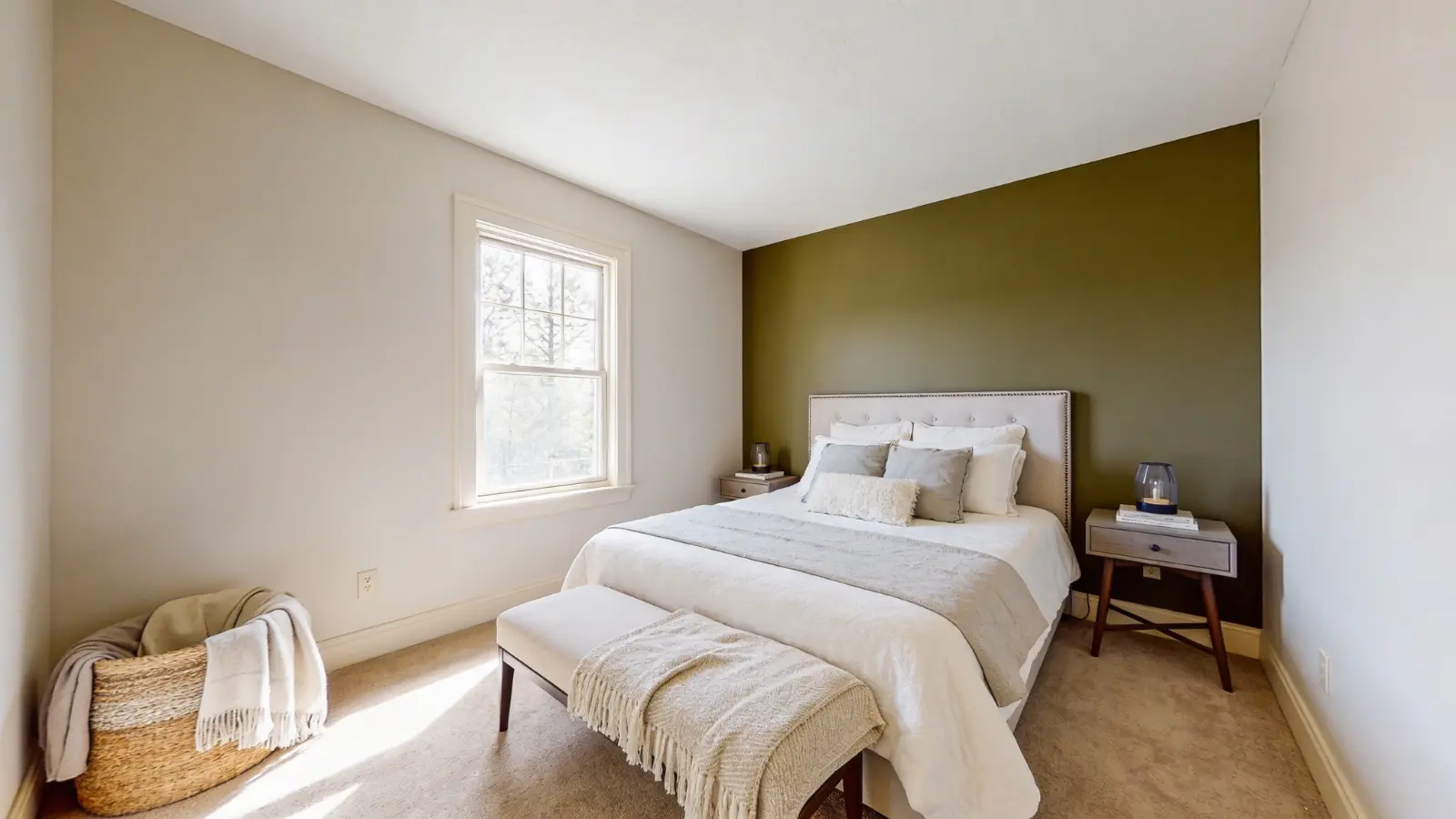
In a bedroom, Roycroft Bronze Green feels rich and calming at the same time. It works best as an accent wall behind the bed, especially when balanced with warm neutrals on other walls and soft, natural-toned bedding.
Rooms with good natural light handle it best; it keeps the space from feeling too heavy.
4. Cabinetry and Built-Ins
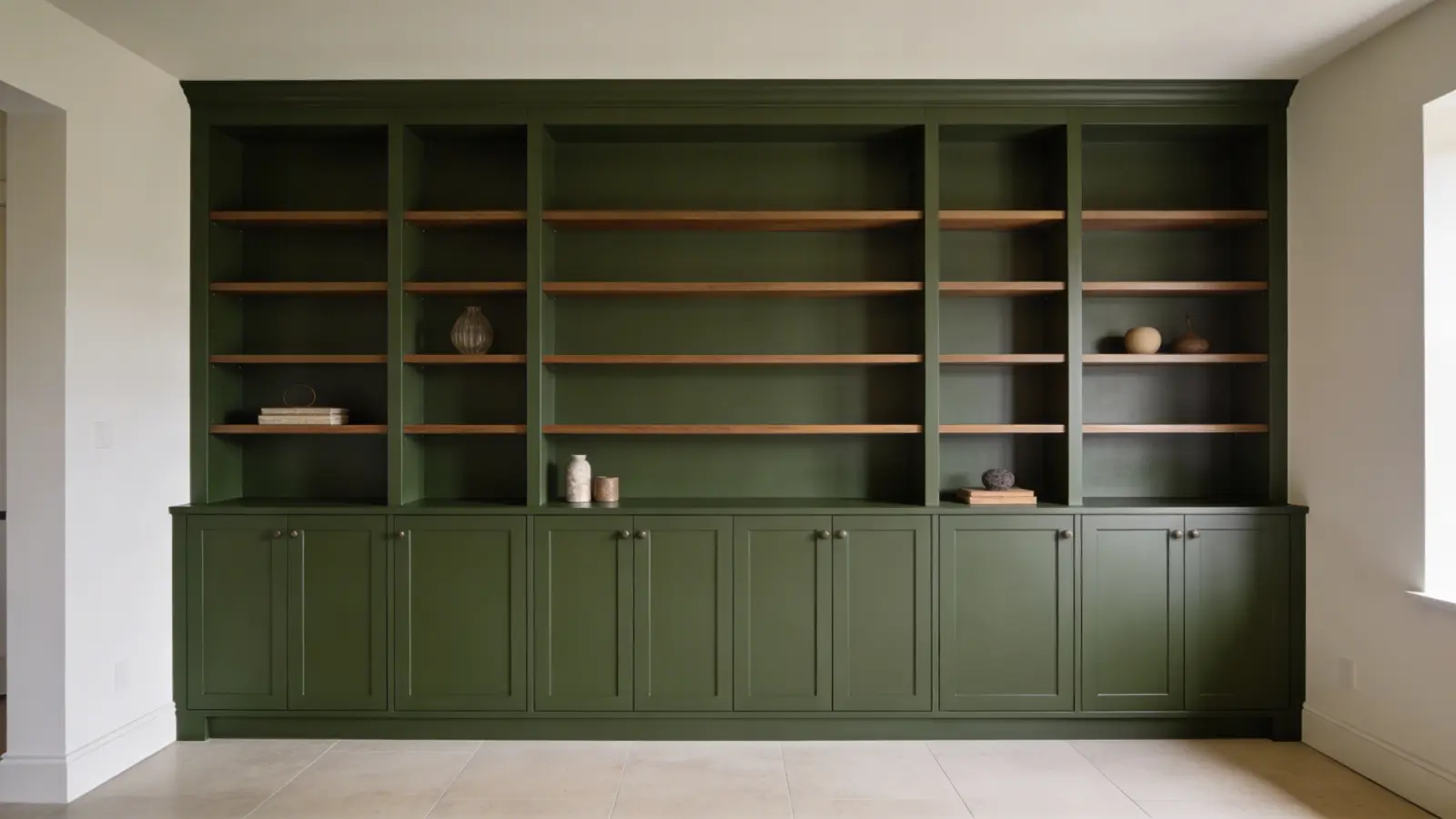
This is one of the best uses for this color. The bronze undertones align naturally with wood finishes, especially medium and dark woods like walnut and oak.
On cabinetry or built-in shelving, it adds depth and contrast without competing with surrounding materials.
5. Exterior Applications
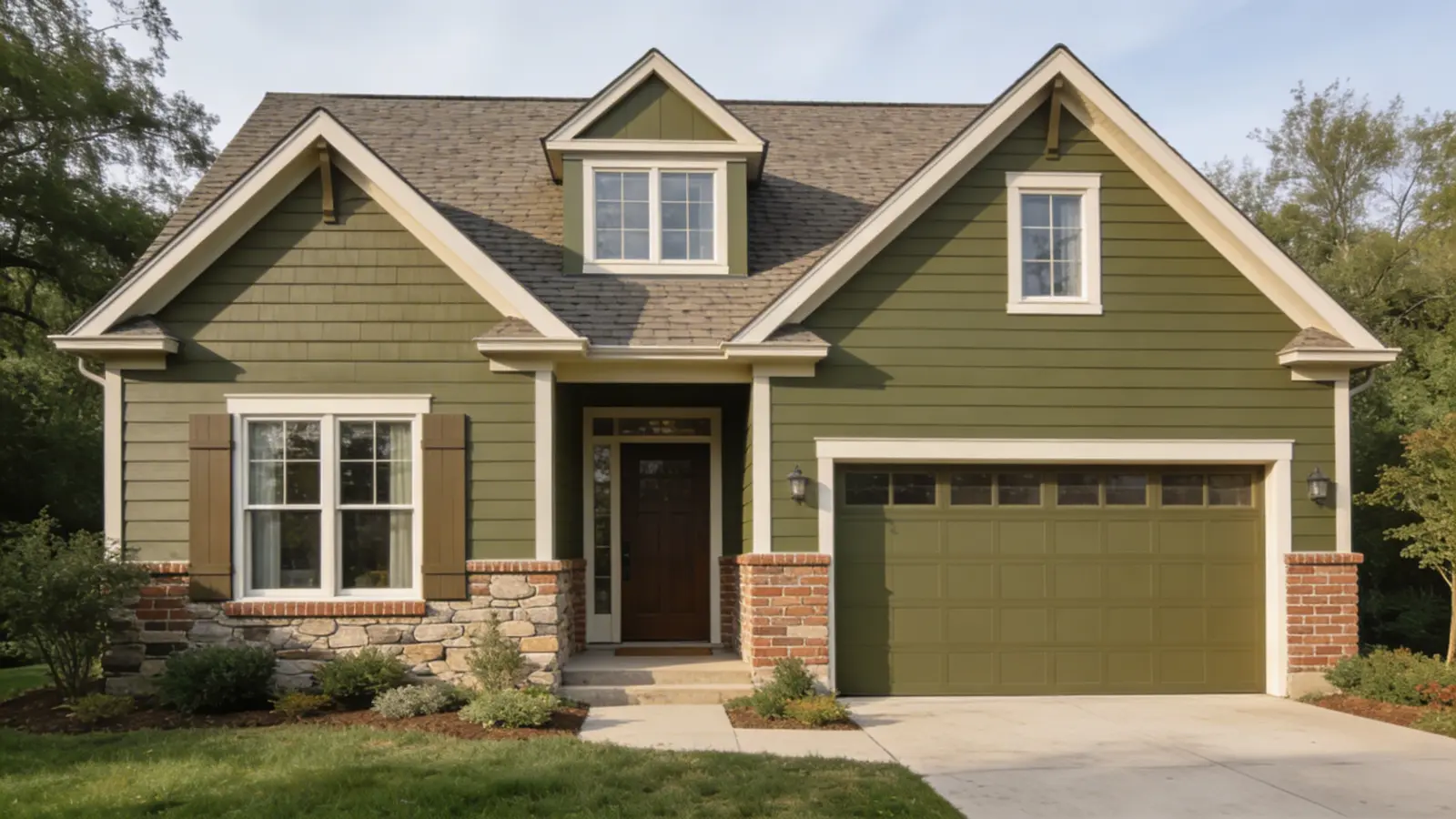
Roycroft Bronze Green often performs better outdoors than indoors. Natural light balances the low LRV, so it doesn’t read as heavy the way it can in dim interior spaces.
It pairs beautifully with brick, stone, and natural wood siding.
Where Roycroft Bronze Green Can Go Wrong
Knowing where this color fails is just as important as knowing where it works.
Here are the situations to steer clear of:
- Small rooms with poor lighting: The low LRV makes an already-tight space feel enclosed and heavy.
- Pairing with cool tones: Cool whites, blue-grays, and similar hues clash with the warm undertones. The contrast looks accidental, not intentional.
- Using it throughout an entire home: In large doses across multiple rooms, the heaviness compounds, and the space can start to feel dense.
- Chasing a fresh green look: If you want something bright, crisp, or modern-leaning, this isn’t it. It’s warm and earthy through and through.
If any of these describe your situation, a lighter or cooler green will serve you better.
Best Color Pairings for Roycroft Bronze Green
Roycroft Bronze Green pairs best with colors that share its warmth or complement its depth. Here’s what works, and why.
Warm Neutrals and Creams
SW Alabaster or SW Creamy are among the most popular pairings for good reason. Warm whites and creams share the underlying warmth of this green.
They don’t fight the undertones; they work with them. The result feels intentional and cohesive, not mismatched.
Natural Wood Finishes
Wood is a natural partner here. The brown in the bronze undertone mirrors the tones found in walnut, oak, and medium-stained woods.
Pairing them creates an earthy, organic palette that feels grounded and warm throughout.
Deep Companion Colors
Tones in the Urbane Bronze range complement this color well. Colors with similar depth levels don’t compete with Roycroft Bronze Green; they balance it.
This approach works especially well in spaces with multiple accent surfaces: trim, furniture, hardware.
What to Avoid
Steer clear of cool whites and blue-grays. These have a different undertone base, and the contrast reads as a mistake rather than a design choice.
The visual tension works against both colors instead of elevating them.
Roycroft Bronze Green vs. Other Sherwin-Williams Greens
Look at close alternatives to understand where this color stands in tone and warmth.
Roycroft Bronze Green vs. SW Pewter Green
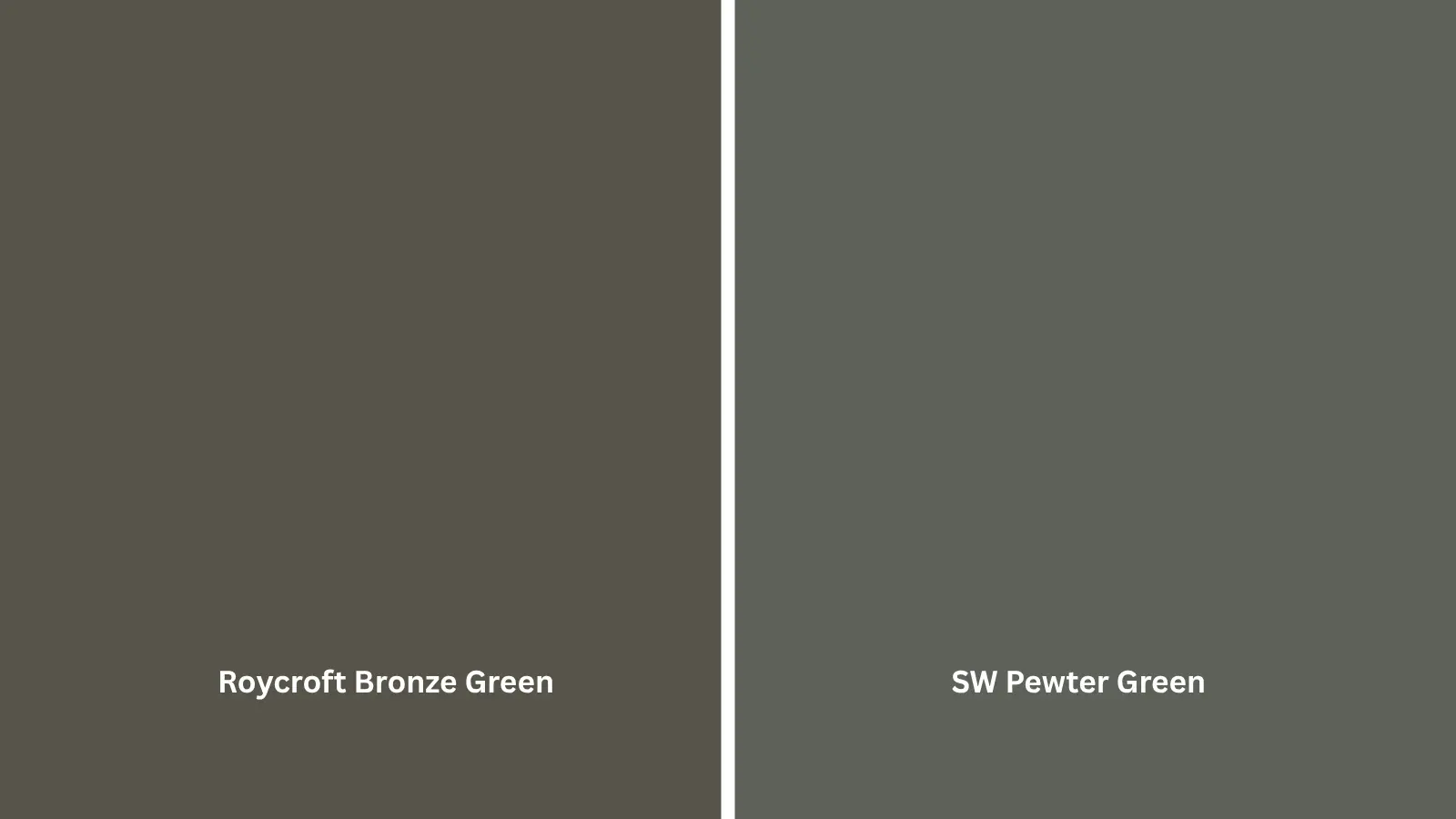
These two get compared often, but they’re quite different in practice. Roycroft Bronze Green is darker, heavier, and more earthy.
Pewter Green (6208) is lighter, softer, and easier to use in smaller or lower-light spaces. If the room feels too dim for Roycroft, Pewter Green is a sensible step up.
Roycroft Bronze Green vs. SW Thunder Gray
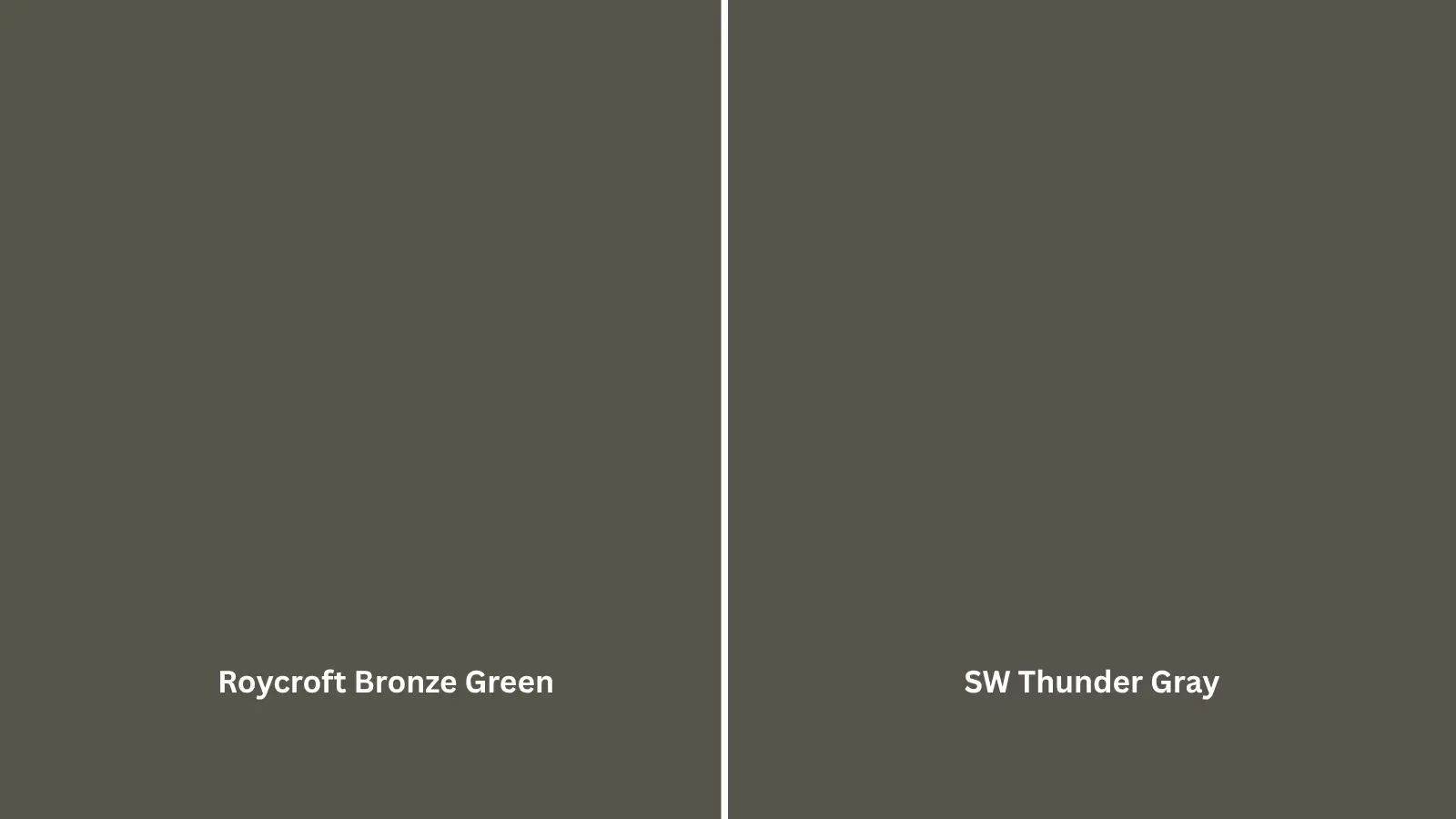
These two sit at nearly the same depth, but they pull in different directions. Roycroft Bronze Green is warm and earthy with olive-bronze tones.
Thunder Gray (SW 7645) is cooler and more neutral, with green and blue-gray undertones that make it feel moodier and less warm.
If you want earthiness and warmth, go with Roycroft. If you need something more versatile across cool and warm settings, Thunder Gray is the better fit.
Roycroft Bronze Green vs. SW Urbane Bronze
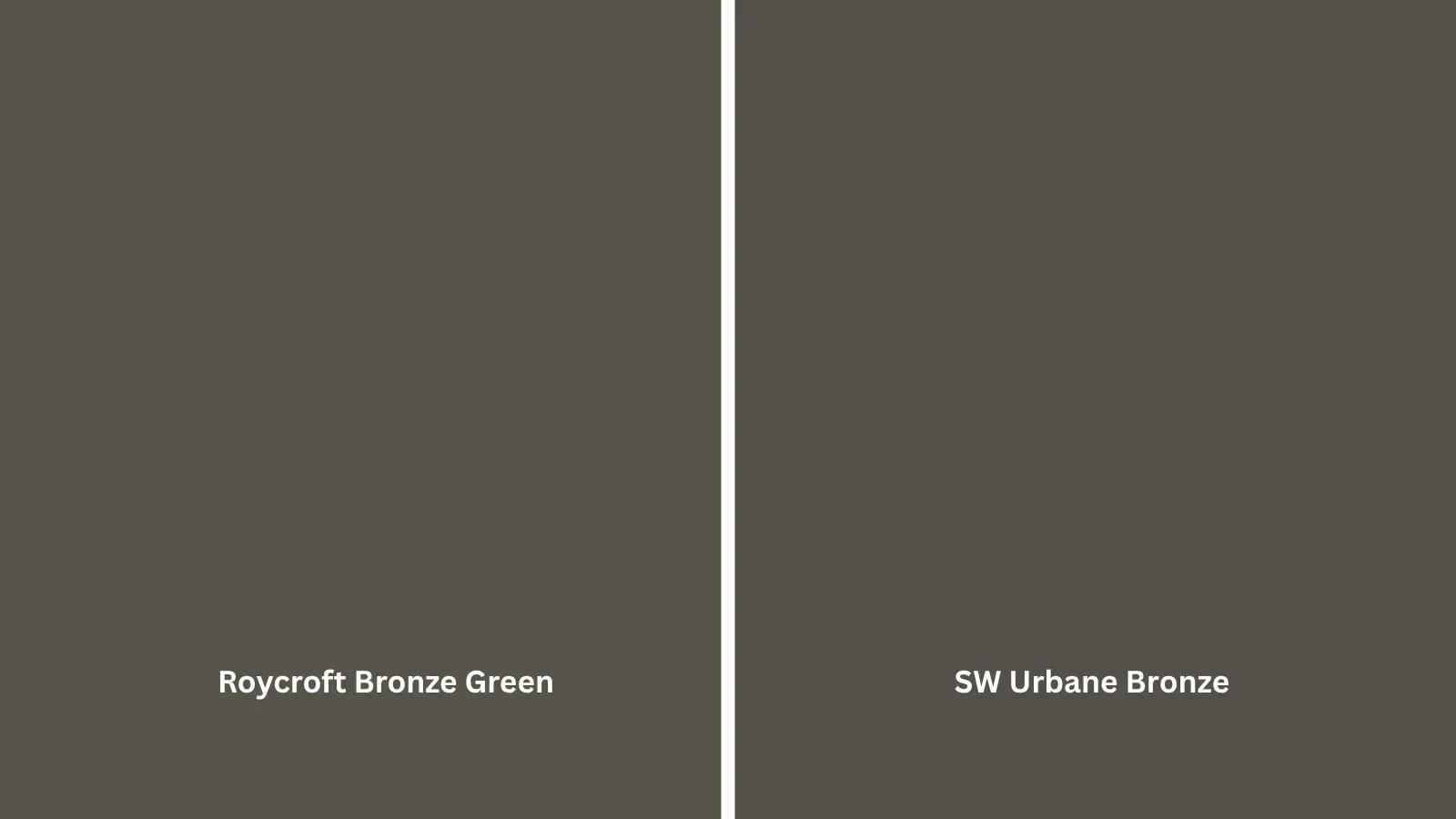
Both are dark and warm with similar LRVs, but they read differently on the wall. Roycroft Bronze Green leads with green, grounded by its olive-bronze base.
Urbane Bronze (SW 7048) leads with warm brown-gray, with green showing up only as a secondary undertone.
Choose Roycroft if you want the color to read as green. Choose Urbane Bronze if you want a warmer, more neutral feel.
Equivalent Colors in Other Brands
Can’t find SW 2846 at your local store? You’re not stuck. Several other brands offer colors that come close in depth, warmth, and undertone.
Keep in mind, no match is ever exact. Each brand uses its own formula, so slight differences in tone and finish are normal. Always sample side by side before making a final call.
Here are the closest alternatives by brand:
- Benjamin Moore – Black Forest Green (2047-10): A deep, muted green with similar earthy weight. Slightly cooler, but close in depth and character.
- Behr – Cascades (N390-7): A dark, warm green with olive undertones. Works well as a near-match for exteriors and cabinetry.
- Valspar – Dried Thyme (5005-2A): A muted, warm green that shares the same subdued, earthy quality as Roycroft Bronze Green.
- PPG Paints – Olive Sprig (PPG1125-7): Deep and warm with a similar olive-bronze character. A solid alternative for interiors and trim.
- Farrow & Ball – Saxon Green (No. 80): For a premium option, saxon green offers a comparable muted, earthy green with historic depth.
These options get you close, but Roycroft Bronze Green has a specific warmth that’s hard to replicate perfectly. If you’re going off-brand, test a large swatch in your room under your lighting before committing.
Final Verdict: Who Should Choose This Color
Roycroft Bronze Green is a very specific kind of color. It rewards the right space and punishes the wrong one.
Choose it if:
- You want a deep, warm, moody green with historic character
- Your room gets good natural or warm artificial light
- You’re using it on cabinetry, as an accent wall, or in a feature space
- You want something that feels layered and atmospheric, not bright
Skip it if:
- You want a fresh, clean, or crisp green
- Your room is small or north-facing with limited light
- You plan to pair it with cool whites or blue-gray tones
The key thing to keep in mind: this is a tone-driven color, not a brightness-driven one. It’s chosen for character and atmosphere. If that’s what you’re after, it delivers.
Conclusion
Roycroft Bronze Green asks something of your space. Give it light, warmth, and the right companions, and it delivers depth that’s hard to find in most paint colors.
Put it in the wrong room, and it’ll feel flat and heavy. Now that you understand the undertones, the lighting behavior, and where it works best, you’re in a much better position to decide.
Test a large swatch first. Check it at different times of day in your actual room. If it feels right, commit. If something feels off, I’d move toward a lighter warm green before making a final call.
Still comparing? Browse more paint color guides on the site.


