Motorized Roller Shades for High Windows: What to Plan Before You Measure
High windows can make a room feel open and architectural, but they are rarely convenient to manage. A two-story living room, vaulted foyer, stair landing, or window above a soaking tub can turn a simple shade adjustment into a ladder job. Motorization makes those windows usable from the floor.
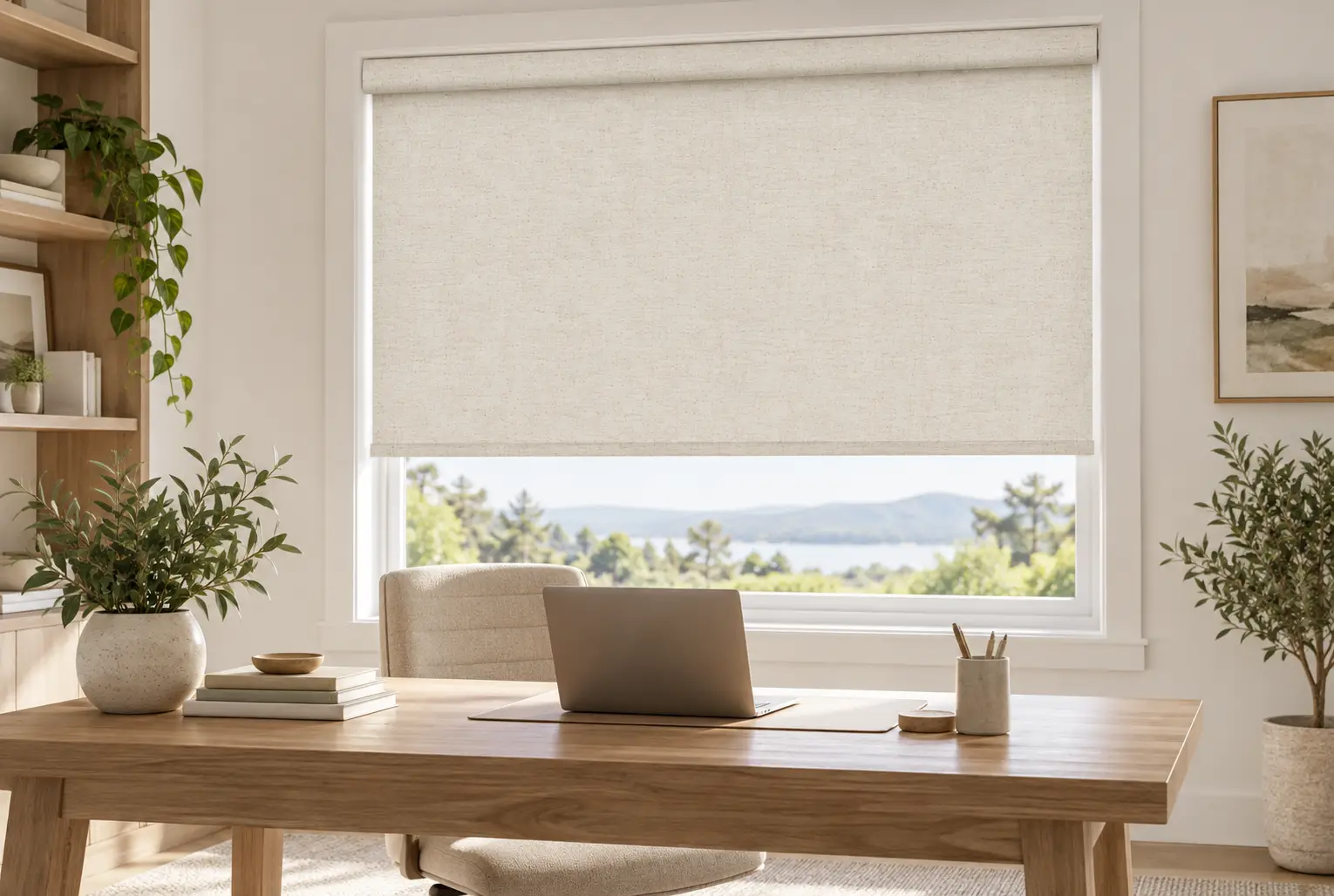
For homeowners who want a clean profile and flexible light control, roller shades work well on tall glass. In bedrooms, media rooms, or west-facing spaces where darkness matters more, blackout roller shades can provide stronger room-darkening coverage. Before you measure either option, decide how the shade will be powered, mounted, controlled, and serviced. Those choices affect what you actually need to measure.
Start With the Window’s Daily Job
Do not begin with the tape measure. Begin with what the high window needs to do every day. A clerestory window in a bright living room may only need afternoon glare control. A tall bedroom window may need privacy and darkness at night. A stairwell window may be mostly about convenient operation.
This matters for homeowners who leave high shades in one position because reaching them is inconvenient. Motorized operation makes the window usable again through a remote, app, wall control, or schedule. In a two-story room, several shades can also be grouped so the window wall moves together rather than requiring separate adjustments.
Choose the Power Source First
Power is one of the biggest planning decisions for motorized roller shades on hard-to-reach windows. Rechargeable battery motors can be practical for retrofits because they avoid opening finished walls. But ask a second question: how will you reach the charging point later?
For a window high above a staircase, occasional charging may still require special access. Solar-assisted charging can reduce routine access when the window receives useful daylight, while hardwired power may suit a renovation or new build where electrical routing can be planned early.
The best option is not simply the easiest one to install today. It is the one that remains manageable after the shade is mounted.
Decide Where the Shade Will Mount
High windows may look simple from the floor, but the mounting area can tell a different story. An inside mount needs enough usable depth for the roller, brackets, motor, and any cassette or fascia. Handles, trim, locks, or uneven jambs can reduce that space. Because depth requirements vary by product, check the specifications for the exact shade rather than relying on a generic minimum.
An outside mount can help when the recess is shallow or when broader coverage matters. It can also reduce visible edge light by extending the shade beyond the glass area. Before measuring, decide where the brackets will sit and make sure that surface is accessible, solid, and free of obstructions.
For very high openings, professional measuring may be worthwhile because safely reaching the bracket location is part of the job.
Match Fabric to the Room and Window
Tall windows create more fabric to raise, roll, and keep tracking evenly, so fabric choice should be considered with the final size rather than treated as a decorative decision at the end.
Light-filtering fabrics suit great rooms, foyers, and home offices where softer daylight is the goal. Blackout fabric is better suited to bedrooms, nurseries, media spaces, or upper windows that send strong sun toward a TV or sleeping area.
If the window is especially wide or tall, confirm that the selected fabric, roller tube, and motor are approved for the finished dimensions. Product size limits are system-specific, and a setup that works on a standard window may not be available for an oversized opening.
Plan Controls and Future Service
A remote may be enough for a guest room or occasional glare adjustment. A high living-room window that needs to close every afternoon may benefit more from scheduling, while smart-home control can make sense when several upper windows should move together.
Think beyond daily operation. Ask where reset or programming controls are located, how the battery is charged, whether the motor can be serviced without removing the entire shade, and how installers will reach the unit later. For older adults, people with mobility limitations, or anyone who wants to avoid repeated ladder use, those details matter as much as app control.
Before final measurements, record the mount location, power plan, fabric choice, control method, and future access plan for each high window. Then measure to the requirements of that exact shade system.