15 Modern Japanese Interior Design Ideas You Need to See!
What if your home felt calm the moment you walked in? That is the quiet power of modern Japanese interior design.
It strips away the unnecessary, brings in natural materials, and creates spaces that feel intentional, balanced, and deeply peaceful.
More people around the world are turning to this style, not just for its beauty, but for the way it makes a space feel.
Whether it is a full redesign or a few simple changes, this style fits any home. Here are the key ideas, elements, and inspiration behind modern Japanese interior design.
What Defines Modern Japanese Interior Design
Modern Japanese interior design is a living philosophy as much as it is a visual style. At its core, it is the art of creating spaces that feel intentional, grounded, and deeply connected to the natural world.
Rooms where every object has a purpose, every surface earns its place, and silence and stillness are treated as design elements in their own right.
Unlike trends that prioritize novelty or maximalism, modern Japanese interior design is built on principles that have been refined over centuries, then thoughtfully adapted to suit the way people live today.
It is a style that asks you to slow down: to choose one beautiful object over ten mediocre ones, to let a room breathe rather than fill it, and to find beauty in the imperfect, the aged, and the quietly human.
The result is interiors that feel calm without being cold, simple without being sparse, and timeless without feeling frozen in the past.
Modern Japanese Interior Design Ideas
Modern Japanese interior design ideas range from simple material swaps to full architectural changes, and the best part is, you can start anywhere.
Each of the ideas below is rooted in the same core philosophy: simplify with purpose, choose natural over synthetic, and let every element earn its place.
1. Use Shoji-Inspired Sliding Panels as Room Dividers

Shoji screens are one of the most recognizable elements of traditional Japanese architecture.
Instead of solid walls or heavy curtains, shoji-inspired sliding panels use translucent materials framed in clean timber to divide spaces while allowing soft, diffused light to pass through. The result is a home that feels open, connected, and intentionally layered.
- Use frosted glass or rice-paper-effect acrylic panels in slim wooden frames for a contemporary shoji look.
- Install floor-to-ceiling panels to maximize visual impact and make ceilings feel higher.
- Choose natural timber finishes like ash, white oak, or hinoki cypress for warmth and authenticity.
- Pair with ceiling-recessed track hardware for a seamless, minimal look when panels are fully open.
Design Tip: In small apartments, replacing a fixed wall with sliding shoji panels transforms a cramped two-room layout into a flexible open-plan space, and back again in seconds.
2. Incorporate a Low-Profile Platform Bed

In Japanese design, sleeping close to the ground is deeply rooted in tradition, originally done on futons over tatami mats.
The platform bed is the modern evolution: a low, flat frame that grounds the bedroom both literally and visually. It creates a sense of calm and deliberate simplicity that high-frame Western beds rarely achieve.
- Choose a solid wood frame, walnut, oak, or bamboo age beautifully over time.
- Keep the headboard simple: a thin slatted panel or a flush upholstered backing over ornate designs.
- Leave the floor around the bed as clear as possible, negative space matters as much as the furniture.
- Layer bedding in neutral linen or cotton: ivory, warm grey, dusty sage, or soft terracotta.
Design Tip: Balance the low profile with textured throws and soft ambient lighting to prevent the space from feeling cold or overly clinical.
3. Layer Natural Textures with Linen, Rattan, and Wood

Modern Japanese interiors build depth and warmth through texture, not pattern or color. By layering rough-weave linen, hand-woven rattan, raw timber, and smooth stone, a room gains richness without visual noise.
Every surface tells a quiet story through the way it is made and the way it ages.
- Start with a neutral base, warm white walls, light timber or concrete floors, and build texture on top.
- Combine hard and soft: a wooden coffee table against a linen sofa, a rattan pendant over a stone side table.
- Let wabi-sabi guide you; imperfect, handmade, and aged textures are more desirable than flawless or synthetic ones.
- Avoid synthetic substitutes where natural alternatives exist; faux rattan and laminate wood undermine the palette.
Design Tip: Stick to three to four primary textures per room and repeat them intentionally. Too many competing materials will make a space feel cluttered despite the muted tones.
4. Create a Minimalist Tokonoma-Style Display Nook

The tokonoma is a built-in recessed alcove in traditional Japanese reception rooms, used to display a single object elevated as art.
In modern interiors, this principle translates into intentional display nooks that celebrate restraint – one shelf, one object, one moment of beauty.
- Create a shallow recessed nook in a living room, hallway, or bedroom wall; 15–20 cm of depth is enough.
- Display only one or two objects at a time: a handmade ceramic, a small branch in a vase, or a sculptural piece.
- Rotate objects seasonally following the Japanese tradition of kisetsukan. Let the display reflect the time of year.
- Finish the nook’s interior in a contrasting tone, warm plaster, dark timber, or matte stone draws the eye inward.
Design Tip: Light the nook with a small recessed downlight or concealed LED strip, a single well-lit object reads as art in a way that a shelf full of things never will.
5. Bring in Bonsai or Indoor Zen Garden Elements

Nature is not an afterthought in Japanese interior design – it is a structural element of the space.
Bonsai trees, moss gardens, and miniature raked sand gardens bring living nature indoors in a controlled, meditative form, softening hard architectural lines and introducing organic shapes into geometric rooms.
- A single well-kept bonsai on a low wooden stand can anchor an entire corner of a room.
- A tabletop zen garden, fine sand, a wooden rake, and a few stones, works beautifully on a desk or coffee table.
- Moss arrangements in ceramic dishes are low-maintenance and striking against timber or concrete surfaces.
- Choose pots in unglazed ceramic, rough stone, or weathered wood, avoid plastic or brightly colored vessels.
Design Tip: For low-light interiors, a preserved moss arrangement or ornamental stone garden requires zero maintenance while delivering the same visual calm as a live bonsai.
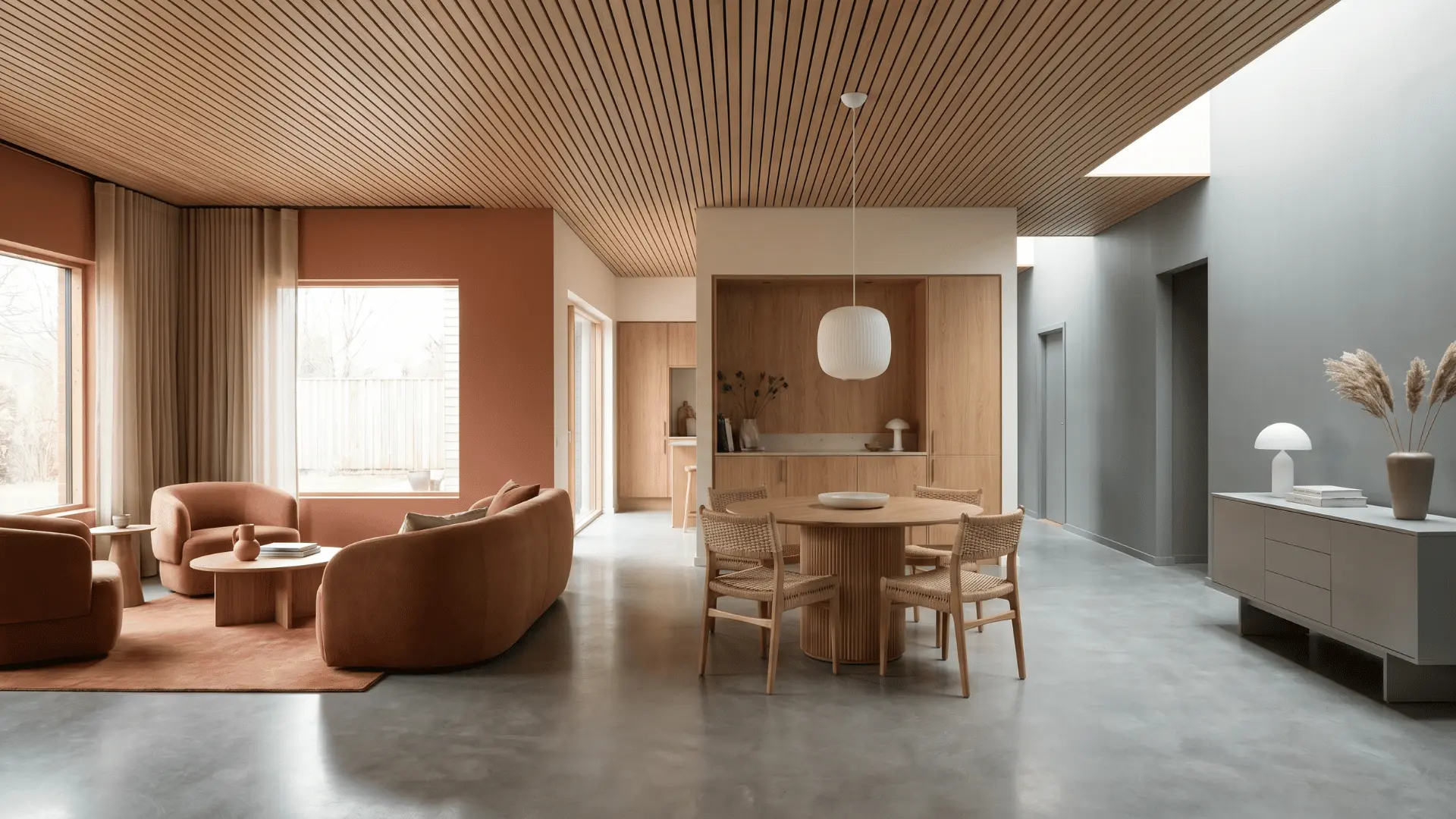
6. Choose a Neutral, Earth-Toned Color Palette

Color in modern Japanese interiors is quiet and grounded, drawing from sand, clay, bark, fog, stone, and moss. It is used not to make a statement but to create a sense of continuity between the space and the natural world outside it.
- Build your base with warm whites, off-whites, and light beiges on walls and ceilings.
- Layer in mid-tones through furniture: soft terracotta, warm taupe, dusty olive, or pale birch.
- Use deeper tones, charcoal, deep walnut, slate grey, and ink black as accents in frames and hardware.
- Draw color cues from the materials themselves. Let the warm gold of timber and dusty green of moss set the palette.
Design Tip: Always test wall color samples at different times of day. These warm neutral tones shift noticeably between morning light and artificial evening light.
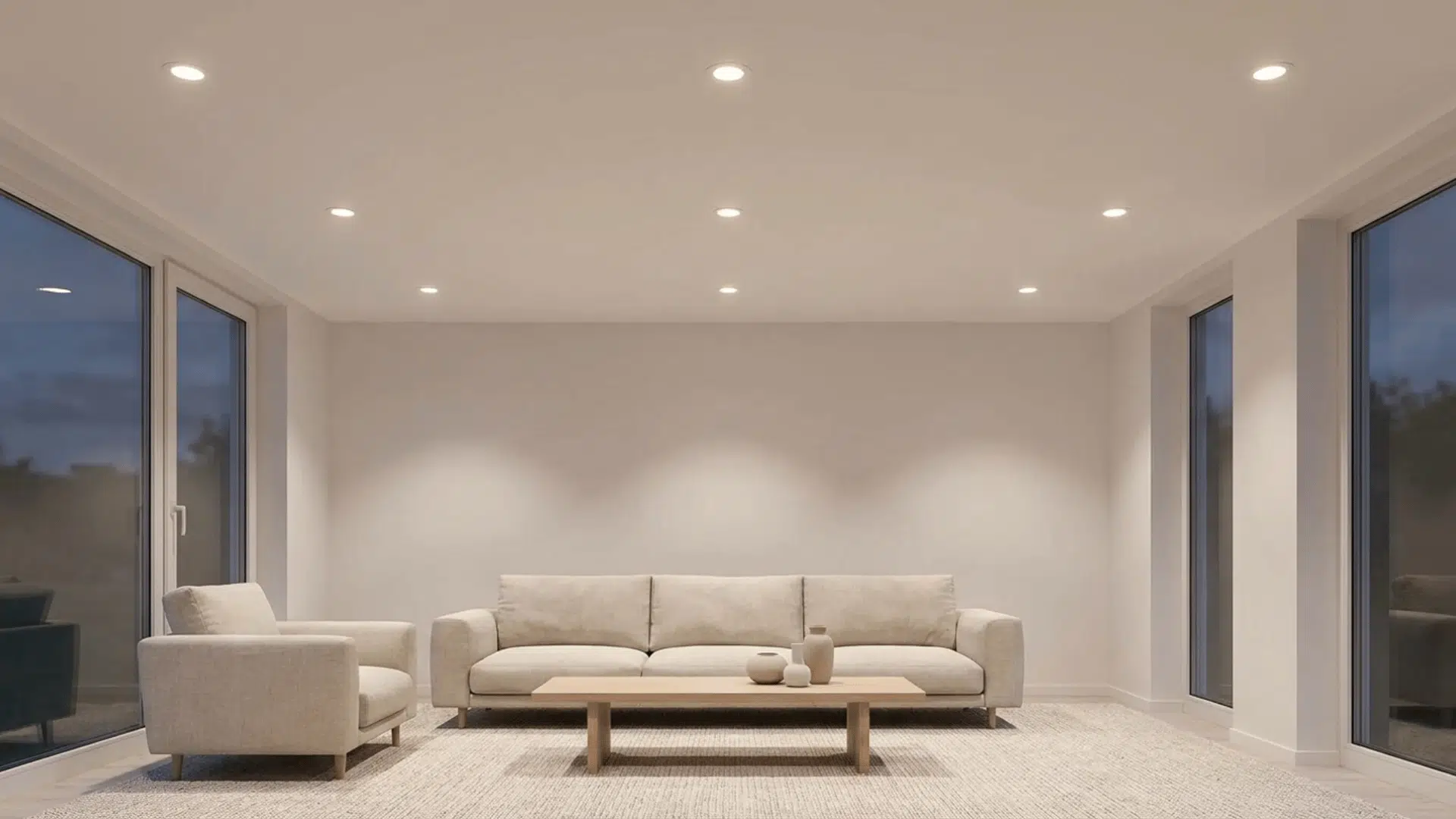
7. Install Recessed or Indirect Ambient Lighting

Lighting in Japanese interiors is never harsh or overhead-dominant. It is layered and soft – designed to mimic natural light filtering through shoji screens.
The goal is never to flood a room with brightness but to create pools of warm light that emphasize texture and make a space feel calm and inhabited.
- Use recessed ceiling lights on a dimmer as a base layer, always warm white (2700K–3000K), never at full brightness.
- Add indirect lighting behind shelving, beneath platform beds, or along ceiling coves for a warm, glowing perimeter.
- Use washi-inspired pendant lights, like Isamu Noguchi’s Akari lamps, to diffuse light while adding sculptural form.
- Avoid cool-white or blue-toned bulbs entirely. They strip warmth from natural materials.
Design Tip: Resist the urge to over-light a room. Shadows give texture depth and a sense of rest that uniformly bright spaces simply cannot provide.
8. Use Tatami Mats or Tatami-Inspired Area Rugs

Tatami mats are one of the oldest flooring traditions in Japan, woven from rush grass; they bring warmth, scent, and quiet texture to any room.
In modern interiors, authentic mats work in dedicated Japanese-style rooms, while tatami-inspired woven rugs bring the same calm to contemporary spaces without structural requirements.
- Use authentic tatami mats in a dedicated meditation room, bedroom, or reading corner for a fully immersive space.
- For other rooms, choose flat-weave rugs in natural rush, seagrass, or fine jute that echo tatami’s texture.
- Pair with low furniture, platform beds, floor cushions, and low coffee tables to honor floor-level living.
- Keep the surrounding floor clear. Tatami looks best when the floor around it is visible and uncluttered.
Design Tip: In humid climates, opt for modern tatami alternatives in washi or synthetic rush. They are far more practical and nearly identical in appearance to authentic mats.
9. Opt for Built-In, Hidden Storage Solutions

The concept of kanso, the removal of the unnecessary, is impossible to achieve when storage is visible and cluttered. Japanese interior design solves this with built-in, integrated storage that keeps everything out of sight.
- Design floor-to-ceiling cabinetry with flush, handle-free doors painted the same color as the wall.
- Use the space under platform beds, benches, and staircases for deep concealed drawers.
- Install a built-in entryway cabinet (getabako) near the front door to keep footwear completely out of sight.
- Reserve visible surfaces for deliberate display only; one object on a shelf reads as art; many read as clutter.
Design Tip: Before building storage, map out exactly what will be stored where and design dimensions around actual objects, not generic measurements.
10. Add a Soaking Tub or Ofuro-Inspired Bathroom

The Japanese bath, or ofuro, is a daily ritual of warmth and restoration, not a utilitarian experience. The bathroom in Japanese design is treated as a sanctuary.
Deep soaking tubs, natural surfaces, and minimal fixtures transform it into the most meditative room in the home.
- Choose a deep freestanding soaking tub, square or rectangular Japanese-style tubs in stone resin or matte ceramic are most authentic.
- Position the tub near a window with a garden view or a living plant arrangement to maintain the nature connection.
- Keep fixtures minimal and matte, brushed gunmetal, matte black, or aged brass over bright chrome.
- Separate the wet zone (shower, tub) from the dry zone (vanity, storage) to preserve the ritual quality of the bath.
Design Tip: Separating the wet and dry zones changes how the entire bathroom feels to use. The soaking tub becomes a destination rather than just a fixture.
11. Embrace Raw Concrete, Stone, and Aged Wood

Modern Japanese interiors celebrate the raw, unfinished beauty of natural and industrial materials.
Bare concrete, exposed stone, and weathered timber are not signs of incompletion. The material surface, every grain, crack, and imperfection, is the decoration.
- Use polished or honed concrete on floors and feature walls. It contrasts beautifully with warm timber and soft textiles.
- Choose rough-cut or hand-split stone for accent walls and bathroom surfaces.
- Incorporate aged or reclaimed timber in beams, shelving, or flooring; weathered wood carries far more visual interest than new.
- Use matte and honed finishes throughout. High-gloss surfaces undercut the raw, grounded feeling this palette creates.
Design Tip: Introduce softness through rugs, linen textiles, and low timber furniture to prevent a raw material palette from feeling like a gallery rather than a lived-in home.
12. Decorate with Ikebana Floral Arrangements

Ikebana is the Japanese art of flower arranging, disciplined, meditative, and nothing like filling a vase with a bouquet. It uses minimal stems, deliberate asymmetry, and empty space as its primary tools. A single branch or three flowers placed with intention communicates far more than a dense arrangement ever could.
- Use low ceramic dishes, tall narrow vases, or flat stone trays. The container is part of the composition.
- Work with odd numbers of stems: one, three, or five elements are the traditional rule.
- Include unexpected natural material: bare branches, seed pods, moss, or dried grass alongside or instead of flowers.
- Refresh seasonally: cherry blossom in spring, lotus in summer, dried grasses in autumn, pine in winter.
Design Tip: Use a tall vertical element, a mid-height diagonal, and a low horizontal anchor, even informally, this three-point structure produces arrangements that feel intentionally balanced.
13. Use Fusuma Doors for Space-Saving Functionality

Where shoji screens divide space with light, fusuma doors define it with opacity.
These traditional sliding panel doors replace swinging hinged doors entirely, saving floor space, creating visual continuity, and allowing rooms to open up or close off depending on how a space needs to function at any moment.
- Install full-height sliding doors throughout. Eliminating door swing arcs instantly makes rooms feel more spacious.
- Use a consistent panel finish across all sliding doors, same timber frame, same panel color, for a unified architectural feel.
- In open-plan layouts, wide fusuma panels can convert one large room into two distinct spaces throughout the day.
- Choose recessed floor tracks or ceiling-hung systems to keep the floor transition seamless and hardware invisible.
Design Tip: Consider commissioning a local artist to hand-paint your sliding panels. A fusuma door with ink wash brushwork functions as both architecture and art.
14. Introduce Handmade Ceramics as Decor Accents

In a Japanese interior, handmade ceramics are the most human element in a room. Every thumbprint in the clay, every variation in the glaze, every slight asymmetry is evidence of a human hand and a deliberate creative act.
A single well-chosen piece can anchor a shelf or become the most compelling object in a room.
- Prioritize handmade or studio ceramics over mass-produced objects; the irregularity is the point.
- Look for matte glazes: ash glaze, iron slip, kuro (black), and shino (white with blush) are classically Japanese.
- Group ceramics in odd numbers, varying height, a tall vase, a medium bowl, and a small cup, read as a composed still life.
- Display on raw timber shelves or unfinished concrete, the contrast between refined glaze and raw surface is where the beauty lives.
Design Tip: Display ceramics on raw timber or unfinished concrete. The contrast between a refined glaze and a rough surface makes both elements more visually interesting.
15. Frame Garden Views as Living Wall Art

In Japanese architecture, the garden is not a separate outdoor feature. It is an extension of the interior, deliberately framed by windows and sliding doors as if it were a painting on the wall.
This concept, called shakkei (borrowed scenery), makes the living, changing natural world outside the most dynamic element of the room.
- Position key furniture, a desk, a reading chair, or a soaking tub to face the most compelling garden view directly.
- Frame views architecturally: a horizontal window at seated eye level, floor-to-ceiling glass, or a narrow vertical opening, each frame frames nature differently.
- Curate what is visible from inside, compose the garden section facing inward with the same intentionality as a painting.
- In apartments, a planted balcony, green wall, or deep window box of moss and grasses serves the same framing function.
Design Tip: Treat the garden and interior as a single unified project. The framed view is as much a design decision as any piece of furniture in the room.
Wrapping It Up
Modern Japanese interior design is more than a style; it is a quieter, more intentional way of living.
From its Muromachi roots to its global reach today, the philosophy has always been the same: choose with care, simplify with purpose, and let nature do the rest.
If you are redesigning a single room or rethinking your entire home, the ideas and principles in this guide give you a strong, confident foundation to build from.
The beauty of this style is that it grows with you; the more you simplify, the more alive your space begins to feel. Your most peaceful room is one decision away. Start designing it today.
Frequently Asked Questions
Is modern Japanese interior design suitable for small spaces?
Yes, it was practically built for them. The emphasis on hidden storage, sliding doors, and negative space makes small rooms feel intentionally open, not cramped.
How much does it cost to achieve this style?
It ranges widely. The look prioritizes quality over quantity; a few well-chosen natural materials and handmade pieces will go further than a room full of furniture.
Can I mix modern Japanese design with my existing furniture?
Yes. Start by decluttering, adding natural textures, and swapping out hardware. The philosophy adapts well without requiring a full redesign or complete furniture replacement.
What’s the difference between Japandi and modern Japanese interior?
Japandi blends Japanese and Scandinavian design for a warmer, cozier feel. Pure modern Japanese design runs deeper, rooted in specific cultural philosophy, spatial ritual, and a connection to nature.