
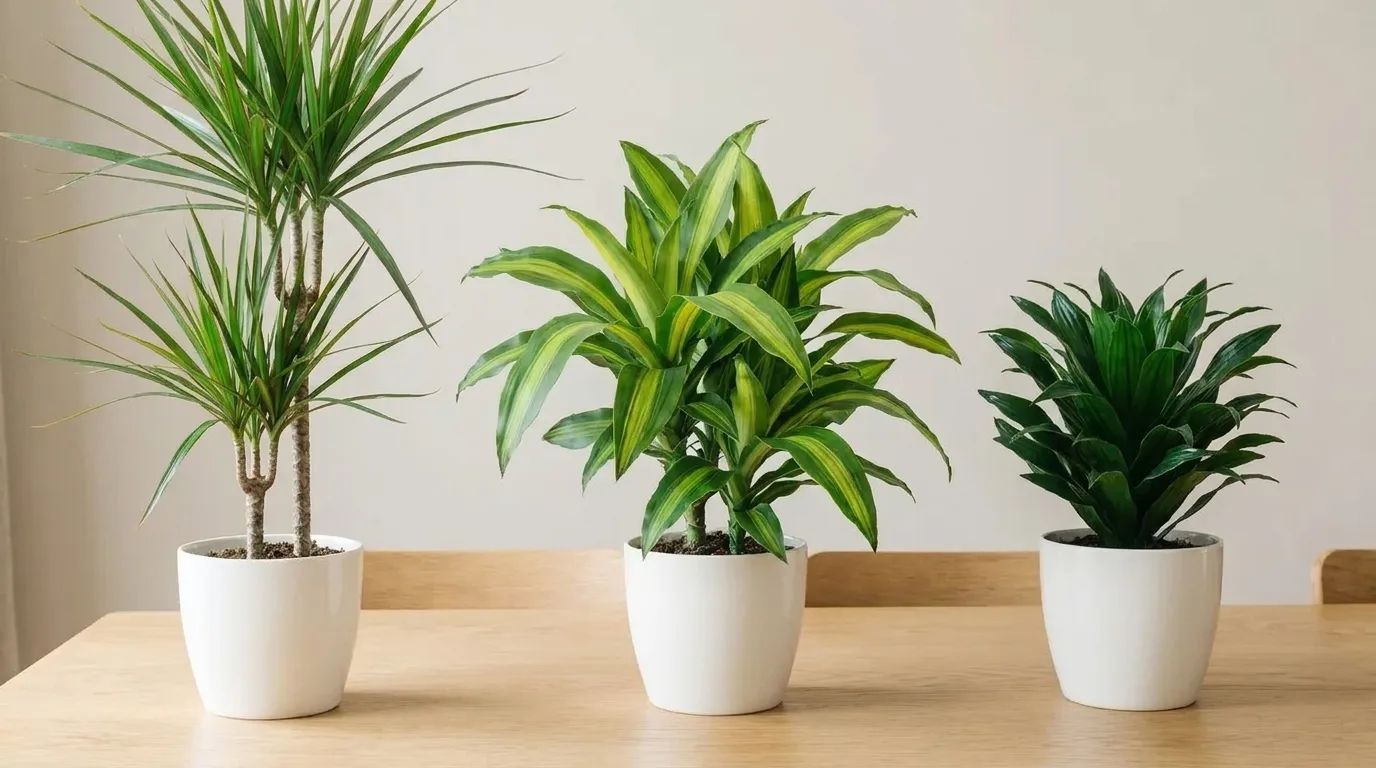
Indoor Types of Dracaena Plants for Your Home
Dracaena is one of the most popular indoor plants, and for good reason. It’s low-maintenance, adaptable, and comes in more varieties than most people realize.
But with so many indoor dracaena varieties available, picking the right one can feel confusing. Some grow tall and tree-like. Others stay compact and bushy.
Some need bright light, while others survive in dim corners. Each type also has different watering needs, growth speeds, and space requirements.
What works well in a large living room may not suit a small desk or office shelf.
This blog breaks down every major type, from species to cultivars, so you can identify what you have, understand what each one needs, and choose the best fit for your space.
What Defines an Indoor Dracaena Plant Type?
Not all dracaena plants are the same, and understanding why helps you pick the right one.
Dracaena includes both species (naturally occurring plants) and cultivars (bred for specific traits, such as leaf color or compact size).
The differences between types come down to three key factors:
- Leaf shape: narrow and long vs. broad and wide
- Leaf color: solid green or variegated with stripes and edges
- Growth structure: tall and tree-like vs. low and bushy
These traits come from genetic variation, small gene differences that show up visually in each plant. The best indoor types tolerate low light, stay manageable in size, and adapt well to containers.
A common misconception is that all dracaenas are the same. They’re not, each type has its own look, growth habit, and care needs.
Main Indoor Dracaena Categories Based on Growth Form
Dracaena plants come in a few distinct growth forms. Knowing each one helps you place the right plant in the right spot.
1. Tall Cane and Tree-Like Dracaena
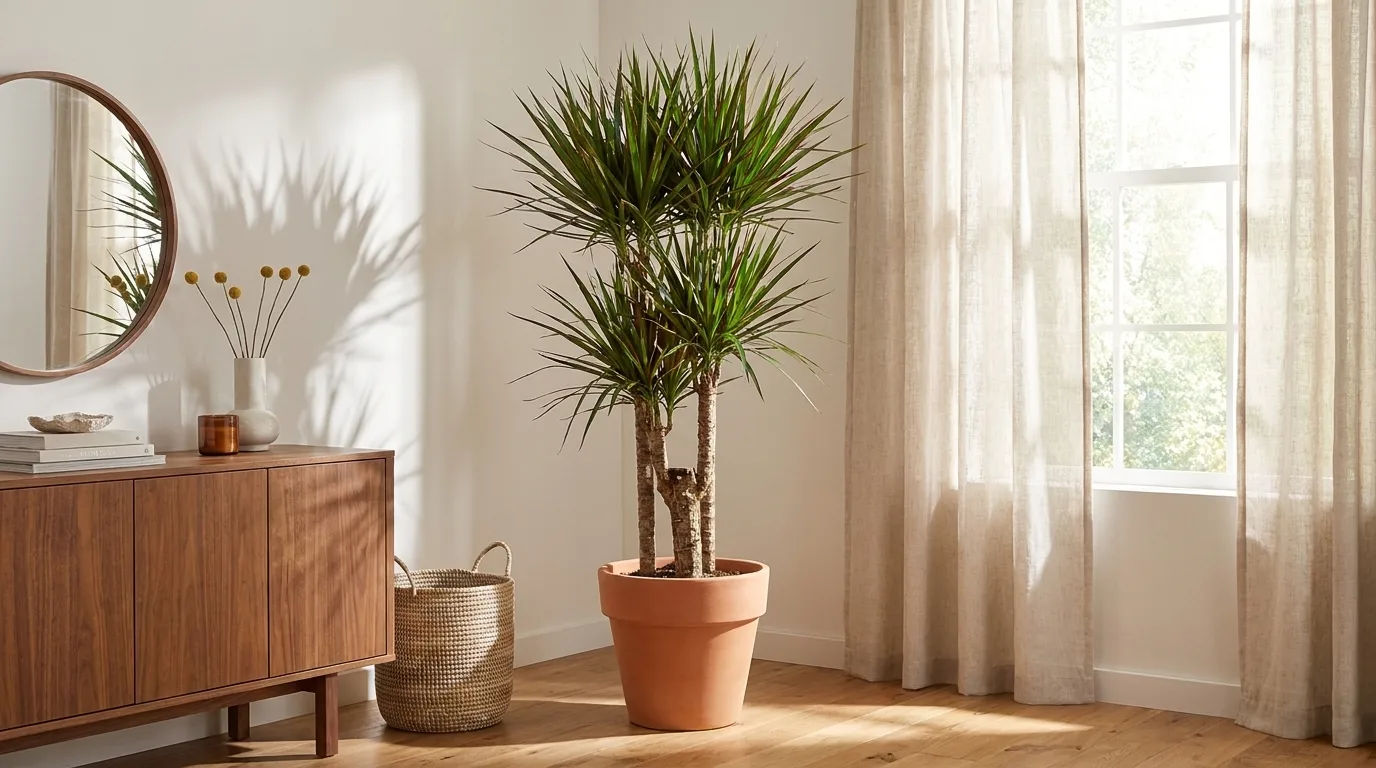
These grow on thick stems called canes, with leaves clustered at the top. The cane stores water, giving it natural drought tolerance and making it easy to maintain indoors.
They work best in large rooms and open corners. That said, because they use water slowly, overwatering can lead to root rot quickly.
2. Bushy and Shrub-Like Dracaena
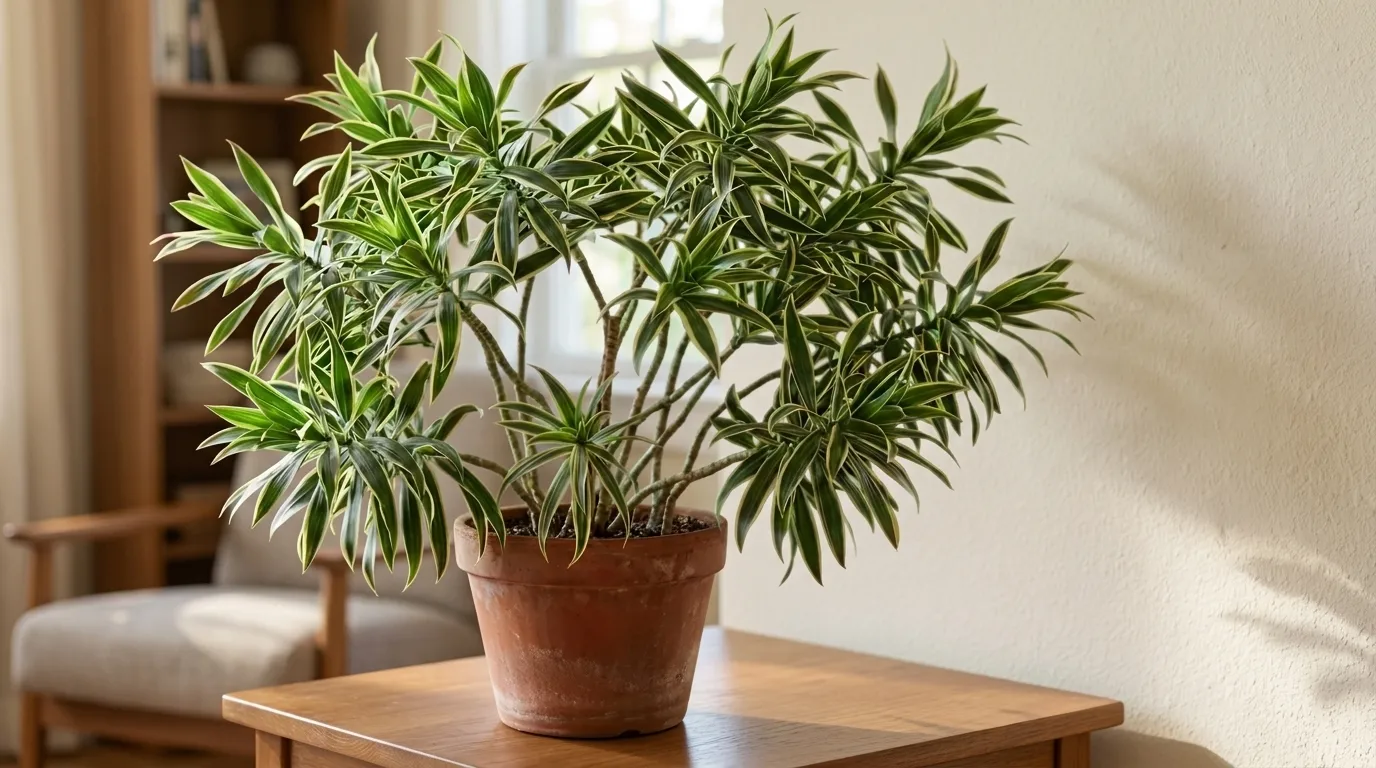
These varieties have multiple stems and dense foliage, giving them a fuller look. Short internodes cause leaves to cluster tightly, keeping the plant compact.
They’re a better fit for desks, shelves, and smaller rooms.
Key Indoor Dracaena Species and Their Identifying Traits
These are the most common Dracaena species you’ll come across as houseplants. Each one looks different and has its own set of care needs.
3. Dracaena Marginata (Dragon Tree)
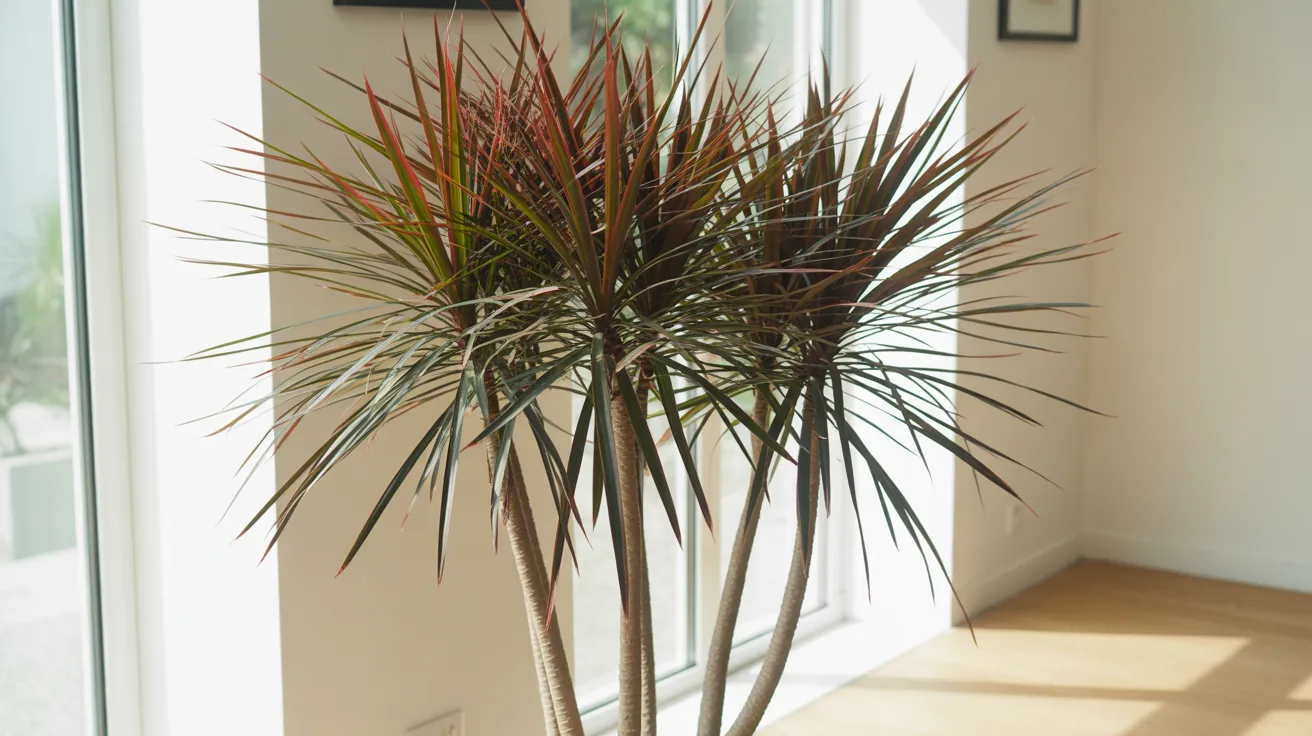
Dracaena marginata is a tall, striking plant with thin, spiky leaves edged in red or purple.
- Its narrow leaves reduce water loss, making it naturally drought-tolerant.
- It survives neglect better than most other indoor houseplants.
If you want a low-maintenance plant that handles irregular watering, Marginata is the safest pick. If you prefer bold, architectural drama in a corner, it delivers that too.
4. Dracaena Fragrans (Corn Plant)
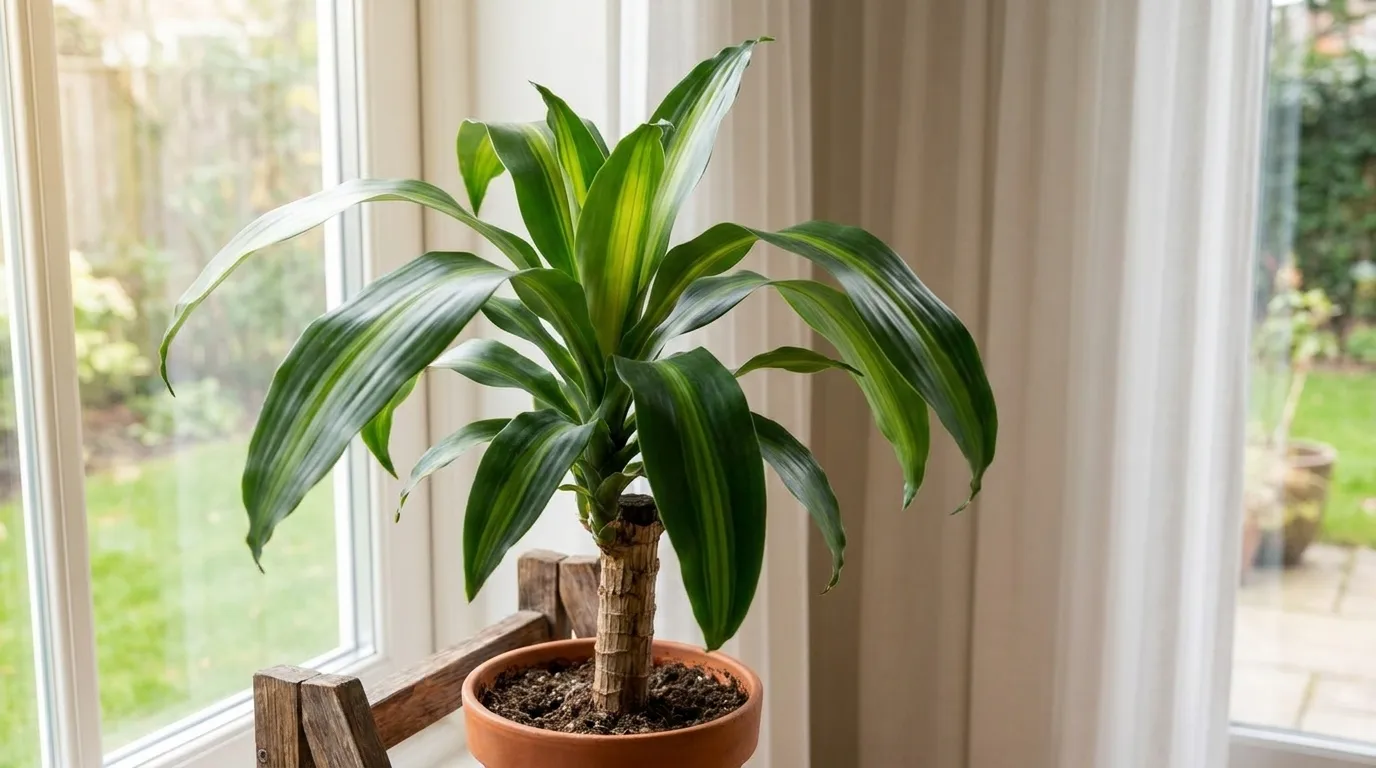
Dracaena fragrans has broad, glossy leaves that closely resemble corn foliage, sitting atop a thick cane.
- Its larger leaf surface absorbs more light, helping it adapt to indoor conditions.
- It needs more light than narrow-leaf types and struggles in dark corners.
If your space gets decent indirect light, fragrans is a rewarding, lush-looking plant. If your room is dim, it will decline faster than other dracaena types.
5. Dracaena Reflexa (Song of India / Jamaica)
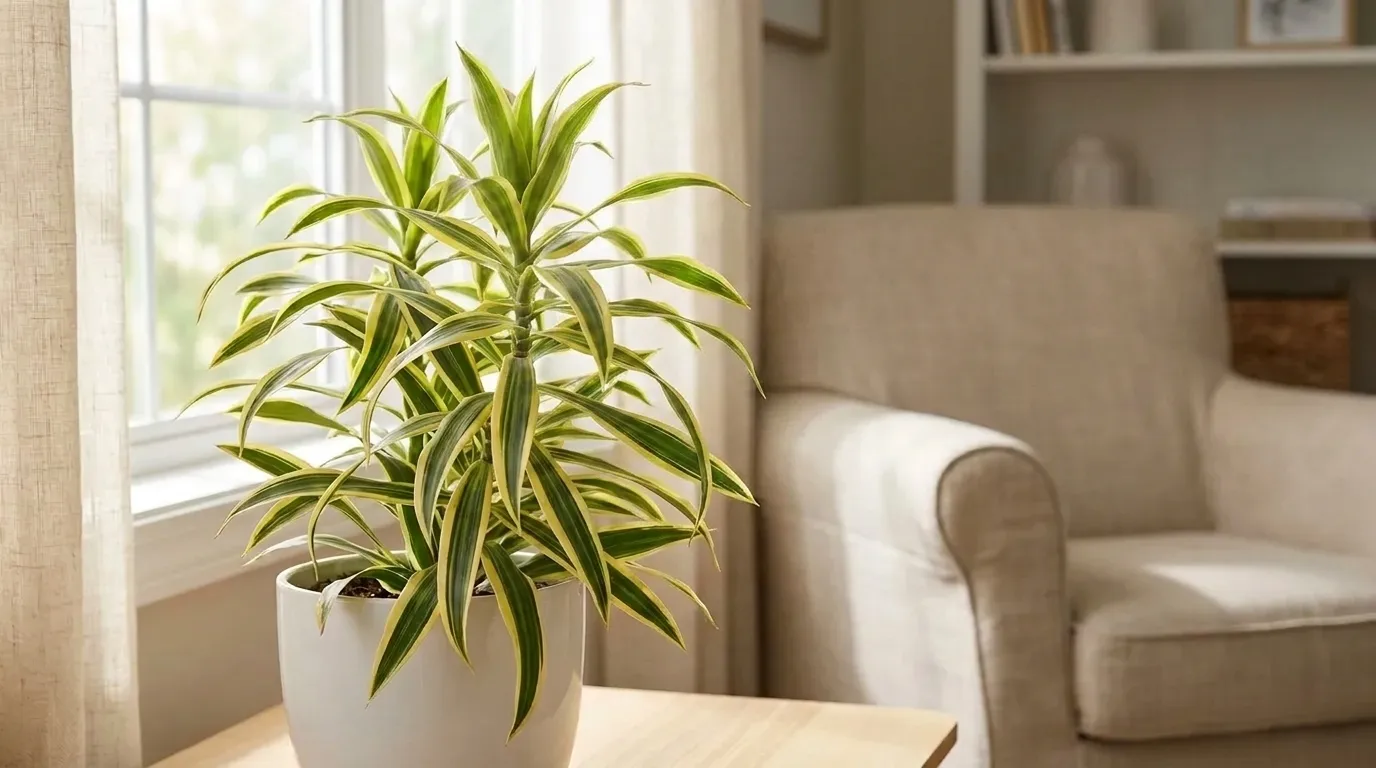
Dracaena reflexa has narrow, strongly variegated leaves in yellow or cream that tend to bend downward.
- Variegation reduces chlorophyll content, meaning it needs more light to stay healthy.
- It’s often mislabeled as low-light tolerant, but it isn’t.
If you have a bright spot and want bold variegation, Reflexa is a standout choice. If your light is limited, this is one type you should avoid.
Common Dracaena Indoor Varieties Within Each Species
Dracaena cultivars vary widely in leaf color, size, and light needs, even within the same species.
Here’s a quick breakdown of the most common types and what sets them apart:
| Variety | Leaf Type | Key Trait | Best For |
|---|---|---|---|
| Lemon Lime | Variegated: yellow & green stripes | Bold, bright foliage | Well-lit spaces |
| Janet Craig | Solid: deep green | Low-light tolerant | Dim rooms, offices |
| Massangeana | Variegated: central yellow stripe | Classic corn plant looks | Medium light |
| Janet Craig Compacta | Solid: deep green | Compact form, same traits | Desks, small spaces |
| Song of India | Variegated: yellow edges | Needs brighter conditions | Bright indirect light |
Variegated types have reduced chlorophyll levels, which slow growth and increase their light requirements. Solid green varieties are more forgiving and adapt better to low-light conditions.
Choosing by variety, not just by species, helps you match the right plant to your space.
How to Identify a Dracaena Type Quickly
Identifying a dracaena comes down to observing a few physical traits in order. Relying on just one feature, especially leaf color, often leads to misidentification.
- Step 1 – Leaf width: Check if leaves are narrow and spiky or broad and wide.
- Step 2 – Color pattern: Look for solid green leaves versus stripes, edges, or variegation.
- Step 3 – Growth form: Note whether it grows on a single cane or has multiple bushy stems.
- Step 4 – Height and spacing: Observe how tall it grows and how far apart the leaves sit.
Each trait reflects species-level differences in morphology, meaning the plant’s physical structure tells you more than its color alone.
Many cultivars share similar coloring, which is the most common reason for misidentification. Use all four steps together for an accurate identification, not just one.
Why Certain Dracaena Types Thrive Indoors?
Dracaena plants evolved in tropical understories, shaded environments with filtered light and infrequent rainfall. That origin is exactly why they adapt so well to indoor environments.
Most types tolerate indirect light without declining, store water in their stems to survive infrequent watering, and grow upright, making them easy to fit into corners and tight spaces.
Their slow metabolism is both a strength and a weakness. It reduces their resource needs, but it also means excess water stays in the soil too long.
Overwatering is the most common reason dracaenas fail indoors, not low light, not neglect.
Common Confusions When Choosing or Identifying Types
Dracaena naming can be inconsistent across sellers, nurseries, and even plant labels. These are the most common points of confusion to watch out for.
- Snake plant mix-up: Snake plants were reclassified under Dracaena, the same plant, with a new genus name.
- Multiple names, one plant: Sellers use different names for the same variety, causing unnecessary confusion.
- Cultivars mistaken as species: Many named varieties are cultivated forms, not separate species entirely.
- Botanical reclassification: Official genus changes don’t always reach retailers, creating outdated or mismatched labeling.
- Marketing names: Brands often rename varieties to sound unique, making them harder for buyers to identify.
These inconsistencies lead to misidentification or accidentally buying duplicates without realizing it.
Always cross-check using physical traits, not just the name on the label.
Conclusion
Dracaena is one of the few plant families that genuinely works for almost every indoor setup, as long as you pick the right type.
Tall cane varieties suit large, open spaces. Bushy types work well on shelves and desks. Compact cultivars fit anywhere space is limited.
And once you know how to read the leaves, identifying any type becomes straightforward.
The biggest mistakes, overwatering, poor light matching, and buying by name alone, are all avoidable with the right knowledge.
Now that you know the key indoor types of dracaena plants, the next step is matching one to your space.
Comment below, which type are you growing or planning to get?
Frequently Asked Questions
Can Dracaena Plants Be Kept in Air-Conditioned Rooms?
Yes, most dracaena types tolerate air-conditioned spaces well. They prefer stable temperatures and handle dry, cool air better than many tropical plants. Avoid placing them directly under vents, as constant cold airflow can cause leaf tips to brown.
Do Dracaena Plants Cause Any Harm to Pets?
Dracaena is toxic to cats and dogs. Ingestion can cause vomiting, drooling, and lethargy. It’s best kept out of reach of pets. Always check a plant’s toxicity before bringing it into a home with animals.
How Often Should Dracaena Be Repotted?
Dracaena needs repotting every two to three years. Move it to a pot one size larger when roots start circling the base or pushing through drainage holes. Avoid oversized pots, as excess soil can retain moisture and increase the risk of root rot.


