How to Use Composite Fencing for Modern Outdoor Rooms and Zoning
The modern British garden is no longer just a patch of lawn bordered by traditional closeboard panels. Over the last few years, a significant shift in UK home design has seen the garden transform into a multi-functional extension of the indoor living space. Driven by the rise of remote working and a desire for year-round outdoor entertaining, homeowners are looking for ways to structure their plots effectively.
The challenge lies in the typical UK garden footprint, which often requires clever layout solutions to feel both expansive and intimate. This is where the concept of “outdoor rooms” and zoning comes into play. By utilizing high-quality composite fencing internally, rather than just along the property boundary, you can carve out distinct, purposeful sanctuaries like private hot tub retreats, cozy fire pit lounges, secluded home office pods and more.
Designing the Modern Outdoor Layout
To successfully partition a garden without making it feel claustrophobic, the choice of material and placement is critical. Traditional timber fencing often feels heavy and requires annual staining to prevent a weathered, mismatched look. Composite panels, however, offer a sleek, symmetrical aesthetic that mirrors indoor cabinetry, providing the perfect architectural backdrop for distinct garden zones.
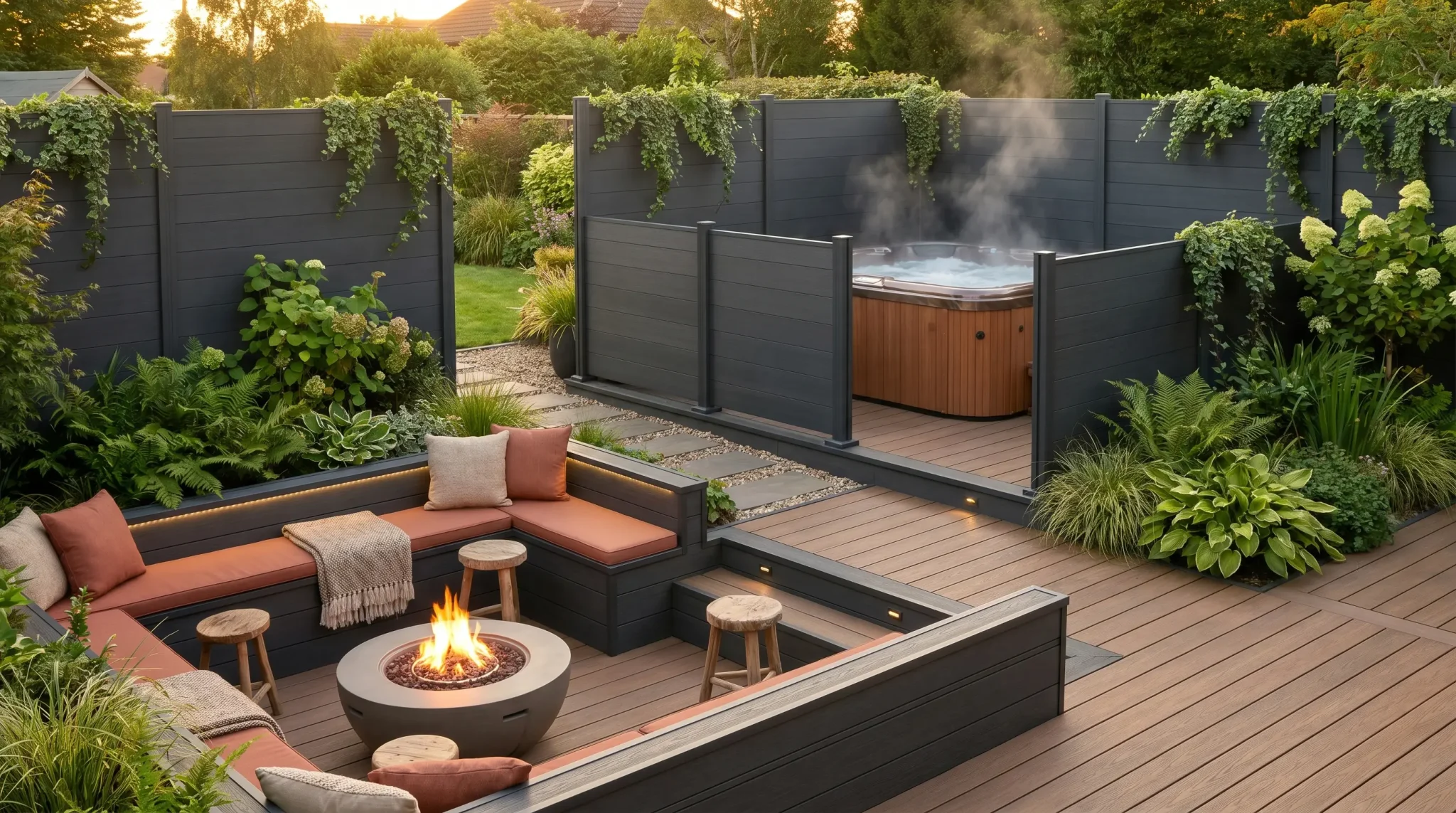
- The Secret Hot Tub Retreat: A hot tub requires acoustic and visual privacy, yet surrounding it with standard 6ft fencing can feel penal. By using mid-height grey or charcoal composite panels in an L-shape configuration, you can block prevailing winds and neighborly views while creating a luxury spa aesthetic. Because composite resists moisture and chlorinated water splashback, it won’t rot or breed mould like traditional timber alternatives.
- The Sunken Fire Pit Lounge: To create an intimate evening atmosphere, use low-level composite fencing panels (around 3 to 4 feet high) to encircle a seating area. This establishes a clear boundary that traps heat and creates a cozy, sunken feel, while still allowing views out across the rest of the garden landscape.
- The Garden Office Pod Screen: With thousands of UK professionals working from garden rooms, separating professional space from domestic life is crucial. Placing a linear run of slatted composite fencing a few metres ahead of an office pod creates a physical “corridor” transition. This screen hides the main house from view during the workday, boosting focus and mental separation.
- The Living Wall Integration: Modern composite panels are structurally robust enough to support vertical planting systems. Interspersing sleek flush panels with sectioned trellis or hanging planters allows you to soften the architecture with ferns, ivy, or jasmine, blending the structural zones seamlessly into the natural garden environment.
Why Composite Outperforms Timber in UK Climates
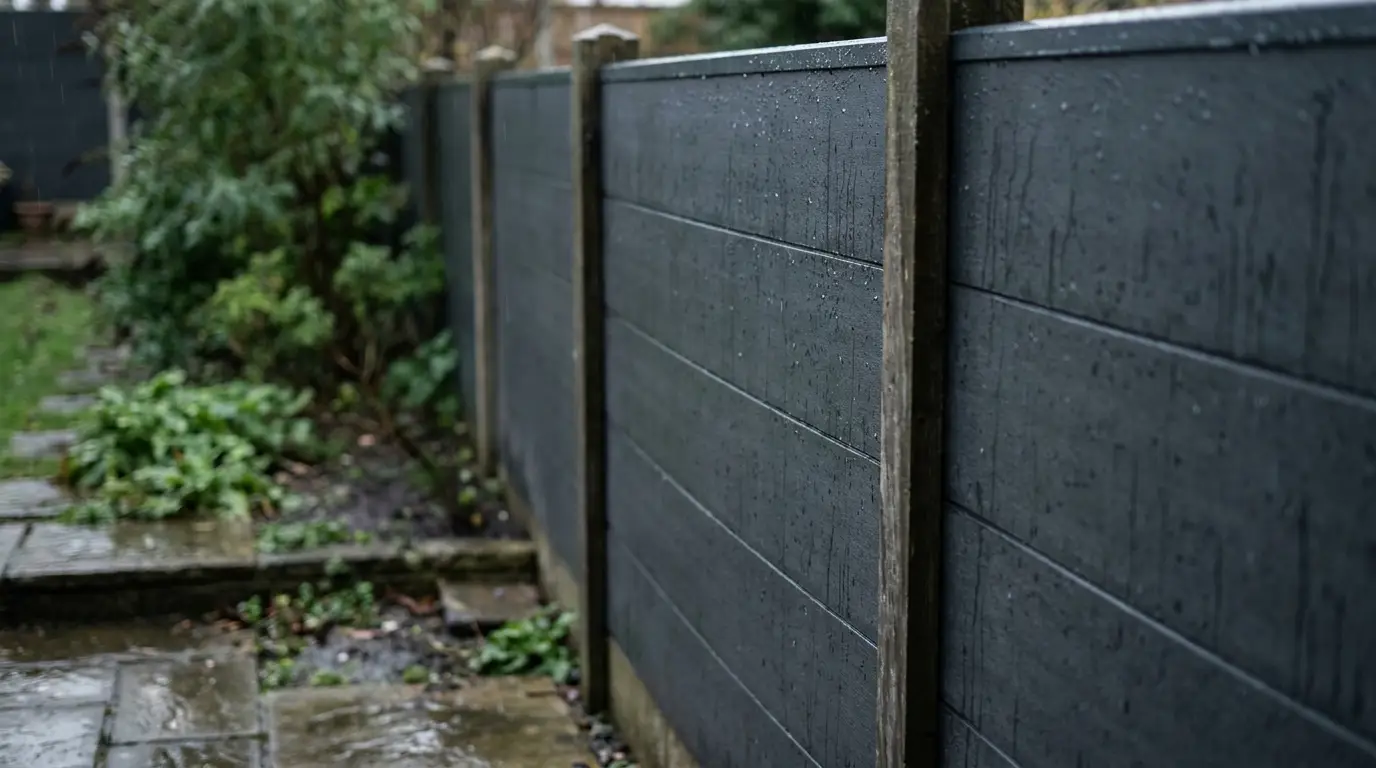
When investing in garden zoning, longevity is a primary concern for UK homeowners. The British climate presents a unique challenge: high humidity, persistent winter rainfall, and brief periods of intense summer UV exposure. Traditional timber fencing panels are notorious for warping, twisting, and succumbing to ground rot within 5 to 8 years if not treated annually.
Statistically, standard pressure-treated timber panels can absorb up to 25-30% of their weight in moisture during a typical British winter. This constant swelling and shrinking cycles loosen fasteners and cause structural sagging. Composite fencing, engineered from a precise blend of recycled plastic polymers and reclaimed wood fibres, boasts a moisture absorption rate of less than 1.2%. This mathematical difference means the panels remain perfectly straight and structurally sound for decades, maintaining the crisp lines required for modern architectural zoning.
Furthermore, wind resistance is a critical metric for UK gardens, which frequently face autumn and winter gales. High-quality composite fencing systems are wind-tested to withstand gusts of up to 70 mph (110 km/h) when installed with internal steel reinforcements or heavy-duty aluminium posts. This structural integrity ensures that your internal zoning walls won’t collapse and damage expensive garden assets like hot tubs or outdoor kitchens during a storm.
Combining Fencing with Structural Foundations
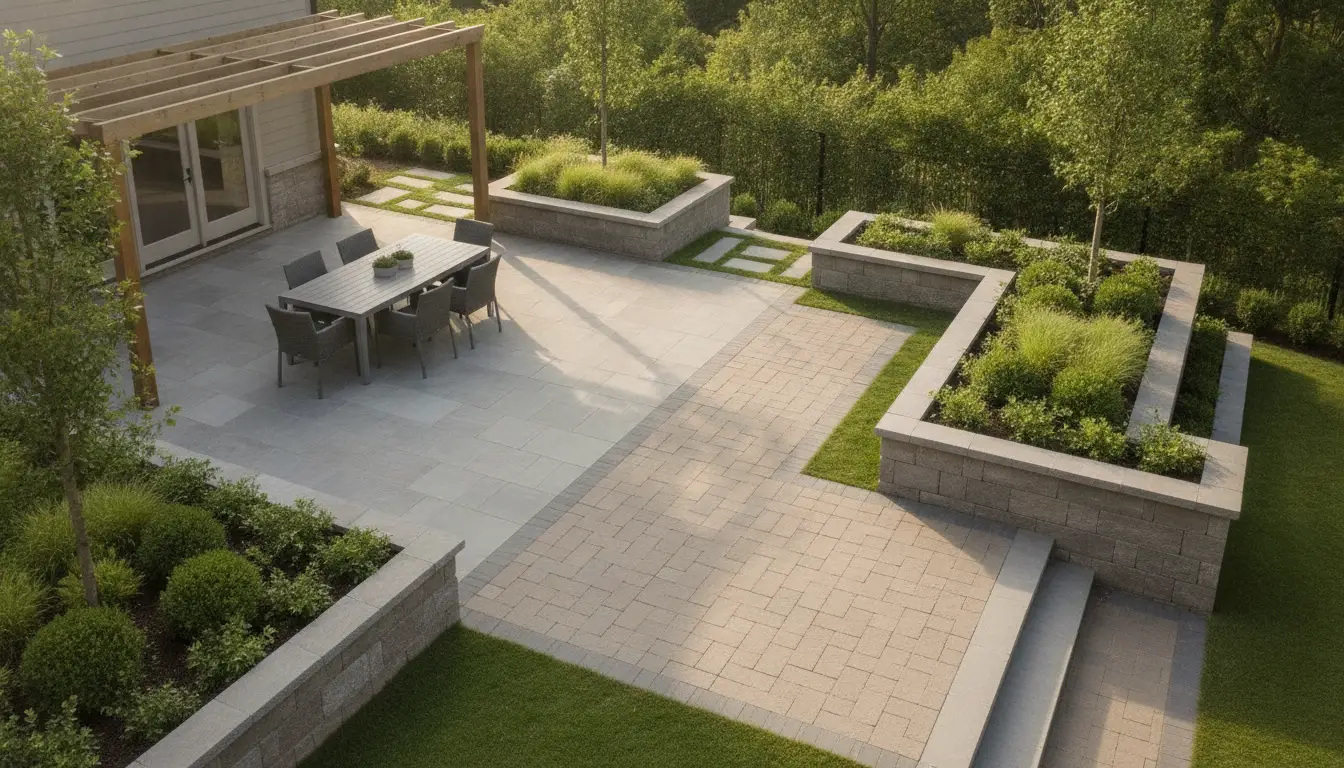
For a garden design to look cohesive, the vertical elements must complement the horizontal surfaces. When installing internal composite zoning walls, consider how they interface with your patio or decking areas. A common design pitfall is pairing low-maintenance composite vertical screens with high-maintenance softwood timber flooring, leading to uneven weathering and a mismatched aesthetic within a few seasons.
To achieve a seamless, premium finish, pair your zoning panels with a high-performance floor surface. Utilising composite components or durable fencing sub-frames ensures that the entire outdoor room ages at the same rate, requiring nothing more than an occasional wash with soapy water to look pristine. This material synergy not only elevates the visual appeal but also protects your financial investment.
Long-Term Value and Sustainability
While the initial material cost of composite fencing is higher than that of standard lap panels, the return on investment for UK property owners is substantial. Research indicates that professionally landscaped gardens featuring defined outdoor living zones can add between 5% and 10% to a property’s overall valuation.
When you factor in the saved costs of annual wood stains, sealers, and replacement panels over a 20-year lifecycle, composite proves to be the more economical choice. Additionally, many premium composite options are manufactured using up to 90% recycled materials, meaning you are building your private garden sanctuary with a significantly reduced environmental footprint. By thinking vertically and zoning with purpose, you can unlock the full potential of your outdoor space, creating a versatile sanctuary that stands the test of time.